
Reviewed · CYCLING TOURS
Historical Kyoto E-Bike Tour
Kyoto spreads its finest sights across the city, and this small-group e-bike tour links them without making you spend the whole day waiting for buses. You ride through ordinary streets, pause at major temples and shrines, then finish among the bamboo of Arashiyama. It is an efficient way to see a lot while still getting a feel for Kyoto beyond the postcard views.
I especially like the maximum group size of eight, which lets guides such as Jody, Pohan, Diego, Jorge, and George answer questions and keep the ride together. I also like the mix of famous sights and quieter back streets, plus the easy-going pace created by electric assistance. The main consideration is road riding: Kyoto has few dedicated bike paths in places, so you should be comfortable sharing streets with cars, buses, mopeds, pedestrians, and other cyclists.
At a glance: what makes this ride useful
- Four major Kyoto sights in one morning and early afternoon: Kitano Tenmangu, Kinkaku-ji, the Arashiyama Bamboo Grove, and Tenryu-ji.
- Electric bikes reduce the strain: You still pedal, but the motor helps across a long city route.
- Small groups keep the day personal: The tour accepts no more than eight people.
- The guides add cultural context: Expect explanations of Japanese customs, shrine rituals, temple traditions, and local cycling rules.
- Lunch is part of the day, but bring yen: Several experiences included ramen or local food stops, and cash was useful.
- The route includes substantial walking: At some stops, you leave the bikes behind and explore on foot.
Why an e-bike works so well in Kyoto
Kyoto is not difficult to explore because its sights are hard to find. It is difficult because they are spread across a wide area, and the most popular roads can clog up quickly. A bike gives you a better chance to move between districts without treating every transfer as a separate transport problem.
The electric motor matters here. This is a five to six-hour outing, and the route covers enough ground that a regular bicycle could feel tiring, especially if you are also walking through temple grounds and the bamboo forest. The e-bike lets you save some energy for the places that deserve it.
Do not mistake electric assistance for a completely effortless ride. You are still riding in city traffic, stopping at intersections, and dealing with the normal demands of cycling. One family found the outing manageable for teenagers who already rode well, but recommended it mainly for teens and adults who are confident on city streets.
The ride is not a race. Guides ride at the front and rear when needed, and the small group makes it easier to pause or adjust the pace. One guide also changed the schedule when rain and snow made conditions less comfortable. That flexibility is valuable in Kyoto, where weather can change the feel of an outdoor day quickly.
Other cycling tours in Kyoto people book:
- Bike Tour Exploring North Kyoto plus Lunch
★ 5.0 · 1,087 reviews - Arashiyama Bamboo Forest & Hidden Gems Bike Tour (Early Bird)
★ 5.0 · 613 reviews - 5 Top Highlights of Kyoto Full Day Bike Tour (E-bike option)
★ 5.0 · 511 reviews
Meeting in central Kyoto and finding your wheels
The starting point is Memory Kyoto Bike Tour at 8-6 Umaryo-cho, Nishikyo Nakagyo-ku, in Nakagyo Ward. It is near public transportation, but the exact meeting spot deserves a little attention. One person found it tucked down a back road with little signage, while another found the ticket instructions clear.
I would not leave this to the last minute. Check the mobile ticket before setting out, allow time to reach the shop, and look carefully for the entrance. Once there, you receive the bike and helmet, with water included for the day.
The route uses two morning departure options, giving you some choice when fitting the tour into a Kyoto stay. The activity returns to the same meeting point, so you do not need to arrange a separate ride from Arashiyama at the end.
Kitano Tenmangu: a shrine tied to learning
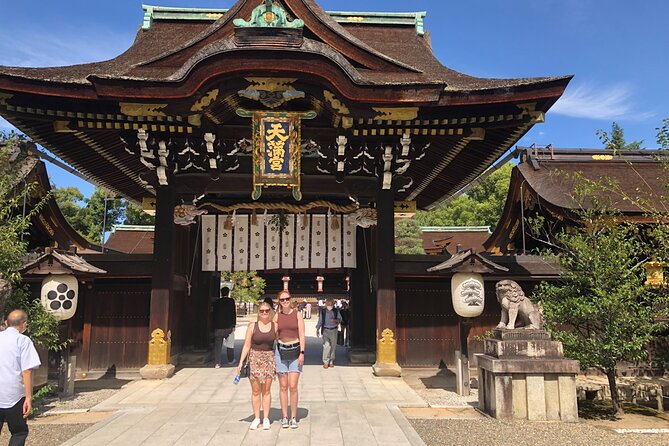
The first stop is Kitano Tenmangu Shrine, one of Kyoto’s important Shinto sites. The guide explains its connection to Sugawara no Michizane, the scholar and court official honored here as a deity of learning.
That detail gives the shrine a clear focus. You are not simply walking through another set of gates and buildings. You learn why students and families come to this place, how the shrine’s traditions developed, and how worship differs from what you will see at a Buddhist temple later in the day.
The grounds are particularly attractive in early spring, when roughly 1,000 plum trees flower. If your visit falls outside that season, you will miss the full blossom display, but the shrine remains a worthwhile opening stop because it introduces Japanese religious customs before the schedule becomes busier.
Allow about 30 minutes here. That is enough for the main explanation, photographs, and a look at the grounds, though you will not have time for a long, unhurried visit to every corner.
Kinkaku-ji: the Golden Pavilion and its famous reflection
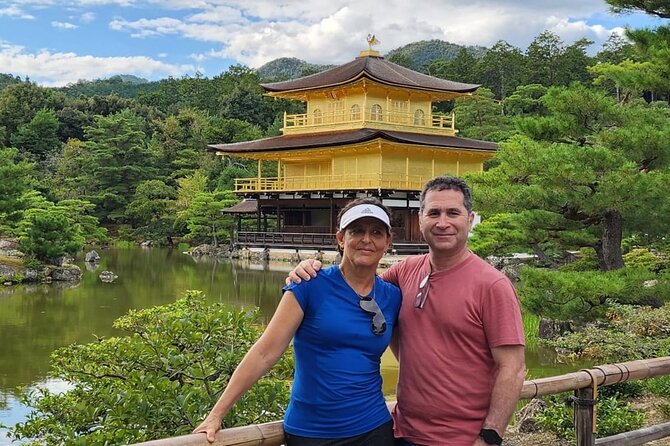
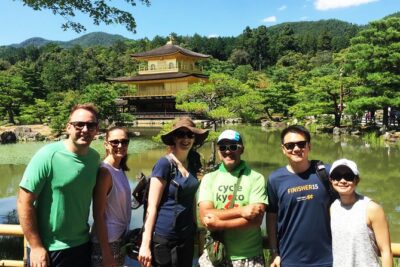
From Kitano Tenmangu, you ride toward Kinkaku-ji, also called the Golden Pavilion. The upper levels are covered in gold leaf, and the building is designed to be seen across a pond, where its reflection helps create the famous picture.
The pavilion is striking, but it is also one of Kyoto’s busiest attractions. The visit follows a set path, and you should expect other people around the viewing areas. The advantage of arriving with a guide is that the building becomes more than a quick photograph. You receive the story of its origins and the reasons it became such a powerful symbol of Kyoto.
The stop lasts about 45 minutes and includes admission. That timing works well for a first visit, giving you space to see the pavilion, walk along the grounds, and hear the main explanation without allowing one sight to consume the entire day.
This is also a good place to remember that the tour is built around highlights, not long periods of quiet contemplation. If Kinkaku-ji is your personal priority, you may want to return on your own for a slower visit.
Other rides on two wheels around Kyoto:
- E-Bike Tours of the highlights of Kyoto!!!
★ 5.0 · 291 reviews - Afternoon Kyoto Bike Tour: Bamboo Forest, Monkeys & Hidden Spots
★ 5.0 · 283 reviews - South Kyoto in a Nutshell: Gentle Backstreet Bike Tour!
★ 5.0 · 225 reviews - Pedal Adventure Kyoto’s iconic landmarks on an e-bike tour
★ 5.0 · 189 reviews
The ride between sights is part of the experience
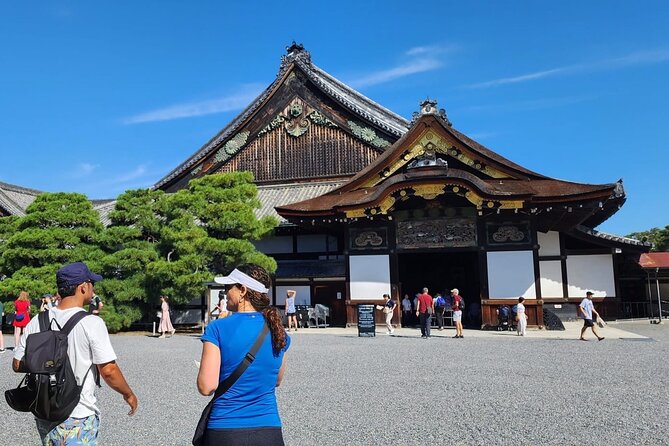
The stretches between the stops are not filler. You pass through Kyoto streets that show daily life rather than only preserved monuments and tourist lanes. Guides point out local details along the way, explain cycling rules, and help the group handle crossings and busy sections.
Several guides receive particular praise for combining facts with an easy manner. Jody is described as patient and entertaining, with years of life in Japan and a background in teaching. Pohan is noted for cultural explanations and for adjusting the day when weather changed. Diego is associated with useful site information and a friendly approach, while Jorge and George are praised for humor, safety, and clear communication.
The route is also a chance to ask the questions that do not always fit into a standard temple visit. You can ask about shrine rituals, Japanese customs, food, neighborhood life, and the difference between Shinto and Buddhism as you move through the city.
Still, keep your expectations realistic. The city riding can feel perilous if you are not used to cycling near traffic. This tour is a better choice for a competent urban cyclist than for someone who has only ridden on quiet recreational paths.
Arashiyama Bamboo Grove: Kyoto’s most atmospheric walk
The Bamboo Forest Trail in Arashiyama is the visual centerpiece of the tour. Tall bamboo rises on both sides of the path, creating a narrow corridor that feels far removed from the city streets you have just crossed.
You spend about 45 minutes walking here. The bikes do not carry you through the grove, and that is a good thing. The path is for people on foot, and the experience depends on slowing down, looking upward, and hearing the bamboo move in the wind.
The grove is also one of Kyoto’s most photographed places, so it may not feel secluded. The best approach is to enjoy the scale and atmosphere rather than expect complete quiet. Your guide can help you understand where to walk and how the grove fits into the wider Arashiyama district.
One useful feature is some flexibility after the bamboo walk. Depending on the day, the guide may let you choose where to finish this part of the visit. The Kimono Garden was another pleasant stop for one group, though it should be treated as a possible extra rather than a guaranteed part of the published route.
Tenryu-ji: gardens, Zen tradition, and a calmer finish
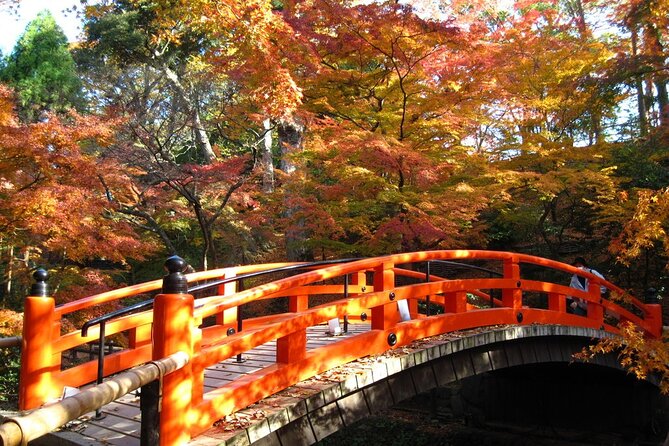
Tenryu-ji gives the tour a different mood. This Buddhist temple is a UNESCO World Heritage Site, and the focus here is its garden, considered one of the finest in Kyoto.
After the movement of the bike ride and the crowds around Kinkaku-ji, the garden offers a chance to slow down. The design draws your eye across ponds, plants, paths, and borrowed views toward the surrounding hills. Your guide explains the temple’s place in Zen Buddhism and the meaning behind the customs you encounter.
The scheduled visit lasts about 45 minutes. That is enough to walk through the principal garden areas and hear the main explanation, but again, this is not an open-ended temple morning. If you like gardens, you may wish you had more time to sit quietly and study the details.
Together, Tenryu-ji and the Bamboo Grove make a strong final section. One offers a carefully shaped garden and religious setting; the other gives you a dramatic natural corridor. They also place you in Arashiyama, one of Kyoto’s best-known western districts, before you ride back to the starting point.
Lunch, cash, and the practical details that matter
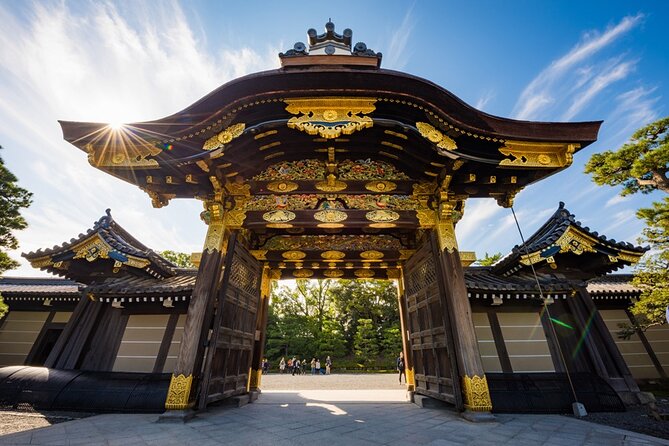
The remaining time is spent cycling between locations and stopping for lunch. The exact restaurant can vary, but the day has included ramen and local Japanese food, including a food-court option with a wide range of choices. One lunch spot by the river was especially appreciated, while another meal featured food delivered by small robot carts.
Bring yen. A ramen stop may be cash-only, and you may want low-value coins if you plan to take part in shrine or temple customs, such as buying prayer items or making offerings. Food is not presented as a fully prepaid part of the tour, so budget separately for lunch.
The included bottle of water is a small but useful touch. You will be outside for hours, and the combination of cycling and walking makes hydration worth planning for, especially in warm weather.
The tour has mobile-ticket confirmation and free cancellation up to 24 hours before the start time. Changes or cancellations inside that window are not accepted for a refund. Most people can participate, but the city riding and walking make basic cycling ability an important practical requirement.
What the $99.49 price buys you
At $99.49 per person, this is not the cheapest way to visit Kyoto’s temples. You could reach the sights by public transportation and pay admissions separately. The value comes from combining transport, a bike and helmet, electric assistance, a guide, cultural explanations, and a full half-day route.
The price makes the most sense if you have limited time or want help linking districts that are awkward to combine on your own. It also saves you from working out every bus connection between western Kyoto and the central sights.
The value is less clear if you prefer to linger at one or two temples. The schedule moves steadily, and the day includes group cycling, walking, and lunch. You are paying for range and interpretation, not for a slow private visit.
A maximum of eight people is important here. A large bike group would be harder to manage on Kyoto’s streets and less useful at temple stops. With a small party, guides can answer questions, watch the pace, and respond to dietary needs more easily.
Who should book this Kyoto bike tour?
I would recommend it to you if you:
- Have one or two days in Kyoto and want to cover several major sights.
- Ride confidently on city streets.
- Like learning about religion, history, and local customs while moving.
- Prefer a small group to a large bus tour.
- Want the help of an English-speaking guide, with guides including Jody, Pohan, Diego, Jorge, and George.
- Enjoy active sightseeing but do not want a strenuous full-day bicycle workout.
I would think twice if you dislike traffic, have difficulty walking for several hours, or want long, quiet visits at each temple. The electric motor reduces exertion, but it does not remove the need to ride safely or walk through large grounds.
Should you book it?
Book this tour if you want a lively introduction to Kyoto that combines major landmarks with local streets, practical cultural insight, and efficient transport. It is particularly useful early in your stay, since the guides can help you understand shrine customs, temple etiquette, food choices, and the shape of the city.
Skip it if your ideal Kyoto day means choosing one temple, moving slowly, and avoiding bicycles and city traffic. For confident riders, though, the e-bike is a smart way to connect Kitano Tenmangu, Kinkaku-ji, Arashiyama, and Tenryu-ji in one well-filled day.
FAQ
How long does the Historical Kyoto E-Bike Tour last?
The tour lasts approximately five to six hours. Time is divided among cycling, walking at the sights, and lunch.
What locations does the tour visit?
The route includes Kitano Tenmangu Shrine, Kinkaku-ji Temple, the Arashiyama Bamboo Forest Trail, and Tenryu-ji Temple.
Is an electric bike provided?
Yes. Each participant can use an e-bike, and a helmet is provided as part of the equipment.
How large is the tour group?
The group has a maximum of eight participants.
Where does the tour start and finish?
It starts at Memory Kyoto Bike Tour, 8-6 Umaryo-cho, Nishikyo Nakagyo-ku, Kyoto. The activity ends back at the same meeting point.
Is lunch included in the tour price?
Lunch time is part of the tour, but the supplied information does not state that the meal itself is included in the price. Bring yen, since some lunch locations are cash-only.
Do I need to be an experienced cyclist?
You should be comfortable riding in city traffic. The route can include streets shared with cars, buses, mopeds, pedestrians, and other cyclists.
What is the cancellation policy?
You can cancel up to 24 hours before the start time for a full refund. Cancellations or changes made less than 24 hours before the start time are not accepted for a refund.
Just added in Kyoto
- Kyoto: Zen Meditation at a Private Temple with a Monk★ 5.0 · 25 reviews
- Private Cooking Class Udon in Kyoto Japan★ 5.0 · 23 reviews
- Your Private Vacation Photography Session In Kyoto★ 5.0 · 110 reviews
- Private Pewter Sake Cup Experience with a Kyoto Artisan★ 5.0 · 31 reviews
- Kyoto Wagashi(Japanese sweets) Cooking Class near Fushimiinari★ 5.0 · 60 reviews
- Kyoto:Family-Friendly Kimono & Yukata Experience at WARGO★ 5.0 · 147 reviews
- Private Guided Traditional Buddhist Cooking in Japan★ 5.0 · 16 reviews
- Kyoto: Gion Geisha District & Sake-in-Hand Walking Tour★ 5.0 · 37 reviews
Cycling Tours, compared.

3h Tokyo E-Bike Tour: Hidden Gems, and Local Life with guide
Read our review →
Arashiyama Bamboo Forest & Hidden Gems Bike Tour (Early Bird)
Read our review →
5 Top Highlights of Kyoto Full Day Bike Tour (E-bike option)
Read our review →
Hiroshima 2hr Peace Cycling Tour with Local Guide
Read our review →Browse the lists this tour appears in