
Reviewed · GO-KARTS
GINZA: Go Kart Experience with NEO GINZA
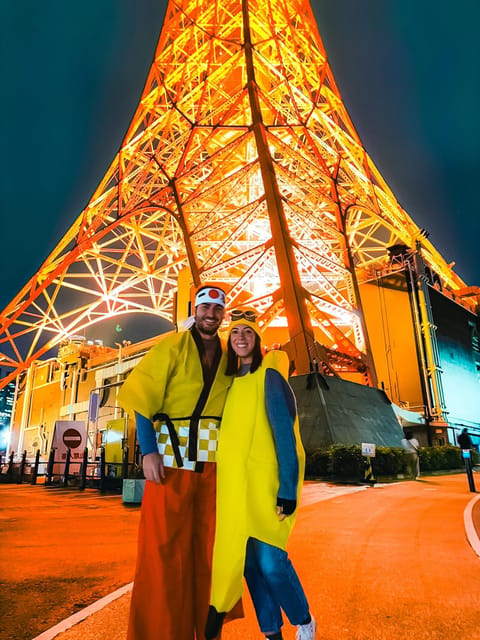
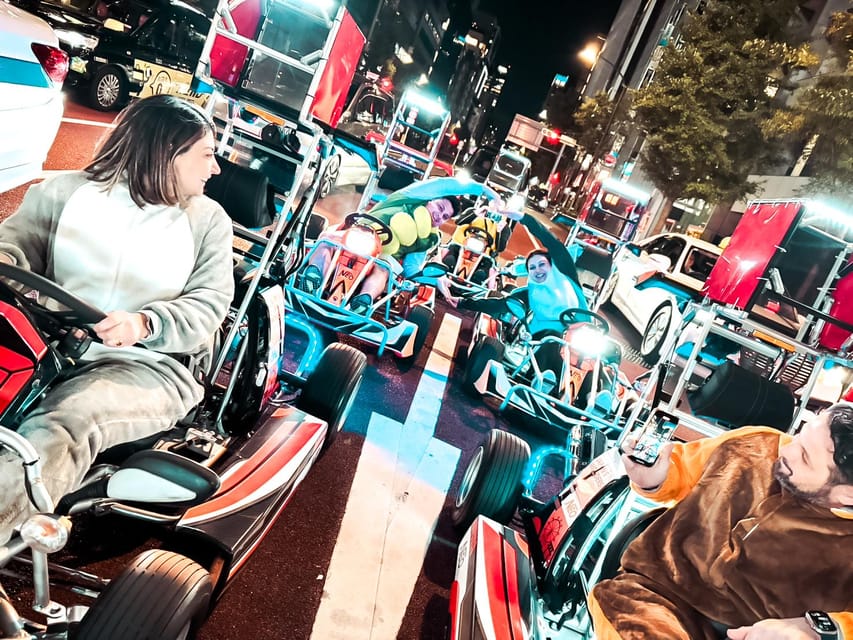
Tokyo looks different from a go-kart. At street level, you pass Tokyo Tower, Ginza, and Kabuki-za with open-air views instead of peering through a bus window. The route is short, but it packs several major sights into one lively hour.
I like the tiny group size, limited to six, and the two-guide setup. I also like that costumes and photo shooting are included, so you can focus on driving and smiling at the right moments. The main catch is the paperwork: you need the correct international driving permit or Japanese license translation before arriving, and the carts are not an option for anyone under 18.
Key points to know before you book
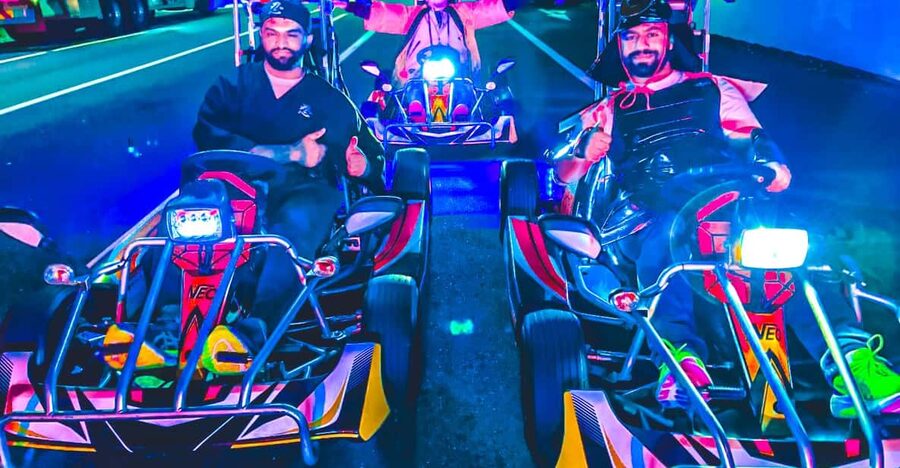
- A one-hour central Tokyo route: Pass Zojo-ji Temple, Tokyo Tower, the Imperial Palace Outer Gardens, Tokyo Station, and Kabuki-za.
- Two guides for a small group: Up to six participants ride with English- and Japanese-speaking staff.
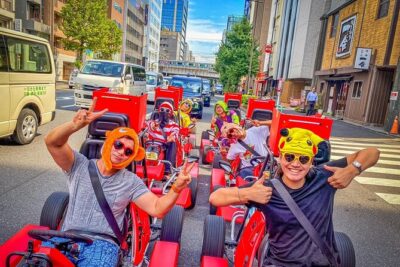
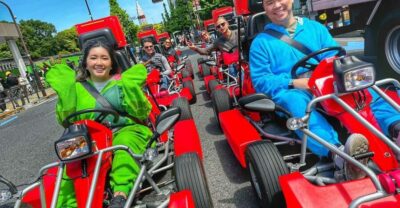
- Costumes are included: Pick a playful outfit for photos and an easy-to-spot look on the road.
- Night rides add Tokyo Tower lights: Several people found the evening setting especially memorable.
- Photos come with the experience: Guides take pictures during the outing and share them afterward.
- Driving documents are essential: Bring your physical passport and an accepted IDP or official Japanese translation.
What this Ginza go-kart ride is really like
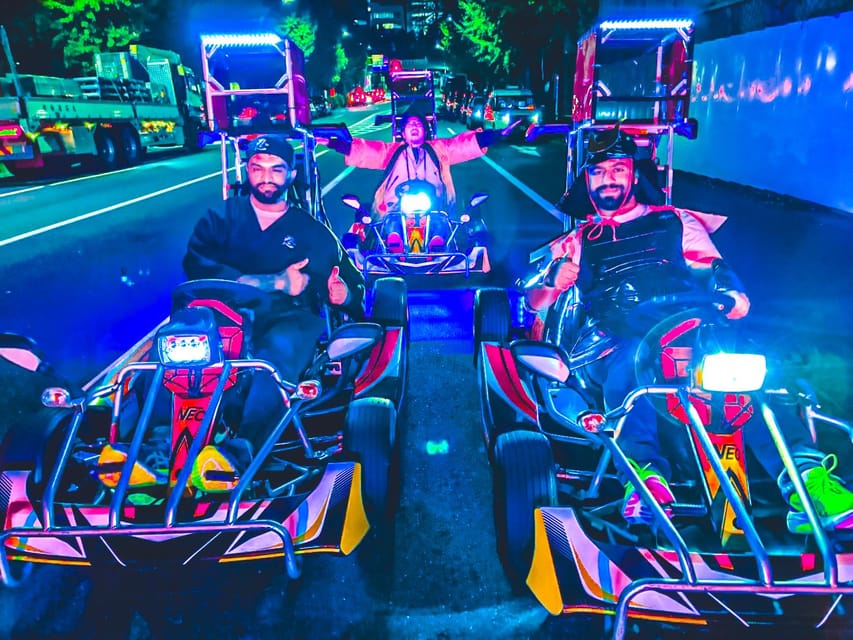
This is not a quiet sightseeing circuit. You are in a small themed kart, moving through central Tokyo streets with a guide leading the way. The fun comes from the mix of driving, city views, costumes, and the reactions your outfit can draw at photo stops.
The experience begins and ends at Shintomicho 1-chome Building, written in Japanese as 新富町一丁目ビル. You meet the staff there, deal with the required checks, choose a costume, and receive guidance before setting off. The activity lasts 60 minutes in total, so expect a brisk outing rather than a long tour with extended visits inside each sight.
Two staff members help guide the group. That matters on city streets, especially when the group is moving between famous sights. The group limit of six also keeps the outing more personal than a large sightseeing vehicle. Patrick is named in several bookings as a friendly guide who explains buildings and local life while driving, so he may be one of the staff members available on your date, but guide assignments can vary.
The carts are simple to drive according to the supplied information, but you still need to treat this as a real driving activity. You are not a passenger in a sightseeing vehicle. You need to follow instructions, watch the road, and arrive prepared with the right documents.
Other street-level rides in Tokyo:
- Flagship 2-Hours Official Street Go-Kart Tour – Tokyo Bay Shop
★ 5.0 · 4,974 reviews - Official Street Go-Kart in Shibuya
★ 5.0 · 3,435 reviews - Official Street Go-Kart Tour – Akihabara
★ 5.0 · 1,578 reviews
Why the costume and photos matter
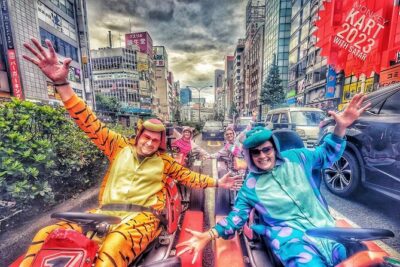
Costumes are not just a small extra. They shape the whole mood of the experience. You can choose from a range of playful outfits, then cruise through central Tokyo dressed as a character or creature. The costume also makes the photo stops more fun and gives the guide an easy way to keep track of the group.
The guides take photos during the tour and share them afterward. This is useful because you cannot safely take pictures with your cellphone while driving, and cellphones are specifically not allowed during the activity. You can enjoy the views without trying to handle a camera from the kart.
The photo service is best treated as a bonus rather than a formal photo shoot. The guides capture moments at the listed sights and along the route. Smile when the group stops, and you should come away with a record of the outing without needing to buy a GoPro rental or SD card. Those items are not included.
Zojo-ji Temple: a calm first landmark
Zojo-ji Temple gives the route an early change of mood. The temple sits near Tokyo Tower, combining traditional Buddhist architecture with one of the city’s most recognizable modern structures. From a go-kart, you pass rather than tour the temple grounds, so think of this as a scenic look and photo opportunity, not a temple visit.
That limitation is worth keeping in mind. If you want time to explore the temple, read signs, or visit its buildings, schedule a separate stop. The kart tour gives you a quick view from the road and places the temple within a larger central Tokyo circuit.
Tokyo Tower: the visual centerpiece
Tokyo Tower is likely to be the most memorable sight on the route. You pass close enough for a strong city photo, and evening departures can show the tower lit against the dark sky. Several people who chose the night outing found this setting particularly special.
The night route also changes the feel of the drive. Ginza’s lights, Tokyo Tower, and the open-air kart create a more theatrical scene than a standard daytime transfer. Daytime may be better if you want clearer views of buildings and street details. Night is the stronger choice if your priority is atmosphere and illuminated landmarks.
You do not go up Tokyo Tower as part of this activity. The value is seeing it from the streets and getting a moving view that a closed bus cannot match.
Same base, a different sort of day:
- Mt Fuji and Hakone 1-Day Bus Tour Return by Bullet Train
★ 5.0 · 26,383 reviews - 1-Day Tokyo Bus Tour
★ 5.0 · 14,250 reviews - Tokyo: TOKYO SKYTREE® Admission ticket
★ 4.5 · 11,192 reviews - Tokyo: teamLab Planets TOKYO Digital Art Museum Entry Ticket
★ 4.6 · 9,779 reviews
The Imperial Palace Outer Gardens: a grand central view
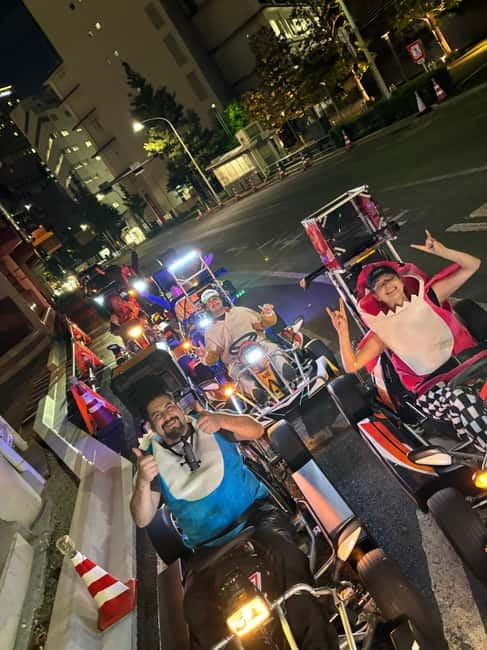
The route continues toward the Imperial Palace Outer Gardens. This area gives you a broad, formal view of central Tokyo and a break from the closely packed streets around Ginza. You pass by for sightseeing and photos, rather than entering the palace grounds.
The outer gardens are especially useful in this tour because they connect several parts of central Tokyo in one circuit. You see how the palace area sits beside major roads, office districts, and historic landmarks. The kart keeps the visit moving, so I would not book this experience as your only palace sightseeing plan.
Tokyo Station: old brick, busy city
Tokyo Station brings a different kind of city view. Its red-brick Marunouchi frontage is one of the capital’s best-known buildings, while the surrounding district is filled with large offices and broad streets. The tour passes by the station, giving you a quick look and a possible photo stop.
You may appreciate the contrast here: the route moves from a Buddhist temple and Tokyo Tower to the palace area and then to one of Japan’s major railway hubs. It is a compact lesson in how old and new Tokyo sit side by side.
Again, this is a street-level sighting. If you want to enter the station, admire the interior, or catch a train, do that before or after the kart ride. The one-hour schedule is built for movement, not long pauses.
Kabuki-za: finishing in Ginza style
Kabuki-za gives the final stretch a distinct Ginza identity. The theater is known for traditional kabuki performances and its striking facade. From the kart, you pass the building and get a quick photo moment before returning to the starting point.
This is a fitting end to the route because Ginza is where the experience begins and finishes. You see a section of Tokyo associated with shopping, dining, theater, and polished city streets, but from a playful and unusual vehicle.
The route does not include a kabuki performance or time inside the theater. If you want to see a show, you will need a separate ticket and schedule.
Why the two-guide format helps
The presence of two guides is one of the practical strengths of this activity. One guide can lead while the other helps support the group and capture photos. The supplied details describe both English-speaking and Japanese-speaking staff, so you can expect communication in those languages.
The group is limited to six participants. That is small enough for instructions to feel direct, and it prevents the outing from becoming a long line of carts. It also makes the photo stops easier to manage.
Past bookings give Patrick particular mention for explaining monuments and buildings, suggesting that the guide role can add more than directions. You may hear bits about Tokyo’s culture, buildings, and daily life as you drive. The amount of commentary can depend on traffic, timing, and the guide on duty, so treat it as a helpful layer rather than a full history tour.
The paperwork is the part you must get right
You cannot simply show up with a normal home-country driving license. All participants need special documents to drive in Japan, and the requirements depend on where your license was issued.
For most countries, you need a physical International Driving Permit issued under the 1949 Geneva Convention. It must be the booklet-style permit issued by the same country that issued your domestic license. An online permit obtained while you are already in Japan is not accepted.
Drivers from Switzerland, Germany, France, Taiwan, Belgium, and Monaco need a Japanese translation of their license from the Japan Automobile Federation, rather than an International Driving Permit. Drivers from countries not covered by the 1949 Geneva Convention, including China, Indonesia, Mexico, Qatar, and Saudi Arabia, are not permitted to drive in Japan for this activity.
Bring the physical documents. You need your physical passport and either the accepted physical IDP or, for the listed countries requiring translation, your physical domestic license plus the official Japanese translation. Missing paperwork can end the experience before it starts, so check this before booking.
You must also be at least 18 and hold a driver’s license. High heels, slippers, alcohol, drugs, and cellphones are not allowed. Wear practical shoes and arrive ready to follow the staff’s instructions.
Is $64 good value for one hour?
At $64 per person, this is not the cheapest way to see Tokyo. A train ride or walk through Ginza costs far less, and a longer sightseeing tour may offer more commentary. You are paying for a specific combination: the kart, staff support, insurance, costume, photos, and a route linking several central landmarks.
I think the price makes sense if the driving itself is the main attraction. You are not only looking at Tokyo. You are part of the scene, moving through it in a themed kart and stopping for photos at major sights. The included photo service also saves you from having to arrange someone to take pictures of the group.
The value is weaker if you mainly want detailed sightseeing. You pass the landmarks rather than enter them, and the total duration is only one hour. You might prefer a conventional walking tour or a museum visit if you want more context and time at each stop.
Hotel pickup and drop-off are not included. You need to make your own way to the starting building and return from there. Other personal expenses are also your responsibility, as are any GoPro rental or SD card costs.
Day or night: which departure should you choose?
Choose daytime if you want to see building details, temple features, and street scenes in natural light. It may also be easier to orient yourself around the route and recognize the different districts.
Choose night if you want illuminated Tokyo Tower and a more dramatic city setting. The strongest praise in the supplied bookings focused on night rides, especially the tower lights and the feeling of moving through Ginza after dark. The choice is personal, but I would select night for atmosphere and daytime for clearer sightseeing.
Starting times vary, so check availability when you book. The experience remains one hour either way.
Who should book this experience?
This suits adults who enjoy playful activities, want an unusual way to see central Tokyo, and already have the correct driving documents. It is also a good fit for couples, friends, and solo participants who do not mind being photographed in a costume.
You will probably enjoy it most if you like the idea of being part of the city scene instead of quietly observing it. The open-air format gives you a broad view, and the small group keeps the outing social without making it feel like a mass activity.
I would not choose it if you are uncomfortable driving on city streets, cannot secure the required documents, want a slow cultural tour, or prefer not to wear a costume. It is also not suitable for anyone under 18 or anyone without a driver’s license.
My call: book it if the driving is the point
I would book NEO GINZA if you want a memorable one-hour burst of Tokyo fun and have your license paperwork ready. The combination of Tokyo Tower, Ginza, costumes, two guides, and included photos gives you something a standard sightseeing route cannot provide.
For the best chance of a memorable outing, bring your physical passport and driving documents, wear flat practical shoes, choose a costume early, and consider a night departure if illuminated Tokyo Tower appeals to you. Skip it if you want long visits inside the landmarks or do not enjoy driving in an active city setting.
FAQ
How long does the NEO GINZA go-kart experience last?
The experience lasts 60 minutes, including the route through central Tokyo and the return to the starting location.
Where does the tour start and finish?
It starts and finishes at Shintomicho 1-chome Building, written in Japanese as 新富町一丁目ビル.
Which landmarks will I pass?
The route passes Zojo-ji Temple, Tokyo Tower, the Imperial Palace Outer Gardens, Tokyo Station, and Kabuki-za in Ginza.
Is the activity available in English?
Yes. English-speaking and Japanese-speaking staff are available, and the tour has a live guide.
How many people can join the group?
The activity is limited to six participants, making it a small-group experience.
What driving documents do I need?
Most participants need a physical International Driving Permit issued under the 1949 Geneva Convention, along with a physical passport. Drivers from Switzerland, Germany, France, Taiwan, Belgium, or Monaco need their physical domestic license and an official Japanese translation from the Japan Automobile Federation.
Are costumes and photos included?
Yes. A costume and photo shooting service are included. GoPro rental and an SD card are not included.
Just added in Tokyo
- The 10 Tastings of Tokyo With Locals: Private Street Food Tour★ 5.0 · 48 reviews
- Small Town in the Big City: Tasting Tokyo’s Kichijoji★ 5.0 · 195 reviews
- Small Town in the Big City: Tasting Tokyo’s Kichijoji★ 5.0 · 16 reviews
- EXCLUSIVE Tokyo Secret: Kichijoji Small-Group Food & Bar Hopping★ 5.0 · 29 reviews
- Explore Kichijoji: Walk Through One of Tokyo’s Beloved Districts★ 5.0 · 21 reviews
- :Tokyo,Shibuya/ Pro Photography in Kimono / English-Friendly★ 5.0 · 26 reviews
- 【R34】Tokyo:Private Daikoku tour in Modified R34★ 4.9 · 92 reviews
- Tokyo:Calligraphy &Make your original folding fan in Asakusa★ 5.0 · 62 reviews
Go-Karts, compared.
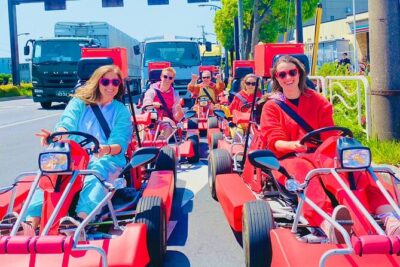
Flagship 2-Hours Official Street Go-Kart Tour – Tokyo Bay Shop
Read our review →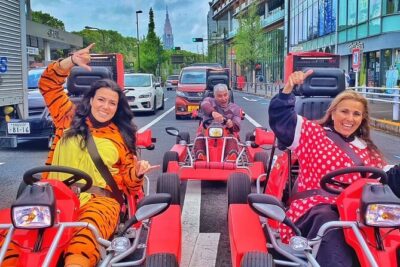
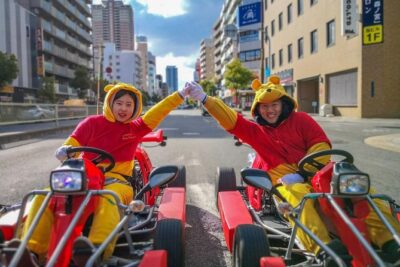
Tokyo Go Kart: Asakusa, Skytree, and Akihabara **IDP MUST**
Read our review →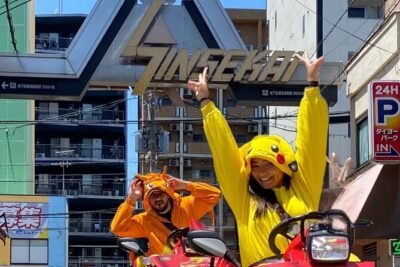

Asakusa, Skytree & Akhihabara Go-Kart City Experience
Read our review →Browse the lists this tour appears in