
Reviewed · SAKE TASTING
Private Pewter Sake Cup Experience with a Kyoto Artisan
The best part of this Kyoto experience is that you do not simply buy a souvenir. You make one yourself, hammering patterns into a pewter cup under the patient guidance of artisan Kanako. The cup becomes a small record of your own hand, not just another item from a shop shelf.
I like the quiet workshop setting and the chance to personalize the base with initials, numbers, or a date. I also like that Kanako adjusts her instruction for beginners and takes care with the final polishing. The main drawback is the location: this is outside central Kyoto, and reaching the studio may take about an hour by scenic train from Kyoto Station.
Key points to know
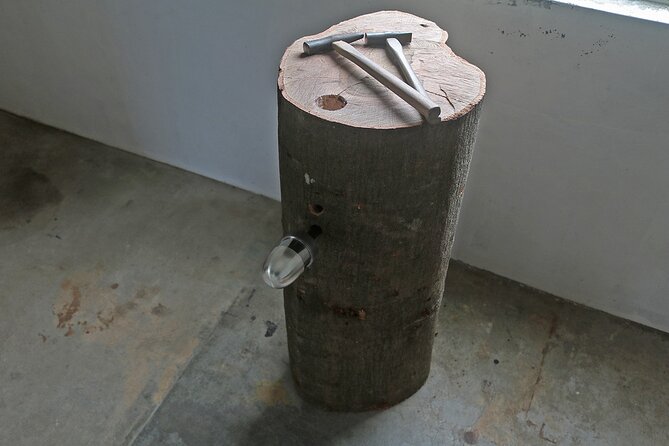
- Hammer your own design: Choose from several hammers and create patterns while rotating the cup on an anvil.
- Kanako teaches the class: Clear English instruction, patience, humor, and careful help are central to the experience.
- A useful souvenir: The finished cup holds about 90 milliliters, or 115 milliliters when filled to the rim.
- Personalize the base: Add letters, numbers, initials, or a meaningful date.
- Quiet northern Kyoto setting: The workshop is away from central Kyoto, with peaceful surroundings and a scenic journey.
- Private and beginner-friendly: Only your group participates, and all materials are provided.
Why this pewter cup makes a better souvenir
Kyoto is full of beautiful things to buy. The trouble is that many souvenirs are made for quick shopping, not lasting use. Here, you leave with a cup that carries the marks of your own decisions: which hammer you chose, how firmly you struck, and how closely you followed or changed the pattern.
That difference matters. You are not watching a craft demonstration from a distance. You are working the metal yourself, with Kanako nearby to show you how to proceed and how to correct small mistakes. The finished object is modest in size, but it has a story attached to it.
Pewter is also practical. The cup can be used for sake, whiskey, chilled green tea, or other drinks. Its compact size makes it easy to pack, and the finished piece is packaged for taking home. One family even chose to enjoy green tea from their new cups because they did not drink alcohol, which is a useful reminder that this is not only a sake activity.
The workshop is best understood as a craft lesson with a keepsake at the end, not as a formal museum-style presentation. You spend most of the time making.
Other tasting rooms and breweries in Kyoto:
- Kyoto Night Foodie Tour in Gion (9+ dishes + 6 Sake tastings)
★ 5.0 · 1,762 reviews - 3-Hour Kyoto Insider Sake Brewery Tour with Tastings & Pairings
★ 5.0 · 917 reviews - Arashiyama Bamboo, Temple, Monkeys, or Secret Sake Brewery
★ 4.8 · 886 reviews
Arriving at Craft Gallery SALUK
The meeting point is Craft Gallery SALUK at Shizuichinonakacho in Sakyo Ward, Kyoto. This is not a central Kyoto attraction that you can casually fit between Nishiki Market and Gion. Plan the trip as part of the experience.
The studio lies in a quieter, mountainous part of northern Kyoto. A previous participant described the journey from Kyoto Station as about an hour by scenic train. Another account praised the sound of a nearby stream and the calm setting. These details explain both the appeal and the trade-off: you give up some convenience, but the workshop feels removed from the city’s crowded sightseeing circuit.
I would allow extra time for the journey and avoid scheduling another fixed activity immediately afterward. The class itself lasts about two and a half hours, and you will want room for the ride back. The activity ends at the same meeting point.
The location also suits the mood of the class. Hammering metal requires attention. A peaceful setting helps you slow down and focus rather than rush through the work.
Choosing a hammer and shaping the surface
The class begins with a blank pewter cup and an introduction to the basic process. You choose from several types of hammers, each capable of leaving a different mark. There is no need to bring equipment or materials. Everything needed for the activity is supplied.
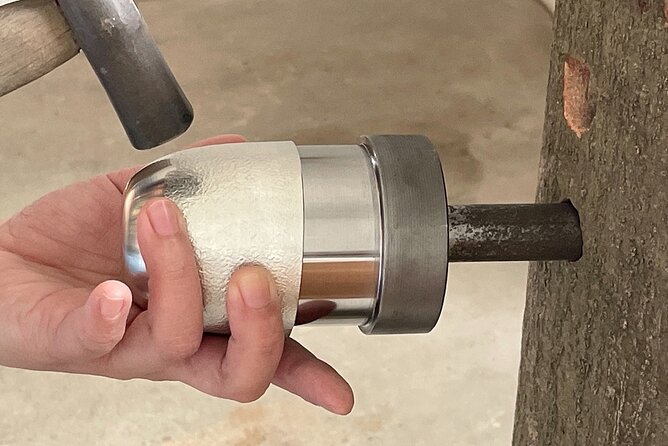
You place the cup on an anvil and strike it while rotating it. This combination of movement and rhythm creates the surface pattern. You can work with one hammer or combine several for a more varied design.
This is where the experience becomes personal. A light, careful tapping pattern will look different from a bolder, more forceful design. You can repeat a regular texture or make something less planned. One person created a forest-inspired pattern, while another made a sparkling surface through careful, patient hammering.
Do not worry if your first marks are uneven. That is part of the point. Kanako teaches you how to hold the work, how to use the tools, and how to keep the cup moving. Her role is not to make every cup identical. She helps you produce something attractive while leaving enough room for your own choices.
The physical work is satisfying, but it is not a high-energy activity. You spend time repeating small movements and watching the metal change. If you enjoy careful handwork, you will likely find the process absorbing. If you want a fast activity with instant results, this may feel slow.
Adding initials, dates, and personal marks
After the main surface work, you may add letters, numbers, initials, or a date to the base. This is a small option with a big effect. A simple date can mark a honeymoon, family trip, birthday, or first visit to Japan.
The engraving is especially useful if several people in your group are making cups together. Each person can create a different surface and then add a clear mark underneath. The cups remain coordinated without looking mass-produced.
I recommend deciding before the class whether you want a name, initials, or date. You do not need to arrive with a design plan, but having one in mind can save time. The cup’s surface will already contain plenty of visual detail, so a simple inscription is often enough.
The activity is private, meaning only your group takes part. That makes it easier to ask questions, work at a comfortable pace, and try something unusual. A couple once went off the suggested pattern with one design, and Kanako helped ensure the result still became a functional, attractive cup.
Same base, a different sort of day:
- PERFECT KYOTO 1-Day Bus Tour
★ 5.0 · 13,518 reviews - Kyoto: Fushimi Inari, Kinkakuji, Bamboo Grove 1 Day Bus Tour
★ 4.8 · 4,316 reviews - Kyoto: Tea Ceremony in a Traditional Tea House in Kiyomizu
★ 4.9 · 3,519 reviews - Kyoto Geisha Walking Tour: Gion District & Hidden Gems
★ 4.7 · 3,273 reviews
Filing the rim and finishing the cup
Once the main pattern is complete, you use a file to adjust the height and shape the rim. You also bevel the edge at an angle so it feels comfortable against your lips.
This stage deserves more attention than you might expect. A cup can look beautiful but still feel awkward if the rim is too sharp or uneven. Filing lets you take part in the practical finishing work rather than stopping after decoration.
For safety, Kanako handles the final polishing with a rotary machine. That is an important boundary between the hands-on portion and the professional finishing. You create the design and perform the accessible finishing steps, while the craftsperson takes care of the equipment and the final surface.
The finished cup measures about 64 millimeters across and 53 millimeters high. Its capacity is about 90 milliliters, or 115 milliliters if filled to the rim. That makes it a small tasting cup rather than a large everyday tumbler.
What Kanako adds to the experience
The instructor is Kanako, the craftswoman behind Saluk. Her teaching style is a major part of the class. She gives directions in English, explains the process clearly, and works patiently with people who have no previous metalworking experience.
You can expect a social element as well as a lesson. Past sessions have included tea, snacks, conversation about Japanese culture, and discussion of other crafts. Kanako has connected with visitors who work in woodcraft, textiles, photography, cooking, and other creative fields.
That exchange is one reason this class feels more personal than a standard souvenir workshop. You are not only learning how to strike pewter. You are meeting an artisan in her own working environment and seeing how she thinks about handmade objects.
The reviews consistently describe Kanako as welcoming, patient, and generous with her time. Those qualities matter because metalwork can make beginners nervous. A poorly placed strike can feel permanent, but the process allows for correction and adjustment. Her guidance helps you keep experimenting instead of becoming overly cautious.
The finished cup and how you can use it
The cup is designed to fit comfortably in your hand. Its small size suits sake, but you are not limited to one drink. You can use it for whiskey, chilled green tea, or other small servings at home.
The cup’s appearance depends on your hammer marks, so no two pieces will be exactly alike. Some will have regular, sparkling textures. Others will look more organic or deliberately irregular. That variation is a strength, not a flaw.
The finished items have been packed in wooden boxes, making them easier to protect on the journey home. Still, you should handle the box with care and pack it so it does not shift inside your luggage. The activity provider supplies the materials, but the information does not specify a separate shipping service, so plan to take the cup home with you.
I like that the result is both decorative and useful. A handmade object that sits untouched on a shelf can be meaningful, but a cup you use for a quiet drink keeps the memory active.
Price, timing, and who gets good value
The cost is $144.96 per person, and the class lasts roughly two hours and thirty minutes. That is not a cheap souvenir purchase. It is a private craft lesson, an artisan encounter, and a finished pewter cup in one package.
The value improves if you care about process. You are paying for guided instruction, materials, access to a workshop normally closed to the public, professional finishing, and a personalized object. If you only want an inexpensive gift, a craft shop will serve you better.
The private format is also important. Only your group participates, so the experience works well for couples, families, close friends, and people who want direct instruction. A family can create a set of related cups, while a couple can make pieces with different patterns and matching dates.
The activity is commonly booked well ahead, with an average booking time of about 37 days. If this workshop is a priority, reserve before your Kyoto schedule fills up. Free cancellation is available until 24 hours before the start time. After that point, the payment is not refunded, and late changes are not accepted.
Is the journey from central Kyoto worth it?
For many people, yes. The trip is a drawback if you have only a short time in Kyoto or prefer to keep every activity near the center. The studio is not a quick stop between major sights.
The journey makes more sense when you treat the workshop as a half-day outing. You get a change of scenery, a quieter part of Kyoto, and a focused activity that does not feel like another temple visit. A scenic train ride can also become part of the day, though the exact route and travel instructions should be checked when you book.
One previous participant received help with the return journey when Kanako and her husband provided a drop-off at a more convenient station. That kind of assistance may depend on the circumstances, so do not plan your transportation around it. Still, it reflects the personal nature of the workshop.
The meeting point is near public transportation, and service animals are allowed. The activity information says most people can participate, but it does not provide detailed accessibility measurements or describe the physical effort required. If you have mobility concerns, ask the provider before booking.
Who should book this pewter workshop?
I would recommend it most strongly to you if you enjoy making things with your hands. You do not need craft experience, but you should be comfortable with a slow, careful process and repeated hammering.
It is a good choice for:
- Couples seeking a shared souvenir with personal meaning
- Families who want a joint activity beyond sightseeing
- People interested in Japanese craft and local artisans
- Visitors who do not drink alcohol, since green tea can be used
- Anyone who prefers a small-group class to a large demonstration
- Creative people who like making their own design decisions
I would be more cautious if your Kyoto visit is tightly scheduled, if you dislike hands-on work, or if you want a polished object with no irregularities. The cup is professionally finished, but its decoration comes from your own hammering. Small variations are part of the result.
Should you book the SALUK pewter cup experience?
Book it if you want a meaningful Kyoto souvenir and are willing to travel outside the city center for a calm, personal class. Kanako’s patient teaching, the private setting, the option to engrave a date or initials, and the useful final product give the experience real substance.
Skip it if your main goal is convenience or low cost. At $144.96, this is an activity purchase, not a bargain shopping stop. But if you value the time spent learning and the pleasure of using something you made yourself, the price is easier to justify.
For a couple, family, or small group with an afternoon to spare, this is one of the more personal ways to connect with Kyoto. You leave with a cup, but the better souvenir is the memory of its marks taking shape under your own hands.
FAQ
Where does the pewter sake cup experience take place?
It takes place at Craft Gallery SALUK, located at Shizuichinonakacho in Sakyo Ward, Kyoto, Japan.
How long does the activity last?
The experience lasts approximately two hours and thirty minutes.
What is included in the activity?
Materials and equipment for making the pewter cup are provided. Kanako guides you through hammering, filing, engraving options, and the finishing process.
Is the workshop private?
Yes. This is a private activity, so only your group participates.
Can beginners take part?
Yes. The class is designed for beginners, and the instructor provides clear instructions and hands-on guidance. The activity information states that most people can participate.
Can I personalize the cup?
Yes. You may add letters, numbers, initials, or a date to the base of the cup.
What size is the finished cup?
The cup measures about 64 millimeters in diameter and 53 millimeters in height. It holds approximately 90 milliliters, or 115 milliliters when filled to the rim.
Can I use the cup for drinks other than sake?
Yes. The finished cup can also be used for whiskey, chilled green tea, and other drinks. Some sessions have included green tea for people who do not drink alcohol.
What is the cancellation policy?
You can cancel for a full refund up to 24 hours before the experience begins. Cancellations and changes made less than 24 hours before the start time are not accepted for a refund.
Just added in Kyoto
- Private Cooking Class Udon in Kyoto Japan★ 5.0 · 23 reviews
- Your Private Vacation Photography Session In Kyoto★ 5.0 · 110 reviews
- Kyoto: Zen Meditation at a Private Temple with a Monk★ 5.0 · 25 reviews
- Kyoto Wagashi(Japanese sweets) Cooking Class near Fushimiinari★ 5.0 · 60 reviews
- Kyoto:Family-Friendly Kimono & Yukata Experience at WARGO★ 5.0 · 147 reviews
- Private Guided Traditional Buddhist Cooking in Japan★ 5.0 · 16 reviews
- Kyoto: Gion Geisha District & Sake-in-Hand Walking Tour★ 5.0 · 37 reviews
- Tour in Kyoto with a Goverment Certified Tour Guide★ 3.5 · 117 reviews
Sake Tasting, compared.

Kyoto Night Foodie Tour in Gion (9+ dishes + 6 Sake tastings)
Read our review →
1-Day Snow Monkeys, Zenko-ji Temple & Sake in Nagano
Read our review →
3-Hour Kyoto Insider Sake Brewery Tour with Tastings & Pairings
Read our review →
Arashiyama Bamboo, Temple, Monkeys, or Secret Sake Brewery
Read our review →

Insider Sake Brewery Tour with Sake and Food Pairing
Read our review →

1.5-Hour Kyoto Insider Sake Experience with 7 Tastings & Pairings
Read our review →Browse the lists this tour appears in