
Reviewed · TOURS IN NAGOYA
Nagoya Endoji Food and Cultural Tour
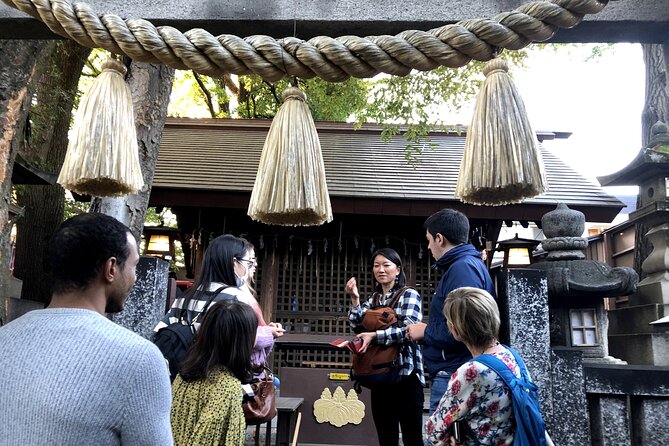
Endoji is the kind of Nagoya neighborhood you could easily walk through without noticing much. That is exactly why this tour works. A local guide points out small temples, shrines, old warehouses, food shops, and cultural details that do not announce themselves. Mayuko and Hiro are among the guides who have led this walk, and both are praised for clear English and thoughtful answers.
I like the small group, capped at eight people, and the mix of tasting and local history. You get savory food, sweets, and a look at daily Japanese culture rather than a parade of major sights. The drawback is the price: at $104.51, your own food, drinks, and purchases cost extra, so this is not a cheap snack walk. You should also be ready for steady walking and bring cash.
Key points to know before you book
- Endoji’s old shopping arcade: Walk through Nagoya’s oldest shopping arcade, with shops and warehouses dating back roughly 80 years or more.
- Food beyond the usual tourist menu: Sample items such as okonomiyaki and Japanese sweets, with small snacks supplied by the guide.
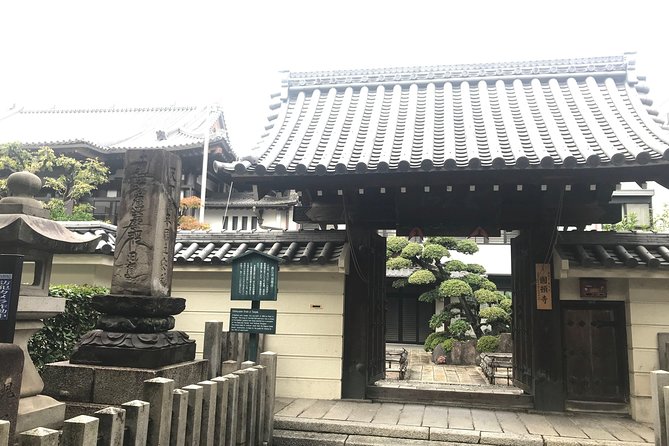
- Temples and shrines in quiet corners: Visit Sengen Shrine and other religious sites, including some tucked beside buildings or on upper levels.
- A small, personal group: The maximum group size is eight, making it easier to ask questions about food, customs, samurai, and local life.
- A traditional finish: The tour ends at Nagonoya Cafe & Hostel with a famous egg sandwich.
- Cash matters: Many small shops do not accept credit cards, and shopping and extra food are not included.
Why Endoji makes a good first look at Nagoya
Nagoya is often treated as a transport stop between Tokyo and Kyoto. That is a shame. The city has its own food traditions and a long commercial past, but many of its best clues are spread through ordinary streets rather than gathered around one famous monument.
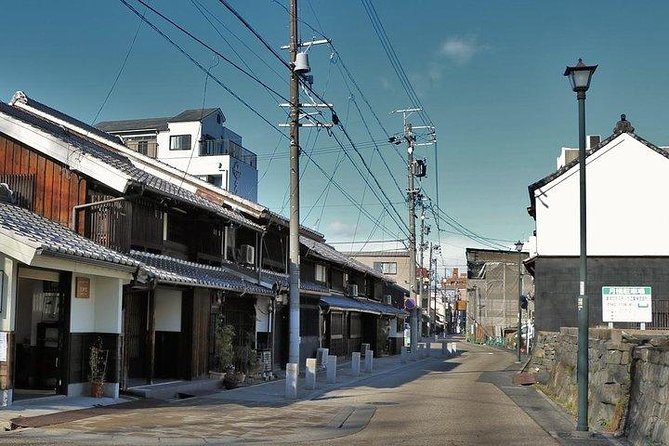
This walk focuses on Endoji, in Nagoya’s Nishi Ward. The area has a traditional shopping street, small restaurants, specialty shops, temples, shrines, and older buildings. You are not simply moving from one major attraction to another. You are learning how a neighborhood worked, how people worshiped, what they ate, and how trade shaped the area.
I like that the tour gives context to details you might otherwise pass. A small statue, a shop front, a roofline, or a narrow passage can seem unimportant until a guide explains its place in local life. The walk also helps you connect Nagoya’s past with its present. Endoji is not presented as a preserved museum district. It remains a working area, with shops and cafes carrying on alongside older structures.
The tour lasts about two and a half hours and begins at 11:00 a.m. That timing places the food portion around lunchtime, though you should not assume every tasting will replace a full meal. You receive little snacks from the guide, while your own food, drinks, and shopping are extra.
Other experiences people book in Nagoya:
- From Nagoya: Gujo, Hida Takayama, and Shirakawa-go Day Tour
★ 4.4 · 398 reviews - Ghibli Park 1-Day Bus Tour from Nagoya
★ 4.5 · 277 reviews - From Nagoya: Hida Takayama & Shirakawa-go Tour w/Opt. Lunch
★ 4.5 · 256 reviews
Starting at Nagonoya Cafe and Hostel
Meet at Nagonoya Cafe & Hostel, at 1-chōme-6-13 Nagono, Nishi Ward. This is also where the tour ends, which keeps the logistics simple. You do not need to find a second meeting point across town after the walk.
The cafe is more than a place to gather. It provides a useful introduction to the character of the district, and the tour finishes here with a famous egg sandwich. Since the tour information also says food and drinks are not included, ask at the beginning how the sandwich is handled and carry money for anything you want to purchase.
From the start, expect a walking tour rather than a seated tasting. Comfortable shoes are sensible. The operator asks for a moderate level of physical fitness and warns you to prepare for a fair amount of walking. No exact distance is given, so anyone who needs frequent rest should take that into account before booking.
The group limit of eight is a real advantage. In a larger group, narrow streets and small shops can become awkward, and questions tend to get lost. Here, you have a better chance to ask about a temple ritual, a food ingredient, a shop, or a custom that catches your attention.
Endoji’s historic shopping arcade
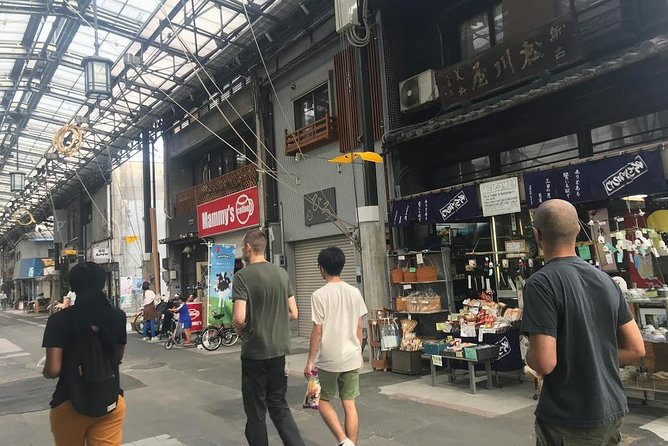
The Endoji Historical District is the center of the experience. Its shopping arcade is described as Nagoya’s oldest, with some shops and warehouses dating back 80 years and more. That age gives the walk a useful sense of time, but the appeal is not just old buildings.
An arcade tells you how neighborhood commerce once functioned. Shops were close together, customers could move along a covered route, and food, household goods, clothing, and services formed part of everyday life. Your guide helps turn those details into a story about Nagoya rather than leaving you to guess.
The district is also a good place to see the difference between a famous sightseeing quarter and a local commercial street. You might find a store that looks modest from outside but has a long family connection to the neighborhood. You may pass a warehouse that says more about the area’s trading past than a polished monument would.
The tour can sometimes skip a shop because of an irregular holiday. That is worth noting if a particular store is the main reason you are booking. The overall route still includes the arcade and nearby cultural sites, but the exact retail stops can change.
Tasting okonomiyaki, sweets, and local specialties
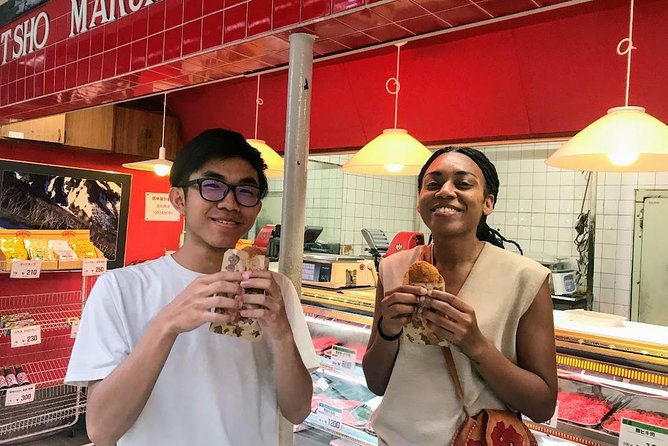
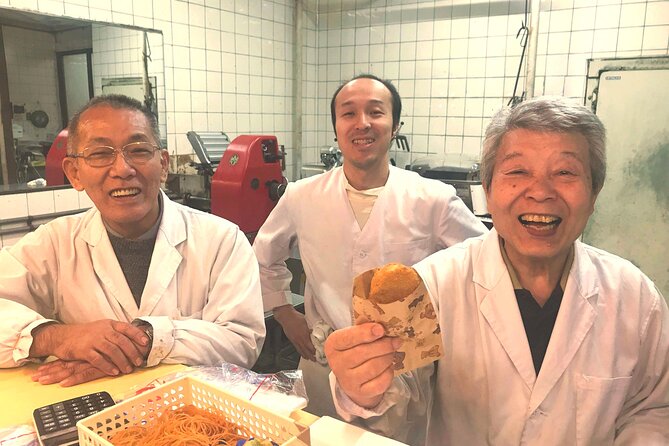
Food gives this walk its strongest practical value. You are introduced to local flavors from savory street food through Japanese sweets. Okonomiyaki, a savory pancake, is specifically included in the experience description, along with Japanese sweets and smaller snacks supplied by the guide.
The food is not just a series of samples. A guide can explain how a dish fits into Japanese eating habits and how Nagoya’s food culture differs from what you may have encountered in Tokyo, Kyoto, or Osaka. Guests have especially appreciated the chance to ask questions about food and daily customs while walking.
Still, budget carefully. The $104.51 price covers the professional guide and little snacks from the guide, but your own food, drinks, and shopping are not included. The egg sandwich at the final cafe should also be treated as a possible extra rather than assumed to be part of the tour price.
Dietary restrictions require special care. Special menus are not available, and there are no refunds if you do not eat the meal. If you have allergies, follow a strict diet, or simply dislike trying unknown ingredients, contact the operator before booking and be prepared for limited flexibility.
Bring cash. Many of the small shops do not accept credit cards, and you may want to buy a snack, sweet, souvenir, or food item along the way. Even if you plan to spend nothing, cash is the sensible choice for this sort of neighborhood walk.
Same base, a different sort of day:
- Hiking the Historic Nakasendo Trail [1 Day Tour from Nagoya]
★ 5.0 · 104 reviews - Nagoya Highlight Tour guided by a friendly local
★ 5.0 · 86 reviews - Nagoya: Japanese Traditional Sweets making and Tea Ceremony
★ 4.9 · 76 reviews - Magome-juku, Tsumago-juku & Ena-kyo 1d Bus Tour from Nagoya
★ 4.6 · 75 reviews
Temples, Sengen Shrine, and small religious sites
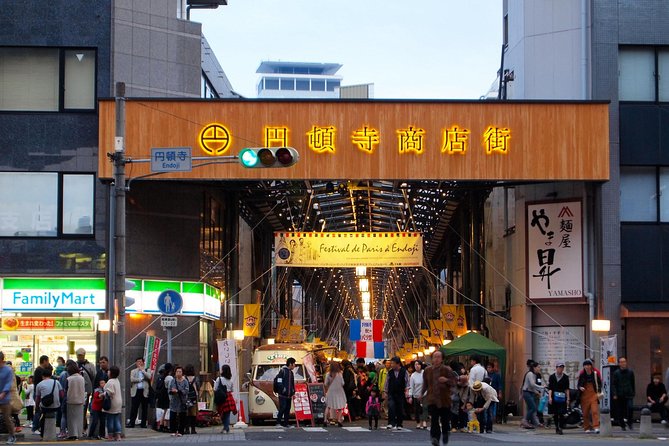
The cultural side of the walk includes historic temples and shrines, with Sengen Shrine named as one of the landmarks. Guides also explain Japanese rites, statues, history, samurai, and religious customs. This is where the tour goes beyond a food crawl.
Some sites may be easy to miss. Past descriptions of the route include shrines and temples tucked around corners or on building roofs. That detail tells you what kind of sightseeing to expect: not one grand temple complex with a clear entrance, but small places woven into the neighborhood.
For many visitors, this is the most useful part of the tour. Japanese religious sites can be beautiful but confusing if you do not know what you are seeing. A guide can explain what a shrine or temple is, how people approach it, and why a statue or ritual object matters. You also gain a better sense of how religion fits into ordinary urban life.
The pace appears to favor explanation over rushing. Guides such as Mayuko have been praised for taking time with questions, while Hiro has been described as informative during the two-and-a-half-hour route. If you want a fast checklist of landmarks, this may feel slow. If you prefer to understand what you are looking at, the pace should suit you.
A kimono shop and everyday Japanese culture
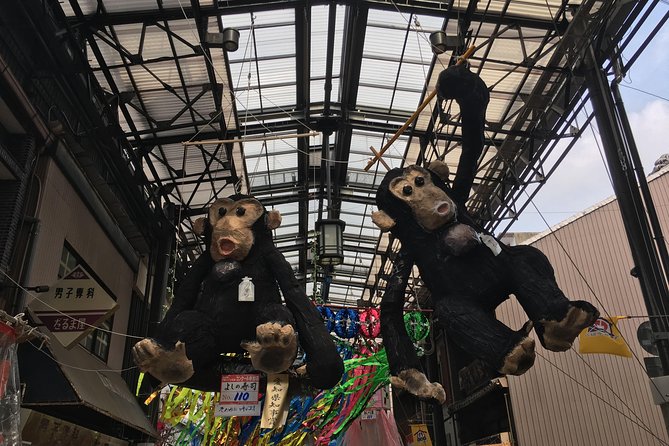
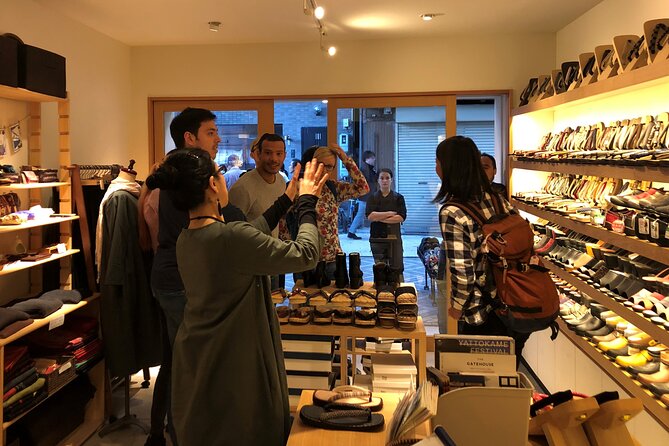
The route includes a kimono shop, which adds a hands-on cultural detail without turning the tour into a formal museum visit. Clothing can tell you a lot about social customs, craftsmanship, ceremonies, and changing daily life. Your guide can place the shop in the wider story of Japanese culture.
The tour also covers more than buildings and food. Guides explain local history, present-day life, samurai, temples, shrines, statues, and Japanese customs. That broad range is useful because Endoji is not a single-theme attraction. Its value comes from the connections between commerce, faith, food, and neighborhood life.
English ability matters on a tour built around those explanations. The guides named in the supplied material, including Mayuko and Hiro, are described as speaking English well and answering questions clearly. Guide assignments can change, so you should not book solely on the hope of having one particular person. The important point is that the experience depends heavily on the guide’s ability to make small details understandable.
Ending with the Nagonoya egg sandwich
The route finishes back at Nagonoya Cafe & Hostel, where you have the famous egg sandwich. This is a pleasant close to a morning of walking because it brings you back to the same place where you started.
Do not expect the final sandwich to turn the tour into a full restaurant meal for every diet. Special menus are not available, and the stated inclusions separate the guide’s snacks from your own food and drinks. If you are hungry, carrying extra money lets you decide what to order or buy.
The ending also gives you a practical chance to continue exploring Endoji on your own. You will have learned which shops and small sites deserve another look, and you can return at your own pace. Since the tour ends at its meeting point, it is easy to continue into the district or head elsewhere in Nagoya.
Is $104.51 a fair price?
At $104.51 per person, this tour is expensive compared with simply wandering through Endoji and buying a few snacks. You are paying for access to a local guide, interpretation in English, a planned route, cultural explanations, and a small group limited to eight people.
The value depends on how you travel. If you enjoy figuring out neighborhoods alone and do not need explanations, the price may feel high. If you have only a short time in Nagoya, the tour can help you make sense of an area that lacks the obvious signposts found at major attractions.
The price makes the most sense for a first visit, especially if Nagoya is one stop on a larger Japan itinerary. You get food, temples, shrines, shopping history, and local customs in one compact outing. Just add a budget for purchases and extra food, and remember that the tour’s included snacks are limited.
Who should book this Endoji walk?
I would recommend it to you if you want a quieter side of Nagoya and prefer a guide who explains cultural details as you walk. It suits curious first-time visitors, solo travelers who want a small group, couples, and families with older children who can manage steady walking.
It is also a good choice if you often walk past Japanese temples and shrines without knowing the proper context. The guide helps you see why small sites matter, not just where they are located.
You may want to skip it if you need a fully planned meal, have strict dietary requirements, dislike walking, or mainly want Nagoya’s biggest headline attractions. The tour is neighborhood-focused, and the exact shop visits can change when a store closes for an irregular holiday.
Cancellation terms are strict close to the start date. Cancel at least six full days before the 11:00 a.m. start for a full refund. Cancellation two to six days ahead brings a 50 percent refund, while cancellation less than two days before the tour brings no refund. Confirmation is normally immediate, but bookings made within seven days of the date may take up to 48 hours and remain subject to availability.
My booking verdict
Book this tour if you want food and cultural explanation in equal measure, and if small neighborhood details interest you more than a rapid list of major sights. Endoji’s arcade, Sengen Shrine, temples, kimono shop, snacks, and egg sandwich form a well-shaped introduction to Nagoya.
The strongest reasons to go are the eight-person limit, the English-speaking guides, and the chance to ask about customs as they appear in front of you. The main cautions are the high price, extra food costs, cash-only shops, walking, and limited dietary flexibility. Bring comfortable shoes, cash, and an appetite for small discoveries, and this should be a worthwhile way to spend a morning in central Nagoya.
FAQ
Where does the Nagoya Endoji Food and Cultural Tour begin?
It begins at Nagonoya Cafe & Hostel, 1-chōme-6-13 Nagono, Nishi Ward, Nagoya, Aichi 451-0042, Japan.
What time does the tour start?
The tour starts at 11:00 a.m.
How long does the experience last?
The tour lasts approximately two hours and 30 minutes.
Where does the tour end?
It ends back at the meeting point, Nagonoya Cafe & Hostel.
How large is the group?
The activity has a maximum of eight travelers.
What food can I expect to try?
The experience includes local flavors such as okonomiyaki, Japanese sweets, guide-provided little snacks, and a famous egg sandwich at Nagonoya Cafe.
Are food and drinks included in the price?
Your own food, drinks, and shopping are not included. The guide provides little snacks, and you should bring money for additional food or purchases.
Are special menus available for dietary restrictions?
No. Special menus are not available, and there are no refunds if a meal is not eaten.
Should I bring cash?
Yes. Many of the small shops do not accept credit cards, so cash is useful for shopping and food purchases.
What is the cancellation policy?
You can receive a full refund by canceling at least six full days before the start time. Canceling two to six full days ahead brings a 50 percent refund. Cancellations less than two full days before the start time are not refunded.
Just added in Nagoya
- Nagoya Street Food Walking Tour of Osu★ 5.0 · 28 reviews
- Walking Small-Group Nagoya City Tour★ 5.0 · 13 reviews
- Private Full-day Nagoya City Tour★ 5.0 · 22 reviews
- Sumo Tournament Experience in Nagoya★ 5.0 · 12 reviews
- Specialties of Nagoya Food Tour★ 5.0 · 12 reviews
- Nagoya: 2026 Hida Takayama Shirakawa-go Light-up Winter Tour★ 3.5 · 16 reviews
- Pub Crawl in Nagoya★ 5.0 · 15 reviews
- Nagoya Samurai & Toyota Tour guided by a friendly local★ 5.0 · 24 reviews
Tours in Nagoya, compared.

Hiking the Historic Nakasendo Trail [1 Day Tour from Nagoya]
Read our review →
Nagoya Highlight Tour guided by a friendly local
Read our review →
Japanese Traditional Sweets making and Tea Ceremony
Read our review →
Magome-juku, Tsumago-juku & Ena-kyo 1d Bus Tour from Nagoya
Read our review →
Nagoya Full-day Private Custom Tour with National Licensed Guide
Read our review →Browse the lists this tour appears in