
Reviewed · TOURS IN OSAKA
Deep Backstreet Osaka Tours (Option to add Dinner)
Osaka’s most revealing sights are not always its neon signs and famous food streets. This evening walk leads you through old alleys, abandoned homes, a former ghetto, and a historic red-light district, with guides such as Mari, Knox, Josh, Rudy, and Alex explaining the social forces behind what you see. It is an unusually direct look at the city.
I like two things in particular: the route reaches places you are unlikely to find alone, and the guide connects everyday scenes with subjects often skipped on standard tours, including homelessness, sex work, religion, class, mental health, and gangs. The food stops also make the three-hour walk feel grounded in daily Osaka life.
The main drawback is the subject matter. This is not a glossy sightseeing stroll, and some stops may feel uncomfortable or sad. You will also walk for about three hours, with breaks, so wear good shoes and expect a few stretches of standing outdoors.
Key points to know before booking
- Old Osaka in the evening: Start at 5:30 pm and follow narrow lanes, retro shops, and unusual local sites as the city changes from day to night.
- History beyond the postcards: The route covers a former ghetto, a red-light district with links to the yakuza, abandoned houses, religion, class, and social policy.
- Two family-run food stops: Taste local street food along the way, with an optional izakaya dinner afterward.
- Small group format: The maximum group size is 15, allowing time for questions and a more personal guide experience.
- Dinner means a full local meal: The upgrade can include tonpeiyaki, karaage, nikudofu, yakitori, and dessert, with a vegetarian-friendly option.
- A safe but candid walk: The route addresses difficult subjects openly, while the experience remains organized and suitable for most people.
Why this Osaka walk feels different
Most first visits to Osaka focus on bright signs, major shopping areas, castles, and famous restaurant districts. This tour takes another route. You move through parts of the city where history is visible in housing, street layouts, religious sites, old businesses, and empty buildings.
The point is not simply to see a rougher side of Osaka. A good guide helps you understand why these areas developed as they did, how social labels can affect families, and why some problems remain out of sight. Guides including Mari, Knox, Josh, Bennett, Tommy, and Thomi have been praised for making difficult material clear, thoughtful, and often funny without turning it into a cheap spectacle.
That balance matters. A tour about sex work, poverty, gangs, and the former ghetto can easily become sensational. Here, the strongest part of the experience is the explanation around each place. You are not just shown an alley and told it is mysterious. You are given context about the people and systems connected to it.
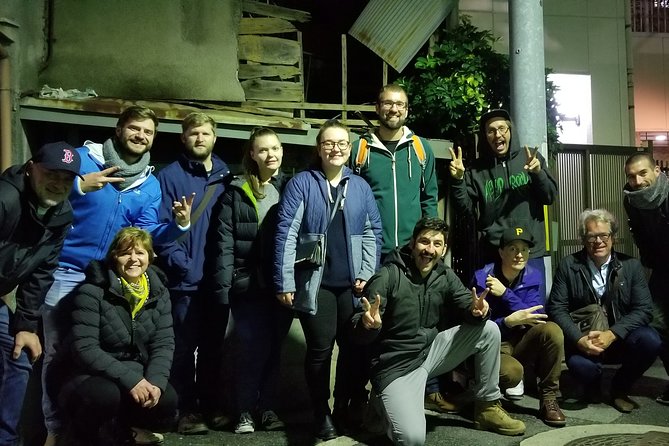
The group limit of 15 helps. It is still a group walk, but small enough for questions and conversation. Solo visitors may also find it an easy way to meet people from different countries, especially if they choose the dinner option afterward.
Other experiences people book in Osaka:
- Osaka Go Karting Tour with Funny Costume
★ 5.0 · 2,658 reviews - Osaka Castle: Museum and Tower Entry Ticket
★ 4.5 · 2,380 reviews - Osaka: Shinsekai Food Tour with 13-15 Dishes at 5 Eateries
★ 4.8 · 2,204 reviews
Starting near Daikokucho Station at 5:30 pm
The meeting point is the FamilyMart MYS Daikokucho Station, at 2-chōme-5-16 Shikitsuhigashi in Naniwa Ward. The location is near public transportation, and the tour begins at 5:30 pm.
That timing is well chosen. You get some remaining daylight for the first part of the walk, then see the backstreets as signs come on and evening activity begins. The changing light suits the route, though you should arrive ready to walk rather than treating this as a quick orientation near the station.
The tour ends back at the meeting point. The provider also offers after-tour help if you want to continue to a bar, shopping area, or entertainment district. That can be useful because the guide has just introduced you to parts of Osaka you might otherwise have trouble locating.
Bring a mobile ticket, comfortable shoes, and water. The activity lasts about three hours, and although breaks are included, you may be standing outdoors at several points. One practical complaint concerns mosquitoes in a park and near a parking area, so insect repellent may be sensible during warmer months.
Narrow lanes, retro shops, and unusual local corners
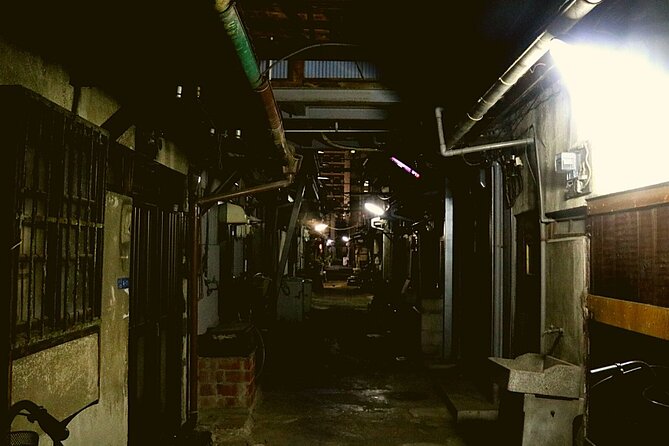
Early in the walk, the guide leads you into a network of old, twisting lanes. This is where the tour earns its name. The lanes offer a sharp contrast to broad commercial streets, and the small scale makes Osaka feel more like a collection of local neighborhoods than one large city.
You will also see bizarre or outlandish shops in Osaka’s retro zone. These are not presented as polished attractions. Their appeal comes from the odd details and the chance to see businesses and streets that are easy to pass without understanding.
The pace is important here. The route is not simply a march from one photo stop to another. Guides such as Knox, Rat, and Mari have been praised for keeping the walk entertaining while explaining what makes each area distinct. Their humor helps, but the best guides also know when to slow down and handle a serious subject with care.
Do not expect every stop to be visually impressive. Some of the value comes from hearing what a place means locally. If you prefer grand monuments and photo-ready architecture, parts of this tour may feel plain. If you like urban detail and social history, those same sections can be the most rewarding.
Abandoned houses and the meaning of a family name
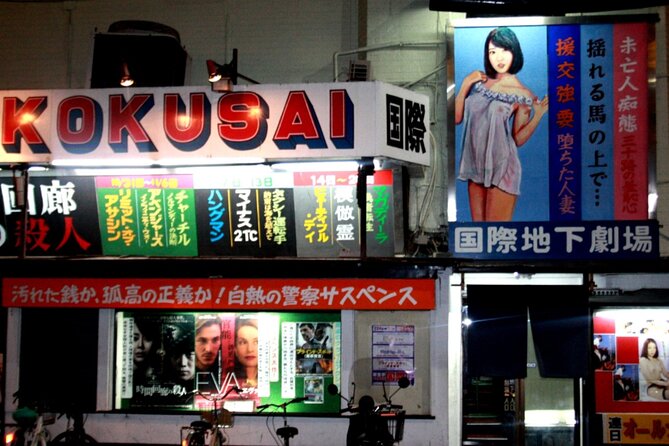
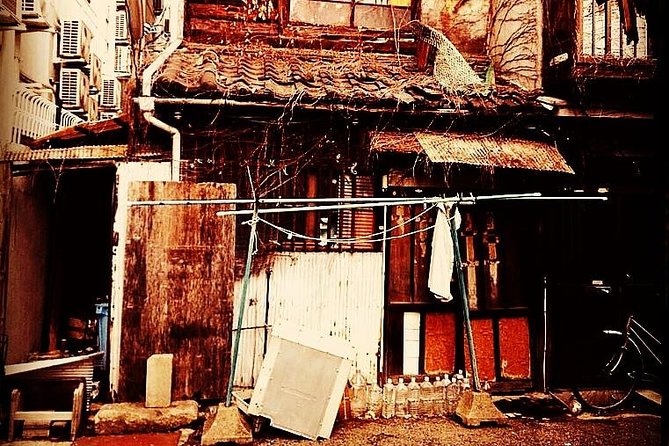
One of the more striking parts of the route is an area with abandoned houses. The empty buildings are not treated as spooky props. The guide explains how family name, class, and social attitudes can affect who is willing or able to take over a home.
This is a useful reminder that a house can carry more than a price tag. In some cases, the past attached to a family or address can make a property difficult to pass down. The subject is sad, but it gives you a more grounded way to look at Osaka’s vacant homes.
You should expect this stop to be more reflective than entertaining. The tour does not hide the uncomfortable parts of city life, and that is one reason it feels different from a standard sightseeing walk. I would not choose this experience if you want every stop to be light and cheerful.
Same base, a different sort of day:
- Osaka Food Tour: 13 Dishes at 5 Local Eateries
★ 5.0 · 2,149 reviews - Hungry Osaka Street Food Tour:15 Tastings & 3 Drinks with a Local
★ 5.0 · 1,727 reviews - Osaka: teamLab Botanical Garden Entry Ticket
★ 4.5 · 1,710 reviews - Osaka: Tea Ceremony Experience
★ 4.9 · 1,426 reviews
Religion in a place most visitors miss
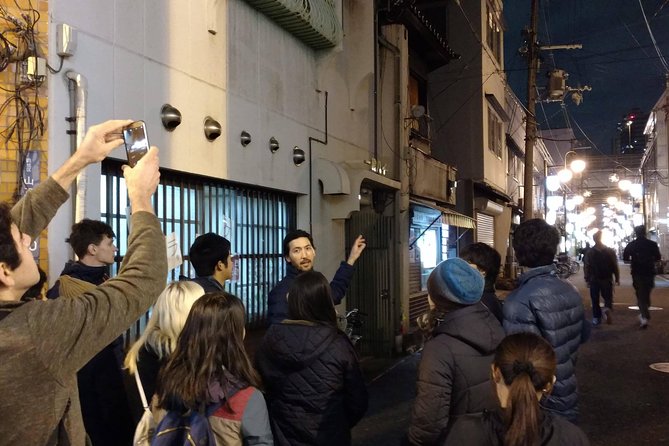
The route includes Osaka’s most important but little-known place of worship, along with a temple and shrine. The guide explains what these sites represent in present-day Japan rather than simply pointing out the architecture.
That approach is valuable because religious buildings can be easy to misread. A shrine, temple, or place of worship may serve as a community anchor, a memorial space, or a working part of local life rather than a decorative backdrop.
One account describes learning how construction is funded and how religious sites fit into the surrounding community. Details such as these help you connect the building to the neighborhood. You may not spend a long time inside each place, but the explanation adds meaning to what you see.
As with any walking tour, respectful behavior matters. Follow the guide’s instructions, avoid treating sensitive sites as a stage, and remember that these are places with living religious and community roles.
The red-light district and the former ghetto
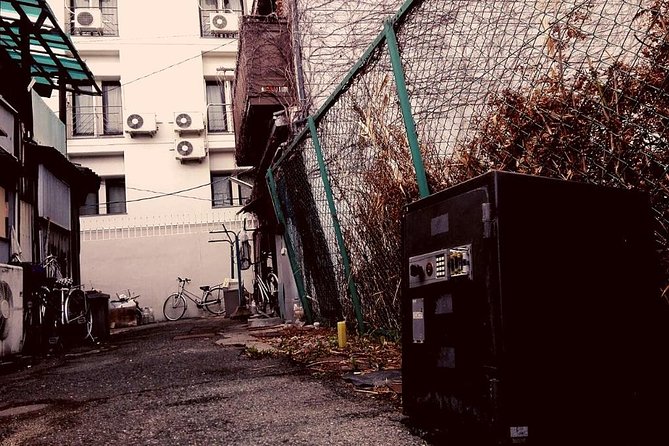
The tour’s most sensitive sections cover a historic red-light district and a former ghetto area. The red-light district has links to the yakuza, while the former ghetto has a controversial past tied to exclusion and social divisions.
These parts require an open mind. The guide is not simply pointing out where nightlife once operated. You are given a wider look at the people who lived and worked in these districts, the labels placed on them, and the reasons certain subjects remain difficult to discuss.
The route also touches on sex work, gangs, homelessness, mental health, and politics. That range can make the walk feel more like a social history lesson than a sightseeing trip. It also explains why the quality of the guide matters so much.
Guides such as Joseph, Thomi, Bennett, and Dillan have been noted for being direct without making the walk feel unsafe. The experience is described as safe, but the content is candid. Keep your expectations realistic: this is not a tour of Osaka’s flashy nightlife, and you should not approach the red-light area as a place for gawking or intrusive photographs.
Street food from family-run stalls
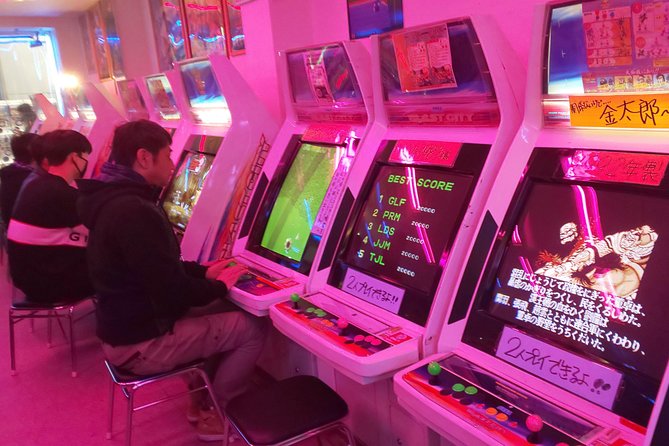
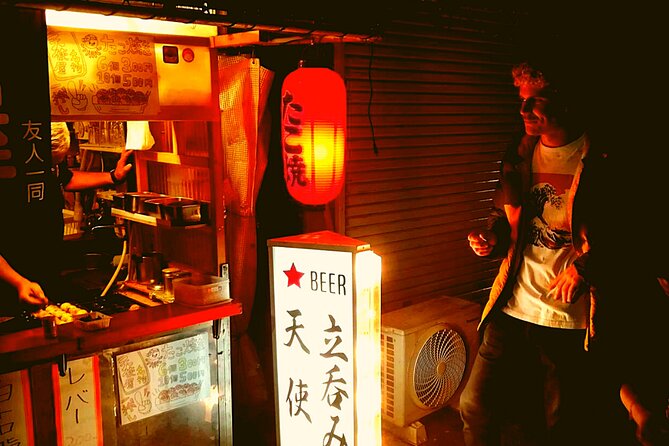
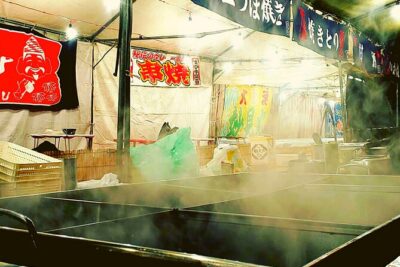
Food gives the walk a welcome lift. The tour includes tastings at two different street-run family stalls, allowing you to sample local dishes in a simple setting rather than sitting down for a formal meal.
The exact food served can vary, so do not book this as a full dinner unless you add the dinner option. Think of the stalls as tasting stops that break up the walking and give you a small introduction to Osaka’s everyday food culture.
The food component is also practical. Osaka is known for eating well, but a dish tastes different when you understand where and how it fits into local life. The stalls make the experience feel tied to the neighborhood instead of added as a generic snack.
If you have dietary restrictions, ask before booking or at the start of the tour. The dinner option is described as vegetarian-friendly, but the street-food details are not fully specified.
Adding the izakaya dinner
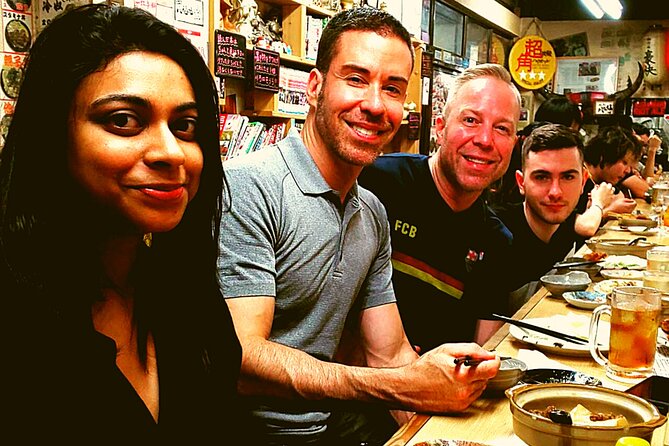
The dinner upgrade is a strong choice if you want the evening to continue beyond the walking route. It takes you to an izakaya for Osaka soul food that is described as difficult to find through ordinary sightseeing tours.
The listed dishes include tonpeiyaki, karaage, nikudofu, yakitori, and dessert. That is a broad sample of savory comfort food, and it gives you more than a single specialty dish. Drinks are not included, though alcoholic and nonalcoholic beverages are available at reasonable prices.
Dinner can also change the social feel of the experience. After several hours of walking and discussion, sitting down together gives you time to ask follow-up questions and meet the rest of the group. For solo visitors, this is one of the best reasons to add it.
The drawback is simple: dinner costs extra, and you may already have plans for Osaka’s food scene. If you are determined to choose your own restaurant or have a tight evening schedule, take the walking tour without the meal. If you want a local-style finish with dishes such as yakitori and nikudofu, the upgrade adds real value.
What the $53.06 price gets you
At $53.06 per person, the tour is priced above a basic city orientation walk but below many full-day guided experiences. The value depends on what you want from Osaka.
You are paying for about three hours with a local guide, access to places that are difficult to interpret alone, street-food tastings, and a small group capped at 15 people. The tour also gives you a framework for understanding subjects that are rarely explained during a standard Namba or Dotonbori stroll.
I consider the price reasonable for visitors who care about context, local neighborhoods, and social history. It is less compelling if you only want famous sights or a simple food crawl. The dinner option should be judged separately because drinks are not included, though the meal itself covers several dishes and dessert.
The high rating of 4.9 from 1,290 reviews and a 97 percent recommendation rate suggest a consistently strong experience, but those numbers do not remove the need to choose the right kind of tour. This is a specialized walk, not a universal introduction to Osaka.
Who should book this experience
I would choose this tour early in an Osaka visit if you want a better understanding of the city before exploring on your own. It can also work late in a trip, when the major sights are finished and you want something less familiar.
It suits you best if you:
- Enjoy walking through ordinary neighborhoods
- Want local explanations rather than only landmark facts
- Are comfortable discussing poverty, sex work, gangs, class, and religion
- Like small groups and opportunities to ask questions
- Want street food and possibly a shared izakaya dinner
- Prefer a candid tour over a polished sightseeing route
It may not suit you if you want a relaxed food tour, have difficulty walking for three hours, or prefer to avoid difficult social subjects. Families should also consider the age and maturity of everyone in the group because the red-light district and related discussion are central parts of the experience.
Should you book Deep Backstreet Osaka Tours?
Book it if you want Osaka explained from the side streets inward. The best parts are the guide-led interpretation, the unusual route, and the mix of food, religion, housing, class, and nightlife. Guides such as Mari, Knox, Josh, and Rudy have the kind of personal style that can turn serious material into an engaging evening.
Add dinner if you enjoy local comfort food and want more time with the group. Skip it if you already have a restaurant reservation or prefer to keep the evening flexible.
This is not the tour for polished Osaka or nonstop photo stops. It is for you if you want a safe, frank look at places and subjects that most visitors pass without understanding.
FAQ
Where does the Osaka backstreet tour start?
It starts at FamilyMart MYS Daikokucho Station, 2-chōme-5-16 Shikitsuhigashi, Naniwa Ward, Osaka, 556-0012, Japan.
What time does the tour begin?
The tour begins at 5:30 pm.
How long does the experience last?
The walking tour lasts approximately three hours.
Where does the tour finish?
The activity ends back at the original meeting point.
How many people can join the tour?
The maximum group size is 15 people.
Is food included?
Food tastings at a street stall are included. You can also choose a dinner option with dishes such as tonpeiyaki, karaage, nikudofu, yakitori, and dessert.
Are drinks included with dinner?
No. Alcoholic beverages and other drinks at the restaurant are not included, though drinks are available at reasonable prices.
Is the dinner option vegetarian-friendly?
Yes. The dinner option is described as vegetarian-friendly.
Can I cancel for a full refund?
Yes, if you cancel at least 24 hours before the experience start time. Cancellations or changes made less than 24 hours before the start time are not refunded or accepted. If poor weather cancels the tour, you will be offered another date or a full refund.
Just added in Osaka
- Osaka Temple Cool Foot Bath & Matcha Experience〈45min〉★ 4.9 · 82 reviews
- Osaka: Mind & Spirit Balance Temple Reiki Healing★ 5.0 · 41 reviews
- Osaka: Samurai Training Experience KENDO in Osaka★ 5.0 · 111 reviews
- Full Day Kyoto Tour : Bamboo Forest, Golden Temple, Fushimi Inari★ 5.0 · 84 reviews
- Osaka: Minoh, Katsuoji Temple, & Minoh Falls Full-day Tour★ 4.9 · 172 reviews
- Ramen and Gyoza Cooking Class in Osaka★ 5.0 · 202 reviews
- OSAKA NIGHT FUSION Japanese Taiko Kabuki Samurai Dance Show★ 4.8 · 155 reviews
- Osaka: A Modern Samurai, Kabuki, Taiko, & Dance Show★ 4.5 · 66 reviews
Tours in Osaka, compared.

Osaka Food Tour: 13 Dishes at 5 Local Eateries
Read our review →
Hungry Osaka Street Food Tour:15 Tastings & 3 Drinks with a Local
Read our review →
Hotspots & Hidden Gems Walking Tour Private or Group
Read our review →Browse the lists this tour appears in