
Reviewed · TOURS IN KAMAKURA
Kamakura: A Journey Through Medieval Japan
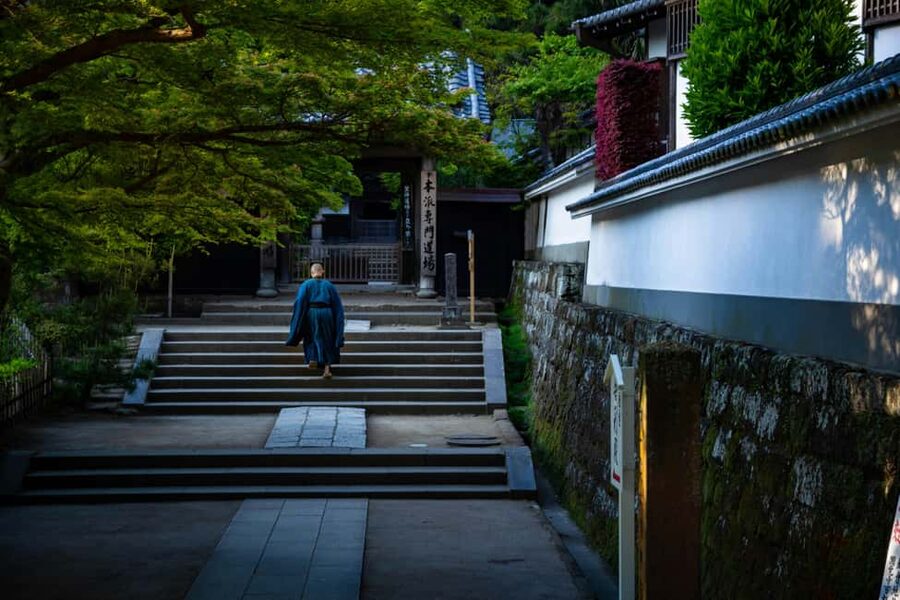
Kamakura packs nearly nine centuries of Japanese history into a seaside town that is easy to reach from Tokyo. This tour connects the dots, from Zen Buddhism at Engaku-ji to the samurai power center at Tsurugaoka Hachimangu, then on to the Great Buddha and possibly Enoshima.
I like the way guide John turns dates and religious terms into stories about real people and political power. I also like the flexible use of trains and buses, which lets you cover a lot without treating the day like a forced march. The main drawback is simple: you will walk a lot, and the tour is not suitable for wheelchair users or people with major mobility limits.
Key points at a glance
- Start at Kita-Kamakura Station: The East Exit is an easy meeting point on a simple local rail line.
- See two sides of Kamakura: Engaku-ji explains Zen culture, while Tsurugaoka Hachimangu brings the samurai government into view.
- Eat Buddhist vegetarian food: Shojin-ryori is generally part of the eight-hour option and can be arranged for the shorter tour.
- Use public transport wisely: A bus and train connect the main sites, saving your legs for temple grounds and Enoshima.
- Choose your finish: The four-hour outing focuses on Kamakura, while the private eight-hour version can continue to Enoshima.
- Expect a strong English-speaking guide: John is praised for storytelling, local tips, thoughtful pacing, and custom plans.
Why Kamakura makes a good Tokyo day trip
Kamakura was the home of Japan’s first warrior government, formed about 900 years ago during the Kamakura Period. That gives the town a different feel from Tokyo’s modern districts. Here, religion, military rule, court tradition, and everyday life overlap in a compact area.
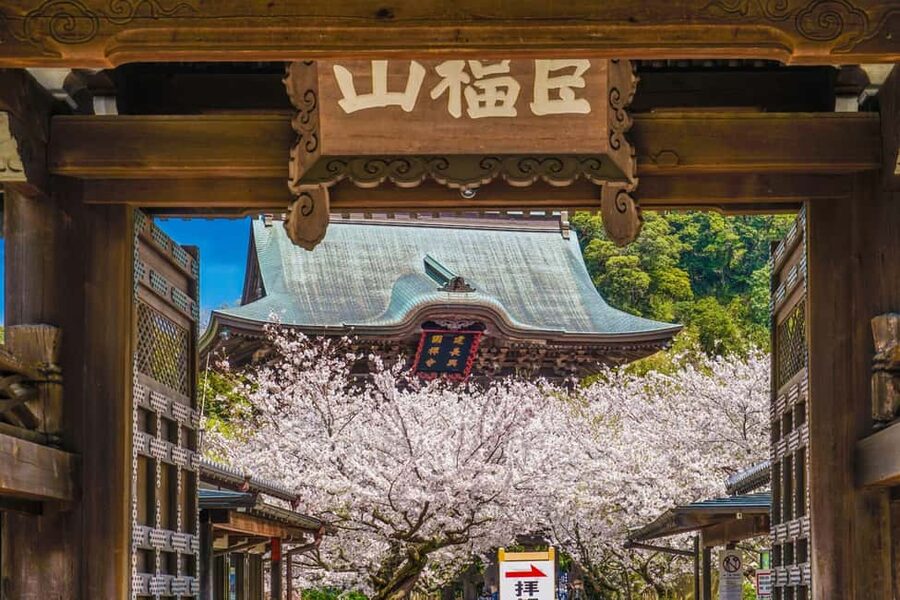
The tour begins in Kita-Kamakura, north of the main downtown center. This is a smart starting point because Engaku-ji and Tokei-ji are close to the station, and you reach the important sites in a natural order instead of zigzagging across town.
You should think of this as a guided walking day with short rides, not as a coach tour. You walk through temple grounds, shrine approaches, shopping streets, and Enoshima. The guide uses public transport when distances grow, with a bus ride of about 20 minutes and a train ride of about 15 minutes built into the longer route.
The pace can be adjusted for a private group. That matters if you are traveling with children, older family members, photographers, or anyone who prefers a slower look at fewer places. It also helps if you have only half a day before catching a train back to Tokyo.
Other experiences people book in Kamakura:
- Tokyo: Kamakura & Enoshima Day Trip including Temple Tickets
★ 4.5 · 1,375 reviews - From Tokyo: Kamakura & Enoshima 1-Day Bus Tour
★ 4.5 · 189 reviews - Kamakura Historical Walking Tour with the Great Buddha
★ 5.0 · 129 reviews
Engaku-ji and the world of Zen
Your first major stop is Engaku-ji, one of Japan’s important Zen temples. Plan on about an hour here. This is not just a quick photo stop. The visit gives you a working introduction to Zen Buddhism and its role in Japanese politics, art, and religious practice.
A guide adds real value at Engaku-ji because temple details can otherwise blur together. John explains why Zen appealed to the samurai class and how religious institutions became tied to political life. You get a better sense of the temple as a place shaped by power and discipline, not simply a pretty collection of wooden buildings and gardens.
The one-hour visit is long enough to set the tone without using up the whole day. You should still expect uneven paths, steps, and standing. The tour description says there are places to sit, but this is not a fully accessible route.
For visitors with only four hours, Engaku-ji is one of the stops I would protect. It gives you the strongest early context for the rest of the day. You will understand more at the Great Buddha and Tsurugaoka Hachimangu after hearing how religious and warrior life developed together.
Tokei-ji, a quieter historical pause
Tokei-ji follows with a guided visit of about 15 minutes. This former nunnery was once a pilgrimage destination for women from across Japan. Its short slot makes sense: it adds a distinctive social and religious detail without turning the morning into a long temple circuit.
I like this stop because it broadens the story beyond samurai leaders and famous monuments. Tokei-ji brings women’s religious life into the picture and shows that Kamakura’s sacred sites served different communities.
Do not expect a huge attraction here or a long guided walk. The value is in the explanation. Without context, you might pass it as another temple. With John’s background, it becomes a useful piece of the larger story.
Shojin-ryori, lunch with a Buddhist connection
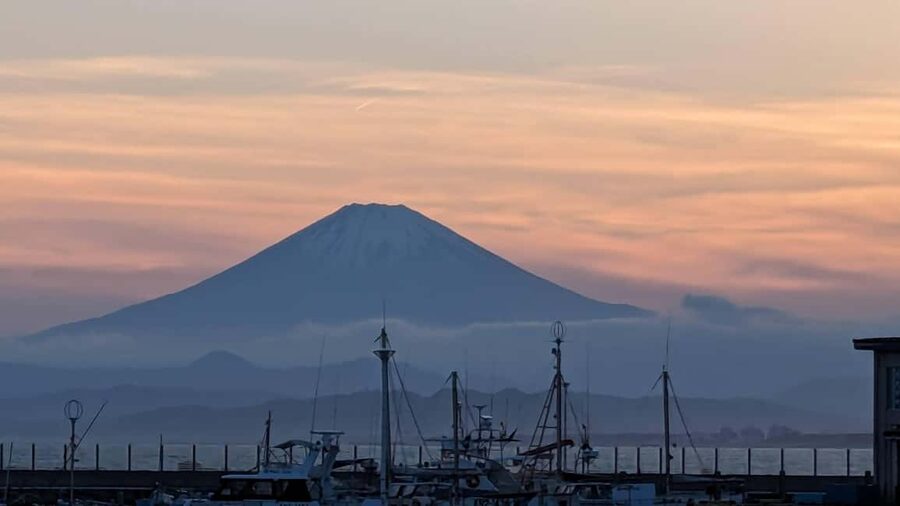
The longer tour usually includes lunch at a local restaurant, with about 45 minutes set aside. The meal is shojin-ryori, the vegetarian cooking associated with Buddhist monks. It is generally offered on the eight-hour tour, but you can request it on the four-hour option.
This is one of the most distinctive parts of the experience. You are not simply stopping for a convenient Japanese meal. You are eating food tied to the religious culture you have just been exploring. Vegetarian and vegan arrangements are available if you tell the guide ahead of time.
The stated lunch estimate is about 1,000 yen per person. That is separate from the tour price, as are admission tickets and local transport. If you have celiac disease, dietary restrictions, or another food concern, speak up before the day. John has arranged a gluten-free lunch for a participant before, so advance notice can make a real difference.
The four-hour tour may move too quickly for a relaxed lunch, which is why it is normally associated with the longer version. If food is part of your reason for booking, choose the eight-hour option or make the request before reserving.
Same base, a different sort of day:
- Kamakura Private Tour: Temples, Nature, and the Great Buddha
★ 5.0 · 121 reviews - Kamakura Walking Tour – The City of Shogun
★ 5.0 · 100 reviews - Kamakura 4hr Private Trip with Government-Licensed Guide
★ 5.0 · 58 reviews - When Emperors Reigned and Shoguns Ruled
★ 5.0 · 43 reviews
Tsurugaoka Hachimangu and the samurai center
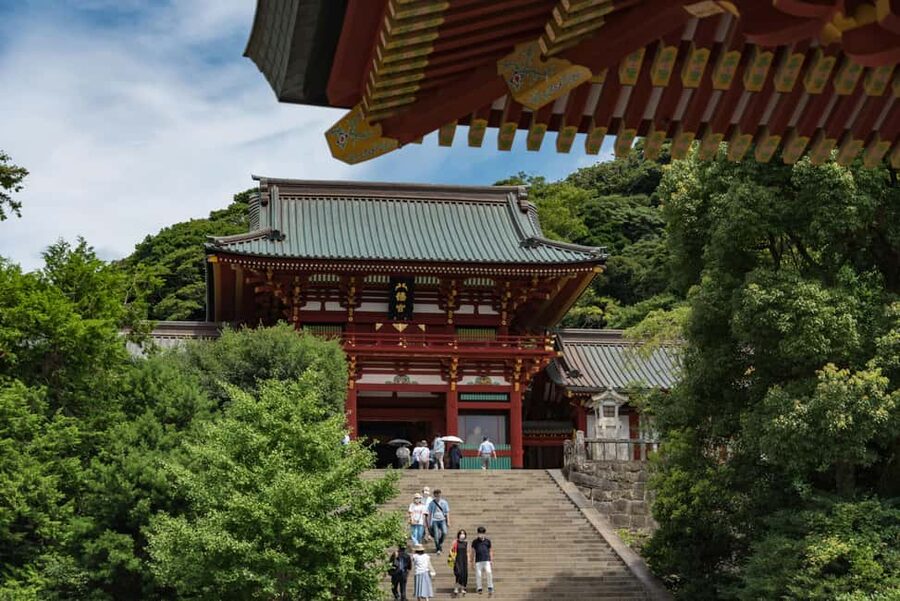
After lunch, the route shifts from Zen Buddhism to the political heart of Kamakura. Tsurugaoka Hachimangu is a large and widely visited shrine in central Kamakura. The guided portion lasts about 30 minutes.
This is where the samurai government becomes easier to picture. The shrine was central to the Kamakura Period, and its size and position help explain how religion could also serve public and political life. John connects the site with the shogunate, the Tokugawa period, and the Imperial Family, giving you a wider view than a single-period history lesson.
The shrine is popular, so it can feel busier than the earlier temple stops. That is part of the tradeoff. You gain a major landmark and a sense of Kamakura as a living town, but you lose some of the quiet found at Engaku-ji and Tokei-ji.
A good guide earns his fee here by pointing out what deserves your attention. The tour places emphasis on photo spots and timing, and John has been praised for helping groups avoid the worst crowd pressure at popular locations. Still, do not expect solitude at a major shrine in downtown Kamakura.
Reaching the Great Buddha by bus
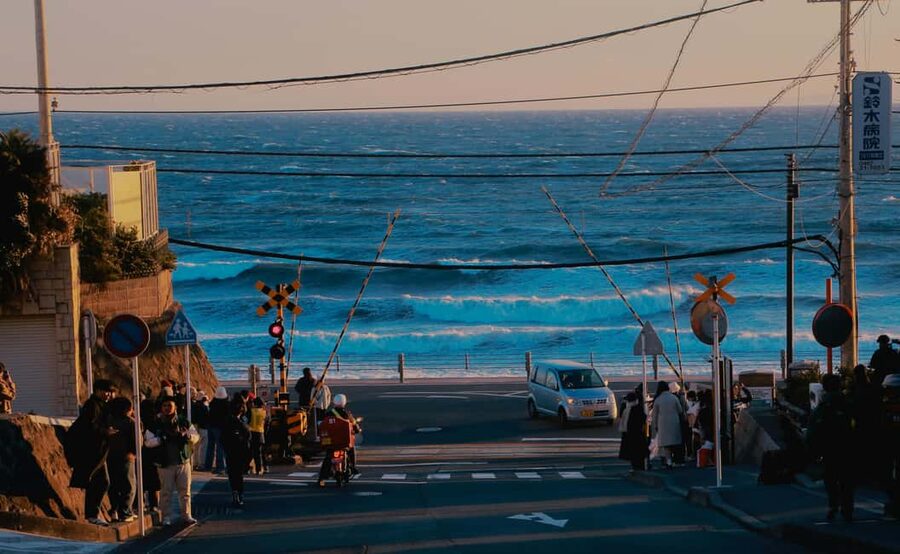
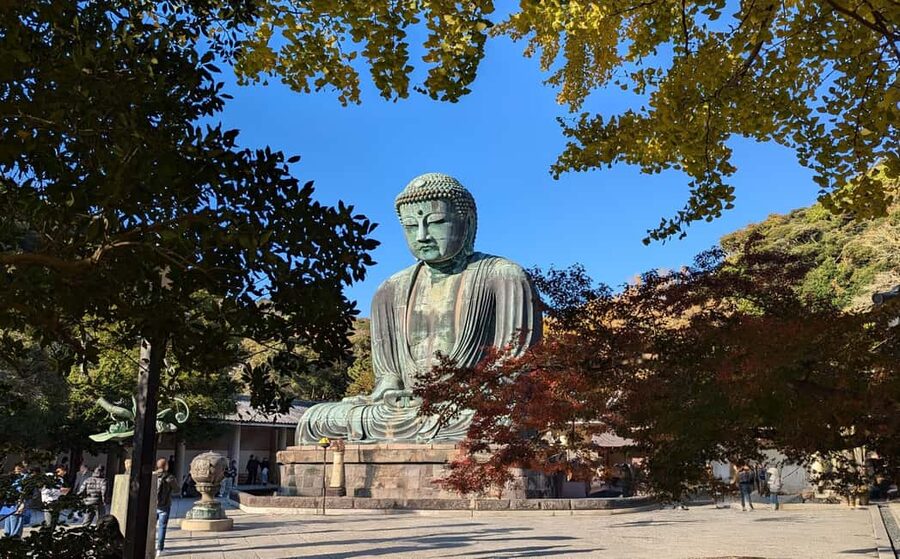
From Tsurugaoka Hachimangu, the group takes a bus for about 20 minutes to Kōtoku-in, the temple complex that houses the Great Buddha of Kamakura. The bus is a practical choice. Walking the whole way would add distance and reduce time at the sites.
Kōtoku-in is scheduled for about 30 minutes with the guide. The statue is one of Japan’s largest Buddha figures and one of Kamakura’s defining sights. Its scale gives the afternoon a clear visual payoff after the more detailed temple and shrine explanations.
The short visit works well if you want a broad introduction to Kamakura. John can explain the statue’s place in Buddhist culture and the way it has become a symbol of the city. You also have time for photographs without turning the stop into a long museum visit.
Admission fees are not included. The total entry cost for the day is estimated at roughly 800 to 1,500 yen per person, with the guide and guests paying their own admission. Transportation is estimated at about 400 yen per person. Add lunch at around 1,000 yen if you take the full route.
Enoshima adds sea air, shrines, and a little kitsch
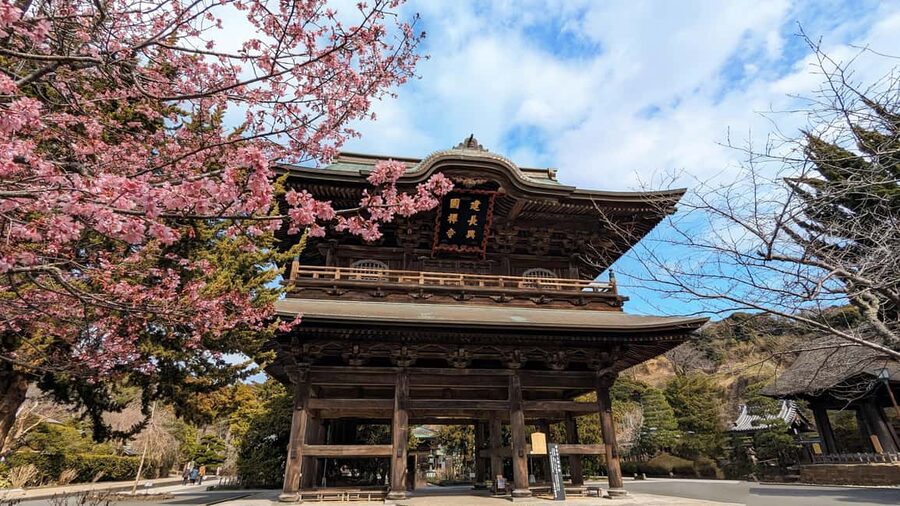
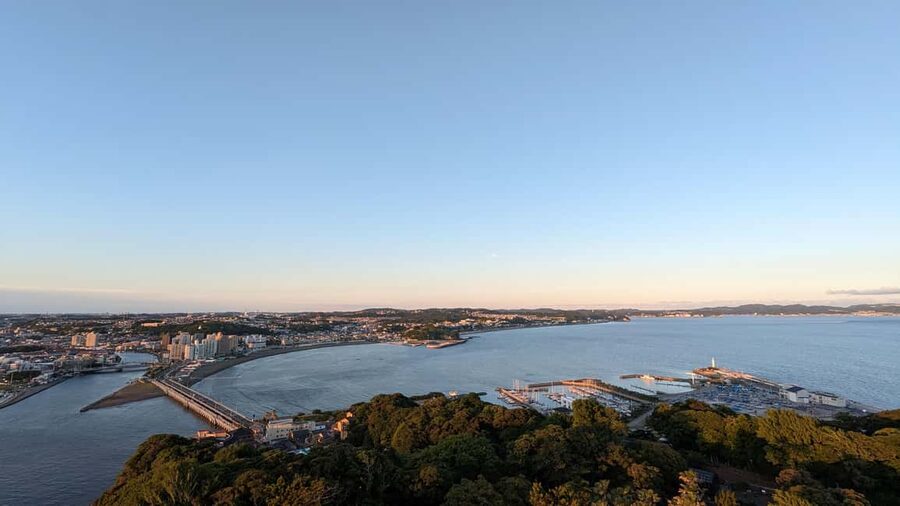
The private eight-hour route continues by train for about 15 minutes to Enoshima. The island is described as a mix of holiness, kitsch, and natural wonder, and that combination is exactly why it works as a final stop.
Enoshima has long had religious importance, but it is also a popular seaside escape for couples and families. You can expect a different mood from the temple grounds: more casual, more recreational, and less solemn. That contrast keeps the day from feeling like one long procession of historic buildings.
The guided visit lasts about two hours. You walk around the island and take in its sacred sites, coastal setting, and viewpoints. John has been praised for choosing strong photography spots and for timing the walk to catch a beautiful sunset when conditions allow.
The island is also where the walking becomes most noticeable. Two hours on foot after a full day of temples and shrines may feel demanding, especially in hot weather or if you have already spent several days walking around Tokyo. The tour uses transport intelligently, but it does not remove the need for stamina.
Enoshima is best for a full-day booking. If your main goal is medieval Kamakura, the four-hour version may be enough. If you want a day that shifts from religious history to a seaside outing, the private eight-hour route gives you more variety.
What John brings to the day
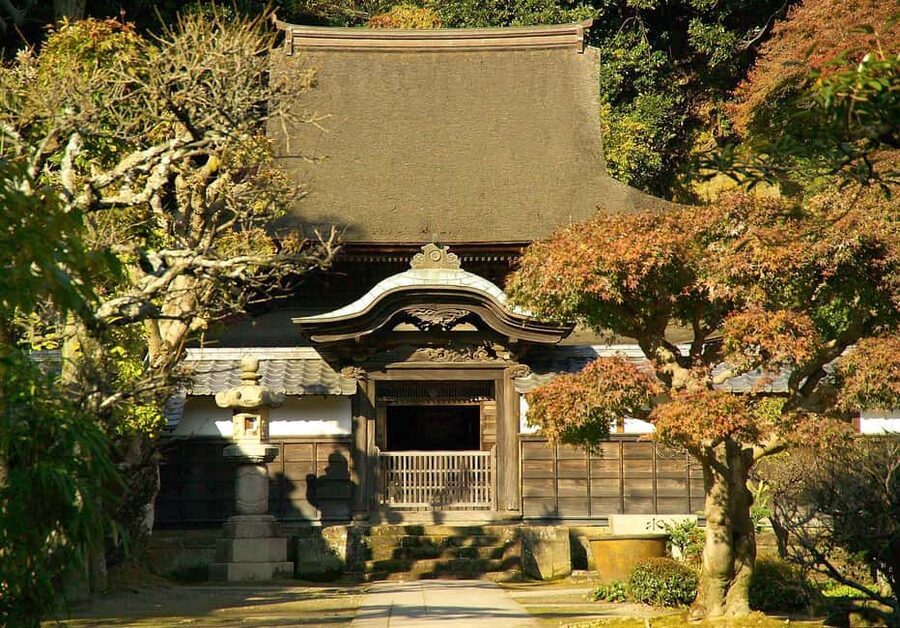
The guide is John, an English-speaking local guide who has earned especially strong praise for storytelling. His style is not limited to naming buildings and dates. He explains historical personalities, Japanese religious life, the Tokugawa shogunate, the Imperial Family, cuisine, and practical customs that may help you during the rest of your trip.
That broad range matters in Kamakura. The sites are close together, but their meanings are not. A temple, a former nunnery, a shrine, and a Buddha statue belong to different strands of Japanese culture. John’s job is to show how those strands meet.
You can also ask for a custom plan if you book privately. One guest received an itinerary adjusted around a half-day schedule, while another group of six had the pace changed to fit their needs. The tour can cover a lot of ground, but the guide is not locked into one rigid script.
English is another practical advantage. John is American, so communication should be straightforward for English-speaking visitors who want to ask detailed questions. That is useful when discussing religious terms, food restrictions, transport, or the difference between a shrine and a temple.
Walking, transport, and physical demands
The description is honest about the tour being a walking experience. You will use trains and buses, and there are places to sit, but you should still plan for temple paths, shrine grounds, station transfers, and the Enoshima walk.
Comfortable shoes are essential. Bring water and allow extra energy for the eight-hour version. The itinerary is not suitable for wheelchair users or people with mobility impairments, and the mix of steps and uneven ground may be tiring even if you are generally fit.
The private format helps, but it cannot change the physical character of Kamakura. Ask for a slower pace if needed. If you only want the major highlights with less strain, the shorter option may be the better match.
The meeting point is outside the East Exit of Kita-Kamakura Station. The station is small and simple to navigate, which makes it less stressful than meeting at a large Tokyo terminal. The longer route can finish at either Kita-Kamakura Station or Kamakura Station.
Is the $35 price good value?
At $35 per person, the tour fee is reasonable for a private or small-group day with a dedicated English-speaking guide. You are paying for historical interpretation, route planning, transport know-how, and the ability to adjust the pace or itinerary.
The advertised price does not cover temple and shrine admissions, local transport, or lunch. Plan on roughly 800 to 1,500 yen per person for entry, about 400 yen for transport, and around 1,000 yen for lunch. The guide and guests pay their own admission and meal costs, so check the final arrangements when booking.
The value is strongest if you care about context. If you only need directions to the Great Buddha, you can visit Kamakura independently. If you want to understand why Zen mattered to samurai, how Tsurugaoka Hachimangu fits into local politics, and how to connect the sites without wasting time, the guide fee makes more sense.
The tour also has a practical benefit for a Tokyo day trip. You do not need to spend your limited time figuring out which train, bus, and walking route links the sights. That can be worth more than the ticket price alone.
Who should book this Kamakura tour?
Book it if you want a clear introduction to Kamakura and prefer stories over silent sightseeing. It suits first-time visitors, history fans, English-speaking families, and anyone who wants a flexible private route rather than a fixed large-group schedule.
Choose the eight-hour version if you want shojin-ryori and Enoshima. Choose four hours if your Tokyo schedule is tight or you mainly want Engaku-ji, Tokei-ji, Tsurugaoka Hachimangu, and the Great Buddha.
Skip it if you want a completely independent day, dislike walking, or need a fully accessible route. For most visitors who can manage a full day on their feet, John’s storytelling, flexible transport plan, and strong local focus make this a useful way to meet Kamakura beyond its famous photographs.
FAQ
Where does the Kamakura tour begin?
The tour begins outside the East Exit of Kita-Kamakura Station.
How long does the experience last?
You can book a four-hour or eight-hour version. Starting times depend on availability.
Is the tour private or shared?
Private and small-group options are available. Private tours can be customized to your needs.
Is the tour conducted in English?
Yes. The live tour guide language is English.
Are admission fees included?
No. Temple and shrine entry fees are separate and are estimated at about 800 to 1,500 yen per person.
Is transportation included?
No. Local transportation costs are separate and are estimated at about 400 yen per person.
Is lunch included?
No. Lunch costs extra, with an estimate of about 1,000 yen per person. Shojin-ryori is generally offered on the eight-hour tour and can be requested for the four-hour option.
Can the tour accommodate vegetarian, vegan, or special diets?
Yes. Vegetarian and vegan arrangements are available, and you should provide dietary information in advance. You should also mention any allergies or other restrictions before the tour.
Is the route suitable for wheelchair users?
No. The experience is not suitable for wheelchair users or people with mobility impairments. It is a walking tour, although buses, trains, and sitting stops help break up the day.
Just added in Kamakura
- First time in Kamakura? Enjoy a Tour of All Must-sees!★ 5.0 · 15 reviews
- Your Own HANKO Name Seal Activity in Kamakura.★ 5.0 · 24 reviews
- When Emperors Reigned and Shoguns Ruled★ 5.0 · 43 reviews
- Buddha, Bamboo & Zen – Bespoke Kamakura Private Walking Tours★ 5.0 · 25 reviews
- Kamakura 4hr Private Trip with Government-Licensed Guide★ 5.0 · 58 reviews
- Kamakura Walking Tour – The City of Shogun★ 5.0 · 100 reviews
- Kamakura Bamboo Forest and Great Buddha Private Tour★ 5.0 · 12 reviews
- Exciting Kamakura – One Day Tour from Tokyo★ 5.0 · 40 reviews
Tours in Kamakura, compared.
Kamakura & Enoshima Day Trip including Temple Tickets
Read our review →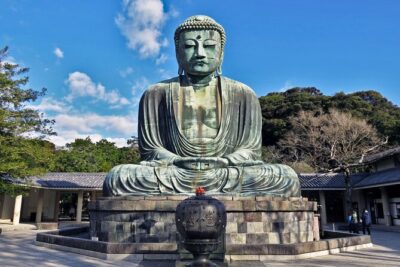
Kamakura Historical Walking Tour with the Great Buddha
Read our review →
Kamakura Private Tour: Temples, Nature, and the Great Buddha
Read our review →
Kamakura 4hr Private Trip with Government-Licensed Guide
Read our review →
Kamakura Full Day Tour with a Local Expert Guide
Read our review →
Browse the lists this tour appears in