
Reviewed · TOURS IN KAMAKURA
First time in Kamakura? Enjoy a Tour of All Must-sees!
Kamakura packs temples, shrines, gardens, bamboo, street food, and one very large Buddha into a single day. This private tour gives you a guide’s full attention while you move between seven of the city’s best-known sights, starting at Kamakura Station and ending where you began. The result is a useful first look at a place that can otherwise feel scattered.
I like the private format, especially if you want to ask questions or adjust the pace. I also like the mix of major sights and local flavor: you get the Great Buddha and Tsurugaoka Hachimangu, but also time on Komachi Street for food and shopping. The main caution is the pace. You will walk a lot, and the $143.71 price does not include transportation, admissions, meals, or the optional 660 JPY experience.
At a glance
- Seven major stops in about 7.5 hours, from bamboo gardens to the Great Buddha
- Private guiding for your group, with room for questions and some flexibility
- Komachi Street food time, including advice on local specialties and eating spots
- Several admission fees and transport costs extra, with an estimated 5,300 JPY per person
- Cash is important, since some stops do not accept credit cards
- A full walking day, best for visitors who want broad coverage rather than a slow temple visit
Why this Kamakura day works well for first-time visitors
Kamakura is easy to reach from Tokyo, but its sights are spread across different parts of town. You can spend a morning at one temple, lose time figuring out local transport, then rush through the Great Buddha late in the day. This tour handles the broad route for you and places the main landmarks in one organized outing.
The private setup matters here. Guides such as Yoshi, Akira, and Rumi have been praised for patience, clear explanations, and attention to individual needs. Yoshi, in particular, has waited for a delayed train and adapted the day when a group wanted to change something. Akira has handled detailed questions and unusual travel needs, while Rumi has helped explain the background of the temples and shrines.
That does not mean every guide will have the same speaking style. One past booking found the guide quiet and more responsive than proactive. If you want a steady stream of historical explanation, say so at the start. A private tour gives you the chance to set that expectation early.
The day begins at 9:00 a.m. outside Kamakura Station. The meeting point is at 1-chōme-1-15 Onarimachi, Kamakura. Arrive early. If you miss the start, public transport delays and the long route can cut into the experience.
Other experiences people book in Kamakura:
- Tokyo: Kamakura & Enoshima Day Trip including Temple Tickets
★ 4.5 · 1,375 reviews - From Tokyo: Kamakura & Enoshima 1-Day Bus Tour
★ 4.5 · 189 reviews - Kamakura Historical Walking Tour with the Great Buddha
★ 5.0 · 129 reviews
Jomyo-ji and matcha in a quiet garden
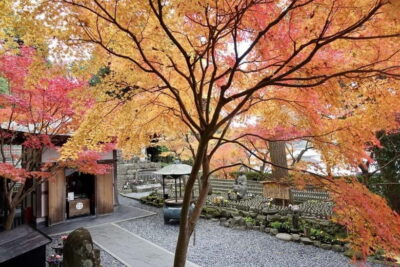
The first stop is Jomyo-ji Temple, with about 40 minutes set aside. Its appeal is not a single giant monument. Instead, you get a calmer temple setting and the chance to enjoy matcha while looking across a Japanese garden.
The matcha stop gives the day a gentle beginning. You can sit, take in the garden, and get a first taste of the careful balance between buildings, plants, and open space that appears throughout Kamakura. Admission is not included, so keep some cash ready.
Forty minutes is enough for a look and a drink, but not for a long, unhurried visit. If gardens are your main reason for coming to Kamakura, you may wish the schedule allowed more time here. For a first visit, though, Jomyo-ji gives you an attractive introduction before the busier parts of the day.
Hokoku-ji’s bamboo grove in a short visit
Hokoku-ji follows, with 20 minutes planned. This temple is famous for its bamboo grove, with roughly 2,000 bamboo plants creating a narrow green corridor and a strong photo stop.
The grove is the point. You will want to look up as well as forward, since the tall bamboo changes the light and feel of the path. Your guide can also place the temple in the wider story of Kamakura’s religious sites, rather than leaving you with only a quick photograph.
The short time limit is the biggest weakness. Twenty minutes allows a focused walk through the bamboo, but it does not leave much room for lingering. If the path is busy, or if you want to enjoy the quiet rather than simply pass through, the stop can feel hurried. Still, it is a sensible inclusion because Hokoku-ji offers a setting very different from the city’s larger shrines.
Komachi Street for food, snacks, and souvenirs
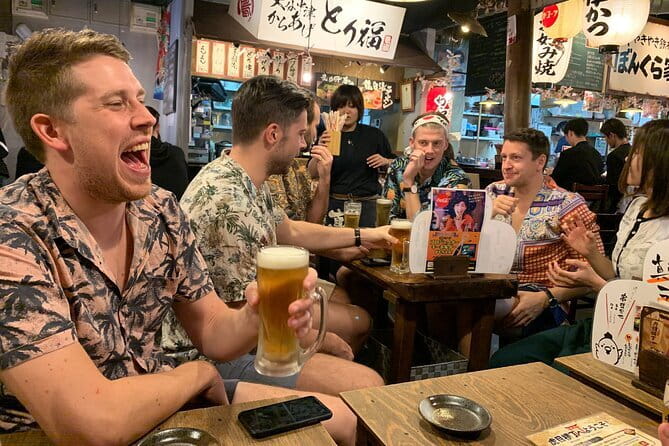
Komachi Street gets about an hour, and this is where the tour shifts from temples to everyday Kamakura. The street runs from Kamakura Station toward Tsurugaoka Hachimangu and is lined with restaurants, food shops, and souvenir sellers.
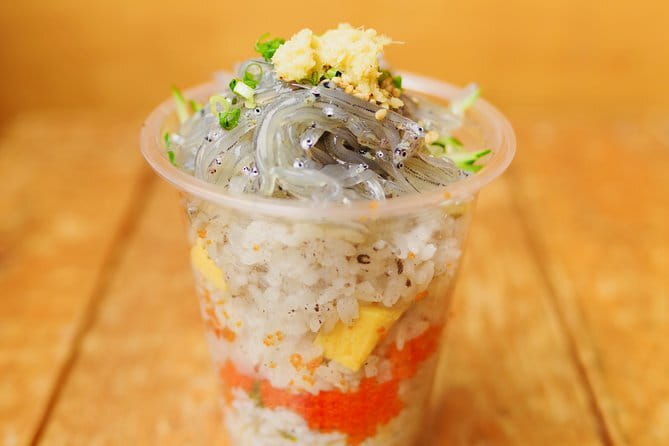
Your guide’s local suggestions can be especially useful here. The tour description points to foods associated with Kamakura, including items that may be difficult to find elsewhere. You are responsible for your own meal and snacks, but the guide can help you decide where to spend that money instead of wandering past every shop without a plan.
An hour is enough for a meal or several small bites, plus a little browsing. It is not a full shopping session. If you enjoy trying local food, treat this as an opportunity to sample something and ask direct questions. If you prefer a quiet lunch, remember that a popular shopping street may feel much less peaceful than the temple grounds.
The food allowance in the estimated costs is 1,000 JPY per person. That is a useful planning figure, but your actual spending can be higher if you choose several snacks or a larger meal.
Same base, a different sort of day:
- Kamakura Private Tour: Temples, Nature, and the Great Buddha
★ 5.0 · 121 reviews - Kamakura Walking Tour – The City of Shogun
★ 5.0 · 100 reviews - Kamakura 4hr Private Trip with Government-Licensed Guide
★ 5.0 · 58 reviews - When Emperors Reigned and Shoguns Ruled
★ 5.0 · 43 reviews
Tsurugaoka Hachimangu and Kamakura’s political past
Tsurugaoka Hachimangu receives about 45 minutes. This is Kamakura’s major shrine, with more than 1,000 years of history and strong links to the samurai government that made Kamakura an important center in medieval Japan.
The shrine was worshiped by the Minamoto, also called Genji, who ruled Japan during the Kamakura era. That connection gives the visit more weight than a quick look at a beautiful religious site. Your guide can help explain why this shrine mattered to the city’s rulers and how religious life and political power were closely tied together.
The grounds are free to enter, but the visit still benefits from context. Without an explanation, you may see a large shrine complex and move on. With a guide, the buildings and approach make more sense as part of Kamakura’s old center.
Forty-five minutes should cover the main area, though it is not enough to explore every corner. The tour places this visit after Komachi Street, which makes practical sense since the street leads toward the shrine. You avoid treating the two sights as unrelated stops.
Meigetsu-in, the Hydrangea Temple
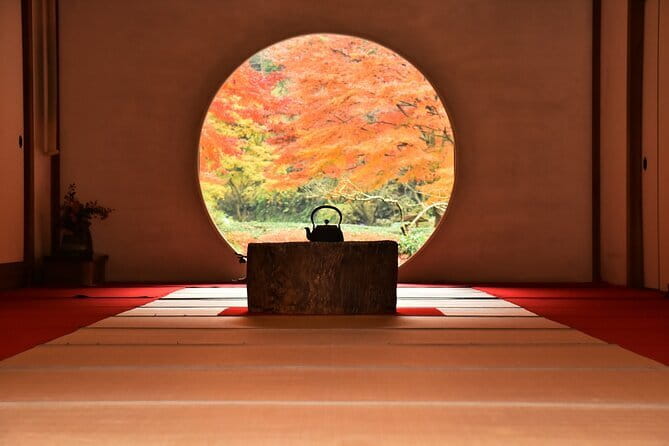
Meigetsu-in is scheduled for 30 minutes. It is known as the Hydrangea Temple and for a large round window that frames a garden beyond it. The window creates a simple but memorable view, with the garden and the room arranged around a strong circular shape.
This is one of the day’s more reflective stops. After the movement of Komachi Street and the scale of Tsurugaoka Hachimangu, Meigetsu-in offers silence, careful design, and a closer look at the relationship between architecture and nature.
The temple is especially associated with hydrangeas, though the appeal changes with the season. The tour information promises plants from all four seasons at Hase-dera, while Meigetsu-in is particularly noted for hydrangeas. If you visit outside the main flowering period, focus on the garden and round window rather than expecting the same floral display shown in seasonal photographs.
Thirty minutes is a compact visit. One person who took this route singled out Meigetsu-in as a favorite, which makes sense if you value atmosphere more than size. Let your guide know if you would like a moment to enjoy the view without a running commentary.
The Great Buddha at Kotoku-in
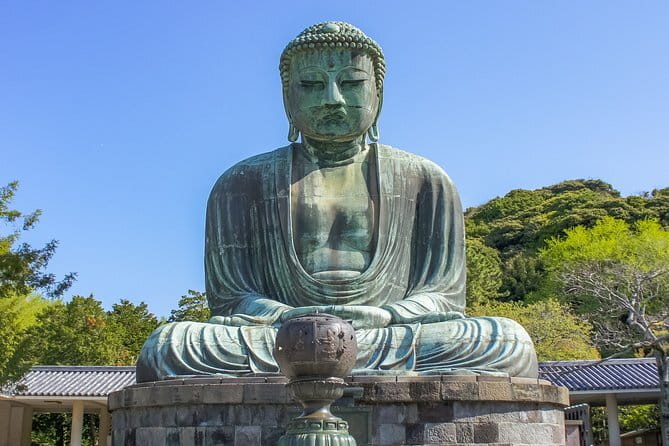
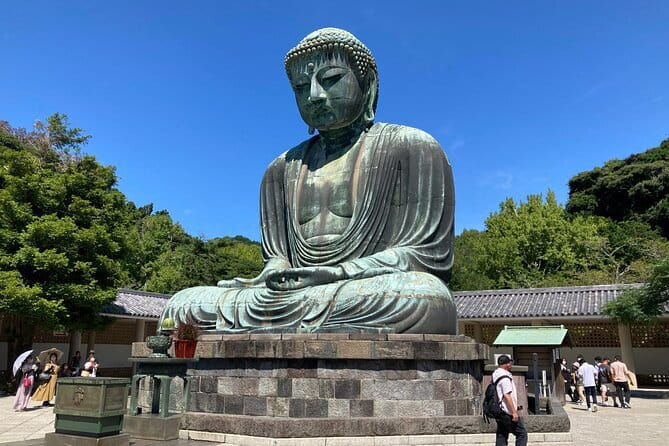
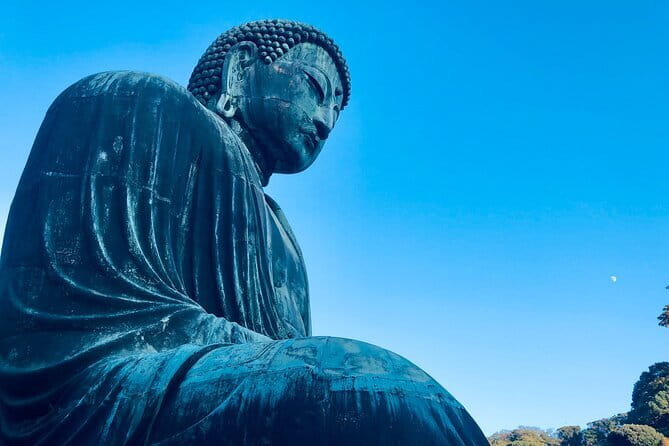
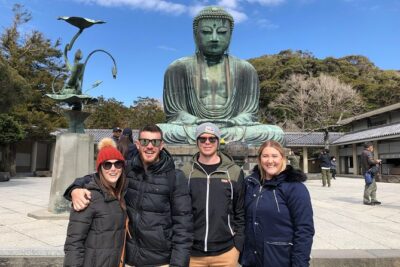
Kotoku-in brings you to Kamakura’s most famous image: the Great Buddha, or Kamakura Daibutsu. The statue is more than 11 meters high, and its scale makes an immediate impression even if you have already seen photographs.
About 35 minutes is planned here. That gives you time to see the statue, take photographs, and, if available, go inside it. The interior visit is an optional experience with an additional cost listed at 660 JPY per person.
The extra charge is modest, but it is still worth knowing before you arrive. Ask your guide how the optional visit fits the schedule, since the day already has several fixed stops. The main temple admission is also not included.
The Great Buddha is an efficient stop because it offers a clear, memorable symbol of Kamakura without requiring a long visit. It can also feel more exposed and less contemplative than the smaller temple gardens. I would treat it as a landmark visit, then save your slower temple time for Hase-dera or Meigetsu-in.
Hase-dera, the Flower Temple
The final major sight is Hase-dera, with about 45 minutes. It is also called the Flower Temple because its large grounds display plants through the seasons. The complex has many points of interest and requires walking uphill through parts of the grounds.
This is one reason comfortable clothing and shoes matter. The tour covers temples, shrines, streets, and garden paths, and Hase-dera adds a climb near the end of an already active day. The reward is a more varied temple visit, with plants, views, and several areas to explore rather than one single building.
The timing may feel short if you want to see every part of the grounds. If your legs are tired, stay focused on the main areas and let your guide help you decide what matters most. One past booking found that visiting four of the five temple sites was tiring, a useful warning for anyone who prefers slow sightseeing.
The route finishes back at the Kamakura Station meeting point. There is no pickup or drop-off service, and no private van is included, so you should plan around public transportation and your return journey.
What the $143.71 price really covers
The advertised price is $143.71 per person. It covers the private guide and the guide’s necessary tour expenses, but not the practical costs of the day.
The estimated extra cost is 5,300 JPY per person:
- 900 JPY for transportation
- 2,650 JPY for admission fees
- 1,000 JPY for food
The optional experience adds another 660 JPY per person. A private van is not included, and neither is pickup or drop-off.
That makes the tour a better value for a small group that wants personal attention than for someone traveling alone on a tight budget. You are paying for route planning, explanations, and the ability to ask for help or request a small adjustment. You are not buying an all-inclusive day.
Bring cash. Some of the places on the route do not accept credit cards, and the admission and food estimates are paid separately. The tour is offered with group discounts, so the per-person value may improve as your group grows, though you should check the final rate for your party.
Who will enjoy this tour most
I would choose this experience if you are visiting Kamakura for the first time and want to see the main sights without spending hours planning transfers. It suits couples, families, and small groups that value a private guide and want both cultural sites and food time.
It is also a good match if you like asking questions. Past guides have been patient with delayed trains, special travel situations, and requests to alter the day. The private format makes that kind of help possible.
I would think twice if you want a slow, meditative temple day. Seven stops in 7.5 hours is a lot. The short visits at Hokoku-ji, Meigetsu-in, and Kotoku-in give you a taste of each place, but not unlimited time.
You should also be comfortable walking and using public transportation. Bad weather can lead to changes in transportation, destinations, or routes. Temporary closures may require an alternative stop.
Practical planning before 9:00 a.m.
Wear comfortable clothes and walking shoes. You will move through streets, shrine grounds, temple paths, and a hillside temple complex.
Build in extra time to reach Kamakura Station. The tour begins at 9:00 a.m., and a late arrival can reduce the time available at later stops. Confirmation is sent within 48 hours of booking, subject to availability.
The tour is private, so only your group participates. It ends at the meeting point. Free cancellation is available up to 24 hours before the start time, but changes or cancellations inside that window are not accepted for a refund.
Should you book this Kamakura tour?
Book it if you want a well-rounded first day, personal guiding, and a clear route through Kamakura’s biggest sights. The strongest features are the private format, the combination of famous landmarks with Komachi Street, and the chance to learn from guides such as Yoshi, Akira, or Rumi.
Skip it if you prefer to choose one or two temples and linger. The cost rises after transport, admissions, food, and the optional experience are added, and the walking can be tiring. For a first visit with limited time, though, this is a practical way to see Kamakura’s key temples, shrines, gardens, food street, and Great Buddha in one organized day.
FAQ
Where does the Kamakura tour start and end?
It starts at Kamakura Station at 9:00 a.m., at 1-chōme-1-15 Onarimachi, Kamakura, Kanagawa 248-0012. The tour ends back at the meeting point.
How long does the tour last?
The experience lasts approximately 7 hours and 30 minutes.
Is this a private tour?
Yes. Only your group participates, and a private guide is included.
Are transportation, admission fees, and food included?
No. The estimated extra cost is 5,300 JPY per person, covering transportation, admissions, and meal costs. Food and drink bought during the day are paid by you.
Do I need to bring cash?
Yes. Some places on the route do not accept credit cards, so cash is recommended.
Is the tour suitable for people who do not want to walk much?
The tour involves a lot of walking, including paths and climbing at Hase-dera. Comfortable clothing and shoes are recommended.
Just added in Kamakura
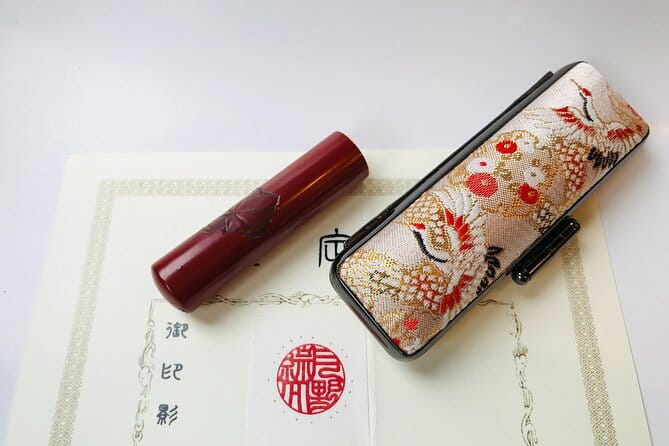
- Your Own HANKO Name Seal Activity in Kamakura.★ 5.0 · 24 reviews
- When Emperors Reigned and Shoguns Ruled★ 5.0 · 43 reviews
- Buddha, Bamboo & Zen – Bespoke Kamakura Private Walking Tours★ 5.0 · 25 reviews
- Kamakura 4hr Private Trip with Government-Licensed Guide★ 5.0 · 58 reviews
- Kamakura Walking Tour – The City of Shogun★ 5.0 · 100 reviews
- Kamakura Bamboo Forest and Great Buddha Private Tour★ 5.0 · 12 reviews
- Exciting Kamakura – One Day Tour from Tokyo★ 5.0 · 40 reviews
- Kamakura Tours Half Day or Full Day Tours with a local guide.★ 5.0 · 12 reviews
Tours in Kamakura, compared.
Kamakura & Enoshima Day Trip including Temple Tickets
Read our review →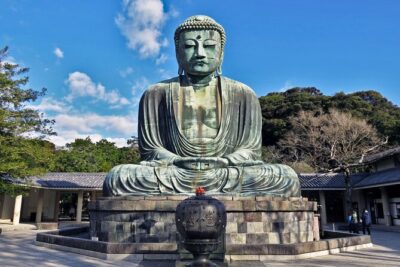
Kamakura Historical Walking Tour with the Great Buddha
Read our review →
Kamakura Private Tour: Temples, Nature, and the Great Buddha
Read our review →
Kamakura 4hr Private Trip with Government-Licensed Guide
Read our review →
Kamakura Full Day Tour with a Local Expert Guide
Read our review →
Browse the lists this tour appears in