
Reviewed · TOURS IN KAMAKURA
When Emperors Reigned and Shoguns Ruled
Kamakura’s story comes alive as you walk from the city’s main shrine to its famous bronze Buddha. This private four-hour tour connects samurai government, Shinto worship, Buddhism, and daily Japanese life in a way that a quick sightseeing stop rarely can.
I like the flexible pace, especially for families, older visitors, or anyone who wants time for questions. I also like having Virgil, a guide who doubles as a photographer, ready to take pictures along the way. The main consideration is cost: at $108.99 per person, this is a premium tour, and entrance fees, food, and local transportation are extra.
What makes this Kamakura tour worth considering
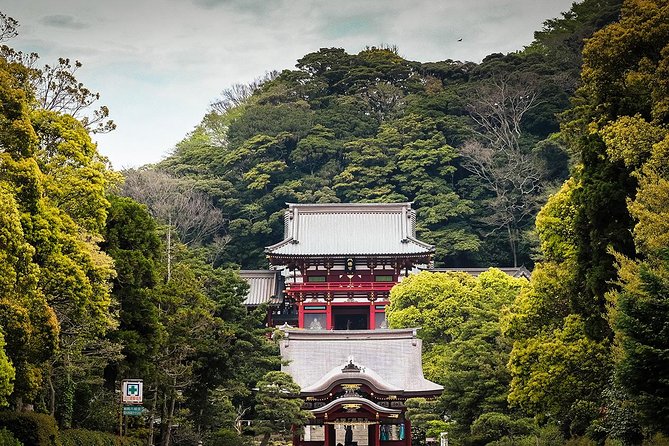
- A clear route through the Kamakura Period: Follow the story of Japan’s first shogunate from Kamakura Station to Hase Station.
- Private attention from Virgil: Your group gets the guide to itself, with space for questions and changes of pace.
- Four major sights in one afternoon: Visit Tsurugaoka Hachimangu, Komachidori, Kotoku-in, and Hasedera.
- Photos built into the experience: Virgil can take pictures of you instead of leaving your group to rely only on selfies.
- A useful mix of culture and everyday life: The route includes shrines and temples, but also shopping streets, snacks, and modern Kamakura.
- Good for small groups: One person, a family, or a private party of up to eight can book the experience.
Starting with Kamakura’s shogun story
Kamakura is not just a pleasant coastal town south of Tokyo. From 1185 to 1333, it was the seat of Japan’s military government, when shoguns and samurai held power while the emperor remained in Kyoto.
That political shift changed Japan. This tour focuses on how the Kamakura shogunate took shape, how warrior culture affected religion and government, and how Zen Buddhism gained influence during the period. You are not simply ticking off temples. You are given a framework for understanding why these places matter.
Virgil is the named guide associated with the experience. His strengths, based on the way the tour is designed and the detailed feedback provided, are storytelling, patience, and flexibility. He speaks English clearly and also speaks Spanish. That matters when you are dealing with names, dates, religious ideas, and customs that can be hard to grasp from a short sign.
The private setting is important here. You can ask why a shrine uses a particular gate, how Shinto differs from Buddhism, or what made the samurai government different from the imperial court. You do not have to save questions for the end or worry about holding up a large group.
Other experiences people book in Kamakura:
- Tokyo: Kamakura & Enoshima Day Trip including Temple Tickets
★ 4.5 · 1,375 reviews - From Tokyo: Kamakura & Enoshima 1-Day Bus Tour
★ 4.5 · 189 reviews - Kamakura Historical Walking Tour with the Great Buddha
★ 5.0 · 129 reviews
Wakamiya Main Street leads you toward the shrine
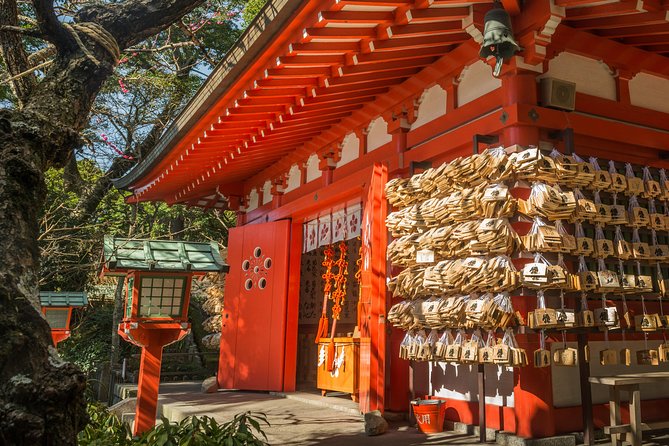
The tour begins at Kamakura Station, at 1-chome-1-15 Onarimachi. The first stop is Wakamiya Main Street, a roughly 20-minute scenic walk toward Tsurugaoka Hachimangu.
This is a useful opening rather than wasted time. The street gives you a first look at Kamakura’s main sightseeing area and helps you understand the connection between the station, the commercial center, and the shrine precinct. Virgil can set the scene before you arrive at the most important religious site on the route.
You should expect walking on public streets, with the normal crowds and stops that come with a popular town. The exact feel will depend on the day. One account describes the town as very crowded on a Sunday during a long weekend, while the private guide was still able to keep the route moving.
This walk also gives you time to settle into the tour. If you arrive in Kamakura without much background, the opening explanation can make the later shrine and temple visits easier to follow.
Tsurugaoka Hachimangu explains the first shogun’s ambitions
Tsurugaoka Hachimangu receives about 50 minutes. Admission is listed as free, though donations or special areas may have their own arrangements.
This is one of Japan’s most important Shinto shrines and was built by Minamoto Yoritomo, the first shogun, in the 12th century. That makes it the essential historical stop. Yoritomo did not choose Kamakura by accident. The location helped him establish a military center separate from the imperial court in Kyoto.
The shrine gives you a direct connection to the birth of shogun rule. Its broad approach, gates, steps, and formal spaces also make it easier to see how political authority and religious ceremony worked together. Your guide can explain the difference between visiting a Shinto shrine and a Buddhist temple, including the distinct customs you may notice.
Fifty minutes is enough for a guided introduction without turning the visit into a long religious lecture. You will want comfortable shoes, since the route involves walking and may include steps or uneven surfaces around historic sites.
The drawback is that this is a popular place, not a quiet private sanctuary. During weekends and holiday periods, the approach can be crowded. The private guide helps with orientation, but no guide can remove the crowds from a major Kamakura shrine.
Komachidori adds snacks, shopping, and modern Kamakura
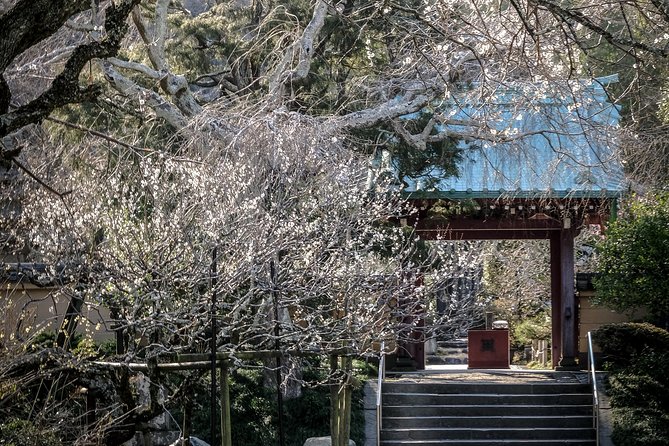
Komachidori takes about 50 minutes. This famous shopping street runs through the area with shops and stalls selling sweets, snacks, and souvenirs.
I like this part because it keeps the tour from becoming a string of solemn religious sites. Kamakura is a living town, not an open-air museum. Komachidori shows you how the city handles modern visitors while still drawing on local food, crafts, and traditions.
You can use this stop to sample something small or browse for gifts. Food and drinks are not included, so plan to pay directly for anything you want to eat. Matcha ice cream was one memorable treat mentioned in the tour feedback, and soba lunch was also part of one particularly flexible day, though neither is promised in the listed program.
The street can be crowded, and 50 minutes may feel short if you want to shop seriously. I would treat it as a chance to look, taste, and ask questions rather than a dedicated shopping session. If you find a snack you like, it may be worth choosing it quickly rather than trying to cover every shop.
This is also where the guide’s flexibility can help. You may prefer more time with the shrine, a quick food stop, or simply a slower walk. Because the activity is private, the day can respond to your interests more easily than a fixed group excursion.
Same base, a different sort of day:
- Kamakura Private Tour: Temples, Nature, and the Great Buddha
★ 5.0 · 121 reviews - Kamakura Walking Tour – The City of Shogun
★ 5.0 · 100 reviews - Kamakura 4hr Private Trip with Government-Licensed Guide
★ 5.0 · 58 reviews - From Tokyo: Kamakura Full Day Tour with a Local Expert Guide
★ 4.6 · 43 reviews
The Great Buddha gives Kamakura its famous image
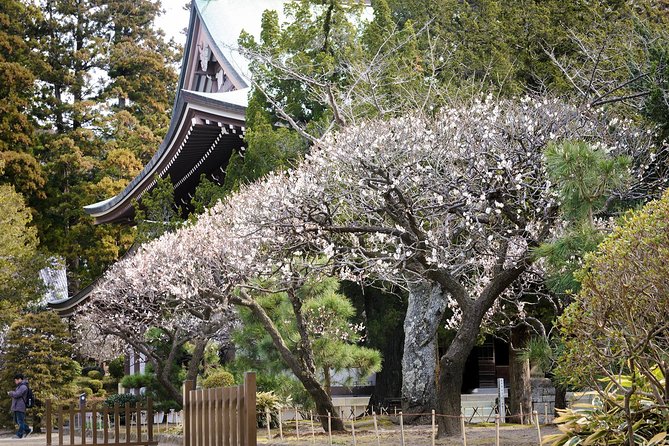
Kotoku-in, home of the Great Buddha of Kamakura, receives about 40 minutes. The entrance fee is not included.
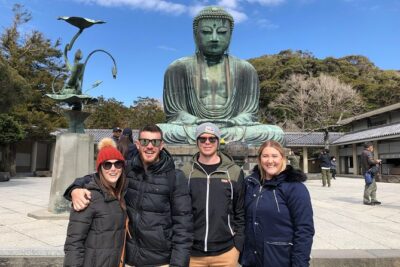
The statue is a centuries-old bronze image of Amida Buddha dating from the 13th century. It is one of Kamakura’s defining sights, and the scale of the statue makes an immediate impression even if you have seen photographs before.
The historical setting makes the statue more interesting. The Kamakura Period was a time of political conflict, social change, and expanding religious movements. Amida Buddhism offered a path of faith that appealed widely, while other Buddhist schools, including Zen, also gained strength. A good explanation here helps you connect the statue to the wider religious world of medieval Japan.
Forty minutes should give you time to approach the statue, take photographs, listen to the explanation, and look around without rushing. The guide can also help you frame pictures, which is useful for solo visitors and families who want everyone in the shot.
The admission charge is separate, so carry enough Japanese yen or a payment method accepted at the site. Since the tour price does not cover entrance fees, you should regard the $108.99 as payment for private guiding and photography support, not as an all-inclusive ticket.
Hasedera finishes the route with gardens and Kannon
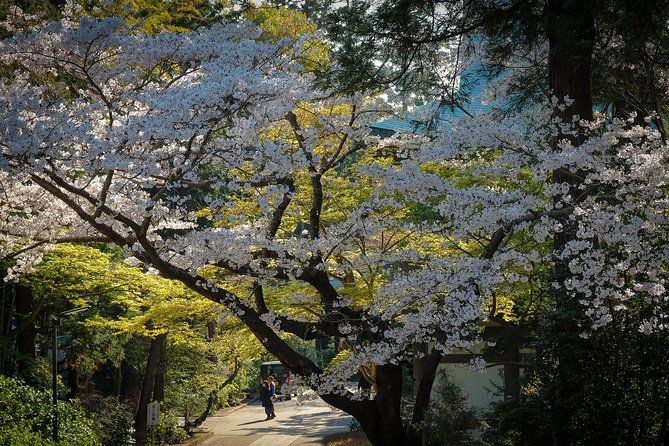
The final stop is Hasedera, with about 1 hour and 20 minutes planned. Admission is not included.
This Buddhist temple spreads across several levels and offers more variety than a single courtyard visit. You can expect gardens, ponds, caves, and views within the temple grounds. The main religious focus is an ancient 11-headed statue of Kannon, the Buddhist Goddess of Mercy.
The longer visit makes sense. Hasedera is not simply a statue stop. You have time to move through different sections, pause in the gardens, and hear how Kannon worship fits into Japanese Buddhist practice. The caves add another change of mood, while the gardens provide a calmer end to a day that began on busy streets.
The temple’s multiple levels mean this is the part where your walking pace matters most. One of the strongest themes in the feedback is Virgil’s patience with slower walkers and his willingness to keep the day unhurried. That can make a real difference if you are traveling with children, teenagers, older family members, or anyone who prefers not to rush.
Hasedera is also a good place for photographs. The combination of temple architecture, gardens, religious objects, and changing levels gives Virgil plenty of settings for group pictures. Your final destination is Hase Station on the Enoden Line, at 2 Chome-14 Hase, so you finish near a useful rail connection rather than returning to the starting point.
What the private format changes
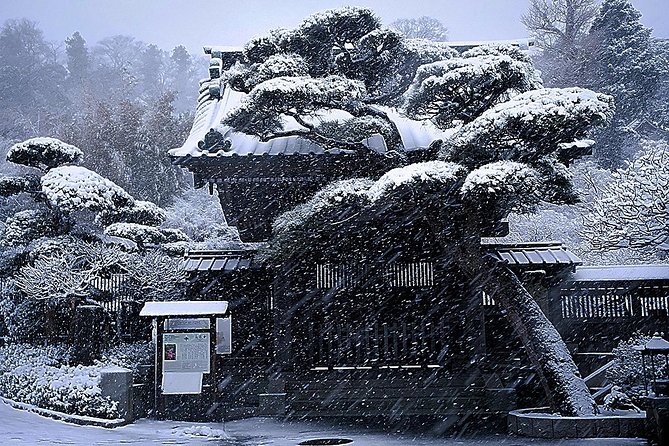
The tour is private, and only your group participates. The group size can range from one person to eight people, making it especially useful if your party wants a guide without joining strangers.
For a solo visitor, the photographer-guide arrangement is a real benefit. You can ask Virgil to take pictures at the major stops instead of trying to set up a phone or asking passing strangers.
For families, the private format allows more patience. A 10-year-old with a strong interest in Japanese culture can ask questions, sample snacks, and stop for pictures without being treated as a delay. Teenagers also have room to ask about samurai, religion, or everyday Japanese life in their own way.
For a group of friends, the value depends on how much you want interpretation. If you only need directions to the four sites, $108.99 per person may feel high. If you want a connected explanation, flexible timing, help with photos, and one guide focused only on your group, the price becomes easier to justify.
You should also understand what is not included. Food, drinks, lunch, transportation to and from the attractions, hotel pickup, hotel drop-off, and the admission fees for Kotoku-in and Hasedera are separate. The tour starts at Kamakura Station and ends at Hase Station, so you need to arrange your own travel to Kamakura and onward from Hase.
How much value do you get for $108.99?
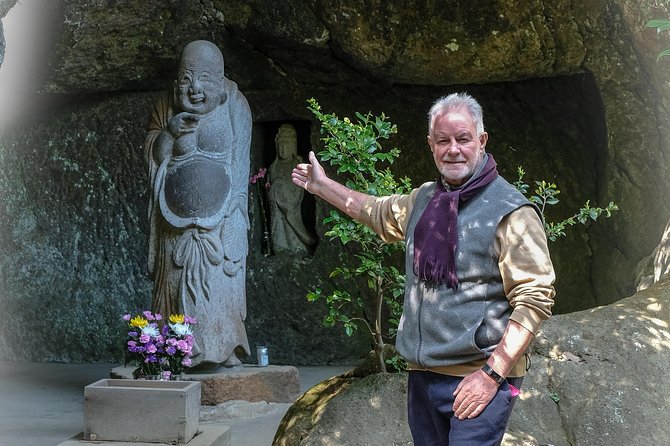
At $108.99 per person, this is not the cheapest way to see Kamakura. You can visit the town independently, pay the entry fees yourself, and follow the same general route with a guidebook or phone.
The value lies in the interpretation and time saved. Kamakura’s sights are easy to reach in theory, but the meaning of the shrine, Buddha, and temple is not always obvious. Virgil’s role is to connect the places, explain the political and religious changes, answer questions, help with public transportation when needed, and take photographs.
The value also improves for larger private groups. A party of several people may find the per-person price more reasonable than a solo visitor does, particularly if you want a private day rather than a fixed group schedule.
The tour is booked an average of 71 days in advance, so planning ahead is sensible. Confirmation is provided at booking, and free cancellation is available until 24 hours before the start time. Changes or cancellations inside that 24-hour window are not accepted for a refund.
Who will enjoy this Kamakura experience?
I would recommend this tour to you if you want historical context rather than a simple list of sites. It is also a strong choice if you are visiting Kamakura for the first time and want the main route handled in a logical order.
It suits:
- Solo visitors who want help with photographs
- Families with children or teenagers
- Small groups of up to eight people
- People interested in samurai history and Japanese religion
- Visitors who prefer a slower, flexible walking pace
- Anyone who wants a guide who can explain culture in clear English
- People who enjoy mixing major sights with shopping and food stops
It may not suit you if you want a silent temple visit, extensive shopping time, or an all-inclusive tour with transport and entrance fees covered. It is also not the right pick if you prefer exploring entirely on your own.
The experience is listed as suitable for most participants and near public transportation. Still, the route includes several hours of walking and a multi-level temple, so consider your own comfort before booking.
Should you book this Kamakura tour?
Book it if you want Kamakura to make sense as more than a beautiful side trip from Tokyo. The strongest reason to choose it is the combination of historical storytelling, private pacing, and useful photography help. Virgil’s patience and personal attention are especially valuable for families and solo visitors.
Skip it if you only want quick photographs at the Great Buddha and Hasedera, or if you want to keep costs as low as possible. In that case, independent sightseeing may serve you better.
For most visitors who have four hours, this is a well-planned introduction to Kamakura. Arrive ready to walk, budget separately for the two paid attractions and any food, and tell the guide what interests you most. That is when the private format earns its keep.
FAQ
How long does the Kamakura tour last?
The tour lasts approximately four hours.
Where does the tour begin?
It begins at Kamakura Station, at 1-chōme-1-15 Onarimachi, Kamakura, Kanagawa 248-0012, Japan.
Where does the tour end?
It ends at Hase Station on the Enoden Line, at 2 Chome-14 Hase, Kamakura, Kanagawa 248-0016, Japan.
What attractions are included in the route?
The route includes Wakamiya Main Street, Tsurugaoka Hachimangu Shrine, Kamakura Komachidori, Kotoku-in and the Great Buddha of Kamakura, and Hasedera Temple.
Are entrance fees included?
Admission is listed as free for Wakamiya Main Street and Tsurugaoka Hachimangu. Entrance fees for Kotoku-in and Hasedera are not included.
Is the tour private?
Yes. Only your group participates, and the activity is designed for solo visitors or private groups of up to eight people.
What is included in the price?
A local guide, professional photographer guide, and tour escort or host are included. Food, drinks, lunch, transportation to and from attractions, hotel pickup and drop-off, and the listed entrance fees are not included.
Just added in Kamakura
- First time in Kamakura? Enjoy a Tour of All Must-sees!★ 5.0 · 15 reviews
- Your Own HANKO Name Seal Activity in Kamakura.★ 5.0 · 24 reviews
- Buddha, Bamboo & Zen – Bespoke Kamakura Private Walking Tours★ 5.0 · 25 reviews
- Kamakura 4hr Private Trip with Government-Licensed Guide★ 5.0 · 58 reviews
- Kamakura Walking Tour – The City of Shogun★ 5.0 · 100 reviews
- Kamakura Bamboo Forest and Great Buddha Private Tour★ 5.0 · 12 reviews
- Exciting Kamakura – One Day Tour from Tokyo★ 5.0 · 40 reviews
- Kamakura Tours Half Day or Full Day Tours with a local guide.★ 5.0 · 12 reviews
Tours in Kamakura, compared.
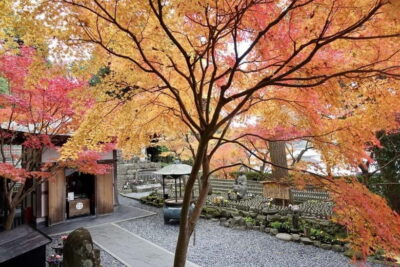
Kamakura & Enoshima Day Trip including Temple Tickets
Read our review →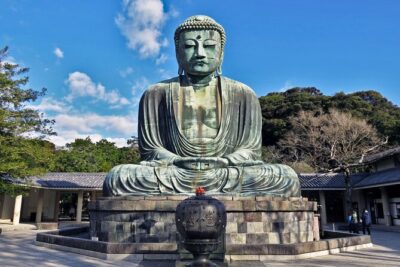
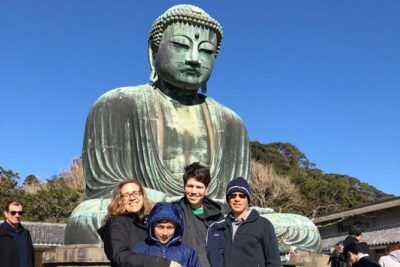
Kamakura Historical Walking Tour with the Great Buddha
Read our review →
Kamakura Private Tour: Temples, Nature, and the Great Buddha
Read our review →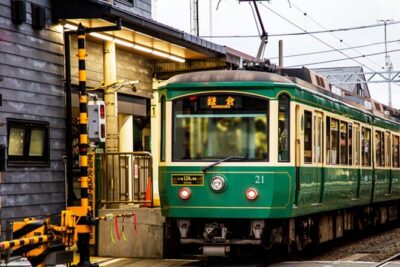
Kamakura 4hr Private Trip with Government-Licensed Guide
Read our review →
Kamakura Full Day Tour with a Local Expert Guide
Read our review →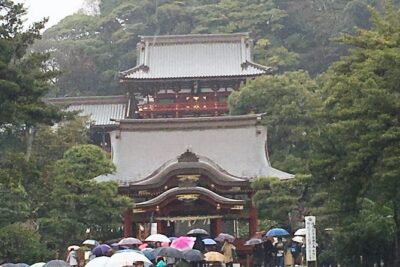
Browse the lists this tour appears in