
Reviewed · CYCLING TOURS
Kanazawa Half Day E-bike Tour
Kanazawa is wonderfully suited to two wheels. This four-hour e-bike tour links the old geisha quarters, Kenrokuen Garden, Kanazawa Castle, and the samurai district without asking you to spend the day waiting for buses. I especially like the small group size, limited to eight, and the extra freedom that comes with keeping the bike until midnight.
I also like the calm tea stop at Gyokusen-an Garden and the way guides such as Rina, Liam, Ti, and Maria adjust the pace to the group. The main consideration is that this is not four hours of riding: you will walk through gardens and historic districts, and some visitors may find the combination of cycling and walking more tiring than expected.
Key points to know before you book
- Four major Kanazawa sights in one route: Visit Kenrokuen, Kanazawa Castle, the geisha districts, and Nagamachi in a single morning or afternoon.
- A small group of up to eight: The guide can offer route help, photo stops, and pacing suited to the group.
- A quiet matcha break: Gyokusen-an Garden provides a restful cultural stop with green tea and traditional sweets.
- E-bikes make the city manageable: Electric assistance helps you cover more ground than you could comfortably walk in four hours.
- The bike is yours until midnight: Continue exploring after the guided portion, subject to the rental arrangement.
- Not just a bike ride: Expect walking at Kenrokuen, Kanazawa Castle, and the historic districts.
Why an e-bike is a smart way to see Kanazawa
Kanazawa’s main sights are spread across several districts. You can walk between some of them, but doing so takes time and energy. Public transport can work, yet it does not give you the same easy access to small lanes, riverfront views, and quiet residential streets.
The e-bike solves that problem neatly. You get the pleasure of moving through the city under your own power, with electric assistance when you need it. Guides also lead you along a planned route, so you do not spend your limited time sorting out directions.
I would not book this as a high-speed cycling workout. The pace is designed for sightseeing, with stops for photos, explanations, short walks, and the tea experience. The riding is part of the fun, but the real value is the way it connects several parts of Kanazawa in a half-day.
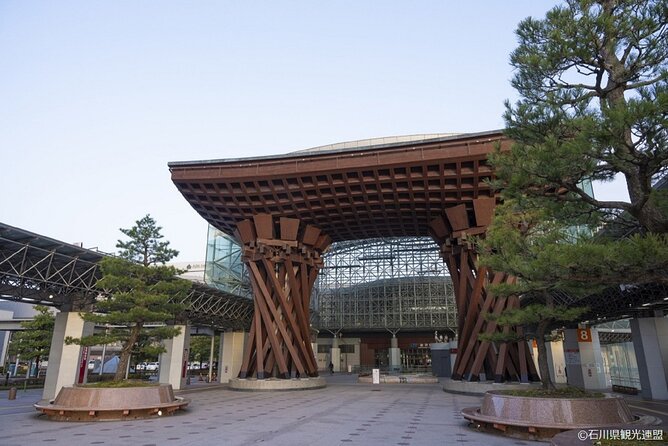
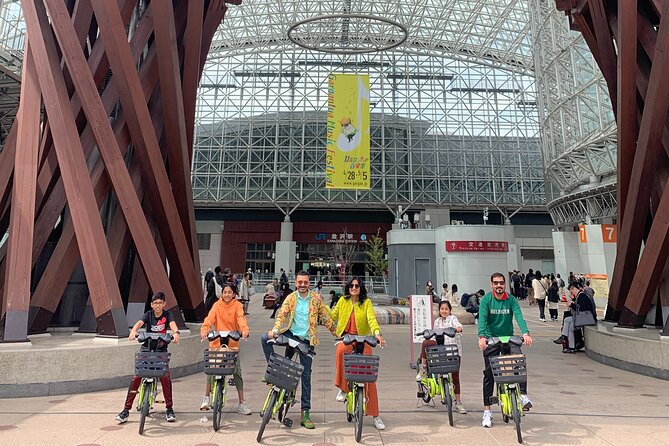
The tour begins beside Kanazawa Station at Machi-Nori bike rental number 19. Look under the train overpass for the group of green electric bicycles. Your guide carries a blue flag marked with the company name New Japan Tourist, making the meeting point easier to spot.
After a short introduction, you receive an e-bike and learn how to use it. That orientation matters if you have never ridden an electric bicycle. Several visitors found the bikes easy and comfortable, while others appreciated being shown how the public bike system works. The guides also keep an eye on safety as the group rides through the city.
Other rides on two wheels around Kanazawa:
- Kanazawa Half Day E-bike Tour
★ 5.0 · 42 reviews - Kanazawa Ninja Temple Half Day E-bike tour
★ 5.0 · 14 reviews - Bike Tour Exploring North Kyoto plus Lunch
★ 5.0 · 1,087 reviews
Kazuemachi and Higashi Chaya: old Kanazawa by the river
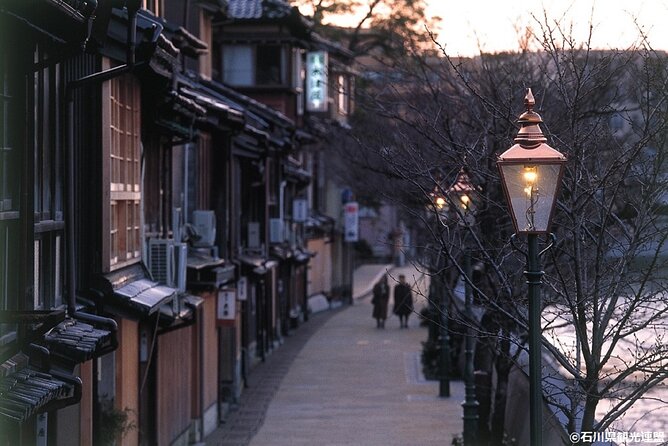
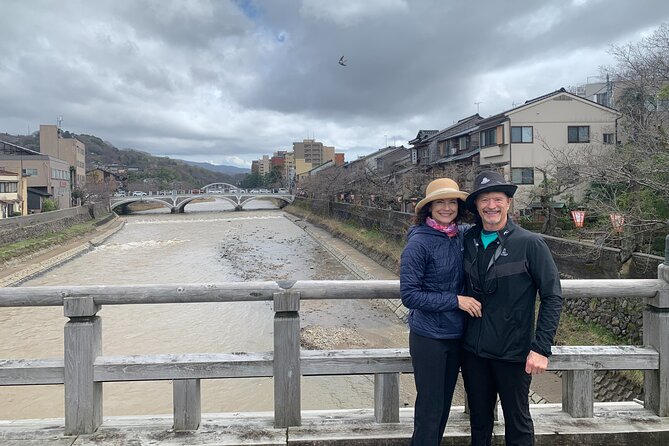
The first stops introduce you to Kanazawa’s traditional side. Kazuemachi Chaya District runs along the Asano River, with wooden buildings and narrow streets that give the area a distinctly old-fashioned feel. You have about five minutes here for a guided look and photographs, so treat it as an introduction rather than a full visit.
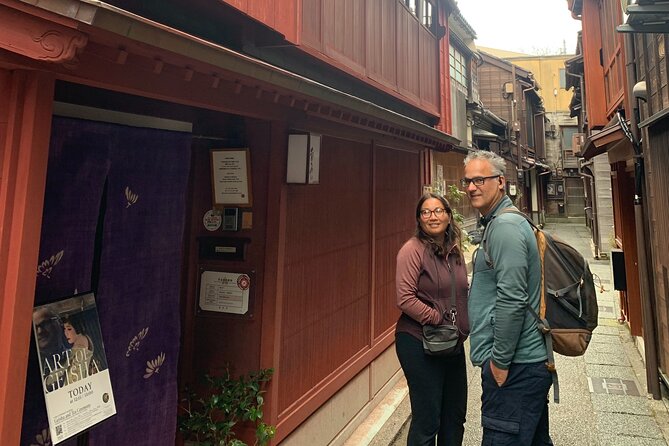
From there, the route continues to Higashi Chaya District. This is one of Kanazawa’s best-known geisha areas, with preserved wooden teahouses and carefully maintained streets. You will stop for about ten minutes and walk through part of the district.
The short timing is both a strength and a limitation. You see the character of the neighborhood without using half the tour at the first stop, but you will not have time for a detailed exploration of every lane or teahouse. If Higashi Chaya is a top priority for you, return later with the extra bike time.
Cycling is particularly useful here because the guide can show you the area without making the whole group trek from the station. You get a quick sense of the architecture, the river setting, and the role these districts played in Kanazawa’s traditional entertainment culture.
Kenrokuen Garden: the tour’s main visual stop
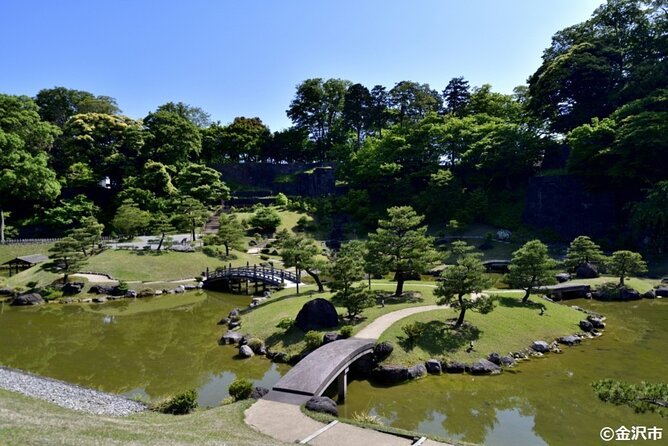
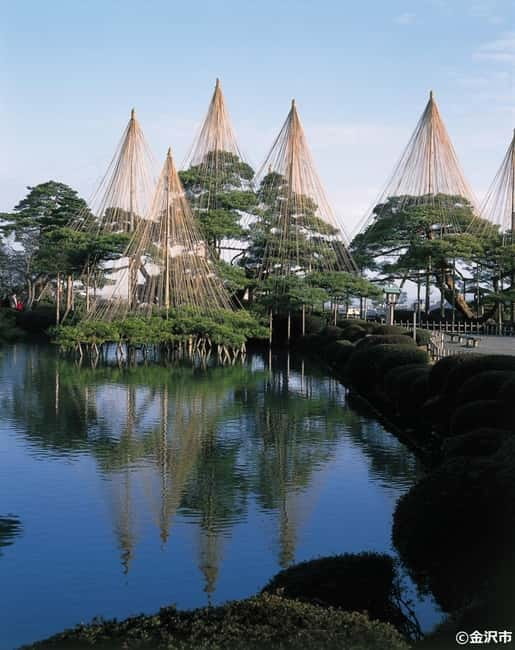
Kenrokuen receives the longest portion of the itinerary, about one hour. That is the right call. This is one of Japan’s most celebrated gardens, known for its ponds, bridges, carefully shaped trees, and balanced arrangement of open and enclosed spaces.
You should expect to leave the bicycle and walk. The garden is not something to skim from a saddle. Its appeal comes from changing views as you move along the paths, so give yourself time to pause and look closely at the water, stonework, trees, and small architectural details.
Your guide adds context that can make the garden easier to read. Rather than seeing a series of pretty views, you begin to notice how the parts work together. The garden is carefully planned, yet it does not feel stiff or formal when you move through it.
The hour is enough for a useful introduction, though not enough for every corner. Wear shoes you can walk in comfortably, and remember that hot weather can make the stop demanding. Karen specifically appreciated that her guide slowed down, allowed recovery time, and encouraged hydration during a very hot tour.
This is also a good place for photographs, but do not expect the guide to turn the visit into a private photo session. The group has a schedule, and the next stops still matter.
Kanazawa Castle and the tea break at Gyokusen-an
Kanazawa Castle follows Kenrokuen, with about 15 minutes set aside for a visit and photographs. The castle was once the seat of the Maeda clan, the powerful family that shaped Kanazawa’s development.
The castle stop is brief, so think of it as a focused introduction. You will hear about the site, see its notable architecture, and gain a sense of its importance. If you want to examine every building or spend time inside detailed exhibits, plan a separate visit.
The tour’s most memorable pause comes at Gyokusen-an Garden, within the Kanazawa Castle grounds. You have around 30 minutes for the garden, matcha, traditional Japanese sweets, and a tea experience.
This stop changes the rhythm of the outing. After riding and walking, you sit quietly and look out over a serene garden while tasting green tea. The tea preparation gives you a small window into Japanese customs without requiring a full formal tea ceremony lasting several hours.
I consider the matcha stop a major part of the tour’s value. A city tour can easily become a checklist of gates, streets, and photo points. Gyokusen-an gives you time to pause and absorb the setting. It is also a useful cultural counterpoint to the physical activity.
The tea may taste stronger and more bitter than the green tea many visitors know. The traditional sweets help balance it. Additional food and drinks are not included, so bring money if you want anything beyond the provided snack and matcha.
Same base, a different sort of day:
- World Heritage Shirakawa-go and Experience Tours from Kanazawa
★ 5.0 · 4,049 reviews - Kanazawa: Kenrokuen Tea Ceremony Experience
★ 4.8 · 1,139 reviews - Kanazawa Half Day Tour (Private Guide)
★ 5.0 · 361 reviews - Kanazawa Full Day Tour (Private Guide)
★ 5.0 · 323 reviews
Passing the 21st Century Museum
The route passes the 21st Century Museum of Contemporary Art, Kanazawa. You can admire its unusual design from the outside, but the tour does not stop for a museum visit.
That detail is important when planning your day. If contemporary art is high on your list, set aside another block of time for the museum. The e-bike tour gives you an orientation to its location and architecture, not an art museum experience.
The brief pass-by also shows the range of Kanazawa. In a few hours, you move from wooden teahouses and castle grounds to a modern cultural building, then back into the old samurai quarter. That contrast helps you understand the city as more than a preserved historic center.
Nagamachi: finishing among samurai residences
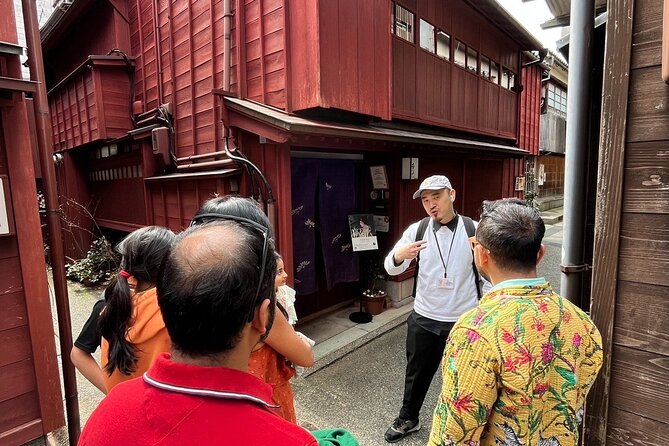
The tour ends in the Nagamachi Samurai District, with about 20 minutes for a guided visit, photographs, and more cycling. This area is known for preserved samurai residences and lanes that retain a traditional feel.
The end point is practical. You do not have to ride back to the station with the group, and you can continue exploring Nagamachi on foot. You may also keep the bicycle until midnight, which lets you return to a favorite neighborhood, find dinner, or make your way around the city without starting another rental process.
Do confirm the exact bike-return arrangements before setting off, especially if you plan to use the bicycle after the guided tour. The information provided says you have access until midnight, but your guide can clarify how the late use works.
Nagamachi is also a natural place to extend your visit. The guided stop is short, so anyone fascinated by samurai homes should plan extra time after the tour. The key benefit is that you arrive with an understanding of the district instead of simply wandering in without context.
Guides, group size, and the feel of the outing
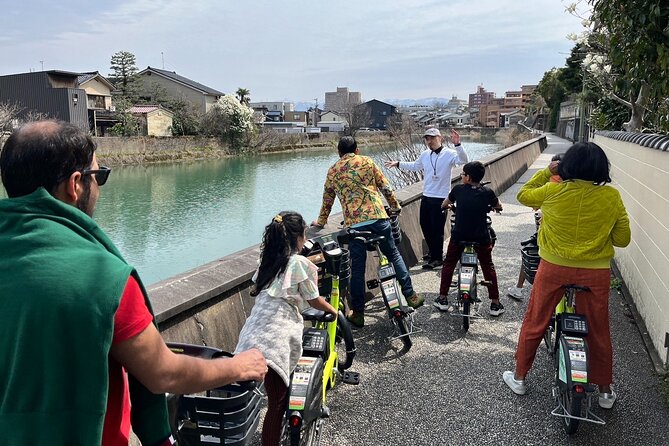
The tour is limited to eight participants, which makes a real difference on bicycles. A large group can create awkward gaps at crossings and make explanations hard to hear. With a small group, the guide can check that everyone is comfortable and adjust the speed.
The guides named in the experience include Rina, Liam, Ti, Maria, Yuki, and Liqm. Their strengths, as reflected in the way the tour is run, include clear English, local stories, route guidance, and practical suggestions for food and coffee.
Rina is often singled out for making the ride feel relaxed, looking after safety, answering questions, and adapting the outing to different ages. Liam is an Australian guide whose clear English can be helpful if you want to follow detailed explanations. Ti is known for combining humor with stories about Kanazawa’s customs and past. Maria is praised for her strong interest in the city’s past and for connecting with both adults and children.
That flexibility matters. The route is set, but the experience does not have to feel rigid. Guides have adjusted for hot weather, offered restroom and drink pauses, taken photos, and tailored the pace to the group. Still, this is a shared tour, not a fully private itinerary. Your freedom to linger will depend on the other participants and the schedule.
Price, timing, and what you receive
At $125 per person, this is not the cheapest way to see Kanazawa. The price makes more sense when you count what is included: a four-hour route, electric bicycle rental, an English or Chinese-speaking local guide, entrance fees, matcha, and traditional sweets.
The biggest value is time. You cover the distance between several major areas while receiving explanations along the way. A self-guided visitor could spend less, but would need to arrange the bicycle, plan the route, handle navigation, and pay separate entrance costs. You also get the chance to continue riding until midnight.
The tour runs for four hours, with starting times depending on availability. It is best for a first visit or a short stay when you want a clear overview before deciding where to return later.
Hotel pickup and drop-off are not included. You must reach Kanazawa Station yourself, and personal spending, extra food, and drinks are also separate.
You can cancel up to 24 hours before the tour for a full refund, and the reserve-now, pay-later option can help if your Japan schedule is still shifting. Cycling tours depend on the weather and may be canceled for rain, snow, strong winds, or unsafe road conditions.
Who should book this Kanazawa e-bike tour?
I would recommend it to first-time visitors, short-stay visitors, families with older children, and anyone who wants an efficient introduction to the city. The minimum age is 10, and you must already be able to ride a bicycle.
It suits people who like a mix of movement and culture. You ride through the city, walk in the garden districts, learn about local customs, and sit down for tea. You do not need to be an athlete, but you should be comfortable being active for four hours.
The tour may be less suitable if you dislike cycling in city streets, need a fully accessible route, or want long visits inside each attraction. Baby strollers and baby carriages are not allowed, and the experience is not suitable for children under 10 or anyone over 95.
Hot weather deserves special attention. Choose light clothing, bring water, and tell the guide if you need a slower pace. The guides have shown care with heat and rest breaks, but you still need to judge your own comfort.
Should you book it?
Book this tour if you want to see Kanazawa’s main historic districts in one well-organized half-day, and if you like the idea of meeting the city from a bicycle rather than behind a bus window. The matcha stop, small group, and extra use of the bike add real value.
Skip it if your priority is a long, unhurried visit to Kenrokuen, the 21st Century Museum, or the samurai residences. In that case, explore those places independently and give each more time.
For most visitors with limited time, I think the tour is a strong choice. It gives you the city’s major themes, leaves you at Nagamachi with the rest of the day ahead, and provides enough local guidance to make your later wandering more rewarding.
FAQ
Where does the Kanazawa e-bike tour start?
It starts at Machi-Nori bike rental number 19, beside Kanazawa Station under the train overpass. Look for the green electric bicycles and a guide holding a blue flag marked with New Japan Tourist.
How long does the tour last?
The guided tour lasts four hours. Starting times depend on availability.
Which places does the tour visit?
The route includes Kazuemachi Chaya District, Higashi Chaya District, Kenrokuen Garden, Kanazawa Castle, Gyokusen-an Garden, and the Nagamachi Samurai District. It also passes the 21st Century Museum of Contemporary Art, Kanazawa.
Does the tour include a museum visit?
No. The tour passes the 21st Century Museum, but it does not stop for a full museum visit.
Is matcha included?
Yes. Traditional Japanese snacks and matcha are included during the stop at Gyokusen-an Garden.
Can I keep the bicycle after the tour?
Yes. You have access to the bicycle for the remainder of the day until midnight. Confirm the exact late-use and return details with your guide.
What languages are available?
The tour is offered with an English or Chinese-speaking guide.
How many people are in the group?
The group is limited to eight participants.
What happens if the weather is poor?
Cycling tours may be canceled for rain, snow, strong winds, or unsafe road conditions. You can cancel up to 24 hours in advance for a full refund.
Just added in Kanazawa
- Kanazawa: Sushi & Japanese Cooking Class at a Historic School★ 5.0 · 66 reviews
- Taste of Kanazawa (Food tasting in Omicho Market & Higashi Chaya)★ 5.0 · 58 reviews
- Kanazawa private 1 day/Photoshoot by professional photographer★ 5.0 · 33 reviews
- Takayama and Shirakawago/Photoshoot by professional photographer★ 5.0 · 67 reviews
- Photoshoot session by professional photographer in Kanazawa★ 5.0 · 42 reviews
- Private Tour of Shirakawago and Gokayama from Kanazawa★ 5.0 · 50 reviews
- Shirakawago & Kanazawa from Kanazawa★ 5.0 · 51 reviews
- Private Ring Craft Experience in Kanazawa★ 5.0 · 22 reviews
Cycling Tours, compared.

3h Tokyo E-Bike Tour: Hidden Gems, and Local Life with guide
Read our review →
Arashiyama Bamboo Forest & Hidden Gems Bike Tour (Early Bird)
Read our review →
5 Top Highlights of Kyoto Full Day Bike Tour (E-bike option)
Read our review →
Hiroshima 2hr Peace Cycling Tour with Local Guide
Read our review →Browse the lists this tour appears in