
Reviewed · SIGHTSEEING BUS TOURS
Kyoto: Hop-on Hop-off Sightseeing Bus Ticket
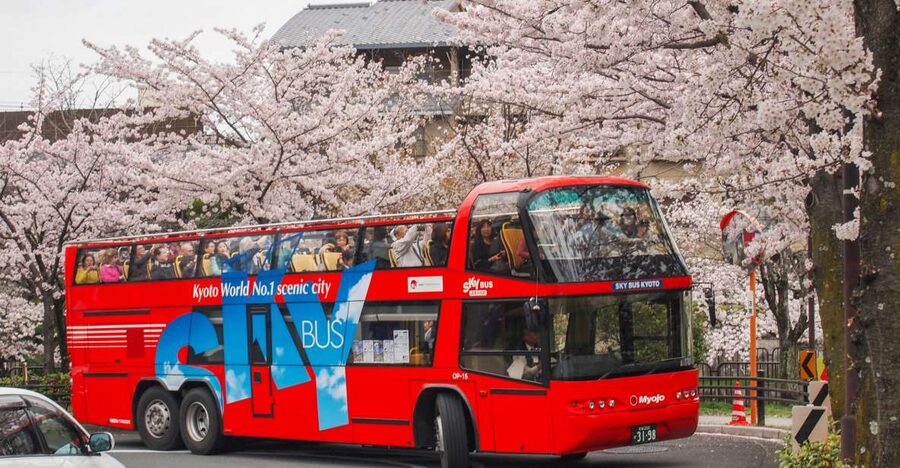
Kyoto’s major sights are spread across the city, and this bus gives you a simple way to connect them without decoding every train and city-bus transfer. I like the freedom to hop off at temples, markets, and old districts, then continue when you are ready. I also like the open-top view, which helps you get a feel for Kyoto’s layout before choosing where to spend your time.
The two-day ticket is the better buy for most first visits. You can use the first day to ride the full circuit and mark the places you want to return to. The main drawback is timing: buses may be 45 minutes apart, and some riders have waited close to an hour after missing one.
Quick reasons to consider this Kyoto bus
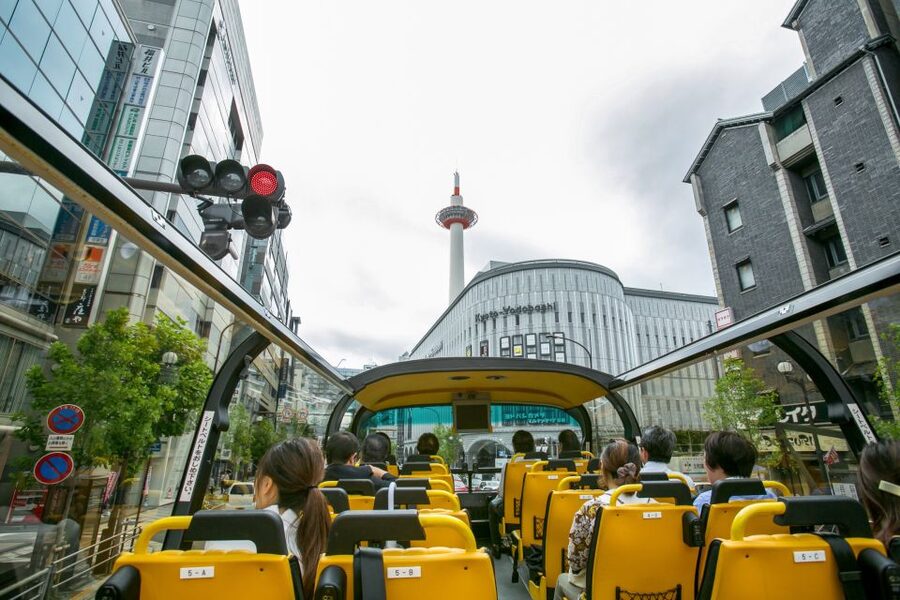
- Kyoto Station starting point: Find the first stop in front of the Isetan department store at the station’s north central exit.
- Major sights on one ticket: The route reaches Nijo Castle, Kinkakuji, Ginkakuji, Kiyomizu-dera, Gion, Nishiki Market, and more.
- Two useful route areas: The service links western sights, including the Golden Pavilion, with eastern sights around Ginkakuji, Heian-jingu, Gion, and Kiyomizu-dera.
- Seven audio languages: Commentary is available in English, French, Japanese, Korean, Chinese, Spanish, and German.
- Open-air views: The upper deck gives you a broad look at Kyoto, but direct sun, rain, and cold can change the ride.
- A good first-day orientation: A full loop takes about 45 minutes, giving you a practical sense of where the main districts sit.
Why this bus works well in Kyoto
Kyoto is not hard to love, but it can be hard to connect. A temple in the northwest may be several miles from a shrine in the east, while the most famous shopping streets sit elsewhere again. The sightseeing bus ties many of these areas together in a way that is easy to follow.
You show your mobile voucher when boarding, then use the ticket for unlimited rides during the selected one or two days. There is no need to commit to a fixed guided schedule. You can ride past a stop, decide it looks worthwhile, and get off on the next loop.
That flexibility matters most if you are visiting Kyoto for the first time. The city’s rail network is useful, but it does not place you directly beside every major temple. This bus reduces the mental work, especially if you would rather not sort out several local routes in one afternoon.
I would use the first complete circuit as an orientation ride. One full circle takes about 45 minutes, so you can see how the northern temples relate to central Kyoto and how the eastern sights connect with Gion. The bus is not a substitute for walking, but it gives you a useful map in your head.
Other ways to see Kyoto in a day:
- From Tokyo: Mount Fuji Full-Day Sightseeing Trip
★ 4.5 · 4,970 reviews - Tokyo: Hop-On Hop-Off Sightseeing Bus Ticket
★ 3.9 · 4,207 reviews - Tokyo: Private City Highlights Tour with Local Guide
★ 4.8 · 1,433 reviews
Kyoto Station and the first ride
Kyoto Station is the most practical place to begin. Leave through the north central exit and look for the sightseeing bus stop directly in front of Isetan. You can also board at any stop on the route, but starting here makes the first ride easy to organize.
The station is more than a transport hub. It has shops, restaurants, and comfort facilities, which is useful when you return after a long day. If you are staying near the station, this stop is especially convenient.
At the start of your ride, pay attention to the direction and route displayed by the staff. There can be some confusion between the red and blue route areas, particularly on the first day. Ask before boarding if you are unsure which bus reaches your next stop.
The ride itself gives you a broad view of Kyoto’s mix of modern streets, older neighborhoods, temples, and commercial areas. The audio commentary adds basic context in your chosen language, though it is best treated as an introduction rather than a full temple-by-temple lesson.
Nishihonganji and the central shopping stops
The Nishihonganji stop, near the Kyoto Tokyu Hotel, brings you close to one of Kyoto’s important Buddhist temples. The stop is useful if you want a quieter religious site before heading into the denser shopping areas.
Next comes Shijo Karasuma and Nishiki-ichiba Market. This is one of the most useful stops for combining sightseeing with food and shopping. Nishiki Market is a narrow, busy arcade where you can browse Japanese ingredients, small snacks, kitchen goods, and local specialties.
The bus does not include food or drinks, so this is a natural place to stop for a meal or snack. Keep track of time, though. The central shopping streets can easily absorb an hour or two, and a missed bus may mean a long wait.
This area also connects with Teramachi-dori and Kawaramachi, both useful for shopping and city life. It is a good break from temple visits and helps show that Kyoto is not only a collection of historic buildings.
Nijo Castle and the northern temple route
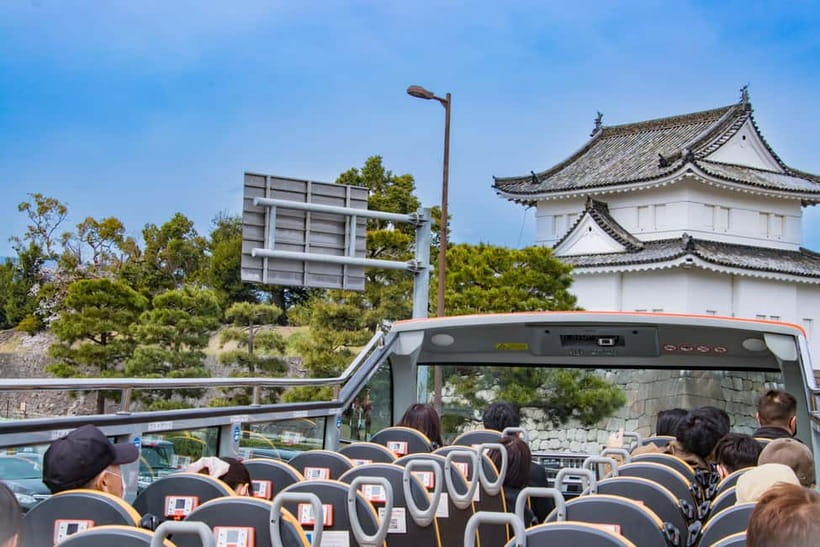
Nijo Castle is one of the strongest stops on the western side of the route. Its grounds and palace buildings offer a change from Kyoto’s temples, with a sense of political power and court life. You will need a separate entrance ticket, since admission is not included.
From Nijo Castle, the route continues toward Kitano-tenmangu Shrine and Kamishichiken. Kitano-tenmangu is an important shrine, while Kamishichiken is known for its traditional entertainment district. This stop gives you a chance to see a less streamlined side of Kyoto, though the area deserves time on foot rather than a quick photograph from the bus.
The route then reaches Kinkakuji, the Golden Pavilion. This is one of Kyoto’s best-known sights and one of the busiest stops. The bus drops you near the temple, but the entrance fee is separate. Bring cash, since the Golden Pavilion does not have an ATM on the premises.
Kinkakuji is visually striking, but plan for crowds, especially during popular seasons. You will walk through the grounds rather than simply view the pavilion from the road. If you want a calm visit, use the bus to arrive early in your day, then accept that the return trip may require patience.
Daitokuji follows on the northern route. Its temple complex offers a different mood from Kinkakuji, with several subtemples and a more spacious setting. Not every part is always open, and admission arrangements can vary, so use this as a flexible stop rather than the one sight you must fit into a tight schedule.
Other tours by coach from Kyoto:
- PERFECT KYOTO 1-Day Bus Tour
★ 5.0 · 13,518 reviews - Kyoto: Fushimi Inari, Kinkakuji, Bamboo Grove 1 Day Bus Tour
★ 4.8 · 4,316 reviews - Kyoto/Osaka: Nara, Fushimi Inari Taisha, Arashiyama Bus Tour
★ 4.7 · 1,275 reviews - Mt Fuji and Hakone 1-Day Bus Tour Return by Bullet Train
★ 5.0 · 26,383 reviews
Kyoto Imperial Palace and Ginkakuji
The Kyoto Imperial Palace stop is at Doshisha University. The palace grounds provide a wide, open contrast to the narrow lanes around Nishiki Market and Gion. It is a good choice if you want a pause from the bus and a sense of the city’s imperial past.
You will need to allow enough time for the palace area, particularly if you prefer a slow walk. The stop is not simply a quick photo point. As with the other sights, admission to any attraction is your responsibility.
Ginkakuji, the Silver Pavilion, is one of the route’s most valuable eastern stops. It is not always included in short guided sightseeing programs, so the bus offers a useful way to reach it without arranging separate transport. The temple is known for its refined gardens and quieter style compared with the Golden Pavilion.
From Ginkakuji, you might continue on foot along the Philosopher’s Path, though the bus ticket itself only covers the ride. Check the time before leaving the stop, because the next bus may not arrive quickly. If you want to visit both Ginkakuji and several nearby sights, the two-day ticket gives you far more breathing room.
Heian-jingu, Gion, and Kiyomizu-dera
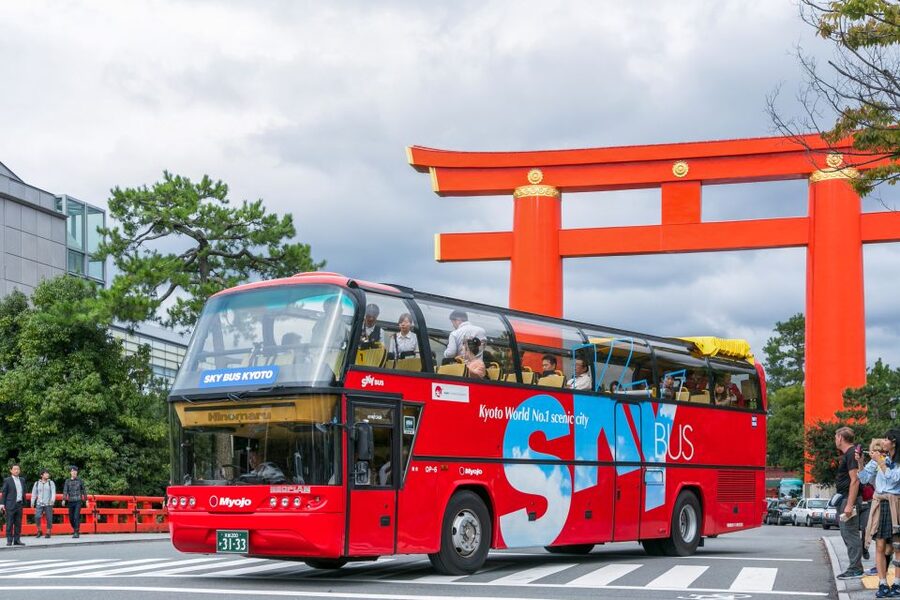
Heian-jingu Shrine and Okazaki Park make another strong eastern stop. The shrine has a large entrance gate and broad grounds, while the park area places you near museums and other cultural sites. This is a good stop for combining a shrine visit with a slower afternoon.
The bus then moves toward Gion, stopping near Kotowa-Kyoto Yasaka. Gion is one of the city’s most atmospheric districts, with traditional wooden buildings, lanes, restaurants, and tea houses. Treat it as a neighborhood to walk through respectfully, not a stage set. Avoid blocking lanes or taking intrusive photographs of people.
Gojozaka is the stop for Kiyomizu-dera and access to Gion. Kiyomizu-dera is one of Kyoto’s essential sights, but the approach includes uphill streets and busy lanes. Give yourself more time than the stop name might suggest. You are not stepping off the bus directly at the temple entrance.
This is also an area where the bus can save your energy. You can ride from the northern or central stops instead of making several transfers, then walk the final section at your own pace. After the visit, expect the return stop to be busy, especially later in the day.
Sanjusangendo and the National Museum
The Sanjusangendo and Kyoto National Museum stop, near the Hyatt Regency Kyoto, works well for a history-focused afternoon. Sanjusangendo is known for its long hall and rows of Buddhist statues, while the National Museum offers changing displays and Japanese art.
These attractions are close enough to pair, but you should check how much time you have before entering. The bus runs to a schedule, and a missed departure can interrupt plans for another stop.
This part of the route also helps connect the eastern temple area with Kyoto Station. It is a practical link if you have spent the day around Gion or Kiyomizu-dera and want to return toward the station without changing trains.
Open-top comfort, weather, and audio
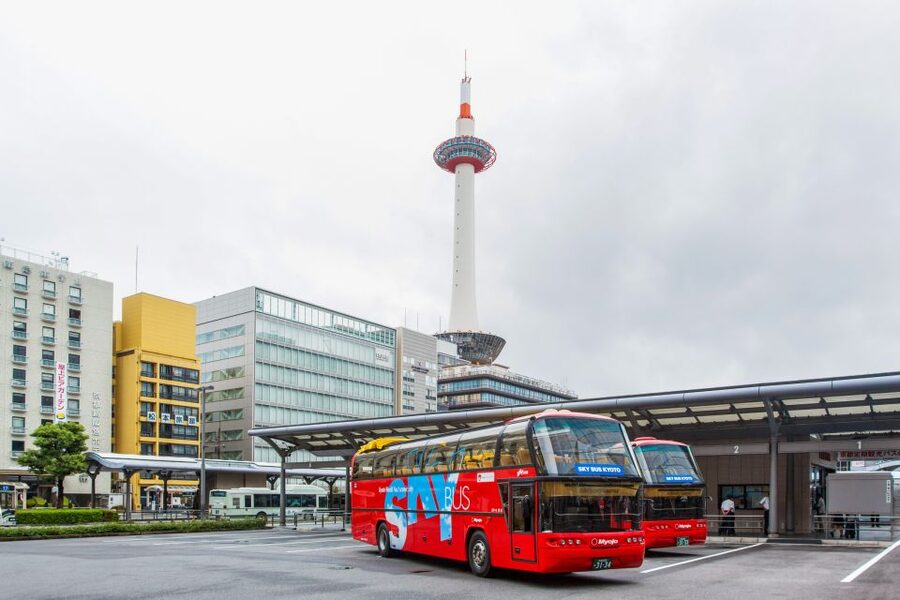
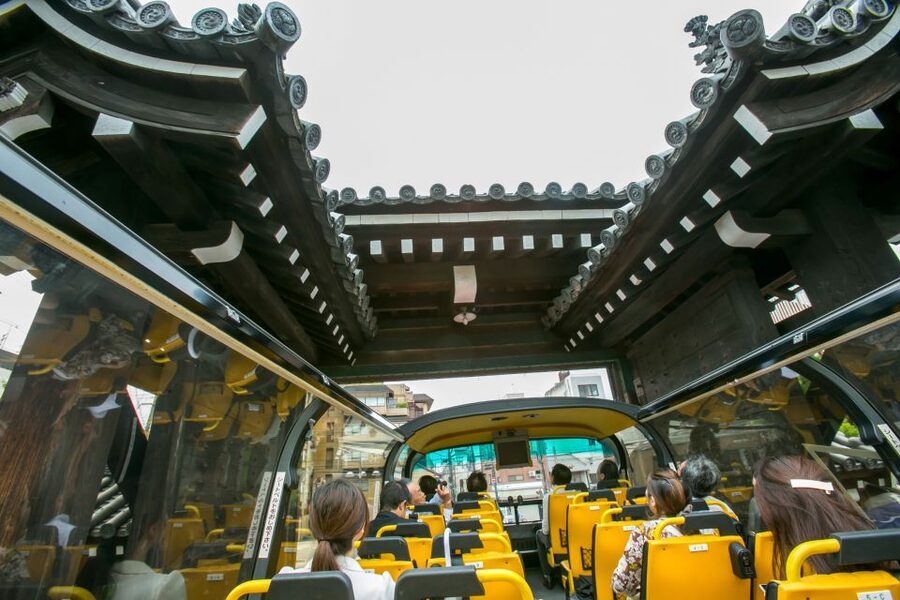
The upper deck is the main pleasure of this bus. You get a broad view of streets and rooftops, and the ride itself becomes part of the sightseeing. It is particularly useful on the first circuit, when you are learning the shape of Kyoto.
The open top also has limits. You will be in direct sunlight, so bring sun protection. In cool weather, the ride can feel cold, and in wet weather you may prefer the covered lower deck. Raincoats are provided when it rains, but severe weather such as typhoons or thunderstorms may stop service.
Some buses include a partly covered upper section, which helps in hot weather. Air-conditioned interiors have also been appreciated during warmer months, but the lower deck offers less of the open view.
Audio commentary comes in seven languages: English, French, Japanese, Korean, Chinese, Spanish, and German. It provides useful facts and orientation, but the narration can cut off as the bus approaches a stop or shift into a directional announcement. I would listen for general context, then use the time off the bus for the fuller story.
Wi-Fi is listed as included but is temporarily suspended. Do not plan your navigation around onboard internet access. The bus is clean and comfortable, but food, alcohol, umbrellas, smoking, and selfie sticks are not allowed. Soft drinks are allowed only if they have lids, such as bottled drinks or lidded coffee.
One day or two days at $27?
At $27 per person, the one-day ticket can be good value if you plan several long connections between the listed sights. Two taxi rides in Kyoto can easily make the ticket look more attractive, especially when you factor in the convenience of staying on one route.
The two-day option makes more sense if you want to enter several temples and still have time to walk. Kyoto’s sights are not quick roadside stops. Kinkakuji, Ginkakuji, Kiyomizu-dera, and Nijo Castle each deserve time, and adding Gion or Nishiki Market can fill the rest of a day.
Bus frequency is the chief value limitation. The service can have long gaps, including a reported 45-minute wait during some late-morning periods. Traffic can also affect timing, even though the operation is generally organized and punctual.
I would not buy this ticket just to sit on the bus all day. I would buy it when I plan to make several stops, especially across both the western and eastern parts of Kyoto. The ticket is less useful if your hotel and daily plans are already centered around one compact district.
Who will get the most from this ride?
This is a strong choice for a first visit, a short stay, or anyone who finds Kyoto’s transport system tiring. It is also useful if you want to avoid crowded rail stations and reduce the number of transfers between famous sights.
Families may appreciate the simple boarding system, though children aged five and under ride free only when sitting on the lap of a ticketed adult, with one child per ticketed passenger. Older adults should note that the upper deck requires stairs, and one rider specifically wished for a ramp and more lower-deck seats.
The bus also suits independent explorers. Staff can help with directions, and individual attendants and guides, including Miyuki, Casey, Lauren, and Frederick, have been praised for clear explanations, humor, and practical local suggestions. The quality of personal assistance may vary by departure, but staff are an important part of making the route easy to use.
You should choose another plan if you need guaranteed close-up views from the road, a detailed historical lecture, or a tightly timed schedule. Some attractions are a walk from their stops, and the audio guide cannot replace time inside the sites.
Should you book this Kyoto bus?
Book it if you want an easy first look at Kyoto and plan to visit several widely separated sights. I would choose the two-day ticket for a relaxed visit, using day one to ride the route and day two to stop at the temples and districts that caught your interest.
Choose the one-day ticket if you have a short stay and a clear list of two or three major stops. Start early, carry cash for Kinkakuji, check the route direction before boarding, and leave room for long waits between buses.
For $27, this is a practical sightseeing tool rather than a full guided tour. It works best when you use it as a moving map, a convenient link between districts, and a way to save energy for the places where Kyoto rewards slow walking.
FAQ
Where can I board the Kyoto sightseeing bus?
You can board at any stop along the route. The first stop is Kyoto Station, directly in front of the Isetan department store when you leave through the north central exit.
What attractions are included on the route?
Stops include Nijo Castle, Kinkakuji, Daitokuji Temple, Kyoto Imperial Palace, Ginkakuji Temple, Heian-jingu Shrine, Gion, Kiyomizu-dera, Sanjusangendo, Kyoto National Museum, Nishiki-ichiba Market, and Nishihonganji.
Is admission to the temples and castles included?
No. The ticket covers the bus ride and audio commentary, but entrance fees to attractions are not included.
Which languages are available for the audio guide?
Audio commentary is available in English, French, Japanese, Korean, Chinese, Spanish, and German.
Can young children ride without a ticket?
Children aged five and under do not need a ticket if they sit on the lap of an adult passenger who has a ticket. The allowance is one child per ticketed adult.
What happens if the weather is bad?
The bus has an open top, so you may be in direct sunlight. Raincoats are provided in wet weather, but buses may not operate during severe conditions such as typhoons or thunderstorms.
Just added in Kyoto
- Kyoto: Private Photoshoot Service★ 5.0 · 158 reviews
- Kyoto Rickshaw Tour★ 5.0 · 210 reviews
- Izakaya Style Cooking Class★ 5.0 · 219 reviews
- Kyoto: Traditional Concert at Townhouse or Bathhouse★ 4.9 · 224 reviews
- Ninja 2-hour Hands-on Lesson by Japanese master in Kyoto -Medium★ 5.0 · 218 reviews
- Kyoto: Arashiyama Bamboo, Temple, Matcha, Monkeys & secret spots★ 5.0 · 219 reviews
- Kyoto Geisha District Walking Tour in Gion★ 5.0 · 232 reviews
- The right way to know Kyoto★ 5.0 · 257 reviews
Sightseeing Bus Tours, compared.
Mt Fuji and Hakone 1-Day Bus Tour Return by Bullet Train
Read our review →
Peaceful Hiroshima & Miyajima UNESCO 1 Day Bus Tour
Read our review →
Tokyo Mt Fuji 5th St & Hakone Cruise Bus Tour w/Bullet Train
Read our review →
Meiji Shrine, Asakusa, Skytree Bus Tour and Cruise
Read our review →
Kyoto/Osaka: Nara, Fushimi Inari Taisha, Arashiyama Bus Tour
Read our review →Browse the lists this tour appears in