
Reviewed · CYCLING TOURS
Kyoto: Full-Day City Highlights Bike Tour with Light Lunch
Kyoto’s best feature is also its biggest challenge: the famous sights are spread across the city. This 44-kilometer bike tour links Arashiyama, Fushimi Inari, Kiyomizu-dera, Gion, and Kinkaku-ji in one long day, using side streets and narrow lanes that buses cannot reach. You cover a lot of ground while still stopping to walk through the main sites.
I like the small group of up to eight and the way the route mixes major sights with quieter corners of Kyoto. I also like that guides such as Rob, Cass, Peter, and Ray are praised for clear explanations, safe riding, patience, and good photographs. The drawback is plain: this really is an eight-hour ride, and the mileage can be demanding. If you are not a regular cyclist, pay extra for a pedal-assist e-bike.
Key points at a glance
- About 44 km of riding: This is a serious full-day cycling outing, not a gentle pedal around one neighborhood.
- Five major Kyoto sights: See Arashiyama Bamboo Grove, Fushimi Inari, Kiyomizu-dera, Gion, and Kinkaku-ji.
- Small groups matter: With no more than eight people, the guide can help with road safety, questions, and photographs.
- E-bikes are a smart upgrade: They still require pedaling but make hot weather and long stretches easier.
- A local-feeling route: Back lanes, gardens, fishing spots, and quieter streets add texture between the famous stops.
- Lunch and admission are covered: You receive a light lunch, bottled water, bicycle, helmet, and entry fees.
Why this Kyoto bike tour covers so much ground
Kyoto is not a compact old town where every sight sits around one central square. Arashiyama is in the west, Fushimi Inari is south, Kiyomizu-dera is in the eastern hills, Gion lies nearby, and Kinkaku-ji is farther north. Seeing all five in one day by public transport means repeated station walks, transfers, and time spent waiting.
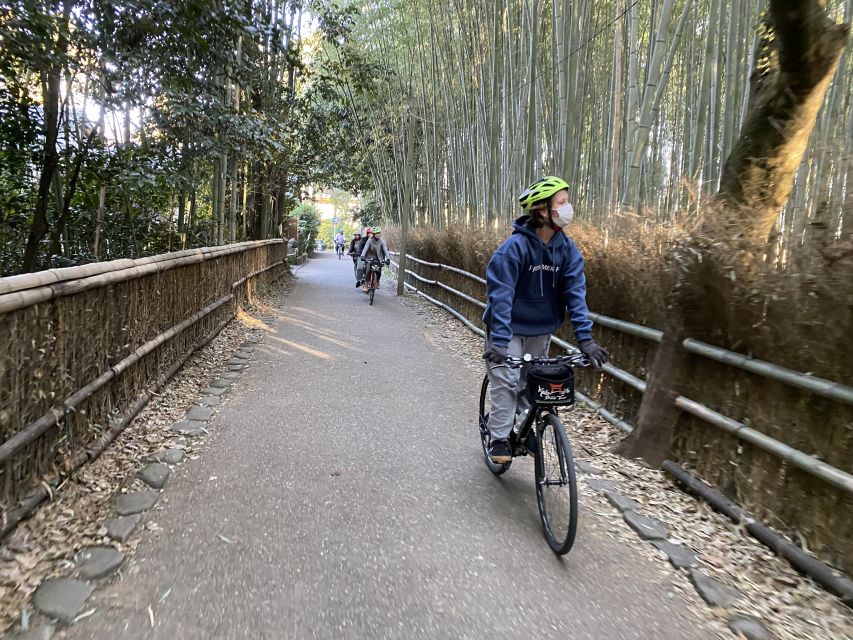
A bicycle gives you a different view of the city. You pass ordinary streets, small lanes, gardens, waterways, and residential areas between the headline sights. Several people who took the tour especially valued seeing locals fishing and tending gardens, as well as routes that tourist buses cannot use.
The trade-off is effort. The tour covers approximately 27 miles, so you should think of it as an active sightseeing day. It suits someone who likes exercise and wants an efficient overview of Kyoto, but it is not the right choice if you prefer slow temple visits with long breaks.
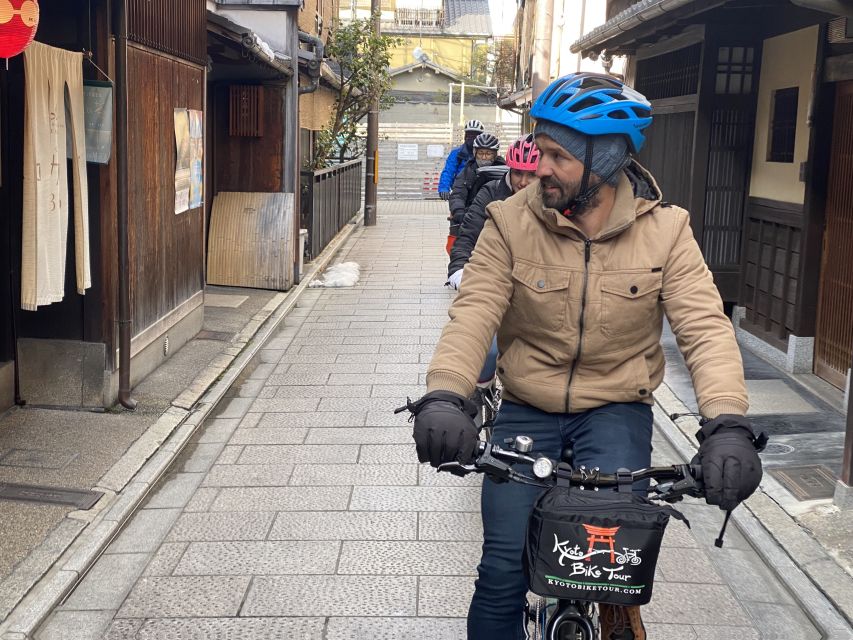
The tour begins outside JR Saga-Arashiyama Station. Look for a guide wearing a bike helmet and a Kyoto Bike Tour shirt. Before setting off, you receive a safety briefing and a bike fitting. That start matters because you spend much of the day riding through city streets rather than staying on a single protected path.
Other cycling tours in Kyoto people book:
- Bike Tour Exploring North Kyoto plus Lunch
★ 5.0 · 1,087 reviews - Arashiyama Bamboo Forest & Hidden Gems Bike Tour (Early Bird)
★ 5.0 · 613 reviews - 5 Top Highlights of Kyoto Full Day Bike Tour (E-bike option)
★ 5.0 · 511 reviews
Arashiyama Bamboo Grove sets the tone
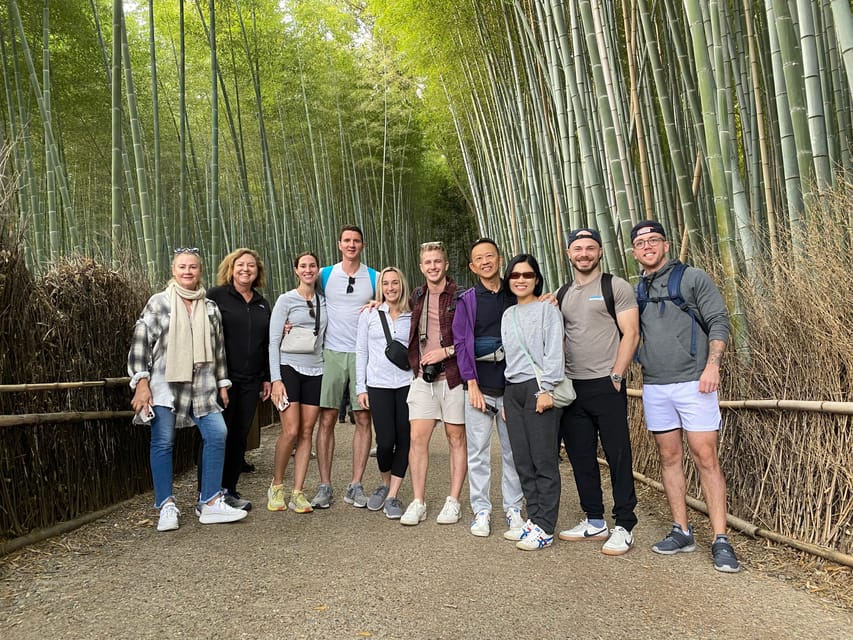
Arashiyama is an excellent place to begin. The Bamboo Grove is one of Kyoto’s most photographed spots, with tall green stalks rising on both sides of the route. Light filters through the stems, and even a short stop gives you that familiar Kyoto image in person.
The cycling portion lets you reach Arashiyama without treating it as a separate half-day trip. You have about 30 minutes here for guided sightseeing and a walk, which is enough to see the grove and take photographs, though not enough for a leisurely exploration of every nearby attraction.
That limited time is part of the day’s pattern. The tour gives you a useful first look at each major place, then moves on. If your priority is spending hours in Arashiyama alone, book a separate visit. If your priority is seeing several sides of Kyoto in one day, this quick stop works well.
Fushimi Inari and its endless vermilion gates
At Fushimi Inari Taisha, the famous Senbon Torii path leads behind the main shrine buildings. The closely spaced vermilion gates create a striking corridor up the wooded hillside. You will also see fox statues, since foxes are associated with Inari, the Shinto deity linked with rice and prosperity.
The tour includes a stroll around the shrine grounds, with roughly 30 minutes for sightseeing. You can take in the main torii-lined section and look for the different fox figures. The full mountain trail extends far beyond the most photographed section, so do not expect to walk the entire route during this stop.
This is one of the places where a guide adds useful context. A guide can explain the role of the shrine, point out details you might miss, and keep the stop moving so the rest of the day stays on schedule. You will need to accept that the visit is an introduction, not a full hike.
Lunch arrives at the right moment
After Arashiyama and Fushimi Inari, a light lunch provides a welcome pause. Lunch is included, along with bottled water, so you do not need to organize a midday meal while trying to keep up with the route.
The exact meal can vary. One example was curry udon at a local restaurant, and a small group was able to choose the restaurant. The important point is that this is a light lunch, not an elaborate food tour. You should still eat a good breakfast and carry whatever extra snack you personally need for a long active day.
The break also gives your legs time to recover. On a hot day, take advantage of the water and pause fully rather than rushing back onto the bike. The tour has a lot to fit in, but conserving energy early makes the final sights much more enjoyable.
Other rides on two wheels around Kyoto:
- E-Bike Tours of the highlights of Kyoto!!!
★ 5.0 · 291 reviews - Afternoon Kyoto Bike Tour: Bamboo Forest, Monkeys & Hidden Spots
★ 5.0 · 283 reviews - South Kyoto in a Nutshell: Gentle Backstreet Bike Tour!
★ 5.0 · 225 reviews - Pedal Adventure Kyoto’s iconic landmarks on an e-bike tour
★ 5.0 · 189 reviews
Kiyomizu-dera brings the eastern hills
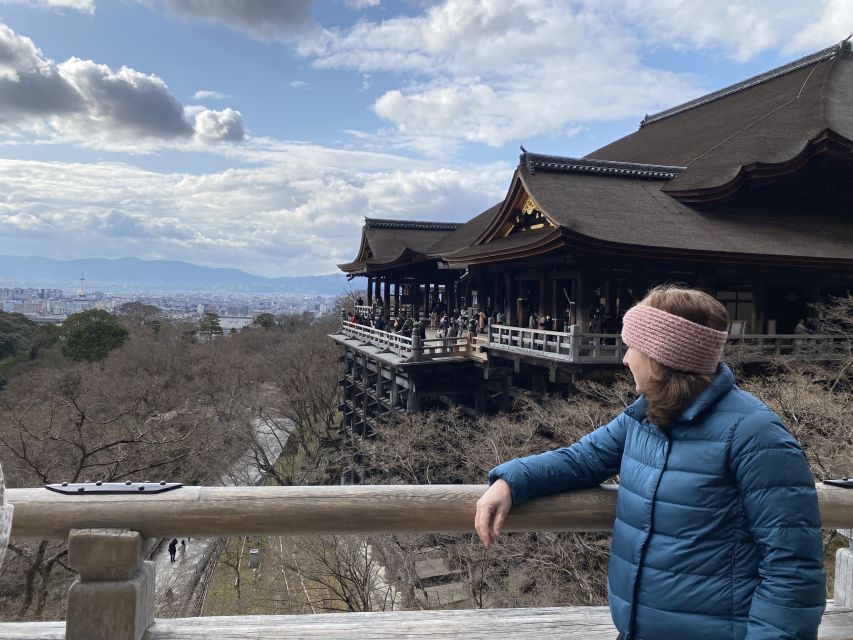
Kiyomizu-dera sits on the eastern edge of central Kyoto. The temple is a UNESCO World Heritage Site, and the Otowa Spring is famous for its pure waters, traditionally associated with beneficial qualities.
The route to the temple adds some of the day’s more demanding riding. You are heading toward the eastern hills after already covering a substantial distance. This is where pedal-assist power can make a major difference, especially in summer or if you do not regularly cycle long distances.
The visit itself lasts about 30 minutes for guided sightseeing. That gives you time to take in the temple area and its setting, but the stop is not designed for an extended exploration of every building and lane around the complex. Kiyomizu-dera can reward a much longer visit, so consider this tour a well-chosen overview.
The approach through eastern Kyoto is valuable in another way. You are not simply being delivered to a temple entrance. You see how the major cultural sites fit into the city around them, with the guide helping you move safely through busy areas.
Gion shows Kyoto’s polished old streets
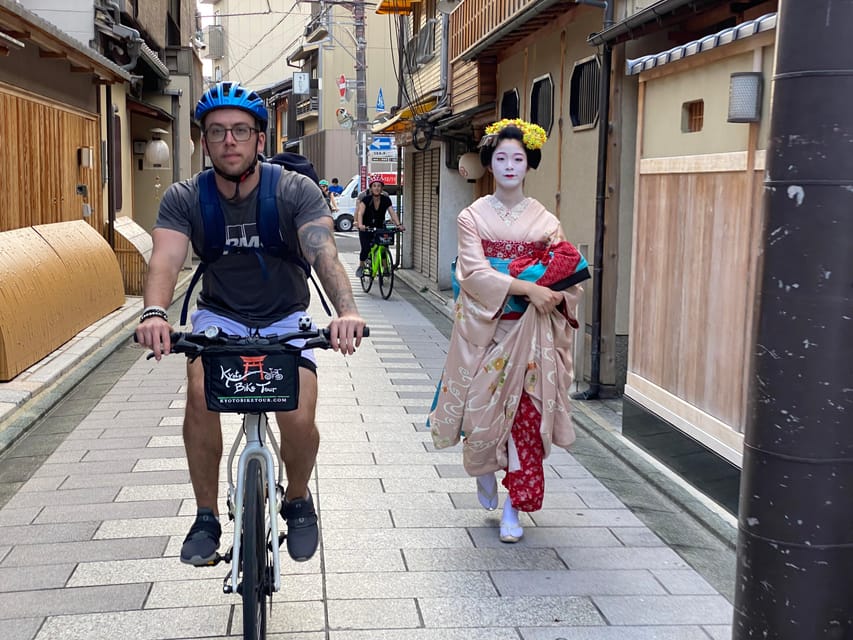
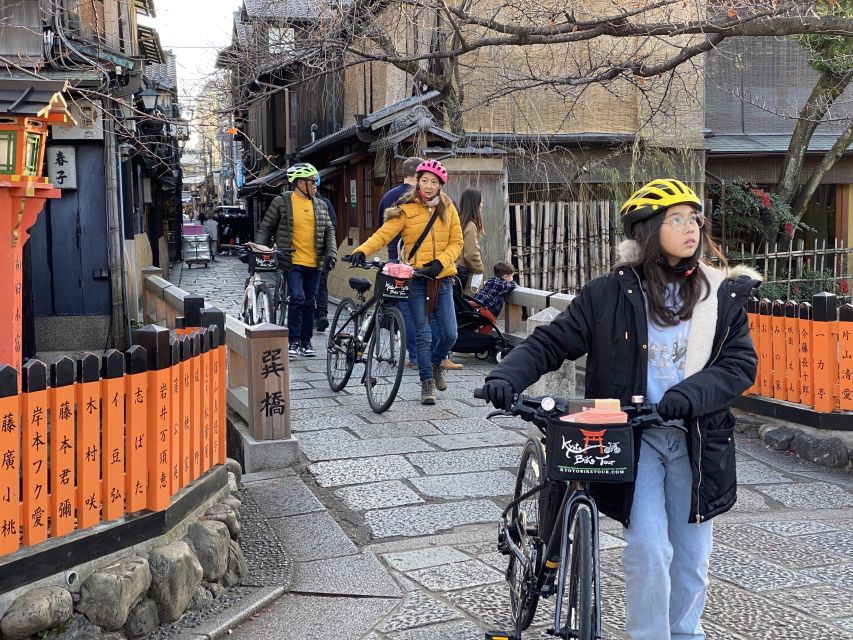
Gion is the cultural heart of the city and one of the most atmospheric parts of the route. You cycle through the entertainment district and may pass the wooden Tatsumi Bridge or Hanamikoji Street, known for traditional buildings, upscale restaurants, and boutiques.
This is a place for respectful observation. You might spot a maiko in a colorful kimono, but such sightings are not guaranteed. The value of Gion is broader than seeing a geisha district figure. The wooden architecture, narrow lanes, restaurants, and carefully maintained streets give you a feel for Kyoto’s traditional public face.
A bicycle helps you move between the district’s main areas without spending the whole afternoon on foot. At the same time, you must follow your guide carefully and ride with care. Gion can be busy, and the tour is not an excuse to photograph people at close range or block narrow streets.
The guide’s role is particularly useful here. Rob has been praised for mixing explanations of religion and history with everyday anecdotes, while other guides have been noted for helping each person get a good photograph. That personal attention is easier in a group of eight than on a large bus tour.
Kinkaku-ji glows beside its pond
The final major sight is Kinkaku-ji, the Golden Pavilion. Its bright gold exterior reflects above a pond, creating one of Kyoto’s most recognizable views. The temple dates to the 14th century and is associated with Zen Buddhism.
Timing can make a real difference. One guide arranged the visit so the pavilion appeared in the golden hour, when the light made the scene especially striking. The exact light depends on the day and the tour schedule, but arriving later can give the pavilion a softer appearance than the harsh midday sun.
Like the other stops, Kinkaku-ji receives about 30 minutes of guided sightseeing. The grounds are organized for viewing the pavilion and pond rather than for wandering wherever you wish. You should expect a focused visit, photographs, and an explanation from the guide before returning to the bicycles.
By this point, you will have seen five very different sides of Kyoto: bamboo, Shinto gates, a hillside Buddhist temple, traditional entertainment streets, and a gold-covered Zen pavilion. That variety is the tour’s strongest argument.
What the cycling is really like

The headline number is approximately 44 km, or 27 miles. Do not dismiss that as a minor detail. Even a fit person can feel the distance after a full day that includes repeated stops, city traffic, walking, heat, and temple visits.
Several riders who were in good shape still found the e-bike useful. Pedal-assist bicycles do not remove all effort. You still pedal, but the motor helps on longer stretches and hills. I would choose the upgrade if you are not a regular long-distance cyclist, if you are visiting during Kyoto’s warmer months, or if you want more energy for the temples.
The tour is not suitable for people who cannot ride a bike, have low fitness, back problems, or mobility impairments. Children under 14 are not accepted. Wear comfortable clothes and shoes, and dress for the weather. High heels, sandals, flip-flops, boots, and loose clothing are not allowed, which makes sense for safety and pedal control.
Winter changes the rhythm. From December through February, stops are shortened so the group can finish before sunset. That means less time at the sights, but it also reflects the practical limits of a long bicycle day in short daylight.
Guides make the long day work
The experience depends heavily on the guide. The tour includes a bilingual guide, with English used for the live tour. Guides named in feedback include Rob, Cass, Peter, and Ray, each praised for a slightly different strength.
Rob is associated with clear explanations, good answers to questions, personal attention, and photographs. Cass is described as organized and friendly, giving enough information without overloading the group. Peter has been noted for patience and flexibility, especially when riders needed extra support. Ray is praised for safe riding, respect for Japanese culture, and careful organization.
Those details matter because a long bike tour can become tiring if the guide is rushed or inattentive. A good leader sets a manageable pace, checks that everyone stays together, explains what you are seeing, and handles busy streets calmly.
The small group limit of eight helps. You can ask questions without holding up a large crowd, and the guide can notice if someone is struggling. Solo visitors also get a natural way to share the day with a few other people without joining a packed coach group.
Is $167 good value?
At $167 per person, the tour is not a cheap way to check off temples. It is a full-day guided outing with a bicycle, helmet, bottled water, light lunch, entry fees, and a small group. You are also paying for route planning, local guidance, and the ability to connect distant sights without organizing several trains and bus rides.
The value is strongest if you want to see all five major places in one day and prefer active sightseeing. Transport alone would not necessarily cost as much, but arranging the route, finding each entrance, keeping track of timing, and navigating Kyoto traffic takes work. The tour handles those details for you.
The value is weaker if you already know Kyoto well, dislike fixed schedules, or want extended time inside each temple. You also need to budget for the possible e-bike upgrade if a standard bicycle sounds too demanding. That extra cost may be worthwhile, but it changes the final price.
Hotel pickup and drop-off are not included. You must reach JR Saga-Arashiyama Station and return there at the end, so allow time to get to the starting point before the safety briefing.
Who should book this day on two wheels?
I would recommend this tour to an active first-time visitor who wants a broad introduction to Kyoto. It is also a strong choice for solo visitors, couples, and small groups who enjoy local streets, guided context, and a full schedule.
Choose it if you like the idea of seeing famous sights while also passing gardens, back lanes, and ordinary neighborhoods. Choose an e-bike if you are unsure about the distance. The upgrade can turn a tiring day into an enjoyable one without removing the pleasure of riding.
I would skip it if you have back or mobility problems, cannot ride confidently, or want a relaxed temple day. The 44 km distance is real, and the schedule does not leave room for lingering at every stop.
The tour has free cancellation up to 24 hours before departure, and you can reserve now and pay later. That flexibility helps if your Kyoto plans are still shifting, but the central decision is physical: can you comfortably spend most of a day on a bicycle?
Should you book the Kyoto highlights bike tour?
Book it if you want an efficient, active overview and are willing to trade long temple visits for breadth. The route connects Kyoto’s most famous sights with quieter streets, and the small group, included lunch, entry fees, and attentive guides make the price easier to justify.
My strongest advice is to take the 44 km distance seriously and select a pedal-assist bicycle unless you already ride long distances with ease. With that choice, the tour can be one of the most useful ways to understand how Kyoto’s separate districts fit together.
FAQ
Where does the Kyoto bike tour begin and end?
The tour begins outside JR Saga-Arashiyama Train Station and returns to the same station.
How long is the tour?
The experience lasts eight hours.
How far do you ride?
The tour includes approximately 44 km, or 27 miles, of cycling.
Which Kyoto sights are included?
You visit Arashiyama Bamboo Grove, Fushimi Inari Taisha Shrine, Kiyomizu-dera, Gion, and Kinkaku-ji, also called the Golden Pavilion.
Is lunch included?
Yes. A light lunch and bottled water are included.
Is an e-bike included?
A bicycle and helmet are included. Pedal-assist e-bikes are available as an upgrade, which is useful for the long distance, hills, and hot weather.
Who cannot take this tour?
The tour is not suitable for children under 14, people with back problems or mobility impairments, people who cannot ride a bicycle, or people with a low level of fitness. High heels, sandals, flip-flops, boots, and loose clothing are not allowed.
Just added in Kyoto
- Kyoto: Zen Meditation at a Private Temple with a Monk★ 5.0 · 25 reviews
- Private Cooking Class Udon in Kyoto Japan★ 5.0 · 23 reviews
- Your Private Vacation Photography Session In Kyoto★ 5.0 · 110 reviews
- Private Pewter Sake Cup Experience with a Kyoto Artisan★ 5.0 · 31 reviews
- Kyoto Wagashi(Japanese sweets) Cooking Class near Fushimiinari★ 5.0 · 60 reviews
- Kyoto:Family-Friendly Kimono & Yukata Experience at WARGO★ 5.0 · 147 reviews
- Private Guided Traditional Buddhist Cooking in Japan★ 5.0 · 16 reviews
- Kyoto: Gion Geisha District & Sake-in-Hand Walking Tour★ 5.0 · 37 reviews
Cycling Tours, compared.

3h Tokyo E-Bike Tour: Hidden Gems, and Local Life with guide
Read our review →
Arashiyama Bamboo Forest & Hidden Gems Bike Tour (Early Bird)
Read our review →
5 Top Highlights of Kyoto Full Day Bike Tour (E-bike option)
Read our review →
Hiroshima 2hr Peace Cycling Tour with Local Guide
Read our review →Browse the lists this tour appears in