
Reviewed · CASTLE TOURS
Kyoto: Nijo-jo Castle and Ninomaru Palace Guided Tour
Nijo Castle is more than a handsome old fortress. It was the Kyoto home and political office of Tokugawa Ieyasu, and its Ninomaru Palace still shows how a shogun lived, received officials, and protected himself from danger. I like the short, focused route and the chance to see areas normally closed to general visitors.
I also like how the guides make small details useful. Ai, Miki, Kaoru, Ayu, and Don have all been praised for clear English and lively explanations, especially around the palace’s paintings, room functions, political symbols, and samurai customs. The drawback is simple: the one-hour tour moves quickly, admission is extra, and the palace can feel hot in summer because there is no air conditioning inside.
Key points
- See Ninomaru Palace with context: Learn how each room served the shogun, rather than simply walking past painted screens.
- Enter restricted areas: The guided route may include two spaces unavailable to ordinary visitors.
- Hear the castle’s political story: Nijo Castle was a power center and residence, not just a defensive stronghold.
- Look closely at palace details: Guides point out symbolic animals, murals, fire precautions, court customs, and daily routines.
- Plan for extra admission: The $16 tour price does not include the castle entrance fee, which is paid in cash on site.
- Allow time after the tour: You can continue through the gardens independently once the guided hour ends.
Why Nijo Castle feels different from a typical castle visit
Many Japanese castles are easiest to understand from the outside: stone walls, gates, towers, and defensive planning. Nijo Castle gives you a much more personal look at power. Its important building, Ninomaru Palace, was the shogun’s Kyoto residence and office, so the rooms reveal rank, ceremony, security, and daily life.
The castle was built in 1603 for Tokugawa Ieyasu, the first shogun of the Edo Period. After the Tokugawa Shogunate ended in 1867, the site became an imperial palace. Kyoto City later received the property, and it opened as a historic site.
That change in ownership gives the visit a useful historical arc. You are not looking at one frozen moment. You are seeing a place that first represented shogun power, then imperial authority, and now Kyoto’s care for an important cultural site. Nijo Castle became a UNESCO World Heritage site in 1994.
I find the castle especially rewarding if you are trying to understand how Japan’s ruling system worked. The buildings do not simply tell a military story. They show how status was managed through architecture, room size, artwork, movement, and ceremony.
Other castles reached from Kyoto:
- Kyoto: Nijo Castle, Kiyomizu & Fushimi Inari Guided Tour
★ 4.7 · 700 reviews - Kyoto: Nijo, Kinkaku-ji, Arashiyama, Kiyomizu & Fushimi Inari
★ 5.0 · 699 reviews - Kyoto: Imperial Palace & Nijo Castle Guided Walking Tour
★ 4.7 · 453 reviews
Starting at the East Main Gate and Karamon Gate
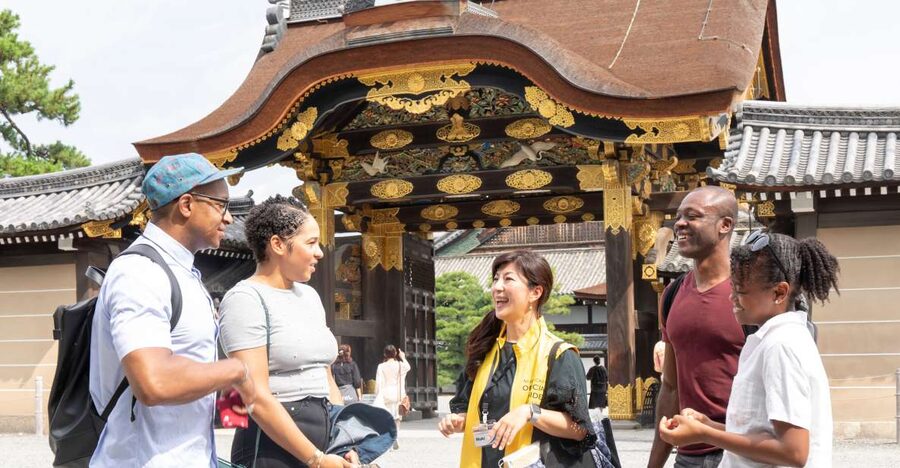
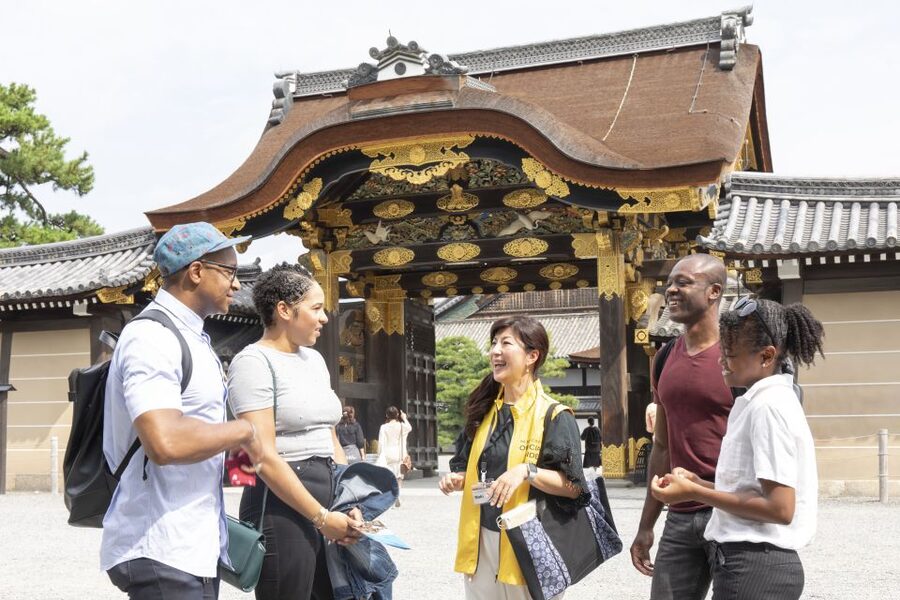
You meet at the reception area beside the General Reception after entering through the East Main Gate. This detail matters. The castle grounds are large enough that arriving at the wrong entrance or wandering around first could make you late, and the tour cannot wait for late arrivals.
The East Main Gate is part of the experience, not just a place to pass through. From here, your guide sets the scene before leading you toward the Karamon Gate, the ornate entrance to the Ninomaru section. The gate creates a sharp contrast with the castle’s heavy defensive walls. It signals that you are moving from the outer defenses toward the shogun’s formal world.
Your guide may use an earphone system. Earphones are supplied to paid participants, but not automatically to children joining free with an adult. If a child needs an earphone, that child must have an adult ticket. That is a small point, but it is worth knowing before you arrive.
Guides such as Kaoru, Ai, Miki, and Ayu have received repeated praise for speaking clearly and keeping groups together, even when the castle is crowded. That is important inside Ninomaru Palace, where you need to hear explanations while continuing along a set route.
Ninomaru Palace: the real heart of the visit
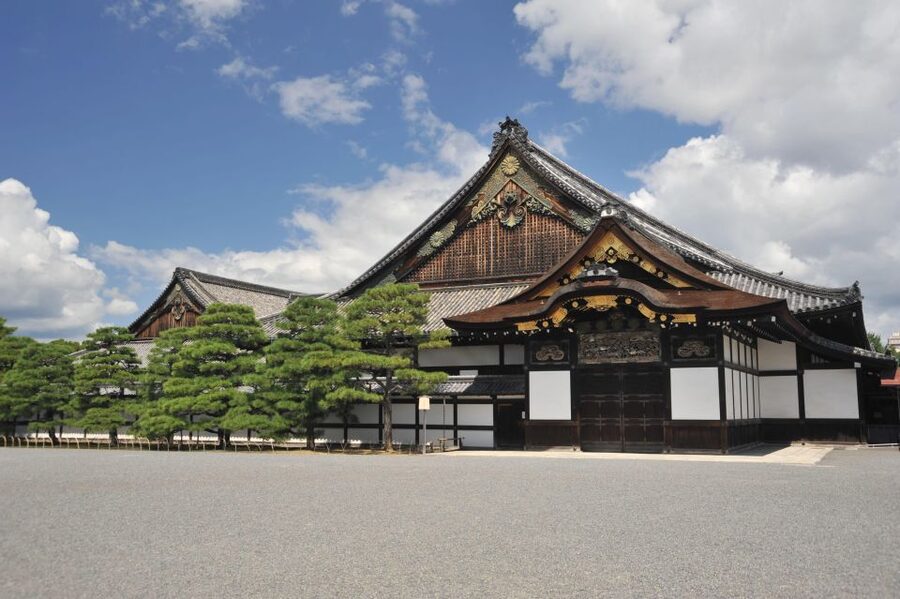
Ninomaru Palace is the main reason to choose this tour. The building remains remarkably intact, and the rooms are filled with painted screens and decorative details that can be easy to overlook when you are moving with the general flow of people.
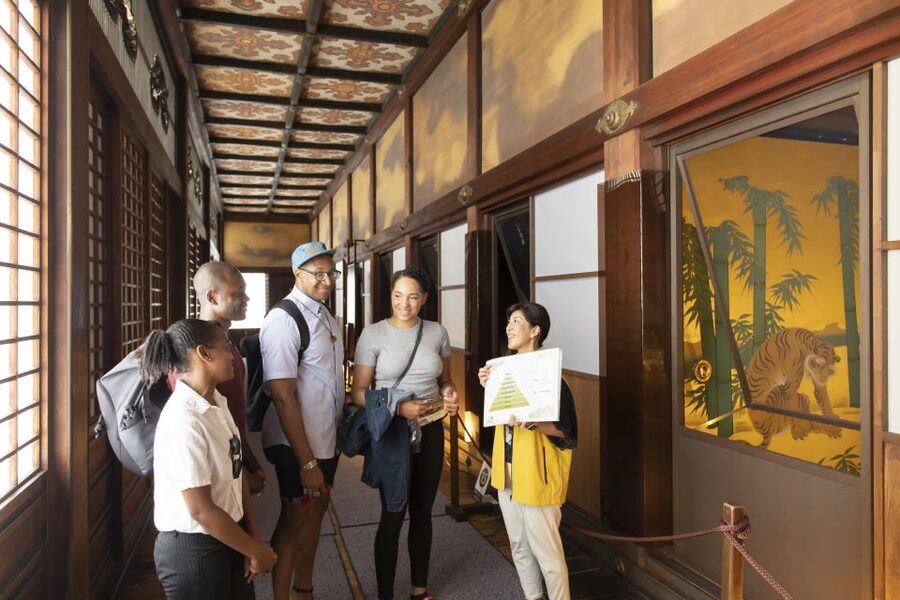
The palace once served as the shogun’s residence and workplace during visits to Kyoto. Your guide explains what each room was used for and how the arrangement reflected rank. One room might be intended for formal audiences, while another offered a more private setting. The difference was not casual interior design. It was a visual system for showing who could approach the shogun and how close they could stand.
I particularly like the way a good guide turns the palace into a story about human behavior. You learn about court intrigue, political power, dinner preparation, and the risks faced by a leader who could not treat food casually. You also hear how artwork communicated ideas about authority and protection.
The palace’s murals deserve time. Guides point out decorative subjects such as dragons, tigers, and other animals, then explain why those images mattered. One guide even connected some carvings to images familiar from modern Japanese popular culture, including possible inspiration for Dragon Ball characters and Pokémon. Treat that as an entertaining observation rather than the central lesson, but it shows how much detail is packed into the building.
Photography is not allowed inside the palace. You also cannot bring water into the interior, and there is no air conditioning. In Kyoto’s summer heat, this can make the one-hour route physically demanding. I would drink water before entering, carry a hat for the outdoor sections, and avoid treating the palace visit as a place to linger endlessly.
The restricted areas add real value
The most unusual feature is access to parts of the castle normally unavailable to the public. The exact access can vary, but the tour includes a chance to enter additional spaces connected with the shogun’s private quarters. Some participants have described seeing two extra areas beyond the standard route.
This is not the same as getting the entire castle to yourself. The palace can still be busy, and the restricted access does not turn the tour into a private after-hours visit. But it gives the guided route something tangible beyond commentary. You are not only paying someone to explain what you could already see. You may also be shown rooms that independent visitors cannot enter.
That makes the $16 tour price easier to justify. If you are interested in architecture, political history, or the way a ruling household functioned, the extra access can be the difference between a pleasant walk and a more meaningful visit.
The exact size of the group is not guaranteed. Some sessions have been small, including groups of four, while other departures may feel busier. A smaller group makes it easier to ask questions and hear the guide, but the strong point of the experience is the added access and interpretation, not a promise of a private tour.
Same base, a different sort of day:
- PERFECT KYOTO 1-Day Bus Tour
★ 5.0 · 13,518 reviews - Kyoto: Fushimi Inari, Kinkakuji, Bamboo Grove 1 Day Bus Tour
★ 4.8 · 4,316 reviews - Kyoto: Tea Ceremony in a Traditional Tea House in Kiyomizu
★ 4.9 · 3,519 reviews - Kyoto Geisha Walking Tour: Gion District & Hidden Gems
★ 4.7 · 3,273 reviews
Ninomaru Garden gives the hour a calmer finish
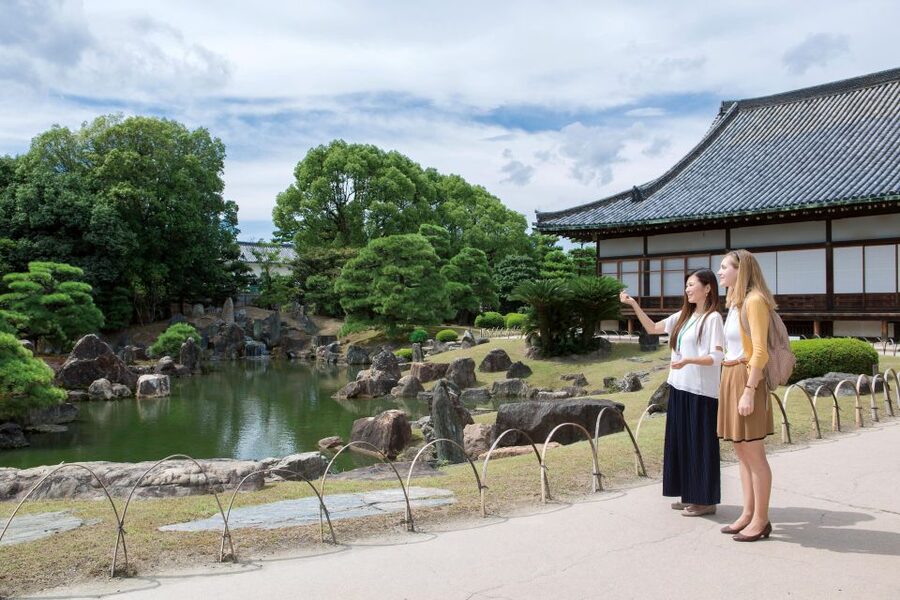
The route includes Ninomaru Garden, which surrounds the palace section and gives you a change of pace after the formal interiors. The garden helps you see how the castle was planned as a complete setting, not merely a collection of buildings.
Inside the palace, your attention goes to rank, ritual, and painted walls. Outside, the garden opens the view and gives you room to think about the scale of the grounds. The tour itself lasts 60 minutes, so you may not have time to explore every corner with your guide. That is fine. Once the guided portion ends, you can continue on your own and give the garden the time it deserves.
I recommend treating the tour as an introduction rather than a full day at Nijo Castle. The guide helps you understand what you are seeing, then you can revisit the grounds at your own speed. One hour is enough to keep the experience lively, but it is not enough for a slow, detailed look at every garden path and building.
The guides make or break the experience
The most consistently praised part of this tour is the guiding. The names that come up repeatedly include Miki, Kaoru, Ai, Ayu, Don, Kiku, and Michiko. Their approaches differ, but the useful pattern is clear: the best guides explain the setting in plain English, answer questions, and connect individual details to Japan’s wider political history.
Kaoru has been described as funny, expressive, and easy to follow. Ai is praised for enthusiasm and careful explanations. Miki is noted for energy, strong English, and the ability to keep a group engaged in very hot weather. Don is valued for mixing history with humor, while Kiku has focused on court intrigue and power struggles.
You should not expect every guide to give exactly the same talk. That is part of the nature of a live tour. Still, the format gives you something an audio guide cannot: a person who can explain a room in response to your question, point to a detail you might miss, or slow down when the group needs more time.
The guide also helps with the physical side of the visit. In hot weather, several guides have taken care to keep the pace manageable and check that people are comfortable. In rainy weather, the tour still runs, so bring suitable clothing if the forecast looks uncertain.
Price, admission, and timing
The tour costs $16 per person, but that is not your complete entry cost. Admission to Nijo Castle is separate and must be paid in cash on site. The admission amount is noted as 1,300 yen, so budget for that additional charge rather than assuming the tour ticket covers the castle.
At first glance, paying for a one-hour tour on top of admission may seem unnecessary. You can enter the grounds without a guide and walk through the public route by yourself. The value comes from three things: the historical explanation, the interpretation of artwork and room functions, and possible entry to restricted areas.
I would pay for the tour if you want to understand the palace rather than simply photograph it. I would skip it only if you strongly prefer independent visits, have already studied Nijo Castle in detail, or want a long, unhurried garden visit with no fixed schedule.
Free cancellation is available up to 24 hours before the start time. You need to arrive early enough to enter through the East Main Gate, find the reception area, and check in before the tour begins. If you are late, you cannot join after departure.
Each paid participant may bring one child aged 0 to 12 free of charge. The child must remain with an adult, and each additional child needs an adult ticket. This can make the tour a good deal for a family with one young child, though the palace rules and warm interior may test very young children’s patience.
Who should book this Kyoto tour
I would recommend it most strongly to first-time visitors who want a clear explanation of the shogunate, families with older children, and anyone interested in Japanese architecture or political history. It is also useful if you are visiting several historic sites and want one focused hour rather than a full lecture.
The tour suits people who enjoy asking questions. You can ask about samurai customs, room use, artwork, palace security, or the shift from shogun rule to imperial control. The guide’s answers can give the rest of your Kyoto sightseeing more meaning.
It is less suitable if you need a cool indoor experience in summer, since the palace has no air conditioning. It is also not the best choice if you want extensive free time inside the castle grounds during the scheduled hour. The tour follows a fixed route and keeps moving.
Should you book the Nijo Castle guided tour?
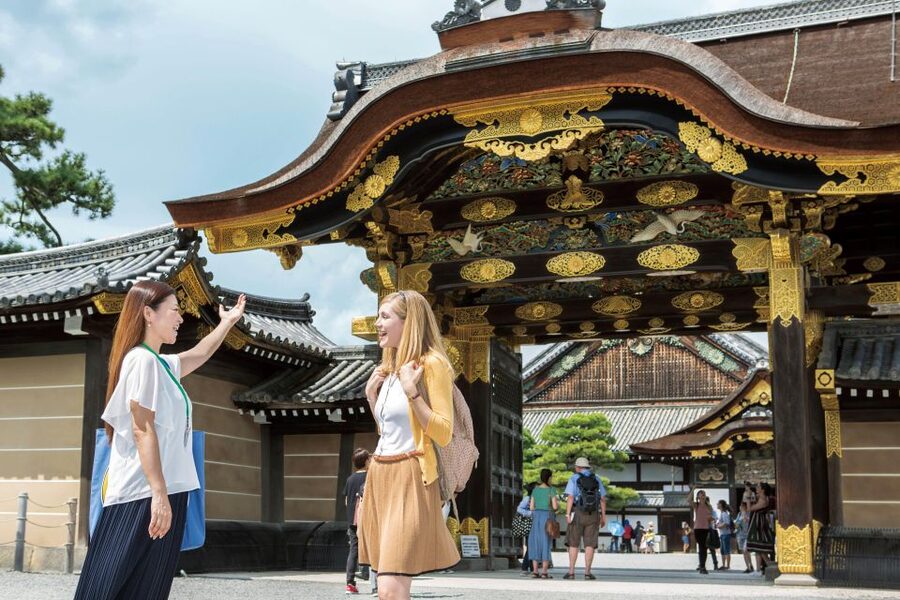
Book it if you want the story behind the rooms. Nijo Castle is impressive on its own, but the palace’s symbolism and political purpose are easy to miss without help. The possibility of entering restricted areas adds a concrete benefit, while the $16 price remains reasonable once you value the guide’s interpretation.
Arrive early, pay the separate admission fee in cash, drink water before entering, and save time afterward for the gardens. If you want an efficient, English-language introduction to one of Kyoto’s most important historic sites, this is a smart addition to your itinerary.
FAQ
How long is the Nijo Castle guided tour?
The guided tour lasts 60 minutes.
What language is the tour conducted in?
The tour is conducted only in English.
Is Nijo Castle admission included in the tour price?
No. Castle admission is separate and must be paid in cash on site. The admission is noted as 1,300 yen.
Where do I meet the guide?
Enter through the East Main Gate and go to the reception area beside the General Reception, on the left after entering. The precise meeting details are provided in the booking confirmation.
What parts of Nijo Castle are included?
The route includes the East Main Gate, Karamon Gate, Ninomaru Palace, and Ninomaru Garden.
Can I enter any areas that are closed to general visitors?
The tour includes access to part of the castle that is normally unavailable to the public. The route may include two additional areas connected with the shogun’s private quarters.
Can children join the tour?
Each paid participant may bring one child aged 0 to 12 free of charge. The child must be accompanied by an adult. Additional children need adult tickets.
What happens if I need to cancel?
You can cancel up to 24 hours before the tour for a full refund.
Just added in Kyoto
- Kyoto Rickshaw Tour★ 5.0 · 210 reviews
- Kyoto: Private Photoshoot Service★ 5.0 · 158 reviews
- Izakaya Style Cooking Class★ 5.0 · 219 reviews
- Kyoto: Traditional Concert at Townhouse or Bathhouse★ 4.9 · 224 reviews
- Ninja 2-hour Hands-on Lesson by Japanese master in Kyoto -Medium★ 5.0 · 218 reviews
- Kyoto: Arashiyama Bamboo, Temple, Matcha, Monkeys & secret spots★ 5.0 · 219 reviews
- Kyoto: Kimono Tea Ceremony with Matcha and Sweet★ 4.9 · 249 reviews
- South Kyoto in a Nutshell: Gentle Backstreet Bike Tour!★ 5.0 · 225 reviews
Castle Tours, compared.
Tokyo Castle & Imperial PalaceーShogun Walking Tour
Read our review →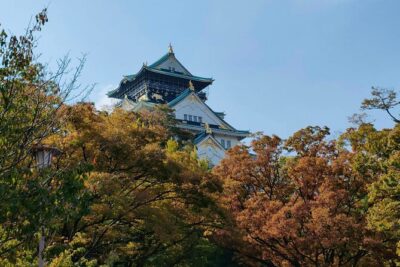
Ultimate Osaka Walking Tour: Castle, Dotonbori & Hidden Gems
Read our review →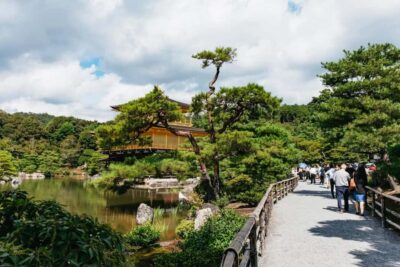
Nijo Castle, Kiyomizu & Fushimi Inari Guided Tour
Read our review →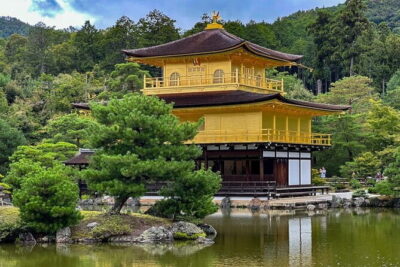
Nijo, Kinkaku-ji, Arashiyama, Kiyomizu & Fushimi Inari
Read our review →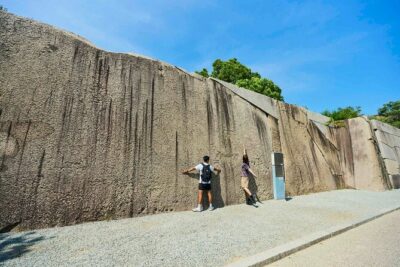
Osaka Castle Walking Tour and Castle Tower Admission
Read our review →
Imperial Palace East Garden and Edo Castle Walking Tour in Tokyo
Read our review →
Imperial Palace & Nijo Castle Guided Walking Tour
Read our review →Browse the lists this tour appears in