
Reviewed · CALLIGRAPHY & CRAFT WORKSHOPS
Calligraphy Class for Beginners in a Century-old Japanese House
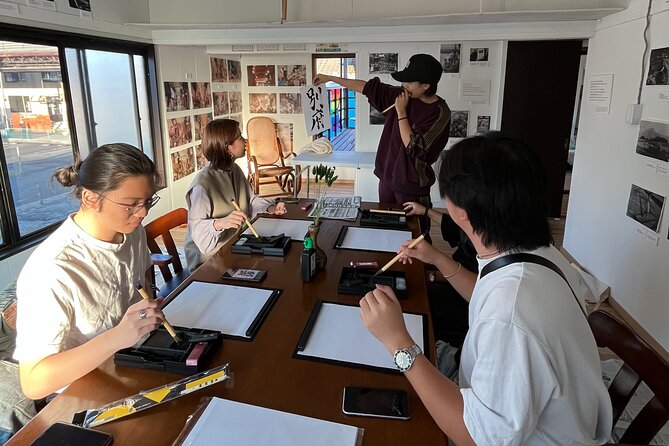
Beppu’s hot springs are not just something to soak in. In this one-hour calligraphy class, you turn the character of the city into something you can hold onto. At Space Beppu, a century-old house, you practice writing words tied to Beppu’s famous hot spring culture, including 温泉, onsen, and 地獄, jigoku.
I like two things right away. First, the class connects the art to the place instead of teaching random characters. Second, you leave with your own brushwork on paper, not just a photograph of someone else’s work. The private format also keeps the pace personal, since only your group participates.
The main consideration is the instructor’s background. Riko and Aoi are friendly, experienced teachers, but this is not a professional calligrapher’s master class. If you want advanced artistic training, choose the separate class led by a professional calligrapher.
Key Points to Know Before You Book
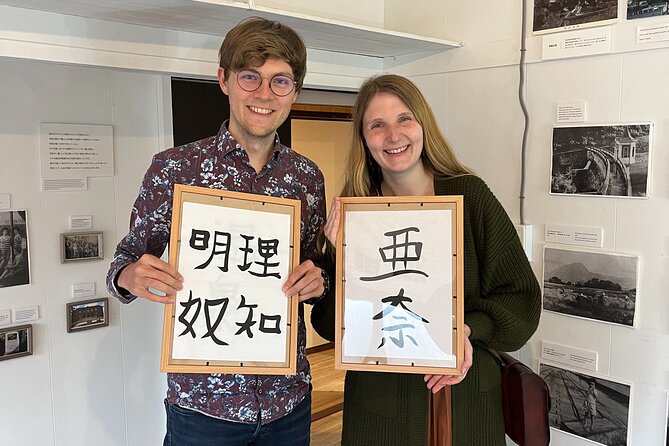
- Write Beppu-themed characters: Practice words such as 温泉, meaning hot spring, and 地獄, meaning hell.
- Learn more than brush control: The class covers strokes, character meaning, writing history, and calligraphy etiquette.
- Meet at Space Beppu: Your class begins and ends at a century-old house in Chiyomachi.
- Take home your work: Your finished calligraphy becomes a personal souvenir rather than a shop-bought keepsake.
- Private, beginner-friendly setting: Only your own group takes part, and most people can participate.
- Allow one hour: The short format fits neatly into a day of sightseeing in Beppu.
Why Beppu’s Characters Make This Class Special
Many Japanese calligraphy classes teach attractive characters chosen mainly for their shape. This one ties the lesson to Beppu itself. That small change matters. When you write 温泉, you are working with the idea that shapes an entire visit to this hot spring city. When you write 地獄, you connect with Beppu’s famous jigoku, or hells, a group of unusual hot spring sites known for their dramatic names.
You do not need to read Japanese before arriving. The instructor guides you through the forms and explains what the characters mean. That gives you a useful way to remember the lesson. Instead of seeing Japanese writing as decoration, you begin to understand that each character carries meaning, structure, and history.
I also like that the class uses traditional brushes and paper. The materials change the experience from ordinary handwriting. A brush responds to pressure, speed, and direction. Your hand has to slow down and pay attention. Even a simple character can look different depending on how you begin and finish each stroke.
This is not a lesson designed to turn you into a calligrapher in an hour. It is a first look at an old art form, with enough practice to make the activity satisfying without becoming demanding.
Other things to make with your hands in Japan:
- Chopstick Making Workshop in Ginza
★ 4.8 · 1,366 reviews - Kyoto : Chopsticks Making Workshop in Gion with Engraving Option
★ 5.0 · 958 reviews - Tokyo Chopstick Making Workshop with Artisan
★ 5.0 · 466 reviews
Entering Space Beppu, a Century-Old House
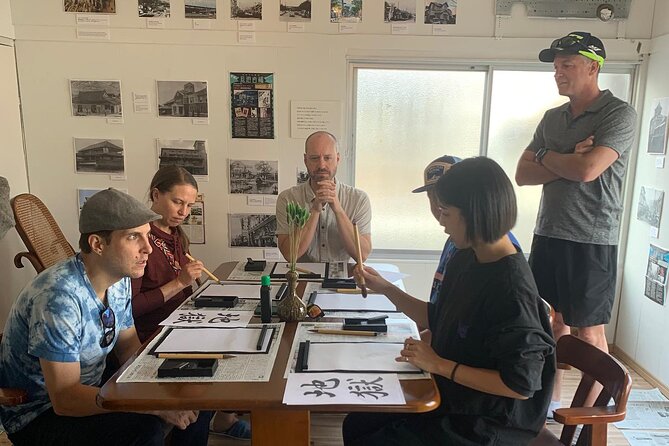
The meeting point is Space Beppu at 12番9号 Chiyomachi, Beppu, Oita 874-0942. The activity starts and finishes here, so you do not need to keep track of several stops or arrange a return transfer.
The setting is part of the appeal. Space Beppu is a century-old Japanese house used for community activities. That gives the class a more local feel than a lesson held in a modern hotel room or a large commercial studio. The house helps you notice the surroundings while you learn, even though the focus stays on the writing.
The exact welcome may come from Riko or Aoi. Both are described as patient and supportive instructors. Riko has been praised for explaining the strokes and the history behind the characters, while Aoi has been noted for pointing out progress as the lesson moves along. The tone is relaxed rather than formal or intimidating.
You should still arrive on time. One participant arrived 30 minutes late and was welcomed, but that is not something to count on. A late arrival can cut into a one-hour class, especially when the teacher needs to explain materials and basic etiquette before practice begins.
What You Learn in the First Few Strokes
The class introduces the ancient art of Japanese calligraphy from a beginner’s point of view. You use a brush and paper to practice the basic movements that form Japanese characters. The lesson is not only about copying a finished symbol. It is about understanding how each line is made.
You can expect attention to the order and direction of strokes. The instructor may also show how the brush should be held and how much pressure to use. These details are important because calligraphy is not simply drawing with ink. The brush creates thick and thin lines through movement, pressure, and control.
The class also includes calligraphy etiquette. That makes the experience more culturally useful. You learn that the art has a proper way of being approached, not just a visual style to imitate. The etiquette element adds context to the tools, the paper, and the act of writing.
The lesson includes stories about the history and meaning of the characters. This is one of the strongest parts of the experience for me. A character becomes easier to remember when you know what it means and why it matters. It also helps you avoid treating Japanese writing as a pattern with no language behind it.
Expect practice rather than instant perfection. Your early strokes may look uneven. That is normal, and the teachers point out improvement as you continue. The goal is a pleasing, meaningful piece made by you, not a flawless work by a professional.
Writing 温泉 and 地獄
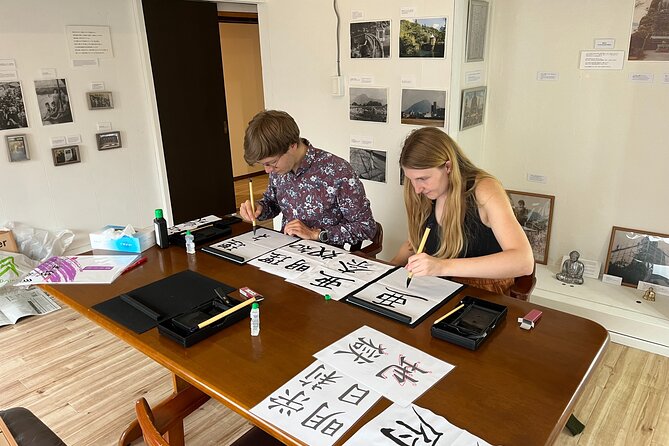
The two most distinctive examples are 温泉, onsen, and 地獄, jigoku. 温泉 means hot spring, the word most closely tied to Beppu’s daily identity. 地獄 means hell, a reference to Beppu’s well-known hell-themed hot spring sites.
These words give the class a stronger sense of place. You are not simply writing a common greeting or an abstract word chosen from a standard lesson. You are working with vocabulary you may see again during your time in Beppu.
The characters also give you different visual challenges. Japanese words made from several characters require attention to balance. Each part needs enough space, and the full word should look well arranged on the page. The instructor helps you shape the characters so they work together.
You may write more than these two words. The experience includes the chance to write various characters and words connected with the surrounding area. The precise number depends on the pace of your group and how much practice you need.
If you already know some Japanese, the language connection may add another layer of interest. If you know none, the teacher’s explanations still give you a clear entry point. You can learn the sound, meaning, and shape as a group rather than memorizing an isolated symbol.
Same base, a different sort of day:
- Mt Fuji and Hakone 1-Day Bus Tour Return by Bullet Train
★ 5.0 · 26,383 reviews - 1-Day Tokyo Bus Tour
★ 5.0 · 14,250 reviews - PERFECT KYOTO 1-Day Bus Tour
★ 5.0 · 13,518 reviews - Tokyo: TOKYO SKYTREE® Admission ticket
★ 4.5 · 11,192 reviews
The Century-Old Setting Versus a Professional Studio
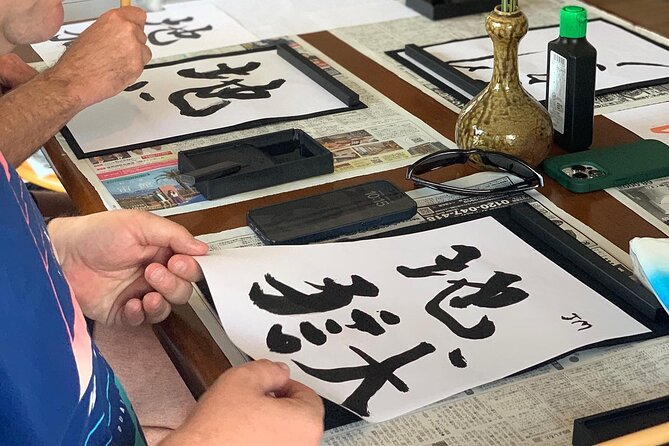
Space Beppu gives the class personality. You are learning in a place tied to community activity, not in a purpose-built art school. That can make the experience feel more connected to everyday local life.
The trade-off is that this is not presented as a formal course at a specialist calligraphy academy. The instructors are Japanese nationals with strong experience teaching the activity, but they are not professional calligraphers. The class is intended for beginners who want a friendly introduction.
That distinction is worth taking seriously when you compare options. If your priority is an authentic first experience, practical guidance, and a souvenir, this class fits well. If your priority is technical correction from a career calligrapher, select the alternative experience specifically taught by a professional calligrapher.
I see the difference as a question of purpose rather than quality. A beginner class can be more approachable because the instructor is focused on helping you enjoy the process. A professional-led class may be better for students who want a deeper artistic critique or more advanced instruction.
A Private Class That Fits a Busy Beppu Day
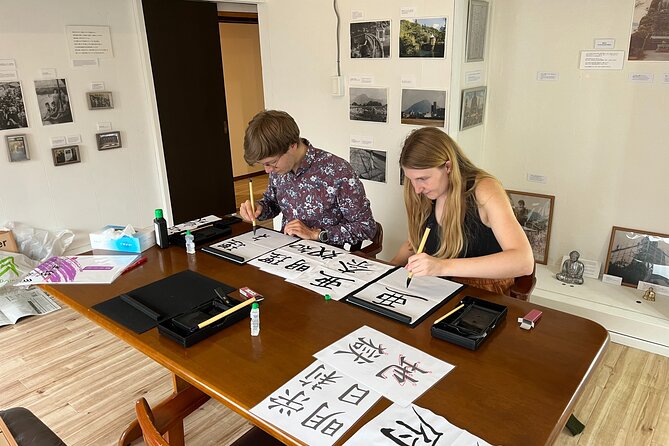
The activity lasts about one hour and is private to your group. That format has several practical advantages. You do not need to match the pace of strangers, and the teacher can focus on your group’s questions and progress.
A private class also makes sense for families, couples, or friends who want to do something together. You can encourage each other, compare brushwork, and choose different characters if the instructor allows it. The setting is social without turning into a noisy group demonstration.
The short duration makes this easy to add to a day in Beppu. You could place it between other plans, use it as a creative break, or choose it when you have only a limited amount of time in town. A cruise passenger with one day in Beppu can use the one-hour format to fit in a local activity without giving up the whole day.
There is one limitation: an hour passes quickly. The lesson can introduce the art, but it cannot cover every technique or provide extensive practice. If you want a long, quiet studio session, this may feel brief. If you want a focused cultural activity with a clear beginning and end, the timing works well.
The meeting point is near public transportation, and confirmation is provided when you book. The available information does not specify a particular bus stop, station route, or walking time, so check your own route before setting out.
What You Take Home
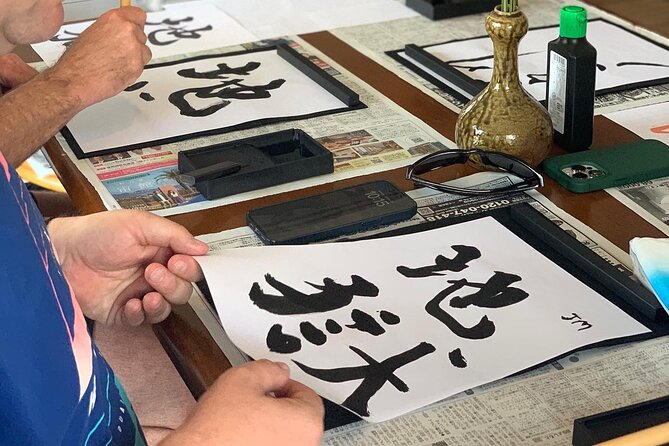
The finished work is a major reason to choose this experience. You create a piece yourself and take it home afterward. That gives you a souvenir with a personal story attached to it.
A shop-bought print can be attractive, but it does not show your first attempt at Japanese brushwork. Your piece may have imperfect lines, yet those marks are the point. They show where you sat, what you learned, and which words you chose in Beppu.
You may want to think about how you will carry the paper afterward. The details do not state whether protective packaging is supplied, so it is sensible to ask at the start of the class if you are continuing your trip with luggage or several stops.
The work can also become a conversation piece at home. You can explain that 温泉 means hot spring, or that 地獄 refers to Beppu’s hells. The souvenir carries both the visual form and the local meaning.
Is $32.84 a Fair Price?
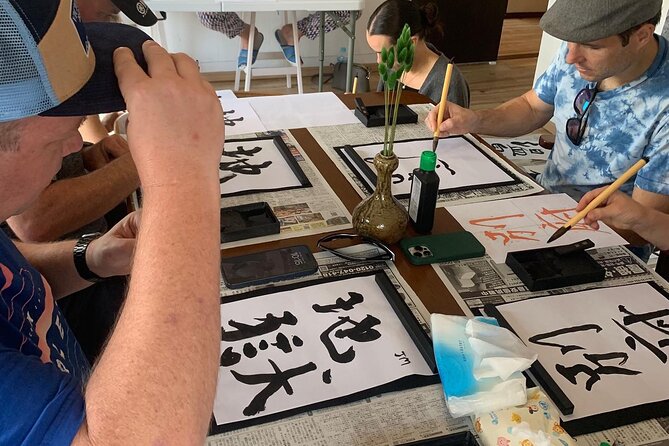
At $32.84 per person, the class is priced as a modest cultural activity rather than a major tour. The value comes from several parts working together: instruction, a historic setting, traditional materials, local vocabulary, and a piece of your own work to take home.
If you only wanted a quick introduction to brush writing, you might find the price less compelling than a free cultural display. But this is a hands-on class, not a demonstration. You are paying for time with an instructor and for the chance to make something yourself.
The private format also affects the value. Your group receives the lesson without sharing the hour with other bookings. Group discounts are available, which may make the cost more attractive for several people booking together.
I would compare it with the price of another paid activity in Beppu rather than with the cost of a souvenir. For a short, local experience that fits into a busy schedule, the amount is reasonable. For someone seeking serious artistic instruction, the value is weaker because the instructor is not a professional calligrapher.
Who Will Enjoy This Most?
I would recommend this class to you if you want a calm, creative activity that connects directly to Beppu. It suits first-time calligraphy students, couples, families, and small private groups. It also works for anyone who prefers making something over simply watching a cultural performance.
You do not need previous experience. The class is built for beginners, and the teachers help you improve as you go. Most people can participate, and the activity is near public transportation.
It is also a good choice if you want a souvenir with more meaning than a standard purchase. You leave with your own writing, plus an understanding of the words and customs behind it.
I would be more cautious about booking it for an advanced calligraphy student. The class introduces technique and etiquette, but it is not advertised as professional training. Choose the professional calligrapher option if detailed artistic instruction is your main reason for attending.
Booking, Timing, and Cancellation Details
The activity offers mobile tickets, so you can keep the booking on your phone. It is often reserved well ahead of time, with an average booking lead time of about 52 days. That suggests you should plan early if this class is important to your Beppu schedule, though availability can change.
Free cancellation is allowed up to 24 hours before the start time for a full refund. Cancellations made within 24 hours are not refunded, and changes during that period are not accepted. The cut-off follows local time in Japan.
Because the activity begins and ends at Space Beppu, allow enough time to reach Chiyomachi before the start. The class is short, and arriving late can reduce your practice time even if the instructor is able to welcome you.
Should You Book This Beppu Calligraphy Class?
Book it if you want a personal, place-specific souvenir and a gentle introduction to Japanese culture. The century-old house, Beppu-themed characters, private format, and patient teaching make this more memorable than a generic handwriting lesson.
Skip it if you want advanced training from a professional calligrapher or a longer studio course. For everyone else, the $32.84 price is fair for an hour of hands-on instruction and artwork you create yourself. I would especially choose it when your Beppu schedule is tight but you still want one activity that feels local, creative, and connected to the city.
FAQ
Where does the calligraphy class take place?
The class takes place at Space Beppu, located at 12番9号 Chiyomachi, Beppu, Oita 874-0942, Japan.
How long does the activity last?
The class lasts approximately one hour.
What Japanese words can I learn to write?
The class focuses on words connected with Beppu’s hot spring region, including 温泉, onsen, meaning hot spring, and 地獄, jigoku, meaning hell.
Can beginners participate?
Yes. The class is designed for beginners, and most people can participate.
Who teaches the class?
The class is taught by a friendly local instructor. Instructors named in the experience details include Riko and Aoi. They are experienced Japanese instructors, but they are not professional calligraphers.
Can I take my calligraphy home?
Yes. You can take your finished calligraphy work home after the class.
Is this a private activity?
Yes. Only your own group participates in the activity.
Can I cancel for a full refund?
Yes, if you cancel at least 24 hours before the scheduled start time. Cancellations made less than 24 hours before the start are not refunded.
Just added in Japan
- Nagasaki Private Customizable Half Day Tour★ 5.0 · 16 reviews
- Nagasaki Full Day Tour with Licensed Guide and Vehicle★ 5.0 · 27 reviews
- Nagasaki Like a Local: Private & Custom Experience (2-3 hrs)★ 5.0 · 14 reviews
- Nagasaki Private Tour with a Local – Highlights & Hidden Gems★ 5.0 · 24 reviews
- Nagasaki WW2 History and Culture Tour★ 5.0 · 19 reviews
- Snow Monkeys, Hokusai & Sake: A Perfect Day in Nagano★ 5.0 · 19 reviews
- Wasabi Farm Walking Tour & Lunch★ 4.5 · 20 reviews
- Nagasaki Street Food Adventure: Private Walking Tour with a Local★ 5.0 · 26 reviews
Calligraphy & Craft Workshops, compared.
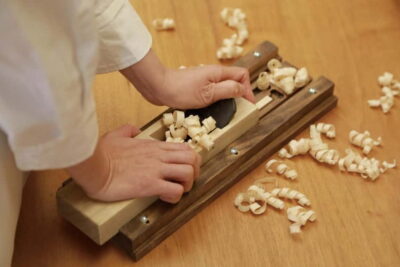
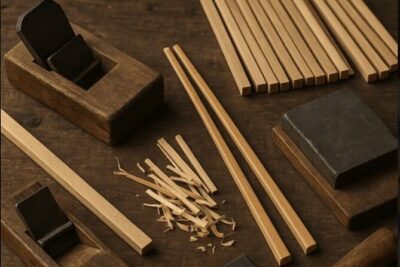
Chopsticks Making Workshop in Gion with Engraving Option
Read our review →

Matcha Making Experience with Mochi Sweets in Asakusa
Read our review →
Authentic knife making experience at a blacksmith in Kyoto
Read our review →
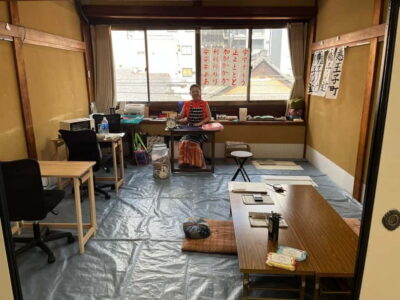
Calligraphy class at Buddhist temple in city center
Read our review →Browse the lists this tour appears in