
Reviewed · CALLIGRAPHY & CRAFT WORKSHOPS
Kyoto: Calligraphy class at Buddhist temple in city center
Kyoto’s 70-minute calligraphy class takes you beyond temple photographs and souvenir shops. Inside a traditional Buddhist temple near the city center, you sit on tatami, handle brush and ink, and create a finished piece of Japanese art. The teacher demonstrates each stroke, while a translator such as Jose or Saskia helps explain the details.
I like two things right away: you leave with a personalized Shikishi board, not a mass-produced trinket, and the small group size allows useful one-to-one correction. The main consideration is simple: most of the class involves sitting on the floor, and calligraphy is harder than it looks. Your arm may tire if you practice too much.
Key points to know before booking
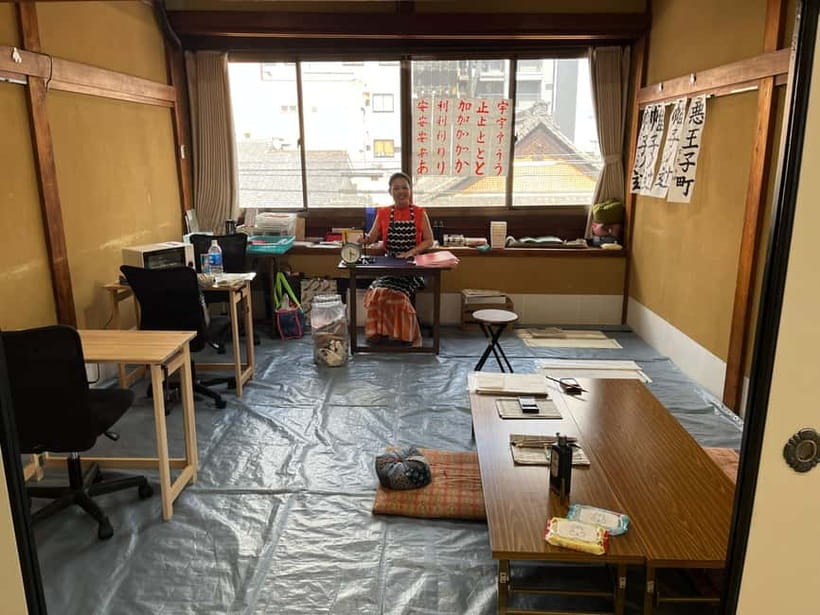
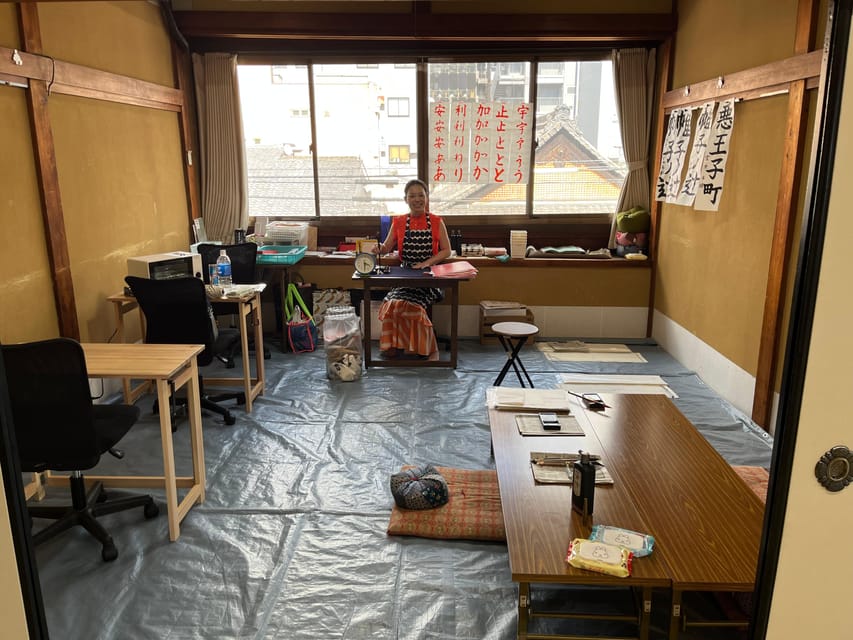
- Temple setting: The class takes place in a Japanese-style room with tatami flooring at Seigan-ji Temple.
- Small class size: Groups are limited to six, with individual guidance from the teacher and translator.
- Make your own souvenir: You choose a word or kanji and write it on a special square Shikishi board.
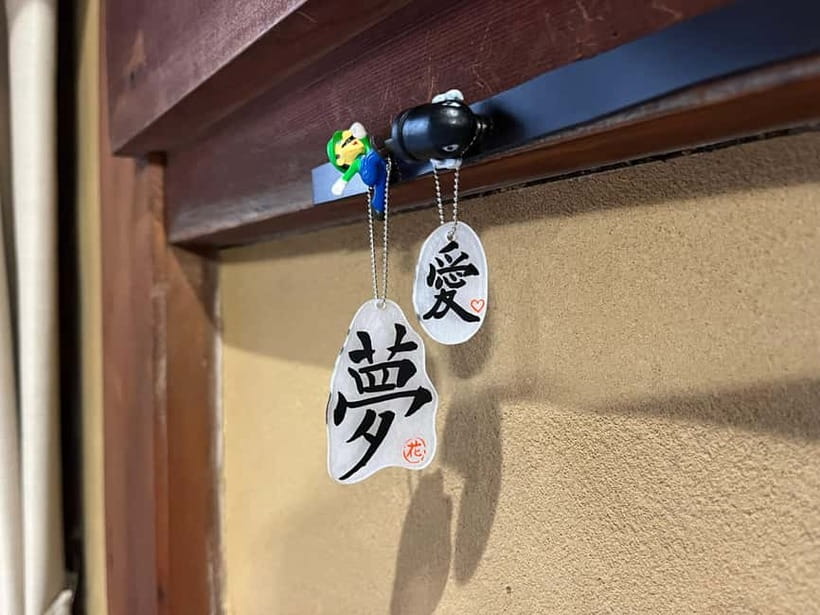
- Personalized extra: The teacher makes a small key-chain featuring your chosen character.
- Languages: Instruction and translation are available in English, Spanish, Japanese, and Dutch.
- Practical comfort: Most seating is on the floor with a zabuton, though a limited number of desks are available.
A quiet temple class in central Kyoto
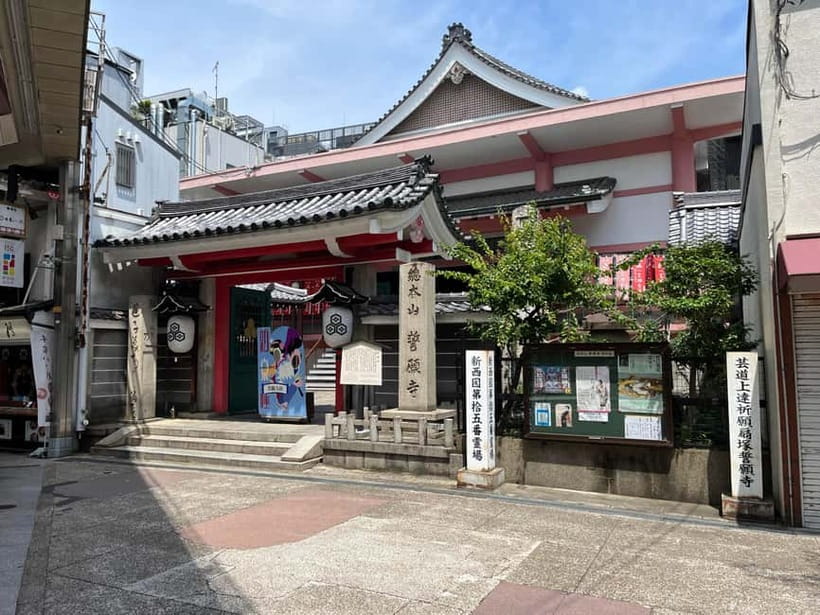
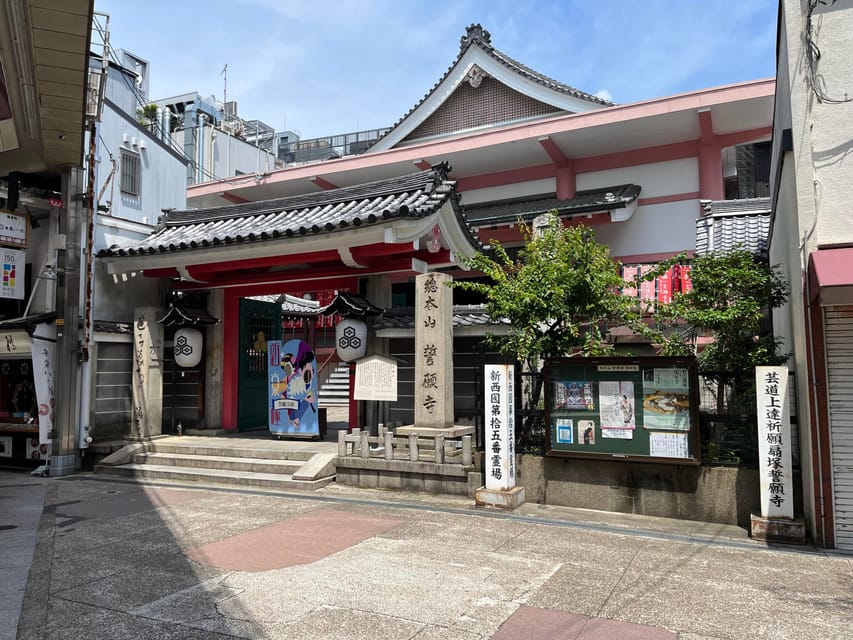
The meeting point is easy to miss if you are not looking carefully. Go to the front of Seigan-ji Temple in the covered Shinkyogoku shopping street and look for a person holding a red lantern on a stick beneath the roof.
Do not climb the temple stairs to search for the workshop. Do not ask the monks or temple staff if you are in the right place. Simply wait at the front for the person with the lantern. This small detail matters, especially in a busy shopping arcade where you may otherwise wander into the wrong entrance.
Once inside, the mood changes. The class takes place in a Washitsu, a traditional Japanese room, with tatami mats and sliding doors. You are not attending a formal religious ceremony, but the temple setting adds a sense of place that a hotel meeting room could never match.
The room is generally quiet because everyone concentrates on the brushwork. It is not a silent meditation session, though. You can ask questions, speak with the translator, and enjoy a relaxed atmosphere while you work.
Other temples and shrines in Kyoto people book:
- Kyoto: Tea Ceremony Ju-An at Jotokuji Temple
★ 4.9 · 3,207 reviews - Arashiyama Bamboo, Temple, Monkeys, or Secret Sake Brewery
★ 4.8 · 886 reviews - Kyoto: Arashiyama Bamboo Forest, Monkeys, Matcha & Temple Tour
★ 5.0 · 759 reviews
What happens during the 70 minutes
The session follows a clear progression. First, the teacher and translator introduce themselves and explain how the class will work. The Japanese calligraphy teacher has been practicing and teaching for more than a decade, with some information describing around 15 years of experience.
Next, you select the word or kanji you want to write. You can choose from examples provided in class, but I suggest arriving with several ideas. A short word connected to a value, place, person, or memory usually works better than trying to invent something at the last second.
You may also write your name in Japanese characters. Some participants use a single kanji, while others choose a word with personal meaning. Since the final piece is yours to display at home, your choice matters more than picking the most visually complicated character.
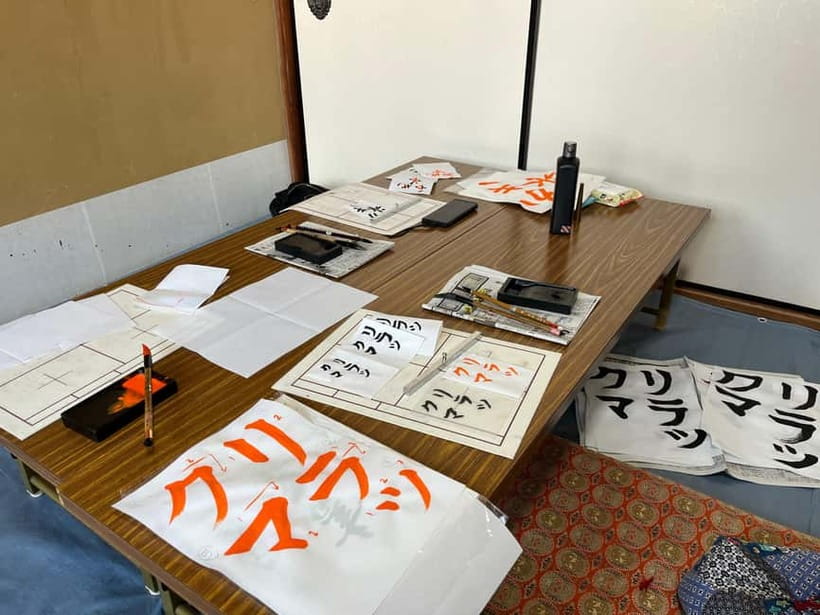
The teacher then explains the tools. Your materials include Washi paper, a brush, ink, Bunchi, and Shitakami. The class provides everything you need, so you do not have to buy a brush set before arriving.
The teacher demonstrates how to hold and control the brush. You practice basic lines first, learning how pressure, speed, and direction change the shape of each stroke. This is where the class becomes more than a quick demonstration. You are not simply watching an expert produce perfect characters. You are given time to try the technique yourself.
After the basic lines, you practice your chosen kanji. The teacher and translator move around the room, offering corrections and encouragement. The instruction is gradual, which helps beginners avoid feeling lost. Several people who arrived with little or no experience found the process approachable because the teacher broke the work into small steps.
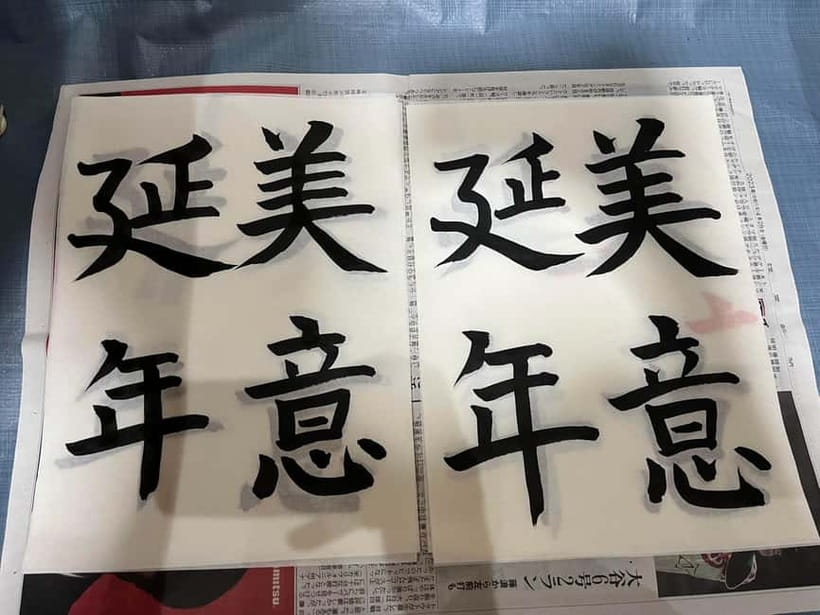
Finally, you write your best version on a Shikishi. This is a special square cardboard board designed for display. It gives the final work a finished look and makes it easier to take home than a loose sheet of paper.
You also receive a key-chain made by the teacher with your chosen character. It is a small extra, but it adds a personal touch and gives you something useful to carry rather than another generic souvenir.
Why calligraphy is worth trying in Japan
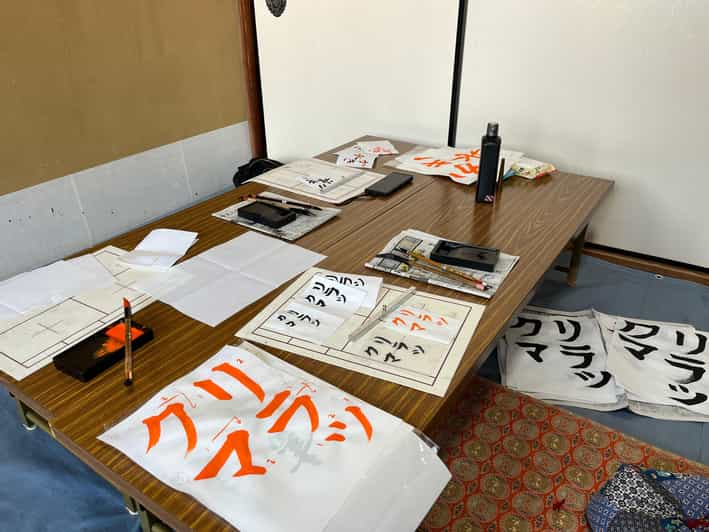
Japanese calligraphy, or shodo, is closely tied to education and daily culture. Children study it at school, and the art teaches more than neat handwriting. You learn about the structure and origins of kanji, the purpose of traditional tools, and the way a character can express feeling through line and balance.
That cultural background gives the activity more weight than a craft session. You begin to notice that a brush stroke is not just a mark on paper. Its thickness, angle, rhythm, and ending all affect the character.
I also like the pace. Kyoto sightseeing can involve temples, buses, crowds, and a lot of walking. This class gives you a short period to sit still and focus on one physical task. The process is calming, but it is not passive. You need to pay attention to every stroke.
The class also gives you a small connection with the teacher and translator. Past sessions have included warm, easy conversation about life in Japan, pets, and everyday culture. Jose has been praised for helping with translation, practical advice, and photographs, while Saskia has also assisted with translation and guidance. The exact staff member may depend on your language and booking.
The final artwork is the real value
At $55 per person, this is not the cheapest way to spend an hour in Kyoto. You can buy inexpensive calligraphy souvenirs in shops. The difference is that here you make the piece yourself, learn the basic method, and understand something about the art before taking it home.
The price includes the Washi, brush, ink, Bunchi, Shitakami, instruction, practice sheets or examples, the finished Shikishi, and the self-made souvenir. Food and drinks are not included, but that should not be a problem for a 70-minute activity. Vending machines are available outside the temple.
I see the strongest value in the combination of instruction and keepsake. A shop-bought print may look more polished, but your own slightly imperfect character carries a memory of sitting on tatami in Kyoto. The key-chain is another small reminder of the class.
Many participants also receive photographs during the session. Photography is not described as a separate guaranteed inclusion, so treat it as a helpful extra rather than the main reason to book.
Other things to make with your hands in Kyoto:
- Kyoto : Chopsticks Making Workshop in Gion with Engraving Option
★ 5.0 · 958 reviews - Authentic knife making experience at a blacksmith in Kyoto
★ 4.8 · 350 reviews - Kyoto: Small-Group Authentic Sushi Making Workshop
★ 5.0 · 137 reviews - Kyoto: Japanese Calligraphy Class
★ 4.8 · 89 reviews
Sitting on tatami: the main practical issue
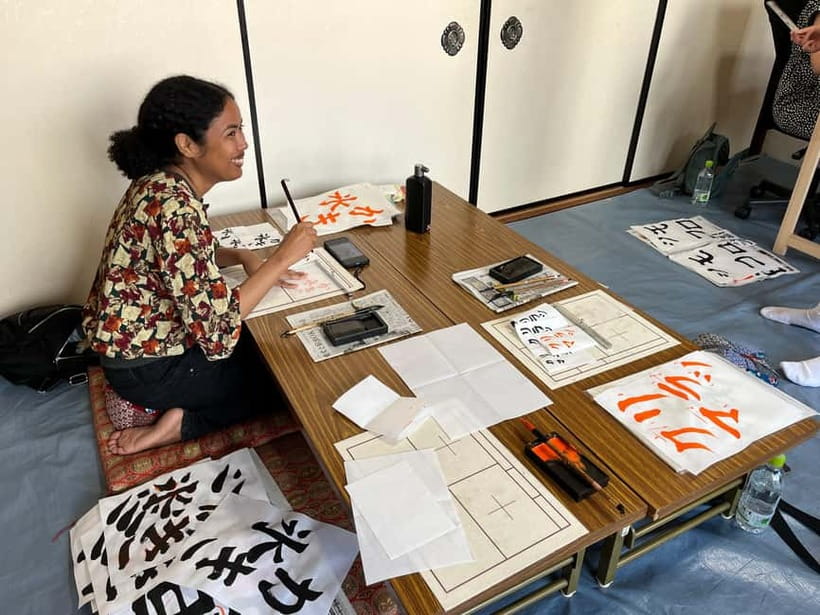
Most people sit on the floor on a zabuton, a Japanese floor cushion. Some desks are available, but the number is limited. If kneeling or sitting cross-legged is difficult, contact the provider before booking and explain your needs.
The activity is listed as wheelchair accessible, but the floor-based format deserves attention. Accessibility can depend on how you participate once inside the Washitsu. Ask about the seating arrangement in advance if you need a chair or desk.
Calligraphy also uses muscles you may not expect. Your hand, wrist, and arm can become tired, especially if you keep practicing after you have produced a few decent attempts. The teacher advises practicing enough to improve, but not so much that your final piece suffers.
That is good advice for beginners. Your first strokes may look uneven, and that is normal. The goal is not to match the teacher after one hour. The goal is to understand the motion and make one final version that feels like your own.
Left-handed participants may find some strokes more challenging, since traditional brush technique is often taught for the right hand. The relaxed setting helps, and the class can offer guidance, but you should expect a little extra adjustment.
Who will enjoy this Kyoto activity
This class suits couples, solo visitors, families with older children, and anyone who wants a hands-on cultural activity. It is especially useful if you have already spent several days seeing temples and want to understand one traditional art through your own hands.
You do not need an artistic background. Beginners are the intended audience, and the class starts with lines before moving to full characters. You should, however, bring patience. Calligraphy rewards control rather than speed.
It can work well for families with behaving adolescents, but the activity is not suitable for young children. The supplied age information excludes children under five, with additional restrictions listed for younger age groups. Babies are not suitable for the class.
The class may also suit people who normally skip staged cultural demonstrations. You are not merely watching a performance. You practice, make errors, receive corrections, and produce a final object.
It is less suitable if you want a fast, polished souvenir with no effort. It is also a poor match if floor seating is uncomfortable or if you need a completely silent setting.
Language support and the teaching style
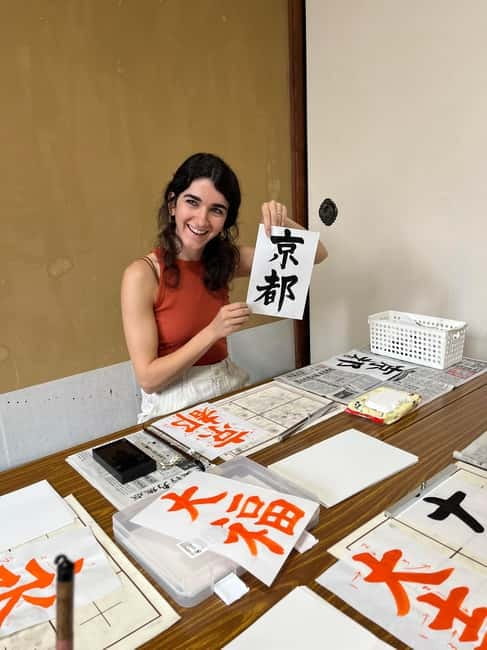
The calligraphy teacher speaks Japanese, while translators support the class in English, Spanish, or Dutch depending on the booking. The translator does more than repeat instructions. They explain the teacher’s demonstrations, help with questions, and offer practical tips as you work.
This two-person format is useful because calligraphy instruction depends on small visual details. You may understand the general idea but miss where a stroke should begin or stop. The translator helps connect the teacher’s demonstration with your own attempt.
The class is limited to six participants. That number keeps the session personal without making it feel like a private lesson. Smaller groups may receive more individual attention, while a full group still allows you to see how other beginners approach the same task.
The highly praised part of this activity is the human side: the teacher’s patience, the translators’ warmth, and the steady encouragement during practice. The location helps, but the instruction is what turns the temple visit into a worthwhile experience.
Booking details and small rules
The experience offers free cancellation up to 24 hours before the start time, and you can reserve now and pay later. Starting times vary, so check availability for your date.
Smoking, vaping, alcohol, and drugs are not allowed. You must also wear footwear, since bare feet are not permitted in the temple setting.
Read the voucher carefully after booking. It contains essential information about the meeting point and workshop arrangements. Arriving at the temple without checking those directions could lead to a confusing start.
Plan to arrive with a few possible words or kanji in mind. You can choose from the class examples, but preparation gives you more time to think about what you want displayed at home.
Should you book this calligraphy class?
I would book it if you want a personal Kyoto souvenir, a calm break from sightseeing, and a real introduction to a traditional Japanese art. The central temple location makes it easy to add to a day of shopping and sightseeing around Shinkyogoku.
The $55 price is fair if you value instruction, materials, a finished Shikishi, and the small personalized key-chain. It is less compelling if you only want a cheap souvenir or dislike sitting on the floor.
Bring a few word ideas, wear appropriate footwear, and keep your expectations realistic. You may not produce museum-quality calligraphy in 70 minutes, but you can create something meaningful, learn why the brush behaves as it does, and take home a piece that only you could have made.
FAQ
Where does the calligraphy class meet?
Meet in front of Seigan-ji Temple in the covered Shinkyogoku shopping street. Look for the person holding a red lantern on a stick beneath the roof.
How long does the experience last?
The class lasts about 70 minutes.
What languages are available?
Instruction and translation are available in English, Spanish, Japanese, and Dutch.
What do I take home?
You take home your calligraphy artwork on a Shikishi board. You also receive a key-chain made by the teacher with your chosen character.
Do I need to bring calligraphy supplies?
No. Washi, a brush, ink, Bunchi, and Shitakami are included, along with explanations, practice, and kanji examples.
Is the class suitable for children?
The activity is not suitable for children under five, and babies are not suitable. Children who attend should be able to remain engaged during a quiet, floor-based class.
More temples and shrines elsewhere in Japan
- Osaka/Kyoto: Arashiyama, Nara & Fushimi Inari Shrine w/Lunch
★ 4.4 · 754 reviews - Kyoto: Ninnaji Temple Entry Ticket
★ 4.2 · 650 reviews - Kyoto Zen Meditation & Garden Tour at a Zen Temple with Lunch
★ 5.0 · 441 reviews - Kyoto: Zen Experience in a Hidden Temple
★ 5.0 · 437 reviews
Just added in Kyoto
- Private Cooking Class Udon in Kyoto Japan★ 5.0 · 23 reviews
- Your Private Vacation Photography Session In Kyoto★ 5.0 · 110 reviews
- Kyoto: Zen Meditation at a Private Temple with a Monk★ 5.0 · 25 reviews
- Private Pewter Sake Cup Experience with a Kyoto Artisan★ 5.0 · 31 reviews
- Kyoto Wagashi(Japanese sweets) Cooking Class near Fushimiinari★ 5.0 · 60 reviews
- Kyoto:Family-Friendly Kimono & Yukata Experience at WARGO★ 5.0 · 147 reviews
- Private Guided Traditional Buddhist Cooking in Japan★ 5.0 · 16 reviews
- Kyoto: Gion Geisha District & Sake-in-Hand Walking Tour★ 5.0 · 37 reviews
Calligraphy & Craft Workshops, compared.
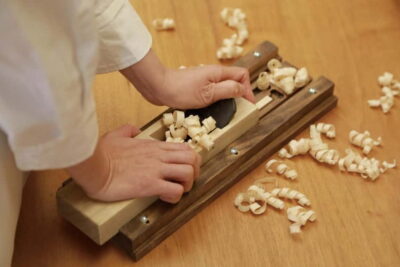
Chopsticks Making Workshop in Gion with Engraving Option
Read our review →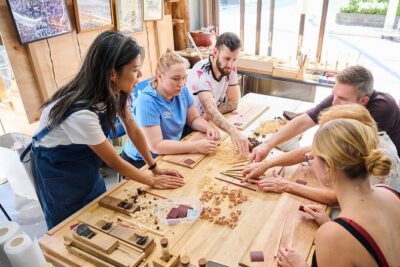


Matcha Making Experience with Mochi Sweets in Asakusa
Read our review →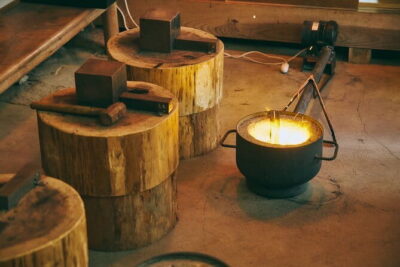
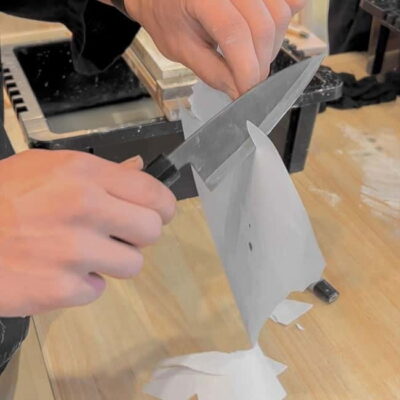
Authentic knife making experience at a blacksmith in Kyoto
Read our review →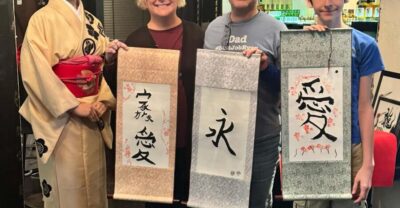
Browse the lists this tour appears in