
Reviewed · TEA CEREMONY EXPERIENCES
Tokyo: Matcha Making Experience with Mochi Sweets in Asakusa
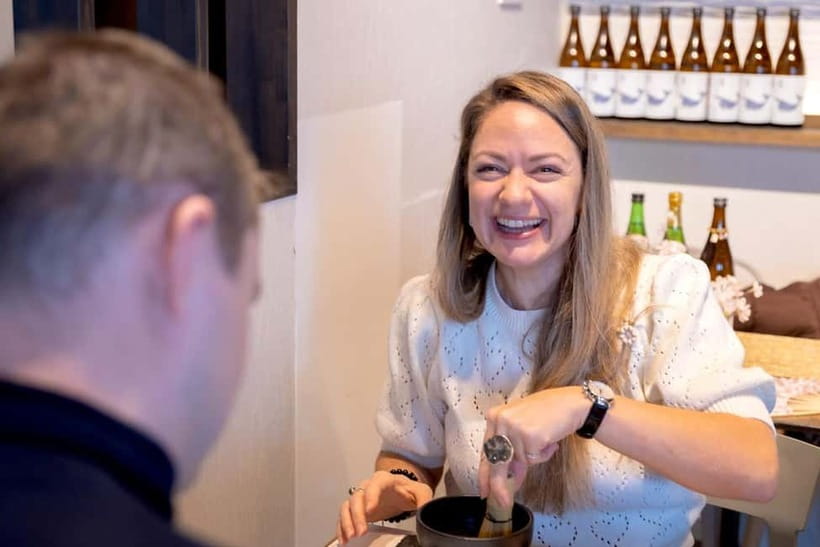
The best part of this one-hour Asakusa class is that you do not just drink matcha, you prepare it yourself. A short history lesson and playful quiz explain where matcha fits in Japanese culture, then an English-speaking host demonstrates the proper whisking technique before you try it.
I like the easy pace and the fact that you get both culture and food for $22. I also like the friendly teaching style, with hosts such as Mana, Ken, Hiyo, and Hayato keeping the lesson lively rather than stiff. The main consideration is timing: one hour gives you a useful introduction, not a full tea ceremony or an advanced lesson in Japanese tea.
Key points at a glance
- A hands-on matcha lesson: You whisk your own tea with traditional tools instead of watching a demonstration from the sidelines.
- A light history quiz: The class uses questions and short explanations to make matcha culture easy to follow.
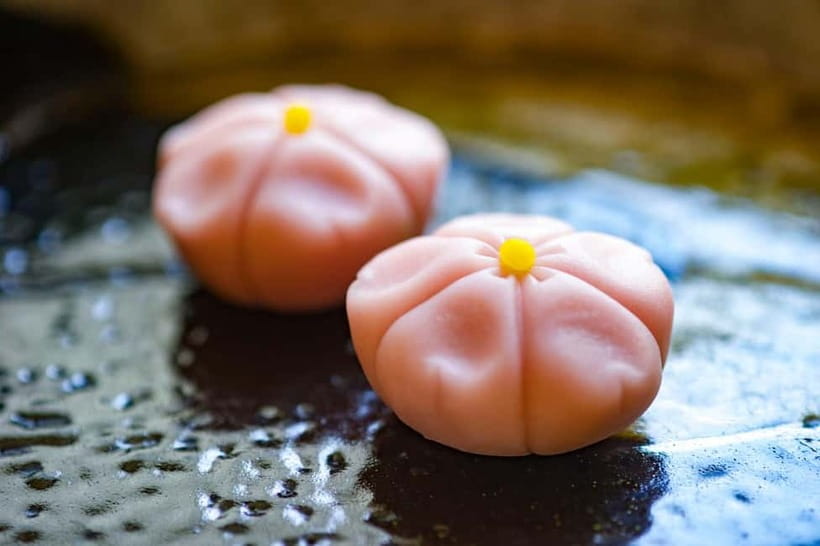
- Mochi sweets included: Your tea comes with Japanese sweets that balance matcha’s earthy, slightly bitter flavor.
- A seated activity in Asakusa: You can learn comfortably without adopting the traditional kneeling position.
- English-speaking local hosts: Guides including Mana, Ken, Hiyo, and Hayato explain the process clearly and add plenty of humor.
- Good value for a short stop: At $22 for an hour, this fits neatly between sightseeing at Sensoji Temple, shopping, and a visit to Tokyo Skytree.
Why this small matcha class works in Asakusa
Asakusa is one of Tokyo’s best areas for an introduction to traditional Japanese culture. The neighborhood is close to Sensoji Temple, the Kaminarimon Gate, old-style shopping streets, and Tokyo Skytree. A matcha class here feels connected to the setting, rather than dropped into a generic cooking studio far from the sights.
The meeting point is at Relink KAMINARIMON building, on the sixth floor, about one minute from Asakusa Station. That location matters. You can place the class into a busy sightseeing day without losing much time on transport, and the nearby temple district gives you an obvious plan before or after the activity.
I would book this as a calm pause in the middle of a Tokyo day. Asakusa can be crowded and noisy around the major sights. Sitting down with a bowl, whisk, and sweet gives you a quieter hour while still teaching you something tied to Japanese food customs.
The class is aimed at first-timers. You do not need previous tea-making experience, and the instructions are given in English. The tone is relaxed, with a quiz, demonstrations, practice, and time to taste what you make.
Other tea rooms and ceremonies in Tokyo:
- Matcha Making Class in Tokyo with Authentic Japanese Sweets Set
★ 5.0 · 744 reviews - Tokyo: Traditional Tea Ceremony with a Tea Master
★ 5.0 · 528 reviews - Tokyo: Matcha and Kimono Experience
★ 4.7 · 219 reviews
The opening lesson: matcha history without a lecture
The activity begins with an introduction to matcha and its place in Japanese culture. Instead of presenting a long formal talk, the hosts use an interactive quiz to get you involved. This is a smart choice for a short class because it gives you basic context without asking you to sit through a dry presentation.
You learn about the origins and traditions connected with matcha, then move toward how the tea is prepared and served. The class also touches on tea etiquette. You will not leave with the full training of a tea practitioner, but you should understand why the preparation is deliberate and why the bowl, whisk, and movements matter.
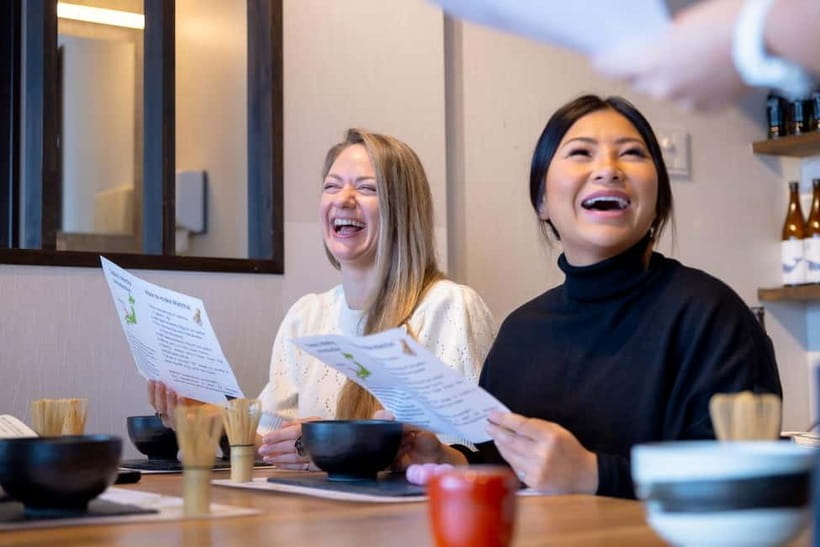
The quiz adds a little humor. Karolina described the history presentation and funny quiz as a highlight, and that combination captures the tone well. You are learning, but you are not expected to behave as if you have entered a silent monastery.
Different hosts bring their own style. Mana is repeatedly praised for keeping the session energetic and fun. Ken is described as engaging, and Hayato combines humor with an explanation of matcha history and tea etiquette. Hiyo and Yui have also guided sessions with clear, welcoming instruction.
Because the hosts change, the exact personality of the class may vary. The common thread is an English-speaking local instructor who explains the subject in a friendly way and encourages questions.
Whisking your own tea with traditional tools
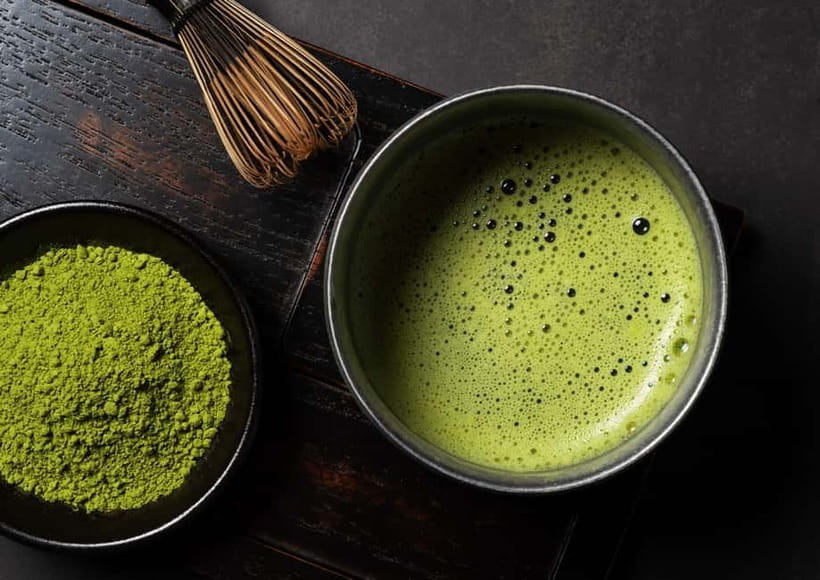
The practical part is the reason to choose this activity over a simple matcha tasting. You receive the ingredients and use traditional tools, including the bamboo whisk, to prepare your own bowl.
The instructor first shows you what to do. You then copy the technique, working to combine the powder and water into a smooth, frothy drink. This is simple enough for children and beginners, but active enough to make the class feel like more than a talk.
Do not worry about producing a perfect bowl on the first try. The value comes from feeling the difference between simply stirring a drink and using the quick whisking motion that gives matcha its texture. You also get a better sense of how much care goes into an everyday bowl prepared properly.
The class is conducted in a seated setting. That is useful for older family members or anyone who cannot comfortably kneel in the traditional style. One participant specifically noted that the seated format made the class easy for a 74-year-old parent and a 23-year-old adult child to enjoy together.
The tea is served without sugar. That may surprise you if your first matcha experience has been a sweet café drink. Unsweetened matcha has a grassy, earthy taste with some bitterness, and the class lets you experience it in a more traditional form.
If you normally avoid matcha because of its strong flavor, the included sweets help. If you already love matcha, the hands-on preparation gives you a more useful understanding of the drink than ordering another matcha latte.
Mochi sweets and the tasting portion
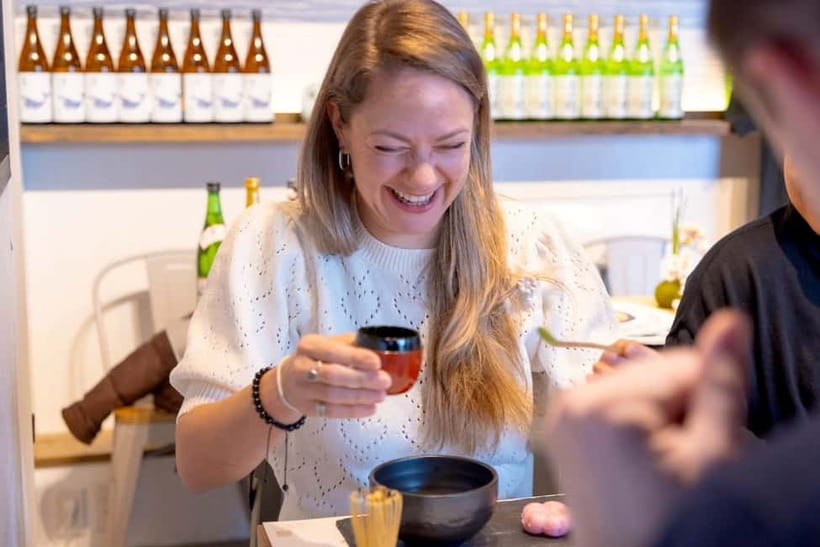
After preparing your tea, you drink it with Japanese sweets. The sweets are described as tasty and well matched to the tea, particularly because their sweetness softens matcha’s bitterness.
This is a small part of the class, but it changes the experience. You are not only learning a technique, you are learning how matcha is enjoyed with food. The pairing also gives the group a natural chance to talk with the hosts and with other participants.
The supplied information calls these Japanese sweets mochi sweets. Exact flavors may vary, so you should not book this expecting a specific filling or brand. What you can count on is a sweet accompaniment served with the matcha you make.
The tasting is also where the class becomes social. Solo visitors are welcome, and the structure gives you a simple way to meet people from different countries. The activity does not require you to arrive with a group, and the hosts help keep the mood open and conversational.
For families, the food portion provides a clear reward after the lesson. Children can learn a little history, practice whisking, and enjoy a sweet within a compact hour. Parents should still remember that the tea itself is unsweetened and may not appeal to every child.
Other things to make with your hands in Tokyo:
- Chopstick Making Workshop in Ginza
★ 4.8 · 1,366 reviews - Tokyo Chopstick Making Workshop with Artisan
★ 5.0 · 466 reviews - Kyoto : Chopsticks Making Workshop in Gion with Engraving Option
★ 5.0 · 958 reviews - Osaka Sushi Making Experience
★ 5.0 · 400 reviews
The teaching style and English instruction
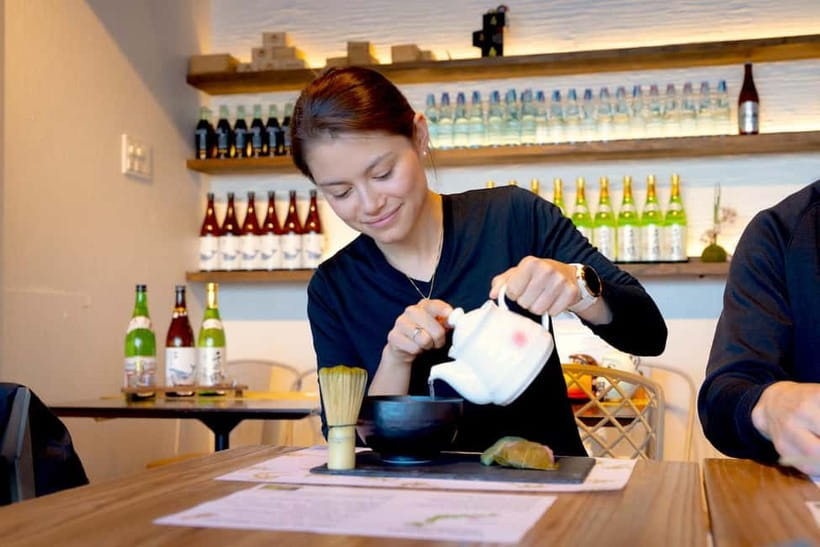
The strongest feature of this activity is the quality of the hosting. The class depends on explanation and demonstration, so clear English makes a real difference.
You can expect the instructor to explain matcha’s background, show the preparation steps, and answer questions. The best sessions appear to combine structure with personality. Mana is praised for enthusiasm and humor, while Hiyo, Yui, Midori, Honoka, Rino, and Moe are also named as hosts who made sessions welcoming and easy to follow.
I like that the staff do not treat beginners as if they should already know tea etiquette. You can ask basic questions, make your bowl, and learn through doing. That makes the activity suitable for someone who is curious about Japanese culture but does not consider themselves a tea enthusiast.
The class is also useful if you want practical knowledge to take home. Several participants left feeling ready to make matcha themselves, and equipment may be available to buy after the session. The purchase opportunity is not included in the $22 price, so think of it as an optional extra rather than part of the class.
What one hour can and cannot deliver
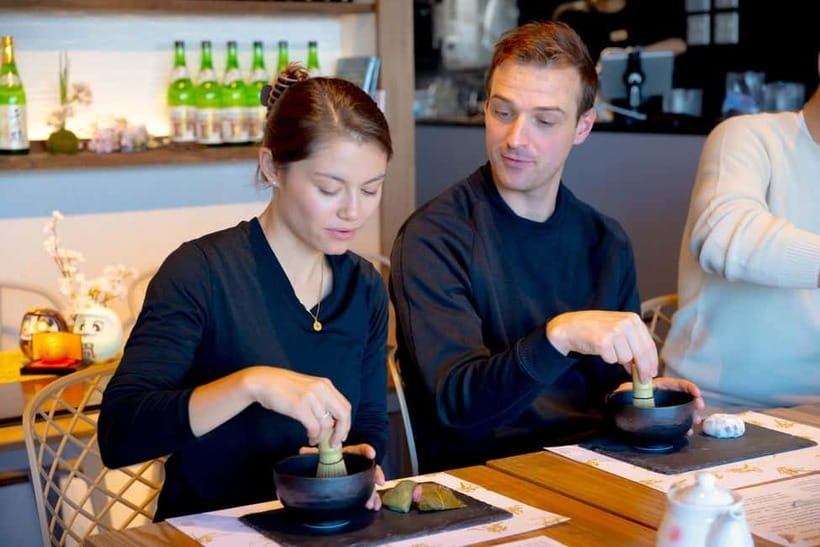
The one-hour format is one of the activity’s best selling points. Tokyo itineraries fill quickly, and a short class can fit between Sensoji Temple, the Sumida River area, and Tokyo Skytree.
You get a clear sequence:
- An introduction to matcha history and culture
- A playful quiz
- An explanation of preparation and etiquette
- A demonstration with traditional tools
- Your own hands-on whisking
- Matcha tasting with Japanese sweets
That is a good amount for $22. The price includes the class, ingredients, and instructor, so you are not paying an admission fee and then facing several small charges inside.
The limit is depth. This is not a formal multi-hour tea ceremony, a full Japanese cooking course, or a specialist workshop on tea farming and production. If you want to study regional tea varieties, advanced whisking, or the finer points of ceremony, you will need a longer and more specialized experience.
For most visitors, that limit is reasonable. The class gives you an introduction you can understand and remember, without taking half a day from Tokyo sightseeing.
Who should book this experience
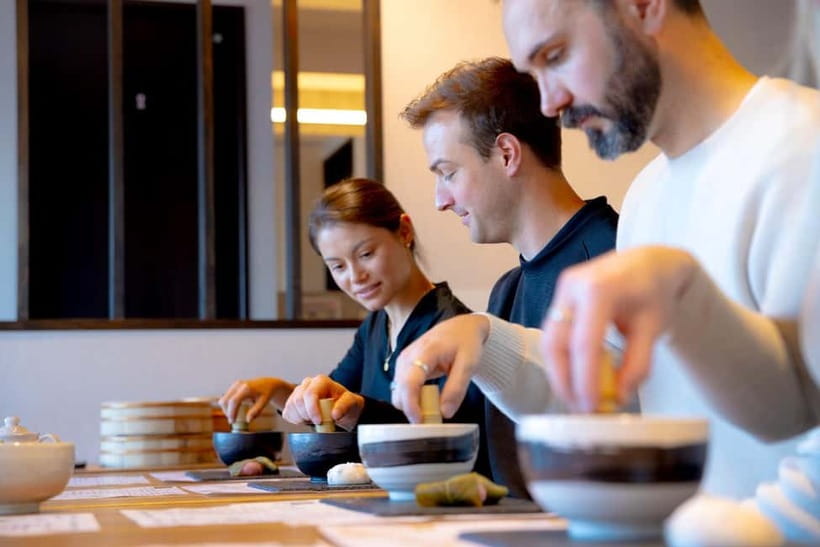
I would recommend this activity to first-time visitors who want a simple connection to Japanese culture. It gives you context, a practical skill, a sweet, and a local setting in just one hour.
It is especially well suited to:
- Solo visitors: You can attend alone and meet other participants in a naturally social class.
- Families: Children can take part in the quiz and whisking, while older relatives can enjoy the seated format.
- Matcha fans: You get to taste unsweetened matcha and learn how it is traditionally prepared.
- Culture-minded foodies: The class explains customs as well as ingredients.
- Busy Tokyo planners: The station-side location makes it easy to add to an Asakusa itinerary.
- Visitors needing a sit-down activity: The class offers a break from walking and sightseeing.
I would be more cautious if you dislike green tea, cannot tolerate bitter flavors, or want a highly formal ceremony with strict silence and elaborate etiquette. The class is friendly and interactive, not solemn or ceremonial from start to finish.
Planning the visit in Asakusa
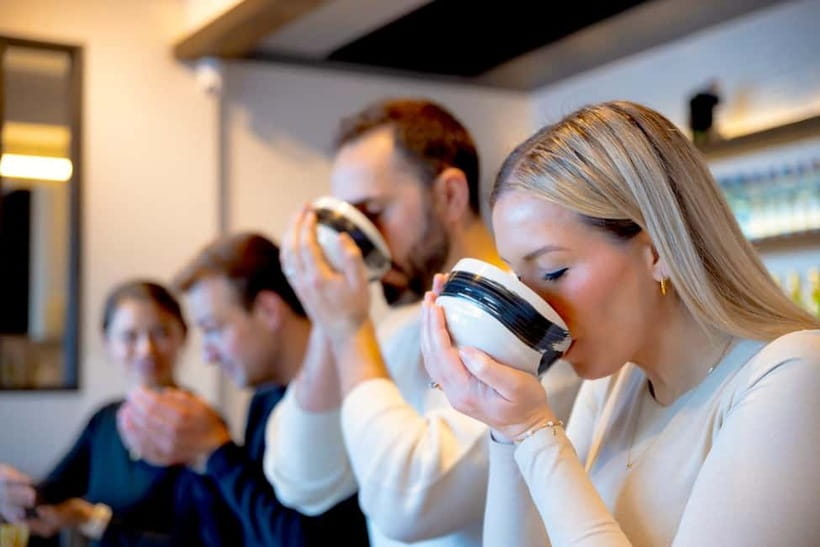
Give yourself enough time to find the Relink KAMINARIMON building at 35.710774, 139.7956532. The meeting point is on the sixth floor, one minute from Asakusa Station, but Tokyo station areas can have several exits and busy pedestrian flows.
Pair the activity with nearby sights rather than crossing the city immediately before it. Sensoji Temple and the Kaminarimon area are natural companions. Tokyo Skytree is also close enough to make a useful second stop, though you should check your booked start time and allow room for station navigation.
The activity runs for one hour, and available starting times depend on the date. Booking ahead makes sense during a tightly planned Tokyo stay, especially if you need a particular time. You can reserve now and pay later, which helps if your schedule is still changing, and cancellation is free up to 24 hours before the activity for a full refund.
There is no hotel pickup or drop-off. You make your own way to the station-side meeting point, which is easy to manage if you are already sightseeing in Asakusa.
Is $22 good value?
Yes, for the right kind of experience. You receive instruction, ingredients, the use of traditional tools during the class, your own prepared matcha, and Japanese sweets. The activity also gives you cultural background and English guidance, not just a drink and a photo opportunity.
The short duration keeps the total cost and time commitment low. At $22, it is an easy addition to a Tokyo day, especially if you want something more personal than browsing a shop or ordering tea in a café.
The value is less clear if your only goal is to taste matcha. You can find matcha drinks elsewhere, often for less. You are paying here for the explanation, the guided practice, the social setting, and the chance to prepare the drink yourself.
The high rating of 4.9 from 388 bookings supports the idea that the class delivers what it promises. The strongest pattern is not a single spectacular feature, but the combination of clear English, lively instructors, good sweets, and a manageable one-hour format.
Should you book it?
Book this matcha experience if you want an affordable, hands-on introduction to Japanese tea culture in a convenient part of Tokyo. It is particularly good for solo visitors, families, first-time matcha drinkers, and anyone who wants a quiet seated activity between Asakusa sights.
Skip it if you want a long, formal tea ceremony or advanced instruction. For everyone else, the balance is persuasive: you learn the background, make the tea, eat mochi sweets, and leave with a technique you can try again at home.
FAQ
Where does the matcha-making experience take place?
It takes place at Relink KAMINARIMON building on the sixth floor, about one minute from Asakusa Station. The coordinates are 35.710774, 139.7956532.
How long does the activity last?
The matcha-making experience lasts one hour.
How much does it cost?
The listed price is $22 per person.
Is the class taught in English?
Yes. The instructor language is English, and English-speaking local staff guide the activity.
What is included in the price?
The price includes the cooking class, ingredients, and instructor.
Are Japanese sweets included?
Yes. You drink the matcha you prepare with Japanese sweets, including mochi sweets.
Do I need previous matcha-making experience?
No. The activity is designed for beginners, and the staff explain and demonstrate the preparation steps.
Can solo visitors join?
Yes. Solo visitors are welcome, and the class offers a chance to meet other participants.
Is hotel pickup provided?
No. Hotel pickup and drop-off are not included. You travel to the Asakusa meeting point yourself.
Can I cancel for a refund?
Yes. You can cancel up to 24 hours in advance for a full refund. You can also reserve now and pay later to keep your plans flexible.
More sweet things to try in Tokyo
- Matcha Making Class in Osaka with Authentic Japanese Sweets Set
★ 5.0 · 509 reviews - Kyoto: Japanese Traditional Sweets Making and Tea Ceremony
★ 4.4 · 314 reviews
Just added in Tokyo
- Japanese Whisky Hunting《HIGH-QUALITY-ONLY》Rare Tasting Class★ 5.0 · 20 reviews
- Luxury Tokyo Sake, Cocktail, Whisky and Pairing Tour★ 5.0 · 18 reviews
- Wagyu & Sake Pairing in Shinjuku – Steak, Shabu-Shabu & More★ 5.0 · 112 reviews
- Small-Group Wagyu Beef and 7 Japanese Dishes Tokyo Cooking Class★ 5.0 · 190 reviews
- Nikko: Edo Wonderland Edomura Cultural Theme Park Ticket★ 4.3 · 205 reviews
- 《MEMBERS-ONLY-BAR-HOPPING》Discover Your Special Whiskey in Tokyo!★ 5.0 · 29 reviews
- From Tokyo: Private Tour to Fuji/Hakone – Onsen, Art, Nature★ 5.0 · 116 reviews
- Tokyo: KABUKI Show at Kabukiza Theatre Admission Ticket★ 4.8 · 152 reviews
Tea Ceremony Experiences, compared.
Tea Ceremony in a Traditional Tea House in Kiyomizu
Read our review →
World Heritage Kyoto & Nara Uji Authentic Matcha Experience
Read our review →
Arashiyama Bamboo Forest, Monkeys, Matcha & Temple Tour
Read our review →Browse the lists this tour appears in