
Reviewed · CALLIGRAPHY & CRAFT WORKSHOPS
Authentic knife making experience at a blacksmith in Kyoto
The hot steel is the star here. You put on a Japanese blacksmith’s uniform, stand near a furnace, and hammer glowing metal into a small kitchen knife under close instruction. I like the hands-on work and the fact that you take home something useful, not just a workshop certificate. I also like the friendly teaching style from instructors such as Mao and Taka.
The main caution is physical effort. Hammering takes more strength than many people expect, and the forge can get very hot. The two Kyoto studios can also cause confusion, so read the location message carefully and allow extra time to find the correct one.
Key points before you book
- You forge a real knife: Shape hot steel with a hammer, then sharpen and polish the finished blade.
- The finished knife is practical: Expect a handmade knife about 13 to 15 cm long, packed in a box and bag.
- The class is guided closely: Mao, Taka, and other smiths explain each step and help correct mistakes.
- The setting is outside central Kyoto: The studio is in Sakyo-ku, reached by the Eizan Electric Railway, with a meeting point near Yase-Hieizan Station.
- The work is physical and hot: Stretch first, wear socks, and expect heat, hammering, and time on your feet.
- The base price is $154: That is a fair price for a rare craft class and a take-home tool, though handle upgrades may cost extra.
Why forging a Kyoto knife feels different
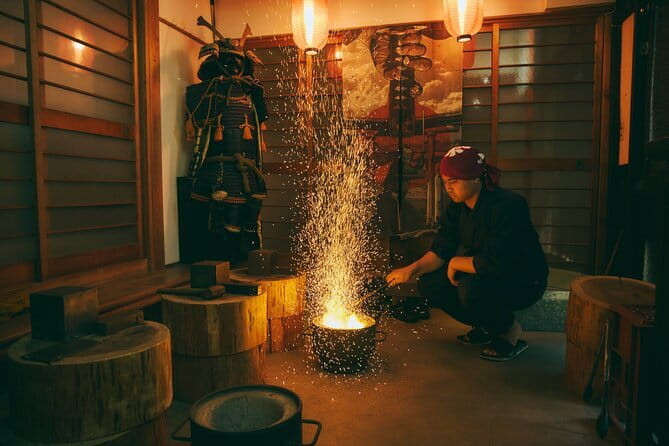
Kyoto offers plenty of polished cultural activities. This one is rougher, louder, hotter, and more rewarding in a direct way. You do not simply watch a craftsperson work. You hold the tongs, lift the hammer, and help turn a piece of heated steel into a blade.
That matters because blacksmithing is difficult to see in ordinary Japanese sightseeing. You may visit temples, gardens, markets, and museums, but very few activities let you work with metal heated to roughly 800 to 900 degrees Celsius. The instructors keep the process controlled, yet the heat and noise remain real.
The knife also gives the class a clear purpose. You are not making a decorative object that will sit on a shelf. The final blade is intended for everyday use, and its uneven marks are part of the appeal. The traditional kurouchi finish has a dark, raw-forged look rather than a bright silver polish. It may not be perfectly uniform, but that is precisely what tells you it was made by hand.
You should set your expectations correctly. This is a short introduction to forging, not a full professional apprenticeship. The class uses a refined format of roughly two and a half hours, with the full booking listed at three hours. Larger knives require more than five hours and cost considerably more, so this session focuses on producing a manageable, useful blade in a single visit.
Other things to make with your hands in Kyoto:
- Kyoto : Chopsticks Making Workshop in Gion with Engraving Option
★ 5.0 · 958 reviews - Chopstick Making Workshop in Ginza
★ 4.8 · 1,366 reviews - Tokyo Chopstick Making Workshop with Artisan
★ 5.0 · 466 reviews
Arriving at the two Studio NIN locations
The activity operates from two studios in Kyoto’s Sakyo-ku area: Studio NIN Yase and Studio NIN Kendo. Staff send a message before your visit to confirm the correct location. Take that message seriously.
The stated meeting point is Studio Shinobi YASE at 168-1 Yase-no-secho, Sakyo-ku, Kyoto City. It is described as a one-minute walk from the Yase-Hieizan Exit of the Eizan Electric Railway, and the train is the recommended way to arrive. A taxi is also possible.
In practice, give yourself spare time. The two studios and similar names can make the final approach less obvious, and one booking message may direct you toward a different studio before the final location is confirmed. One person needed extra time after being sent to the wrong studio. Another found the station access simple but reported a longer walk than expected. The sensible plan is to check the final message, save the studio name, and avoid arriving at the last minute.
This location also changes the feel of the day. You are not in a busy downtown shopping street. The Sakyo-ku setting gives the outing a quieter, more local edge, though it adds transport time to a central Kyoto schedule. I would not place this immediately before a timed temple visit unless you have allowed a generous buffer.
Changing into a smith’s uniform
After check-in, you change into traditional blacksmith attire. This is more than a costume photo opportunity. It gives the class a clear beginning and helps protect your everyday clothes from dust, metal residue, and workshop grime.
Bring socks. That is the one item specifically required, and closed footwear suitable for the activity should be part of your normal preparation. Alcohol and drugs are not allowed.
The staff provide the costume, a towel, and water. In hot weather, the furnace area can feel intense. Cool neck wraps have been provided during summer sessions, and the studio has air conditioning, but you should still expect to sweat. I would wear light clothes under the uniform and avoid scheduling this after a long, exhausting day of sightseeing.
Tools, safety, and the first lesson
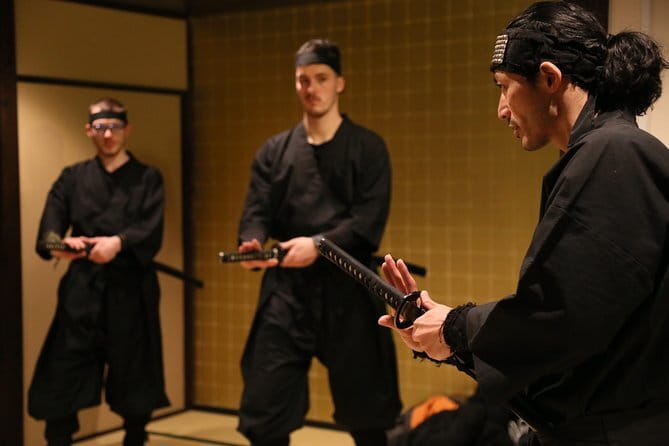
Before the furnace starts, the instructor introduces the main tools. You learn how to handle hammers, tongs, grinders, and sharpening equipment. Safety comes first because the work involves hot steel, hard blows, and powered tools.
The instructors explain where to stand, how to hold the metal, and how to swing without losing control. Mao has more than 10 years of knife-making experience, and Taka is also praised for giving clear, upbeat instruction. Other staff members may assist, depending on the group.
English and Japanese are available. The teaching is designed for beginners, so you do not need prior metalworking experience. That said, beginner-friendly does not mean effortless. The staff may step in to fix the shape or guide your hands, but you still do enough work to feel responsible for the result.
This careful balance is one of the class’s strengths. If your hammering goes slightly off line, you are not left with a useless lump of metal. The instructor helps correct it, while allowing you to perform the key actions yourself. You finish with a knife that works, but the process still feels like your own.
Same base, a different sort of day:
- PERFECT KYOTO 1-Day Bus Tour
★ 5.0 · 13,518 reviews - Kyoto: Fushimi Inari, Kinkakuji, Bamboo Grove 1 Day Bus Tour
★ 4.8 · 4,316 reviews - Kyoto: Tea Ceremony in a Traditional Tea House in Kiyomizu
★ 4.9 · 3,519 reviews - Kyoto Geisha Walking Tour: Gion District & Hidden Gems
★ 4.7 · 3,273 reviews
Heating the steel in the furnace
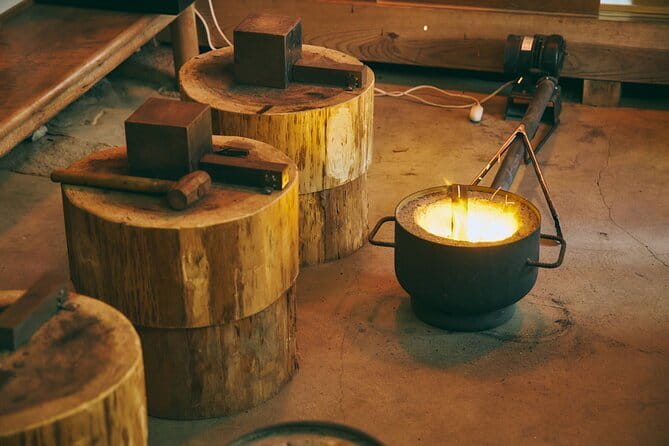
The raw iron goes into the furnace and gradually turns red-hot. This is the point where the workshop changes from a craft demonstration into a physical task.
You need to watch closely. The steel must reach the right temperature for shaping, and the timing matters. When it is ready, the smith removes it with tongs and places it for hammering. You then work under direct instruction, striking the heated metal to stretch and shape it.
The heat is part of the attraction, but it can also be the hardest part for some people. Summer sessions are especially demanding. Bring water, use the supplied towel, and do not underestimate advice to stretch before arriving. The repeated hammering works your arms and shoulders, and the floor work can leave you more tired than expected.
Hammering the blade into shape
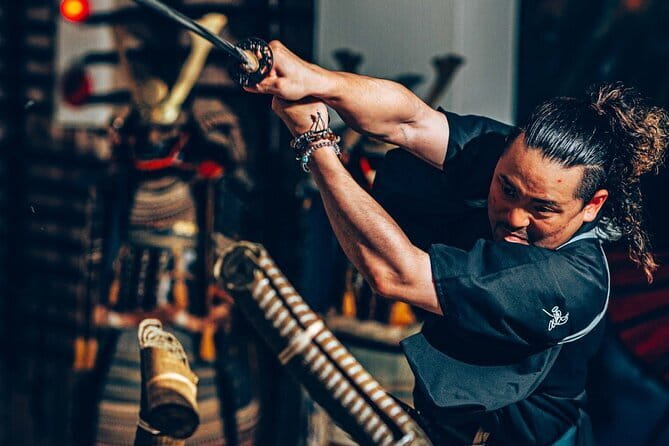
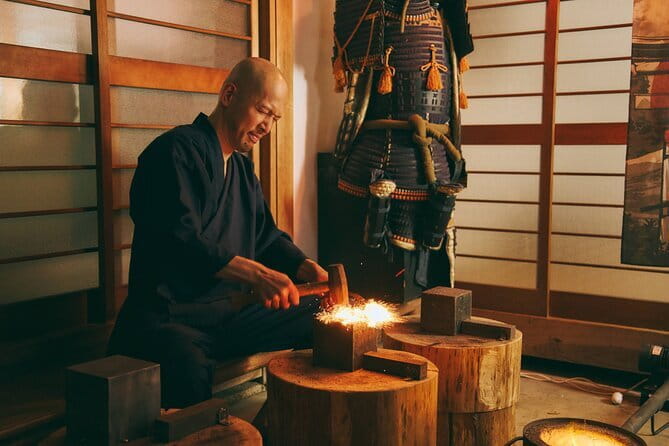
This is the central event. You strike the glowing steel again and again, learning the proper angle, rhythm, and force. The aim is not to swing wildly. Good forging depends on controlled hits in the right place.
You will likely hear plenty of hammering around you, especially in a larger small-group session. The instructors keep the mood light and may add humor, which helps when your arms start to tire. At quieter times, the class may be very small. One session had only three participants, allowing more personal guidance, while another was effectively private.
The work has a satisfying rhythm. You hit the metal, pause while the smith checks it, and repeat. The staff may reheat the steel and make technical corrections, but your contribution remains clear. By the end of this stage, the rough block has begun to look like a knife.
This is also where the experience earns its price. At $154 per person, it is not a cheap souvenir activity. But you receive several hours of instruction, use professional tools and materials, wear supplied clothing, and leave with a handmade knife. Compared with a passive craft display, you get both a lesson and a usable object. The value is strongest if you care about making things with your hands.
Cooling, grinding, and sharpening the edge
Once the blade has its basic form, it is cooled and checked. You work on rough edges and prepare the shape for sharpening. The exact amount of hands-on work may vary because the instructors need to keep the final knife safe and functional.
Next comes the edge. Under guidance, you use sharpening stones and grinders to bring the blade to life. This requires patience. The knife will not become sharp simply because it has been hammered into shape.
The grinders are exciting, but they demand attention. The staff show you how to position the blade and how much pressure to apply. Beginners can produce a functional edge, yet you should not expect the flawless finish of a factory-made chef’s knife. Small variations are normal and give the blade its character.
Some participants wish they had more time to work on the blade. That is a fair criticism. The class moves at a brisk pace because it must get you from raw metal to finished knife in one visit. If you enjoy slow, detailed craft work, the session may feel short. If you want a practical introduction without committing a full day, the pace works well.
Polishing, the final finish, and your souvenir
The final stage is polishing. You clean up the blade and bring out a more finished appearance, while retaining the rustic forged character. The result is a handmade Japanese-style knife approximately 13 to 15 cm long.
Do not expect every knife to look identical. That is part of the point. The raw-forged kurouchi finish is intentionally rustic and helps preserve the visual marks of the process. A bright, factory-perfect surface would remove some of the charm.
The knife is placed in a box and bag for transport. It makes a strong gift because it is small, useful, and tied to a specific day in Kyoto. You can give it to a cook at home, use it for everyday kitchen work, or keep it as a reminder of the trip.
Some sessions offer a knife with a handle for an extra 5,000 yen, payable by cash or card according to the available arrangements. The included format may instead produce a knife without a traditional handle, so confirm the current option before booking if the handle matters to you.
Photos and videos are welcome during the process. Staff may also help capture the major steps, which is useful because your hands are busy when the steel is hot. Take photos, but do not let the camera distract you during hammering or sharpening.
Group size, age limits, and who will enjoy it
A small group is available, but the exact size depends on bookings. A smaller class gives you more direct time with the instructor. A larger group can feel more social, especially when everyone is comparing shapes and cheering each other through the hammering.
The minimum age is 15. Children under 15 cannot attend under the stated rules, and anyone under 15 is not covered simply by bringing a guardian. People over 95 are also listed as unsuitable.
I would recommend this for:
- Couples seeking a practical souvenir rather than another shopping stop
- Families with teenagers aged 15 and older
- Solo visitors who enjoy learning alongside people from different countries
- Anyone interested in Japanese tools, cooking, metalwork, or traditional crafts
- People who do not mind heat, noise, standing, and repeated hammering
I would think twice if you have limited arm strength, dislike hot work, or want a slow historical lecture. The class includes some background on Japanese blacksmithing, but the focus is doing the work. One participant wanted more history, so this is best viewed as a practical workshop with cultural context, not a museum talk.
Is $154 a fair price?
The cost is high compared with a simple cooking class or craft souvenir. It becomes easier to justify when you count what is included: costume, towel, water, tools, materials, instruction, a box, a bag, and the finished knife.
You are also paying for a rare chance to work in a real forge environment under trained supervision. The staff must control a potentially dangerous process and still give beginners enough freedom to feel involved. That combination has real value.
The knife itself may not be perfect. Expect small marks, a rustic finish, and a shape influenced by your own hammering. That is not a flaw in the experience. It is the reason the souvenir carries more meaning than a knife bought from a shop.
Free cancellation up to 24 hours before the activity and a reserve-now, pay-later option make the booking easier to fit into a changing Kyoto schedule. Still, check the final studio location before setting out.
Should you book the Kyoto knife-making class?
Book it if you want a physical, unusual Kyoto activity and like the idea of taking home a useful object you helped create. The patient instructors, clear safety guidance, and strong English support make it suitable for beginners. The session is especially good for families with older teenagers and couples looking for a shared project.
Skip it if you want a quiet cultural visit, have no patience for heat and hammering, or need a perfectly finished knife. You should also allow enough time for the trip to Sakyo-ku and confirm which of the two studios you are visiting.
For the right person, this is one of the more memorable ways to spend three hours in Kyoto. You leave with tired arms, a box containing your own blade, and a much better sense of how much work sits behind a simple kitchen knife.
FAQ
How long does the knife-making activity last?
The listed duration is three hours. The knife-making format itself is described as a refined two-and-a-half-hour process, with the remaining time covering arrival, preparation, instruction, and closing.
Where does the workshop take place?
The activity operates from two studios in Sakyo-ku, Kyoto: Studio NIN Yase and Studio NIN Kendo. Staff send a message before your visit to confirm which location you should attend.
How do I reach the meeting point?
The stated meeting point is Studio Shinobi YASE, at 168-1 Yase-no-secho, Sakyo-ku, Kyoto City. It is listed as a one-minute walk from the Yase-Hieizan Exit of the Eizan Electric Railway. Train travel is recommended, and taxis are also available.
What do I take home?
You take home a handmade knife approximately 13 to 15 cm long. A box and bag are included. Some sessions offer a knife with a handle for an additional 5,000 yen.
Is the workshop available in English?
Yes. The listed languages are English and Japanese. Instructors including Mao and Taka provide step-by-step guidance with the tools, forging, sharpening, and finishing.
What should I bring, and who cannot attend?
Bring socks. Alcohol and drugs are not allowed. Children under 15 and people over 95 are listed as unsuitable, and children under 15 must not attend without the required age eligibility.
Just added in Kyoto
- Kyoto: Private Photoshoot Service★ 5.0 · 158 reviews
- Kyoto Rickshaw Tour★ 5.0 · 210 reviews
- Kyoto: Arashiyama Bamboo, Temple, Matcha, Monkeys & secret spots★ 5.0 · 219 reviews
- Izakaya Style Cooking Class★ 5.0 · 219 reviews
- Kyoto: Traditional Concert at Townhouse or Bathhouse★ 4.9 · 224 reviews
- Ninja 2-hour Hands-on Lesson by Japanese master in Kyoto -Medium★ 5.0 · 218 reviews
- Kyoto: Afternoon Japanese Izakaya Cooking Class★ 4.9 · 241 reviews
- Samurai Training with Modern day Musashi in Kyoto★ 5.0 · 256 reviews
Calligraphy & Craft Workshops, compared.
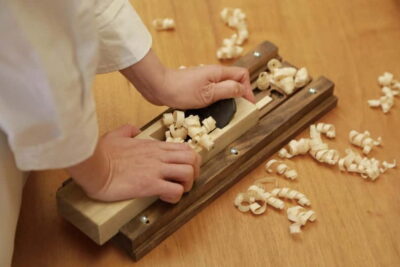
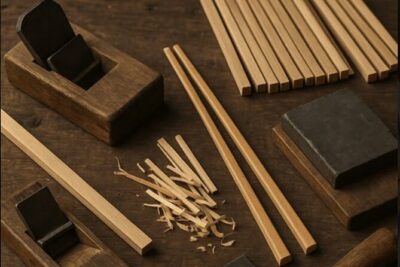
Chopsticks Making Workshop in Gion with Engraving Option
Read our review →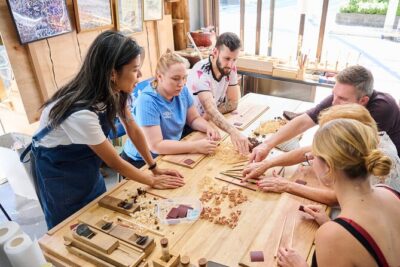


Matcha Making Experience with Mochi Sweets in Asakusa
Read our review →
Seki: Samurai Knife Making Experience at the Knife Museum
Read our review →
Try Mindful Calligraphy Near Kanazawa’s Ninja Temple
Read our review →
Browse the lists this tour appears in