
Reviewed · GO-KARTS
East Tokyo Go-Kart Tour
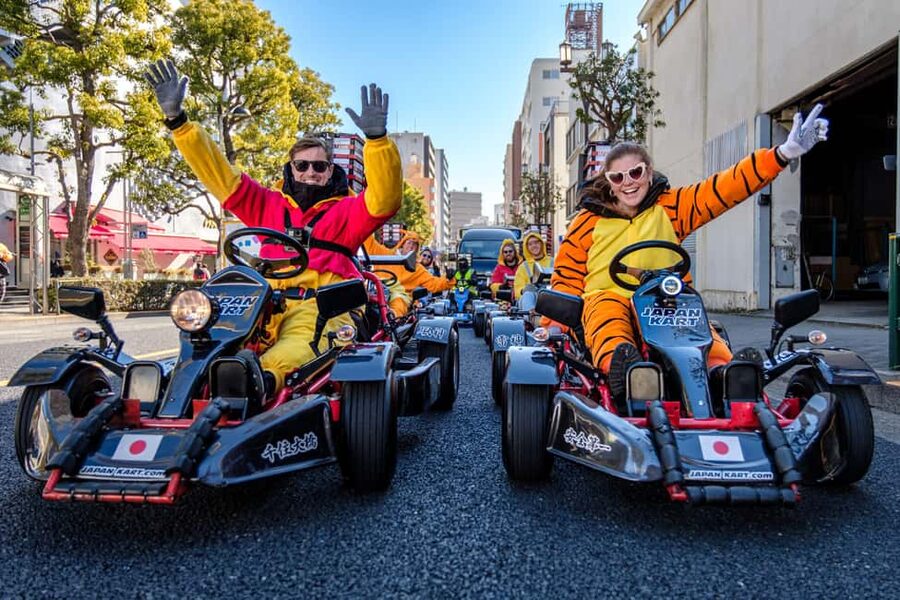
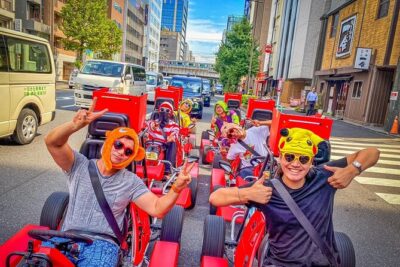
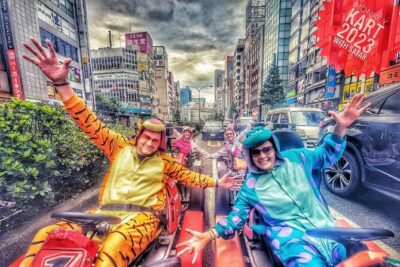
Tokyo is at its most surprising when you are not underground on the subway. On this tour, you sit low in an open go-kart and follow a guide through Tokyo Bay, Ginza, Akihabara, Ueno, and Asakusa. The city rolls past at street level, with Rainbow Bridge views, neon-lit shopping streets, and plenty of curious looks from pedestrians.
I like the small groups of up to 10 and the careful lead-and-follow setup. I also like that photos, costumes, fuel, and safety instruction are included, so the $64 price covers more than just the kart. The main drawback is simple: you must concentrate on traffic, lane position, and road surfaces, so this is better for active sightseeing than for quietly studying landmarks.
Key points to know before you book
- Two routes are available: a roughly two-hour East Tokyo ride or a one-hour route from the SkyTree branch.
- The East Tokyo route covers a lot of ground: Tokyo Bay, Ginza, Nihonbashi, Kanda, Akihabara, Ueno, and Asakusa.
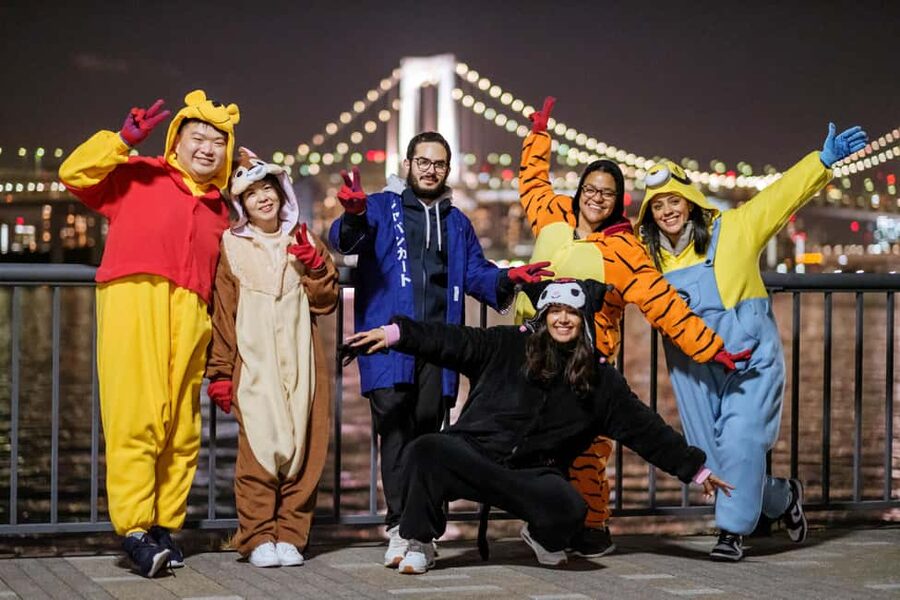
- Rainbow Bridge and Tokyo Bay are the photo highlights, with a planned break during the longer tour.
- You need exact driving documents: your home-country license, a Geneva Convention 1949 international driving permit, and your passport.
- The tour is road driving, not a closed track: expect real traffic, intersections, and the need to follow the guide closely.
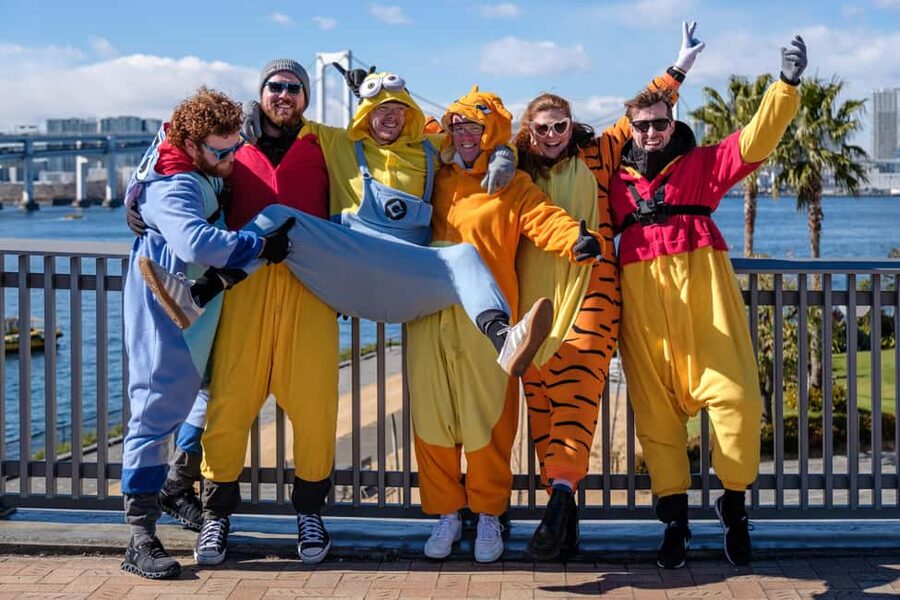
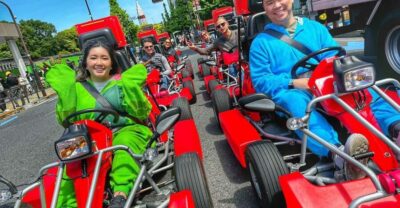
- Costumes and photos are included, adding a playful touch without extra charges.
What this Tokyo go-kart tour is really like
This is not a theme-park ride and not a sightseeing bus. You drive a small go-kart on Tokyo’s public roads, following an English-speaking guide through several central districts. The karts are newly made, and the company gives a safety briefing and demonstration before every departure.
The route is designed for movement rather than long stops. You pass major areas, pause for photos, and see Tokyo from a low, open-air viewpoint. That makes the experience exciting, but it also means you should not expect a detailed spoken explanation of every building. The guide’s main job is to keep the group together and safe.
The longer tour generally takes about two hours on the road, though you should allow around two and a half hours from arrival to finish. One rider described about 1 hour and 10 minutes of actual driving on a shorter outing, so timing can vary with traffic, stops, and the day’s schedule.
The group limit is 10 people. That matters here. A large convoy would be difficult to manage in city traffic, while a smaller group lets the guide keep an eye on each driver. The company uses a lead vehicle and a tail vehicle, according to the experience details, and guides stop when the group becomes separated.
Other street-level rides in Tokyo:
- Flagship 2-Hours Official Street Go-Kart Tour – Tokyo Bay Shop
★ 5.0 · 4,974 reviews - Official Street Go-Kart in Shibuya
★ 5.0 · 3,435 reviews - Official Street Go-Kart Tour – Akihabara
★ 5.0 · 1,578 reviews
Starting near Tokyo Skytree
The main check-in point is at the activity provider’s shop near Tokyo Skytree Tower. This is a useful location for planning your day, since you can visit Asakusa or Skytree before or after the ride. Check your booking carefully, though, because the one-hour SkyTree branch uses a different meeting point.
At the shop, you handle paperwork, receive your safety instruction, and choose from the available costumes. The costumes are part of the fun, especially if your group wants a shared photo theme. You can also expect the staff to check your driving documents before letting you participate.
Do not arrive with only a photo of your permit on your phone. You need a hard-copy, booklet-form international driving permit when required. If the documents are wrong or missing, you can be refused participation without a refund.
The briefing covers how to operate the kart and how to behave in traffic. That preparation is important because the first few minutes can feel intimidating. You are not learning on a closed circuit. You are joining Tokyo’s road system, with cars, signals, lane changes, and wet pavement all part of the setting.
The two-hour route through East Tokyo
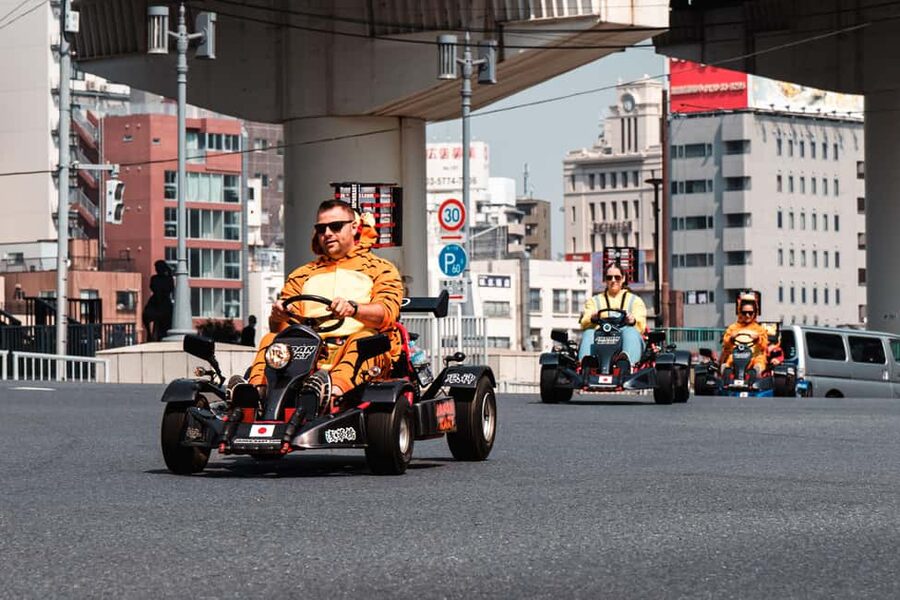
The longer route is the better choice if you want the full city experience and the strongest value for the $64 price. It links waterfront views with old neighborhoods, commercial districts, and famous streets.
Tokyo Bay and Rainbow Bridge
The ride heads toward Tokyo Bay, where the city opens up and the views become broader. Rainbow Bridge is one of the main visual rewards. From the kart, you see the bridge structure and Tokyo Bay from a street-level position that differs from the usual observation deck or train view.
The group takes a break in the bay area, giving you a chance to reset, use the toilet, and take photos. Guides also take pictures during the route, and the photos are included in the price. Bring a phone or small camera only if you can secure it properly. Harnesses may be available for a phone or GoPro, but you should still follow the staff’s instructions.
This is often the most memorable part of the ride, especially around sunset or after dark. Timing is not guaranteed, and weather can change the mood quickly. A sunny evening gives you cleaner views, while rain makes the drive more demanding. The operator may reschedule a rainy tour when possible, and bad-weather cancellations qualify for a full refund.
Same base, a different sort of day:
- Mt Fuji and Hakone 1-Day Bus Tour Return by Bullet Train
★ 5.0 · 26,383 reviews - 1-Day Tokyo Bus Tour
★ 5.0 · 14,250 reviews - Tokyo: TOKYO SKYTREE® Admission ticket
★ 4.5 · 11,192 reviews - Tokyo: teamLab Planets TOKYO Digital Art Museum Entry Ticket
★ 4.6 · 9,779 reviews
Ginza
From the bay, the route moves toward Ginza, Tokyo’s famous shopping district. Here, the experience shifts from open views to polished streets, large buildings, bright signs, and heavy city movement.
You pass through rather than stop for shopping. That is worth understanding before booking. Ginza is part of the visual rhythm of the tour, not a shopping visit. You get a quick look at the district from the road, then continue with the group.
Night rides can make this section especially entertaining because the city lights and costumes create a natural photo setting. At the same time, evening traffic may be busier, so you must give your full attention to driving.
Nihonbashi and Kanda
The route continues through Nihonbashi and Kanda, two central Tokyo areas that show a more everyday side of the capital. You pass office streets, intersections, older commercial corridors, and dense urban blocks.
These sections are less about a single postcard view and more about seeing how Tokyo fits together. The benefit is variety. You are not repeating one type of scenery, and you get a sense of the connections between the city’s famous districts.
The tradeoff is that the tour moves quickly. If a particular building or street catches your eye, there is no guarantee of a stop. Think of this as a moving overview, not a walking tour with time for close inspection.
Akihabara
Akihabara brings a sharper change in atmosphere. The district is known for electronics, gaming, anime, and eye-catching signs, and the route gives you a quick pass through its streets.
You will probably notice pedestrians taking pictures or waving at the karts. That reaction is part of the experience. The costumes and unusual vehicles make the group easy to spot, and the ride has a public, playful quality rather than a quiet sightseeing feel.
If Akihabara is a major interest, plan a separate visit on foot. From the kart, you see the district in motion, but you will not have time to browse shops or explore side streets.
Ueno
Ueno is one of the strongest sections for travelers who want something beyond modern Tokyo. The area connects transport, markets, parks, museums, and older city scenes. On the longer route, you pass through Ueno without leaving the kart, so the view is brief but useful.
One rider particularly enjoyed this part of the route, and I can see why. After the commercial energy of Ginza and Akihabara, Ueno gives the ride a different texture. You are still in central Tokyo, but the setting feels less glossy and more rooted in daily city life.
Keep your expectations realistic. You are not touring the museums or walking through Ueno Park during the drive. If you want those places, schedule them before or after the kart tour.
Asakusa
The route finishes through Asakusa, an old Tokyo district known for traditional streets and major temple scenery. It is a fitting end because the area contrasts so clearly with Ginza and Akihabara.
Asakusa also makes a practical base for the day. You can eat nearby, visit the temple area, or walk toward Tokyo Skytree. Since the main shop is near Skytree, you can combine the tour with this part of East Tokyo without wasting much time on transfers.
Again, the kart gives you a moving glimpse rather than a full cultural visit. I would not use this tour as your only introduction to Asakusa. Use it to get your bearings, then return on foot when you want a slower look.
The one-hour SkyTree branch
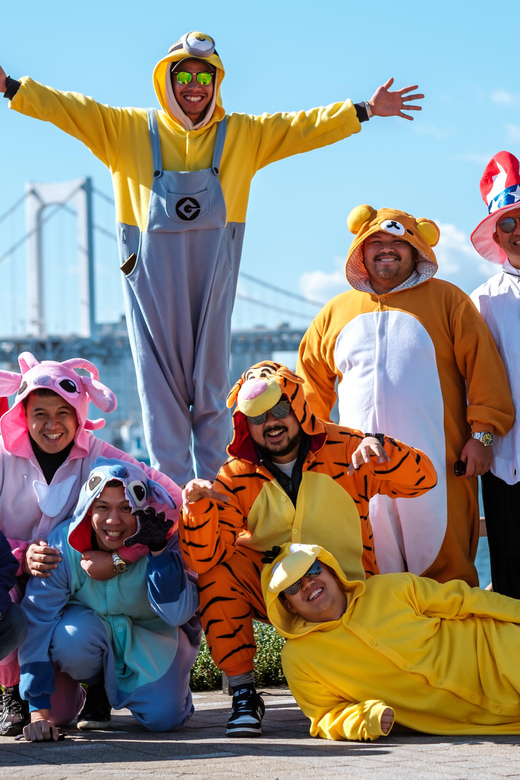
The shorter option takes about one hour and uses a different meeting point at the SkyTree branch. Its route includes Asakusa, Ueno, Akihabara, Ueno Park, Kappabashi Kitchen Tools Street, and Tokyo Skytree.
This is a good pick if your schedule is tight or if you are unsure about spending two hours on the road. You still get the unusual experience of driving through Tokyo, but you give up the longer bay and Ginza circuit.
The route has a clear old-and-new Tokyo mix. Kappabashi is known for kitchen equipment and restaurant supplies, while Asakusa and Ueno bring older city character. Tokyo Skytree provides the modern visual anchor.
I would choose the one-hour tour if you already have a packed itinerary or want a first taste of the activity. I would choose the two-hour route if this is a highlight of your visit and you want the best combination of bay views, central districts, and time behind the wheel.
Safety, traffic, and how demanding the drive feels
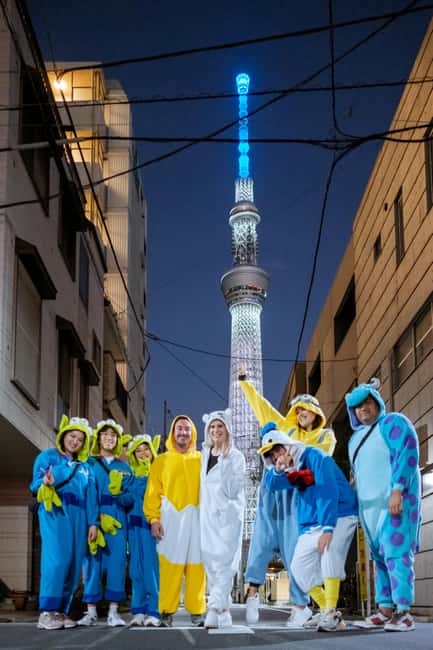
The strongest part of the operation is its attention to safety. Guides demonstrate the karts, explain the traffic rules, and lead the group through the city. Several riders found the first moments daunting, then settled into the rhythm once they understood the kart and the guide’s signals.
You should not treat this as a carefree photo ride. You need to watch the road, maintain your place, and respond to traffic. One driver noted that concentration on driving reduced the time available for sightseeing, and that is an honest warning.
Rain deserves special attention. Wet road surfaces can make the kart feel less stable, and rain can reduce your ability to enjoy the views. The company may offer a reschedule when conditions are poor, but you should still check the forecast and keep some flexibility in your plans.
Wear closed-toe shoes. High heels, sandals, flip-flops, and bare feet are not allowed. Alcohol and drugs are prohibited, and you may not bring alcoholic drinks into the vehicle. Drivers must be at least 18.
The paperwork that can make or break your booking

This is the most important practical detail. You need all three of the following:
- Your valid driving license from your home country
- A hard-copy international driving permit issued under the Geneva Convention 1949 by an authorized issuer in your own country
- Your passport
Japan does not accept international driving permits issued under the Vienna Convention 1968 for this activity. Do not buy a permit from a random online company. The permit must come from the approved authority in your country, and it should be in booklet form rather than a loose paper document.
Drivers from Switzerland, Germany, France, Taiwan, Belgium, Estonia, and Monaco need an original national driving license, an official Japanese translation from the authorized organization, and a passport. US military personnel need a SOFA license, plus an active military ID and stateside driver’s license.
This is not paperwork you can fix at the shop. Bring the physical documents with you. Forgetting your license, permit, translation, or passport can mean missing the tour with no refund.
Is $64 a fair price?
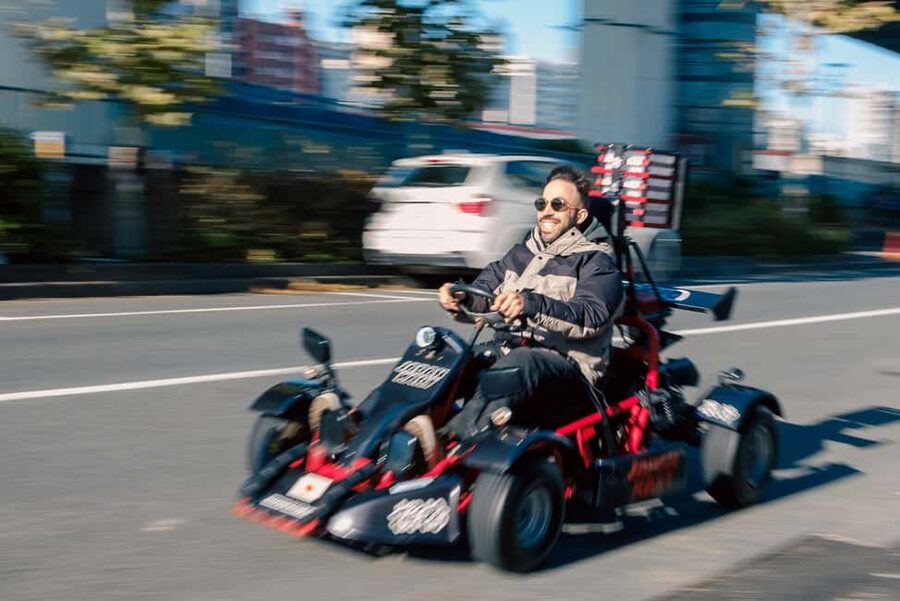
At $64 per person, the value is good if you want both an activity and a quick look at several parts of Tokyo. The fee includes the kart, fuel, taxes, costumes, and photos. You are also paying for the guide team, the briefing, and the work involved in managing a small group on public roads.
The two-hour option gives you more time for the price than the one-hour outing, especially if you want Tokyo Bay and Rainbow Bridge. It also saves your feet while covering districts that would take much longer to connect on foot.
The value is weaker if your main goal is detailed sightseeing. You do not get a full narrated explanation of each landmark, and you cannot stop whenever something interests you. In that case, pair this with walking tours, museums, or observation decks rather than using it as your only city tour.
Included photos help. Guides take group pictures at scenic points, and the photo service avoids the awkward choice between driving and trying to photograph yourself. Some outings also include a drink or snack at the end, though that should not be treated as guaranteed.
Who should book it?
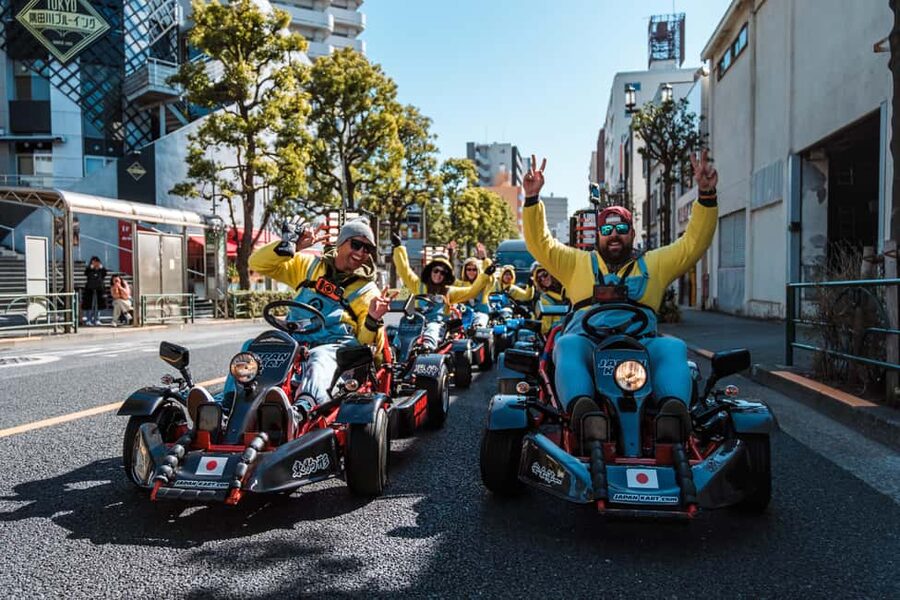
I would recommend this to confident drivers who want an unusual way to see Tokyo. It works particularly well for couples, friends, families with adult children, and anyone who enjoys driving as part of a holiday.
It is also a strong choice for a repeat visit. If you have already seen Tokyo from trains, temples, and observation decks, the street-level perspective feels genuinely different.
I would think twice if you dislike city traffic, wet weather, or constant attention behind the wheel. The tour is not suitable for anyone under 18, and it is not a good fit if your driving documents are uncertain.
Should you book the East Tokyo Go-Kart Tour?
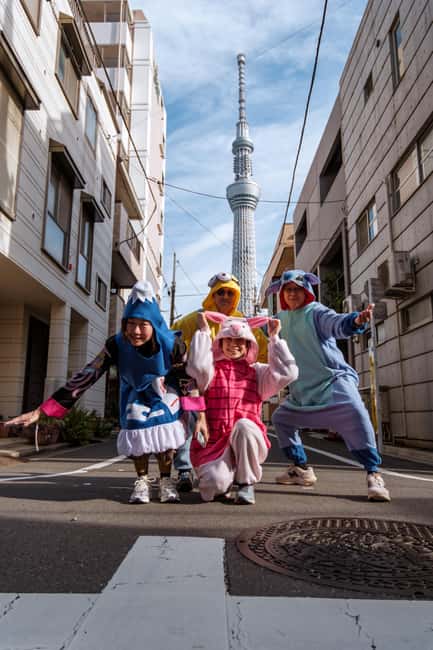
Book the two-hour route if you want the fullest ride, especially for Tokyo Bay, Rainbow Bridge, Ginza, and the mix of modern and older districts. Choose the shorter SkyTree route if you want a compact introduction or need to fit the activity between other plans.
The best practical tip is to organize your driving permit before you leave home, wear proper shoes, and choose a dry time if possible. If you can handle public-road driving and want a playful, fast-moving view of Tokyo, this is worth the $64. If you want quiet cultural detail, choose a walking tour instead, or add one after the karts.
FAQ
How long does the East Tokyo go-kart tour last?
The activity is listed as lasting between 90 and 150 minutes. The main East Tokyo route is about two hours, while the SkyTree branch offers a one-hour route.
Where does the tour start?
The main check-in is at the provider’s shop near Tokyo Skytree Tower. The one-hour SkyTree branch uses a different meeting point, so check the location for your selected route.
What driving documents do I need?
You need your home-country driving license, a hard-copy international driving permit issued under the Geneva Convention 1949 by an authorized issuer in your country, and your passport.
Are Vienna Convention 1968 international permits accepted?
No. International driving permits issued under the Vienna Convention 1968 are not accepted in Japan for this activity.
What is included in the price?
The price includes the go-kart, fuel, taxes and fees, costumes, and photos. Hotel pickup and drop-off are not included.
Can I cancel the tour?
You can cancel up to 24 hours before the start time for a full refund. If bad weather causes the operator to cancel the tour, you can receive a full refund or reschedule when space is available.
Just added in Tokyo
- Nikko: Edo Wonderland Edomura Cultural Theme Park Ticket★ 4.3 · 205 reviews
- 《MEMBERS-ONLY-BAR-HOPPING》Discover Your Special Whiskey in Tokyo!★ 5.0 · 29 reviews
- Japanese Whisky Hunting《HIGH-QUALITY-ONLY》Rare Tasting Class★ 5.0 · 20 reviews
- Luxury Tokyo Sake, Cocktail, Whisky and Pairing Tour★ 5.0 · 18 reviews
- Wagyu & Sake Pairing in Shinjuku – Steak, Shabu-Shabu & More★ 5.0 · 112 reviews
- Small-Group Wagyu Beef and 7 Japanese Dishes Tokyo Cooking Class★ 5.0 · 190 reviews
- Tokyo Cyberpunk Street Photo Tour★ 5.0 · 165 reviews
- From Tokyo: Private Tour to Fuji/Hakone – Onsen, Art, Nature★ 5.0 · 116 reviews
Go-Karts, compared.
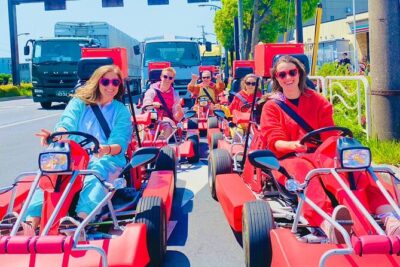
Flagship 2-Hours Official Street Go-Kart Tour – Tokyo Bay Shop
Read our review →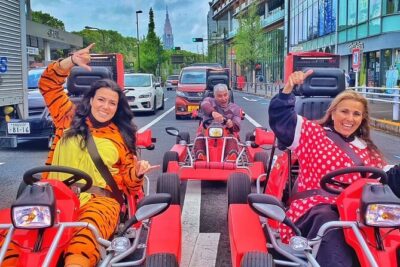
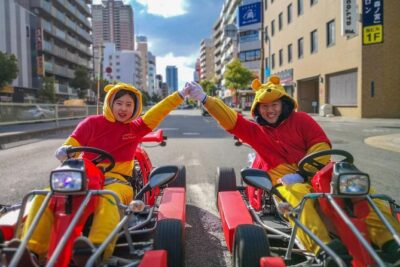
Tokyo Go Kart: Asakusa, Skytree, and Akihabara **IDP MUST**
Read our review →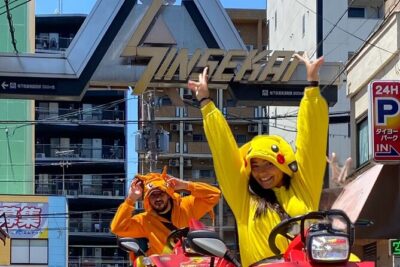

Asakusa, Skytree & Akhihabara Go-Kart City Experience
Read our review →Browse the lists this tour appears in