
Reviewed · TOURS IN OSAKA
Food crawl: Discover Osaka’s soul with every step!
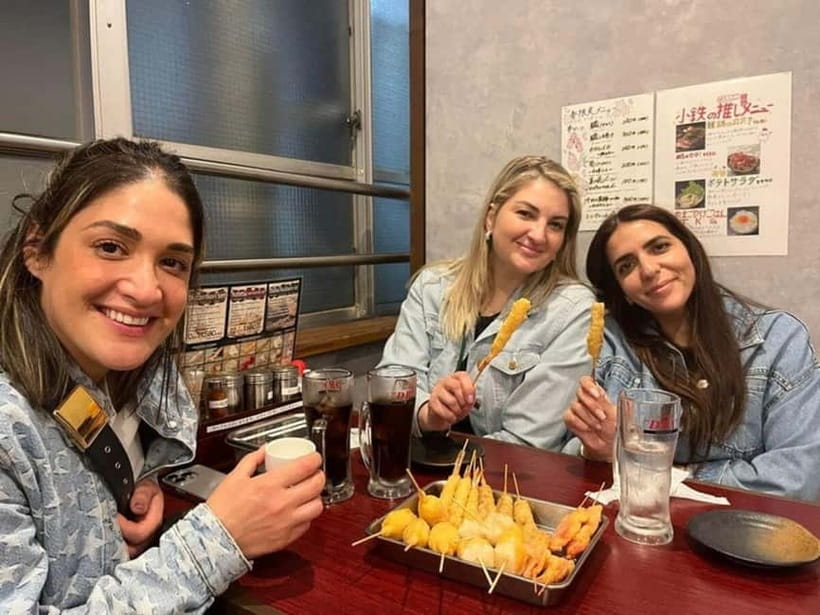
Osaka’s food culture is best understood one small plate at a time, and this tour takes you beyond the obvious restaurant signs. Your guide leads you through local shopping streets and back streets, stopping for dishes such as okonomiyaki, kushikatsu, gyoza, and sushi. You can bring a food wish list, or let the guide choose places that are harder to find online.
I like the small group of up to eight and the flexible format. Guides such as Victor, Marino, Kota, Kuni, and Sebastiano have led tours that included strong food recommendations, local history, and good conversation. The main drawback is the meeting point: Namba Walk is underground, busy, and split into two walkways, so you should arrive at least 30 minutes early.
Key points
- Three hours of eating and exploring: The route combines food stops, shopping streets, neighborhood walks, and local conversation.
- Flexible food plan: Tell the guide what you want to eat, or ask for places used mainly by locals.
- Food is not included: The $51 tour price covers the guide and planning, but you pay for each dish yourself.
- Cash matters: Some small shops accept cash only, so bring enough yen for food and drinks.
- Small group setting: The tour is limited to eight people, making it easier to ask questions and adjust the route.
- Hard-to-find meeting point: Osaka JOINER is inside Namba Walk, between an NTT docomo shop and Travelex, underground.
Why this food crawl works in Osaka
Osaka has a reputation for casual eating, but you can spend a full day here and still miss the places that give the city its character. A famous restaurant street may be easy to find, yet a small counter shop or neighborhood grill can offer a more personal look at how people eat in Osaka.
This three-hour experience is built around that local feel. You are not simply seated at one restaurant for a fixed meal. You walk through a part of town, stop for food, speak with shop staff and local customers, and move on when the next place calls.
I like this format because it gives you context. You learn what a dish is, how it is usually eaten, and why a certain shop matters to the neighborhood. You also get someone to handle the awkward parts, such as reading an unfamiliar menu or deciding what to order when every option looks good.
The experience is not a food tasting with all dishes paid in advance. Your $51 covers the English-speaking guide and the planning, but food expenses and transportation are extra. That means your final cost depends on how much you eat and which places you visit.
Other experiences people book in Osaka:
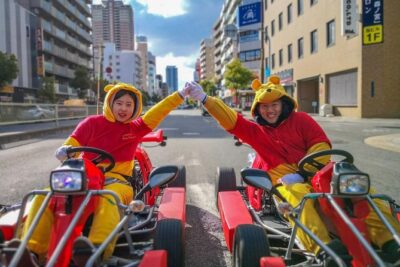
- Osaka Go Karting Tour with Funny Costume
★ 5.0 · 2,658 reviews - Osaka Castle: Museum and Tower Entry Ticket
★ 4.5 · 2,380 reviews - Osaka: Shinsekai Food Tour with 13-15 Dishes at 5 Eateries
★ 4.8 · 2,204 reviews
Starting at Osaka JOINER in Namba Walk
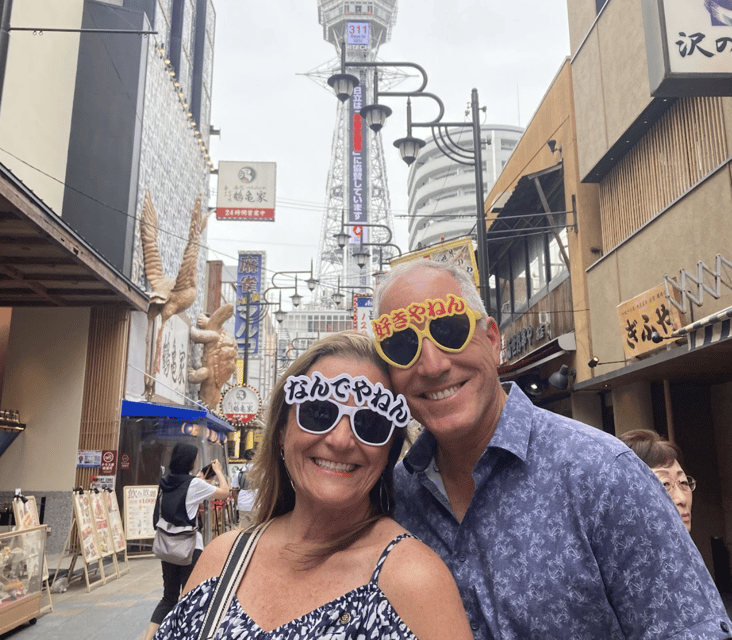
The meeting point is Osaka JOINER, inside Namba Walk at 5-2 Nijinomachi, 1-chome Sennichimae, Chuo-ku, Osaka. It is underground, between an NTT docomo shop and Travelex.
This sounds simple on paper. In practice, Namba Walk can be confusing. It has two long underground walkways, plenty of signs, and a steady flow of people. One person arrived late after struggling to locate the shop and missed the beginning of the tour.
My advice is simple: treat the meeting point as part of the itinerary. Get to the Namba area early, then allow extra time to walk underground and locate the storefront. Do not rely on arriving at the exact meeting time. If you are carrying luggage or meeting the group after a train ride, add even more time.
The daytime example begins at 11:00 and ends around 14:00. The evening example starts at 17:00 and finishes around 20:00. Starting times vary, so check the available option when booking.
Walking through local streets before the main meal
The first part of the experience usually combines walking, food, and shopping. You might visit a local shopping street, look at small stores, pick up souvenirs, or try something from a casual food stand.
This is useful because Osaka’s food culture is not limited to sit-down restaurants. Snacks, prepared foods, and quick bites are part of ordinary daily life. A guide can point out how the area works and help you decide what is worth trying before you reach the larger meal stop.
The walking also gives the tour some breathing room. You are not expected to eat four full meals in three hours. Instead, you sample different kinds of food while moving through the neighborhood.
The exact route can change, which is both a strength and a limitation. If you have a particular interest, such as street food, sushi, shopping, or a certain district, tell the guide before the tour. If you do not have a plan, the guide can recommend places favored by local residents.
You should not expect a fixed menu or identical route every time. This is a flexible introduction to Osaka rather than a carefully measured tasting flight.
Okonomiyaki, kushikatsu, gyoza, and sushi
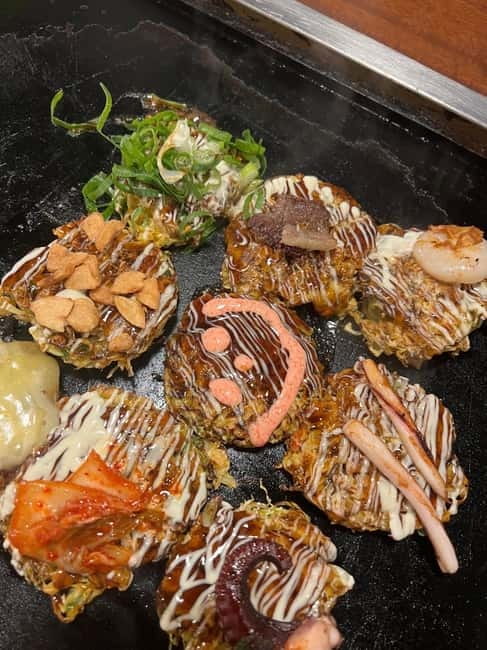
The sample schedule includes a local okonomiyaki and kushikatsu stop. Other food experiences have included gyoza, sushi, and skewered deep-fried street food.
Okonomiyaki is one of Osaka’s signature dishes: a savory pancake cooked with a mix of ingredients and finished with sauce and other toppings. It is filling, familiar enough for first-time visitors, and closely tied to Osaka’s casual dining culture.
Kushikatsu offers a different experience. Food is placed on skewers, coated, and deep-fried. It is easy to share and gives you a chance to try several small items instead of committing to one large dish.
Gyoza and sushi bring more variety to the route. One food stop featuring gyoza was singled out as especially good, while a sushi restaurant also made a strong impression. I like that the possible selection is not locked into one Osaka specialty. You can get a broader sense of the city’s food choices.
The skewered food stop is particularly useful if you want something quick and local. The name of the place is not always clear from the description, so ask your guide to identify each shop and explain what you are eating. That small bit of information can turn a quick snack into a better cultural experience.
Food portions and prices are not specified in advance. Since you pay separately, ask about the cost before ordering if you are watching your budget. You may also want to pace yourself. A food crawl is more enjoyable when you leave room for the next stop.
Same base, a different sort of day:
- Osaka Food Tour: 13 Dishes at 5 Local Eateries
★ 5.0 · 2,149 reviews - Hungry Osaka Street Food Tour:15 Tastings & 3 Drinks with a Local
★ 5.0 · 1,727 reviews - Osaka: teamLab Botanical Garden Entry Ticket
★ 4.5 · 1,710 reviews - Osaka: Tea Ceremony Experience
★ 4.9 · 1,426 reviews
A guide who adjusts the experience
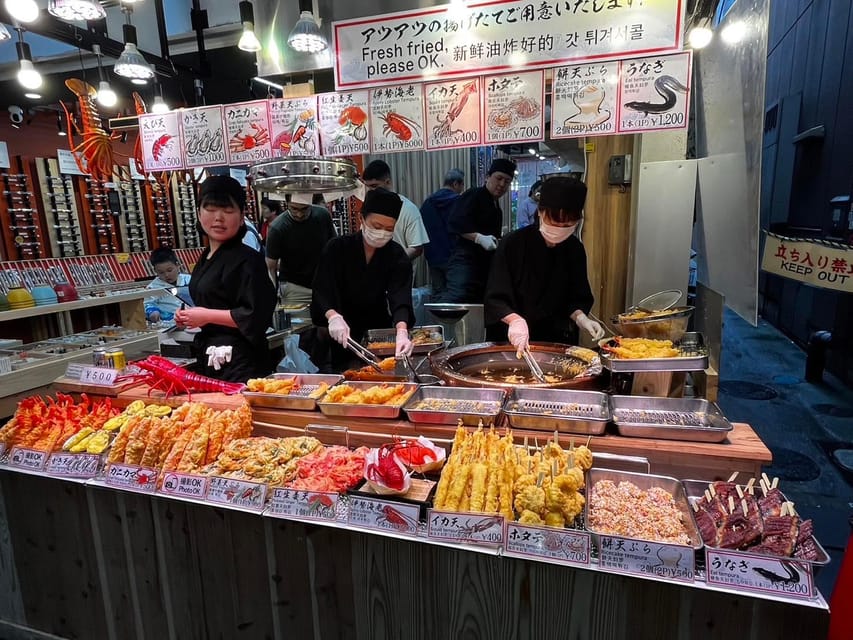
The guide is the main reason to book this tour instead of simply following a food map. Guides are expected to speak English and Japanese, and the group size is limited to eight.
Several guide names appear in the tour history. Victor has led walks that included local culture and history. Marino has been praised for creating an easy connection within the group. Kota has handled family requests well and adjusted the food stops to match preferences. Kuni has guided groups through several food stops, and Sebastiano has offered strong restaurant advice.
Guide assignments can change, so you should not book on the assumption that one named person will lead your departure. Still, these examples show the kind of experience the operator aims to provide: friendly conversation, useful food advice, and a route that can respond to the group.
The customization is more than a marketing line. If you know you want sushi, gyoza, or a particular neighborhood, you can bring that request. If you have no idea where to begin, you can ask for places that do not appear prominently online.
This works best if you speak up. Tell the guide how hungry you are, what you avoid, and how adventurous you feel. A family, a couple, and a solo visitor may need very different routes.
Meeting local people without forcing the moment
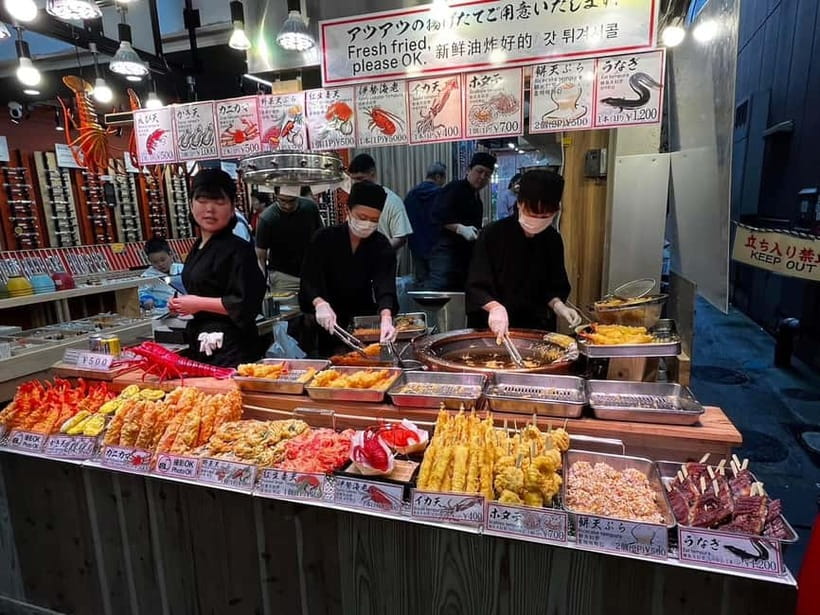
The tour is designed to put you in contact with local customers and shop staff. That may mean a brief conversation at a food counter, a question about the dish, or a chance to watch the everyday rhythm of a small shop.
I appreciate this because local contact can be difficult to arrange on your own. You may not know which places welcome visitors, how to order, or when a shop is too crowded for a long conversation. A guide helps you take part without making the interaction feel like a staged performance.
Keep your expectations realistic. The tour promises opportunities to connect with local people, not a private meeting or a guaranteed long conversation. The quality of that contact will depend on the shops, the timing, and how comfortable everyone feels.
The small group helps. With no more than eight people, you can ask questions without holding up a large crowd. You also have a better chance to hear the guide and stay together on the underground streets and busy sidewalks.
Daytime and evening options
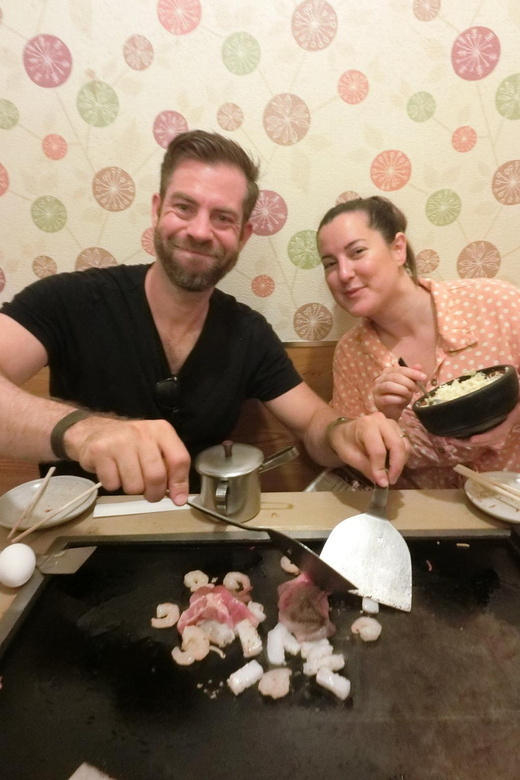
The daytime example begins at 11:00 with shopping streets and local food, followed by dishes such as okonomiyaki and kushikatsu, then ends at 14:00.
This is a good choice if you want to use the evening for another activity, or if you prefer to eat earlier. It may also suit families who do not want a late finish.
The evening route starts at 17:00. It includes a walk around the local town, food, souvenir shopping, and a look at back streets before the food stops continue until about 20:00.
The evening option may give you a different view of Osaka’s food districts, when restaurants and street stalls are preparing for the night crowd. It is also convenient if you spend the day sightseeing elsewhere.
The tour may include a temple, as one route did, but that is not promised in the standard description. Think of it as a possible extra rather than a guaranteed stop.
What the $51 price really covers
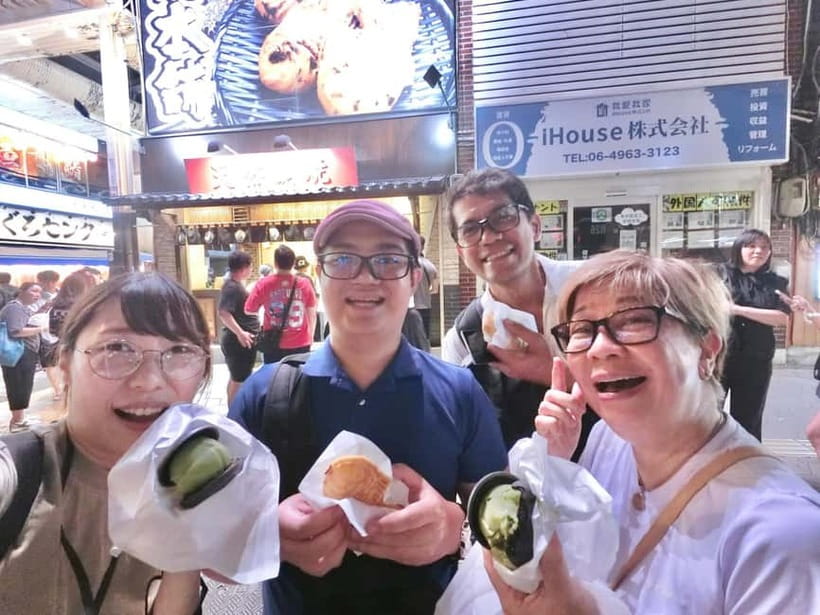
At $51 per person, the value depends on how much help you want. You are paying for three hours of a local guide’s time, route planning, English-language support, and access to food stops you may not find easily by yourself.
The price does not cover the food. That is important. You might spend modestly on several small portions, or more if you choose several restaurants and larger dishes. Transportation is also excluded.
I see the price as reasonable for someone who wants an easy first evening in Osaka or a guided start to the city’s food scene. It is less attractive if you already know the area, speak Japanese, and enjoy choosing restaurants independently.
The flexible route adds value for people with clear preferences. A vegetarian, a family with children, or someone focused on sushi can ask for help before the walk begins. The operator asks you to share allergies or religious dietary restrictions in advance.
Do not assume every request can be met at every shop. The tour can be customized, but the available food depends on the route and local businesses open that day.
Cash, timing, and practical details
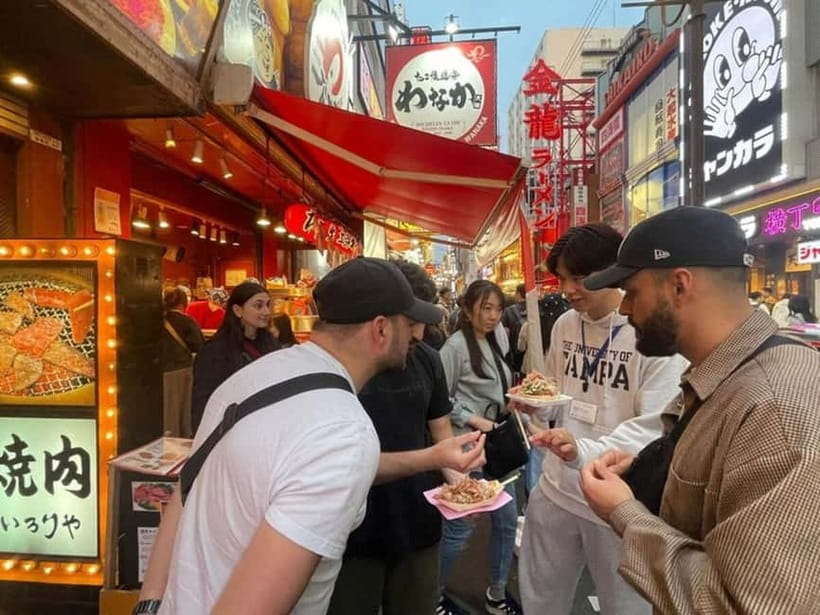
Bring cash. Some of the shops may accept only cash payments, and food is not covered by the booking price. Carry enough yen for your own purchases and food, since the exact number of stops and prices can vary.
Wear comfortable shoes. The tour involves walking around local streets and shopping areas, and the meeting point itself can take time to reach. You do not need special equipment, but you do need to stay alert in busy underground passages.
The group is limited to eight participants. That is small enough for questions and route changes, but it does not mean a private tour. You will share the experience with other people.
Free cancellation is available up to 24 hours before the start time for a full refund. You can also reserve now and pay later, which helps if your Osaka plans are still shifting.
Who should book this Osaka food crawl?
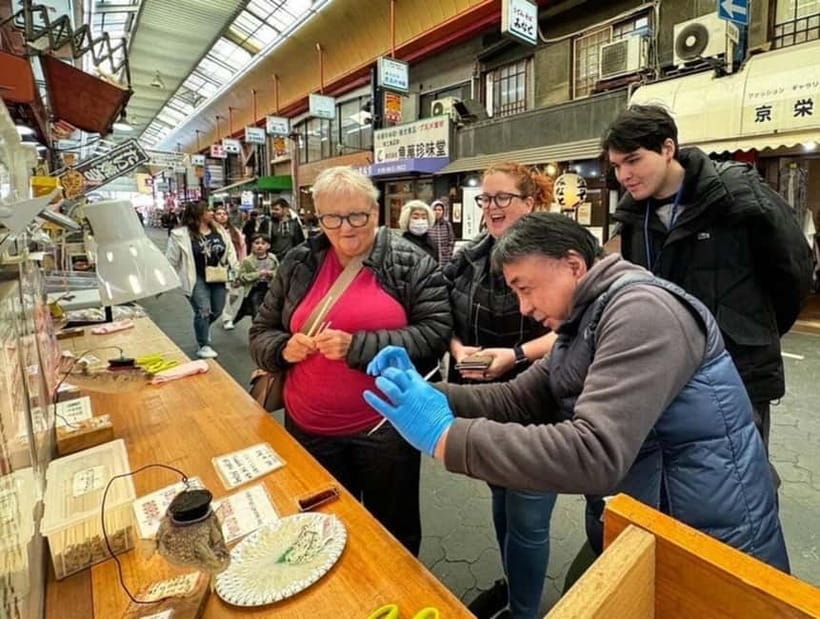
I would choose this tour if you are visiting Osaka for the first time and want help getting oriented through food. It also suits you if restaurant research feels like work, if you want to ask questions in English, or if you prefer several small stops to one formal meal.
Families can benefit from the flexible format, provided everyone is comfortable walking and sharing food choices. Couples and solo visitors may like the social side of a small group, especially if they want more conversation than a self-guided food map provides.
This is not the best choice if you need a firm menu, a guaranteed list of restaurants, or an all-inclusive price. It is also not ideal if you dislike paying separately at each stop or want a tour with no walking.
Should you book it?
Book this food crawl if you want local guidance, flexible food choices, and a small group. The strongest part is the chance to move beyond obvious tourist stops and try places selected around your interests.
Plan carefully for the underground meeting point, bring cash, and remember that the $51 price does not include food or transport. If you do those three things, the tour offers a practical and friendly way to begin eating your way through Osaka.
FAQ
Where does the tour meet?
The meeting point is Osaka JOINER inside Namba Walk, at 5-2 Nijinomachi, 1-chome Sennichimae, Chuo-ku, Osaka. It is located between an NTT docomo shop and Travelex.
How long does the food crawl last?
The activity lasts three hours. Example daytime hours are 11:00 to 14:00, while an example evening schedule runs from 17:00 to 20:00.
What food might be included?
Possible foods include okonomiyaki, kushikatsu, gyoza, sushi, and skewered deep-fried street food. The exact route and dishes can vary.
Is food included in the $51 price?
No. Food expenses are separate from the tour price. Transportation is also not included.
Do I need to bring cash?
Yes. Some of the shops visited may accept cash only, so you should carry cash for food and purchases.
Can I request particular foods or places?
Yes. You can share a specific food or location request, and the guide can adjust the experience where possible. You can also ask for recommendations if you have no set plan.
What languages does the guide speak?
The tour is offered in English and Japanese.
What happens if I need to cancel?
You can cancel up to 24 hours in advance for a full refund. The reserve-now, pay-later option is also available.
Just added in Osaka
- Private arrival transfer from Kansai International airport to Kyoto City★ 5.0 · 32 reviews
- (Ticket Included) Explore Osaka Castle & Museum of History★ 4.8 · 21 reviews
- Hidden Osaka – Yukaku Red Light Tour & Culinary Adventure★ 4.8 · 96 reviews
- Osaka: Walking Tour and Top Highlights★ 4.8 · 104 reviews
- Pickleball in Osaka, Kobe & Kyoto with Locals!★ 4.7 · 80 reviews
- Osaka: Private Ceramic Painting Workshop★ 5.0 · 13 reviews
- Eat Like a Local in Osaka – Private Custom Street Food Tour★ 4.3 · 33 reviews
- Osaka:SUMO BEATS SHOWCASE: Taiko Drum and Wagyu burger!★ 4.2 · 37 reviews
Tours in Osaka, compared.
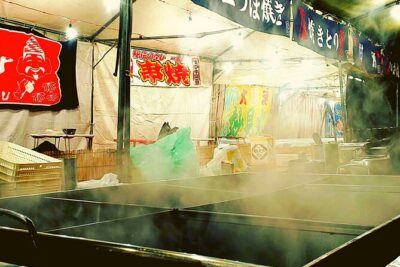
Osaka Food Tour: 13 Dishes at 5 Local Eateries
Read our review →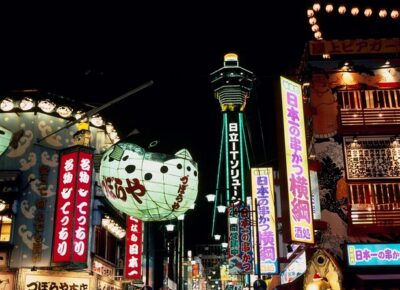
Hungry Osaka Street Food Tour:15 Tastings & 3 Drinks with a Local
Read our review →
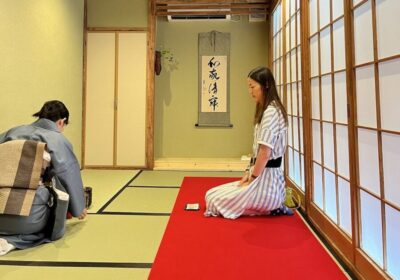
Hotspots & Hidden Gems Walking Tour Private or Group
Read our review →Browse the lists this tour appears in