
Reviewed · AIRPORT TRANSFERS
From Narita Airport: Private Layover or Transit Guided Tour
Narita Airport is more than a place to wait for your next flight. A short train ride takes you to Naritasan Shinshoji Temple, an active Buddhist site reached through a charming old street lined with eel restaurants, sweets shops, and small stores. In four hours, you get a real taste of Japan without gambling on a long trip into Tokyo.
I like two things right away: the private format lets your guide adjust the pace and interests, and the visit includes local details that are easy to miss alone, from Goma Prayer to Narita’s famous eel. The main catch is time. You need a fairly long layover, and the tour involves walking, trains, airport security, and a careful return to the terminal.
Key points to know before booking
- A practical four-hour escape from the airport: You travel by train for about 15 minutes each way between Narita Airport and Narita Station.
- Naritasan Omotesando feels like a proper old town: The approach street offers food, sweets, traditional products, and plenty of local color.
- The temple visit includes Goma Prayer: Your guide can explain what you are seeing and help connect the ceremony with Japanese Buddhist customs.
- Lunch is part of the experience, but not the price: Plan roughly 2,000 yen for a regular meal, or 3,000 to 4,000 yen for a higher-end choice.
- Your guide can shape the visit: Fusako and Chiho have arranged tea ceremonies, local tastings, origami, and meals suited to individual interests.
- Pack light and carry cash: Large luggage should remain at the airport, and some Narita shops and restaurants do not accept cards.
Why Narita is a smart layover stop
The appeal here is not checking off a famous city landmark. It is the chance to leave the airport and spend a few hours in a smaller Japanese town with a guide who can explain what you are seeing.
Narita is close enough to the airport to make the trip practical. The train ride takes about 15 minutes, so much of your limited time goes toward walking, eating, and visiting the temple rather than sitting in traffic. That matters on a layover, when an ambitious trip into central Tokyo could leave you watching the clock.
The experience is also more personal than a standard group excursion. The booking is for a private group of up to four people, with an English or Japanese-speaking guide. You can ask to focus on food, customs, Buddhist practice, shopping, architecture, or a slower stroll. If you have mobility needs, the activity is listed as wheelchair accessible, though you should still explain your requirements when booking because the route is a walking tour through streets and temple grounds.
Other transfers and rides around Tokyo:
- Haneda Airport (HND) Private Transfer to Central Tokyo
★ 4.5 · 636 reviews - Narita Airport (NRT) Private Transfer to Central Tokyo
★ 4.5 · 300 reviews - Private Haneda Airport (HND) to Central Tokyo City Transfer
★ 4.5 · 260 reviews
Meeting your guide at Narita Airport
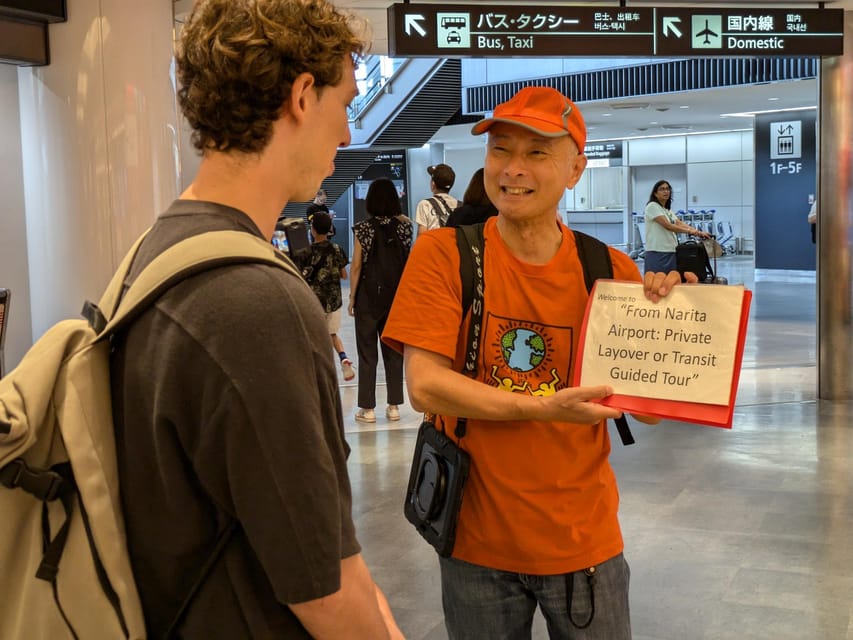
Airport pickup is at the Visitor Service Center area near the Tourist Information Center on the arrival level of Terminal 1’s central building. Your guide wears something orange. If you start from Narita Station instead, meet near the Tourist Information Center just outside the east exit of JR Narita Station.
The meeting instructions are clear, but airports are large and tiring places. Give yourself time to collect your bearings, especially if you have just arrived from an overnight flight. Airport-style security applies to all visitors, so your tour may take longer than the simple four-hour sightseeing time suggests.
Communication before the tour is one of its useful strengths. The company has helped with meeting-point photos, airport luggage information, and transfers between terminals. If your connection involves another terminal or a luggage locker, sort out those details before you begin. One guide even helped a guest operate a luggage-locker machine at the end of the walk, a small service that can make a big difference when the instructions are in Japanese.
The short train ride to Narita
Your guide takes you to the station and helps with the train ticket. The ride to Narita Station lasts about 15 minutes, and the return trip takes about the same time.
This simple transfer is part of the value. You do not need to work out the route, buy a ticket, or wonder which exit to use while tired from a flight. Your guide can also point out details along the way. One guide has used paintings in the airport to explain local history before the train ride even begins.
The train fare is not included. The stated cost is around 500 yen, and you should carry cash. That amount is modest, but airport passengers often arrive with little Japanese currency, so it is worth planning ahead.
Walking Naritasan Omotesando
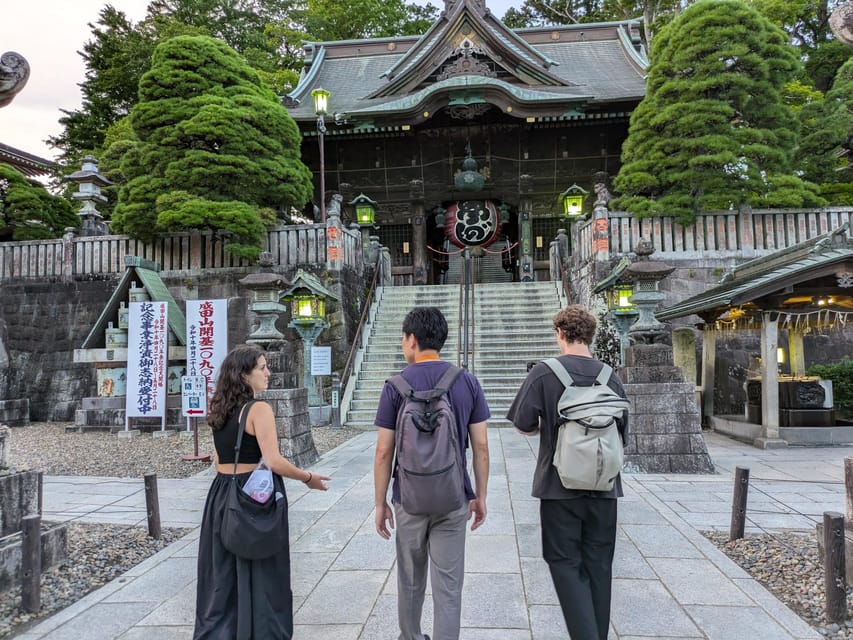
From Narita Station, you walk along Naritasan Omotesando, the traditional approach to the temple. Allow about an hour for the guided portion, although the private setup means the pace can change.
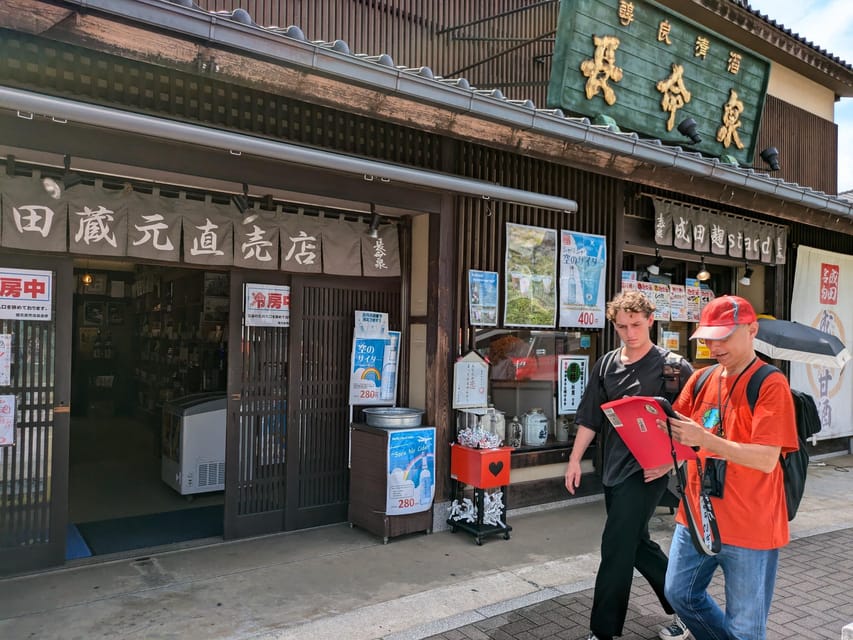
This is where the visit begins to feel like more than an airport stop. The street has an old-fashioned Japanese character, with restaurants, food shops, sweets, and traditional goods packed along the route. Narita is especially known for eel near the temple approach, and your guide can explain how the local food connects to the town.
You may stop for small tastings, such as bean-filled waffles or sesame ice cream. A guide might also point out reasonably priced shops, explain familiar Japanese products, or talk about Kabuki theater and everyday customs. These small observations are useful because they give you something to look for instead of simply walking past storefronts.
The street is not a silent museum. It is a working commercial area, and that is part of its charm. You can browse at your own pace, ask about products, and decide which tastes or souvenirs are worth your limited time. If you prefer to reach the temple quickly, say so. If food and shopping matter more than a formal history talk, your guide can adjust.
The main limitation is physical. You will be on your feet, and the route is outdoors. Wear comfortable shoes, bring water in warm weather, and consider a hat. Summer heat can be serious, and the route may change on especially hot days.
Same base, a different sort of day:
- Mt Fuji and Hakone 1-Day Bus Tour Return by Bullet Train
★ 5.0 · 26,383 reviews - 1-Day Tokyo Bus Tour
★ 5.0 · 14,250 reviews - Tokyo: TOKYO SKYTREE® Admission ticket
★ 4.5 · 11,192 reviews - Tokyo: teamLab Planets TOKYO Digital Art Museum Entry Ticket
★ 4.6 · 9,779 reviews
Entering Naritasan Shinshoji Temple
The temple visit lasts about 30 minutes in the basic schedule, but the wider grounds and the prayer ceremony can make this the emotional center of your time in Narita.
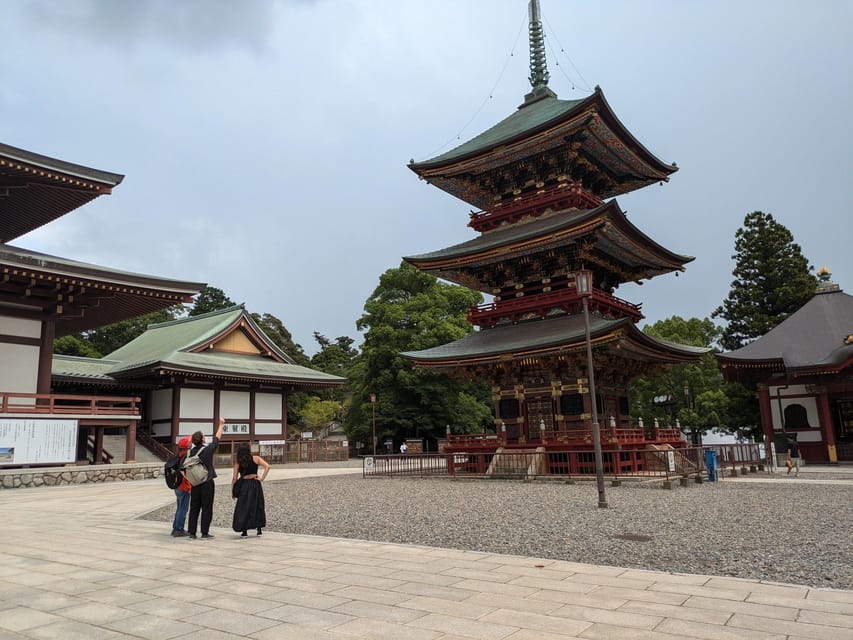
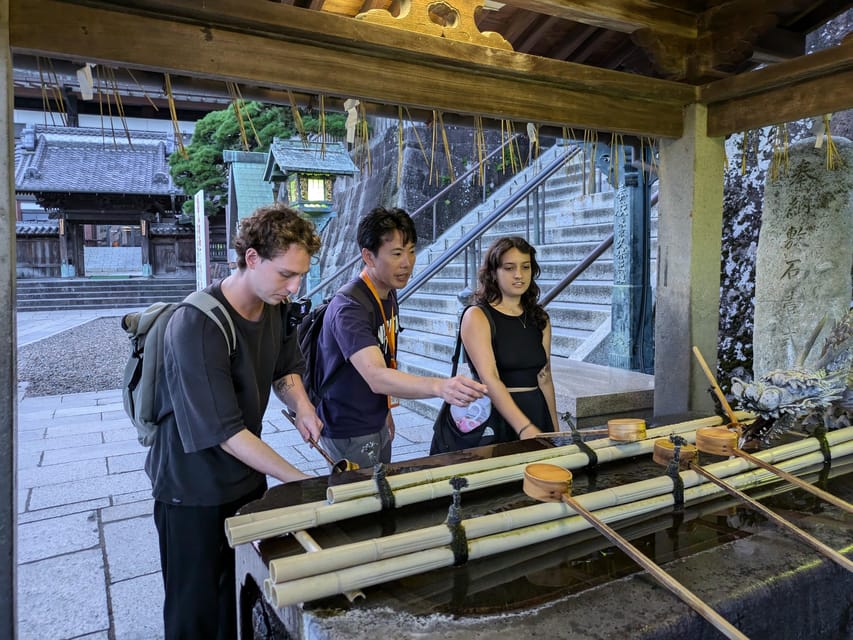
Naritasan Shinshoji is more than a photo stop. It is a major Buddhist temple with a long past, and your guide can explain the buildings, rituals, and customs in plain language. You may walk through the grounds, visit the main hall, and watch the Goma Prayer ceremony.
Goma Prayer uses fire as part of a Buddhist prayer ritual. Seeing it in person gives you a direct look at religious practice, rather than a quick explanation from a guidebook. Your guide can tell you what is happening and how to behave respectfully. The timing of ceremonies can vary, so do not treat the prayer as guaranteed at a precise minute.
The temple grounds also provide a change from the narrow shopping street. You get room to pause, look at the architecture, and absorb the setting before lunch. The guide may include a tea ceremony if one is taking place during your visit. Several guests have also had the chance to participate in tea-related activities, write haiku, or learn origami, but these additions depend on the day and your guide’s planning.
If you want a serious religious visit, tell your guide at the start. If you are more interested in visual details, customs, or photography, say that instead. A private guide is most useful when you give clear signals about the kind of experience you want.
Choosing lunch in Narita
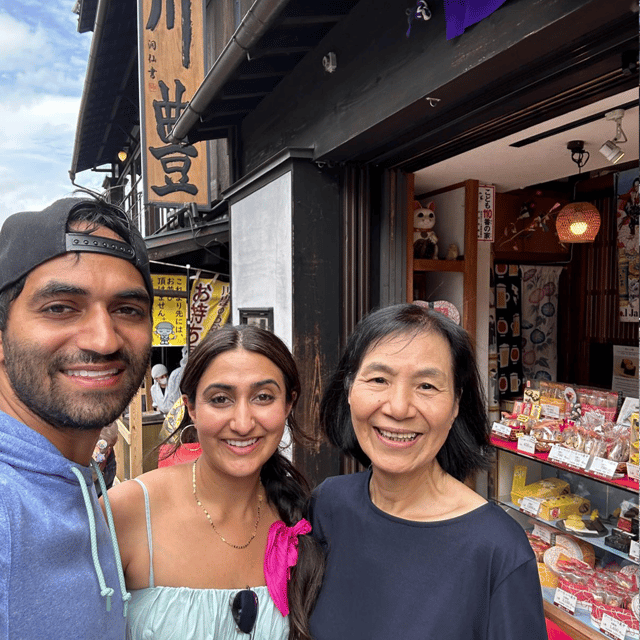
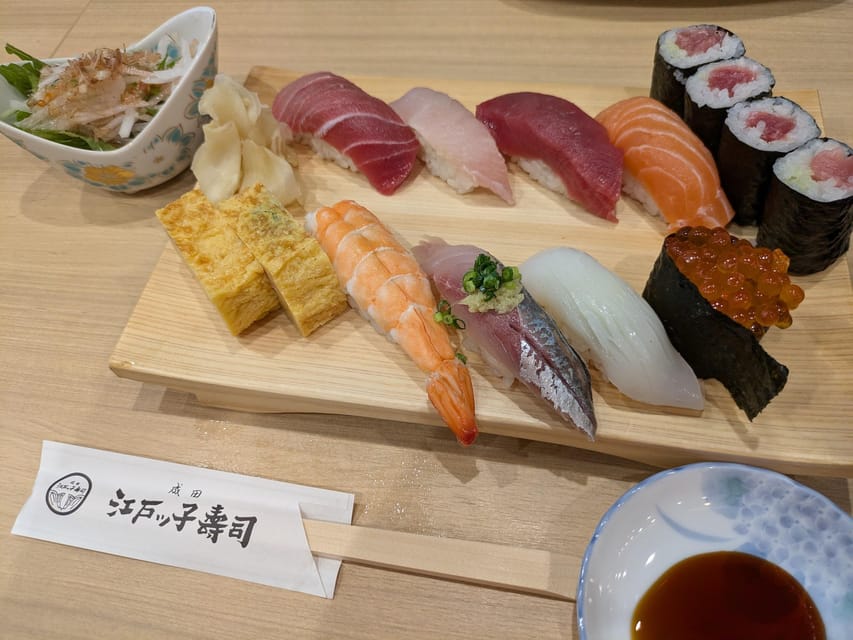
Lunch is scheduled for about an hour, with two hours of flexible time in the Narita portion of the tour. The meal is not included, so you choose and pay for your food.
Narita gives you several sensible choices:
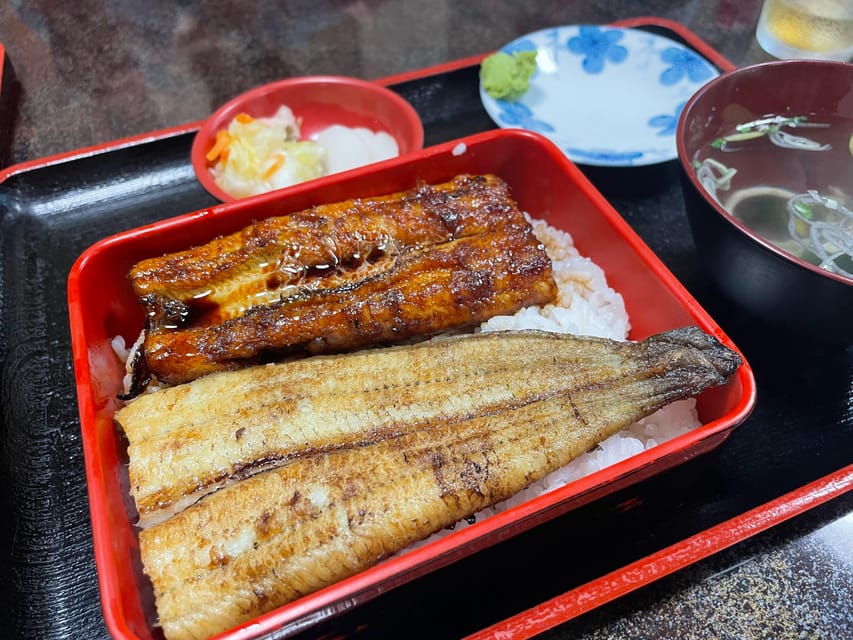
- Eel, a local specialty along the temple approach
- Sushi
- Tempura
- Soba noodles
- Udon noodles
- Seasonal Japanese dishes
A regular Japanese meal costs around 2,000 yen. A more polished meal may run 3,000 to 4,000 yen. Your guide can help you choose a restaurant and explain the menu, which is especially helpful if you want to try eel or several dishes but do not know how much to order.
The best meals on this sort of short visit are not necessarily the fanciest. A shared plate arrangement lets you sample more than one dish and keeps the meal social. Guides have arranged combinations that included eel, noodles, shrimp, vegetables, and sushi. That kind of meal turns lunch into a practical introduction to Japanese food rather than a rushed stop for something familiar.
Keep your schedule in mind. A long lunch is pleasant, but you still need the return train, airport security, and your flight. Tell your guide your departure time and allow a generous buffer. The tour is designed for a layover, not for squeezing sightseeing into the last possible minute.
What the private guide adds
The guide is the reason to choose this tour instead of taking the same train independently. You can reach Narita on your own, but you would need to navigate the station, understand the temple customs, choose a restaurant, and decide what deserves your limited attention.
Fusako has guided several visits and is described as warm, fluent in English, flexible, and good at explaining local culture. Chiho has also led the route, helping with train tickets, food, temple customs, and local history. The company’s support representative, Kai, has assisted with pre-tour communication and airport details.
The strongest feature is the human connection. A guide can introduce you to bean-filled sweets, explain the meaning behind a ceremony, show you a practical shop, or slow down when you need a break. You may even receive a small traditional pastry or gift, learn to fold an origami crane, or try a short cultural activity.
That flexibility comes with a price. At $277 per group of up to four, this is not a cheap way to occupy a layover. A couple or family can spread the cost across several people, making it easier to justify. A solo guest pays more per person, and one solo booking was charged at the two-person rate, so confirm the minimum party rule before you pay.
Is $277 good value for four hours?
The price makes sense if you value help, structure, and personal attention. It covers a private guide and a customized visit, but not lunch, train fare, baggage storage, shopping, or other personal expenses.
For four people, the base cost works out to about $69.25 each before food and transport. For two people, the per-person cost is much higher, but you still get a private guide rather than sharing the day with a large group. For one person, the value depends heavily on how much you care about cultural explanation and logistical help.
I would compare it this way: you are not paying only for a walk to a temple. You are paying to use a layover without having to solve every small problem yourself. The guide helps you get through the airport meeting point, train transfer, local streets, temple visit, meal, and return journey. If you have never visited Japan and want a friendly introduction without a language barrier, that support is valuable.
If you are comfortable using trains, reading signs, and choosing a restaurant alone, you can spend far less by visiting Narita independently. The private tour earns its price through convenience and depth, not through expensive entrance tickets.
Timing, luggage, and weather
This is best for a layover of at least six hours. The advertised activity lasts four hours, but you still need time for arrival procedures, meeting your guide, returning to the airport, passing security, and reaching your gate.
Do not bring large luggage on the walk. Baggage storage fees are not included, and the instructions specifically advise leaving large bags at the airport. Carry only what you need for the outing. If you use a locker, make sure you keep the code and know exactly where the locker is located.
The tour operates rain or shine. Rain may slow the walk, while summer heat can affect the route and the amount of time outdoors. Wear comfortable shoes, bring water, and carry a hat in hot weather. A guide may provide umbrellas, but do not depend on that as your only wet-weather plan.
Cash matters. Some restaurants and shops do not accept credit cards, and you will need money for the train, lunch, snacks, and souvenirs. Around 10,000 yen in cash is suggested if you want freedom to eat, browse, and buy something small.
Who will enjoy this Narita tour?
I would choose this for a first visit to Japan, especially if you have a long Narita layover and want more than an airport lounge. It suits couples, families, and small private groups who prefer conversation and flexibility over a fixed group schedule.
It is also a good fit if you want to try local food but feel uncertain about ordering. Eel, soba, sushi, tempura, sweets, and tea are easier to approach when a guide can explain what you are seeing and help you choose.
You may want to skip it if your layover is short, you dislike walking, or you want a low-cost independent outing. It is also not the right choice if your main goal is central Tokyo. This experience stays close to Narita Airport, and that is precisely why it works.
Cancellation is free up to 24 hours in advance, and you can reserve now and pay later. Check visa requirements based on the country that issued your passport before booking, since leaving the airport means entering Japan.
Should you book it?
Book this tour if you have enough time, want an easy first look at Japan, and value a guide who can turn ordinary details into meaningful ones. Naritasan Omotesando, Goma Prayer, eel lunch, local sweets, and the temple make a satisfying four-hour introduction.
I would be cautious if your connection leaves little room for delays or if $277 feels too high for a short outing. For the right layover, though, this is a well-planned way to replace airport waiting with a temple, a traditional street, and a good Japanese meal, while keeping the trip close enough to remain practical.
FAQ
How long does the tour last?
The tour lasts four hours. The train journey takes about 15 minutes each way, with time for Naritasan Omotesando, Naritasan Shinshoji Temple, free time, and lunch.
Where does the tour meet at Narita Airport?
Meet near the Tourist Information Center in the Visitor Service Center area on the arrival level of the Central Terminal building in Terminal 1. Your guide will be wearing something orange.
Can I start or finish at Narita Station?
Yes. The activity offers pickup and drop-off at Narita Station, near the Tourist Information Center outside the east exit of JR Narita Station, as well as at Narita International Airport.
Is lunch included?
No. Lunch costs extra. A regular Japanese meal usually costs around 2,000 yen, while higher-end choices generally cost about 3,000 to 4,000 yen.
How much cash should I bring?
The train fare is around 500 yen, and some shops and restaurants do not accept credit cards. About 10,000 yen in cash is recommended if you also plan to buy food, souvenirs, or other items.
Can I bring large luggage on the tour?
Large luggage should be left at the airport because this is a walking tour. Baggage storage fees are not included.
Just added in Tokyo
- The 10 Tastings of Tokyo With Locals: Private Street Food Tour★ 5.0 · 48 reviews
- Small Town in the Big City: Tasting Tokyo’s Kichijoji★ 5.0 · 195 reviews
- Small Town in the Big City: Tasting Tokyo’s Kichijoji★ 5.0 · 16 reviews
- EXCLUSIVE Tokyo Secret: Kichijoji Small-Group Food & Bar Hopping★ 5.0 · 29 reviews
- Explore Kichijoji: Walk Through One of Tokyo’s Beloved Districts★ 5.0 · 21 reviews
- :Tokyo,Shibuya/ Pro Photography in Kimono / English-Friendly★ 5.0 · 26 reviews
- 【R34】Tokyo:Private Daikoku tour in Modified R34★ 4.9 · 92 reviews
- Tokyo:Calligraphy &Make your original folding fan in Asakusa★ 5.0 · 62 reviews
Airport Transfers, compared.



Narita Airport(NRT) Private Transfer To/From Tokyo 1-way or Round
Read our review →Browse the lists this tour appears in