
Reviewed · HIROSHIMA & MIYAJIMA DAY TRIPS
Full Day Hiroshima and Miyajima Bus Tour from Hiroshima
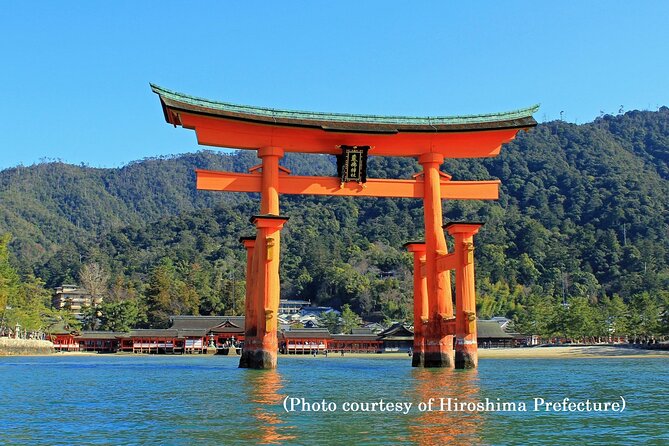
Miyajima’s red torii gate rising from the sea and Hiroshima’s Atomic Bomb Dome make a powerful pairing. This tour handles both in one long day, with an English-speaking guide, bus transport, ferry fare, admission fees, and the Miyajima visitor tax included. I especially like the easy connection between the two major sights and the chance to hear personal Hiroshima stories from guides such as Taeko and Nikki.
I also like the free time on Miyajima for oysters, okonomiyaki, eel rice, or a walk through the shopping streets. The main drawback is the group size, which can reach 40 people. A soft-spoken guide or a crowded public holiday can make it hard to hear, and the schedule is too tight for the ropeway or a serious Mount Misen hike.
Key points to know before booking
- Two World Heritage sites in one day: You visit Itsukushima Shrine on Miyajima and Hiroshima’s Peace Memorial Park, including the Atomic Bomb Dome and museum.
- A practical transport package: The price includes the bus, ferry, admissions, guide, and Miyajima visitor tax, which keeps the day simple.
- Lunch is independent: You get time to eat on Miyajima, but food is not included. Local choices include oysters, Hiroshima-style okonomiyaki, and conger eel rice.
- The Hiroshima visit is emotionally serious: The Peace Memorial Museum and Atomic Bomb Dome are not quick photo stops. Allow yourself quiet time.
- Group management matters: The maximum is 40 people, and several guides have been praised for warmth and historical insight, while a few have been difficult to hear.
- Plan for a full day: The tour begins at 10:10 am at Hotel Granvia Hiroshima and ends at Hiroshima Station around 6:00 to 6:30 pm.
Why this Hiroshima and Miyajima pairing works
Hiroshima and Miyajima are often planned as separate visits, but they fit together well. Miyajima gives you sacred architecture, island scenery, deer, food, and ferry travel. Hiroshima’s Peace Memorial Park asks you to slow down and face the human cost of war.
The contrast gives the day shape. You begin with the graceful buildings of Itsukushima Shrine, built beside the water and tied to the island’s religious identity. Later, you walk through a place created to remember the atomic bombing of 1945 and to promote peace.
At $152.54 per person, this is not the cheapest way to see the two places. You could arrange the trains, ferry, local transit, shrine admission, and museum visit yourself for less. The value comes from having one booking, one English-speaking guide, and a planned route between the sites.
That convenience matters most if you have only one day in Hiroshima or you do not want to work out the transport connections. It matters less if you enjoy planning independently or want to spend many hours on Miyajima.
Other long days west of Hiroshima:
- Peaceful Hiroshima & Miyajima UNESCO 1 Day Bus Tour
★ 5.0 · 5,309 reviews - Hiroshima: Hiroshima and Miyajima UNESCO Sites 1-Day Tour
★ 4.9 · 2,330 reviews - Hiroshima / Miyajima Full-day Private Tour with Government Licensed Guide
★ 5.0 · 1,298 reviews
Meeting at Hiroshima Station at 10:10 am
The meeting point is the lobby of Hotel Granvia Hiroshima, at the north side of Hiroshima Station. This is a practical location for anyone staying near the station or arriving by train, but you should allow time to find the hotel lobby before the 10:10 am start.
The tour ends at Hiroshima Station rather than returning you to your hotel. That is useful if you are catching an evening train or staying near the station. It also means you must handle your onward journey yourself after about 6:00 to 6:30 pm.
If you are coming from Kyoto or Shin-Osaka with a Japan Rail Pass, take an early enough Shinkansen to reach the meeting point on time. Missing the start can mean missing the tour, even if your train was delayed by a tight connection.
The bus is air-conditioned, a welcome feature on muggy summer days. One guide and driver combination was especially appreciated when the driver handed out water bottles in hot weather. Still, bring your own water, snacks, a fan, and an umbrella. The day includes outdoor walking, ferry travel, and long periods on your feet.
Crossing to Miyajima and seeing Itsukushima Shrine
The first major stop is Miyajima, whose name means shrine island. You travel by bus to the ferry terminal, then cross the water. The ferry ride is part of the appeal, since the island approach gives you a different view of the shrine buildings and the famous red torii gate.
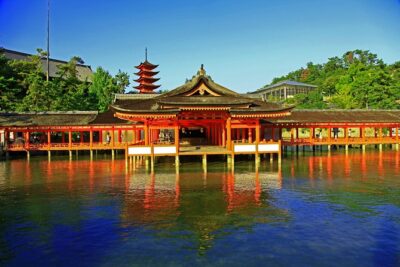
Itsukushima Shrine is the heart of the visit. Established in the sixth century, it is known for its Shinden-zukuri design, an architectural style associated with aristocratic residences. The shrine’s buildings sit beside the water, creating the unusual impression that the sacred complex floats at high tide.
The tour allows about an hour at the shrine, with admission included. Your guide explains the site’s religious and architectural importance, then you have a chance to look closely at the gates, walkways, and bright vermilion structures.
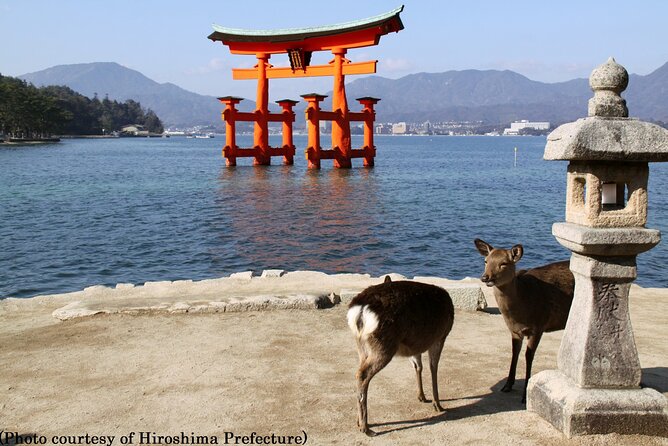
Tide conditions change the view. At high tide, the torii appears to rise from the sea. At lower water, the shoreline looks very different, and you may be able to see the gate from closer range. The schedule does not promise a particular tide, so treat the changing view as part of the experience rather than expecting one exact photograph.
Miyajima also has deer around the shrine and shopping areas. They are accustomed to people and can make amusing companions, but keep your papers and food secure. The important point here is to enjoy the island without letting the deer distract you from the shrine itself.
Guides have made a major difference during this part of the day. Masako has been praised for patience, clear explanations, and helping with photographs. Azusa has also been singled out for taking well-timed pictures and explaining the island’s past with humor. You are not guaranteed a particular guide, but the strongest guiding on this tour adds useful context to what could otherwise become a quick walk through a pretty complex.
Lunch on Miyajima, with choices but no included meal
The tour gives you about an hour for lunch on Miyajima, and you choose and pay for your own meal. That arrangement keeps the day flexible, but it also means you should not assume a set menu or a reserved restaurant.
Miyajima is known for oysters, Hiroshima-style okonomiyaki, and conger eel rice bowls. These foods give you a chance to try local specialties rather than settling for a generic bus-tour lunch.
An hour is enough for a straightforward meal and some browsing, but it is not generous if lines are long. Public holidays and weekends can make the island crowded. If you see a food option you want, do not spend all your time searching for the perfect place.
The free time is also useful for souvenirs and a short independent walk. However, this is not the right tour for a long Mount Misen outing. The ropeway and a serious hike require more time than the schedule normally allows. You can explore on your own, but you may need to leave the main group and manage the timing carefully.
One point deserves special attention: the amount of independent time can vary. Some people may find the unsupervised period too long if they only want the shrine, while others will appreciate having room to eat and wander. If you prefer every minute to include guided commentary, this may feel loose.
Other tours by coach from Hiroshima:
- Mt Fuji and Hakone 1-Day Bus Tour Return by Bullet Train
★ 5.0 · 26,383 reviews - 1-Day Tokyo Bus Tour
★ 5.0 · 14,250 reviews - PERFECT KYOTO 1-Day Bus Tour
★ 5.0 · 13,518 reviews - Tokyo Mt Fuji 5th St & Hakone Cruise Bus Tour w/Bullet Train
★ 4.4 · 5,024 reviews
The Atomic Bomb Dome and Hiroshima’s difficult history
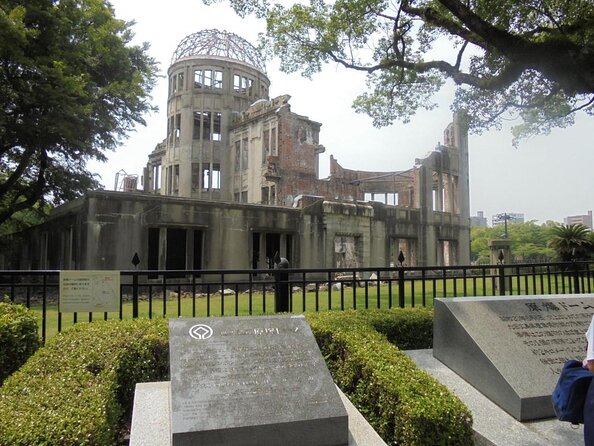
After Miyajima, the tour moves to Hiroshima’s Peace Memorial Park. The Atomic Bomb Dome is usually given about 40 minutes, though the order and exact timing can change with traffic and site conditions.
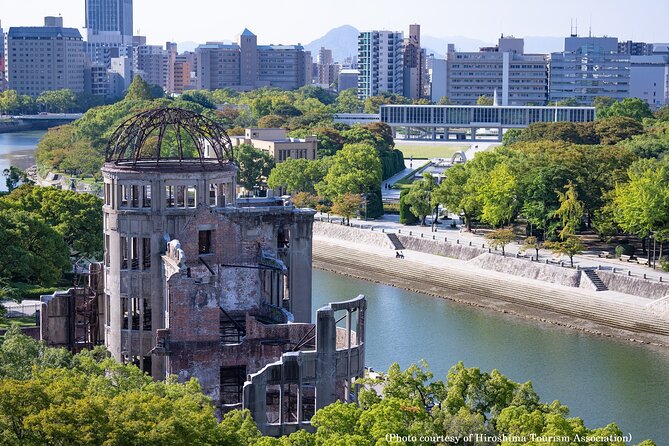
The Dome is the skeletal remains of a building damaged by the atomic bomb. It has been preserved as a symbol of the destruction caused by the bombing and as a call for the end of nuclear weapons. You can look at it from several angles, but the significance is not in the amount of time spent taking pictures. It is the physical evidence of a city changed in an instant.
The guide may explain what happened in 1945 and point out nearby memorials. This is one of the places where group management matters. A guide who gathers everyone before speaking and uses a clear voice can make the walk far more meaningful. A large group scattered around the park, or a guide speaking before everyone arrives, can leave people missing important information.
The park itself is broad and quiet, with monuments dedicated to those who died. The Memorial Cenotaph for Atomic Bomb Victims holds a list of names and invites a pause rather than a hurried visit. The Cenotaph for Korean Victims is another important stop, reminding you that the bombing affected people from outside Japan as well.
Give yourself emotional space. This is not simply another sightseeing stop between two attractions. Some parts of the museum and memorial area are disturbing, and the experience may stay with you long after the bus ride ends.
One hour inside the Peace Memorial Museum
The Peace Memorial Museum is included, with roughly one hour set aside for the visit. The museum presents the bombing and its effects through objects, records, photographs, and personal accounts.
An hour gives you a meaningful introduction, but it does not allow time for every display at a slow pace. You may need to make choices. Focus on the exhibits that speak most directly to you, and do not feel pressured to rush through every room.
The museum portion is usually self-guided rather than a continuous lecture from the tour leader. That is both a strength and a limitation. You can move at your own pace, but the guide may not be beside you to explain every exhibit or answer questions as they arise.
I like that the tour pairs the museum with the Dome and the outdoor memorials. Seeing the physical remains, then entering the museum, gives the history a clear sequence. If you want several hours for the museum alone, visit independently on another day instead.
The emotional weight of the park also means that the tour’s upbeat moments on Miyajima should not be judged by the same standard. It is a day of contrasts, and a respectful guide understands when to explain, when to answer questions, and when to allow silence.
Guides, group size, and the quality of the commentary
The tour uses a national government licensed English guide interpreter. The best guides reported for this experience do more than recite dates. They explain Japanese customs, shrine manners, local food, and the history of Hiroshima in a way that connects the sites.
Masako is noted for kindness and for helping people at the end of the tour. Tomoko used visual check-ins to make meeting times and locations clear. Akko Watanabe has been praised for explaining Japanese customs and mannerisms, while Hikari provided strong commentary at both Miyajima and the Atomic Bomb Dome.
Several guides with local connections have added personal stories about Hiroshima. That can bring a human scale to a subject that otherwise feels distant and textbook-like. A guide such as Taeko, who shared family stories about Hiroshima, can help you understand that the bombing is not only an event in a history book.
The weak point is consistency. Some guides have spoken so softly that people at the back could hear little. Others read from notes on the bus or began speaking before the entire group had gathered. With up to 40 people, even a good explanation can get lost outdoors.
Try to stay near the guide during walking sections. If the bus has no designated seating, sit where you can hear clearly when possible. The tour is strongest when the guide is energetic and the group stays together, so your position can affect how much you take away.
Is $152.54 a fair price?
The price includes the English-speaking guide, bus transportation, ferry transportation, Itsukushima Shrine admission, Peace Memorial Museum admission, the Miyajima visitor tax, and other listed transportation and entry costs. Lunch and any unlisted expenses are extra.
That package has real value for a first visit. You do not need to compare ferry schedules, work out the best order for Miyajima and Hiroshima, or worry about paying each admission fee separately. The bus also saves energy during a long day.
Still, the tour is not a bargain for independent planners. Hiroshima’s public transport is usable, Miyajima is accessible by ferry, and the main sites can be arranged without a guide. You are paying for structure, commentary, and time efficiency.
I would consider the price fair if you have one free day, want English explanations, and are arriving from another Japanese city. I would hesitate if you are already staying several nights in Hiroshima and can spread the visits over separate days.
The tour is also efficient for people arriving from Kyoto or Osaka, although that creates a very long day. A full-day schedule combined with Shinkansen travel can put you back in Kyoto around 9:00 pm, depending on your connections. That may be worthwhile, but do not plan an early night.
Who should book this day tour?
I would choose this tour if you want the two essential Hiroshima-area sights handled in one booking. It suits first-time visitors, people with limited time, and anyone who prefers an English-speaking guide to explain customs and difficult historical material.
It also works well for solo visitors who like the security of organized transport and a clear meeting point. Families can join, though children under five are free only without a bus seat. If you need a seat for a child under five, book the child rate.
The tour is less suitable for anyone wanting a relaxed Miyajima day. You will not have much time for the ropeway, a long hike, or a slow meal. It is also not ideal if you need a quiet, small-group experience, since the maximum group size is 40.
Most participants can take part, but expect walking at both locations. Anyone under 18 needs written parental permission, and anyone under 15 or not yet in middle school must be accompanied by a parent or guardian.
Cancellation is free up to 24 hours before the start time. Changes or cancellations inside that window are not refunded, so keep the timing in mind if your rail plans are uncertain.
Final verdict: book it for efficiency, not freedom
I would book this tour if I had one day for Hiroshima and wanted context along with transport. Miyajima, the ferry, the Atomic Bomb Dome, the museum, and the memorials form a meaningful day, and the strongest guides bring warmth and clear historical perspective.
I would skip it if I wanted to hike Mount Misen, spend hours in the museum, or set my own pace. The price is higher than arranging the day yourself, and the quality of commentary depends heavily on the individual guide and how well a large group can hear.
For most first-time visitors with limited time, the convenience earns its cost. Bring water, arrive early at Hotel Granvia Hiroshima, stay close to the guide, and treat the Peace Memorial Park with the quiet attention it deserves.
FAQ
Where does the Hiroshima and Miyajima tour begin?
The tour begins at the lobby of Hotel Granvia Hiroshima, at 1-5 Matsubaracho, Minami Ward, Hiroshima. The scheduled start time is 10:10 am.
Where does the tour end?
The tour ends at Hiroshima Station, around 6:00 to 6:30 pm. You must make your own arrangements for your next destination from the station.
Is lunch included?
No. Lunch is not included. You have time to eat on Miyajima, where oysters, Hiroshima-style okonomiyaki, and conger eel rice bowls are available.
Are ferry and admission fees included?
Yes. The tour includes ferry transportation, Itsukushima Shrine admission, Peace Memorial Museum admission, the Miyajima visitor tax, and other listed transportation and entry fees.
How large can the tour group be?
The tour can have a maximum of 40 participants. Seats may not be assigned.
Can children join the tour?
Children up to five years old may join free of charge, but they will not receive a bus seat. If a seat is needed, book the child rate. Participants under 18 need written parental permission, and those under 15 or not yet enrolled in middle school must be accompanied by a parent or guardian.
Can I cancel for a full refund?
Yes, if you cancel at least 24 hours before the experience start time. Cancellations or changes made less than 24 hours before the start are not accepted for a refund.
Just added in Hiroshima
- Hiroshima: Best of Hiroshima Guided Bike Tour★ 4.9 · 89 reviews
- Hiroshima & Miyajima 6.5h Guided Tour – Dome, Park & Shrine★ 4.9 · 83 reviews
- Day Trip to Hiroshima & Miyajima with Itsukushima Shrine★ 4.6 · 124 reviews
- Hiroshima 3hr Peace Cycling Tour with Local Guide★ 5.0 · 131 reviews
- Hiroshima Local guided Hiking Tour&Open-air Tea Ceremony★ 5.0 · 213 reviews
- Hiroshima: Food and Culture Guided Walking Tour with Dinner★ 4.9 · 212 reviews
- Hiroshima & Miyajima: Full-Day Private Tour & Licensed Guide★ 4.8 · 252 reviews
- Hiroshima: History of Hiroshima Group Walking Tour★ 4.8 · 266 reviews
Hiroshima & Miyajima Day Trips, compared.
Peaceful Hiroshima & Miyajima UNESCO 1 Day Bus Tour
Read our review →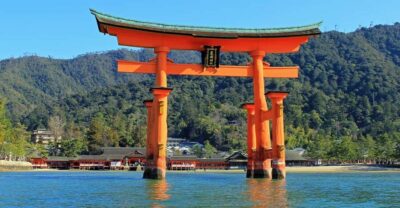
Hiroshima and Miyajima UNESCO Sites 1-Day Tour
Read our review →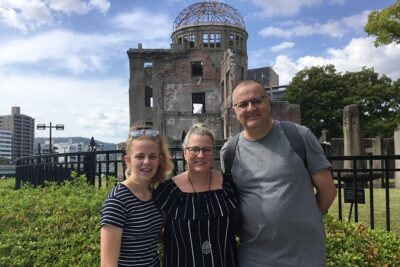
Hiroshima / Miyajima Full-day Private Tour with Government Licensed Guide
Read our review →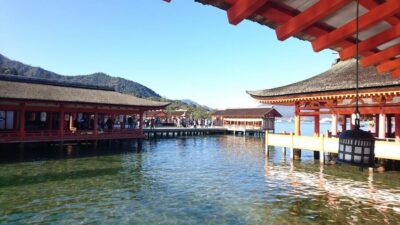
Osaka/Kyoto: Hiroshima Miyajima Bus Tour & Shinkansen Ticket
Read our review →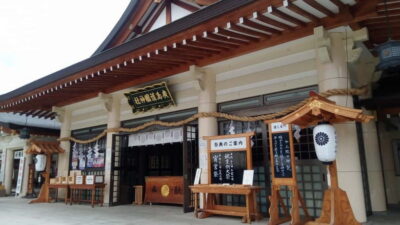
Hiroshima Historical Walking Tour – Why A-Bomb was Dropped
Read our review →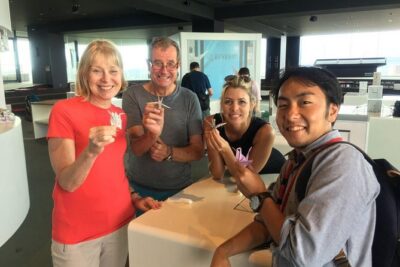
Hiroshima Peace (Heiwa) Walking Tour at World Heritage Sites
Read our review →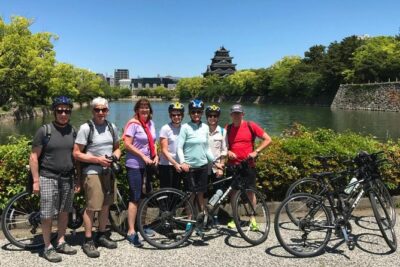
Hiroshima in a Nutshell: Morning Bike Adventure
Read our review →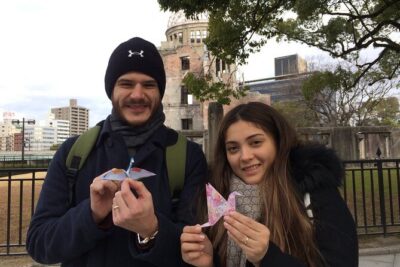
Hiroshima City 4hr Private Walking Tour with Licensed Guide
Read our review →Browse the lists this tour appears in