
Reviewed · HAKONE DAY TRIPS
Hakone Adventure: Explore Nature’s Beauty and Tranquility
Hakone is at its best when you see it from several angles: a slow mountain train, a cable car, a ropeway above volcanic vents, and a boat crossing Lake Ashi. This experience links those pieces into one private guided journey, with time for Owakudani, Hakone Shrine, and the area’s best-known views.
I like the excellent mix of nature and transport, and I like having a guide such as Yumiko, Taku, Yuuki, or Kyo to handle the changes. The main caution is cost: the $139 price does not include transport fares or food, and crowds can make the schedule tight enough to cut short the shrine visit.
Key points worth knowing
- Four ways to see Hakone: Ride the Tozan Railway, cable car, ropeway, and sightseeing boat in one day.
- Owakudani feels wonderfully alive: Steam rises from active vents, sulfur hangs in the air, and black eggs are a local specialty.
- Lake Ashi supplies the postcard moment: You may see Mt. Fuji, forested hills, and the famous red torii gate.
- Private guiding helps with transfers: Your guide stays with you through several changes of transport.
- Crowds can change the day: Ropeway queues may eat into time at Hakone Shrine.
- Transport costs extra: Compare the total price with arranging Hakone’s sightseeing route on your own.
Why this Hakone route works
Hakone can look simple on a map and feel confusing on the ground. The sights are spread around a volcanic caldera, and the route uses several kinds of public transport. You change from train to cable car, then ropeway, then boat, followed by a bus.
That variety is the point. You do not simply arrive at a viewpoint, take a picture, and leave. You watch the scenery change from wooded mountain slopes to steaming volcanic ground, then to calm blue water and shrine buildings beneath the trees.
The tour runs for 270 to 570 minutes, depending on the option and timing. That is a broad range, so check the exact departure and return details before booking. Starting points include Shinjuku in Tokyo, Hakone Yumoto, Odawara, and Mukoyama Park. Drop-off is at Hakone Yumoto or the Shinjuku area.
The private-group format is useful here. A guide can help you find the right platform, cable car, or boat when the stations are crowded. Taku was especially attentive with transport and offered extra help to someone with slight mobility concerns. Still, the route involves walking, stairs, and changes between vehicles, so this is not an easygoing sightseeing bus ride.
Other hot-spring days out of Hakone:
- Hakone 6 hour Private Tour with Government-Licensed Guide
★ 5.0 · 218 reviews - Custom Private Tour in Hakone with a Certified Local Guide
★ 5.0 · 91 reviews - Hakone 8 hour Private Tour with Government-Licensed Guide
★ 5.0 · 63 reviews
The Hakone Tozan Railway starts the climb
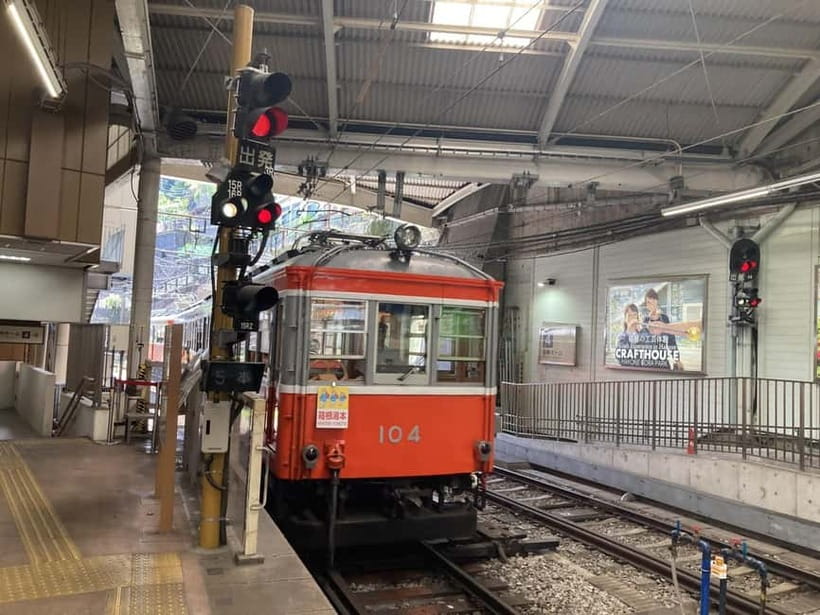
The first major ride is the Hakone Tozan Railway, described as Japan’s only mountain railway. It takes about an hour and climbs through wooded slopes and narrow valleys.
The train is part of the attraction, not just a way to get somewhere. Its slow climb gives you time to watch seasonal scenery outside the windows. Your guide can explain how Hakone grew as a mountain resort and how the railway opened the area to visitors.
I like this beginning because it eases you into the day. You start at ground level and gradually move into the mountains instead of being dropped straight at a viewpoint. The route also gives your guide a natural chance to explain Hakone’s place along the old Tokaido Road, the historic route linking important cities in Japan.
Do not expect a private carriage or a quiet museum-like setting. This is public transportation, and the experience depends on the day’s crowds. If you want a slow look out the window, stand or sit where you can see the wooded slopes. Comfortable shoes matter from the start.
Cable car and ropeway over the caldera
After the train, the route continues by cable car for about 40 minutes, then by ropeway. These are different kinds of rides, and together they give you a broad view of Hakone’s volcanic basin.
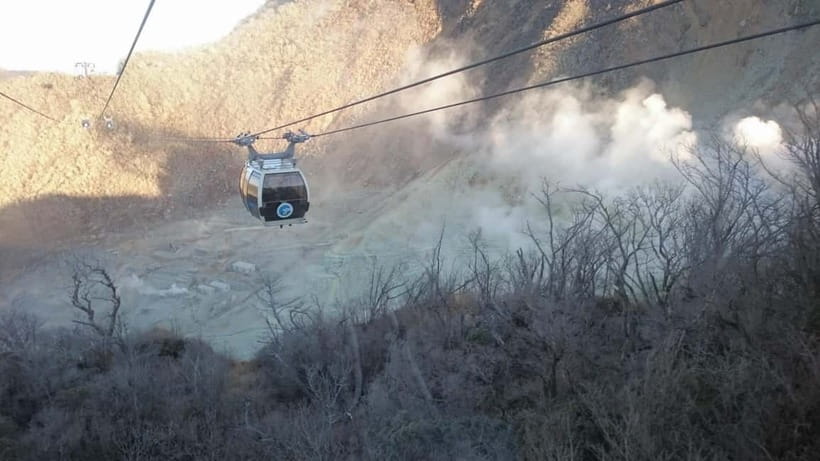
The cable car climbs through the mountain area, while the ropeway carries you above valleys and volcanic ground. From above, you get a much better sense of the huge crater created by earlier eruptions. The guide fills in the story as you move, which helps turn a series of rides into one connected picture of Hakone.
The ropeway is also where timing becomes important. One Monday, a long queue delayed boarding and left too little time for Hakone Shrine later in the day. That is a useful warning: a weekday does not guarantee empty stations, and the route can be affected by crowds.
I would book this experience with a flexible day rather than a tightly timed return train. If you must catch a specific train back to Tokyo, ask how much spare time you have. The advertised route includes many sights, but a long ropeway queue can force a choice.
Owakudani and the smell of active volcanoes
Owakudani is the most unusual stop. Steam rises from volcanic vents, and the air has a clear sulfur smell. This is not a polished garden or a quiet lake view. It is a raw reminder that volcanic forces still shape the area.
You have about 20 minutes listed for the guided visit and sightseeing. That is enough to look around, hear the local stories, and see the steam, but it is not a long walking period. The short stop also makes sense because the day has several more major sections.
Black eggs are one of Owakudani’s best-known local specialties. They are cooked in the area’s hot volcanic water and are closely tied to the site’s identity. The tour information specifically highlights the chance to discover them, though food purchases are not included in the price.
Bring a camera, but protect it from the weather and keep your attention on the ground. Owakudani is a place for atmosphere as much as for photographs. Mist or clouds may hide the wider views, yet the steam and sulfur still make the stop worthwhile.
Same base, a different sort of day:
- Private Tour – Hakone Day Trip! A Tour to Explore All Must-Sees!
★ 5.0 · 58 reviews - Private Hakone Half-day Car Tour with Hotel Pickup – Local Guide
★ 5.0 · 48 reviews - Hike Hakone Hachiri
★ 5.0 · 48 reviews - Hike Japan Heritage Hakone Hachiri with certified mountain guide
★ 5.0 · 46 reviews
Lake Ashi brings a change of mood
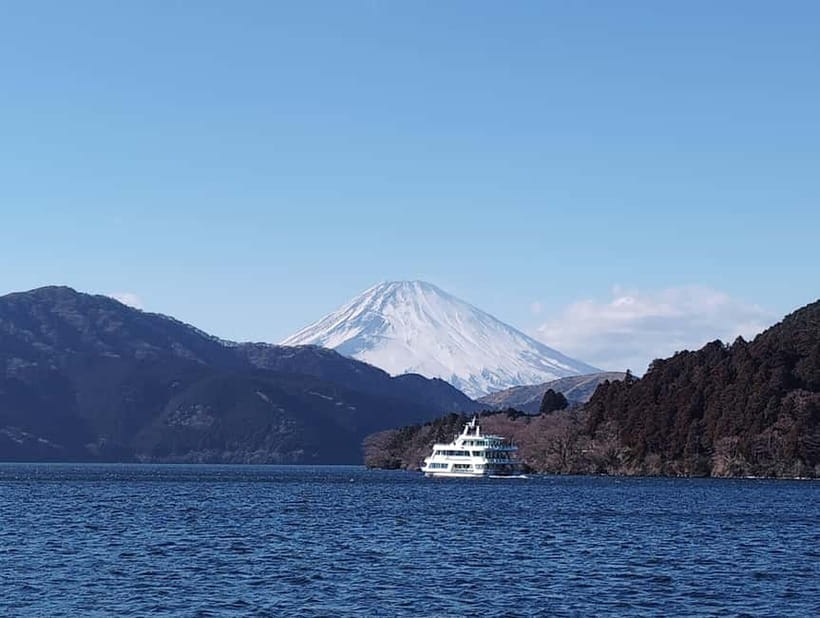
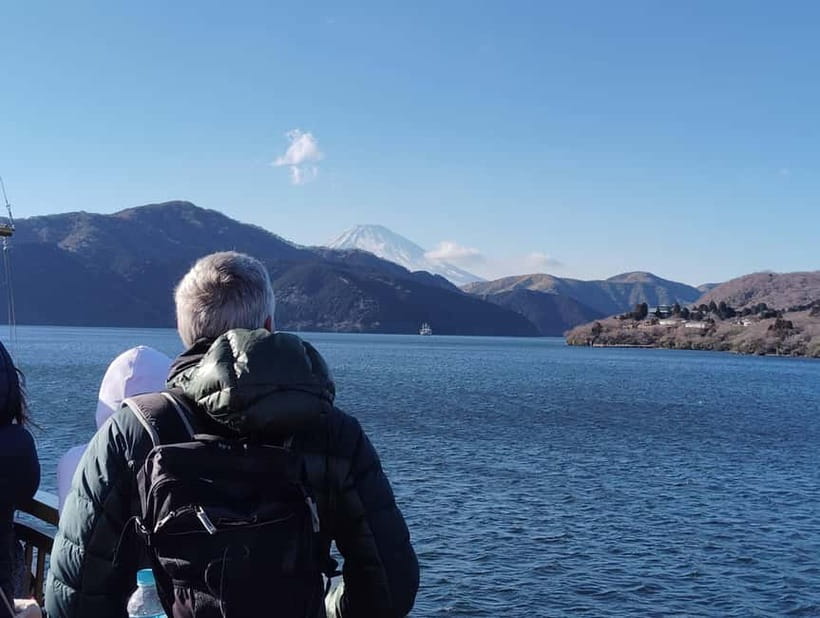
After the volcanic valley, the route reaches Lake Ashi, a calm lake inside Mount Hakone’s caldera. The sightseeing cruise lasts about 50 minutes, giving you time to sit down and let the scenery pass.
This is one of the tour’s best transitions. The day shifts from mountain railway and steaming vents to open water, forested hills, and distant peaks. On a clear day, Mt. Fuji may appear beyond the lake. You might also see the famous torii gates connected with Hakone Shrine.
Mt. Fuji is never guaranteed. Cloud cover blocked the mountain during one outing, but the lake and volcanic area still offered plenty to see. That is normal for this region, so book the day for the whole Hakone experience, not for one Fuji photograph.
The boat is also a practical break in a demanding schedule. You can rest your feet, take pictures from the deck or windows, and listen to your guide explain the area. You are still on a sightseeing boat rather than a private cruise, so conditions and available seating can vary.
Hakone Shrine and the red torii
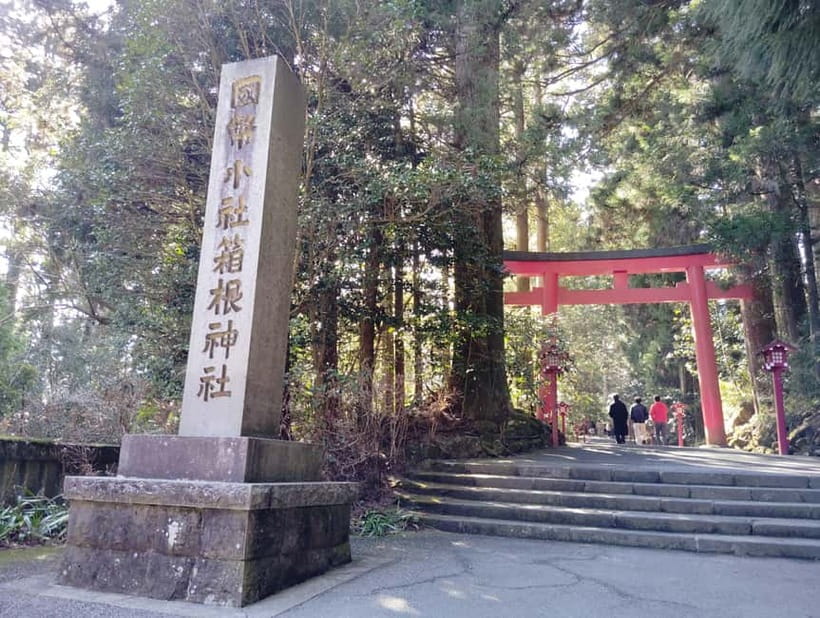
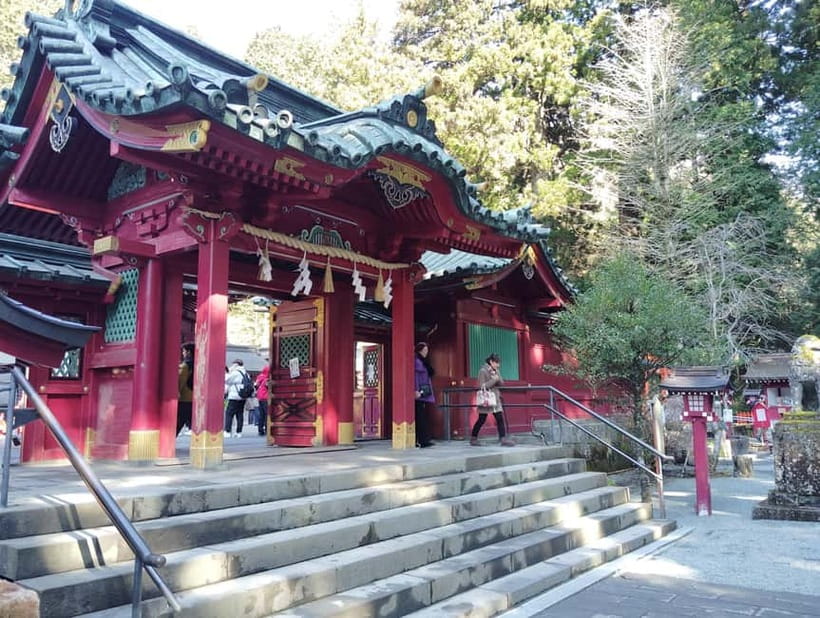
The route includes a 10-minute Lake Ashi visit and about 45 minutes at Hakone Shrine. The shrine is known for its red torii gate by the water, one of Hakone’s most recognizable sights.
The shrine gives the day a cultural center. After the railway, volcanic valley, and lake, you get a place tied to Japanese spiritual tradition. The forest setting adds a quieter note, and the guide can explain why the shrine matters rather than leaving you with only a photograph.
This stop is also the most vulnerable to delays. If the ropeway is crowded or you need to catch a return train, the shrine may be shortened or missed. That happened on one tightly timed outing, and it is the clearest practical weakness of the route.
If the shrine is important to you, do not book the shortest possible version of the day. Tell the guide at the start that you want to protect this stop, and avoid scheduling a return train too soon after the planned finish.
The bus ride closes the circuit
A bus or coach ride of about 45 minutes brings you toward the final drop-off. It is not the flashiest part of the experience, but it completes the loop and removes another navigation problem.
By this point, you have used several forms of transportation. Without help, you would need to watch station signs, understand transfer points, check departure times, and keep track of where you are in the circuit. A private English-speaking guide makes that easier.
The route is especially helpful if you are starting in Hakone rather than traveling there and back from Tokyo on the same day. One traveler praised the chance to focus on Hakone without making the full Tokyo return journey that day. If you are already staying in the region, choose the Hakone Yumoto or Odawara meeting point when available.
Those starting in Shinjuku get the convenience of a Tokyo departure, but the day can become long. Confirm both the start and end locations before booking, especially if you have evening plans.
What the $139 price really covers
The price is $139 per person for the guided experience. It covers the guide, the planned route, and help connecting the train, cable car, ropeway, cruise, and other transport.
It does not include transportation fares, and food and drinks are also extra. This is the point to calculate carefully. The tour saves you planning time and provides a private English-speaking guide, but it is not a transport pass.
For someone who wants to understand Hakone and avoid route mistakes, the added cost may be sensible. Guides such as Yumiko, Taku, Yuuki, and Kyo were praised for being prompt, friendly, attentive, and helpful with the transport system. That personal assistance is the main value.
For an independent visitor who is comfortable reading schedules and buying tickets, the price may feel high. One direct comparison put a self-guided round-trip option at roughly one-third of the tour price, though that would not include private guiding or the same level of help.
I would treat this as a convenience and interpretation purchase, not a cheap way to ride Hakone’s trains. Add the separate fares and any meals before deciding.
Timing, walking, and weather
Wear comfortable shoes. You will walk between stations, vehicles, viewpoints, and sightseeing stops, and the day includes several changes of transport. The experience is not recommended for people with mobility impairments, heart problems, or pregnant women.
Warm clothing is a good idea, even when Tokyo feels mild. Hakone is in the mountains, and the ropeway and open viewpoints can feel cooler. Check the forecast and bring sunscreen and a camera.
Weather affects the experience in two ways. Clouds can hide Mt. Fuji, and poor conditions may change the quality of the ropeway views. Even so, Owakudani’s steam, the train ride, the shrine, and the lake remain worthwhile parts of the route.
Arrive 15 minutes before departure. The meeting point changes with the option you book, so read the confirmation closely. Smoking is not allowed.
Free cancellation is available up to 24 hours in advance, and you can reserve now and pay later. Those terms are helpful if the weather forecast is still uncertain, but they do not solve the problem of a tightly timed return train.
Who will get the most from this day
I would choose this experience if you are visiting Hakone for the first time and want the major sights without building the route yourself. It suits couples, families, and small private groups who value help with transfers and explanations along the way.
It is also a strong choice for anyone who wants more than a single lake viewpoint. The train, cable car, ropeway, volcanic valley, boat, and shrine create a full picture of the area.
I would think twice if your budget is tight, you dislike fixed schedules, or you want long, unhurried visits at each stop. The route packs a lot into one day, and crowds can reduce your time at the shrine or other stops.
Guide quality matters, and the named guides received warm praise for being considerate and well organized. Still, a good guide cannot control ropeway queues, clouds, or public transport delays.
Should you book this Hakone experience?
Book it if you want Hakone’s main sights linked by a private English-speaking guide and you value not having to work out the route. The combination of Owakudani, Lake Ashi, Hakone Shrine, and the mountain railway is genuinely appealing, especially on a clear day.
Skip it if you mainly want the cheapest way around Hakone. You will pay the $139 tour price plus transport fares, and a self-guided route may cost much less.
My practical advice is to book with spare time after the tour, check the weather, wear sturdy shoes, and do not schedule a tight train connection home. If the day allows room for queues, this is an efficient and enjoyable introduction to Hakone’s volcanic scenery, lake views, and spiritual sites.
FAQ
Where can I join the Hakone tour?
You may be able to start at Mukoyama Park, the Shinjuku Station East Exit Police Box, Hakone Yumoto Station, or the Odawara Tourist Information Center. The exact meeting point depends on the option you book.
Where does the tour finish?
The listed drop-off points are Hakone Yumoto Station and the Shinjuku Station East Exit Police Box area. Check your selected option for the exact ending point.
Are transportation fares included in the $139 price?
No. Transportation fares are paid separately during the tour. Food and drinks are also not included.
Is the tour conducted in English?
Yes. The tour has a live English-speaking guide throughout the journey.
How long does the Hakone experience last?
The stated duration ranges from 270 to 570 minutes. Check availability for the exact starting time and length of your chosen option.
What should I bring?
Bring comfortable shoes, warm clothing, sunscreen, and a camera. Arrive at the meeting point 15 minutes before departure, and check the weather so you can dress properly.
Just added in Hakone
- Traverse Outer Rim of Hakone Caldera and Enjoy Onsen Hiking Tour★ 5.0 · 30 reviews
- Private Hakone Half-day Car Tour with Hotel Pickup – Local Guide★ 5.0 · 48 reviews
- Hike Hakone Hachiri★ 5.0 · 48 reviews
- Hike Japan Heritage Hakone Hachiri (Half Day)★ 5.0 · 18 reviews
- Hike Japan Heritage Hakone Hachiri with certified mountain guide★ 5.0 · 46 reviews
- Easygoing Nature Walk in Hakone Tour★ 5.0 · 15 reviews
- Odawara: Guided Ninja & Samurai Tour of Odawara Castle★ 5.0 · 25 reviews
- Odawara: Odawara Castle Tenshukaku Entrance Ticket★ 4.2 · 30 reviews
Hakone Day Trips, compared.
Mt Fuji and Hakone 1-Day Bus Tour Return by Bullet Train
Read our review →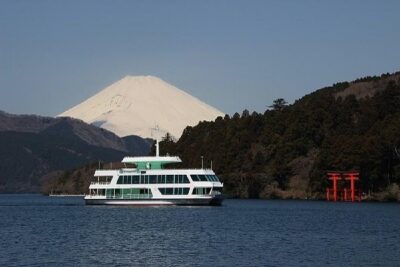
Mt Fuji & Hakone Cruise, Drum Show Bullet Train 1 Day from Tokyo
Read our review →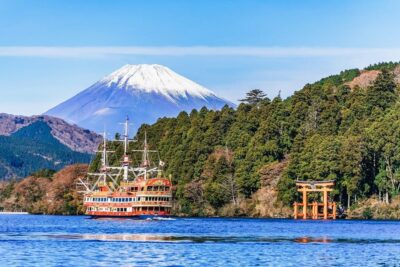
Tokyo Mt Fuji 5th St & Hakone Cruise Bus Tour w/Bullet Train
Read our review →
Private Tour to Mt. Fuji and Hakone (Fully Licenced Operator)
Read our review →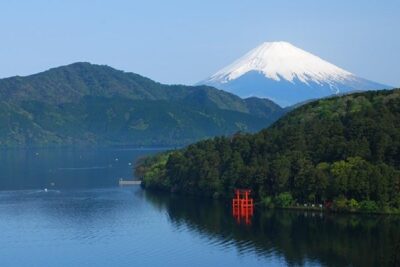
Mt Fuji & Hakone Cruise, Drum Show Bus 1 Day from Tokyo
Read our review →
Mt. Fuji, Kamakura, Big Buddha, & Lake Ashi Day Trip
Read our review →
Mt. Fuji & Hakone Private Day Tour with English-Speaking Driver
Read our review →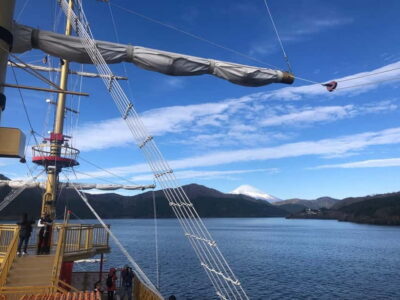
Hakone Fuji Day Tour w/ Cruise, Cable Car, Volcano
Read our review →Browse the lists this tour appears in