

Reviewed · HAKONE DAY TRIPS
Hike Japan Heritage Hakone Hachiri (Half Day)
The most appealing part of this half-day outing is that it lets you walk through old Hakone rather than simply look at it from a bus window. You follow sections of the Tokaido highway, the historic road linking Tokyo and Kyoto, on forest paths and remarkably well-preserved cobbled stretches. The route also reaches Lake Ashi, with a possible Mt. Fuji view if the weather cooperates.
I like the mix of scenery and context, especially the stop at Hatajuku, a village known for Hakone woodcraft, and the pause at a 400-year-old tea house for amasake. I also like the small group size, capped at six, and the guides Akihiro and Aki, who bring clear English and useful local knowledge. The main consideration is that this is a real walk on uneven ground, and the weather-dependent, nonrefundable booking calls for care when choosing your date.
Key points to know before you book
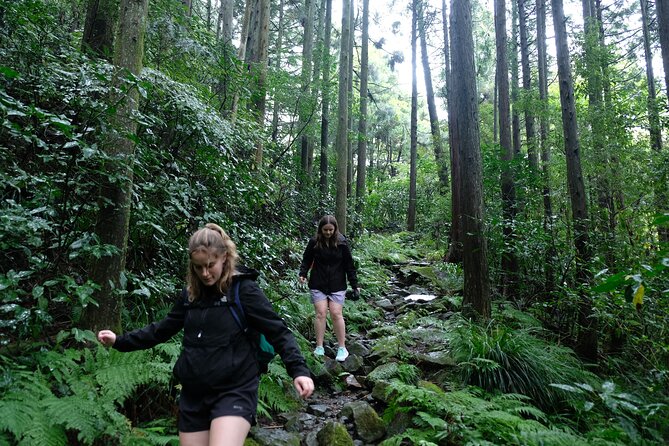
- A historic trail with real walking: Expect two to three hours on cobbles, forest paths, and uneven surfaces.
- The steepest section is skipped: A short bus ride saves your legs, but the bus fare is extra and costs less than 400 yen.
- Hatajuku adds local character: You’ll visit Hakone’s traditional woodcraft village after about an hour of hiking.
- The tea house is more than a snack stop: The Amazake Tea House has about 400 years of history and serves an energizing amasake drink.
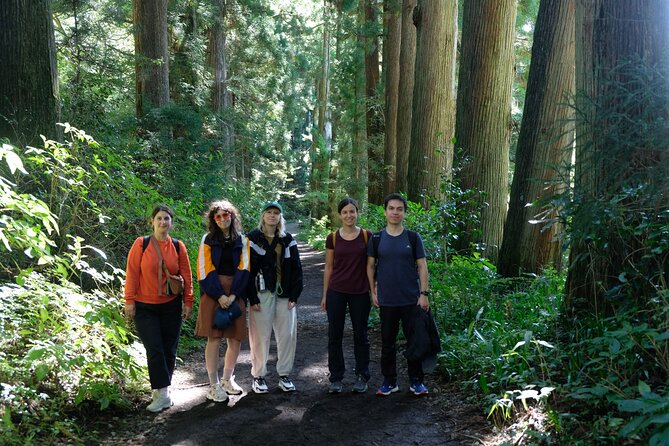
- A small group helps: With no more than six people, you can ask questions and keep the pace practical.
- The finish is useful for onward travel: You end at Lake Ashi near the Hakone Checkpoint, where buses and ferries continue toward your next stop.
Why this is a better look at Hakone than a standard sightseeing circuit
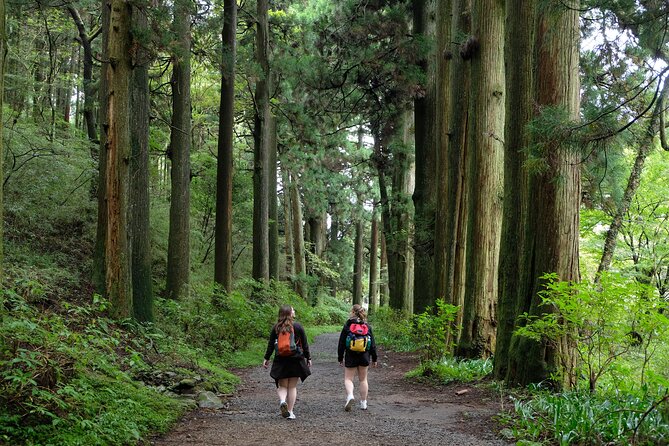
Hakone is famous for hot springs, Lake Ashi, Mt. Fuji views, and its well-used sightseeing loop. Those are good reasons to visit, but the popular circuit can make the area feel like a string of stops connected by transport. This hike gives you time between the sights, where the old road passes under trees and across stone paving.
The route follows part of the old Tokaido highway. During the Edo period, this road connected Tokyo and Kyoto and carried people, goods, and official traffic across Japan. You are not simply being told that Hakone mattered. You are walking along one of the routes that made it matter.
That difference is important. The best parts of the tour are not grand monuments. They are the quiet forest sections, the worn cobbles, the small village, and the tea house that has served people along this route for centuries. I would choose this outing if you want a stronger sense of place and do not mind giving up some comfort for a few hours.
The guide is central to the experience. Akihiro, also known as Aki, is from the area and has been praised for his clear English, friendly manner, and explanations of the Edo-era road. One review also notes that he studied in Seattle, which may help explain why communication feels easy for English-speaking visitors. The tour includes a certified National Mountain Guide, so you get more than a walking companion. You get someone who can explain the route and help you handle it sensibly.
Other hot-spring days out of Hakone:
- Hakone 6 hour Private Tour with Government-Licensed Guide
★ 5.0 · 218 reviews - Custom Private Tour in Hakone with a Certified Local Guide
★ 5.0 · 91 reviews - Hakone 8 hour Private Tour with Government-Licensed Guide
★ 5.0 · 63 reviews
From Hakone Yumoto to Hatajuku on foot
The tour begins at Hakone-Yumoto Station at 9am. The meeting point is convenient if you are staying in the Hakone area or arriving by train. Transportation to the trailhead is not included, and the group shares a taxi costing about 2,000 yen in total, divided among the group.
That extra ride is worth planning for. The advertised walking time is about two to three hours, but the entire experience lasts roughly four hours because of the transport, stops, and explanations. You should arrive ready to walk rather than treating this as a casual stroll from the station.
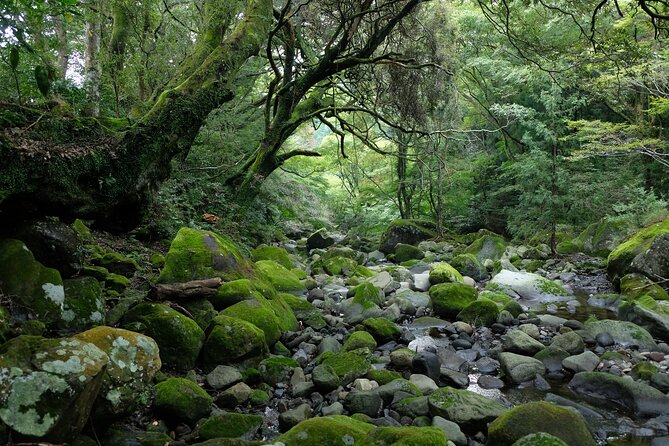
The first major section takes about an hour and leads toward Hatajuku. This is where the tour begins to feel different from a regular town walk. The route moves through forest and along old paved sections, with a mix of firm stone and more natural trail.
Cobbles can be tiring, especially if you are used to smooth sidewalks. They also change your pace. You will want sturdy shoes with a good grip, and you should expect some uneven footing even though the steepest part is removed later. The tour asks for a moderate level of physical fitness, which is a fair description.
Hatajuku is known for Hakone’s woodcraft tradition. The village gives you a look at a local art rather than another scenic viewpoint. The stop is included in the walking time and does not require an admission ticket, so the value comes from the guide’s explanation and the chance to understand how craft fits into Hakone’s identity.
One supplied account also describes a rest in the village with barley tea and a traditional rice dessert. The precise refreshments can vary, so I would not book this expecting a guaranteed snack there. Still, it shows the kind of local pause that can make the walk feel less like exercise and more like a regional tour on foot.
The bus shortcut and Hakone’s 400-year-old tea house
After Hatajuku, the group takes a bus to avoid the steepest portion of the trail. This is one of the smartest design choices in the route. You still get the old-road experience, but the tour does not insist that you climb every demanding section simply to prove a point.
The bus fare is separate and costs less than 400 yen. It is a small expense, but you should carry enough Japanese yen because it is not included in the tour price. The shared taxi at the beginning is another extra cost, so the advertised price is not the full door-to-door cost.
The bus brings you to the Hakone Amazake Tea House. The building has about 400 years of history and sits along the old route toward Lake Ashi. Here, you receive amasake, a traditional sweet drink made from fermented rice. Despite its name, amasake can be nonalcoholic, but the information provided for this tour does not specify the exact preparation. Think of it as a traditional energy stop, not a modern cafe break.
I like this pause because it gives the walk a human rhythm. You begin with forest and stones, stop in a craft village, ride around the harshest climb, and then sit down at a tea house that served the same route long before modern Hakone buses and sightseeing boats.
The tea house is not presented as a long meal stop. The scheduled visit is about 30 minutes. That is enough time to drink the amasake, listen to the guide, and rest your legs before the next section.
Forest paths leading toward Lake Ashi
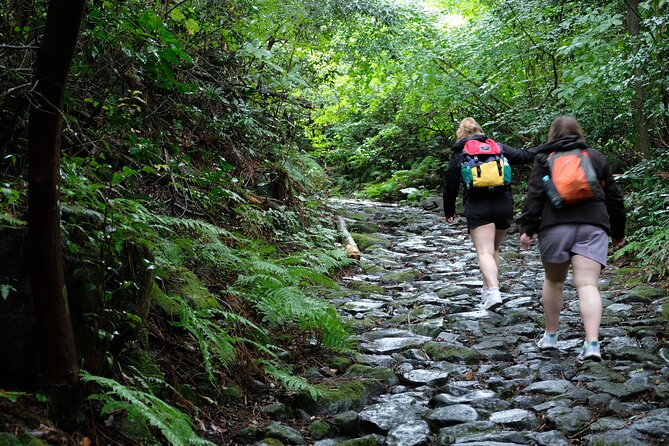
After the tea house, you continue on foot toward Lake Ashi. This part is described as a forest bathing hike, and that phrase makes sense in practical terms: the woods, rather than a series of buildings or formal attractions, are the main setting.
Some of the route is less visited, and the group may have quiet stretches of forest largely to itself. I would not treat that as a promise of complete solitude, since conditions can change, but it is a useful contrast with Hakone’s busier sightseeing points.
The scenery is a good reason to choose this tour, but the views are not guaranteed in the way a museum visit is. Mt. Fuji may appear across Lake Ashi if the weather is clear. Clouds, haze, or rain can block it. The tour remains worthwhile for the trail, the lake, and the guide’s explanations, but you should not book it only for a Fuji photograph.
When the mountain is visible, the setting is especially rewarding: Lake Ashi in the foreground, Mt. Fuji beyond it, and the old road behind you. When it is not visible, you still reach one of Hakone’s main scenic areas and finish with a stronger sense of how the lake fits into the route through the mountains.
The walk ends near Lake Ashi at Motohakone. The scheduled time for the lake portion is about an hour, which gives the group room to take in the setting before the tour ends. From there, you can continue by bus toward Odawara, Hakone-Yumoto, or your Hakone hotel. A ferry, including the well-known pirate ship service, is also available for onward travel.
More walking routes from Hakone:
- Hike Hakone Hachiri
★ 5.0 · 48 reviews - Hike Japan Heritage Hakone Hachiri with certified mountain guide
★ 5.0 · 46 reviews - Traverse Outer Rim of Hakone Caldera and Enjoy Onsen Hiking Tour
★ 5.0 · 30 reviews - Hakone Hachiri: Old Tokaido Highway Hiking Tour
★ 4.9 · 22 reviews
The Hakone Checkpoint explains why this route mattered
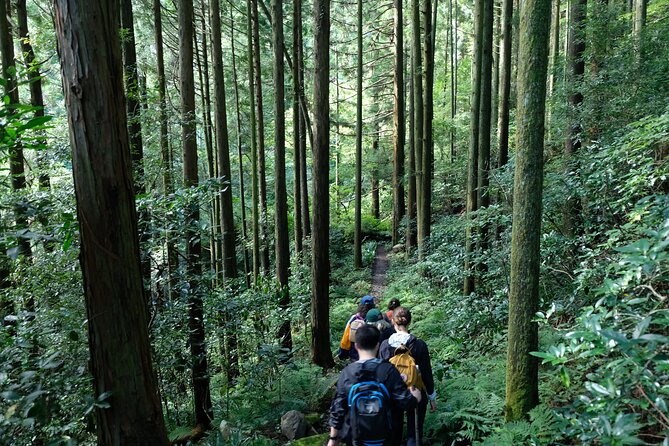
The Hakone Checkpoint is the final stop. This was an important control point on the old Tokaido road, and it helps explain why Hakone was more than a pretty mountain resort.
Your guide puts the checkpoint into the wider story of travel and movement in Japan. That context matters because the road, village, tea house, and checkpoint are connected. Without explanation, they can look like separate attractions. With the route linked together, you see Hakone as a passage through the mountains, not only as a place for lake views and hot springs.
The scheduled stop is about 30 minutes. That is long enough for an introduction to the checkpoint’s role without turning the half-day hike into a full historical lecture. If you prefer sightseeing that gives you a little background but keeps moving, this balance should suit you.
The finish also makes practical sense. You do not need to return along the trail or backtrack to the station. The tour leaves you at a transport hub near the lake, so you can continue your day in Hakone.
What the $114.95 price really includes
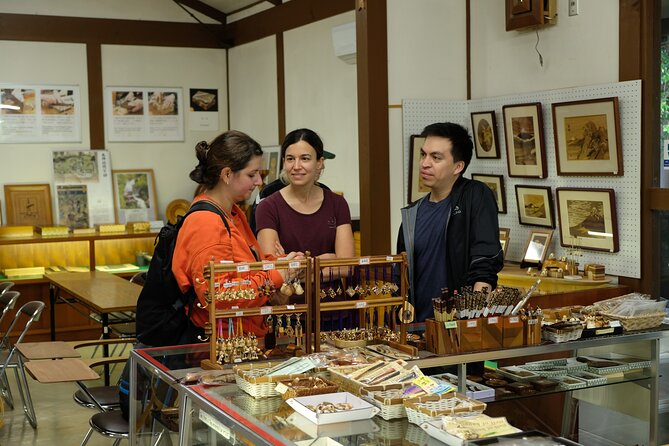
At $114.95 per person, this is not the cheapest way to walk around Hakone. The price makes more sense if you value the guide, the small group, and the historical interpretation rather than simply paying for a marked trail.
You receive a certified National Mountain Guide, a planned route, the Hatajuku and tea house stops, and help with the steepest section by bus. The group maximum of six is a real advantage. A guide can answer questions more easily, adjust explanations to the group, and keep the outing from feeling like a large procession.
You should add the shared taxi cost of about 2,000 yen divided among the group, plus the bus fare of less than 400 yen. The amasake stop is included in the tour structure, but the information provided does not list a separate drink charge. It is sensible to have some extra money available for transport and any optional purchases.
The value is strongest for a visitor who might otherwise pass through Hakone without understanding its old road. If you are an experienced independent hiker who only wants directions, the price may feel high. If you want local context, a manageable route, and a guide who can connect the scenery to Japanese history, it is easier to justify.
Who should choose this half-day hike
I would recommend this tour to you if you want an active morning and prefer smaller, quieter experiences to a packed sightseeing loop. It suits people who enjoy history but do not want to spend the entire day indoors, and it works well for a parent and older teenager who can handle uneven paths.
The route also fits a day plan that continues after lunch. You start at 9am and finish around 1pm, with buses and ferries available from Lake Ashi. That timing leaves the afternoon for another Hakone sight, although you should allow for transport times and not schedule something that requires a tight connection.
You should think twice if you have trouble on cobbled paths, need a fully smooth walking surface, or want a guaranteed Mt. Fuji view. The tour asks for moderate fitness, and the route includes forest trails and old paving even though the steepest climb is skipped.
The small group may also be less suitable if you prefer complete independence. This is a guided outing, and the value comes partly from listening to the guide and moving as a group. In return, you avoid the work of piecing together the historic route yourself.
The cancellation terms deserve attention. The experience is nonrefundable and cannot be changed for personal reasons after booking. It requires good weather, and if the operator cancels because of poor weather, you are offered another date or a full refund. Check the forecast before booking, especially if your Japan schedule is fixed.
Should you book Hike Japan Heritage Hakone Hachiri?
Book it if you want to understand Hakone by walking through its old route, not just by collecting lake and mountain viewpoints. The combination of cobbled Tokaido sections, Hatajuku woodcraft, a 400-year-old tea house, and the Hakone Checkpoint gives the morning a clear sense of purpose.
The best reason to go is the guide-led context. Akihiro and Aki have been singled out for friendly, clear explanations, and the small group allows the history to stay personal rather than formal. The biggest drawbacks are the extra transport costs, uneven ground, weather risk, and the lack of a guaranteed Mt. Fuji view.
For a moderate walker who wants an authentic half-day in Hakone, I think the tour earns its price. For someone seeking only an easy photo stop or a guaranteed mountain panorama, spend your money elsewhere.
FAQ
Where does the tour begin?
The tour begins at Hakone-Yumoto Station in Hakone at 9am.
Where does the tour finish?
It finishes at Motohakone near Lake Ashi and the Hakone Checkpoint. From there, you can take a bus toward Odawara, Hakone-Yumoto, or your Hakone hotel, or continue by ferry.
How long does the experience last?
The tour lasts approximately four hours. The walking itself takes about two to three hours, with additional time for transport and stops.
Is transportation to the trailhead included?
No. A shared taxi takes the group to the trailhead and costs about 2,000 yen to be shared among the group.
Is the bus to the tea house included?
No. The bus fare is separate and costs less than 400 yen.
How physically demanding is the hike?
You should have a moderate level of physical fitness. The route includes cobbled paths and forest trails. The steepest part is skipped by bus.
What happens if the weather is poor?
The experience requires good weather. If it is canceled because of poor weather, you will be offered another date or a full refund. Personal cancellations and amendments are nonrefundable.
Just added in Hakone
- Traverse Outer Rim of Hakone Caldera and Enjoy Onsen Hiking Tour★ 5.0 · 30 reviews
- Private Hakone Half-day Car Tour with Hotel Pickup – Local Guide★ 5.0 · 48 reviews
- Hike Hakone Hachiri★ 5.0 · 48 reviews
- Hike Japan Heritage Hakone Hachiri with certified mountain guide★ 5.0 · 46 reviews
- Easygoing Nature Walk in Hakone Tour★ 5.0 · 15 reviews
- Odawara: Guided Ninja & Samurai Tour of Odawara Castle★ 5.0 · 25 reviews
- Odawara: Odawara Castle Tenshukaku Entrance Ticket★ 4.2 · 30 reviews
- Kowakien Yunessun Hot Springs Entry Ticket★ 4.2 · 23 reviews
Hakone Day Trips, compared.
Mt Fuji and Hakone 1-Day Bus Tour Return by Bullet Train
Read our review →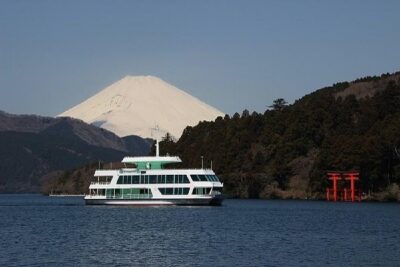
Mt Fuji & Hakone Cruise, Drum Show Bullet Train 1 Day from Tokyo
Read our review →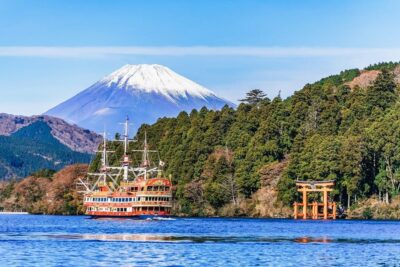
Tokyo Mt Fuji 5th St & Hakone Cruise Bus Tour w/Bullet Train
Read our review →
Private Tour to Mt. Fuji and Hakone (Fully Licenced Operator)
Read our review →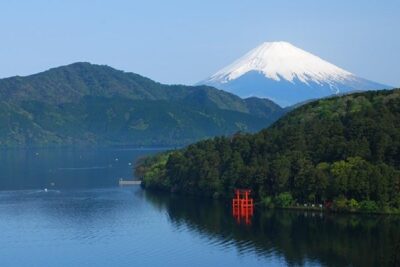
Mt Fuji & Hakone Cruise, Drum Show Bus 1 Day from Tokyo
Read our review →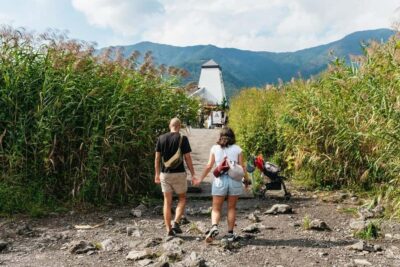
Mt. Fuji, Kamakura, Big Buddha, & Lake Ashi Day Trip
Read our review →
Mt. Fuji & Hakone Private Day Tour with English-Speaking Driver
Read our review →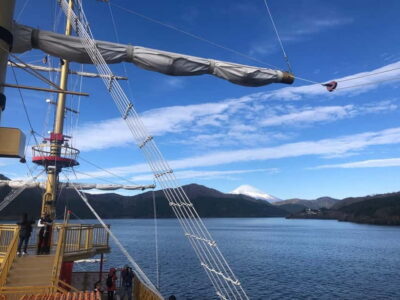
Hakone Fuji Day Tour w/ Cruise, Cable Car, Volcano
Read our review →Browse the lists this tour appears in