
Reviewed · MOUNT FUJI DAY TRIPS
Tokyo: Hakone Fuji Day Tour w/ Cruise, Cable Car, Volcano
Mount Fuji is only part of the attraction here. The real treat is the changing view: first from a decorated pirate ship on Lake Ashi, then from the Hakone Ropeway, and finally from the volcanic slopes of Owakudani. I like that the tour gives you several ways to experience Hakone without making you work out a complicated rail-and-bus route.
I also like the chance to trade some shopping time for a Japanese onsen, especially after several busy days in Tokyo. Guides such as Tina, Jeff, and Vicky have been praised for clear explanations and helpful advice. The main drawback is the weather: Fuji can stay hidden all day, and traffic can stretch the two-hour return ride.
Key points at a glance
- Three strong Hakone viewpoints: See Lake Ashi, Mount Hakone, and Owakudani in one day.
- Pirate boat included: The 30-minute cruise is a scenic way to reach the next part of the route.
- Owakudani feels genuinely volcanic: Look for sulfur steam and try a black egg said to add seven years to your life.
- You choose the afternoon mood: Shop at Gotemba Premium Outlets or spend time at a hot spring, with some schedules allowing both.
- Comfortable transport matters: The air-conditioned coach gives you a place to rest between stops, with charging ports reported on some buses.
- Fuji views are never guaranteed: Clear winter and spring days can be superb, but clouds, rain, wind, and typhoon-season weather often block the mountain.
Why this Hakone day trip works from Tokyo
At $98 per person, this is a practical way to pack several Hakone highlights into one long day. Your price covers the coach, sightseeing cruise, ropeway ticket, and guide. You still pay for food, drinks, shopping, and the hot spring, but the included transport and admissions remove much of the planning burden.
The day lasts about 10 hours. That sounds long, but Hakone is far enough from Tokyo that road time takes a serious bite out of the schedule. You may spend around two hours getting there and another two hours returning, with traffic making those stretches longer. The upside is that you can rest in an air-conditioned bus instead of changing trains and buses on your own.
This suits you if you want a broad first look at Hakone rather than a slow, local stay. It is less suitable if you want to hike, linger at museums, or spend a full day in one hot spring town. The route gives you variety, but variety means moving on when a place starts to feel interesting.
Other days out to the mountain from Tokyo:
- Mt Fuji and Hakone 1-Day Bus Tour Return by Bullet Train
★ 5.0 · 26,383 reviews - Mt Fuji & Hakone Cruise, Drum Show Bullet Train 1 Day from Tokyo
★ 4.0 · 7,413 reviews - Tokyo Mt Fuji 5th St & Hakone Cruise Bus Tour w/Bullet Train
★ 4.4 · 5,024 reviews
The ride out from Tokyo
The departure details depend on the option you book. The supplied information identifies the Matsuoka Central Building at 2-chōme-2-1 Yaesu as a starting and return point, while the tour is also described as departing from the Tokyo area for Hakone. Check your exact meeting point carefully before the morning of the trip.
Do not arrive with a large suitcase. Only one small hand-carry bag is allowed, and large bags are not permitted. Wear shoes you can walk in, and bring warm clothing even if Tokyo feels mild. Hakone’s higher areas can be cooler, and the ropeway and volcanic valley are exposed to wind.
The bus is one of the tour’s quiet strengths. You get a fixed seat, air conditioning, and a place to recover between active stops. Some departures have charging ports, which is useful if you plan to take photos throughout the day. The guide speaks English or Chinese, depending on the departure, and several guides have earned strong praise for keeping the group on schedule and helping with practical choices.
Lake Ashi by pirate boat
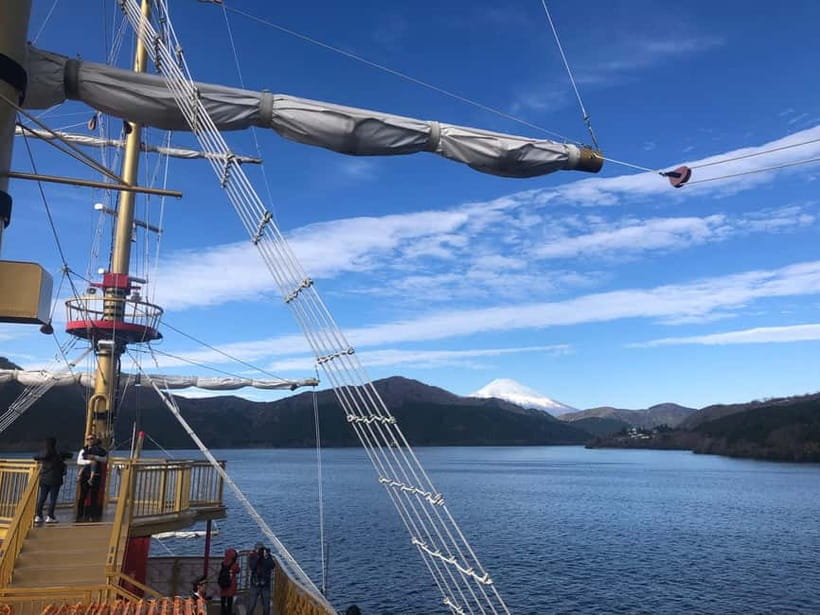
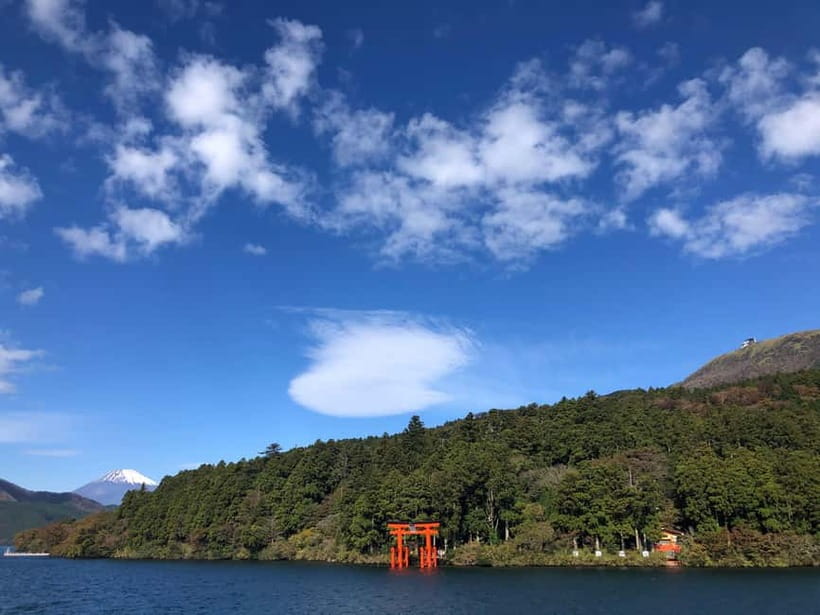
The first major stop is Lake Ashi, also called Lake Ashinoko. Here you board a decorated pirate-style sightseeing boat for about 30 minutes. It is playful rather than traditional, but it gives the lake a memorable shape and makes the transfer feel like part of the sightseeing.
Look across the water toward the surrounding mountains. On a clear day, Mount Fuji may appear beyond the lake, creating the classic Hakone view. The boat is also a good place to take a breath after the road journey. You are not simply being moved from one transport connection to another. You get a short, scenic ride with open views and fresh air.
The limitation is time. Thirty minutes passes quickly, and you cannot control where the boat is when Fuji appears. Clouds may cover the mountain, and strong wind can lead to changes if the cruise is not operating. Still, Lake Ashi remains worthwhile even without a perfect Fuji photograph because the boat ride gives you a different view of Hakone than the road does.
Up Mount Hakone on the ropeway
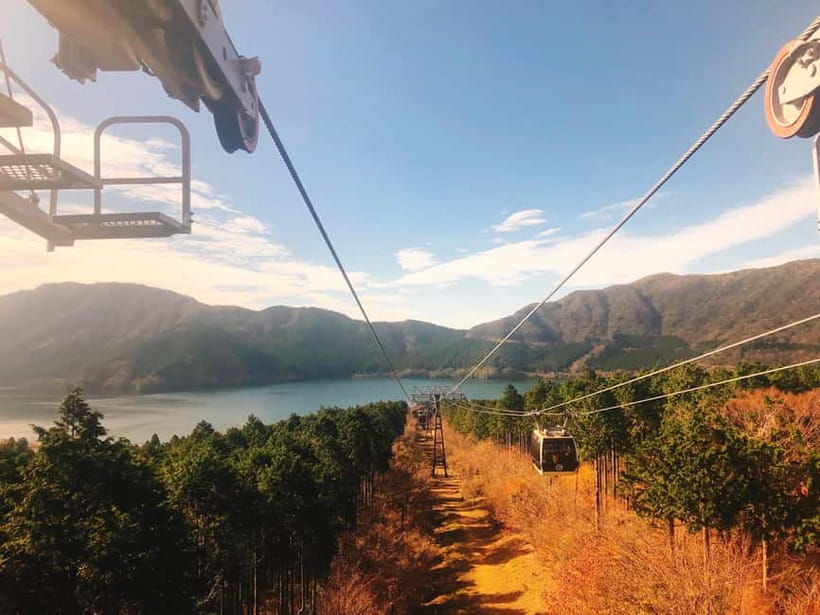
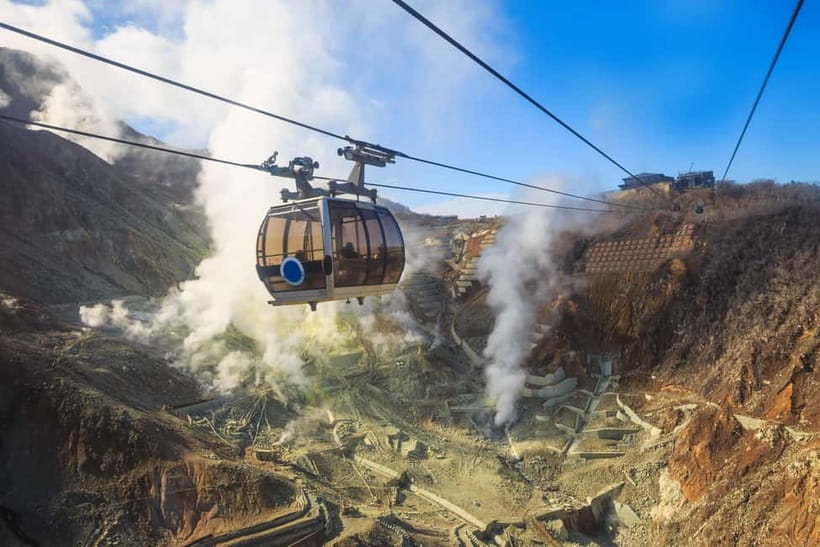
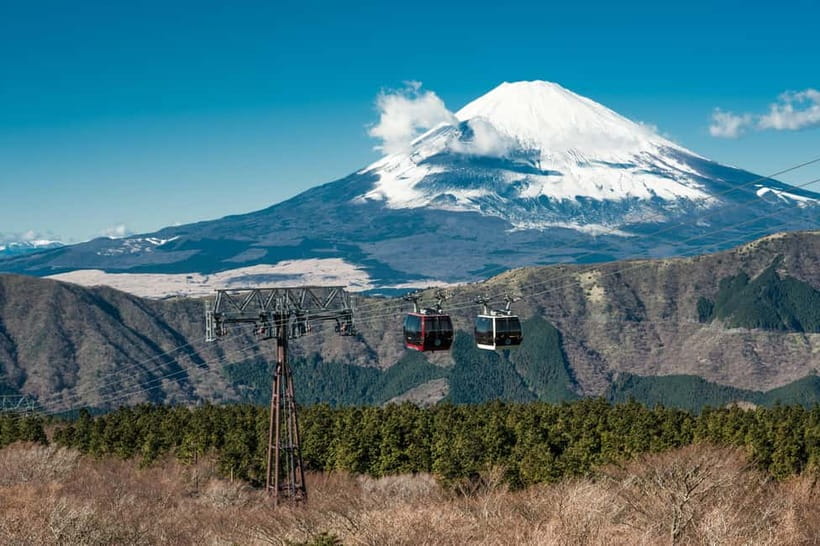
After the cruise, you take the Hakone Ropeway for roughly 20 minutes. This is one of the day’s most enjoyable transitions. The cabin lifts you above the trees and mountain slopes, giving you a wider view than you get from the shore.
On a clear day, this is your second chance to see Fuji. You may also look down toward the volcanic area around Owakudani, which makes the ropeway more than a simple cable ride. The height and open views are the point, so keep your camera ready, but do not expect every ride to offer a clear summit.
Wind can affect the ropeway, and the order or details of the route may change if it closes. If you have a strong fear of heights, this is worth considering before booking. For most people, the ropeway is a highlight because it links the lake and volcanic valley in a quick, dramatic way.
Other hot-spring days out of Tokyo:
- Tokyo: Mt. Fuji Tour, Hakone Ropeway, Owakudani, Lake Ashi
★ 4.7 · 4,002 reviews - Private Tour to Mt. Fuji and Hakone (Fully Licenced Operator)
★ 5.0 · 1,910 reviews - Mt Fuji & Hakone Cruise, Drum Show Bus 1 Day from Tokyo
★ 4.0 · 1,287 reviews - From Tokyo: Mt. Fuji & Hakone Tour w/ Return by Bullet Train
★ 4.2 · 1,278 reviews
Owakudani and the black egg tradition
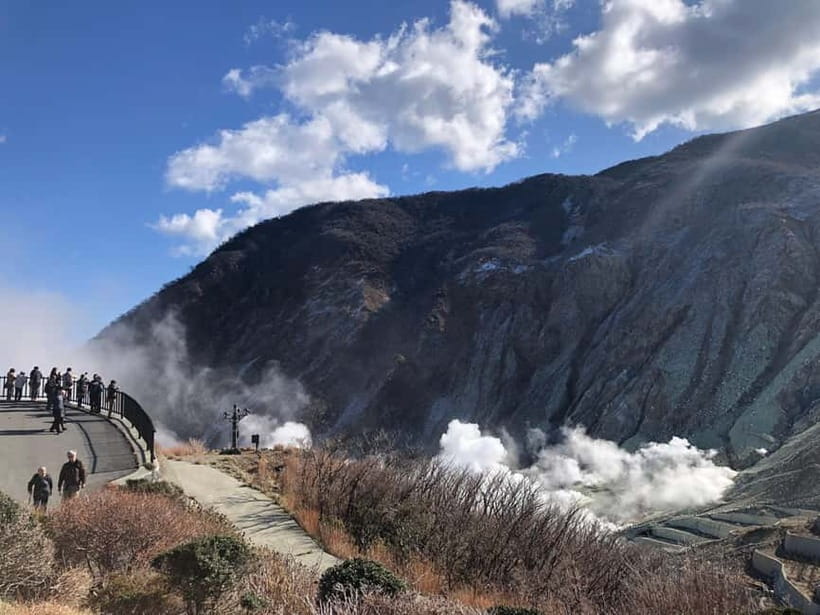
Owakudani, or the Great Boiling Valley, is the most unusual stop. The area was formed by a volcanic eruption about 4,000 years ago, and sulfurous steam still escapes from the ground. The air can smell strongly of sulfur, and that is part of the experience, not a sign that something has gone wrong.
You get about 75 minutes here for sightseeing, photos, food, and shopping. That is enough to see the main area and sample local specialties, but it is not a long visit. The volcanic setting gives the day more substance than a series of viewpoints. You can see evidence of active geothermal forces rather than simply looking at a mountain from a distance.
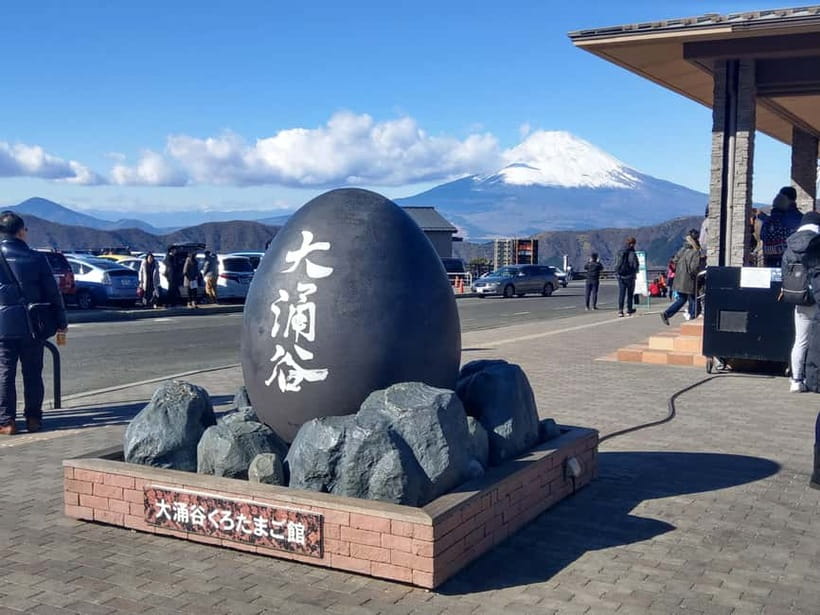
The signature snack is the kuro tamago, or black boiled egg. The shells turn dark during cooking in the sulfur-rich environment. Local legend says eating one adds seven years to your life. You do not have to treat the claim as medical advice to enjoy the ritual. Black ramen and black ice cream may also be available, depending on what is operating that day.
People with heart or respiratory problems should not book this experience. The volcanic environment, sulfur fumes, walking, and changing elevation may be uncomfortable or unsuitable. Warm clothing is useful here too, especially when wind moves across the exposed areas.
The afternoon choice: outlets, onsen, or both
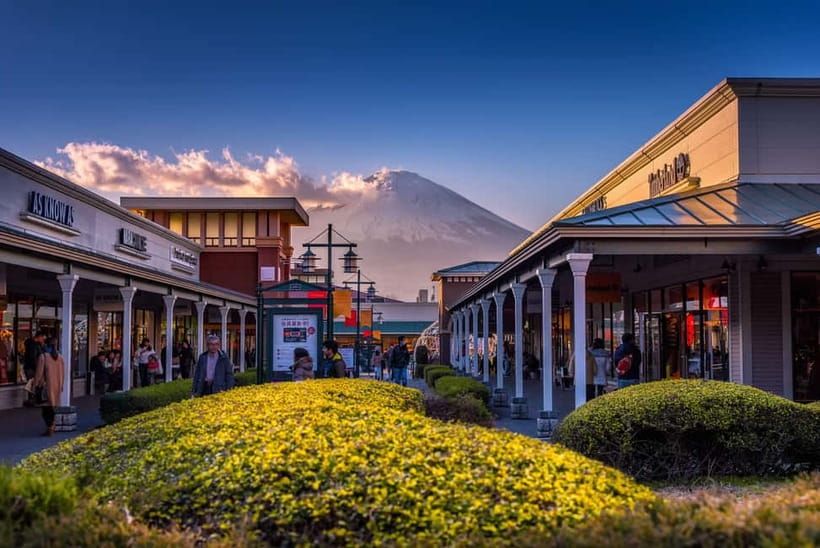
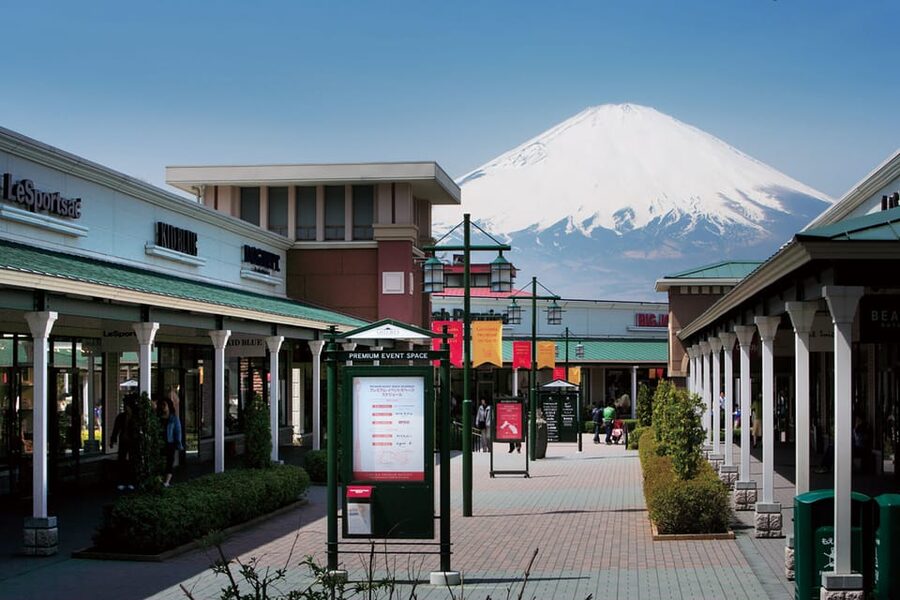
The afternoon is where this tour can fit different personalities. One option is about two hours at Gotemba Premium Outlets, one of Japan’s largest outlet shopping centers. The center is known for its broad selection of shops and views toward Mount Fuji from the grounds.
The outlet stop works best if you like branded goods or want time to browse after a morning of sightseeing. Some prices can be good, but do not assume every shop is a bargain. The stores include higher-end labels, and one visitor found the mall less inexpensive than expected. If shopping is not your thing, two hours can feel long, especially after the more distinctive sights in Hakone.
The other choice is a hot spring visit at Gotemba Onsen Kaikan, generally around one hour. Hot springs are an important part of Japanese bathing culture, and this is a chance to try one without giving up a separate day in your schedule. You pay the entry fee and towel cost yourself.
Some departures allow you to divide the time, spending an hour at the onsen and an hour at the outlets. This arrangement has been especially useful for families and mixed groups. One person can soak while another shops, though you should confirm the exact timing with your guide.
The Fuji view from an onsen can be wonderful on a clear day, but it is not guaranteed. Private rooms may be arranged with help from the guide, as Vicky and Tina have done for some groups, but private bathing costs extra and availability can vary. Bring a towel only if your booking instructions permit it, and expect to pay separately for the hot spring and towel.
What the guides add
A good guide matters on a route with several transport changes and a tight schedule. Tina is repeatedly praised for clear explanations in English and Chinese, for helping people choose between the onsen and outlets, and for suggesting food and places to visit after the tour. Jeff and Jeffry are also praised for being informative and keeping the day organized.
Vicky has helped arrange onsen rooms and photo stops, while Lisa, Jax, Sheilla, Ivan, and other guides have been praised for friendly service and useful explanations. Guide quality can vary by departure, and one person found an English-speaking guide difficult to understand. That is a fair reminder not to assume every guide will have the same speaking style.
The commentary focuses on getting you through the day and explaining the main sites. If you want a detailed lecture on Japanese culture at every stop, this may feel light. If you prefer practical information, clear meeting instructions, and help with the choices, the format works well.
The Fuji question: set your expectations
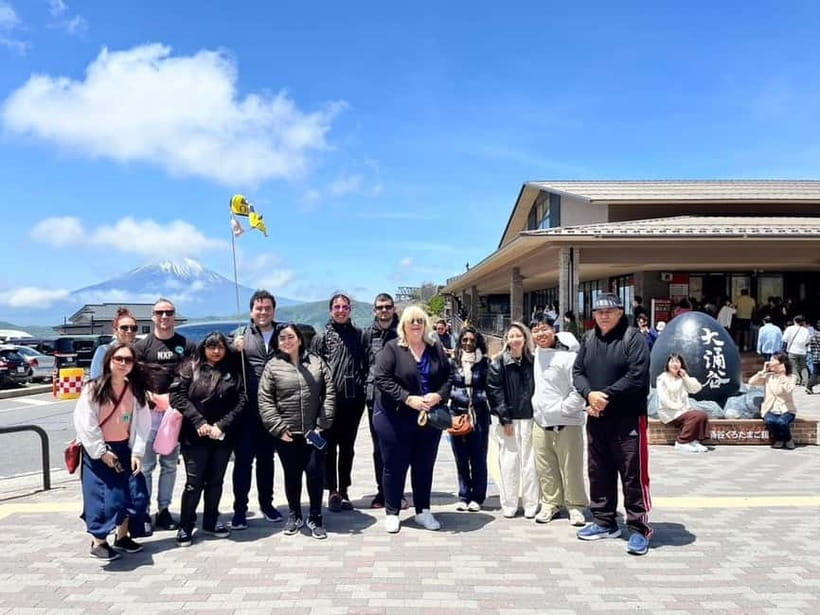
Mount Fuji is the star in the title, but the mountain is not a guaranteed part of the view. Clouds often gather around the summit, and rain, strong wind, summer haze, and typhoon-season weather can block it completely. Even on a day with good conditions, Fuji may appear only briefly between clouds.
Clear winter and spring days offer some of the best chances. Several January, February, April, and May departures had striking views, while other trips in June, July, August, September, and October saw little or none of the mountain. That is not a flaw the operator can fix.
If seeing Fuji is your main goal, you may prefer a trip focused on Kawaguchiko or Fuji Station, where the route is designed more directly around the mountain. If you want Hakone itself, with its lake, ropeway, volcanic valley, and onsen culture, this tour remains worthwhile even when Fuji hides.
Timing, comfort, and practical limits
The advertised return is around 6 PM, but traffic can change that. Tokyo traffic, especially around the morning departure and afternoon return, can add time. The road to Hakone also includes winding sections, so people prone to motion sickness should prepare accordingly.
The tour is active but not a hiking expedition. You walk around the lake area, Owakudani, and the shopping or bathing stop, with stairs and uneven areas possible. One guide and driver assisted a participant with mobility difficulties, but the supplied information does not promise full accessibility. Ask before booking if stairs or long walking periods are a serious concern.
Bring comfortable shoes, warm layers, and a small bag. Leave large luggage at your accommodation. Food is not included, so plan to buy lunch or snacks at the stops. The guide can point you toward local choices, but the cost is yours.
Bad weather can force changes to the cruise, ropeway, or other stops. If the whole tour must be canceled for severe weather, notice is given by 2 PM the day before. If an individual attraction is closed, the itinerary may change without a refund. You also need to arrive on time, since no-shows and late arrivals are not refunded.
Should you book this Hakone tour?
Book it if you want a comfortable, efficient introduction to Hakone and like having several headline sights combined in one day. The included cruise, ropeway, coach, and guide make $98 a reasonable price, especially if you would otherwise pay separately for transport and admissions. The onsen option adds a relaxing Japanese experience that many Tokyo visitors would not arrange on their own.
Skip it if you need a guaranteed Fuji view, dislike shopping, or want a slow day with long stays at one location. You should also think twice if heart or respiratory problems make the sulfurous Owakudani air unsuitable.
My practical choice would be a clear-weather departure in winter or spring, with the onsen selected if the booking allows it. Go for the mountain views, but judge the day by the whole route: lake, boat, ropeway, volcano, food, and a chance to soak. Fuji may be shy, but Hakone still gives you plenty to see.
FAQ
How long is the Tokyo to Hakone tour?
The full experience lasts about 10 hours, with a planned return to Tokyo around 6 PM. Road conditions can make the journey longer.
What is included in the price?
The price includes the sightseeing cruise on Lake Ashi, Hakone Ropeway ticket, air-conditioned coach transportation, and a live guide.
Are food and drinks included?
No. Food and drinks are not included, so you pay for meals, snacks, and drinks yourself.
Can I choose between the outlet mall and a hot spring?
Yes. The afternoon options include Gotemba Premium Outlets or a hot spring at Gotemba Onsen Kaikan. Some schedules may let you divide the time between both, so confirm the arrangement with your guide.
Do I need to pay extra for the onsen?
Yes. The hot spring entrance fee and towel are not included in the tour price.
Is Mount Fuji guaranteed to be visible?
No. Visibility depends on weather. Clouds, rain, wind, haze, and seasonal conditions can hide the mountain, and the ropeway or cruise may change if strong wind causes a closure.
What languages are available for the guide?
Guided departures are available in English or Chinese. The exact guide and language depend on the option you book.
Just added in Tokyo
- Small-Group Wagyu Beef and 7 Japanese Dishes Tokyo Cooking Class★ 5.0 · 190 reviews
- Nikko: Edo Wonderland Edomura Cultural Theme Park Ticket★ 4.3 · 205 reviews
- 《MEMBERS-ONLY-BAR-HOPPING》Discover Your Special Whiskey in Tokyo!★ 5.0 · 29 reviews
- Japanese Whisky Hunting《HIGH-QUALITY-ONLY》Rare Tasting Class★ 5.0 · 20 reviews
- Luxury Tokyo Sake, Cocktail, Whisky and Pairing Tour★ 5.0 · 18 reviews
- Wagyu & Sake Pairing in Shinjuku – Steak, Shabu-Shabu & More★ 5.0 · 112 reviews
- From Tokyo: Private Tour to Fuji/Hakone – Onsen, Art, Nature★ 5.0 · 116 reviews
- Tokyo: KABUKI Show at Kabukiza Theatre Admission Ticket★ 4.8 · 152 reviews
Mount Fuji Day Trips, compared.
Mt Fuji and Hakone 1-Day Bus Tour Return by Bullet Train
Read our review →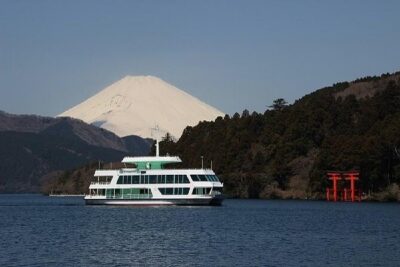
Mt Fuji & Hakone Cruise, Drum Show Bullet Train 1 Day from Tokyo
Read our review →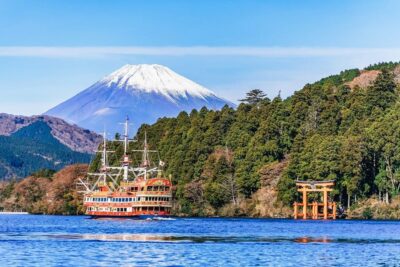
Tokyo Mt Fuji 5th St & Hakone Cruise Bus Tour w/Bullet Train
Read our review →
Mt.Fuji,Kawaguchiko Oishi Park,Arakurayama Sengen Park
Read our review →
Mt Fuji Top 5 Spots Day Tour: Arakurayama Park,Oshino Hakkai
Read our review →
Private Tour to Mt. Fuji and Hakone (Fully Licenced Operator)
Read our review →
Mount Fuji Full-Day Private Tour from Tokyo (Customizable)
Read our review →Browse the lists this tour appears in