
Reviewed · HIROSHIMA & MIYAJIMA DAY TRIPS
Hiroshima: City and Miyajima Bike and Boat Tour
Hiroshima and Miyajima make a powerful one-day pairing: one city shaped by war and remembrance, one wooded island shaped by faith and sea. This tour links them by easy cycling, train, ferry, and walking, so you get a much fuller picture than either stop alone.
I like the flat bike route, which lets you cover Peace Park and Hiroshima Castle without a hard workout. I also like the small group size and the way the day includes transport, lunch, water, a helmet, and the Miyajima ferry, rather than leaving you to piece together the connections yourself.
The main drawback is the long 450-minute schedule. You spend much of the day moving between sites, and Miyajima deserves more time than a single afternoon can give. You also need to be comfortable riding a bike, and the tour does not suit wheelchair users or pregnant women.
Key points at a glance
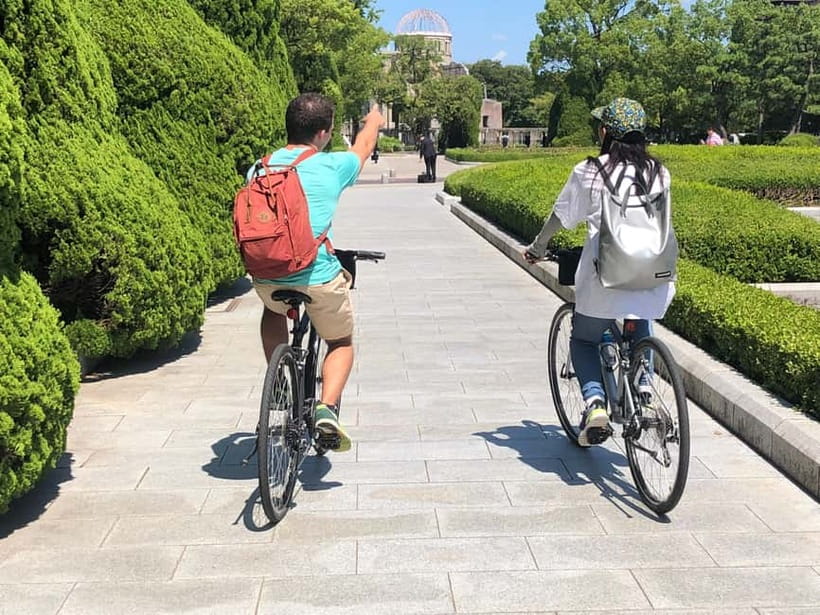
- Flat Hiroshima cycling route: Ride around Peace Park and the A-bomb Dome at an easy pace, with Trek bikes, step-through models, and child-sized bikes available.
- Two very different settings: Move from Hiroshima’s solemn city center to Miyajima’s wooded hills, shrine buildings, and seaside lanes.
- Small English-speaking group: The group is limited to eight, allowing time for questions and individual support.
- History beyond the bombing: Hiroshima Castle adds context about the city’s feudal past and pre-Meiji story.
- Itsukushima Shrine included: Visit Miyajima’s famous Shinto shrine while learning how the island became a religious center.
- Practical value: Train and ferry transfers, lunch, water, bike, and helmet are included in the $138 price.
Why this city-and-island combination works
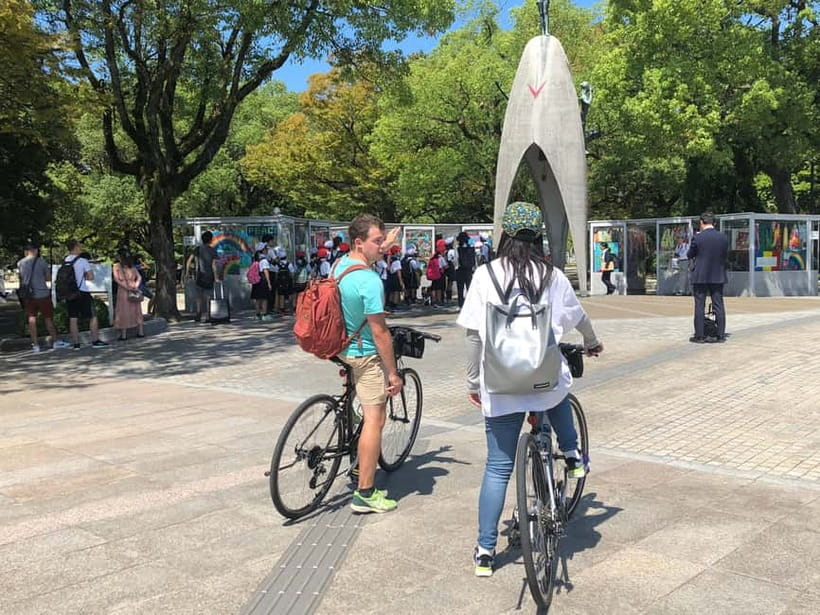
The strongest feature here is contrast. Hiroshima’s Peace Park asks you to slow down and think about the atomic bombing, the lives lost, and the city’s work of remembrance. Miyajima then gives you forest, water, shrine architecture, and a very different sense of place.
You are not simply checking two famous names off a list. The route shows how Hiroshima changed from a feudal castle town to a modern city, then carries you to an island whose importance grew from religious tradition rather than urban power.
That range is useful if you have one full day in the area. You see the core Hiroshima sights in the morning, then spend the later part of the day on Miyajima. The tradeoff is pace. This is a survey of both places, not a slow, detailed visit to either one.
The tour lasts 450 minutes, or 7.5 hours. That is a full day, but it is also an efficient one. You avoid the uncertainty of arranging a bike rental, finding the right train, buying a ferry ticket, and deciding how to connect the city sights with Miyajima.
Other long days west of Hiroshima:
- Peaceful Hiroshima & Miyajima UNESCO 1 Day Bus Tour
★ 5.0 · 5,309 reviews - Hiroshima: Hiroshima and Miyajima UNESCO Sites 1-Day Tour
★ 4.9 · 2,330 reviews - Hiroshima / Miyajima Full-day Private Tour with Government Licensed Guide
★ 5.0 · 1,298 reviews
Starting on two wheels at Peace Park
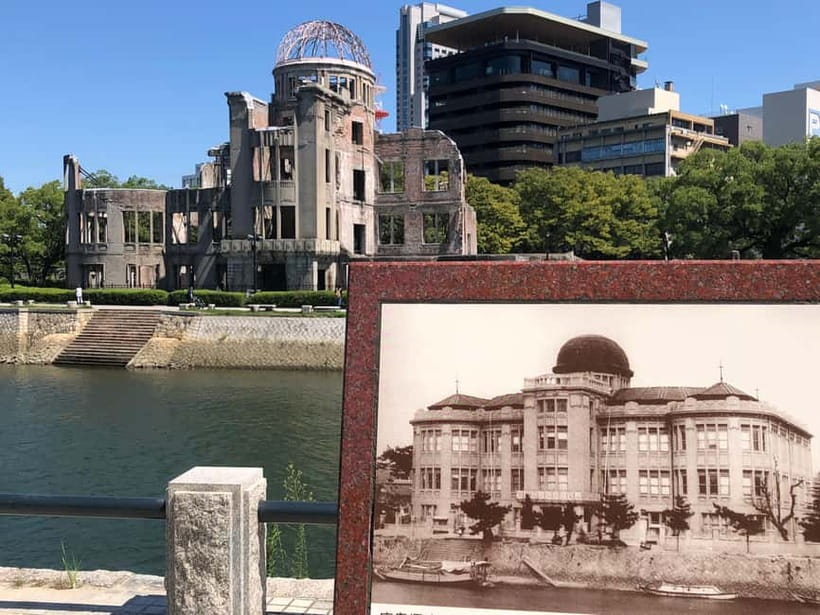
The cycling section begins with Hiroshima’s most important modern landmarks. You ride around Peace Park and the A-bomb Dome while your guide explains the setting and the bombing’s impact.
The A-bomb Dome is especially powerful because of its physical presence. The damaged structure remains in the city center, close to the river and the park, rather than being hidden away in a museum. A bike makes it possible to move around the area easily and see how the memorial sites relate to one another.
This portion calls for a respectful pace. It is not a sightseeing loop where you rush from photo to photo. Your guide provides commentary about Hiroshima’s history, and the small group gives you a better chance to ask questions about what you are seeing.
The route is completely flat. That matters more than it may sound, especially on a long day that later includes train travel and walking. You do not need cycling experience beyond being able to ride a bike, and the pace supports slower riders.
The bikes are Trek models in several sizes. Step-through bikes and child-sized bikes are available, but you should provide everyone’s height when booking so the operator can prepare the right equipment. Helmets are included.
Hiroshima Castle and the city before 1945
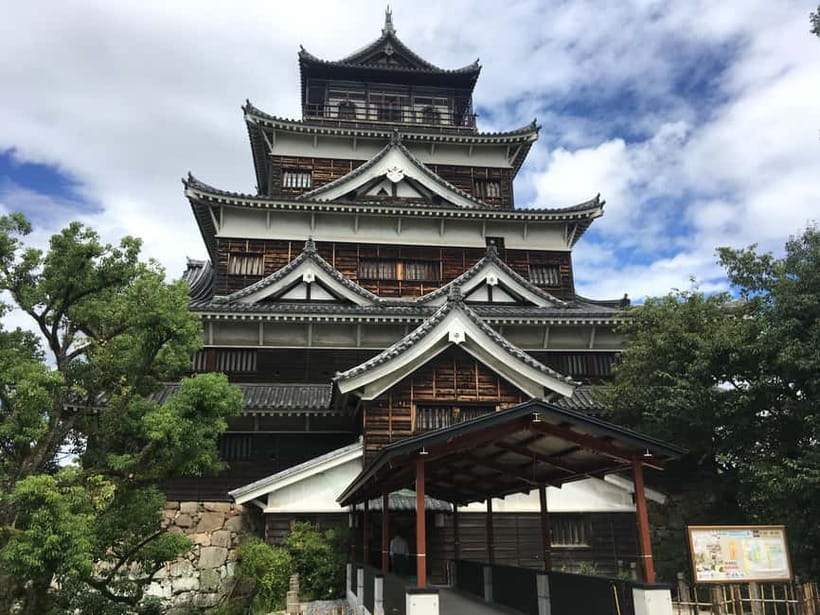
After Peace Park, the tour turns to Hiroshima Castle. This changes the subject from twentieth-century destruction to the city’s feudal past.
That shift is valuable. If you only visit Peace Park, it is easy to think of Hiroshima solely through the lens of 1945. The castle helps place the city in a longer story, including its role before the modern era and the history leading up to the Meiji period.
The castle visit is part of the guided route, so you receive context rather than simply seeing a rebuilt structure and moving on. The supplied details do not promise a long indoor museum visit, so expect the castle to function as an important historical stop within the day, not as a separate half-day attraction.
This is also where the bicycle format earns its keep. You can move between the city’s major points without spending the morning waiting for taxis or figuring out unfamiliar transit. The route remains flat and manageable.
The train and ferry to Miyajima
The change of transport is part of the experience. From Hiroshima, you take a train and then board a ferry for Miyajima, with the boat ticket included.
The ferry provides a clean break from the city. Hiroshima’s streets and memorial spaces give way to open water and an island setting with thick greenery and bright Shinto buildings. The crossing is not just a practical transfer. It helps you feel the change in character between the two destinations.
Because the train and ferry are arranged as part of the tour, you do not have to work out the connection on your own. That is useful for first-time visitors, particularly on a tightly timed day. It also means you should stay with the group and follow the guide’s instructions, since the day depends on several linked movements.
The ferry segment can be busy, and the island is a major attraction. The tour’s small group limit of eight should make it easier to stay together than on a large coach excursion, but this is still a public ferry, not a private boat.
Same base, a different sort of day:
- Hiroshima Historical Walking Tour – Why A-Bomb was Dropped
★ 4.8 · 893 reviews - Hiroshima Peace (Heiwa) Walking Tour at World Heritage Sites
★ 5.0 · 872 reviews - Hiroshima in a Nutshell: Morning Bike Adventure
★ 5.0 · 524 reviews - Hiroshima City 4hr Private Walking Tour with Licensed Guide
★ 5.0 · 437 reviews
Walking through Miyajima’s religious center
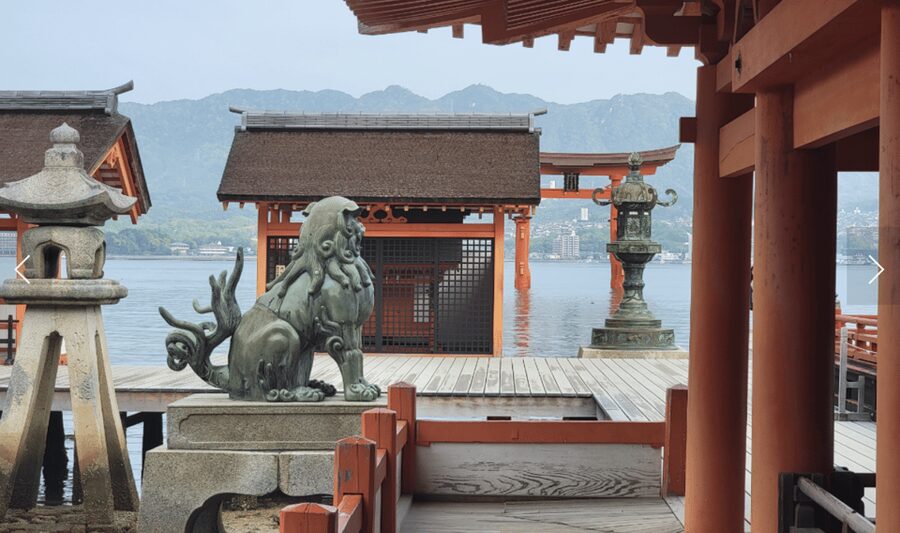
Miyajima is introduced on foot. Your guide explains how the island developed as a religious center while taking you through its lanes and scenic areas.
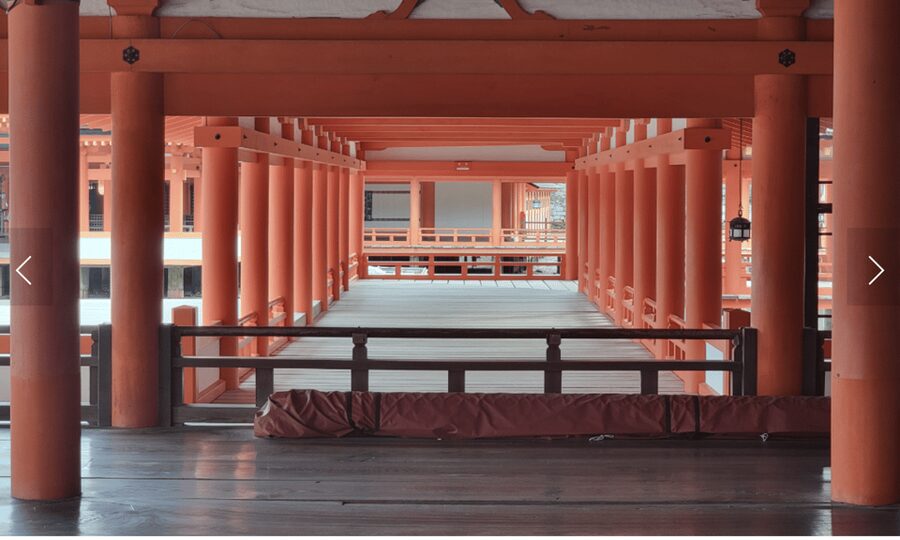
The island’s appeal comes from the combination of natural setting and sacred architecture. Green hills provide the backdrop for orange Shinto buildings, and the narrow lanes offer plenty of places to stop for photographs. After the serious tone of Peace Park, Miyajima feels lighter, though its religious importance gives the visit more depth than a simple waterfront stroll.
Itsukushima Shrine is included. This is the key cultural stop on the island, and the guide helps explain why Miyajima became an important place of worship. The tour does not list every shrine or temple visit, so you should not assume the schedule covers every religious site on the island.
You will have time for a walking tour and photographs, but not unlimited free exploration. If your main goal is to shop, seek out every lane, or spend a long time at one shrine, the fixed schedule may feel restrictive. The benefit is that you get an organized introduction to the island without losing the whole day to navigation.
The contrast with Hiroshima is the day’s visual highlight. One setting is defined by memorials and urban streets. The other offers trees, water, traditional buildings, and a strong sense of place shaped by religion.
Guides who make the history easier to follow
The quality of the guide matters a great deal on this tour because the subject matter changes so quickly. Recent tours have been led by guides including Ishan, Aimée-Linh, Melissa, Sage, and Aimee.
Ishan was praised for answering many questions with enthusiasm. Aimée-Linh was described as combining strong historical knowledge with humor, which can help keep a long day from feeling heavy. Melissa gave a particularly careful account of the atomic bombing, Hiroshima’s remembrance, Hiroshima Castle, and the island visit, and stayed beyond the expected time to help the group.
Sage handled a rainy day with detailed commentary and extra support for slower riders. That is a useful sign for anyone unsure about the cycling pace. The route is slow and easy, but the guide still needs to keep a mixed group together across bikes, trains, ferries, and walking.
The named guides are not a guarantee of who will lead your departure. Still, the pattern is clear: this tour depends on an English-speaking guide who can handle difficult history, answer questions, and keep the logistics moving.
Is $138 a fair price?
At $138 per person, this is not the cheapest way to see Hiroshima and Miyajima. You could arrange public transport and visit some sites independently for less.
The price makes more sense when you count what is included: a bike, helmet, guide, city cycling route, commentary, Hiroshima Castle visit, train transfer, ferry ticket, Miyajima walking tour, Itsukushima Shrine, lunch, and water. You are paying for structure as much as transport.
The small group limit of eight is also important. A large group can make cycling awkward and can limit questions at sensitive sites. Here, you have a better chance to hear the guide clearly and get help with bike size or pace.
I see the tour as good value for someone who wants one organized day with both Hiroshima and Miyajima. It is less compelling for an independent visitor who enjoys planning transit, already knows the history, or wants several hours of unstructured time on the island.
Lunch is included, but you should provide information about dietary restrictions in advance. That is a practical detail, especially since the day is long and there may not be much spare time to arrange food on your own.
Who will enjoy this tour most
This experience suits you if you can ride a bike, enjoy guided history, and want to cover a lot in one day. The flat route makes it a good choice for casual cyclists, and the bikes come in several sizes.
It also suits visitors who want help with Hiroshima’s difficult past. Peace Park can be emotionally demanding, and a thoughtful guide can provide context without leaving you to interpret every memorial alone.
Families may appreciate the child-sized bikes, though the tour is still long. Ask about children’s heights when booking so the operator can prepare suitable equipment.
You should think twice if you want a slow, independent Miyajima visit. The island portion comes after the city cycling and transport, so you may arrive with limited energy. You also should not book if you cannot ride a bike, use a wheelchair, or are pregnant.
Comfortable clothes and shoes are essential. Bring a camera, and remember that smoking is not allowed during the activity.
Rain, pace, and the practical details
Rain is the main weather concern. If the forecast creates a problem, the operator contacts you and offers either a walking tour around Peace Park or a full refund. You need to remain reachable so you receive that message.
The cycling itself is flat, but flat does not mean effortless. You are still spending part of a 7.5-hour day on a bike, then continuing by train, ferry, and on foot. The guides support slower riders, but you should be honest about your comfort level.
There is no hotel pickup or drop-off. You need to reach the starting point yourself, and you should allow enough time to arrive ready to ride.
Free cancellation is available up to 24 hours before the tour for a full refund. You can also reserve now and pay later, which helps if your Japan plans are still shifting.
Should you book this Hiroshima tour?
Book it if you want an efficient, well-supported day that connects Hiroshima’s memorial center with Miyajima’s sacred island setting. The combination of flat cycling, a small English-speaking group, included transport, and strong historical commentary gives you more context than a simple sightseeing transfer.
I would especially choose it for a first visit with limited time. The route introduces the A-bomb Dome, Peace Park, Hiroshima Castle, the ferry crossing, Itsukushima Shrine, and Miyajima’s lanes without asking you to solve the day’s logistics yourself.
Skip it if you cannot ride, need wheelchair access, dislike fixed schedules, or want to spend most of your day on Miyajima alone. For everyone else, $138 is a reasonable price for a long, carefully connected day, provided you are ready for a serious morning, a scenic island afternoon, and plenty of movement.
FAQ
How long does the Hiroshima and Miyajima tour last?
The tour lasts 450 minutes, which is 7.5 hours. Starting times vary, so you should check availability when booking.
Is the cycling route difficult?
No. The cycling route is completely flat and is suitable for anyone who can ride a bike. Slower riders are supported by the guide.
What kind of bicycles are available?
The tour uses Trek bikes in a range of sizes. Step-through bikes and child-sized bikes are also available. You should provide the height of everyone in your group.
Are the train and ferry included?
Yes. Train and ferry transfers to Miyajima are included, and the boat ticket is covered.
Is lunch included?
Yes. Lunch and water are included. You should provide information about any dietary restrictions in advance.
What happens if it rains?
If rain affects the cycling portion, the operator contacts you and offers either a walking tour around Peace Park or a full refund. You should make sure you can be reached.
Is the tour suitable for wheelchair users or people who cannot ride a bike?
No. The tour is not suitable for wheelchair users, pregnant women, or people who cannot ride a bike.
Just added in Hiroshima
- Iya Valley BROMPTON Slow Cycling Tour★ 5.0 · 28 reviews
- Iya Valley All Must-Sees Private Chauffeur Full-day Tour with a Driver★ 5.0 · 20 reviews
- Shore Excursion from Hiroshima Port : Private Tour in Hiroshima★ 5.0 · 17 reviews
- Hiroshima & Miyajima All-Inclusive Tour w/Licensed guide Pancho★ 5.0 · 54 reviews
- Okunoshima Rabbit Island Cycling Tour with Local Guide★ 4.5 · 17 reviews
- The Peace Memorial to Miyajima : Icons of Peace and Beauty★ 4.5 · 31 reviews
- Private Full Day Hiroshima Tour★ 4.5 · 29 reviews
- Hiroshima Saijo Sake Tasting Tour with visit to 7 Breweries★ 5.0 · 104 reviews
Hiroshima & Miyajima Day Trips, compared.
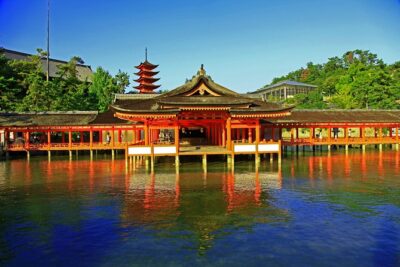
Peaceful Hiroshima & Miyajima UNESCO 1 Day Bus Tour
Read our review →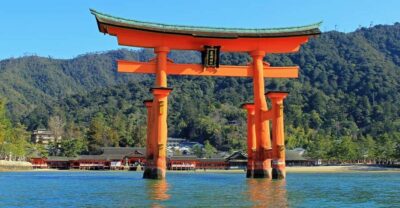
Hiroshima and Miyajima UNESCO Sites 1-Day Tour
Read our review →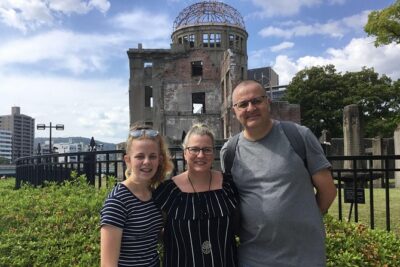
Hiroshima / Miyajima Full-day Private Tour with Government Licensed Guide
Read our review →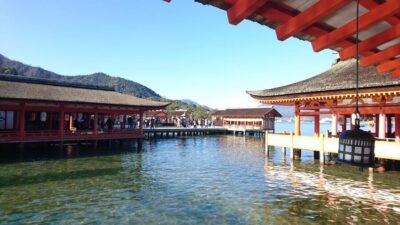
Osaka/Kyoto: Hiroshima Miyajima Bus Tour & Shinkansen Ticket
Read our review →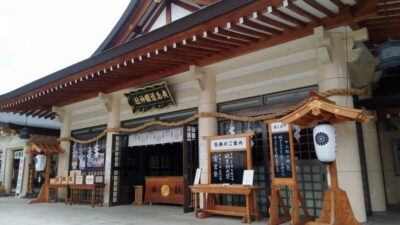
Hiroshima Historical Walking Tour – Why A-Bomb was Dropped
Read our review →
Hiroshima Peace (Heiwa) Walking Tour at World Heritage Sites
Read our review →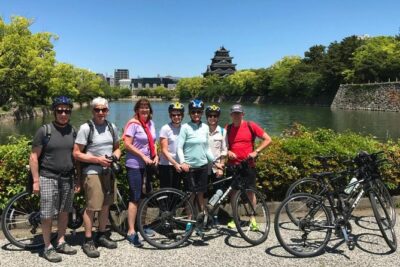
Hiroshima in a Nutshell: Morning Bike Adventure
Read our review →
Hiroshima City 4hr Private Walking Tour with Licensed Guide
Read our review →Browse the lists this tour appears in