
Reviewed · HIROSHIMA & MIYAJIMA DAY TRIPS
Hiroshima & Miyajima: UNESCO A-Bomb Dome & Itsukushima
Hiroshima is best understood through both its beauty and its sorrow, and this private tour puts the two side by side. You begin among Miyajima’s shrine gates, temple grounds, and deer, then move into the Atomic Bomb Dome, Peace Memorial Park, and the personal stories of August 6, 1945. Guides such as Yuka and Masayo bring local family memories to the day, not just textbook dates.
I like the freedom to adjust the route around tides, weather, mobility, and your interests. I also like that you can eat local Hiroshima food, stop for photographs, and hear about Japanese customs along the way. The main drawback is the packed seven-hour schedule: Miyajima, transport, the Peace Museum, and several Hiroshima sights can feel rushed, especially if you want quiet time at the museum.
Key points to know before booking
- Family history adds a human voice: Hiroshima-born guides, including Masayo, share stories connected to atomic bomb survivors in their families.
- Miyajima comes first: Itsukushima Shrine, the floating torii, Daisho-in, Senjokaku Pavilion, deer, and local food fill the opening part of the day.
- The route is private and flexible: You can adjust the pace, add Hiroshima Castle, change the order around tide times, or request other local stops.
- Transport is part of the experience: Expect trains, ferries, trams, walking, and possibly taxis, with transportation costs paid separately.
- The day covers a lot: You can see major Hiroshima sights in seven hours, but the schedule leaves little room for lingering.
- The price buys personal attention: At $177 per person, the value is strongest for couples, families, and small groups who want help navigating and a guide focused on their interests.
Why this Hiroshima day works so well
This is not a standard bus circuit. It is a private day with a Hiroshima-born guide who meets you on foot at a central hotel, station, museum, port, or another agreed location in central Hiroshima City.
That personal setup matters here. Hiroshima and Miyajima are easy enough to visit independently, but the day involves several trains, ferries, trams, walking sections, ticket points, and timing choices. A guide keeps the day moving while explaining what you are seeing.
The guides also adjust their approach. Masayo, often called Masa, is praised for fluent English, a warm manner, and personal family connections to the bombing. Yuka is known for contacting guests before the tour, discussing special requests, and reshaping the route around tide times or mobility needs.
You should still expect a full day on your feet. The tour lasts seven hours, and the itinerary includes many stops. If you prefer a slow visit with long pauses, tell your guide early and remove some sights rather than trying to do everything.
Other long days west of Hiroshima:
- Peaceful Hiroshima & Miyajima UNESCO 1 Day Bus Tour
★ 5.0 · 5,309 reviews - Hiroshima: Hiroshima and Miyajima UNESCO Sites 1-Day Tour
★ 4.9 · 2,330 reviews - Hiroshima / Miyajima Full-day Private Tour with Government Licensed Guide
★ 5.0 · 1,298 reviews
Miyajima by ferry, deer, and sacred architecture
The day usually begins with a train ride of about 40 minutes, followed by a ferry of about 15 minutes. The approach to Miyajima gives you an immediate change of mood. Hiroshima’s city streets give way to water, island views, shrine architecture, and deer wandering around the public areas.
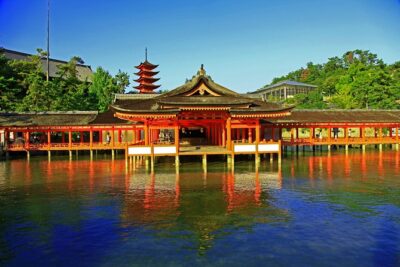
The island is officially Itsukushima, though Miyajima is the name you will hear most often. Its main draw is Itsukushima Shrine, a UNESCO World Heritage Site built around the relationship between land, sea, and worship.
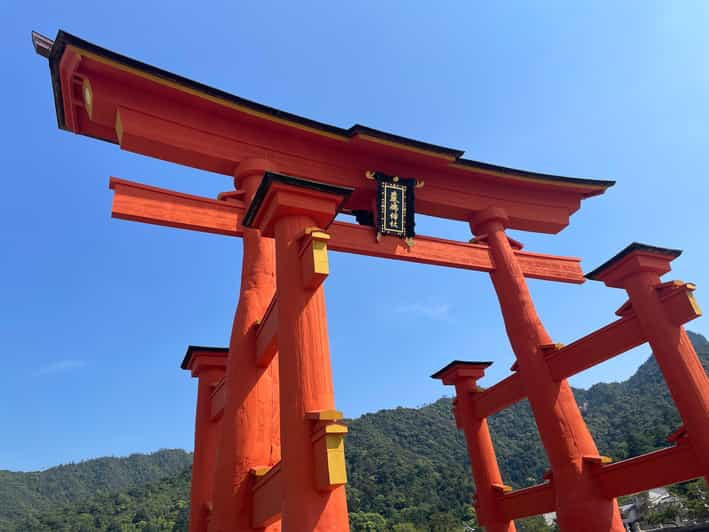
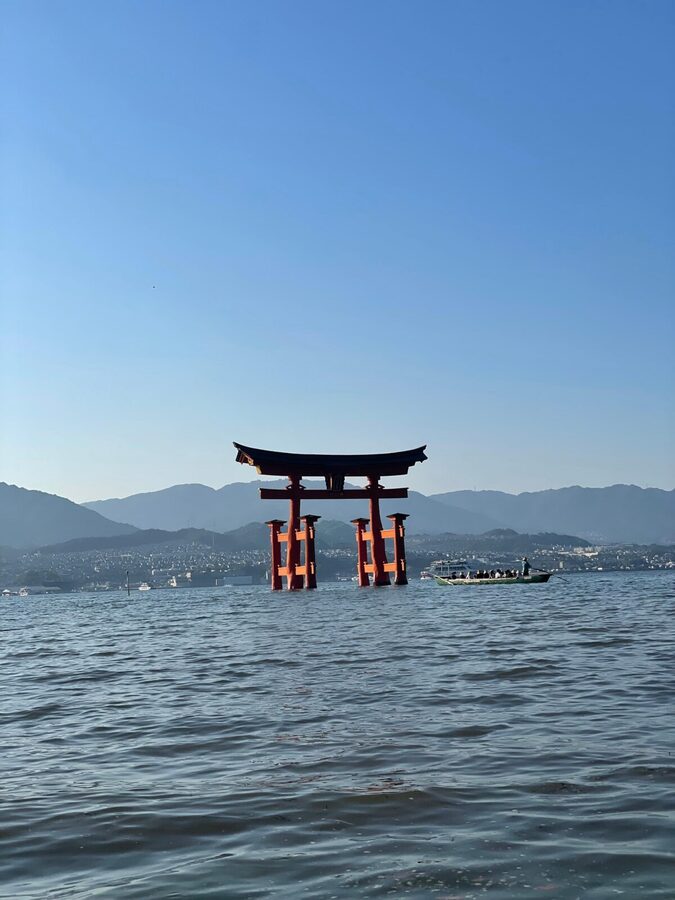
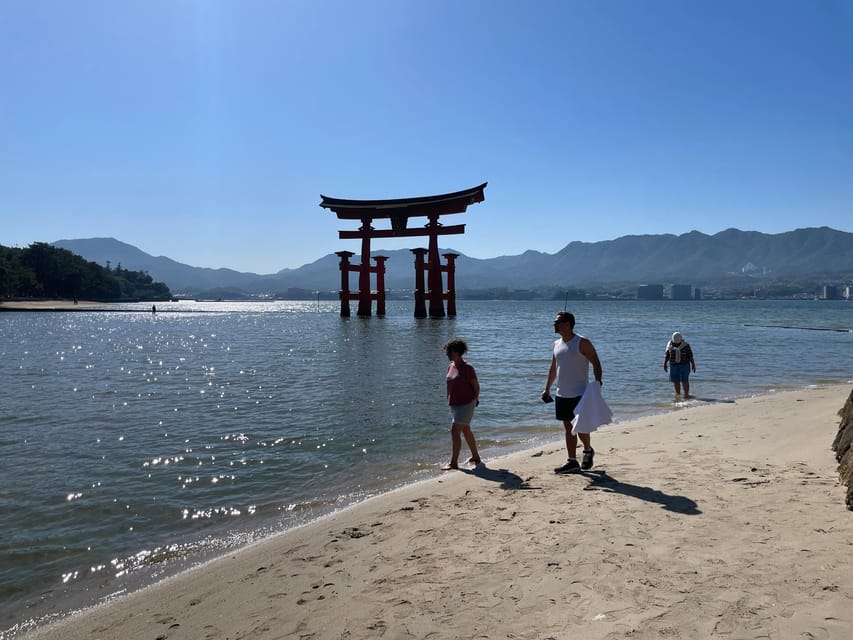
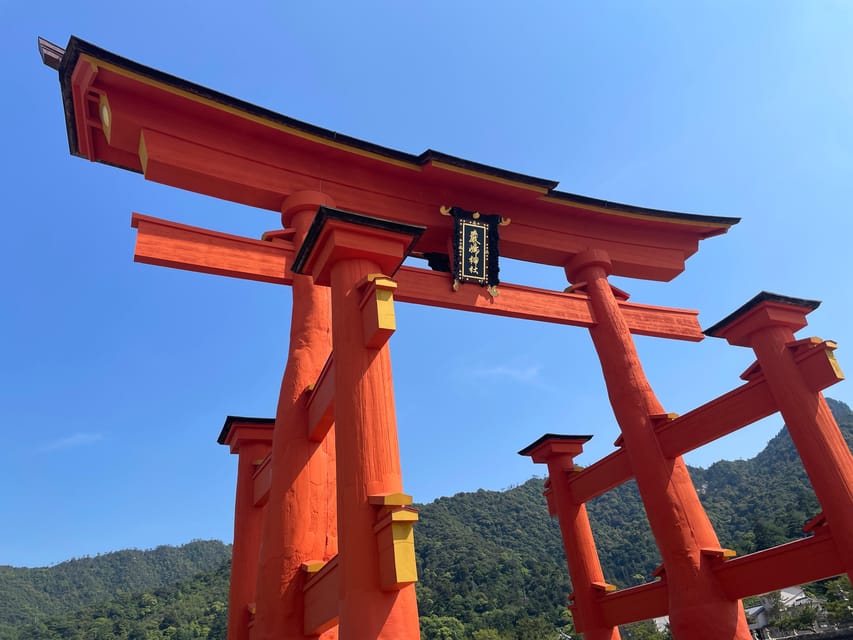
Tide times matter. At high tide, the famous torii appears to float offshore. At low tide, you may be able to walk closer to it. The tour can change its order to improve your chance of seeing the gate in the condition you prefer, but tides and departure times limit what is possible.
Your guide can explain the shrine’s symbolism and customs as you walk. That is useful because the beauty of the site can otherwise distract you from its religious purpose. You will have a guided visit of about 20 minutes at the shrine, plus time for views and photographs.
Miyajima’s deer add a lighter note, though you should treat them as wild animals rather than pets. The island also has plenty of shops, food counters, and narrow streets where you can sample regional specialties.
Itsukushima Shrine and the island’s temples
The floating torii is scheduled as a photo stop and guided explanation. Allow your guide to handle the timing advice, since the best angle depends on tide, weather, and crowds. The gate is famous, but the shrine itself deserves more attention than a quick photograph.
Daisho-in, a major Buddhist temple complex, receives about 30 minutes. It offers a useful contrast with the Shinto shrine. You will see religious details, statues, and quiet corners that reward a slower eye. The guide helps explain what you are looking at rather than leaving you to guess at the meaning of each feature.
Senjokaku Pavilion is another short stop, with time for photographs and a guide explanation. The broad wooden space and nearby pagoda provide a different view of Miyajima’s religious center.
The schedule gives you about 20 minutes at Miyajima before the torii and shrine visits, then another half hour at Daisho-in and a short pavilion stop. That is enough for an introduction, not a thorough island exploration. You will not have much time for a long walk toward the mountain or an extended temple visit.
Lunch on Omotesando Street
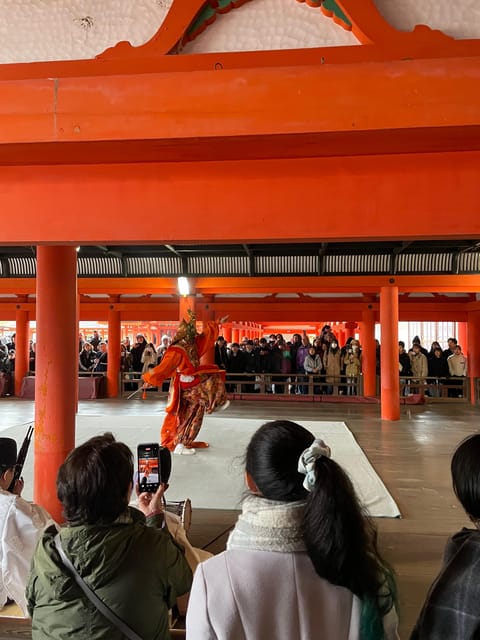
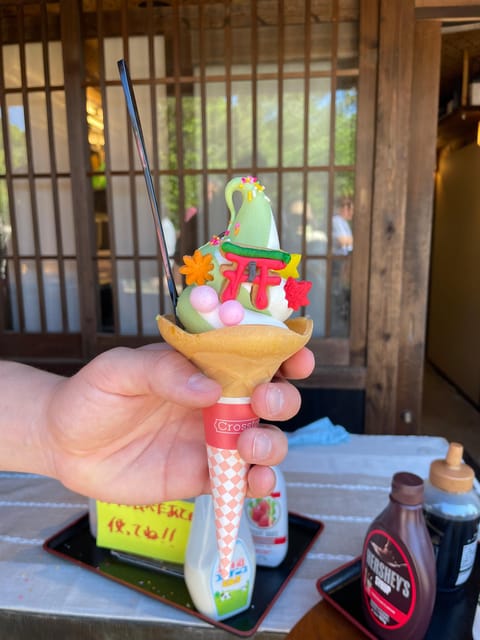
Miyajima Omotesando Shopping Street is where the day shifts from sacred places to local food and shopping. The itinerary allows about 90 minutes for lunch, street food, regional dishes, and browsing.
You might try oysters, eel, beef, or momiji manju, a small maple-leaf-shaped cake associated with Miyajima. The exact meal is your choice and food is not included, so tell your guide what you want to taste and how much time you want to spend eating.
This is one of the tour’s more useful flexible sections. Some people want a proper meal. Others prefer several small snacks and photographs. Your guide can point you toward local specialties and help with the practical side of ordering.
The tradeoff is that the shopping street can become a time trap. If you want a relaxed shrine visit and a full lunch, you may need to skip one of the shorter city stops later. A private guide can help make that call.
Same base, a different sort of day:
- Hiroshima Historical Walking Tour – Why A-Bomb was Dropped
★ 4.8 · 893 reviews - Hiroshima Peace (Heiwa) Walking Tour at World Heritage Sites
★ 5.0 · 872 reviews - Hiroshima in a Nutshell: Morning Bike Adventure
★ 5.0 · 524 reviews - Hiroshima City 4hr Private Walking Tour with Licensed Guide
★ 5.0 · 437 reviews
Returning to Hiroshima by public transport
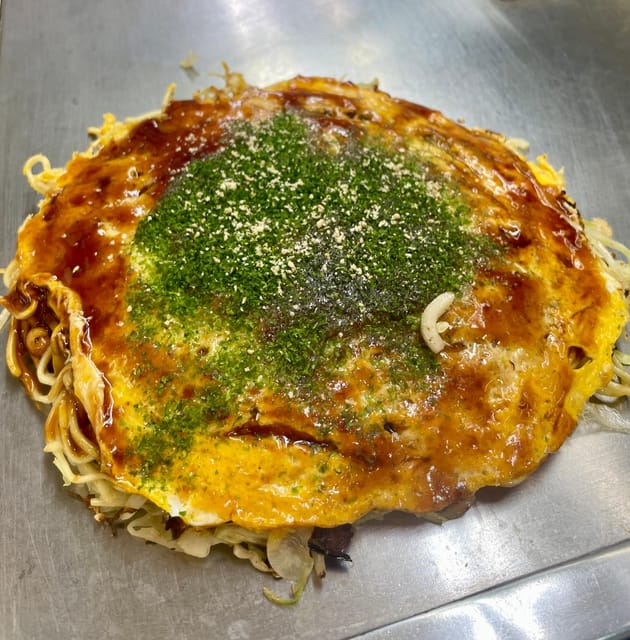
After Miyajima, the tour returns by ferry, then continues by tram for about 45 minutes. Depending on your departure point, tide conditions, and preferences, the guide may adjust the transport plan or use a taxi.
Some routes use a different boat or a faster return to the Peace Memorial area. That can be helpful for older adults, families, or anyone tiring after several hours of walking. One particularly practical feature is the guide’s willingness to change the transport plan when a guest has limited mobility.
You pay transportation costs separately. This includes trains, ferries, trams, buses, and taxis as needed. Your own rail pass or transit card may cover some journeys, but the tour price itself does not include these fares.
This is not a private vehicle tour. You will use Hiroshima’s public transport and walk between sights. That gives you a more local sense of the city, but it also means stairs, platforms, boarding times, and crowded services can shape the day.
Shukkei-en Garden and Hiroshima Castle
The city portion can include Shukkei-en Garden, with about 30 minutes for a visit and guided walk. The garden offers a calm pause before the heavier memorial sites. Its ponds, bridges, plants, and carefully arranged views show a quieter side of Hiroshima.
Entry to Shukkei-en is included. If you enjoy gardens, you may want to give it more time than the standard schedule allows. If your main purpose is Hiroshima’s wartime history, this is one of the stops that could be shortened.
Hiroshima Castle follows as a photo stop and short visit of about 15 minutes. One guest specifically requested the castle and had it added to the route. That is a good example of how the private format works: you can ask for a cultural or historical stop that matters to you, then accept less time elsewhere.
The short castle visit is best treated as an exterior look and an orientation stop. You should not expect a full museum visit within the standard seven-hour plan.
The Atomic Bomb Dome and the hypocenter
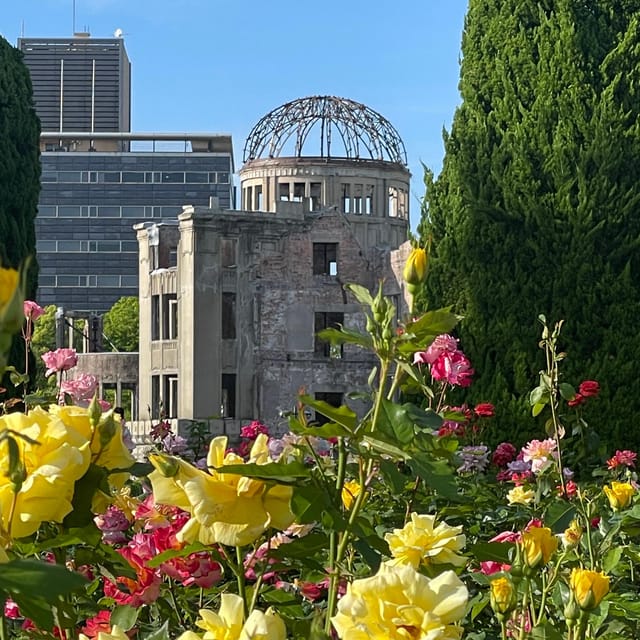
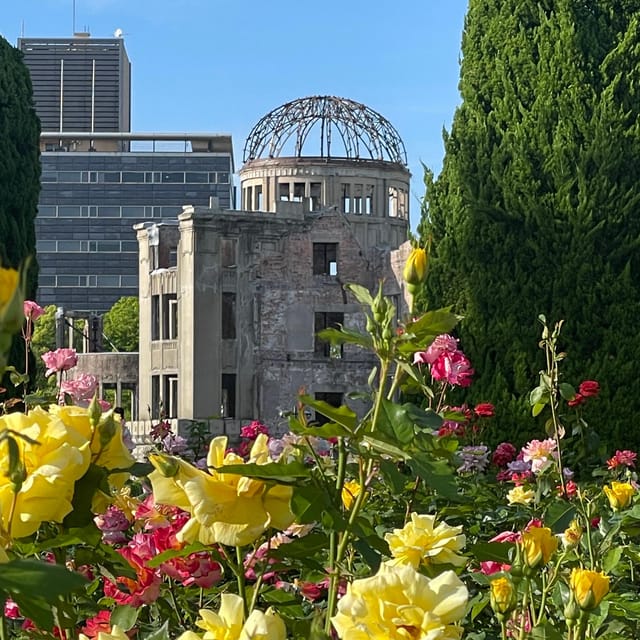
The Atomic Bomb Dome is one of the day’s most important stops. The tour allows about 15 minutes for photographs and explanation, followed by a 10-minute stop at the hypocenter.
The Dome’s damaged structure is familiar from photographs, but seeing it beside the modern city changes its impact. The guide can place the building within the wider story of Hiroshima and explain how the surrounding area was transformed.
The hypocenter stop is shorter and less dramatic visually. That is precisely why it can be easy to miss without a guide. You may find the marker on an ordinary city street, where daily life continues around a site of enormous historical importance.
These brief stops work best when you have already decided how much emotional detail you want. The subject is painful, and a private guide can adjust the conversation. You can ask questions, keep the explanation factual, or allow more room for personal family stories.
Peace Memorial Park, the Children’s Monument, and the museum
Peace Memorial Park gives you about 30 minutes for a guided visit and photographs. The Children’s Peace Monument is included as another stop. Your guide can explain the monument’s connection to the children affected by the bombing and the message of peace it carries.
The Peace Memorial Museum receives about an hour. Admission is included, and the tour is designed to skip the ticket line. The museum is sobering, direct, and not a place to rush through casually.
A guide can help you understand the basic sequence of events and answer questions afterward. Still, the museum itself contains dense material, and a busy day can make one hour feel short. One practical option is to visit the museum independently for a longer period, then use the private guide for Miyajima and the outdoor memorial sites. Another option is to let the guide accompany you through the museum if you want context as you go.
The museum is closed from February 16 through February 21 for renewal. Check the date carefully before booking. If it is closed during your visit, the rest of the Hiroshima memorial route can still be covered, but the included museum visit will not be available.
Personal stories without losing historical balance
The strongest reason to choose this tour is the guide’s connection to Hiroshima. Masayo’s family includes atomic bomb survivors, and other guides share stories passed down through Hiroshima families. These accounts can make the history feel immediate without turning the experience into a performance.
You should know that personal testimony changes the tone of the day. This is not only an architecture and sightseeing tour. You may hear about loss, recovery, fear, and the way memories have been carried across generations.
At its best, the guide gives you both the public record and the local human view. You can ask how Hiroshima rebuilt, how Japanese families remember the bombing, and how the city presents its message of peace today. The private setting also gives you space to pause rather than keep up with a large group.
This part is especially useful if you want more than dates and names. It is also the reason I would not book this tour simply to collect photographs. The memorial portion asks for attention and respect.
Is $177 per person a fair price?
At $177 per person, this is not the cheapest way to see Hiroshima and Miyajima. You still pay separately for trains, ferries, trams, buses, taxis, food, drinks, the Miyajima visitor tax, and optional workshops.
The value comes from the private guide rather than included transport. You receive roughly seven hours of one-to-one or small-group attention, pickup on foot, planning help, photography, museum admission, and Shukkei-en admission. The guide also handles route changes and keeps you from losing time at stations or ferry points.
For two people, the cost can make sense if you want a custom day and personal historical context. Families and small groups may find the private format especially worthwhile because you can set the pace around children or older relatives.
If you are comfortable with public transport, have plenty of time, and prefer to explore independently, you can visit the main sites for less. Pay for this tour when the guide’s local perspective, planning support, and family stories are central to what you want.
Who should book this private Hiroshima tour?
I would choose it for a first visit to Hiroshima when you want Miyajima and the memorial sites in one day. It also suits anyone who wants to ask questions freely, eat local food, and adjust the route as the day develops.
It is a good match for families, older adults, couples, and anyone who feels uncertain about Japanese trains, ferries, and trams. Wheelchair access is available, but you must notify the operator in advance so the route can be planned properly.
You should think twice if you want a slow temple day, a long museum visit, or several hours of shopping. The seven-hour format covers a great deal, and some people may prefer to split Miyajima and Hiroshima over two days.
The tour is available in English or Japanese. Pickup is on foot from listed central locations, and another central Hiroshima hotel or Airbnb may be possible if arranged in advance. Cruise-port pickup can be arranged, but transportation to and from the port by taxi is not included.
Final recommendation
Book this tour if you want Hiroshima explained by someone who lives there, not simply pointed out on a map. The combination of Itsukushima Shrine, Daisho-in, local food, the A-Bomb Dome, Peace Memorial Park, and the museum gives you a strong first look at both Miyajima and Hiroshima.
Choose a slower or self-guided plan if you want to linger at every site. For most first-time visitors with only one day, the private format earns its price through flexibility, navigation help, and the personal family history that gives the memorial visit its lasting weight.
FAQ
How long does the Hiroshima and Miyajima tour last?
The tour lasts seven hours, including travel between Hiroshima, Miyajima, and the city sights.
What places are included on Miyajima?
The route includes Miyajima Island, the floating Itsukushima torii gate, Itsukushima Shrine, Daisho-in Temple, Senjokaku Pavilion, and Omotesando Shopping Street.
Does the tour visit the Peace Memorial Museum?
Yes. The Peace Memorial Museum is included, with entry tickets and about one hour scheduled for the visit. It is closed from February 16 through February 21 for renewal.
Is transportation included in the $177 price?
No. Train, ferry, tram, bus, and taxi fares are not included. You are also responsible for the Miyajima visitor tax.
Is food included?
No. Lunch, drinks, street food, and regional specialties are purchased separately. The itinerary allows about 90 minutes for lunch and shopping on Omotesando Street.
Can the itinerary be changed?
Yes. The itinerary is private and can be adjusted around your interests, pace, tide conditions, departure point, weather, and mobility needs. Hiroshima Castle and other requests can be discussed in advance.
Where can pickup take place?
Pickup is available on foot from listed hotels, Hiroshima Station, the Peace Memorial Museum, the cruise terminal, and other listed central locations. If your hotel or Airbnb is not listed, you can request pickup if you are in central Hiroshima City.
Is the tour wheelchair accessible?
Yes, but you must notify the operator in advance so the route and transportation can be arranged appropriately.
What languages are available?
The tour is offered in English and Japanese, with a live local guide.
Just added in Hiroshima
- Iya Valley BROMPTON Slow Cycling Tour★ 5.0 · 28 reviews
- Iya Valley All Must-Sees Private Chauffeur Full-day Tour with a Driver★ 5.0 · 20 reviews
- Shore Excursion from Hiroshima Port : Private Tour in Hiroshima★ 5.0 · 17 reviews
- Hiroshima & Miyajima All-Inclusive Tour w/Licensed guide Pancho★ 5.0 · 54 reviews
- The Peace Memorial to Miyajima : Icons of Peace and Beauty★ 4.5 · 31 reviews
- Okunoshima Rabbit Island Cycling Tour with Local Guide★ 4.5 · 17 reviews
- Private Full Day Hiroshima Tour★ 4.5 · 29 reviews
- Hiroshima Saijo Sake Tasting Tour with visit to 7 Breweries★ 5.0 · 104 reviews
Hiroshima & Miyajima Day Trips, compared.
Peaceful Hiroshima & Miyajima UNESCO 1 Day Bus Tour
Read our review →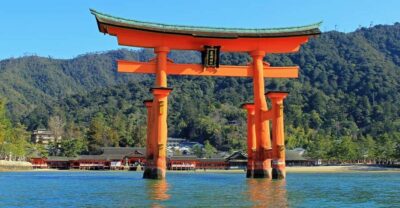
Hiroshima and Miyajima UNESCO Sites 1-Day Tour
Read our review →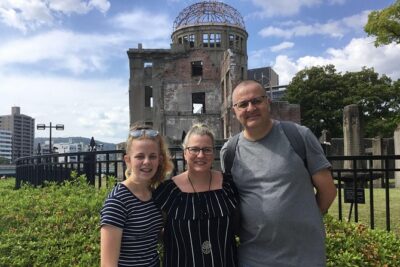
Hiroshima / Miyajima Full-day Private Tour with Government Licensed Guide
Read our review →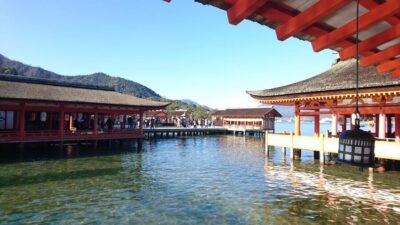
Osaka/Kyoto: Hiroshima Miyajima Bus Tour & Shinkansen Ticket
Read our review →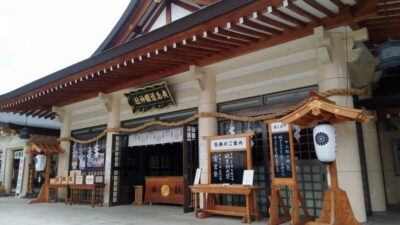
Hiroshima Historical Walking Tour – Why A-Bomb was Dropped
Read our review →
Hiroshima Peace (Heiwa) Walking Tour at World Heritage Sites
Read our review →
Hiroshima in a Nutshell: Morning Bike Adventure
Read our review →
Hiroshima City 4hr Private Walking Tour with Licensed Guide
Read our review →Browse the lists this tour appears in