
Reviewed · WHISKY TASTINGS
Japanese Whisky Hunting《HIGH-QUALITY-ONLY》Rare Tasting Class
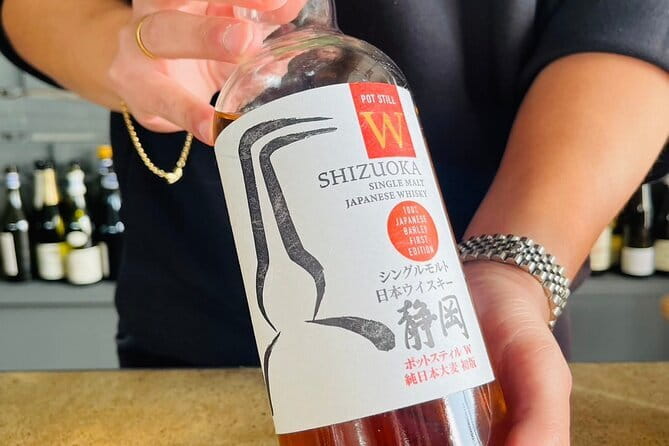
Japanese Whisky Hunting is less a formal lecture than a friendly tasting at a private-feeling meeting spot near Yoyogi-Uehara Station. You work through about 10 Japanese whiskies, with the host choosing bottles based on your taste and explaining how Japanese whisky developed and where the current brands fit.
I like the careful pouring order and the way snacks and small sweets are used between glasses. I also like the personal touch: hosts such as Dan, Shugo, Yukata, and Hayato have been praised for adjusting the selection, answering questions, and helping with photos. The main consideration is that the experience is built around alcohol, and the small group often sells out.
Key points at a glance
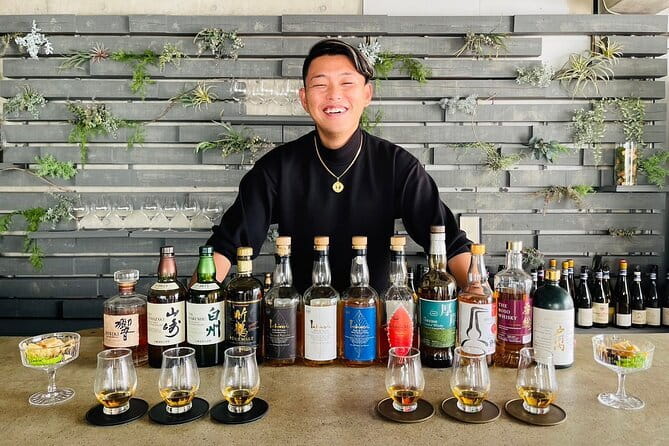
- About 10 Japanese whiskies: Bottles are selected from across Japan and may change with the market and available stock.
- Tasting shaped around you: Hosts can adjust the pours to your preferences rather than forcing every person through the same fixed list.
- Yoyogi-Uehara location: The meeting point is about 10 seconds from the station, and roughly 10 minutes from Shinjuku and Shibuya.
- Small-group format: The activity is intended for up to four people, with a maximum of six.
- Food with the whisky: Brunch-style Japanese snacks and small desserts help you compare flavors without tasting on an empty stomach.
- Extras included: Bottled water, a free soft drink, photos during the activity, and a surprise souvenir are part of the package.
Why this Tokyo whisky tasting is different
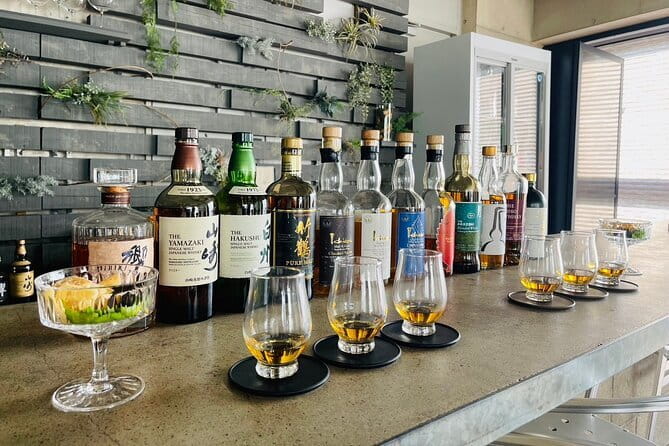
Many city tastings are built around a fixed flight and a short explanation of each bottle. This one has a looser, more social shape. You sit with a host who loves Japanese culture and spirits, then taste through a selection that can change according to your preferences and the stock available at the time.
That matters because Japanese whisky is not one single flavor style. A beginner may prefer a lighter, softer pour, while someone who already drinks whisky may want something smoky, aged, or more unusual. The hosts have been praised for reading the room and changing direction as the tasting develops.
The experience is also small. The stated maximum is six people, but the format is meant to work best with about four. I see that as a real benefit for anyone who wants to ask how a whisky was made, compare two bottles, or admit that a particular pour is not to their taste without holding up a large group.
There is no need to know whisky before you arrive. You can come with a simple preference, such as sweet, smooth, smoky, or strong. You can also arrive with no vocabulary at all and let the host guide you from the first glass.
Other distillery visits near Tokyo:
- 《MEMBERS-ONLY-BAR-HOPPING》Discover Your Special Whiskey in Tokyo!
★ 5.0 · 29 reviews - Luxury Tokyo Sake, Cocktail, Whisky and Pairing Tour
★ 5.0 · 18 reviews - [Otaru & Yoichi] Let’s go to Otaru Canal, Sakaimachi Street, Music Box Hall, and Yoichi Nikka Whiskey by private car (arriving and departing from Sapporo)
★ 5.0 · 21 reviews
Starting beside Yoyogi-Uehara Station
The meeting point is at Yoyogi-Uehara Station, at 3 Chome-8 Nishihara in Shibuya, Tokyo. The activity is described as being about 10 seconds from the station, so this is not a tour that asks you to cross several city blocks while trying to read a phone map.
The location gives you an easy change of pace from central Tokyo. Shinjuku and Shibuya are about 10 minutes away, making it practical to place the tasting before dinner or after a day of sightseeing. You return to the same meeting point at the end, so there is no need to arrange a separate pickup.
Your host may be Dan, Shugo, Yukata, Hayato, or another member of the team. The individual names matter because the tone is personal rather than scripted. Dan has been especially praised for guiding the tasting and offering dinner suggestions afterward. Shugo is noted for shaping the drinks around personal taste, while Yukata has focused on Japanese whisky history and current brands.
The exact host and bottle list are not guaranteed in advance. That is worth accepting before booking. The experience is about discovering what is available and what suits you, not about securing one particular famous bottle.
How the tasting unfolds
The session lasts about two hours. It begins with introductions and a chance to explain what you already like, if anything. You might mention a favorite whisky, a dislike of smoke, or simply ask for something gentle to start.
The first pours are important because they give the host a sense of your palate. From there, the selection can develop in a more personal direction. The stated plan is to offer around 10 types of Japanese whisky collected from across Japan, but the range may change according to professional market conditions and the host’s stock.
That flexibility is one of the strongest parts of the activity. A fixed flight can be efficient, but it may give you several pours that all feel alike. Here, the host can use your reactions to decide what should come next. It also creates more conversation, since you can ask why a certain bottle was chosen or explain what you notice in the glass.
You should not expect a full distillery visit. The activity takes place at the meeting location, and the value comes from the range of pours, the host’s explanations, and the chance to compare styles in one sitting. If you want a production tour with mash, stills, and warehouse details, this is not that kind of outing.
Understanding Japanese whisky without a classroom lecture

The hosts explain the story of Japanese whisky, along with current brands and the way the category is viewed today. The amount of detail can follow your interest. You can ask about a label, a region, a style, or how Japanese producers differ from better-known whisky traditions.
I like this approach because whisky can become technical very quickly. A long talk about grain bills and maturation can lose a first-time drinker. A casual explanation tied to the glass in front of you is easier to remember.
The activity also helps you separate brand reputation from your own taste. A bottle may be famous, expensive, or hard to find, yet another pour may suit you better. The best outcome is not simply naming the costliest whisky. It is leaving with a clearer idea of what you enjoy and what to search for later.
Several hosts have been praised for being well versed in both the older story of Japanese whisky and its current brands. That balance is useful. You get context, but the experience does not appear to turn into a dry timeline of dates and producers.
Same base, a different sort of day:
- Mt Fuji and Hakone 1-Day Bus Tour Return by Bullet Train
★ 5.0 · 26,383 reviews - 1-Day Tokyo Bus Tour
★ 5.0 · 14,250 reviews - Tokyo: TOKYO SKYTREE® Admission ticket
★ 4.5 · 11,192 reviews - Tokyo: teamLab Planets TOKYO Digital Art Museum Entry Ticket
★ 4.6 · 9,779 reviews
Japanese snacks and sweets between the pours
The package includes brunch-style Japanese snacks and a small Japanese dessert. These are not just decorative extras. Food gives you a pause between drinks and lets you notice how a whisky changes alongside something salty, savory, or sweet.
The tasting is designed around pairing. The snacks may be matched to particular pours, and the order of the whisky can be arranged with those pairings in mind. One particularly well-regarded aspect is the thoughtful progression from glass to glass, with food helping each stage feel distinct.
You should still eat properly before or after the activity. The included food is described as snacks and small dessert, not a full dinner. If you plan to continue drinking afterward, use the water and soft drink provided, and arrange your evening at a comfortable pace.
Bottled water and a free soft drink are included as chasers. That is a practical touch, especially when you are tasting around 10 whiskies in two hours. You can slow down, cleanse your palate, and avoid treating every glass as something to finish quickly.
What the small group means for you
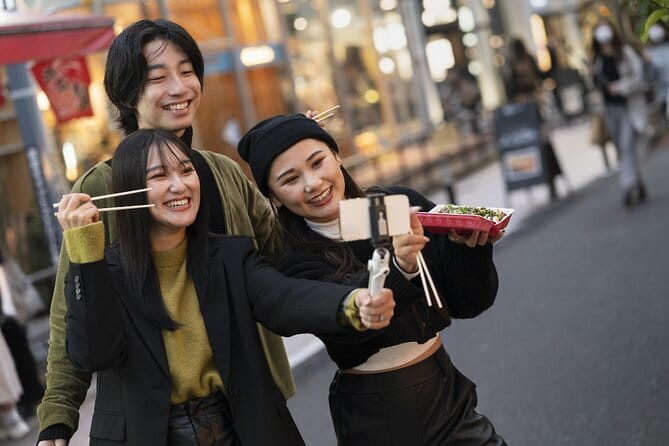
The activity is designed for a maximum of six people, though the host says the preferred small-group size is up to four. The smaller number lets you speak directly with the host and makes it easier to compare impressions with the people beside you.
This is a good match for couples, friends, and solo visitors who enjoy conversation. You do not have to be an expert or a serious collector. The hosts welcome questions, and the relaxed setting appears to be as important as the alcohol itself.
The tradeoff is availability. A four-person target means popular time slots can fill quickly, particularly since the activity has been booked repeatedly. If you want a specific date, book ahead rather than assuming you can decide at the last minute.
You may share the session with other people. That can add energy to the tasting, but it also means the experience is not guaranteed to be a private appointment unless the booking arrangement confirms that.
Meeting hosts who make the tasting personal
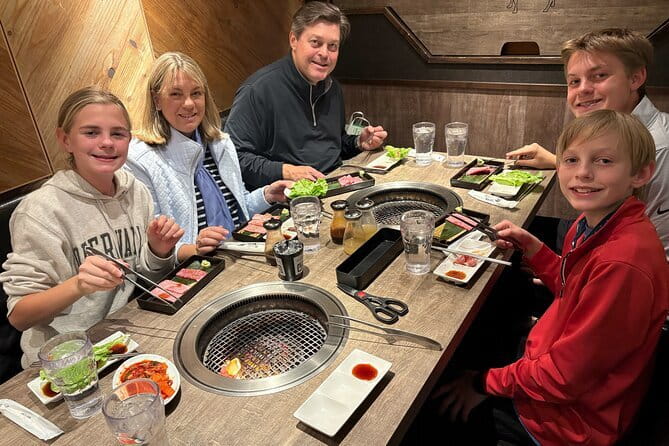
The host is central to the value here. A good bottle list helps, but the activity works because someone guides the pace and explains what you are drinking.
Dan has received praise for presenting a broad range, explaining Japanese whisky history and current brands, and helping people discover new favorites. He has also offered dinner suggestions at the end, which can be useful if you are staying in the area and want to keep the evening going.
Shugo has been noted for adjusting the whisky to individual preferences and creating an easy conversation about Japanese culture. Yukata has been described as prompt and helpful, with clear explanations of the category’s past and present. Hayato has offered a balance between giving direction and allowing people to explore their own preferences.
These details point to a host-led experience rather than a one-size-fits-all presentation. Still, the exact personality and teaching style will depend on who leads your session. If you want a particular host, ask the provider before booking, but do not assume a named host is guaranteed.
The team also offers photo help during the activity. You can ask the host to take pictures, which saves you from trying to photograph a glass, a snack, and your companions at the same time.
Is $110.62 a fair price?
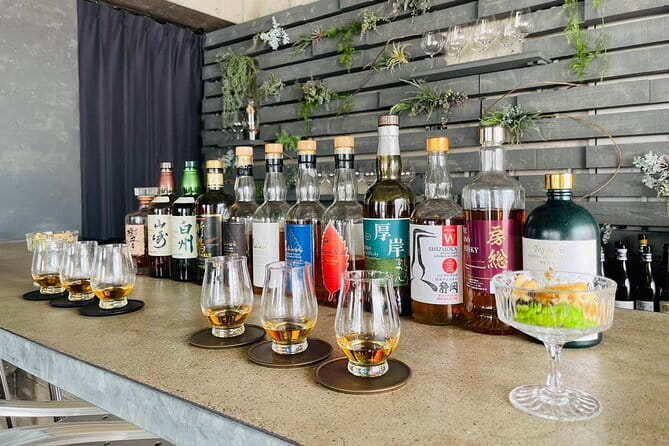
At $110.62 per person, this is not a cheap bar stop. The price makes more sense if you plan to use the two hours well: tasting a wide range of Japanese whisky, asking questions, eating the included snacks, and learning which bottles fit your palate.
The package includes around 10 whisky pours, Japanese snacks, a small dessert, bottled water, a soft drink, photos, and a surprise souvenir. It also includes the benefit of a host who can adjust the sequence rather than leaving you to order random glasses in a bar.
For a person who only wants one drink, the price will feel high. For someone interested in Japanese whisky but unsure how to choose among unfamiliar labels, the guided comparison can be better value than buying several full bottles or ordering expensive individual pours without context.
The souvenir adds a pleasant final touch, though the details are not specified. Think of it as a small extra rather than the reason to book. The main value is the tasting and the conversation.
Group discounts are available, but the exact savings are not stated. If you are going with several people, check the current booking price before assuming the discount amount.
Practical details before you book
The activity is near public transportation and ends where it begins. There is no air-conditioned vehicle because transportation is not part of the experience. You make your own way to Yoyogi-Uehara Station.
Confirmation is sent at booking, and a mobile ticket is available. Most people can participate. The provider also states that babysitting may be arranged for an extra fee, with staff who include licensed babysitters and people with overseas and group-home experience. You should contact the provider directly if you need that service, since it is not included in the listed price.
The experience requires good weather and a minimum number of participants. If poor weather or low enrollment causes a cancellation, you can choose another date or receive a full refund.
You may cancel for a full refund up to 24 hours before the start time. Changes or cancellations inside that 24-hour window are not accepted for a refund. The deadline uses Tokyo local time, so check the clock carefully if you are booking from another country.
The practical issue I would watch most closely is the alcohol. Around 10 tastings can add up, even when the pours are small. Plan your evening around the session, use the included water, and avoid scheduling something that demands sharp concentration immediately afterward.
Who will enjoy Japanese Whisky Hunting most?
I would choose this for you if Japanese whisky is a main interest, or if you want an introduction that feels social rather than formal. It is also a good fit if you like asking questions and comparing impressions as you taste.
Couples may enjoy the way the host can adjust the selection to two different palates. A group of friends can use the activity to start an evening in Tokyo, especially with Shibuya or Shinjuku only about 10 minutes away.
It is less suitable if you do not drink alcohol, want a full meal, or expect a distillery tour. It may also disappoint someone who wants a fixed list of exact bottles guaranteed in advance. The selection changes with stock and professional market conditions.
Families with children can ask about paid babysitting, but the tasting itself remains an alcohol-focused activity. If one person in your party does not drink, confirm with the provider how that person would be accommodated before paying.
Should you book it?
Book Japanese Whisky Hunting if you want a personal tasting with a flexible bottle list, local snacks, and plenty of time to talk. The strongest reasons are the small group, the host-led selection, the thoughtful order of the pours, and the chance to find bottles you might later seek out at home.
I would skip it if your priority is a large public tour, a full dinner, or a visit to a working distillery. I would also think twice if $110.62 feels steep for an evening built around tasting rather than sightseeing.
For the right person, this is a useful Tokyo introduction to Japanese whisky. You leave with more than a few drinks in you. You leave with a better sense of what you like, some local food memories, photos, and a souvenir to carry home.
FAQ
Where does the Japanese Whisky Hunting experience meet?
It meets at Yoyogi-Uehara Station, at 3 Chome-8 Nishihara, Shibuya, Tokyo 151-0066, Japan. The location is described as about 10 seconds from the station.
How long does the activity last?
The tasting lasts approximately two hours.
How many people can join?
The activity can accommodate up to six people. The host aims to keep the tasting especially small, often with up to four people.
How many Japanese whiskies will I taste?
The package includes around 10 types of Japanese whisky. The exact selection can change based on available stock and professional market conditions.
Are food and nonalcoholic drinks included?
Yes. Japanese snacks, a small Japanese dessert, bottled water, and a free soft drink are included.
Which hosts may lead the tasting?
Hosts named in the experience information include Dan, Shugo, Yukata, and Hayato. The specific host may vary.
Does the activity include transportation?
No. Transportation and an air-conditioned vehicle are not included. You make your own way to the meeting point, and the activity ends there.
Can I cancel for a refund?
You can cancel up to 24 hours before the start time for a full refund. Cancellations or changes made less than 24 hours before the start are not refunded.
Just added in Tokyo
- Nikko: Edo Wonderland Edomura Cultural Theme Park Ticket★ 4.3 · 205 reviews
- 《MEMBERS-ONLY-BAR-HOPPING》Discover Your Special Whiskey in Tokyo!★ 5.0 · 29 reviews
- Luxury Tokyo Sake, Cocktail, Whisky and Pairing Tour★ 5.0 · 18 reviews
- Wagyu & Sake Pairing in Shinjuku – Steak, Shabu-Shabu & More★ 5.0 · 112 reviews
- Small-Group Wagyu Beef and 7 Japanese Dishes Tokyo Cooking Class★ 5.0 · 190 reviews
- From Tokyo: Private Tour to Fuji/Hakone – Onsen, Art, Nature★ 5.0 · 116 reviews
- Tokyo: KABUKI Show at Kabukiza Theatre Admission Ticket★ 4.8 · 152 reviews
- Tokyo: KABUKI, BUNRAKU, etc. presented by National Theatre★ 4.6 · 135 reviews
Whisky Tastings, compared.
《MEMBERS-ONLY-BAR-HOPPING》Discover Your Special Whiskey in Tokyo!
Read our review →![[Otaru & Yoichi] Let’s go to Otaru Canal, Sakaimachi Street, Music Box Hall, and Yoichi Nikka Whiskey by private car (arriving and departing from Sapporo)](https://assets.japanesetravels.com/wp-content/uploads/otaru-yoichi-let-s-go-to-otaru-canal-sakaimachi-street-music-box-hall-and-yoichi-nikka-whiskey-by-private-car-arriving-and-departing-from-sapporo-400x266.jpg)
Luxury Tokyo Sake, Cocktail, Whisky and Pairing Tour
Read our review →Browse the lists this tour appears in