
Reviewed · FUSHIMI INARI TOURS
Kyoto: Half-day Guided Bike Tour with Fushimi Inari
South Kyoto is made for two wheels. This tour links major temples with Gion backstreets, canal paths, and riverside riding, so you see more than a string of famous gates and photo stops. The grand finale is Fushimi Inari, where you leave the bike for a walk beneath its famous orange torii gates.
I like the small group limit of eight and the gentle pace. I also like the mix of major sights and quieter neighborhood riding, especially the route beside the Takase Canal and Kamo River. The main drawback is that this is still an active outing: you may cover more than 15 kilometers, and it is not suitable if you cannot ride comfortably or have back problems.
Key points to know
- Fushimi Inari comes near the end, when you explore the torii gates on foot rather than trying to cycle through the shrine.
- The route covers more than temples, with Gion lanes, the Takase Canal, the Kamo River, and local streets.
- Small groups make a difference, with a maximum of eight people and room for the guide to adjust the pace.
- The bikes are well maintained, with several sizes and helmets available.
- English-speaking guides bring different strengths, including Jay, Julian, Indra, Sean, Juan, and Mayco.
- An e-bike upgrade costs 3,000 yen, a useful option if you want help with the longer ride.
Why this South Kyoto bike route works
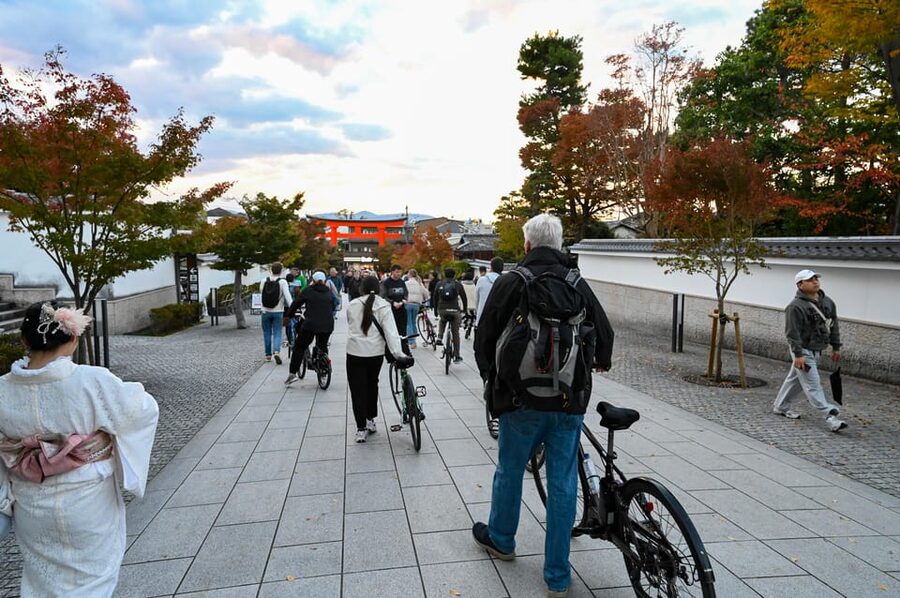
Kyoto has a familiar problem: its best-known sights are spread across the city, while buses and trains can leave you walking through crowded streets. A bicycle gives you a more direct way to connect them. You move from temple grounds to canals, from a geisha district to ordinary residential streets, without spending half the morning waiting for transport.
This is not a race. The published plan includes a 15-minute safety briefing, guided visits, photo stops, and short pauses beside the water. The schedule totals roughly three and a half hours, making it a practical morning or afternoon activity rather than a full-day commitment.
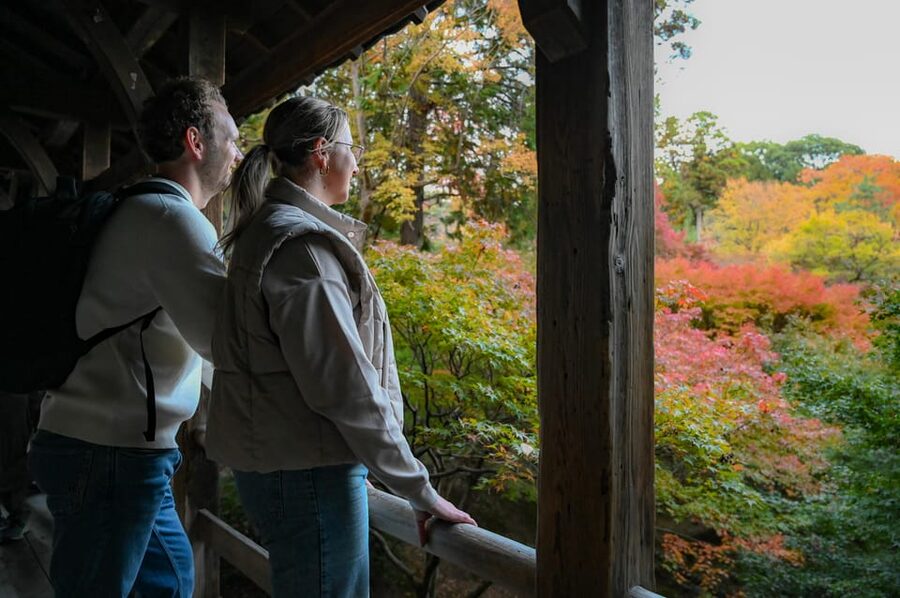
The route also gives you a useful first look at how Kyoto fits together. Toji and Higashi-Honganji introduce the city’s major Buddhist temples. Gion shows you a more refined historic district. Tofukuji brings a quieter temple setting, and Fushimi Inari supplies the instantly recognizable Kyoto image.
The 4.9 rating from 21 bookings reflects a clear pattern: guides are a major part of the experience. Jay is praised for making people feel comfortable while sharing local culture, Julian for keeping the mood easy when the weather turned poor, Indra for answering questions and pointing out less crowded places, and Sean for adjusting the time spent at each stop. Juan and Mayco also receive specific praise for their friendly, informed guiding.
That does not mean every departure will feel identical. Your guide affects the rhythm, depth, and personality of the ride. The common thread is an English-speaking leader who handles the route and explains what you are seeing.
Other cycling tours in Kyoto people book:
- Bike Tour Exploring North Kyoto plus Lunch
★ 5.0 · 1,087 reviews - Arashiyama Bamboo Forest & Hidden Gems Bike Tour (Early Bird)
★ 5.0 · 613 reviews - 5 Top Highlights of Kyoto Full Day Bike Tour (E-bike option)
★ 5.0 · 511 reviews
Starting near Kyoto Station and getting settled
The meeting point is at Cycle Kyoto, a short walk from Kyoto JR Station. From the station, go past Avanti, cross one set of traffic lights, pass the Daily Yamazaki convenience store, and take the next left.
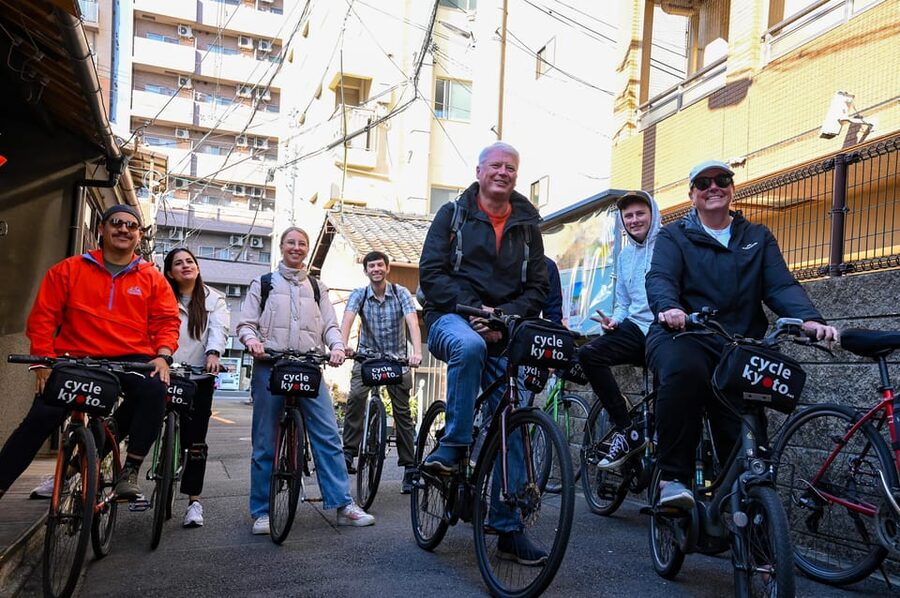
Allow enough time to find the shop without rushing. The first 15 minutes are set aside for a safety briefing, which is useful in a city where you will share roads and paths with other people. You receive a bicycle, helmet, and water, plus a small pouch on the bicycle for personal items.
Wear clothing that lets you pedal freely and shoes that will not trouble you after several hours. Sunscreen matters on clear days, while warm layers are useful in cooler weather. Check the forecast before you go, since rain and temperature can change the feel of a bicycle tour quickly.
The standard bikes suit people who already ride with confidence. E-bikes are available by request for an additional 3,000 yen. If you are unsure about the distance, the upgrade may be worth considering, especially if you want to save energy for the temple visits and Fushimi Inari walk.
Toji: a strong opening at Kyoto’s oldest temple
The first major stop is Toji, described as Kyoto’s oldest temple and a UNESCO World Heritage site. The tour gives you about 35 minutes here, enough for a guided introduction and a proper look around rather than a quick pass by the entrance.
Toji works well at the start because it immediately gives you a sense of Kyoto’s religious scale. This is not just a small neighborhood shrine. It is one of the city’s major temple sites, and the guide can help you understand what you are looking at instead of leaving you to guess from a signboard.
You should think of this stop as an orientation to Kyoto’s temple culture. The tour does not give you unlimited time, so anyone wanting a very slow visit or extended photography may find the schedule brisk. Still, the guided 35-minute visit gives the temple a useful place in the wider route.
Higashi-Honganji and the scale of central Kyoto
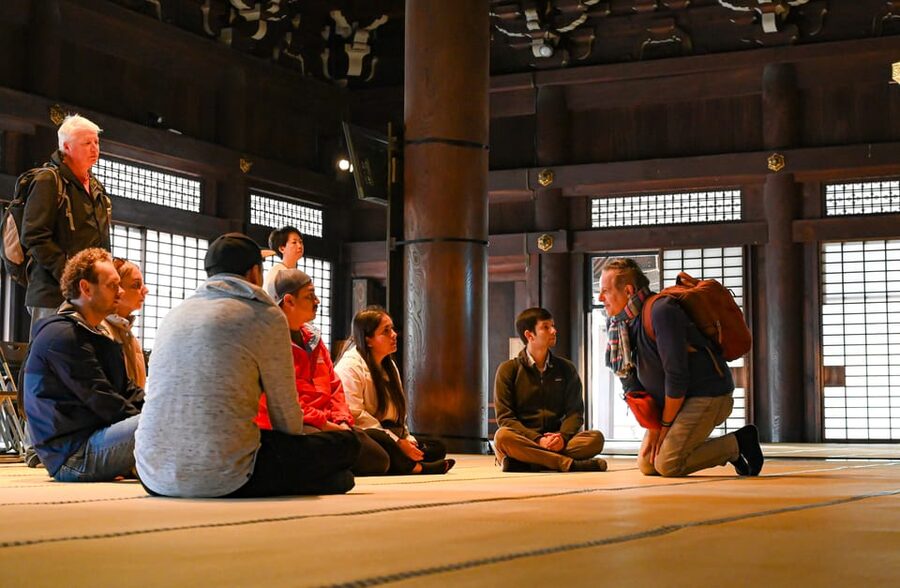
Next comes Higashi-Honganji, one of Japan’s largest temples. The planned visit lasts about 35 minutes, matching Toji for importance and allowing the guide to explain the site without turning the morning into a long lecture.
The contrast with bicycle travel matters here. You arrive after seeing streets at ground level, then step into a major religious complex with a much greater sense of size. For me, that change of pace is one of the route’s strengths. You are not simply collecting photographs. You are moving between different types of Kyoto spaces.
This stop is also convenient early in the tour, while your legs are fresh. Since no meal is included, plan to eat before departure or after returning to Cycle Kyoto. The tour provides water, but not snacks or lunch.
Other shrine walks around Kyoto:
- Kyoto: Fushimi Inari, Kinkakuji, Bamboo Grove 1 Day Bus Tour
★ 4.8 · 4,316 reviews - Fushimi Inari Hidden Hiking Tour (Private Option Available)
★ 5.0 · 1,750 reviews - Kyoto/Osaka: Nara, Fushimi Inari Taisha, Arashiyama Bus Tour
★ 4.7 · 1,275 reviews - Osaka/Kyoto: Arashiyama, Nara & Fushimi Inari Shrine w/Lunch
★ 4.4 · 754 reviews
Following the Takase Canal and Kamo River
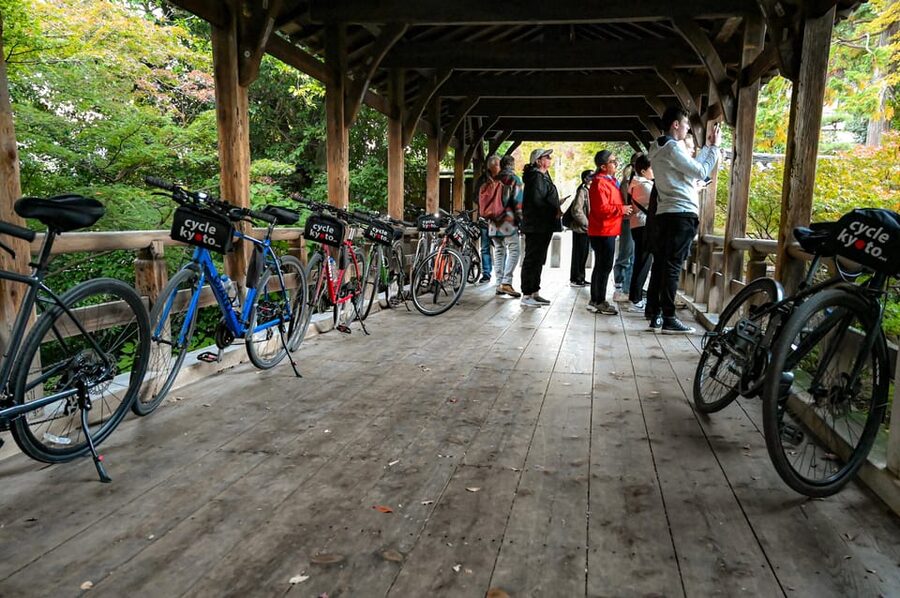
After the central temples, the route follows the Takase Canal for around 10 minutes and then reaches the Kamo River for about 15 minutes. These are short visits, but they prevent the tour from becoming a temple-only circuit.
The canal section adds a quieter, more local feeling. You get a look at Kyoto through its waterways and side streets, not only through formal monuments. Along the Kamo River, the route opens up and gives you a break from enclosed temple grounds and urban traffic.
These sections are also part of the reason the bicycle format makes sense. You are not stopping at the river merely to say you saw it. You are riding along a route that connects one district to another. The water and changing streets become part of the journey.
Do not expect a long riverside picnic or an extended nature stop. The schedule keeps moving. The reward is variety and a better sense of the city’s layout.
Gion by bicycle, not just by postcard
The tour then enters Gion, Kyoto’s famous geisha and teahouse district, for about 30 minutes. The focus is on backstreets rather than a rushed stop at one famous corner.
Gion is best approached with care and attention. Quiet lanes, traditional buildings, and narrow streets create a very different mood from the larger temple grounds. A guide helps you understand the area’s role in Kyoto and keeps the visit focused, since it is easy to wander without knowing what you are seeing.
Cycling through Gion is a highlight, but it requires sensible behavior. Follow your guide, ride at the agreed pace, and be respectful around homes, businesses, and people going about their day. The tour’s small size should make that easier than joining a large group.
This is one of the places where the route feels more personal than a standard sightseeing loop. You get movement through the district instead of only a photo stop. At the same time, this part is not a private tour of geisha culture, and the experience remains a short guided pass through the neighborhood.
Tofukuji brings a quieter temple pause
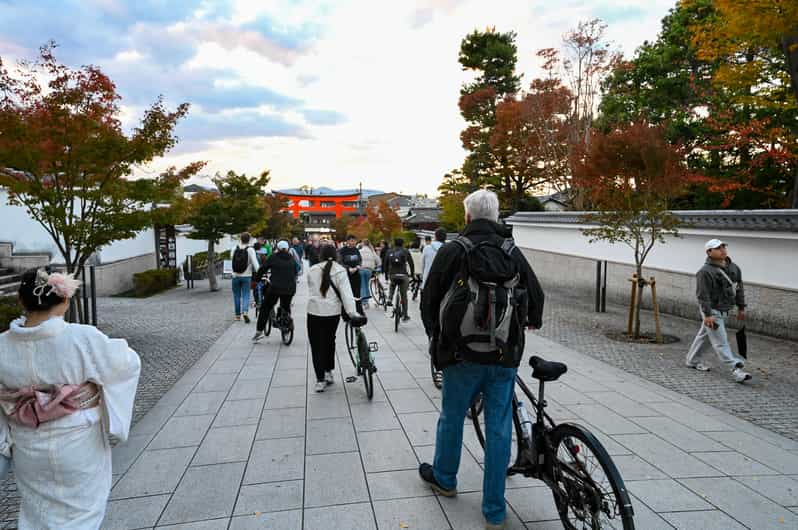
Tofukuji is scheduled as a 30-minute photo stop. That wording gives you a useful clue about the pace. You will have time to admire the temple and take pictures, but not to explore every corner at length.
The setting provides a welcome change after the streets of Gion. Tofukuji is known for its strong visual appeal, and the stop lets you pause before the final ride to Fushimi Inari. Your guide may add context, but the purpose here is mainly to look, photograph, and reset.
I like this kind of stop on a half-day tour. It gives you a clear memory of the place without pretending you have seen the whole complex. If Tofukuji is a top priority for you, you may want to return independently with more time. On this route, it works as a well-placed visual break.
Fushimi Inari and the orange torii gates
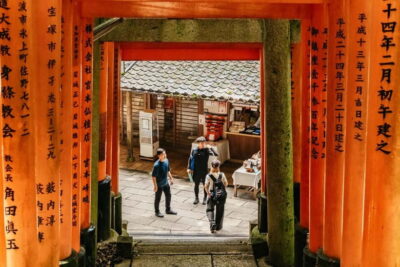
The last major stop is Fushimi Inari Taisha, with about 45 minutes for a guided visit. This is the longest stop on the route, and it needs the time. The famous orange torii gates are not a single doorway. They form a path through the shrine grounds, and the tour includes a walk around the best-known section.
You leave the bicycle behind for this part. That matters because the gates are made for walking, not riding. Expect people and a popular atmosphere, particularly at a site described as Japan’s most visited attraction. The guide can help you make the most of the available time, but 45 minutes is still a short visit compared with a full hike up the mountain.
The strongest reason to end here is simple: Fushimi Inari gives the tour a memorable finish. You have already seen large temples, rivers, old streets, and a historic district. The orange gates provide a final burst of color and a setting unlike the earlier stops.
The limitation is that you will not have time for every trail. If you want to walk far beyond the main torii gate area, plan a separate visit. This tour is designed to introduce you to Fushimi Inari while still returning you to the starting point on schedule.
How much cycling should you expect?
One booking participant recorded more than 15 kilometers of riding, so you should prepare for a real bike ride, not a short pedal between two nearby sights. The pace is described as gentle, and one small group was able to adjust how long it stayed at each stop. That flexibility depends on the day’s group and schedule, but the format leaves some room for the guide to respond to the people riding.
The route is best for someone who can ride comfortably for several hours with regular breaks. You do not need to be a serious cyclist, but you should be happy on a bike in an urban setting.
This activity is not suitable for children under 13, people with back problems, or anyone who cannot ride a bike. Smoking, alcohol, and drugs are not allowed. Comfortable clothing is more useful than dressing for a formal temple visit.
Weather deserves attention. Rain does not automatically cancel the outing, and Julian is credited with making a wet day work well, but conditions will affect comfort and visibility. Bring warm clothing when needed, check the weather before leaving, and remember sunscreen on bright days.
Is $77 a fair price?
At $77 per person, the value depends on how much structure and local explanation you want. You are paying for a bicycle, helmet, water, guide, a small group capped at eight, and a route that connects several places difficult to combine efficiently on foot.
The price looks more reasonable if you would otherwise pay for separate transport between Toji, Gion, Tofukuji, and Fushimi Inari. It also includes the benefit of not planning the route yourself. The guide handles the order and leads you through backstreets and riverside stretches that are easy to miss when you stick to major roads.
It is less compelling for you if you already know Kyoto well, dislike group schedules, or want long visits inside each temple. The tour favors breadth over depth. You see several important areas in one morning or afternoon, but none receives the attention of a dedicated temple tour.
The e-bike costs an extra 3,000 yen. That is not a small add-on, so request it only if the distance, weather, or your own fitness makes the standard bicycle questionable. A comfortable ride is worth more than saving the upgrade fee and spending the final hour tired.
Who should book this tour?
I would choose this for a first or second visit to Kyoto, especially if you want a quick map of South Kyoto and prefer active sightseeing. It suits adults and teenagers aged 13 or older who can ride confidently and enjoy a moderate amount of movement.
It is also a good match if you want a guide who can add cultural context. Jay, Julian, Indra, Sean, Juan, and Mayco are the guides specifically associated with recent departures, and the tone appears to vary from deeply informative to relaxed and humorous. You can expect a human-led experience rather than an audio guide and a fixed script.
I would skip it if your main goal is a slow, detailed visit to Fushimi Inari or Tofukuji. I would also think twice if you have mobility or back concerns, dislike cycling in cities, or want guaranteed dry weather. The tour can work in poor weather, but it cannot remove the discomfort of riding in it.
Free cancellation up to 24 hours before departure and the option to reserve now and pay later make planning easier. The tour is offered in English, and meals are not included.
Should you book the Cycle Kyoto ride?
Book it if you want to cover a lot of South Kyoto without spending the day on buses, and if you like the idea of seeing the city from quiet streets and river routes. The best features are the small group, well-kept bikes, gentle pace, and strong guides, with Fushimi Inari providing a memorable final stop.
Do not book it for a slow temple study tour or a relaxed walk with almost no physical effort. For the right rider, $77 buys a useful mix of major sights, local streets, and practical guidance in about three and a half hours. If you can ride comfortably and want Kyoto to feel like a city rather than a checklist, this is a smart half-day choice.
FAQ
How long does the Kyoto bike tour last?
The tour lasts 210 minutes, or about three and a half hours.
Where does the tour begin and end?
It begins and ends at Cycle Kyoto. From Kyoto JR Station, go past Avanti, cross one set of traffic lights, pass the Daily Yamazaki convenience store, and take the next left.
What sights does the tour visit?
The route includes Toji, Higashi-Honganji Temple, the Takase Canal, the Kamo River, Gion, Tofukuji Temple, and Fushimi Inari Taisha.
Is the tour conducted in English?
Yes. The tour includes a live English-speaking guide.
How many people are in the group?
The group is limited to eight participants.
Are bicycles and helmets included?
Yes. Bicycle rental, a helmet, a guide, and water are included. A small pouch is also provided on the bicycle for personal items.
Can I use an e-bike?
E-bikes are available upon request for an upgrade fee of 3,000 yen.
What is the minimum age?
The minimum age for the public tour is 13. Children under 13 cannot join.
What should I bring?
Bring comfortable clothing, comfortable shoes, warm clothing when needed, sunscreen, and a camera. Check the weather before departure.
Is food included?
No. Meals are not included in the tour price.
Can I cancel the booking?
You can cancel up to 24 hours before departure for a full refund. You can also reserve now and pay later.
More cycling tours elsewhere in Japan
- E-Bike Tours of the highlights of Kyoto!!!
★ 5.0 · 291 reviews - Afternoon Kyoto Bike Tour: Bamboo Forest, Monkeys & Hidden Spots
★ 5.0 · 283 reviews - South Kyoto in a Nutshell: Gentle Backstreet Bike Tour!
★ 5.0 · 225 reviews - Pedal Adventure Kyoto’s iconic landmarks on an e-bike tour
★ 5.0 · 189 reviews
Just added in Kyoto
- Private Cooking Class Udon in Kyoto Japan★ 5.0 · 23 reviews
- Your Private Vacation Photography Session In Kyoto★ 5.0 · 110 reviews
- Kyoto: Zen Meditation at a Private Temple with a Monk★ 5.0 · 25 reviews
- Private Pewter Sake Cup Experience with a Kyoto Artisan★ 5.0 · 31 reviews
- Kyoto Wagashi(Japanese sweets) Cooking Class near Fushimiinari★ 5.0 · 60 reviews
- Kyoto:Family-Friendly Kimono & Yukata Experience at WARGO★ 5.0 · 147 reviews
- Private Guided Traditional Buddhist Cooking in Japan★ 5.0 · 16 reviews
- Kyoto: Gion Geisha District & Sake-in-Hand Walking Tour★ 5.0 · 37 reviews
Fushimi Inari Tours, compared.
Fushimi Inari Hidden Hiking Tour (Private Option Available)
Read our review →
Kyoto/Osaka: Nara, Fushimi Inari Taisha, Arashiyama Bus Tour
Read our review →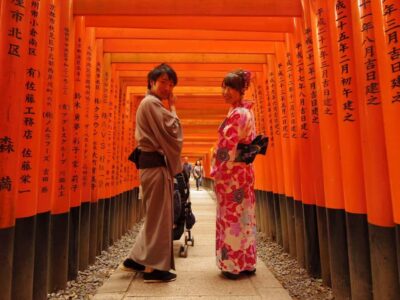
Osaka/Kyoto: Arashiyama, Nara & Fushimi Inari Shrine w/Lunch
Read our review →
Nijo Castle, Kiyomizu & Fushimi Inari Guided Tour
Read our review →
Nijo, Kinkaku-ji, Arashiyama, Kiyomizu & Fushimi Inari
Read our review →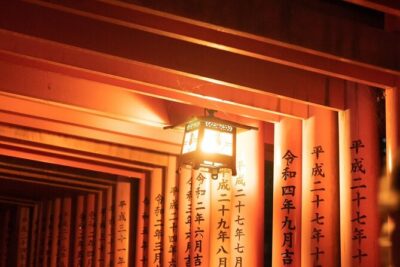
Kyoto Early Bird English Tour: Fushimi-Inari and Arashiyama
Read our review →Browse the lists this tour appears in