
Reviewed · CYCLING TOURS
Kyoto Shogun Cycling Tour
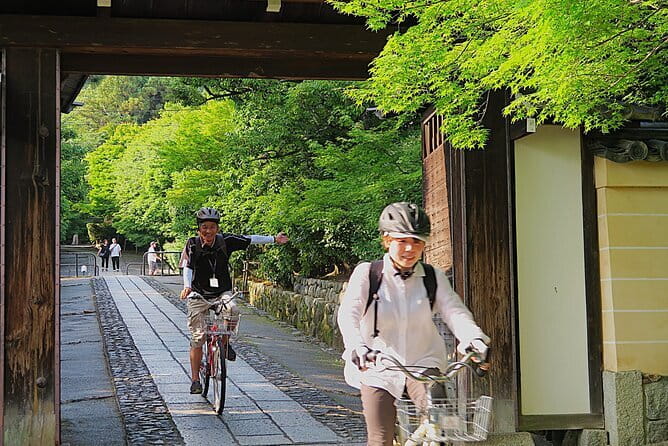
Kyoto’s shogun-era story comes into focus on two wheels, from the gold-covered Kinkakuji to the quiet gardens of Toji-in and the political drama of Nijo Castle. I like the small private group, which lets your guide adjust the pace, and I like that admission to all three major sights is included. The route is also described as an easy downhill ride, making it a friendly choice for many casual cyclists.
The main consideration is timing. Three and a half hours is enough for the headline sights, but not for long, leisurely visits at each one. You also need to be comfortable riding on the road, and children must be at least 10 years old and 145 centimeters tall.
Key points at a glance
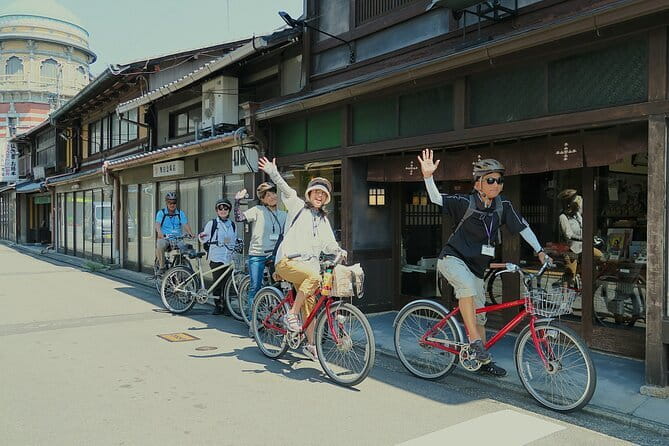
- Three very different historic stops: Kinkakuji’s polished gold, Toji-in’s calm Zen garden, and Nijo Castle’s grand shogun-era buildings give the ride real variety.
- A private group of two to six: Your guide can keep the pace personal, with an extra guide available for groups of seven to 12.
- An easy route for capable cyclists: The ride is intended for people who can handle a bicycle safely on the road without help.
- Strong English-language guiding: Guides including Seiya, Makoto, Nozomi, and Yasunobu Yagyu have led routes praised for clear explanations and local insight.
- Rain does not automatically cancel the day: You can ride with a free poncho or switch to a walking tour using public transportation.
- A one-way Kyoto experience: The tour starts near Wara Tenjin and finishes at the Kyoto Station Cycle Terminal, which can be handy for the rest of your day.
Why this cycling route works so well in Kyoto
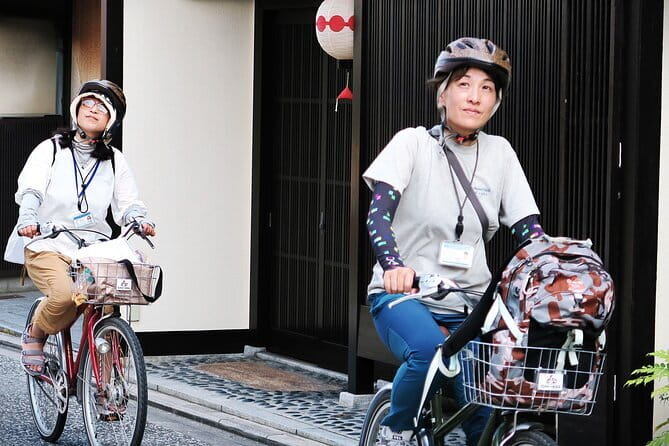
Kyoto can feel spread out on foot. Its famous temples and castles sit in different parts of the city, and moving between them by bus can eat up time. A bicycle gives you a practical middle ground: faster than walking, more open than a bus, and slow enough to notice ordinary streets between the big sights.
This tour connects three places with very different moods. Kinkakuji is the photogenic star. Toji-in is quieter and more reflective. Nijo Castle brings you back into public life, politics, and the end of the shogun period.
I especially like that the route is not built around one famous photograph. Kinkakuji alone can be crowded and visually overwhelming. Pairing it with Toji-in gives you room to think, while Nijo Castle adds scale and historical drama.
The tour lasts about three hours and 30 minutes. The planned visits take about one hour at Kinkakuji, one hour at Toji-in, and 90 minutes at Nijo Castle. That is a sensible half-day outline, though you should expect a steady pace rather than a slow temple meditation.
Other cycling tours in Kyoto people book:
- Bike Tour Exploring North Kyoto plus Lunch
★ 5.0 · 1,087 reviews - Arashiyama Bamboo Forest & Hidden Gems Bike Tour (Early Bird)
★ 5.0 · 613 reviews - 5 Top Highlights of Kyoto Full Day Bike Tour (E-bike option)
★ 5.0 · 511 reviews
Starting near Wara Tenjin
The meeting point is Wara Tenjin mae, at Kinugasa Oharaicho in Kyoto’s Kita Ward. The tour then finishes at the Kyoto Cycling Tour Project’s Kyoto Station Cycle Terminal, at 552-13 Higashiaburanokōjicho in Shimogyo Ward.
That one-way setup is useful. You do not have to cycle back to the starting point, and ending near Kyoto Station gives you a clear base for lunch, trains, or the next part of your day. Check the meeting details carefully before setting out, since the start and finish are in different parts of Kyoto.
The bikes, helmet, and rainwear are included. The supplied details do not specify bike models or electric assistance, so I would not assume an e-bike. If you are used to casual city cycling, the route should feel manageable, but you still need to ride safely on public roads.
The group size matters. A normal private group has two to six people per guide. One-person bookings are not accepted. Groups of seven to 12 can be accommodated with an additional guide, so larger families or friend groups do not have to split into unrelated parties.
Kinkakuji, Kyoto’s gold-covered opening scene
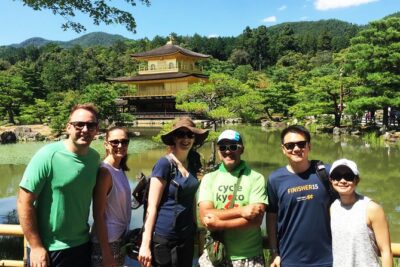
The first stop is Kinkakuji, better known as the Golden Pavilion. You enter the temple grounds with your guide and walk through the gardens around the famous building.
The pavilion is striking for an obvious reason: its upper floors are covered in gold leaf and reflect in the pond in front of it. It was once tied to the Ashikaga Shoguns and served as a center of government, so your guide can connect the polished architecture with the power structure of medieval Kyoto.
This stop is best understood as a garden and viewing experience rather than a visit inside the pavilion. The building itself is seen from the grounds, while the paths lead you through carefully arranged scenery. The included admission saves you from handling another ticket line, and your guide can add context that a quick photograph cannot.
Allow about one hour here. That gives you time to see the main view, walk through the garden, and hear the historical background without turning the stop into a long temple visit.
The drawback is that Kinkakuji is one of Kyoto’s most famous sights, so it may feel busier than Toji-in. If you want solitude, this will not be the quietest part of the morning. Still, it makes sense as the opening stop because it gives the tour an immediate visual punch.
Toji-in and the quieter side of Zen
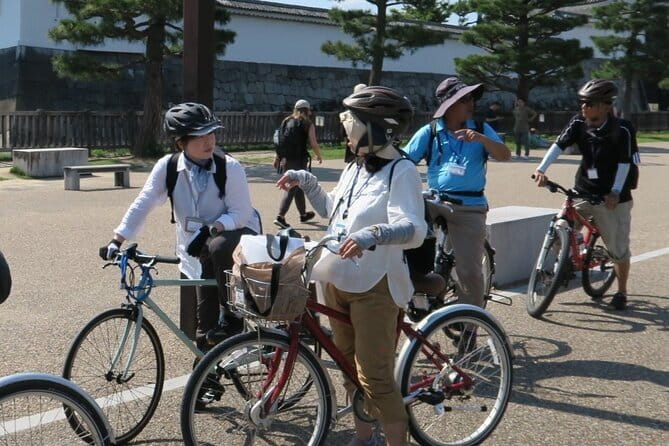
Toji-in changes the tone completely. The temple is associated with the Ashikaga family and serves as their resting place. Here, the focus shifts away from gold and spectacle toward gardens, restraint, and the Zen idea of wabi-sabi.
Your guide takes you through the temple interiors and the garden. You also see the small teahouse and the hall where Zen masters once sat and contemplated the world. The appeal is not one grand monument. It is the balance of buildings, garden, empty space, and carefully maintained details.
I see this as the emotional center of the tour. Kinkakuji gives you the famous image of Kyoto, while Toji-in gives you a more subdued sense of how religious spaces are used for attention and calm. The one-hour stop should give you enough time to look closely rather than simply pass through.
The word wabi-sabi is often used too loosely, but here it points toward a preference for simplicity, age, restraint, and natural imperfection. Ask your guide to explain how that idea appears in the garden and tea-house setting. Guides such as Makoto and Yasunobu Yagyu have been praised for making historical and cultural details easy to follow, and this is exactly the sort of stop that benefits from explanation.
Matcha service is not included. That matters if you are expecting a formal tea experience. You can still appreciate the teahouse and its setting, but a tea service would be a separate matter.
Other rides on two wheels around Kyoto:
- E-Bike Tours of the highlights of Kyoto!!!
★ 5.0 · 291 reviews - Afternoon Kyoto Bike Tour: Bamboo Forest, Monkeys & Hidden Spots
★ 5.0 · 283 reviews - South Kyoto in a Nutshell: Gentle Backstreet Bike Tour!
★ 5.0 · 225 reviews - Pedal Adventure Kyoto’s iconic landmarks on an e-bike tour
★ 5.0 · 189 reviews
Nijo Castle and the end of the shogun age
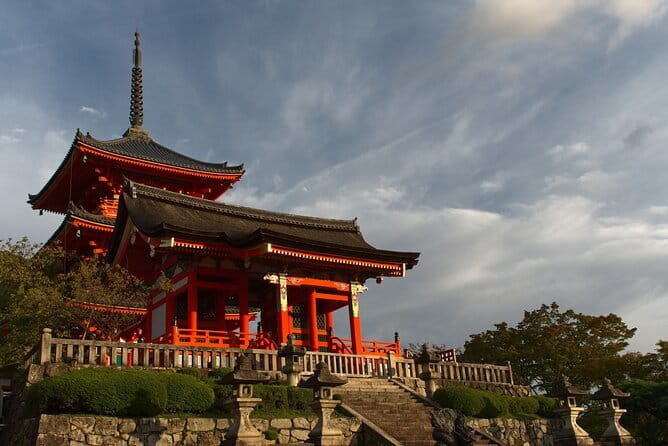
Nijo Castle gives the tour its strongest political setting. It was the Kyoto residence of the final shoguns and played a role in events that brought the shogun era toward its close.
Your guide leads you through the grounds, where you see ornamental carvings and large historic buildings. Compared with the open garden setting at Toji-in, Nijo Castle feels more formal and defensive. It was built to project authority, protect its rulers, and host important political business.
The 90-minute visit is the longest stop, and that is appropriate. There is more ground to cover, and the castle’s importance comes from the way its buildings fit together. You are not simply looking at a beautiful structure. You are walking through a place linked to the final stage of Tokugawa rule in Kyoto.
I like the order of the stops. The tour begins with Ashikaga power at Kinkakuji, moves to the Ashikaga family’s quieter religious setting at Toji-in, then finishes with the Tokugawa shogunate at Nijo Castle. It gives you a clear historical thread without requiring a full day in a museum.
The tour description does not promise a detailed visit to every interior or every castle feature, so keep your expectations practical. You will receive a guided visit through the grounds, with time for the major buildings and carvings. If Nijo Castle is your top priority, you may want to confirm the exact route and interior access when booking.
The guides are a major part of the experience
The strongest pattern among the named guides is their ability to combine facts with an approachable style. Seiya is described as an English-speaking guide who could keep both adults and a 12-year-old engaged. Makoto is known for a personable manner and for adding time when a local festival made an extra stop worthwhile.
Nozomi has led routes that included temples, shrines, Gion, and the Imperial Palace, and is noted for clear information about Shinto and Buddhist sites. Yasunobu Yagyu has been praised for local insight into Kyoto, its people, and its culture.
Other named guides include Yutaka Kaneda, Kaz, and JJ. A larger group of nine used two guides on a related morning cycling route, which suggests that the operator is accustomed to adding staff when group size requires it.
Guide assignments can change, so you should not book on the assumption that one particular person will lead your ride unless the operator confirms it. Still, the range of named guides gives you a useful sense of the guiding style to expect: English explanations, historical context, and a willingness to make the day feel personal.
What the cycling itself is like
The route is presented as easy and downhill, which should appeal if you want to cover more ground without signing up for a demanding athletic ride. Even so, easy does not mean you can ignore traffic or road conditions. Children must be able to ride independently and safely on the road, and the minimum age is 10.
The tour does not state the total cycling distance or the exact amount of time spent in the saddle. That makes it hard to judge the physical effort precisely. I would describe it as a sightseeing ride for people who are comfortable on a bicycle, not a technical cycling excursion.
You receive a helmet and rainwear. The rainwear is useful because the tour operates in wet weather. If it rains, you can continue by bicycle with a free rain poncho, or change to a walking tour using buses or the metro, with public transportation included in the tour fee.
That weather policy is one of the tour’s practical strengths. Kyoto rain can change a pleasant ride into a soggy one, but you are not forced into one plan. The walking option also makes sense if road conditions feel uncomfortable.
The tour is private, so you are not trying to match the speed of a large group. That is helpful if one person needs a slower pace or a short break. It also means the guide can spend more time answering questions, though the overall schedule still has fixed stops.
Is $153.50 a fair price?
At $153.50 per person, this is not the cheapest way to see Kyoto. You are paying for a private guide, bicycle use, helmet, rainwear, admission to Kinkakuji, admission to Toji-in, admission to Nijo Castle, and a route designed to connect the sights in one half-day.
The value depends on how you normally travel. If you are happy to use public transportation and visit temples on your own, you can spend less. You would then need to plan the order, manage transfers, handle admission, and find the historical background yourself.
I think the price makes more sense for a first visit, a small family group, or anyone with limited time. The guide turns three separate sights into one connected story, and the private format avoids the stop-and-start rhythm of a large tour.
The price is less attractive if your main goal is a long bicycle ride. This is a sightseeing tour with bicycles, not an all-day cycling challenge. Much of your time is spent walking through temple and castle grounds.
Who should book this Kyoto ride?
I would consider it a good fit for:
- First-time visitors who want Kyoto’s major historic themes explained clearly
- Couples or small groups who prefer a private tour
- Families with children aged 10 or older who can ride safely on roads
- Casual cyclists who want an easy route rather than a strenuous day
- Visitors who want to connect several western and central Kyoto sights efficiently
- People who value an English-speaking guide and cultural explanation
I would think twice if you dislike cycling in city traffic, need a fully accessible activity, or want a very slow visit at each temple. The supplied information says most people can participate, but it does not give detailed accessibility information for bikes, temple paths, or castle grounds.
You should also note that the tour accepts a minimum of two people. A solo visitor cannot book it alone under the stated conditions.
Booking, weather, and cancellation details
Confirmation is sent within 48 hours of booking, subject to availability. The tour is near public transportation, but the exact best route to Wara Tenjin depends on where you are staying.
The cancellation information needs careful attention. One set of booking details says you can request a refund by notifying the operator at least three days before the tour, by 18:00 Japan time. The formal cancellation policy also says the experience is non-refundable and cannot be changed for any reason.
Because those terms conflict, I would confirm the applicable rule with KCTP before paying. If the minimum number of participants is not met and the tour is canceled, you are offered another date or experience, or a full refund.
My verdict: a smart half-day for history-minded cyclists
I would book this tour if I wanted a guided introduction to Kyoto’s shogun-era sights without spending a full day on buses. The combination of Kinkakuji, Toji-in, and Nijo Castle is well chosen, and the private format gives the guide room to explain the links between architecture, religion, and political power.
The strongest reasons to choose it are the small group, included admissions, flexible rain plan, and guides who can make the history understandable in English. The main limits are the relatively high price, the short schedule at each stop, and the need to ride safely on public roads.
Check the cancellation terms, confirm the meeting point, and book only if everyone in your group is comfortable cycling. If that fits, this is a practical way to see three important Kyoto sites while adding the pleasure of moving through the city under your own power.
FAQ
How long does the Kyoto Shogun Cycling Tour last?
The tour lasts approximately three hours and 30 minutes.
Where does the tour start?
It starts at Wara Tenjin mae, Kinugasa Oharaicho, Kita Ward, Kyoto, 603-8351, Japan.
Where does the tour finish?
It finishes at the Kyoto Cycling Tour Project’s Kyoto Station Cycle Terminal, 552-13 Higashiaburanokōjichō, Shimogyo Ward, Kyoto, 600-8235, Japan.
Which sights are included?
The tour visits Kinkakuji Temple, Toji-in Temple, and Nijo Castle.
Are admission tickets included?
Yes. Admission tickets for Kinkakuji, Toji-in, and Nijo Castle are included.
Is bicycle use included?
Yes. Bicycle use, a helmet, and rainwear are included.
Is matcha service included?
No. Matcha service is not included in the tour fee.
How many people can join?
The standard arrangement accepts two to six people per guide. Groups of seven to 12 can arrange an additional guide. One-person bookings are not accepted.
Can children join the tour?
Children must be at least 10 years old, at least 145 centimeters tall, and able to ride a bicycle safely on the road without assistance.
What happens if it rains?
The tour operates in rain. You can continue by bicycle with a free rain poncho, or switch to a walking tour using public transportation, with the bus or metro fare included in the tour fee.
Just added in Kyoto
- Private Cooking Class Udon in Kyoto Japan★ 5.0 · 23 reviews
- Your Private Vacation Photography Session In Kyoto★ 5.0 · 110 reviews
- Kyoto: Zen Meditation at a Private Temple with a Monk★ 5.0 · 25 reviews
- Private Pewter Sake Cup Experience with a Kyoto Artisan★ 5.0 · 31 reviews
- Kyoto Wagashi(Japanese sweets) Cooking Class near Fushimiinari★ 5.0 · 60 reviews
- Kyoto:Family-Friendly Kimono & Yukata Experience at WARGO★ 5.0 · 147 reviews
- Private Guided Traditional Buddhist Cooking in Japan★ 5.0 · 16 reviews
- Kyoto: Gion Geisha District & Sake-in-Hand Walking Tour★ 5.0 · 37 reviews
Cycling Tours, compared.

3h Tokyo E-Bike Tour: Hidden Gems, and Local Life with guide
Read our review →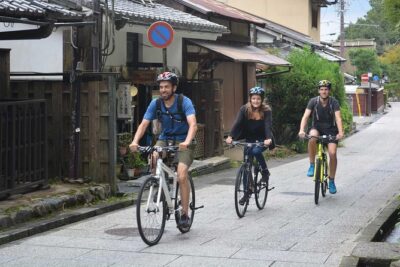
Arashiyama Bamboo Forest & Hidden Gems Bike Tour (Early Bird)
Read our review →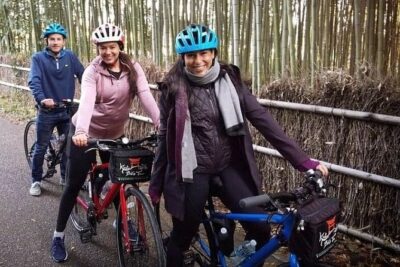
5 Top Highlights of Kyoto Full Day Bike Tour (E-bike option)
Read our review →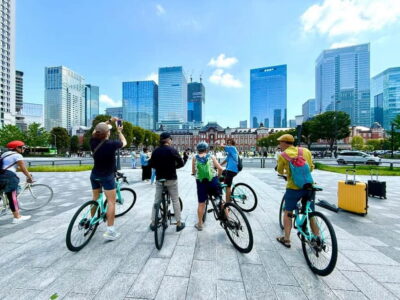
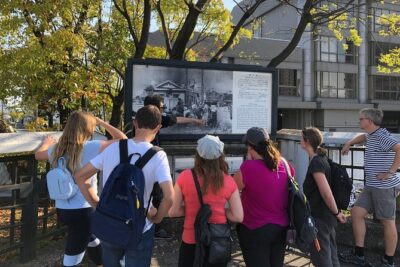
Hiroshima 2hr Peace Cycling Tour with Local Guide
Read our review →Browse the lists this tour appears in