
Reviewed · IMPERIAL PALACE & HISTORIC SITES
Nijo Castle and Imperial Palace Visit with Guide
Nijo Castle’s painted rooms and famous nightingale floors bring Japan’s shogun era to life, while Kyoto Imperial Palace shows the other side of power: the emperor’s court. This tour links both sites in one efficient outing, with a guide explaining the politics, symbols, and small details you could easily miss alone.
I like the included admission and public transport, since you do not have to sort out two entry fees or navigate between the sites yourself. I also like the chance to ask questions, especially about the change from Tokugawa shogun rule to Emperor Meiji’s restored authority.
The main consideration is pace. You get about one hour at each major site, and both involve walking. The experience is marketed as private, but the tour information also describes a small group of fewer than eight people and lists a maximum of 11, so confirm the group arrangement when booking.
Key points at a glance
- Two power centers in one tour: See the shogun’s Nijo Castle and the emperor’s Kyoto Imperial Palace in a single 2.5-hour visit.
- Mia is a frequently praised guide: She is known for clear English, humor, visual aids, and strong explanations of the Tokugawa period.
- The castle includes interior rooms: You go inside Nijo Castle, not just around its gardens and outer walls.
- Public transport is part of the tour: Your guide leads the transfer from the castle to the palace, with transport costs included.
- Choose morning or afternoon: The two time options make it easier to fit this visit into a Kyoto sightseeing day.
- Wear comfortable shoes: You will walk through large grounds and historic buildings, with no hotel pickup or drop-off.
Why these two sites belong together
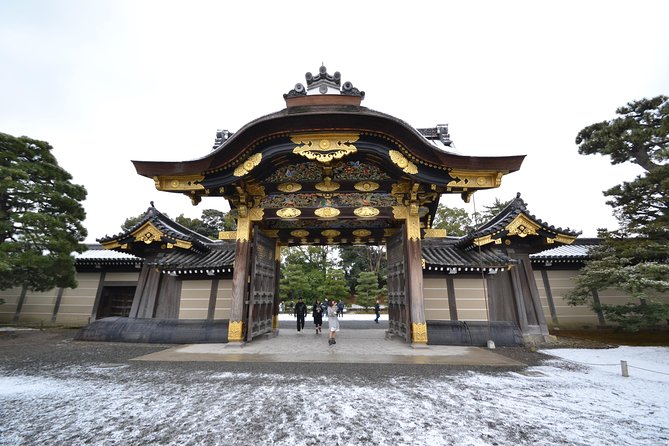
Kyoto can sometimes feel like a long parade of temples, gardens, and old wooden streets. Nijo Castle and Kyoto Imperial Palace offer something different. They help you understand who held power in Japan, and how that power changed.
Nijo Castle was tied to the Tokugawa shogunate, the military government that controlled Japan during the Edo period. Kyoto Imperial Palace represents the imperial family and the older court tradition centered in Kyoto, Japan’s ancient capital.
That contrast gives the tour a clear story. At the castle, you learn about the shogun’s authority, meetings, ceremony, and political control. At the palace, you see the setting connected to the emperor and the imperial household. The transfer between the two sites also marks a shift in subject, from military government to imperial rule.
I find this pairing more useful than visiting either site in isolation. Nijo Castle is visually striking, but its rooms and symbols can seem puzzling without context. The palace grounds are impressive, but the political story can feel distant if you do not understand the role of the emperor. Together, the sites make the transition from shogun rule to Emperor Meiji’s restored authority easier to follow.
Other historic grounds in Kyoto:
- Kyoto: Imperial Palace & Nijo Castle Guided Walking Tour
★ 4.7 · 453 reviews - Kyoto Imperial Palace & Nijo Castle Guided Walking Tour – 3 Hours
★ 4.5 · 106 reviews - Kyoto: Nijo Castle and Kyoto Imperial Palace Guided Tour
★ 4.6 · 98 reviews
Starting at Nijo Castle’s main gate
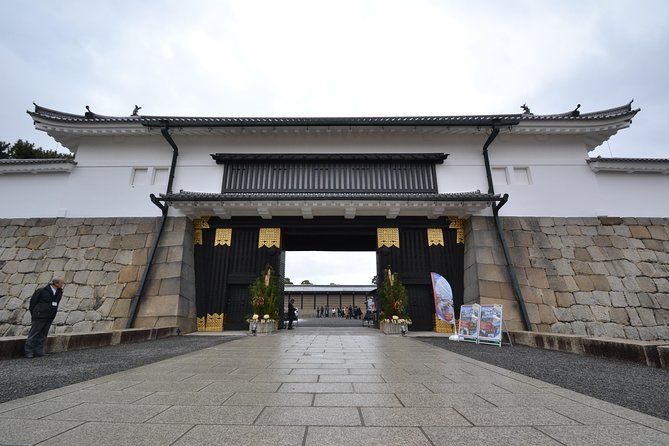
You meet your guide in front of the large white main gate at Nijo Castle, at 541 Nijojocho in Nakagyo Ward. This is a practical meeting point because the entrance is prominent, and you do not need to find a hotel lobby or wait for a pickup.
The first guided portion lasts about one hour. That is enough time to get a focused introduction, though not enough for an unhurried look at every corner of the grounds. Your guide leads you through the castle complex and explains how it functioned during the shogun period.
The interior is a major reason to choose this tour. You do not simply photograph the stone walls and gardens from outside. You enter the castle buildings, where the layout, decoration, and ceremonial spaces help show how power was displayed.
Pay attention to the details your guide points out. The symbolism in the rooms and the arrangement of spaces mattered. Several people who took this tour especially valued explanations of where shogun meetings took place and how the building worked as a political setting.
A guide can also explain the famous floorboards associated with Nijo Castle. Their sound is one of the details many people notice, but the larger value comes from understanding why a shogun’s residence needed such careful control of movement and access.
The tour does not promise a long free period to wander. If you enjoy stopping at every painting or taking extensive photographs, one hour may feel short. If you want the main story and the important rooms without spending half a day on one complex, the time limit is useful.
What makes the guide important inside the castle
The strongest part of this experience is the human explanation. The buildings are old and beautiful, but the political meaning is not always obvious.
Mia is the guide name praised most often in the supplied material. She is described as warm, funny, clear in English, and able to explain the Tokugawa shogunate without burying you in dates. She also uses visual aids, which can help when discussing people, power structures, or changes in the imperial line.
Other guide names include Mie, Choko, Miya, and Mike, so you should not assume Mia will lead every departure. The consistent point is that the guide assignment can make a major difference. You are paying for interpretation, not simply admission and a walk through two sites.
I like the reported balance between background and conversation. The guide explains the main period, then responds to specific questions. That works well for a family or mixed-age group because you can ask for a simpler explanation, request more detail, or connect the history to Japanese culture and politics.
A good guide also helps with the human side of history. The tour covers the shogun, the emperor’s family, succession, and the transfer of power. Those subjects can become a blur of names when read from a guidebook. A spoken explanation, supported by visual material, can make the sequence easier to remember.
The transfer by public transport
After about an hour at Nijo Castle, you travel to Kyoto Imperial Palace by public transportation with the guide. The transport cost is included, and the guide leads the way.
This is more useful than it may sound. Kyoto’s public transport is manageable, but a visitor still has to identify the right route, handle payment, and make sure the timing works. During a short tour, a wrong turn can eat into the palace visit. Having the guide manage the transfer keeps the focus on the sites.
The journey also creates a natural break between the two subjects. You move from the shogun’s castle to the imperial setting, and the guide can continue the historical thread along the way.
The tour ends in front of the Imperial Palace, in Kyoto Gyoen National Garden. This matters for planning. You do not return to Nijo Castle, and there is no hotel drop-off. If you have a lunch reservation, another tour, or a train to catch, use the palace as your finishing point when working out your schedule.
Other castles reached from Kyoto:
- Kyoto: Nijo-jo Castle and Ninomaru Palace Guided Tour
★ 4.7 · 1,020 reviews - Kyoto: Nijo Castle, Kiyomizu & Fushimi Inari Guided Tour
★ 4.7 · 700 reviews - Kyoto: Nijo, Kinkaku-ji, Arashiyama, Kiyomizu & Fushimi Inari
★ 5.0 · 699 reviews - Kyoto: Nijo Castle World Heritage Guided Tour with Admission
★ 5.0 · 128 reviews
Kyoto Imperial Palace and its wider garden setting
The second guided section lasts about one hour. Entry to the palace is included, and the tour finishes in front of the palace within Kyoto Gyoen National Garden.
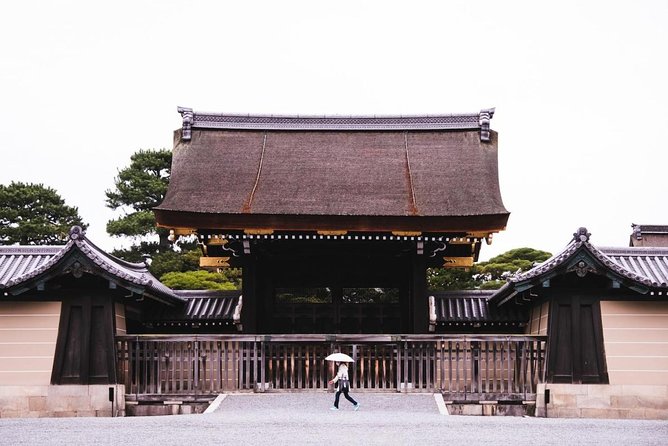
The palace provides a different atmosphere from Nijo Castle. Nijo is closely tied to the shogun’s military government and political presence. The Imperial Palace introduces the court and the imperial family, along with the long role of Kyoto as Japan’s historic capital.
Your guide can help you read the setting rather than simply walk through it. The value lies in connecting the buildings and grounds to the emperor’s position, the old court tradition, and the later transfer of political authority.
Several comments about the tour highlight the symbolism found at both sites. That is an important advantage here. Historic Japanese buildings often contain visual clues that are easy to miss if you only follow signs in English. A guide can point out why a feature matters, who used a room, or how the setting reflected rank and authority.
The palace portion is not presented as a long, open-ended exploration. One hour gives you an organized look, but you may want extra time in Kyoto Gyoen National Garden after the tour ends. Since the tour finishes there, you can continue on your own if your schedule allows, though no additional guided time is included.
The pace, group size, and private-tour question
The description presents this as a private experience for you and your party, but the itinerary also calls it a small-group tour with fewer than eight people. The additional information sets the maximum at 11.
That is worth clarifying before you pay. If you want a guide focused only on your family or friends, ask the operator how your selected date is arranged. The price of $79.18 per person may feel reasonable for a genuinely private outing, especially because admission and public transport are included. It is a different value calculation if you join a small group.
The group limit is still fairly modest compared with a large coach tour. A smaller party makes it easier to hear the guide, ask questions, and stay together during the public transport transfer. The supplied information also indicates that some departures may have very few participants, but you should treat that as a possibility rather than a promise.
The two-and-a-half-hour duration is another useful middle ground. You get more than a quick orientation, yet you do not give up an entire day. I would choose it early in a Kyoto visit, when you still need the historical framework for later sights.
Price and what you receive for it
At $79.18 per person, this is not the cheapest way to enter Nijo Castle and the Imperial Palace. You are paying for the guide’s time, the history lesson, the transfer between sites, and the convenience of having both admission fees handled.
For a first visit to Kyoto, I think the price can make sense. The two sites are important, but neither is self-explanatory. A sign may identify a building, yet it will not always explain the political tension between the shogun and the emperor, or the significance of the rooms and ceremonial spaces.
The value is strongest if you enjoy asking questions or want a coherent story rather than a checklist of sights. It is weaker if you prefer to move slowly, take photographs at your own pace, or read detailed information independently.
The tour also includes a professional English-speaking guide, which is central to the experience. Food and drinks are not included, but that is not a serious drawback for a 2.5-hour outing. Plan a snack or meal before or after, rather than expecting a stop during the guided visit.
Who should book this experience
I would recommend this tour to first-time Kyoto visitors who want help with Japanese political history. It suits couples, families, and small parties who prefer direct explanations over a large organized group.
It is especially useful if you have seen or enjoyed stories about samurai, shoguns, or the Meiji period. The castle and palace give physical shape to those subjects. You can also ask the guide to explain the difference between military authority and imperial status, which is not always easy to grasp from a standard sightseeing visit.
Families may appreciate the humor and visual aids attributed to guides such as Mia. Children and teenagers often respond better to a story about people, ceremonies, and power than to a string of dates.
You should think twice if you dislike fixed schedules. The tour allocates roughly one hour to each main stop, then moves on. You also need comfortable shoes, since the experience involves walking through large historic grounds and buildings.
Most people can participate, and service animals are allowed. The tour is near public transportation, but hotel pickup and drop-off are not provided.
Practical planning before you go
Choose the morning or afternoon departure that gives you room before and after the tour. Because the end point is at Kyoto Imperial Palace rather than Nijo Castle, plan your next activity from Kyoto Gyoen National Garden.
Arrive at the Nijo Castle main gate with enough time to find the meeting point. Your confirmation is issued within 48 hours of booking, subject to availability, so check the details before setting your day around the tour.
Wear shoes suited to walking. The supplied information specifically advises comfortable footwear, and that is good advice for both the castle grounds and the palace area.
The tour requires good weather. If poor weather causes cancellation, you are offered another date or a full refund. You can cancel for a full refund up to 24 hours before the start time, but changes or cancellations inside that window are not accepted.
Should you book the Nijo Castle and Imperial Palace tour?
Book it if you want the two sites connected by a clear story about shogun rule, the imperial family, and the shift in power toward Emperor Meiji. The included tickets and public transport simplify the day, while a strong guide can reveal details you might miss alone.
I would be most inclined to book if Mia, Mie, Choko, or another well-regarded English-speaking guide is available, though guide assignments can change. Confirm the group size if the private format matters to you.
Skip it if you want a slow photographic visit or already understand the history well. For most first-time visitors, though, this is a compact and sensible way to see two of Kyoto’s most important political sites without spending a full day on them.
FAQ
How long does the tour last?
The experience lasts approximately 2 hours and 30 minutes, including the guided visits and public transport transfer.
Which sites does the tour visit?
It visits Nijo Castle first, followed by Kyoto Imperial Palace.
How much time is spent at each site?
The planned visit includes about one hour at Nijo Castle and one hour at Kyoto Imperial Palace.
Is transportation between the sites included?
Yes. Public transportation between Nijo Castle and Kyoto Imperial Palace is included in the tour price.
Are entrance fees included?
Yes. Admission fees for both Nijo Castle and Kyoto Imperial Palace are included.
Where does the tour begin and end?
You meet in front of the main gate at Nijo Castle. The tour ends in front of Kyoto Imperial Palace in Kyoto Gyoen National Garden.
Is the tour private or shared?
The experience is presented as private for your party, while the itinerary describes a small group of fewer than eight people and a maximum of 11 participants. Confirm the arrangement for your chosen date.
Can I cancel for a full refund?
Yes. You can cancel at least 24 hours before the start time for a full refund. Cancellations or changes made less than 24 hours before the start time are not accepted, and poor-weather cancellations offer another date or a full refund.
Just added in Kyoto
- Your Private Vacation Photography Session In Kyoto★ 5.0 · 110 reviews
- Kyoto: Zen Meditation at a Private Temple with a Monk★ 5.0 · 25 reviews
- Private Cooking Class Udon in Kyoto Japan★ 5.0 · 23 reviews
- Private Pewter Sake Cup Experience with a Kyoto Artisan★ 5.0 · 31 reviews
- Kyoto Wagashi(Japanese sweets) Cooking Class near Fushimiinari★ 5.0 · 60 reviews
- Kyoto:Family-Friendly Kimono & Yukata Experience at WARGO★ 5.0 · 147 reviews
- Private Guided Traditional Buddhist Cooking in Japan★ 5.0 · 16 reviews
- Kyoto: Gion Geisha District & Sake-in-Hand Walking Tour★ 5.0 · 37 reviews
Imperial Palace & Historic Sites, compared.
Imperial Palace and Shogun Historical Walking Tour
Read our review →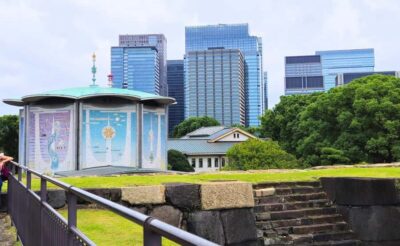
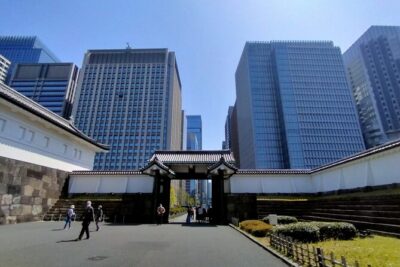
Imperial Palace East Garden and Edo Castle Walking Tour in Tokyo
Read our review →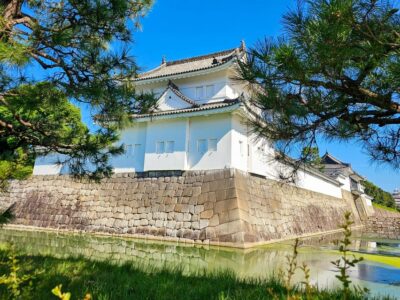
Imperial Palace & Nijo Castle Guided Walking Tour
Read our review →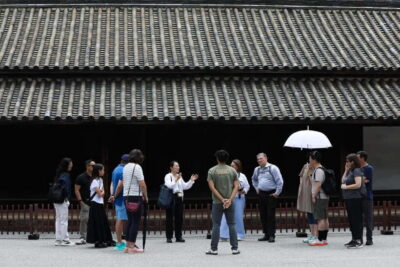
Imperial Palace, Sensō-ji Temple, & Tokyo Tower Tour
Read our review →
Tokyo Castle, Imperial Palace, Shogun & Garden Walking Tour
Read our review →
Imperial Palace, the history of Japan (ENGLISH GUIDE)
Read our review →Browse the lists this tour appears in