
Reviewed · IMPERIAL PALACE & HISTORIC SITES
Tokyo: Imperial Palace Japanese History Walking Tour
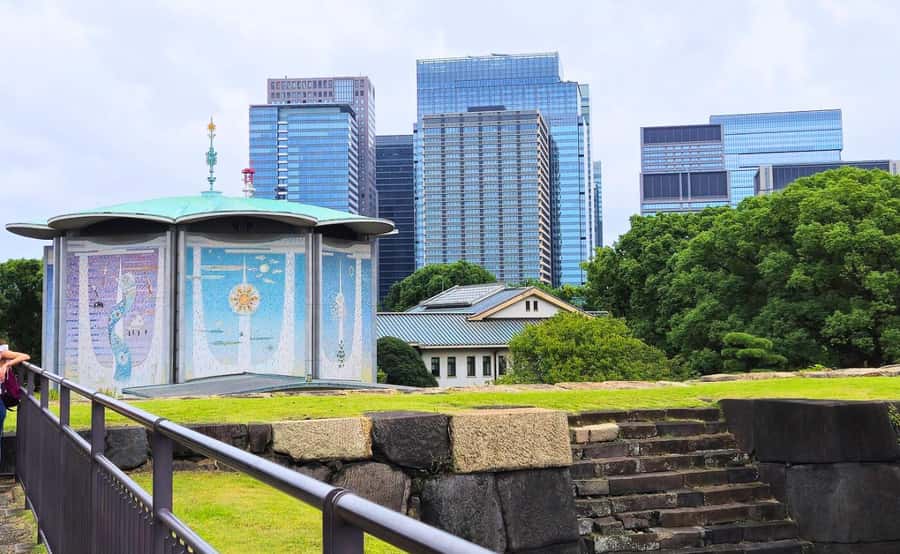
Tokyo’s Imperial Palace grounds tell the story of how a shogun’s castle became an emperor’s palace. This walking tour makes that change easier to understand, using castle ruins, a miniature model, gardens, old samurai buildings, bamboo, and royal koi as chapter markers.
I like the friendly, interactive guiding, especially the way guides such as Mika, Natsumi, and Laki answer questions instead of delivering a dry speech. I also like the low $32 price, which is fair for a roughly two-hour history walk with local tips and help taking photos. The catch is that you stay outdoors and walk on uneven ground, with no access to the Inner Palace and limited suitability for anyone with mobility or health concerns.
Key points
- See Edo Castle’s former grounds: Walk where the shogun’s castle once shaped Japan’s political life more than 350 years ago.
- Learn the social order: Your guide explains the old ranking system from farmer to samurai, daimyo, and shogun.
- Meet at an easy rail hub: Tokyo Station and Otemachi Station are both about a five to ten-minute walk from the meeting point.
- Expect personal guiding: Mika, Natsumi, Laki, and other guides are praised for clear explanations, questions, photos, and Tokyo advice.
- Look for small details: A castle model, bamboo, old samurai structures, gifted trees, and royal koi make the history visible.
- Plan for weather: The walk runs rain or shine, and summer heat, mosquitoes, and heavy rain can affect your comfort.
Why Edo Castle matters more than the palace walls
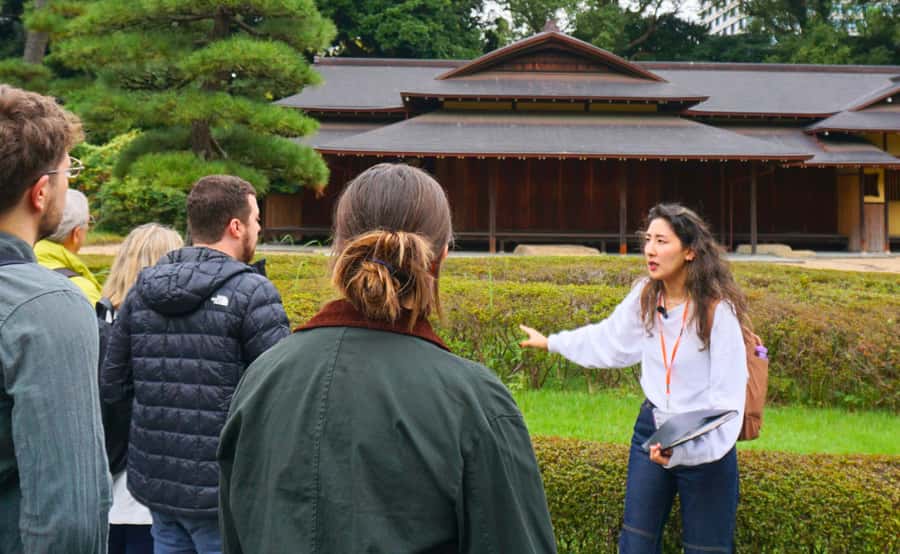
The main attraction here is not a lavish royal interior. It is the story beneath your feet.
The present Imperial Palace occupies the site of Edo Castle, the seat of the shogun during the Edo period. The original castle buildings are gone, but the grounds preserve enough clues to make the former power center understandable. Your guide connects the remaining stonework, gates, gardens, and layout to the political system that shaped Japan.
That context matters because the palace can otherwise feel like a pleasant green space in the middle of Tokyo. You see clipped trees, open paths, water, and old walls, but a guide helps you picture the enormous castle complex that once occupied this area. You also learn how the site changed from the shogun’s base to the emperor’s palace.
The tour is especially useful early in a Tokyo visit. It gives you a basic framework for the Edo and Meiji eras, then helps you recognize how social rank, military power, and imperial rule affected Japanese culture.
Other walking tours in Tokyo people book:
- Tokyo Tsukiji Fish Market Food and Culture Walking Tour
★ 5.0 · 3,184 reviews - Tokyo: Imperial Palace and Shogun Historical Walking Tour
★ 5.0 · 2,251 reviews - Tokyo: Shinjuku Local Bar and Izakaya Guided Walking Tour
★ 4.9 · 1,794 reviews
Meeting near Wadakuramon Fountain
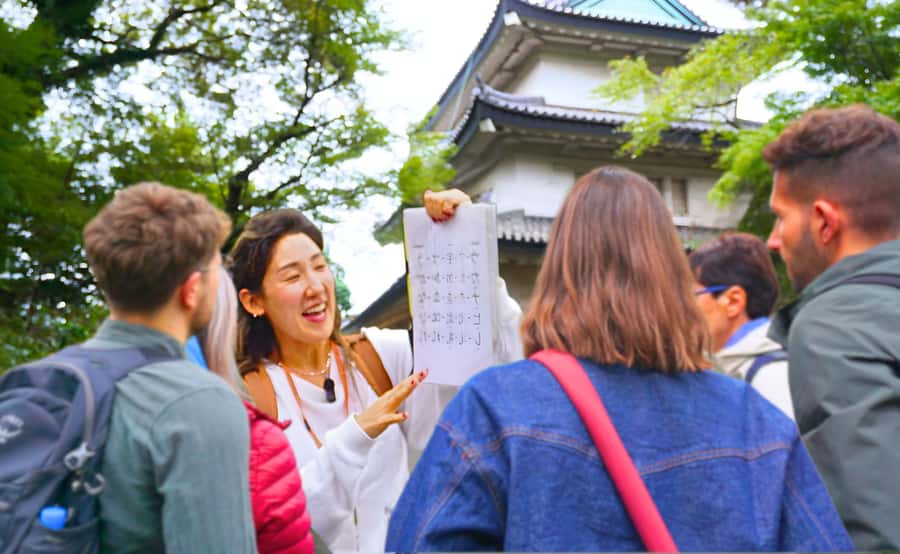
The meeting point is at the Starbucks near the fountain in Wadakuramon Fountain Park. From Tokyo Station or Otemachi Station, allow five to ten minutes on foot. Your guide should be holding a Sunrise Adventure sign, which makes the group easier to spot.
This is a sensible place to meet because the palace grounds are large and the gates can be confusing if you arrive without a clear landmark. I would not cut the timing too close. Tokyo Station is busy, and the walk through the surrounding office district can take longer than expected if you are unfamiliar with the area.
From the fountain, the group walks toward Otemon Gate. This approach gives the tour a useful sense of arrival rather than dropping you into the gardens with no explanation. Once you pass through the gate, the focus shifts from modern Tokyo to the former castle grounds.
The tour ends back at the meeting point. That makes it easy to continue toward Tokyo Station, Otemachi, or another part of central Tokyo afterward.
Otemon Gate and the vanished castle
Otemon Gate is the first major point where the old castle story becomes tangible. Your guide explains what stood here and why gates were important in a castle complex. This is not just a photo stop. It begins the discussion of defense, rank, movement, and control.
One of the most useful features is a miniature model showing how the castle looked in the past. The model helps solve a common problem at historic sites: you can see the surviving ground but not the original buildings. With the model and the guide’s explanation, you get a clearer idea of the scale and purpose of the former castle.
Your guide also explains why the original castle is no longer there. The point is not simply that a building disappeared, but that Japan’s political center changed over time. The castle’s transformation into an imperial palace mirrors the country’s shift from shogun-led rule toward imperial government.
The exact balance between walking and explanation may vary by guide. Mika is praised for clear history lessons and careful attention to the group. Natsumi is often noted for storytelling and for answering questions in a way that keeps the subject moving. Laki is described as warm, energetic, and good at making the walk interactive.
From farmer to shogun
The tour’s clearest teaching point is the old social ranking system. You learn about farmers, samurai, daimyo, and shogun, and how those groups fitted into the political order.
This is valuable because the word samurai can otherwise turn Japanese history into costume drama. The guide places the samurai within a larger system of service, status, and authority. Daimyo, or powerful regional lords, fit into the structure differently from the shogun, who held the central military authority.
The explanations also help you understand why Edo Castle mattered so much. It was not simply a large residence. It was the center of a system that organized land, loyalty, military power, and social position.
The best part of this section is the chance to ask questions. Several guides use direct questions and small bits of interaction to keep the group involved. That works well for children and for adults who know little about Japanese history. It also gives you room to ask about customs, daily life, or the move from the Edo period to the Meiji era.
The tour does not try to cover every detail of Japanese history. That is a benefit. You get a practical introduction rather than a long academic lecture, with enough background to make later visits to temples, shrines, museums, and historic towns easier to follow.
Other historic grounds in Tokyo:
- Tokyo: Imperial Palace and Shogun Walking Tour
★ 4.9 · 935 reviews - Imperial Palace East Garden and Edo Castle Walking Tour in Tokyo
★ 5.0 · 510 reviews - Tokyo: Imperial Palace East Gardens Walking Tour
★ 4.8 · 353 reviews - Tokyo: Imperial Palace, Sensō-ji Temple, & Tokyo Tower Tour
★ 4.5 · 339 reviews
Gardens, bamboo, and royal koi
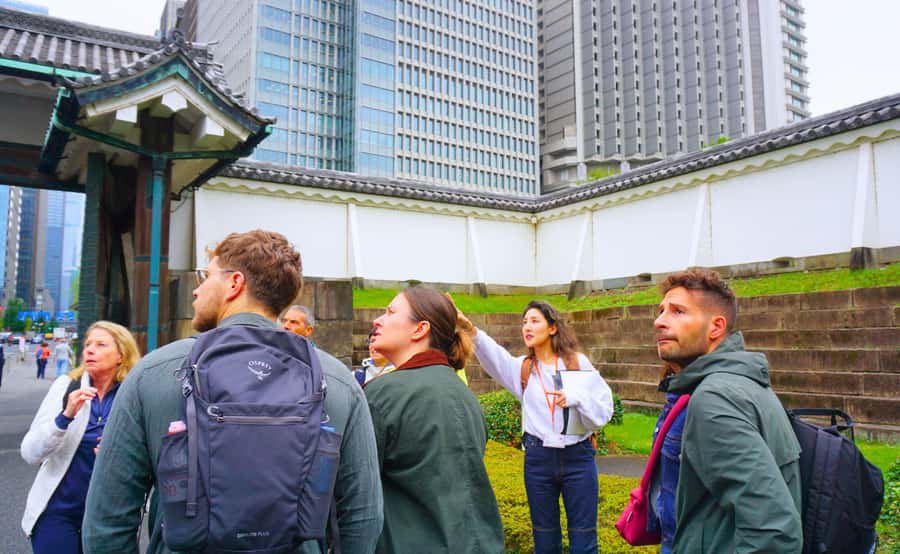
The Eastern Gardens supply the visual change of pace. After the castle history, you move through peaceful paths, plantings, and open garden areas. Trees from different parts of Japan were given to the emperor, and the guide points out how these plantings connect the palace to the wider country.
The bamboo area is one of the more memorable photo stops. It also provides a cooler, greener setting during hot weather, though you should not count on shade at every point. Tokyo summer can be intense, and one guide adjusted the pace and used shade whenever possible. That kind of care makes a real difference on an outdoor tour.
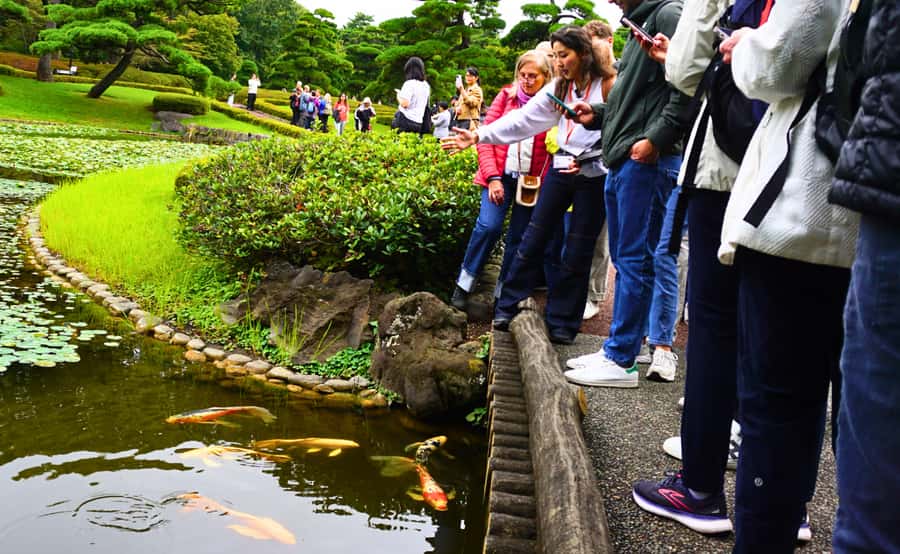
The royal koi are another small but distinctive detail. They are not the main reason to book the walk, but they make a pleasant final stop and give the tour a lighter ending after the political history. Bring a camera, since photo help is part of the experience and guides are happy to take pictures for you.
Mosquitoes can be present in the palace grounds. One guide supplied mosquito spray, but I would still bring your own repellent if you are sensitive to bites. Comfortable shoes, water, a hat, and weather-appropriate clothing are more important here than dressing up for a palace visit.
What the guiding is really like
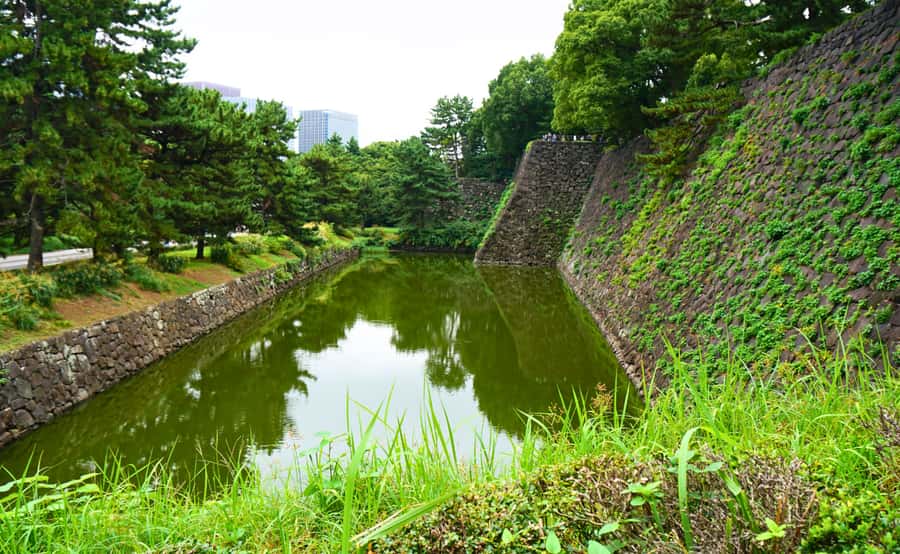
The strongest part of this experience is the human explanation. The grounds are accessible without a guide, but you would miss the connections between the ruins, the social system, and the palace’s changing role.
Mika is repeatedly praised for excellent English, clear explanations, patience, and attention to the group. She also helped with photos and answered many questions. Natsumi is described as a strong storyteller who explains the Edo period, palace design, Japanese culture, and Tokyo’s growth in an easy-to-follow way.
Laki brings a more playful, interactive approach and is particularly well suited to families who want children involved. Alexandre offers the tour in French as well as English and has been praised for taking extra time to explain history and culture. Other guides, including Nico, Hugo, Fei, Arief, and Lucky, are also noted for friendliness, cultural insight, and practical advice.
You should not expect every guide to use exactly the same stories or route emphasis. That is normal on a history walk. The consistent feature is the chance to ask questions and get recommendations for food, etiquette, and other Tokyo sights. One guide even offered a private tour with a tea ceremony, though that is not part of the standard $32 experience.
Heat, rain, and walking conditions
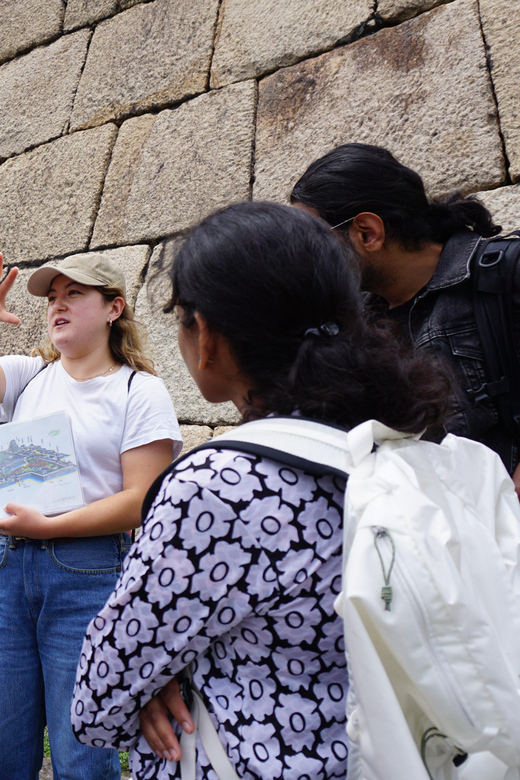
This is an outdoor walk, and it operates rain or shine. Summer heat is the most obvious concern. Shade from the trees helps, but you will still be outside for much of the tour. Carry water and dress for the forecast.
Heavy rain can also change the mood. One guide kept the experience enjoyable during a downpour, but rainproof shoes and a compact umbrella would be sensible. The operator does not list the tour as suitable for people with low fitness levels, recent surgery, back problems, heart problems, or mobility impairments.
Wheelchair users and pregnant women are also listed as unsuitable for this activity. The grounds include walking routes and surfaces that may be difficult for people who need fully accessible paths. If you have any concern about the physical demands, contact the provider before booking rather than assuming the palace grounds will be easy.
The tour is a better fit for someone who enjoys a steady walk with regular explanations than for someone seeking a short photo visit. You will get more from it if you are willing to pause, listen, and ask questions.
Is $32 good value in Tokyo?

At $32 per person, this is a reasonable introduction to the palace grounds. You are paying for roughly two hours of guiding, historical context, photo help, and a chance to ask about the rest of your Tokyo plans.
The value is strongest if you would otherwise walk through the gardens without understanding the castle remains. The guide turns scattered details into a connected story. The price also compares well with the cost of a larger paid attraction, especially since the gardens, bamboo, and koi provide plenty to see without extra admission being listed.
The value is lower if you mainly want access to the palace itself. The Inner Palace is not open to the public and is not included. This tour does not take you inside royal living quarters or provide an interior palace visit. Book it for history, gardens, and the former Edo Castle site, not for a palace tour in the grand European sense.
A full refund is available when you cancel at least 24 hours ahead. You can also reserve and pay later, which helps if your Tokyo schedule is still shifting.
Who should book this walk?

I would recommend it to first-time Tokyo visitors who want a simple introduction to the country’s political history. It also suits anyone curious about the Edo period, samurai structure, imperial traditions, or the physical layout of Edo Castle.
Families can do well here, especially with an interactive guide such as Lucky or Laki. Children may respond better to the model, gates, castle stories, and koi than to a museum lecture. History fans will appreciate the chance to ask more detailed questions, while casual sightseers can enjoy the gardens and leave with a clearer sense of what they saw.
I would skip it if you want an indoor activity, dislike guided walking, or need guaranteed accessibility. I would also avoid scheduling it at the hottest part of a summer day unless you are comfortable walking outdoors in Tokyo heat.
Should you book the Imperial Palace history walk?
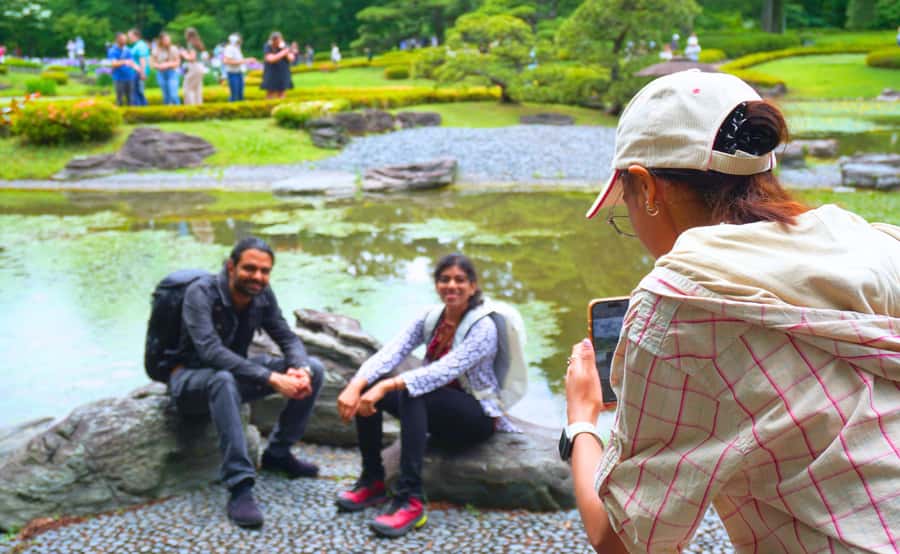
Book this tour if you want the Imperial Palace grounds to make sense. For $32, you get a clear introduction to the Edo and Meiji eras, the old social order, the former castle, and the palace’s later role. Guides such as Mika and Natsumi add warmth, practical Tokyo advice, and the flexibility to answer real questions.
Do not book it expecting entry to the Inner Palace or a grand indoor palace tour. You will spend the time outside, walking through gardens and former castle grounds in all weather. For the right visitor, that is exactly the appeal: history underfoot, a calm break from central Tokyo, and a guide who helps you see more than stone walls and trees.
FAQ
Where does the Imperial Palace walking tour start?
Meet near the Starbucks by the fountain in Wadakuramon Fountain Park. The park is about a five to ten-minute walk from Tokyo Station or Otemachi Station.
How do I recognize the guide?
The guide will be near the fountain and should hold a sign with the Sunrise Adventure logo.
Where does the tour end?
The walking tour ends back at the original meeting point near Wadakuramon Fountain Park.
Is the Inner Palace included?
No. The Inner Palace is not open to the public and is not part of this activity.
What languages are available?
The tour is offered in English and French.
Does the tour run in bad weather?
Yes. The walk takes place rain or shine, so wear clothing suitable for the forecast.
Who may find this tour unsuitable?
The activity is not listed as suitable for pregnant women, wheelchair users, people with mobility, back, or heart problems, people with recent surgeries, or people with a low level of fitness.
More walking tours elsewhere in Japan
- Tokyo: Tsukiji Fish Market Food and Walking tour
★ 5.0 · 1,724 reviews - Tokyo: Asakusa Walking Tour with Sensoji Temple Visit
★ 4.8 · 1,583 reviews - Tokyo: Tsukiji Fish Market Guided Walking Tour
★ 4.9 · 1,397 reviews - Tokyo Castle & Imperial PalaceーShogun Walking Tour
★ 4.7 · 1,068 reviews
Just added in Tokyo
- Nikko: Edo Wonderland Edomura Cultural Theme Park Ticket★ 4.3 · 205 reviews
- 《MEMBERS-ONLY-BAR-HOPPING》Discover Your Special Whiskey in Tokyo!★ 5.0 · 29 reviews
- Japanese Whisky Hunting《HIGH-QUALITY-ONLY》Rare Tasting Class★ 5.0 · 20 reviews
- Luxury Tokyo Sake, Cocktail, Whisky and Pairing Tour★ 5.0 · 18 reviews
- Wagyu & Sake Pairing in Shinjuku – Steak, Shabu-Shabu & More★ 5.0 · 112 reviews
- Small-Group Wagyu Beef and 7 Japanese Dishes Tokyo Cooking Class★ 5.0 · 190 reviews
- Tokyo: KABUKI, BUNRAKU, etc. presented by National Theatre★ 4.6 · 135 reviews
- Mt. Fuji & Hakone Cherry Blossom private One Day Tour★ 4.5 · 35 reviews
Imperial Palace & Historic Sites, compared.
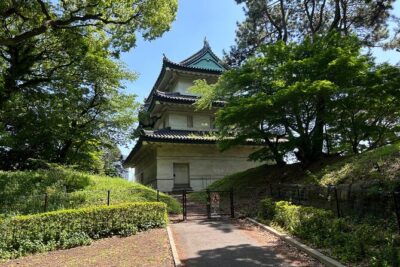
Imperial Palace and Shogun Historical Walking Tour
Read our review →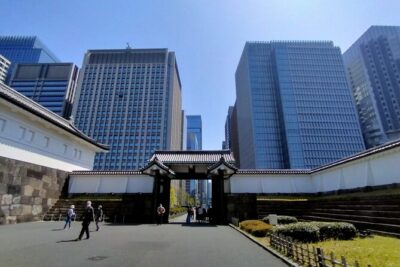
Imperial Palace East Garden and Edo Castle Walking Tour in Tokyo
Read our review →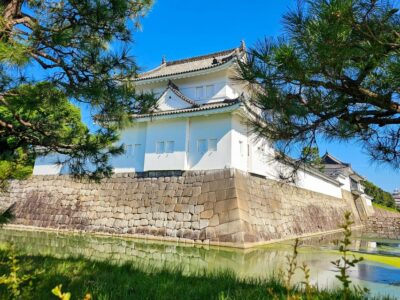
Imperial Palace & Nijo Castle Guided Walking Tour
Read our review →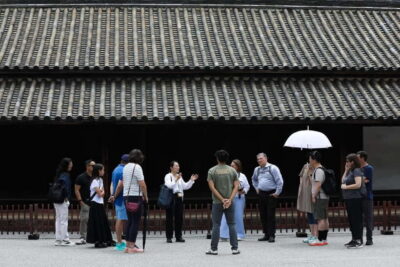
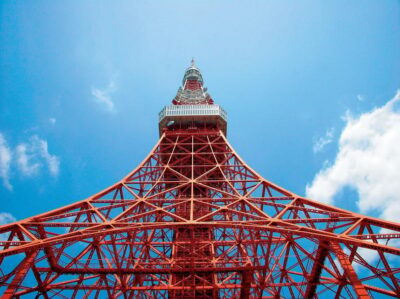
Imperial Palace, Sensō-ji Temple, & Tokyo Tower Tour
Read our review →
Tokyo Castle, Imperial Palace, Shogun & Garden Walking Tour
Read our review →Browse the lists this tour appears in