
Reviewed · TOURS IN OSAKA
Osaka: Traditional Mochi Pounding Experience with Tasting
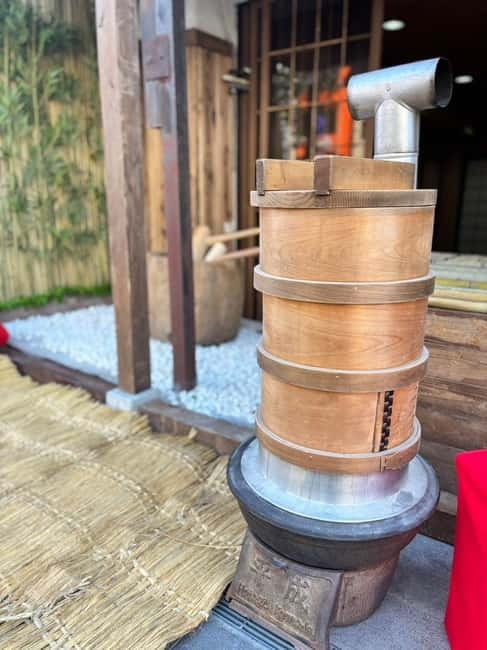
Mochi pounding turns a simple sweet into a lively piece of Japanese culture. You’ll help transform steamed glutinous rice with a mortar and pestle, then eat the results while they are fresh and wonderfully sticky. I like the small groups of up to four and the short, useful introduction before the hands-on work begins.
I also like the range of toppings, from kinako and sweet red bean paste to nori and sweet soy sauce, plus the cup of tea served with your tasting. The main consideration is physical effort: pounding mochi takes more stamina than the cheerful photos suggest, and the compact room may feel close if you prefer lots of space.
Key points
- Traditional rice pounding: Use a mortar and pestle to turn steamed glutinous rice into mochi.
- A compact one-hour format: The session gives you culture, making, shaping, and tasting without taking half a day.
- Fresh toppings to compare: Try kinako, red bean paste, nori, sweet soy sauce, and other available flavor combinations.
- Good for mixed-age groups: Choose the adult plan for ages 13 and up, or the family plan for children and adults.
- Helpful multilingual guides: Instruction is offered in English and Chinese, with guides such as Seina, Taka, Misaki, Moe, and Grace.
- Central but easy-to-miss entrance: The activity is around Dotonbori, with access reported from the canal side rather than the main street.
Why mochi pounding works so well in Osaka
Many food activities give you a sample and a short explanation. This one puts you in the middle of the process. You do not simply watch a staff member make mochi. You help mash the rice, take a turn with the wooden tool, shape the finished dough, and eat what you made.
That physical work matters. Mochi is not just rice pressed into a sweet ball. The pounding changes the texture, making the rice smooth, elastic, and sticky. You can see and feel the change in front of you, which makes the cultural lesson easier to remember.
The opening introduction lasts about 10 minutes. It covers the history and cultural importance of mochi, giving you enough background to understand the activity without using up the best part of the hour. I appreciate that balance. You get context, but the focus stays on doing something.
The experience is especially useful if your Osaka schedule is packed with food halls, department stores, and famous signs. Those places show you what Osaka eats. This session shows you how one traditional food is made.
Other experiences people book in Osaka:
- Osaka Go Karting Tour with Funny Costume
★ 5.0 · 2,658 reviews - Osaka Castle: Museum and Tower Entry Ticket
★ 4.5 · 2,380 reviews - Osaka: Shinsekai Food Tour with 13-15 Dishes at 5 Eateries
★ 4.8 · 2,204 reviews
The one-hour route from rice to mochi
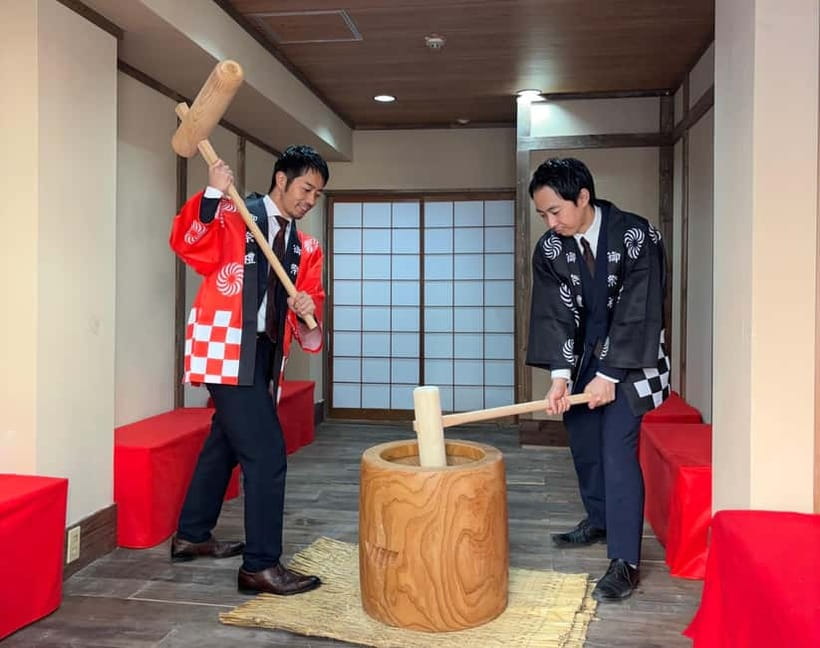
The session begins with steamed glutinous rice and a short explanation of the tools. You work with a traditional mortar and pestle, moving through the early stage of mashing before the rice becomes a cohesive mass.
Next comes the famous pounding. The guide explains how to use the tool and helps keep the process safe and orderly. Everyone gets a chance to participate, so even a solo participant is not left standing at the edge of the room. The small-group setup makes it easier to receive help and ask questions.
This is also the part where you should expect to put in some effort. The work is fun, but repeated pounding can tire your arms. If you are visiting with children, the family plan is designed to include different ages, and the guides adjust the activity so children can take part rather than simply watch.
Once the dough reaches the right texture, you shape it into pieces. This gives the session a satisfying finish before the tasting begins. You have followed the full path from rice to food, not just performed one decorative step.
The one-hour length is a real advantage. You can fit it between sightseeing stops without sacrificing an entire afternoon. At the same time, the activity is long enough to include an introduction, several hands-on stages, and a generous tasting.
Fresh mochi and the topping table
The tasting is more than one plain bite. You can pair your freshly made mochi with classic Japanese flavors, including kinako, sweet roasted soybean flour, sweet red bean paste, nori, and sweet soy sauce. A cup of tea comes with the food.
Kinako gives the mochi a dry, nutty coating. Red bean paste brings a sweet, smooth contrast, while nori adds a savory note. Sweet soy sauce moves the experience in another direction, showing how mochi can work with flavors beyond the dessert category.
The range is useful for anyone who thinks they already know mochi. Soft packaged mochi from a shop and warm, freshly pounded mochi have different textures. The handmade version is notably sticky, and that is part of its appeal. You should take small bites and pay attention to the texture rather than rushing through it.
The tasting can also fill you up. You may want to avoid booking this immediately after a large meal. The amount is not described as a full meal, but the activity includes enough mochi for several flavor combinations, and the rice-based sweet is satisfying.
I like that you can compare toppings in the same sitting. A person who dislikes red bean paste may prefer it with cream or another pairing, while someone who prefers savory food may enjoy nori or sweet soy sauce. The tasting is a small lesson in Japanese flavor balance.
Friendly instruction in a group of four
The activity is limited to four participants. That number changes the mood. You are not trying to see over a crowd or wait through a long line of people before touching the tools.
The guides are described as cheerful, attentive, and willing to help with photos. Names connected with the sessions include Seina, Taka, Misaki, Moe, and Grace. English and Chinese instruction is available, which makes the process easier to follow when timing and movement matter.
The staff also keep the tone social. Solo participants can join without feeling stranded, and families can take part together. If you are alone, ask the guides to take photos while you pound or shape the mochi. That practical help is valuable because using the tools and taking a picture at the same time is not easy.
The room is compact and kept clean. That is useful for a food activity, but it also means you should not expect a large studio or much room to spread out. The limited space helps the group stay connected, though people who dislike close quarters may want to keep that in mind.
The guides have also been praised for helping mixed-age groups participate. Children may not have the strength to manage every stage, but they can still contribute, shape the dough, and taste the results. Adults and older children can take on more of the pounding.
Same base, a different sort of day:
- Osaka Food Tour: 13 Dishes at 5 Local Eateries
★ 5.0 · 2,149 reviews - Hungry Osaka Street Food Tour:15 Tastings & 3 Drinks with a Local
★ 5.0 · 1,727 reviews - Osaka: teamLab Botanical Garden Entry Ticket
★ 4.5 · 1,710 reviews - Osaka: Tea Ceremony Experience
★ 4.9 · 1,426 reviews
Finding the entrance near Dotonbori
The central location is one of the strongest practical points. You can place the activity into a Dotonbori sightseeing day, making it easy to combine with the canal, restaurants, and nearby shopping.
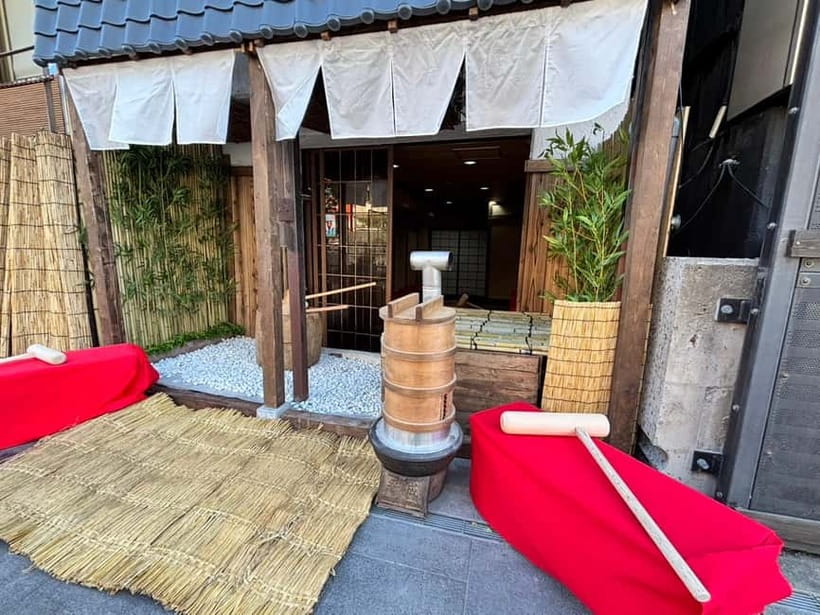
The entrance deserves extra attention. It is by the river or canal side rather than directly on Dotonbori Street. Some participants had trouble finding it and noticed a handwritten sign at the entrance of a hotel on a parallel street.
I would allow a little extra time to get there. The meeting point can vary according to the plan you book, so check the exact instructions before leaving. Do not assume that the brightest Dotonbori sign marks the door.
Transportation is not included. You make your own way to the meeting point, so this is easiest for someone already planning to visit the central Osaka area. Since the activity lasts only an hour, the lack of transport is not a major problem, but it does make accurate meeting-point information important.
Adult plan or family plan?
The adult experience is for ages 13 and up. It suits older teenagers and adults who want a more focused look at the process and the cultural background.
The family experience welcomes all ages. I would choose it for a group with young children, grandparents, or a mix of adults and teenagers. The session is active enough to keep children engaged, but the introduction is short enough that they do not have to sit through a long lecture.
This is not a passive food demonstration. You need to stand, handle ingredients, use the tools, and shape sticky dough. Comfortable clothing is recommended, and that advice is worth following. Wear something you can move in and do not choose an outfit that needs constant protection from flour or sauces.
The experience is available year-round, so it can serve as a useful rainy-day plan or a break from outdoor sightseeing. It also gives you a change of pace from temples and shopping streets without taking you far from the center.
What the $31 price gets you
At $31 per person, the value comes from the combination of instruction, food, and participation. You are paying for an organized cultural activity, all ingredients and tools, a guide, and a tasting with several seasonings.
If you only want to eat mochi, this is not the cheapest way to get a snack. Osaka has many places to buy sweets. The reason to book this is the process: learning why mochi matters, handling traditional equipment, and eating something you helped make.
The small group improves the value. With no more than four participants, the session can give each person real time with the mortar, pestle, and dough. A larger class might cost less, but you could spend more time watching than doing.
I consider the price fair for someone seeking one memorable food activity in Osaka. It is particularly good value for a family because the same hour gives children a hands-on cultural lesson and adults a chance to enjoy the food. Solo visitors also get the full experience rather than being treated as an afterthought.
Flexible booking helps if your Osaka plans are still shifting. You can reserve and pay later, and cancellation is free up to 24 hours before the activity for a full refund. Check availability because starting times vary.
Who should book this experience?
I would recommend it to anyone who likes food with a story and prefers doing over watching. It works well for families, couples, solo visitors, and older children who can follow instructions.
It is also a good pick for repeat visitors to Japan. You may have eaten mochi many times, but making it from steamed rice gives you a new way to understand the food. The experience does not require specialist cooking skills, and the guides handle the instruction.
You may want to skip it if you dislike sticky textures, do not want to use physical effort, or prefer a quiet tasting with no group participation. The pounding is part of the point, and the session has an upbeat, social feel.
The cultural content is brief rather than academic. If you want a long lecture on Japanese food history, this will feel light. If you want a clear introduction followed by real participation, the balance is right.
Practical tips before you go
- Wear comfortable clothing that lets you move freely.
- Leave room in your appetite because the tasting can be filling.
- Check the meeting point for your selected plan.
- Look for the entrance from the canal or river side, not only from Dotonbori Street.
- Arrive with enough time to find the door, especially if you are unfamiliar with the area.
- If you are traveling alone, ask the guides to take photos while you work.
- Choose the adult plan for ages 13 and up, or the family plan for younger children.
- Expect a clean, compact room rather than a large open workshop.
Should you book the Osaka mochi pounding experience?
I would book it if you want a short, active food experience near Dotonbori. The strongest reasons are the small group, the chance to make the mochi yourself, and the useful mix of history and tasting.
The session earns its place in an Osaka itinerary because it gives you something a restaurant cannot: a direct connection between ingredient, technique, and finished food. Just allow extra time to find the canal-side entrance, wear clothes suited to movement, and avoid arriving after a heavy meal.
For families, solo visitors, and anyone curious about Japanese sweets, this is an easy recommendation at $31. If you only want a quick dessert, buy mochi elsewhere and spend your hour exploring Osaka.
FAQ
How long does the mochi pounding experience last?
The experience lasts one hour. It includes a short introduction, the preparation and pounding process, shaping, and tasting.
How much does the activity cost?
The listed price is $31 per person.
What will I do during the experience?
You will learn about mochi, work with steamed glutinous rice, use traditional tools to pound it, shape the finished dough, and taste it with Japanese toppings.
Which toppings are included?
Toppings include kinako, sweet red bean paste, nori, and sweet soy sauce. Tea is also served with the tasting.
Is the activity suitable for children?
Yes. The family plan welcomes all ages. The adult plan is for participants ages 13 and up.
What languages are available?
Instruction is available in English and Chinese.
How many people are in each group?
The activity is offered as a small group with a maximum of four participants.
Is transportation included?
No. You are responsible for getting to and from the meeting point. The meeting point may vary depending on the plan you select.
Just added in Osaka
- Osaka: Mind & Spirit Balance Temple Reiki Healing★ 5.0 · 41 reviews
- Osaka Temple Cool Foot Bath & Matcha Experience〈45min〉★ 4.9 · 82 reviews
- Full Day Kyoto Tour : Bamboo Forest, Golden Temple, Fushimi Inari★ 5.0 · 84 reviews
- Osaka: Minoh, Katsuoji Temple, & Minoh Falls Full-day Tour★ 4.9 · 172 reviews
- OSAKA NIGHT FUSION Japanese Taiko Kabuki Samurai Dance Show★ 4.8 · 155 reviews
- Ramen and Gyoza Cooking Class in Osaka★ 5.0 · 202 reviews
- Osaka: A Modern Samurai, Kabuki, Taiko, & Dance Show★ 4.5 · 66 reviews
- Osaka: Samurai Training Experience KENDO in Osaka★ 5.0 · 111 reviews
Tours in Osaka, compared.


Osaka Food Tour: 13 Dishes at 5 Local Eateries
Read our review →
Hungry Osaka Street Food Tour:15 Tastings & 3 Drinks with a Local
Read our review →


Hotspots & Hidden Gems Walking Tour Private or Group
Read our review →Browse the lists this tour appears in