
Reviewed · HIROSHIMA & MIYAJIMA DAY TRIPS
The Journey of Hiroshima from Tragedy to Peace
Hiroshima Peace Memorial Park is most powerful when you move through it slowly, one memorial at a time. This walking tour follows that path, from the Gates of Peace to the Atomic Bomb Dome and the exact hypocenter of the 1945 blast, while explaining what the city was like before, during, and after the bombing.
I like the route’s human focus, especially the stories of Dr. Marcel Junod, Sadako Sasaki, Korean victims, and the survivor connected with the Peace Park Rest House. I also like the guides’ careful pace and willingness to answer questions. The main drawback is that the tour does not include the Peace Memorial Museum, and its many outdoor stops can be difficult for people with mobility limitations.
Key points at a glance
- The tour ends at the exact hypocenter, the point directly beneath the atomic bomb’s explosion.
- The Atomic Bomb Dome is part of a wider story, not just a photo stop. You learn why it survived and what it represents today.
- The human stories are the heart of the walk, including Sadako Sasaki, Dr. Marcel Junod, and a survivor only 170 meters from the blast point.
- The route includes less familiar memorials, such as the Norman Cousins Peace Memorial and the Korean Monument.
- English-speaking guides such as Ali, Wajid, and Zunera explain the sites and make room for questions.
- At $30 per person, the tour offers a useful introduction to the park, but you should budget separately for the museum.
Why this Hiroshima walk matters
Hiroshima Peace Memorial Park can feel orderly and calm today. Green space, broad paths, memorials, and the river make it easy to forget that this was the center of a city destroyed by one bomb. A guided walk helps you connect the quiet setting with the people and events that shaped it.
The tour is not only about military history. It looks at ordinary residents, medical workers, children, foreign nationals, survivors, and peace advocates. That wider view matters. Hiroshima’s story is not limited to the moment of the explosion. It also includes the city before the bombing, the suffering that followed, and the long effort to remember the dead while calling for an end to nuclear weapons.
I would choose this experience if you want a serious introduction to Hiroshima before visiting the museum, or if you have already been to the museum and want to understand the memorial park’s outdoor sites in better context. At $30 per person, it is a reasonable price for a guided route through so many important locations.
The tone is reflective rather than lighthearted. You should expect difficult subjects and moments of silence. This is not a casual sightseeing stroll, though the pace is described as comfortable and gives you time for photographs and discussion.
Other long days west of Hiroshima:
- Peaceful Hiroshima & Miyajima UNESCO 1 Day Bus Tour
★ 5.0 · 5,309 reviews - Hiroshima: Hiroshima and Miyajima UNESCO Sites 1-Day Tour
★ 4.9 · 2,330 reviews - Hiroshima / Miyajima Full-day Private Tour with Government Licensed Guide
★ 5.0 · 1,298 reviews
Meeting at the Gates of Peace
The walk begins at the Gates of Peace, in front of the Italian restaurant Mario. This gives you a clear place to meet your guide before entering the park.
The opening location is fitting. The gates prepare you for a route built around Hiroshima’s peace message, but the guide also sets the historical frame. You will hear about Hiroshima before the bombing, what happened during the attack, and how the city rebuilt afterward.
Guides include Ali, Wajid, and Zunera. The strongest feature shared by these guides is their ability to explain difficult material clearly and adjust the pace for questions. Wajid is also noted for making communication before and during the walk straightforward, which can make the meeting point easier to manage.
The activity is offered in English. Because this is a group walk, the amount of discussion can depend on the group, but the experience is designed to be interactive rather than a simple speech delivered at each stop.
Mother and Baby in Storm: beginning with compassion
The first major stop is the Mother and Baby in Storm statue. Its subject is simple but powerful: the bond between a mother and child in the aftermath of catastrophe.
Starting here places individual love before the larger political story. Hiroshima can easily be reduced to dates, aircraft, weapons, and casualty numbers. This statue brings the focus back to people protecting one another and trying to survive.
Your guide uses this stop to introduce the emotional side of the park. It is a useful beginning because it reminds you that the city’s peace message grew from human loss and care, not from an abstract idea.
Dr. Marcel Junod and the response after the blast
The Dr. Marcel Junod Memorial honors the Swiss physician who became a humanitarian figure after the bombing. This stop broadens the story beyond Hiroshima’s residents and the governments involved in the war.
Junod’s memorial points to the urgent medical and humanitarian work that followed the explosion. You learn how people responded to mass suffering when local services had been shattered. That makes the stop useful for understanding the aftermath, not just the blast itself.
I appreciate this part of the route because it shows that Hiroshima’s story includes international responsibility and compassion. The memorial also gives the guide a chance to explain how outside medical workers helped document and respond to the disaster.
Same base, a different sort of day:
- Hiroshima Historical Walking Tour – Why A-Bomb was Dropped
★ 4.8 · 893 reviews - Hiroshima Peace (Heiwa) Walking Tour at World Heritage Sites
★ 5.0 · 872 reviews - Hiroshima in a Nutshell: Morning Bike Adventure
★ 5.0 · 524 reviews - Hiroshima City 4hr Private Walking Tour with Licensed Guide
★ 5.0 · 437 reviews
Norman Cousins and the push for nuclear disarmament
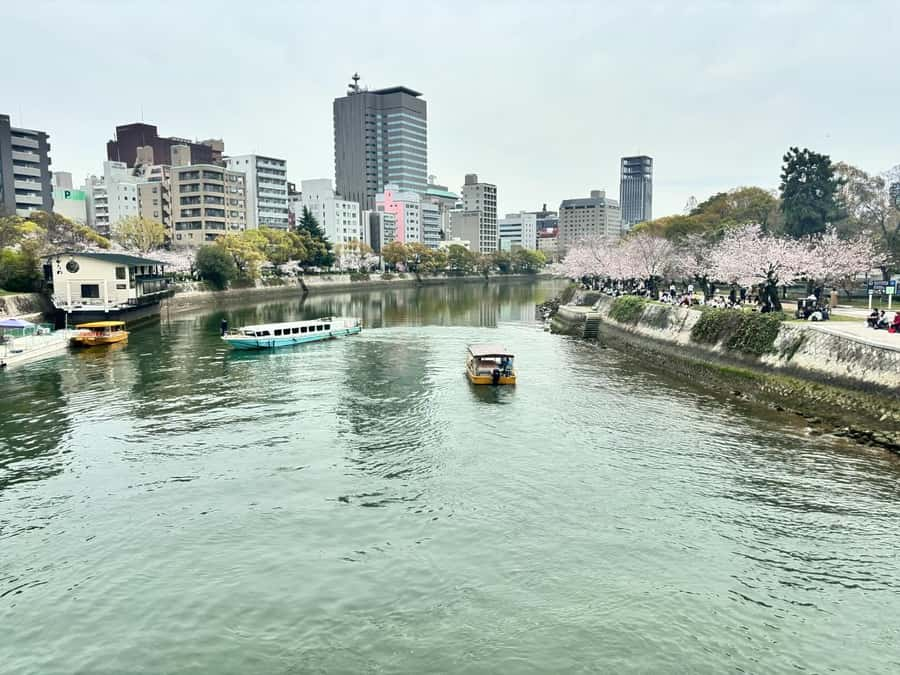
At the Norman Cousins Peace Memorial, the focus shifts to an American writer and peace activist who advocated for nuclear disarmament.
This is one of the less familiar stops on the route, and it adds political context to the park. Hiroshima’s peace work did not remain only a local act of remembrance. It became part of a wider argument against nuclear weapons.
The memorial is worth including because it shows how people from outside Japan engaged with Hiroshima’s message. It also helps you see the park as an active call for change, not simply a place dedicated to the past.
The Peace Cenotaph and the eternal flame
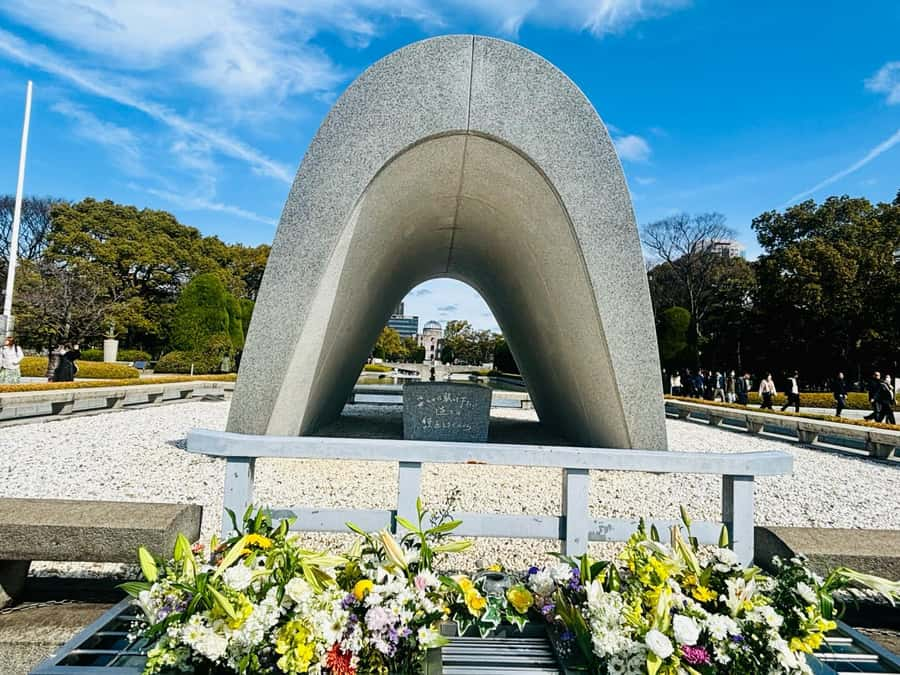
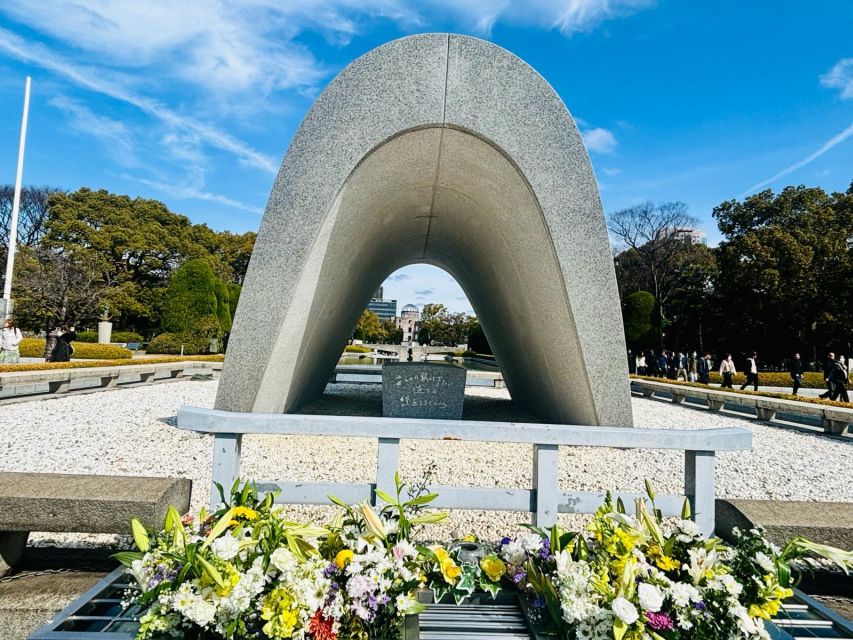
The Peace Cenotaph is one of the park’s central memorials. Its curved stone form shelters the names of atomic bomb victims, while the nearby Flame of Peace carries a promise that it will remain lit until the last nuclear weapon has been eliminated.
Your guide can explain why the cenotaph is such an important point in the park’s design. The names place the victims at the center, while the flame links remembrance to a future goal.
This is likely one of the quietest parts of the walk. Give yourself time to look, listen, and take in the setting rather than rushing toward the next stop. The meaning is direct, but the scale of the loss is difficult to absorb all at once.
The Flame of Peace is included in the experience. It is one of the tour’s clearest symbols, and it ties together the route’s two main ideas: remembering what happened and working toward a world without nuclear weapons.
The National Peace Memorial Hall and the stories behind the names
The Hiroshima National Peace Memorial Hall for the Atomic Bomb Victims provides a more personal record of those who died. The hall contains an extensive archive and presents information about people’s lives before the bombing.
This stop is especially valuable if you want more than a broad account of the attack. Numbers tell you the scale of the disaster, but personal records help you understand that each victim had a home life, work, family, and plans for the future.
The hall is also a good reminder that Hiroshima existed before 1945. The city was not created by the bombing, and its people should not be remembered only through the circumstances of their deaths.
You should ask your guide questions here if the group format allows. Ali, Wajid, and Zunera are all described as willing to explain details and respond carefully, which is useful at a site containing so much information.
The Peace Park Rest House and a remarkable survival story
At the Hiroshima Peace Park Rest House, you hear about a resident who was only 170 meters from the hypocenter when the bomb exploded and survived.
That distance is hard to picture until you are walking through the park. The story gives the bombing a physical scale. It helps you understand how close the blast was to ordinary homes, businesses, and people going about their daily lives.
The Rest House stop also adds an important note about rebuilding. Hiroshima’s story did not end with destruction. Survivors had to endure injury, grief, uncertainty, and the challenge of restoring a city.
This is one of the most memorable parts of the route because it connects a personal survival story with a place you can actually see. It is also a good point for questions about what happened immediately after the bombing.
The Children’s Monument and Sadako Sasaki
The Children’s Monument is dedicated to Sadako Sasaki and other children affected by the atomic bomb. Colorful paper cranes surround the monument, creating one of the park’s most recognizable sights.
Sadako’s story has become closely linked with the cranes and the hope for peace. The monument gives the tour a child’s perspective, which is important because children were among the victims and survivors of the bombing.
The bright cranes can look cheerful, but the meaning is serious. They represent remembrance, hope, and the wish for a world without nuclear weapons. Your guide can help place Sadako’s story within the wider experience of children affected by the bombing.
For families with older children or young adults, this may be one of the easiest stops to discuss. The story is personal and understandable, though the subject remains painful.
The Korean Monument and a wider account of suffering
The Korean Monument honors Korean victims of the atomic bombing. Its inclusion matters because any honest account of Hiroshima must recognize that not everyone affected was Japanese.
This stop adds a perspective that can be missed when the story is told only through Japan’s national experience. Korean people were among those who suffered and died in the bombing, and the memorial recognizes their place in Hiroshima’s history.
The monument also connects remembrance with reconciliation. It encourages you to think about the different nationalities and communities caught in the war, and about the need for peace that reaches beyond national borders.
I consider this one of the tour’s strongest choices. It adds depth without requiring a separate excursion, and it keeps the route from presenting Hiroshima as a single, simplified story.
Ringing the Peace Bell
The Peace Bell offers a small moment of participation. Visitors can ring it in remembrance and as a personal call for peace.
This is a different experience from looking at a monument or listening to an explanation. The sound gives the group a shared action, even if each person brings a different response to the park.
The bell stop should not be treated as a novelty. Its value comes from the pause it creates. After hearing about victims, survivors, and the effects of the bombing, you have a chance to take part in the park’s message rather than only observe it.
The Atomic Bomb Dome and the view of destruction
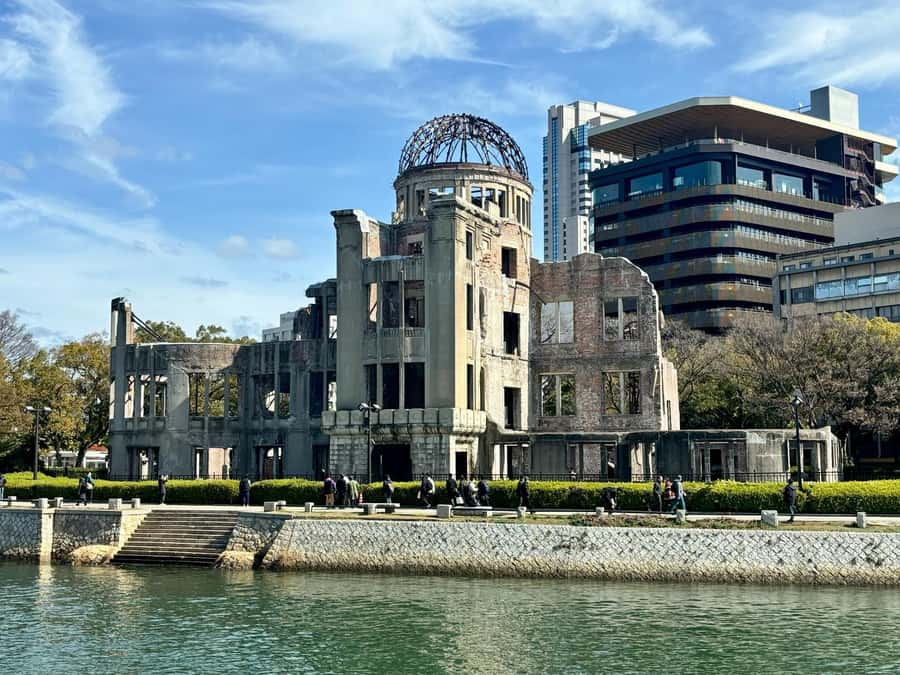
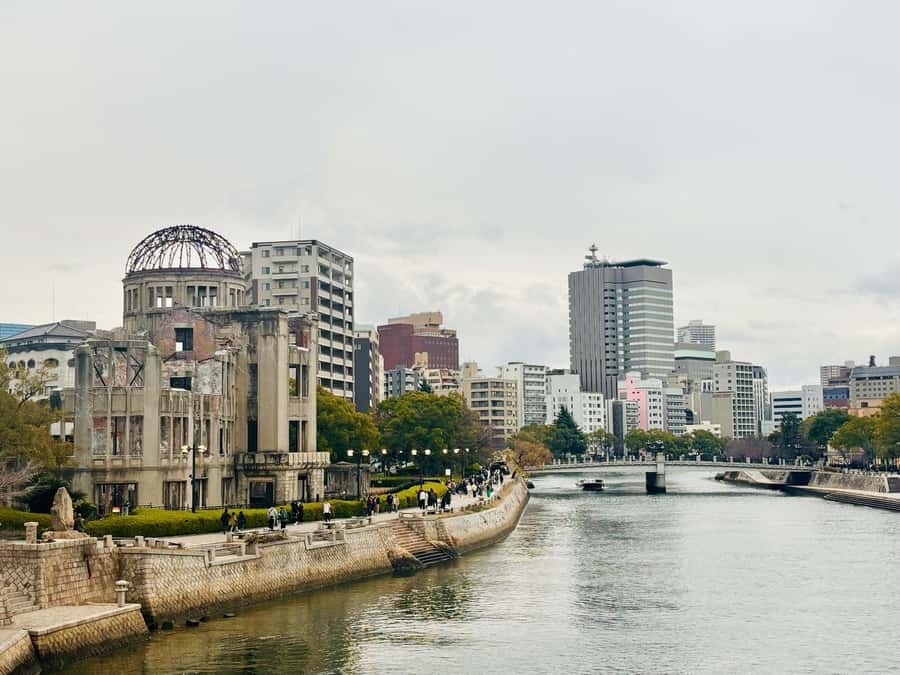
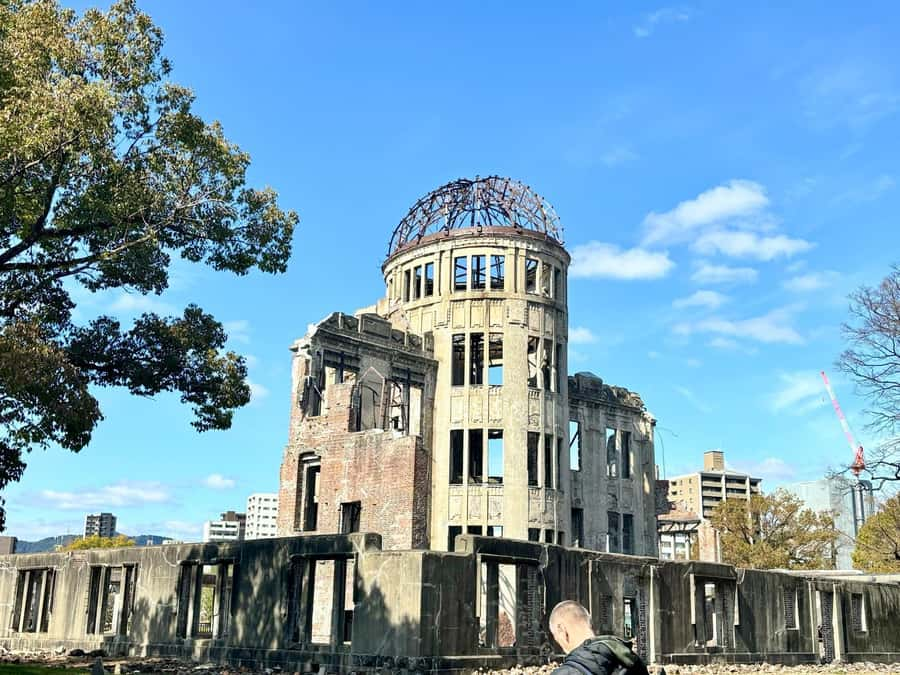
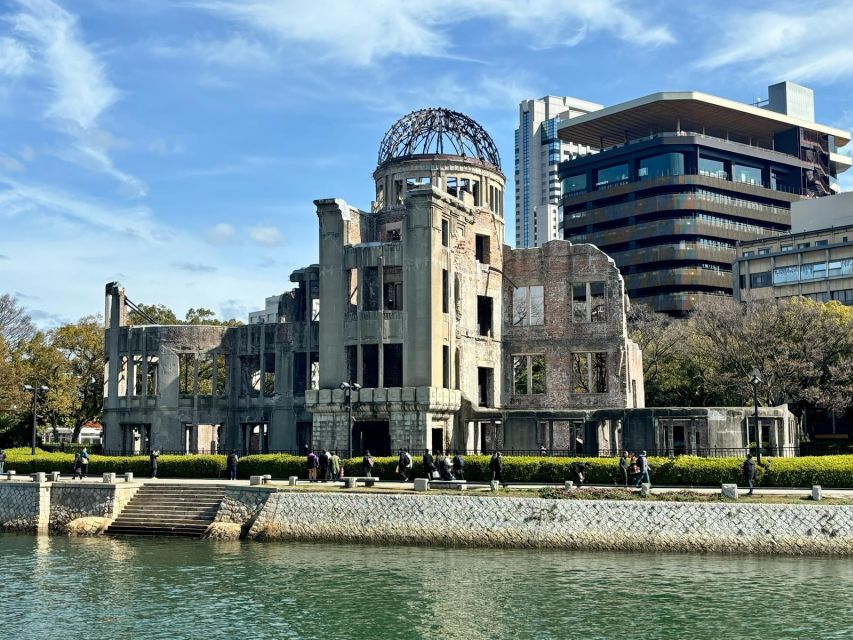
The Atomic Bomb Dome is the tour’s most recognizable site and a UNESCO World Heritage Site. Its damaged structure remains beside the river, close to the former center of Hiroshima.
The guide explains how the building survived the blast and why it has been preserved. The ruins are difficult to look at because they are both a physical structure and a reminder of the people and buildings that did not survive.
This is also where photographs are most likely, but I would avoid treating the Dome as just a backdrop. The value of the stop comes from understanding what the building represents: the scale of destruction, the decision to preserve evidence of the bombing, and Hiroshima’s continuing appeal for peace.
The Dome is powerful partly because it is so concrete. You do not need to imagine every detail. The damaged walls and exposed frame make the past visible.
Ending at the exact hypocenter
The walk concludes at the hypocenter, the point directly beneath the explosion. This final stop brings the route to its geographic center.
Ending here gives the tour a clear structure. You begin at the Gates of Peace, move through memorials that explain the human and political aftermath, and finish at the place where the destruction began.
The hypocenter is not a scenic finale. It is a place for quiet reflection. Your guide helps connect the physical point beneath you with the people who experienced the blast and the city’s commitment to peace.
The activity ends back at the meeting point, so you should not need to arrange a separate return transfer. The exact walking duration is not provided, so allow flexibility in your day rather than scheduling another activity too tightly afterward.
How much value do you get for $30?
At $30 per person, this is good value if you want a guided introduction to the outdoor memorial park. You visit many important locations, hear the stories behind them, and can ask questions as you go.
The price does not include food or entrance to the Peace Memorial Museum. That is not necessarily a weakness, since you can decide whether to add the museum separately and spend as much time there as you wish. Still, budget for that extra cost if you want the fullest account of Hiroshima’s history.
The tour is especially useful for first-time visitors who might otherwise see the Atomic Bomb Dome, Cenotaph, and Children’s Monument without understanding how they connect. A guide gives the park a clear order and fills in the background between the visible sites.
It is less useful for someone who wants a private tour or a detailed museum visit built into the same booking. This is a group walking tour in English, with the emphasis on the park and its memorials.
Pace, accessibility, and the best time to go
The walk includes many stops and is described as proceeding at a comfortable pace. Several people found the amount of walking manageable, with time for photographs and discussion.
The activity is not suitable for people with mobility impairments. The route uses outdoor paths and includes multiple memorials, so consider your comfort with walking before booking.
One useful timing tip comes from the experience of the route itself: a 4:30 p.m. start can help you avoid the strongest daytime heat. The exact tour duration is not provided, so check the available booking time and leave room afterward for the museum or a quiet meal.
I would not rush this tour. Hiroshima’s memorials ask for attention, and the best value comes from listening rather than racing from one stop to the next.
Who should book this Hiroshima tour?
Book it if you want:
- A guided introduction to Hiroshima Peace Memorial Park
- Clear explanations in English
- Personal stories alongside the major historical events
- A route that includes the Atomic Bomb Dome and hypocenter
- A group walk with time for questions and photographs
- A way to visit less familiar memorials, including the Korean Monument and Norman Cousins Peace Memorial
It suits adults, older children, young adults, students of peace studies, and anyone interested in the human cost of war. The route is serious, but the guides’ approachable style can make difficult material easier to discuss.
You may want a different option if you need step-free access, want a private guide, or expect the museum entrance to be included. You should also avoid packing the day too tightly, since the emotional weight of the walk may call for a quiet break afterward.
Should you book The Journey of Hiroshima from Tragedy to Peace?
I would book this tour if you want the outdoor memorial park explained with care rather than simply photographed. The strongest reasons are the well-shaped route, the human stories, and the guide’s attention to questions and pace. Ali, Wajid, and Zunera are all named as guides associated with a clear and personal presentation, and the tour has earned a 4.8 rating from 44 reviews.
At $30, it offers solid value for a focused walk through Hiroshima’s most important memorial sites. Add the museum separately if you want more first-person records and archival material. If you can walk comfortably and are ready for a serious experience, this tour gives you a thoughtful way to understand Hiroshima’s path from tragedy toward peace.
FAQ
How much does the tour cost?
The tour costs $30 per person.
What language is the tour offered in?
The tour is offered in English.
Where does the tour begin?
Meet your guide at the Gates of Peace, in front of the Italian restaurant Mario.
Where does the tour end?
The activity ends back at the meeting point.
Is the Atomic Bomb Dome included?
Yes. The Atomic Bomb Dome is included, along with Hiroshima Peace Memorial Park, the Hiroshima Peace Memorial Hall for Atomic Bomb Victims, Children’s Monuments, and the Flame of Peace.
Is the Peace Memorial Museum entrance included?
No. Entrance to the museum is not included.
Is food included?
No. Food is not included in the price.
Is the tour suitable for people with mobility impairments?
No. The activity is listed as unsuitable for people with mobility impairments.
Can I cancel for a full refund?
Yes. You can cancel up to 24 hours in advance for a full refund. You can also reserve and pay later, so no payment is required today.
Just added in Hiroshima
- Iya Valley BROMPTON Slow Cycling Tour★ 5.0 · 28 reviews
- Iya Valley All Must-Sees Private Chauffeur Full-day Tour with a Driver★ 5.0 · 20 reviews
- Shore Excursion from Hiroshima Port : Private Tour in Hiroshima★ 5.0 · 17 reviews
- Hiroshima & Miyajima All-Inclusive Tour w/Licensed guide Pancho★ 5.0 · 54 reviews
- The Peace Memorial to Miyajima : Icons of Peace and Beauty★ 4.5 · 31 reviews
- Okunoshima Rabbit Island Cycling Tour with Local Guide★ 4.5 · 17 reviews
- Private Full Day Hiroshima Tour★ 4.5 · 29 reviews
- Hiroshima Saijo Sake Tasting Tour with visit to 7 Breweries★ 5.0 · 104 reviews
Hiroshima & Miyajima Day Trips, compared.
Peaceful Hiroshima & Miyajima UNESCO 1 Day Bus Tour
Read our review →
Hiroshima and Miyajima UNESCO Sites 1-Day Tour
Read our review →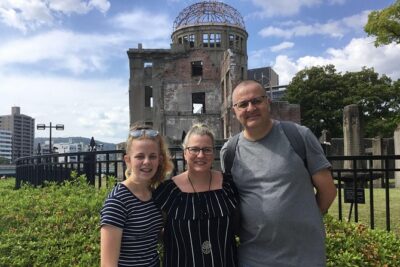
Hiroshima / Miyajima Full-day Private Tour with Government Licensed Guide
Read our review →
Osaka/Kyoto: Hiroshima Miyajima Bus Tour & Shinkansen Ticket
Read our review →
Hiroshima Historical Walking Tour – Why A-Bomb was Dropped
Read our review →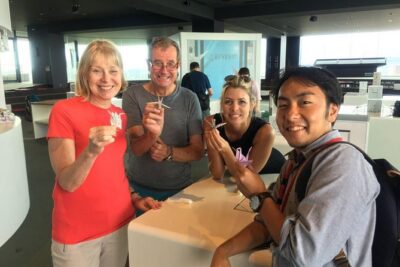
Hiroshima Peace (Heiwa) Walking Tour at World Heritage Sites
Read our review →
Hiroshima in a Nutshell: Morning Bike Adventure
Read our review →
Hiroshima City 4hr Private Walking Tour with Licensed Guide
Read our review →Browse the lists this tour appears in