
Reviewed · HIROSHIMA & MIYAJIMA DAY TRIPS
Walking Through History: Hiroshima’s Path to Peace
Hiroshima’s Peace Memorial Park is easiest to understand when someone connects its many monuments into one story. This small-group walk does that with a PhD scholar guide, moving from the Atomic Bomb Dome through memorials for children, Korean victims, and all those killed in the bombing.
I like the maximum group size of eight, which allows room for questions and a pace that can adjust to the group. I also like that the museum ticket is purchased ahead of time, saving you from one more line on an emotionally heavy day. The main drawback is that your guide cannot speak inside the museum, so the tour’s teaching ends just as you enter its most detailed indoor exhibit.
Key points at a glance
- Nine meaningful stops in about two hours: The route covers the park’s major monuments without wasting time on distant sights.
- A small group capped at eight: You get a better chance to ask questions and hear the guide clearly.
- Several perspectives on the bombing: The route includes the Korean Victims Monument, children’s memorials, survivor stories, and the city’s peace message.
- Museum admission included: Your ticket is arranged in advance, but you visit the Peace Memorial Museum on your own.
- An easy, mostly flat walk: Comfortable shoes matter, and the guide can slow down for different physical needs.
- A thoughtful but focused history lesson: The tour centers on Hiroshima’s destruction and peace movement, so you may want extra time for Japan’s wider wartime role.
Why this Hiroshima walk works
This is not simply a stroll from one famous monument to another. The route gives you a sequence of quiet stops, each adding a different human angle to August 6, 1945, and its aftermath.
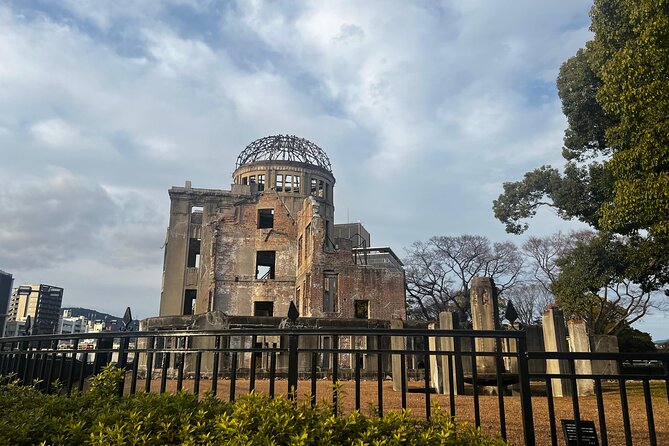
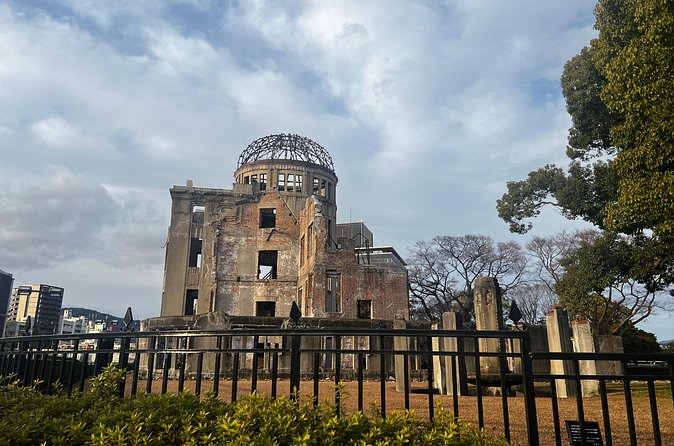
You begin at the Atomic Bomb Dome, the most recognizable structure in Hiroshima’s Peace Memorial Park. Its exposed frame and damaged walls make the bombing feel physical rather than abstract. A guide can help you read the building as both a ruin and a symbol of the city’s decision to remember rather than erase what happened.
From there, the route moves through the park at a measured pace. You are not rushed from photo stop to photo stop. The schedule allows time for explanation, questions, and reflection, which matters here more than covering ground quickly.
Past guides have included Ghani, Sheraz, Cva, and Sharain. The strongest guiding style reported from this experience is clear, warm, and interactive, with questions offered to the group rather than a nonstop speech. That approach is useful in Hiroshima, where the monuments can blur together if you do not pause to understand their purpose.
Other long days west of Hiroshima:
- Peaceful Hiroshima & Miyajima UNESCO 1 Day Bus Tour
★ 5.0 · 5,309 reviews - Hiroshima: Hiroshima and Miyajima UNESCO Sites 1-Day Tour
★ 4.9 · 2,330 reviews - Hiroshima / Miyajima Full-day Private Tour with Government Licensed Guide
★ 5.0 · 1,298 reviews
The Atomic Bomb Dome, Hiroshima’s difficult starting point
The tour opens with about 20 minutes at the Atomic Bomb Dome. Admission is free, and the building is viewed from the outside.
This is the right place to begin because it gives you an immediate sense of scale and loss. The structure survived near the bomb’s hypocenter, while much of the surrounding city was destroyed. Its damaged shell is stark, and the contrast between the ruin and the modern city around it can be unsettling.
Your guide explains the events of August 1945 and the building’s place in Hiroshima’s memory. Bring questions here. The stop is long enough for a proper introduction, but not so long that the entire tour gets stuck at one landmark.
You will have photo opportunities, but this is not a casual backdrop. Give yourself permission to put the camera away for a moment. The value of this stop is not just seeing a famous UNESCO World Heritage Site. It is beginning to grasp why Hiroshima chose to preserve this particular ruin.
Peace Bell and the sound of remembrance
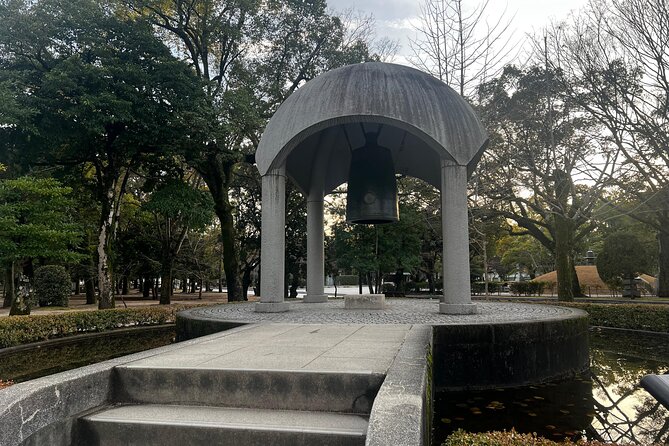
The Peace Bell receives about 10 minutes. Its purpose is simple and powerful: a world without nuclear weapons.
The bell gives the park a participatory element. Instead of only looking at a monument, you encounter a symbol tied to sound, harmony, and collective hope. Your guide explains its meaning and connects it to Hiroshima’s wider peace message.
Ten minutes is enough for orientation and reflection, though you should not expect a long ceremonial presentation. The tour keeps moving, and that is part of its strength. Hiroshima has many memorials, and a clear route helps you absorb them without turning the visit into a confusing checklist.
The Korean Victims Monument adds needed context
The stop at the Monument to Korean Victims and Survivors lasts about 10 minutes. This is one of the most important details in the route because it broadens the story beyond Japanese victims alone.
Korean people were among those killed and injured in the atomic bombing. The monument recognizes their suffering and their place in Hiroshima’s history, while also pointing toward reconciliation and peace.
I appreciate that this stop is not left out of a short introductory walk. It reminds you that wartime Hiroshima was part of a wider imperial and colonial story. If you want to understand the city honestly, you need to consider more than one national perspective.
The guide’s explanation matters here. A short visit can easily become a name and a plaque unless someone explains why this monument is separate, why it was created, and what it asks you to remember.
Same base, a different sort of day:
- Hiroshima Historical Walking Tour – Why A-Bomb was Dropped
★ 4.8 · 893 reviews - Hiroshima Peace (Heiwa) Walking Tour at World Heritage Sites
★ 5.0 · 872 reviews - Hiroshima in a Nutshell: Morning Bike Adventure
★ 5.0 · 524 reviews - Hiroshima City 4hr Private Walking Tour with Licensed Guide
★ 5.0 · 437 reviews
The Children’s Peace Monument and Sadako’s cranes
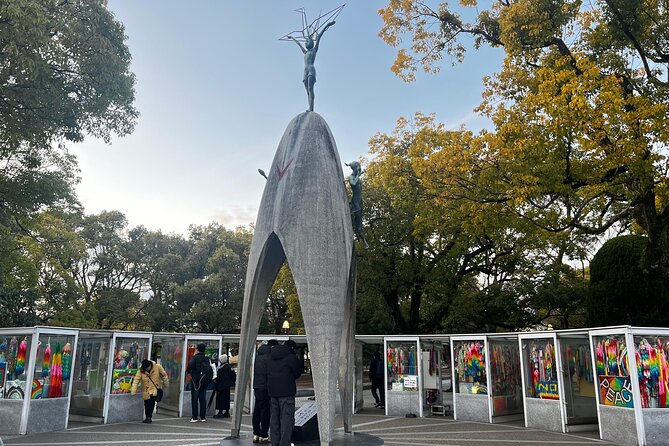
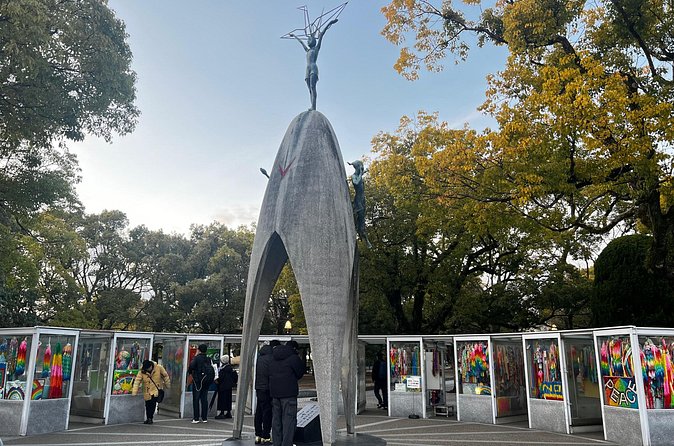
The Children’s Peace Monument takes about 10 minutes. It honors children who died because of the bombing and is linked to Sadako Sasaki, the young girl whose paper cranes became a lasting symbol of hope.
The surrounding paper cranes add color and texture to an otherwise solemn part of the park. They also give you a direct connection between an individual child’s story and the larger public memorial.
This stop often works especially well for families, though the subject is serious. The guide can explain how Sadako’s story shaped the monument without reducing Hiroshima to a single sentimental tale. You will likely find that the cranes invite a quieter kind of attention than the larger stone memorials.
If you are visiting on a hot day, use the stop as a chance to pause. One guide was praised for finding shade and giving the group space to take in each site, a sensible habit in Hiroshima’s summer heat.
The Peace Flame and the Cenotaph
The Peace Flame burns continuously and represents Hiroshima’s commitment to the abolition of nuclear weapons. The stated intention is that it remain lit until all nuclear arms are gone.
The flame is a brief stop, about 10 minutes, but it helps connect the park’s separate monuments. The Dome recalls destruction. The children’s monument recalls personal loss. The flame turns those memories toward a political and moral demand for peace.
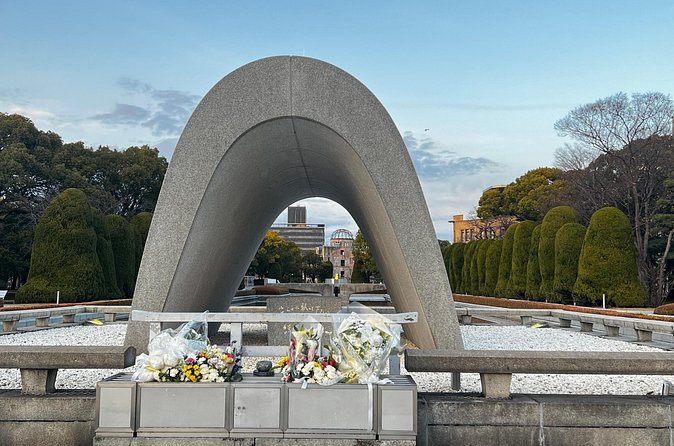
You then reach the Hiroshima Peace City Monument Cenotaph for the Atomic Bomb Victims. Its arched form contains the names of known victims and carries the inscription: Let all the souls here rest in peace, for we shall not repeat the evil.
The cenotaph aligns with the Peace Flame and the Atomic Bomb Dome, creating one of the park’s most meaningful visual relationships. Your guide can point out this alignment, which is easy to miss if you explore alone.
This is also a place where wording matters. The park’s message focuses on the victims and on preventing another nuclear attack. Some people may want more direct discussion of Japan’s wartime aggression and its alliance with Germany. This tour may not give that subject as much attention as you expect, so plan to raise the question or use the museum to broaden your understanding.
A quiet pause at the National Peace Memorial Hall
The Hiroshima National Peace Memorial Hall for the Atomic Bomb Victims is designed for quiet reflection. The visit lasts about 20 minutes and includes personal stories, photographs, and survivor testimonies.
This stop differs from the outdoor monuments. Instead of looking at symbols from a distance, you encounter individual lives and voices. That shift can make the historical scale more understandable. A number in a memorial register is important, but a photograph or testimony can make the human cost more immediate.
The building’s atmosphere encourages silence rather than constant explanation. Your guide provides context outside or around the visit, but you should expect time to think for yourself.
The 20-minute allocation is useful, though it is not enough to explore every story in detail. If survivor accounts are the part of Hiroshima’s history you most want to study, return later with more time.
The Peace Memorial Museum, with a ticket already arranged
The Peace Memorial Museum is the most information-heavy stop, yet the scheduled visit is only about 10 minutes. Your entrance ticket is included and purchased in advance, which helps you avoid the long admission line.
There is an important catch: guides are not allowed to speak inside the museum. You explore independently, so the museum visit is not a guided tour. The guide can prepare you for what you will see, but once inside, you set your own pace.
Ten minutes is enough for a quick look, not a full museum visit. If your schedule allows, stay longer after the walking tour ends or return at another time. The museum contains the personal evidence and survivor material that can turn the park’s broad message into a more detailed understanding of what happened.
You may find the exhibits difficult. That is not a flaw, but you should know what kind of visit you are booking. This is a memorial site, not a light sightseeing stop. Children and sensitive visitors may need a slower pace and time afterward to process what they have seen.
Finishing at the Gates of Peace
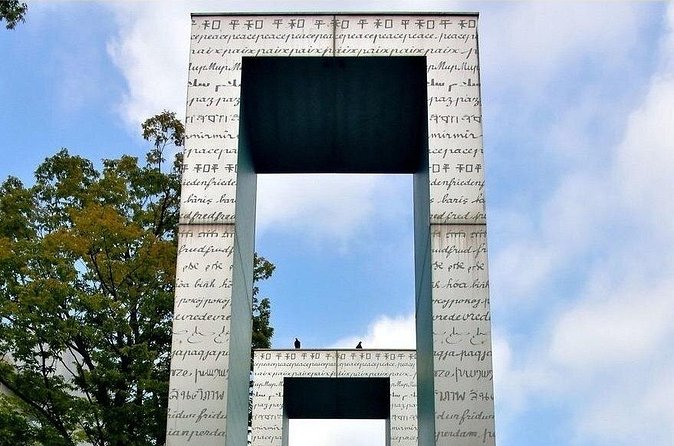
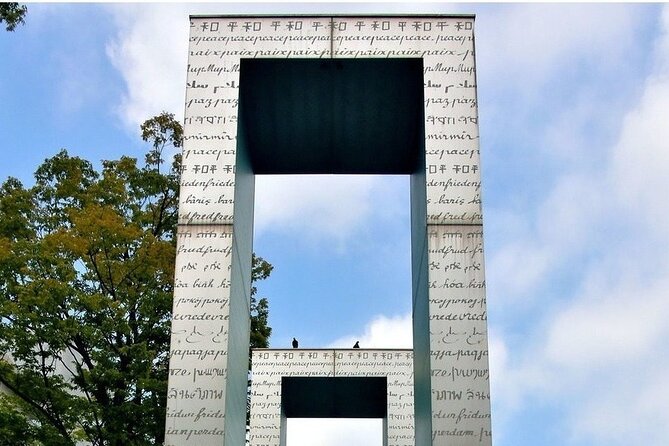
The route ends at the Gates of Peace, a series of ten glass gates inscribed with the word peace in different languages. You spend about 20 minutes here.
Ending at this installation gives the walk a more open and forward-looking finish. After the Dome, cenotaph, and testimonies, the gates shift the focus toward a message meant for the whole world.
The ending location is at 4-15 Nakajimacho, separate from the starting point at 1-chome-10-1 Otemachi. That matters for your plans. You do not return to the starting point, so check your onward route before booking another timed activity.
The gates also make a natural place to pause, take photographs, and ask final questions. The experience ends with a message of peace, but the route does not pretend that remembrance alone solves the hard questions raised by Hiroshima.
Pace, group size, and physical demands
The advertised duration is about two hours, and the route is described as an easy walk on fairly flat ground. You still cover several outdoor stops, so wear comfortable shoes and bring water, especially in warm weather.
The small group limit of eight is a real advantage. It lets the guide slow down if someone has a knee problem or difficulty with stairs, and it makes it easier to hear explanations in an open park. One guide adjusted the pace for an injured participant, while another made a point of stopping in the shade on a very hot day.
That does not mean the tour is fully accessible in every respect. The information says most people can participate, and service animals are allowed. If you have specific mobility needs, ask before booking rather than assuming every surface and entrance will suit you.
The meeting point is near public transportation. Confirmation arrives when you book, and the ticket is mobile, so you can keep the booking on your phone.
Is the $31.63 price good value?
At $31.63 per person, the price is reasonable for a two-hour private-feeling introduction to the Peace Memorial Park, especially with a group capped at eight and museum admission included.
The value comes less from paid attractions than from the guide’s explanations. Nearly every outdoor stop is free, so you are mainly paying for structure, context, and the chance to ask questions. That is worthwhile in a park where many monuments can seem similar at first glance.
The included museum ticket adds practical value because it removes one task from a busy sightseeing day. Still, remember that the museum visit itself is short in the planned schedule and unguided inside. If you want a full museum experience, treat this tour as your introduction and budget extra time.
The average booking point is about 14 days ahead. That suggests you should reserve early if your Hiroshima dates are fixed, particularly because the group is small.
Who should book this experience?
I would choose this walk if you are visiting Hiroshima for the first time and want a clear route through the main Peace Park monuments. It suits people who value explanation, questions, and human stories more than simply collecting photographs.
It is also a strong choice for a day trip from Kyoto. A guide can help you use limited time well, and the two-hour length leaves room for the museum, lunch, or another Hiroshima sight. One family visiting from Kyoto felt the trip became worthwhile after the walk, which is exactly the kind of time pressure this format helps solve.
Families may appreciate the Children’s Peace Monument and the manageable pace. History students and serious readers may like the Korean Victims Monument and the chance to ask about difficult subjects.
I would be more cautious if you want a full account of Japan’s wartime conduct, the political background to the bombing, or a long museum interpretation. The route is centered on Hiroshima’s victims, remembrance, and nuclear disarmament. Ask direct questions and use the museum to fill out the wider context.
Should you book it?
Book this tour if you want a well-organized first look at Hiroshima’s Peace Park, a small group, and a guide who can connect the monuments into one understandable story. The combination of a PhD scholar guide, included museum ticket, and flexible pace gives the $31.63 price solid value.
Skip it only if you prefer to explore quietly on your own or already know the park and its history well. Even then, the Korean Victims Monument, the Peace Flame, and the visual alignment of the Dome, cenotaph, and flame may give you details worth seeing with a guide.
FAQ
How long does the walking tour last?
The tour lasts approximately two hours.
What is the maximum group size?
The group can include a maximum of eight people.
Is admission to the Peace Memorial Museum included?
Yes. The entrance ticket is included and purchased in advance.
Is the museum visit guided?
No. Guides are not allowed to speak inside the museum, so you visit it independently.
Where does the tour begin and end?
The tour begins at 1-chome-10-1 Otemachi, Naka Ward, Hiroshima, and ends at the Gates of Peace at 4-15 Nakajimacho.
Are the outdoor monuments included in the ticket price?
Yes. Admission to the Atomic Bomb Dome, Peace Bell, Korean Victims Monument, Children’s Peace Monument, Peace Flame, National Peace Memorial Hall, cenotaph, and Gates of Peace is listed as free.
Can I cancel for a full refund?
Yes, if you cancel at least 24 hours before the experience start time. Cancellations made less than 24 hours before the start time are not refunded, and changes within that period are not accepted.
Just added in Hiroshima
- Iya Valley BROMPTON Slow Cycling Tour★ 5.0 · 28 reviews
- Iya Valley All Must-Sees Private Chauffeur Full-day Tour with a Driver★ 5.0 · 20 reviews
- Shore Excursion from Hiroshima Port : Private Tour in Hiroshima★ 5.0 · 17 reviews
- Hiroshima & Miyajima All-Inclusive Tour w/Licensed guide Pancho★ 5.0 · 54 reviews
- Okunoshima Rabbit Island Cycling Tour with Local Guide★ 4.5 · 17 reviews
- The Peace Memorial to Miyajima : Icons of Peace and Beauty★ 4.5 · 31 reviews
- Hiroshima Saijo Sake Tasting Tour with visit to 7 Breweries★ 5.0 · 104 reviews
- Hiroshima Private Tour with a Local – Highlights & Hidden Gems★ 4.5 · 24 reviews
Hiroshima & Miyajima Day Trips, compared.
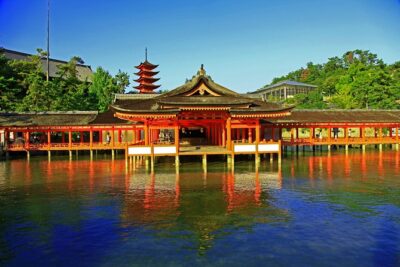
Peaceful Hiroshima & Miyajima UNESCO 1 Day Bus Tour
Read our review →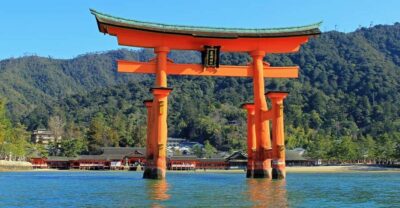
Hiroshima and Miyajima UNESCO Sites 1-Day Tour
Read our review →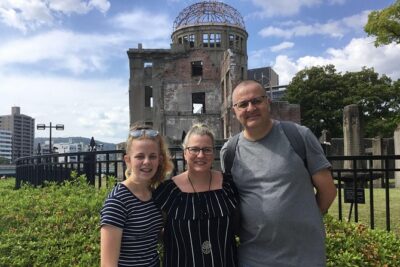
Hiroshima / Miyajima Full-day Private Tour with Government Licensed Guide
Read our review →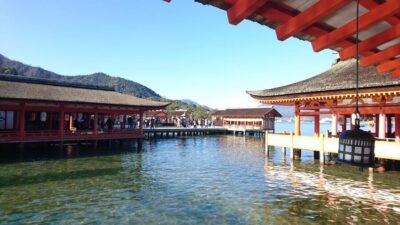
Osaka/Kyoto: Hiroshima Miyajima Bus Tour & Shinkansen Ticket
Read our review →
Hiroshima Historical Walking Tour – Why A-Bomb was Dropped
Read our review →
Hiroshima Peace (Heiwa) Walking Tour at World Heritage Sites
Read our review →
Hiroshima in a Nutshell: Morning Bike Adventure
Read our review →
Hiroshima City 4hr Private Walking Tour with Licensed Guide
Read our review →Browse the lists this tour appears in