
Reviewed · SAMURAI & NINJA EXPERIENCES
Experience Samurai and traditional Culture to the fullest
The sharpest part of this Osaka activity is the change from quiet brushwork to samurai sword cutting. You begin with kimono, calligraphy, and tea, then take on the discipline and responsibility linked with carrying a real sword before posing in armor with Osaka Castle behind you.
I like the thoughtful mix of traditional arts and theatrical history, rather than a quick costume photo alone. I also like the patient instruction reported by recent participants, especially for calligraphy and katana technique. The main consideration is the $168 price for three hours, plus the need to arrive 30 minutes early and manage your own transport.
Key points to know before booking
- Calligraphy comes before the sword: You practice basic strokes and choose a Kanji character before writing samurai farewell words.
- Tea ceremony teaches more than tea: The session focuses on courtesy, gestures, etiquette, and hospitality.
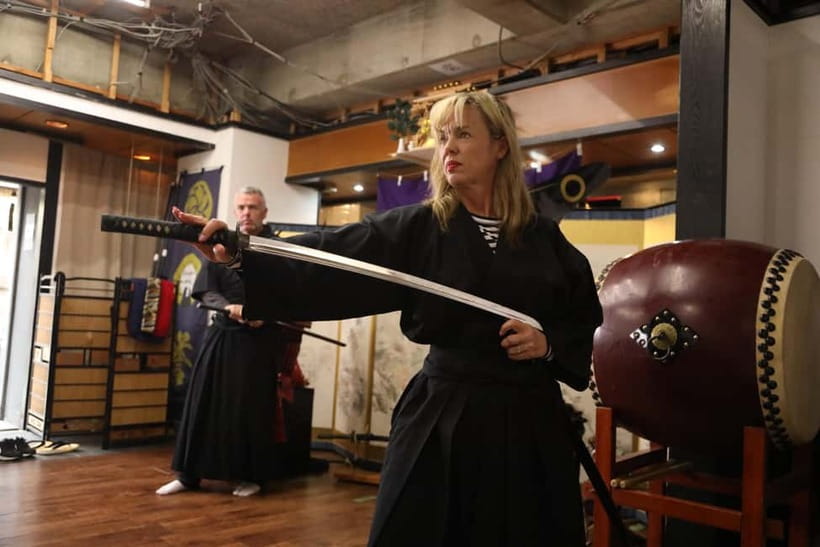
- Sword cutting is hands-on: You learn how to handle a samurai sword and try cutting under professional instruction.
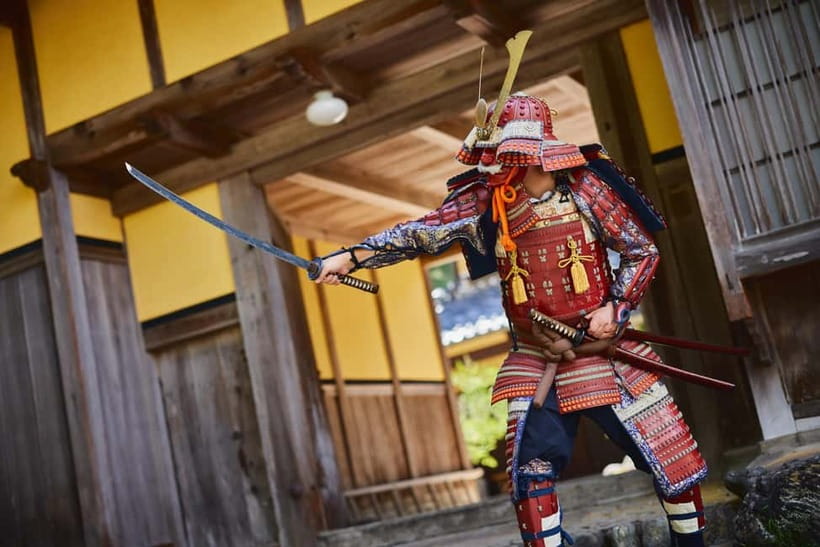
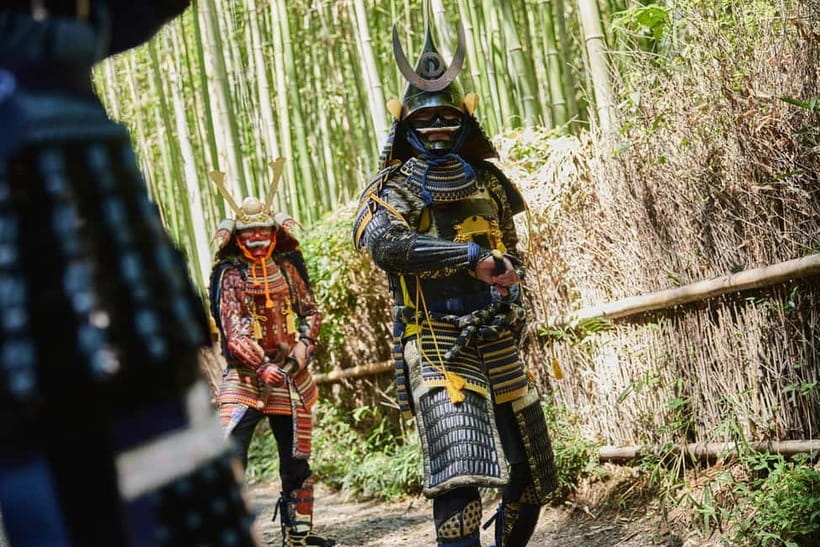
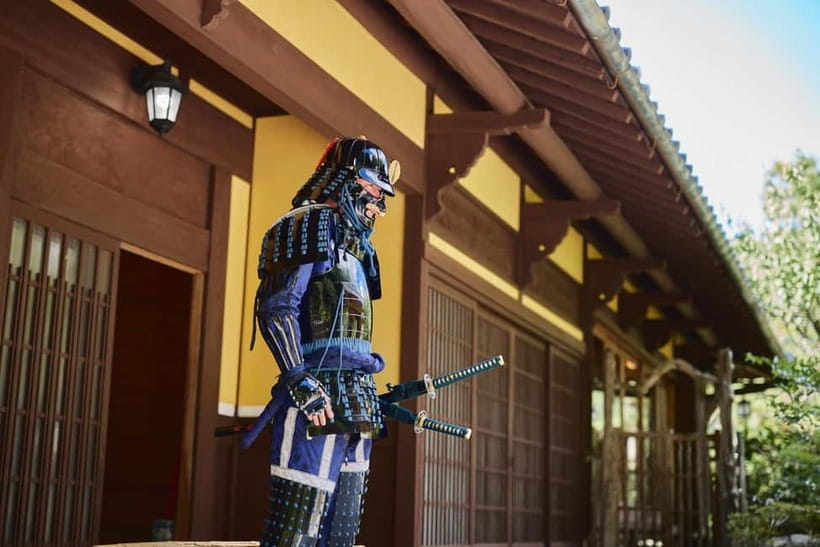
- Armor photography is part of the story: You pose as a Toyotomi soldier during the 1615 Osaka Summer Battle.
- The group is private: You get a more personal session than a large costume demonstration.
- The optional seppuku activity is serious in tone: It costs extra and adds about 30 minutes.
A three-hour samurai story near Osaka Castle
This activity works because it has a clear arc. You first prepare yourself through Japanese dress and traditional arts. Then you move into Bushido themes, sword handling, and the visual drama of armor.
The setting is near Osaka Castle, at Excellence Takayama, 2-3-19 Shiginonishi, Joto-ku, Osaka. Look for the wooden sign marked Honor of the Samurai. Pamphlets sit in front of the shop, and hanging kimono and hakama may help you spot the place.
You should arrive 30 minutes before your booked start time. That early arrival is not wasted time. You need instructions and a change of clothes before the scheduled three-hour program begins.
The activity is private, which matters here. Calligraphy, tea ceremony, sword handling, and armor fitting all work better when the instructor can watch your movements and answer questions. The available information does not give a maximum group size, so I would confirm the exact party arrangement if privacy is especially important to you.
Other samurai and ninja experiences in Osaka people book:
- Samurai Training Experience KENDO in Osaka
★ 5.0 · 515 reviews - OSAKA NIGHT FUSION Japanese Taiko Kabuki Samurai Dance Show
★ 4.8 · 155 reviews - Osaka: Samurai Training Experience KENDO in Osaka
★ 5.0 · 111 reviews
Kimono first, then the manners behind it
The opening lesson introduces kimono as a symbol of Japan. You change before beginning the traditional activities, so wear a simple T-shirt underneath. That small clothing choice should make the change easier and more comfortable.
The point is not only to dress up. The session connects kimono with courtesy, manners, controlled gestures, and hospitality. Those ideas carry through the rest of the program, especially the tea ceremony.
I like this beginning because it slows the pace. Many costume activities rush straight to photographs. Here, you first learn how the clothing and movement fit into a wider idea of traditional culture.
Still, you should know what this is and what it is not. It is a guided introduction, not a long formal study of kimono history or Japanese dress. If your main goal is fashion photography, the later armor session will probably matter more to you. If you enjoy learning why movements are done in a certain way, the opening section gives the rest of the experience more meaning.
Calligraphy, Kanji, and a samurai farewell
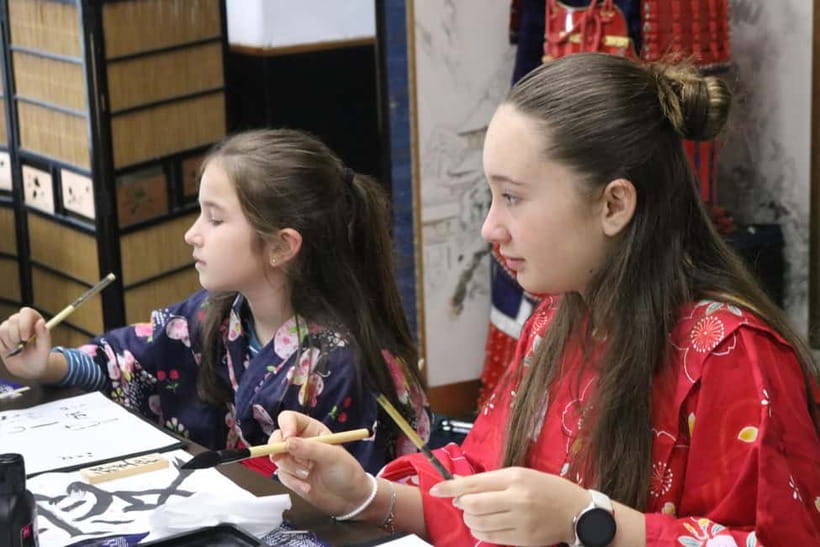
The calligraphy lesson takes about 20 minutes. You learn how to prepare your writing space, hold the brush, and use the tools. The instructor introduces basic strokes called tome, hane, and harai, which involve stopping, flicking, and sweeping the brush.
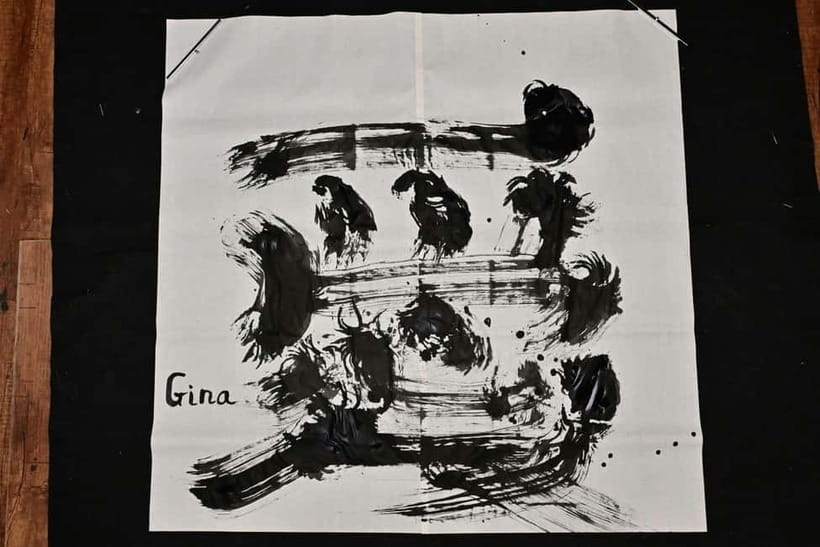
You then choose a Kanji character and practice it in the correct stroke order. This gives you a small personal choice inside a structured lesson. You are not simply copying a finished design for a photograph. You are learning the order and movement that make the character work.
The next ten minutes shift into samurai calligraphy. You write the character again as part of a farewell message, described as words of resignation before death. This is a dramatic theme, but it connects the brushwork to the activity’s samurai setting.
I would treat this part with respect rather than as a novelty. The subject concerns death, honor, and a final statement. The activity uses it as a historical and artistic theme, not as a casual joke.
Calligraphy also gives you a useful reset before the sword session. The work is slow and exact. You pay attention to pressure, direction, and order. That contrast helps explain why the program includes both quiet arts and physical action.
Tea ceremony and the meaning of hospitality
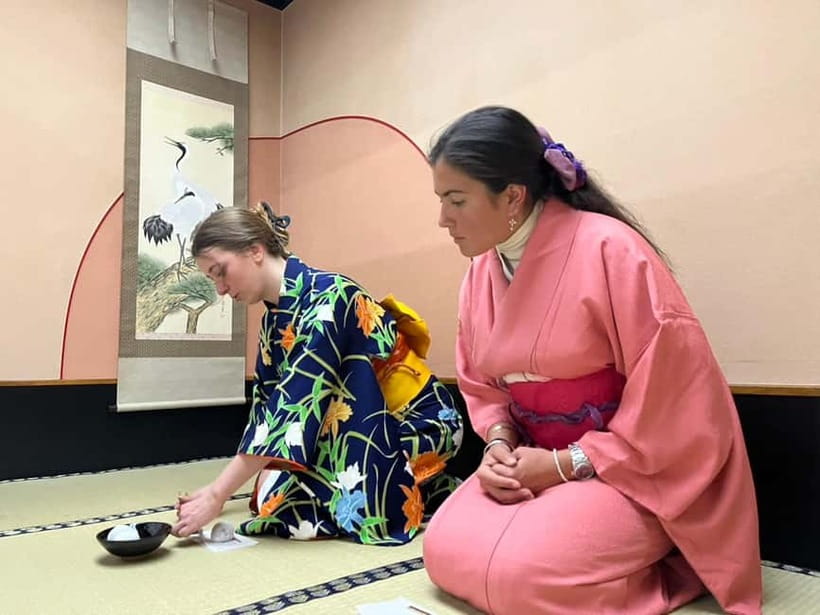
The tea ceremony takes about 30 minutes. A tea master prepares and serves powdered green tea, while you learn basic etiquette, manners, graceful gestures, and hospitality.
This is one of the more valuable sections for anyone who wants a cultural activity rather than a costume performance. The ceremony places emphasis on honor, a quality associated here with the spirit of Bushido. Your movements and behavior become part of the lesson.
I would not book this expecting a full historical lecture on tea. The supplied details focus on participation and manners. You learn through the actions themselves, with the instructor showing you how to prepare yourself and behave during the ceremony.
The tea portion also helps balance the sword work. After the excitement of wearing armor and using a katana, the ceremony brings the mood back to control and attention. That contrast is one of the best features of the schedule.
If you have limited interest in tea, you may find 30 minutes slow. But if you want a fuller look at traditional Japanese conduct, this is not filler. It explains the values the activity later attaches to samurai life.
Other swordplay and stealth sessions in Osaka:
- Osaka: A Modern Samurai, Kabuki, Taiko, & Dance Show
★ 4.5 · 66 reviews - Osaka: Private Samurai Experience – Train with Sword Master
★ 5.0 · 36 reviews - Osaka: Ninja Experience Cafe in Dotonbori
★ 4.9 · 16 reviews - Samurai Armor & Sword experience with phot near Osaka Castle
★ 4.6 · 16 reviews
Learning to carry and cut with a samurai sword
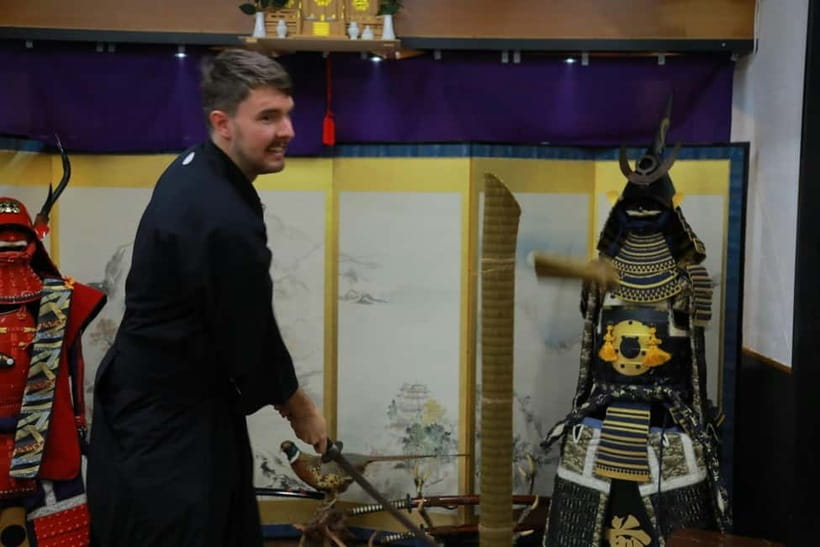
The sword lesson lasts about 30 minutes. You learn how to use a samurai sword and think about the self-respect and responsibility connected with carrying a deadly weapon.
The practical highlight is trial cutting. You handle a serious sword and attempt a cut under the direction of a certified professional instructor. The activity presents swordsmanship as training without an end, not as a simple stage trick.
The information provided does not spell out every safety rule or the exact cutting material. For that reason, I would follow every instruction closely and ask the staff what the cutting exercise involves before beginning. The presence of a certified professional instructor is reassuring, but a sword is still a serious object.
This section is likely to be the most memorable part for many people. It gives you something physical to learn, rather than just a costume and a pose. At the same time, it demands focus. You should not expect to swing casually or improvise.
One recent participant specifically praised the patient help with katana technique. That is useful to know because beginners may worry about getting the movement wrong. The format is designed to teach the basic technique, not to assume you already know how to handle a sword.
Armor, Osaka Castle, and the 1615 battle
The armor section takes about 30 minutes, followed by a 30-minute photo session. You put on samurai armor and take part in a staged battle concept linked with the Osaka Summer Battle of 1615.
The story places you on the Toyotomi side as the battle begins. You pose as a leading soldier, using Osaka Castle as the setting for the image. This gives the photographs a clear historical frame rather than a generic warrior theme.
The armor fitting itself takes place indoors according to the activity details. The photograph is taken on the grounds of Osaka Castle, with the castle in the background. That distinction matters, since you should not assume the entire armor portion takes place outdoors.
The photo session is included, and the finished data is sent to a designated email address. A photographer covers the activities, not just the final pose, so you may receive images showing calligraphy, tea, sword practice, and armor. Confirm the email details carefully when asked.
I like the battle setting because it gives you something to do with the costume. You are not only standing still in armor. You are asked to pretend to be a soldier entering battle, which gives the pose and the photographs more purpose.
Do keep expectations sensible. This is a staged cultural photo experience, not a live reenactment or a historical battlefield tour. The value comes from taking part in the scene and learning the arts around it.
The optional seppuku session and its serious subject
A 30-minute seppuku, also called harakiri, activity is available as an option. It focuses on a samurai’s readiness to die for a lord, the importance of righteousness, and the idea of a beautiful death.
This is the most sensitive part of the program. The material treats seppuku as a historical Bushido subject and a form of samurai storytelling. It is not part of the basic activities listed as included, so you should expect an extra charge.
I would choose this option only if you have a strong interest in the darker and more serious side of samurai culture. It may not suit children, casual photographers, or anyone looking for a lighthearted afternoon.
The main three-hour program already contains plenty: kimono, calligraphy, tea, sword work, armor, and photographs. You do not need the optional session to feel that you received the central experience.
What the $168 price gives you
At $168 per person, this is not a low-cost dress-up stop. The price makes more sense when you count the separate parts included: clothing, armor, instruction, calligraphy practice, samurai calligraphy, tea ceremony, sword cutting, and photography.
You also receive guidance from a certified professional instructor and English-speaking staff. Taxes and tips are included, which makes the final cost easier to understand.
The strongest value comes from the range. A short photo session near Osaka Castle might cost less, but it would not give you the same progression from calligraphy and tea to sword work and armor. On the other hand, if you want only one polished photograph, the full program may feel expensive.
Recent participants praised the staff’s friendliness and patience. One described the service as careful during both calligraphy and katana practice. Another rated the activity as the best part of an Osaka visit and appreciated having a photographer present throughout. Those details suggest that the human guidance is a major part of what you are paying for.
The activity is also private, which adds value for couples, families with older children, or small groups who want a more personal pace. Children under 10 are not accepted, and people over 95 are excluded from the activity. The program is not suitable for babies.
Languages, timing, and practical planning
English is the default language for interpretation. Staff may be available in Spanish, Italian, French, Chinese, Thai, or Indonesian, but you need to ask about the schedule before booking. Availability is limited, so do not assume a non-English session will be possible.
Transportation is not included. You arrange your own route to the Osaka address, and there is no hotel or train station pickup. I would allow extra time for finding the wooden Honor of the Samurai sign and for changing clothes.
Bring a T-shirt. The activity does not list any other required item, but comfortable clothing underneath the kimono is sensible. Pets, baby strollers, alcohol, and drugs are not allowed. Baby carriages are also listed as prohibited.
You can cancel up to 24 hours before the activity for a full refund, and you can reserve now and pay later. Those terms help if your Osaka schedule is still moving, but you should still check the available start times before fixing your day.
A movie shoot is not included. It is a paid option, separate from the included photography. If you want moving footage rather than still photographs, ask about that cost before you book.
Who will enjoy this most
I would recommend this for adults and children aged 10 or older who want a structured cultural activity with a strong visual finish. It suits first-time visitors who want to connect Osaka Castle with samurai history, as well as people who enjoy Japanese calligraphy, tea, costume, or martial arts.
It is especially good for a private group. You can ask questions, take instruction at a personal pace, and move between quiet and active sections without a large audience around you.
I would hesitate if you dislike formal manners, have no interest in calligraphy or tea, or only want a quick armor photo. Half the appeal is the preparation before the camera comes out.
The optional seppuku theme also means you should consider your comfort with serious historical ideas. You can skip it and still receive the main program.
Should you book this Osaka samurai experience?
Book it if you want more than a costume photograph. The combination of brushwork, tea ceremony, sword cutting, armor, and Osaka Castle photography gives you a fuller introduction to traditional culture than a short photo stop.
The $168 cost is reasonable for a private three-hour program with instruction and photography, though it is too high if you plan to use only the final image. Arrive early, wear a T-shirt, confirm your preferred language, and allow time for transportation.
My practical choice would be to book the standard program first and add the seppuku option only if its historical theme genuinely interests you. For a hands-on Osaka activity with patient staff, a clear schedule, and a memorable armor photograph, this is a strong pick.
FAQ
Where does the samurai activity take place?
The address is Excellence Takayama 1F, 2-3-19 Shiginonishi, Joto-ku, Osaka-shi, Osaka 536-0014. A wooden sign reading Honor of the Samurai marks the meeting point.
How long does the activity last?
The main activity lasts three hours. You should arrive 30 minutes before your reserved start time for instructions and changing clothes.
What is included in the price?
The price includes samurai clothing, indoor armor wear, English-speaking staff, a certified professional instructor, calligraphy practice, samurai calligraphy, tea ceremony, sword trial cutting, armor wear, photography, tax, and tips.
Is transportation included?
No. Hotel and train station pickup and drop-off are not included, and you arrange your own transportation.
What language is used during the activity?
English is the default language for interpreters. Spanish, Italian, French, Chinese, Thai, and Indonesian may be available, but you must ask about staff availability before booking.
Can children take part?
Children under 10 cannot participate. Babies under one year are also not suitable for the activity.
What should I bring?
Bring a T-shirt. You will change into kimono and samurai clothing before the activities begin.
Are photographs included?
Yes. Photo shooting is included, and the photo data is sent to a designated email address.
Is the seppuku activity included?
No. Seppuku, also called harakiri, is an optional activity that takes about 30 minutes and costs extra.
Can I cancel the booking?
You can cancel up to 24 hours in advance for a full refund. Reserve now and pay later is also available.
Just added in Osaka
- Private arrival transfer from Kansai International airport to Kyoto City★ 5.0 · 32 reviews
- (Ticket Included) Explore Osaka Castle & Museum of History★ 4.8 · 21 reviews
- Hidden Osaka – Yukaku Red Light Tour & Culinary Adventure★ 4.8 · 96 reviews
- Osaka: Walking Tour and Top Highlights★ 4.8 · 104 reviews
- Pickleball in Osaka, Kobe & Kyoto with Locals!★ 4.7 · 80 reviews
- Osaka: Private Ceramic Painting Workshop★ 5.0 · 13 reviews
- Eat Like a Local in Osaka – Private Custom Street Food Tour★ 4.3 · 33 reviews
- Osaka:SUMO BEATS SHOWCASE: Taiko Drum and Wagyu burger!★ 4.2 · 37 reviews
Samurai & Ninja Experiences, compared.
Samurai Ninja Museum Guided tour and Experience
Read our review →
Kendo and Samurai Experience with Uniform and Gear
Read our review →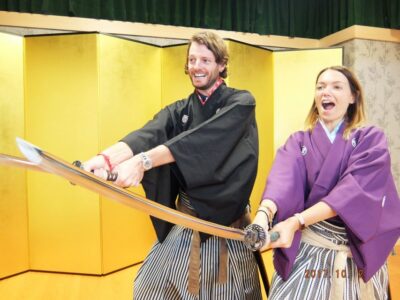
Samurai Sword Class by Experts in Traditional Arts
Read our review →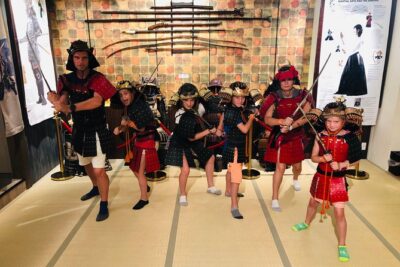
Skip the lines Basic Ticket at SAMURAI NINJA MUSEUM KYOTO
Read our review →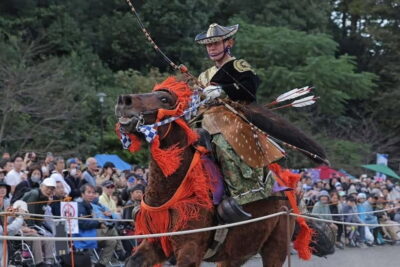
Samurai Sword & Archery Class from Samurai Descendant
Read our review →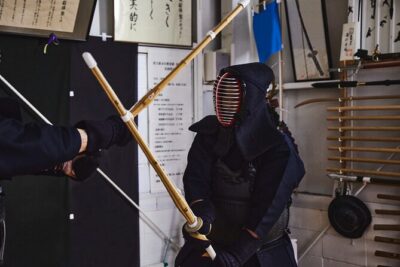
Browse the lists this tour appears in