
Reviewed · WALKING TOURS
Sapporo: The Indigenous Ainu People & Jozankei walking tour
The best thing about this day is its unusual pairing: Ainu culture in the morning, then a forested hot spring village in the afternoon. At the cultural center, you do more than peer at objects behind glass. You can handle traditional craftworks made by Ainu artisans and get a clearer sense of how Hokkaido’s first inhabitants lived.
I like the hands-on museum visit and the way Jozankei is explored on foot, with stops at Futami Tsuribashi Suspension Bridge and a footbath. Guides such as Scott add useful context and keep the long transport stretches lively. The main drawback is the length of the day and the reliance on trains and buses, with winter schedules sometimes creating long waits.
Key points to know before you book
- Ainu culture comes first: Spend about 90 minutes at the Sapporo Ainu Culture Promotion Center, where traditional objects can be touched and examined.
- Jozankei fills the afternoon: The 4.25-hour visit includes guided walks, free time, parks, a shrine, a temple, and a suspension bridge.
- The final reward is an onsen: Hotel Shika no Yu offers a two-hour day-bath visit, with etiquette explained before you enter.
- Scott is a well-regarded guide: His clear explanations, easy conversation, and care for the group are repeatedly praised.
- This is a full public-transport day: Plan for an 80-minute train ride, a one-hour bus journey, and a 75-minute return bus ride.
- Bring practical gear: Comfortable shoes, water, a towel, and a change of clothes matter, especially in winter or when walking on uneven ground.
Why this Sapporo day trip feels different
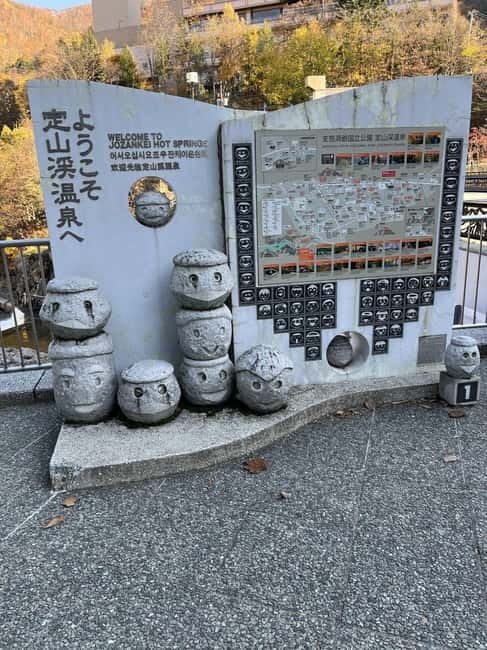
Many excursions from Sapporo focus on scenery or food. This one gives you two very different ways to understand Hokkaido. The Ainu center introduces the island’s Indigenous people through objects, art, and explanations. Jozankei then shows how volcanic activity created a hot spring settlement surrounded by trees and steep hills.
That contrast gives the day some shape. You start with culture and history, move through the countryside, and finish with a Japanese bathing ritual. It is not a quick photo stop followed by a rushed meal. You spend real time at both main destinations.
The tour lasts 570 minutes, or nine and a half hours. You meet at 9 a.m. at Myomu, the circular white stone structure near the South Exits of Sapporo Station. That central meeting point is useful, but Sapporo Station has several large exits and corridors, so allow time to find the South Exit area. Your guide wears a Snow Monkey Resorts tour tag.
The day is best for you if you want more than a standard city tour and can manage a long outing with public transportation. It is less suitable if you need step-free access, have back problems, or prefer a private vehicle and a flexible timetable.
Other guided walks in Hokkaido:
- Sapporo Walking Tour
★ 4.9 · 17 reviews - Sapporo Highlights: Golden Route Morning Guided Walking Tour
★ 4.9 · 16 reviews - Kyoto Geisha Walking Tour: Gion District & Hidden Gems
★ 4.7 · 3,273 reviews
Meeting Hokkaido’s Ainu people at the cultural center
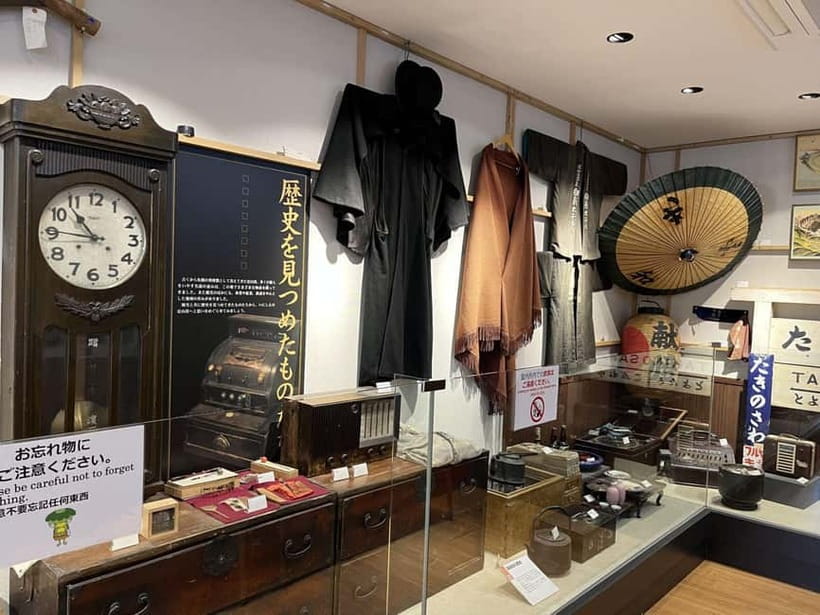
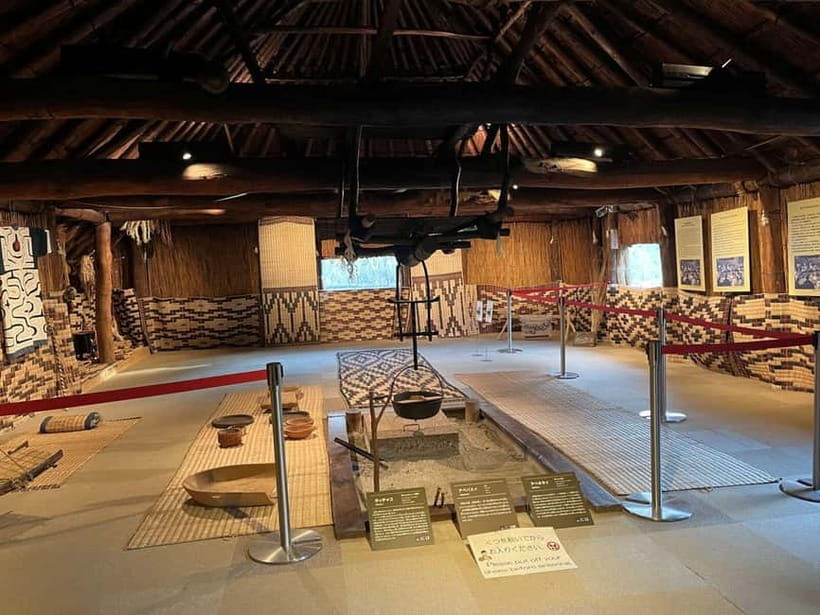
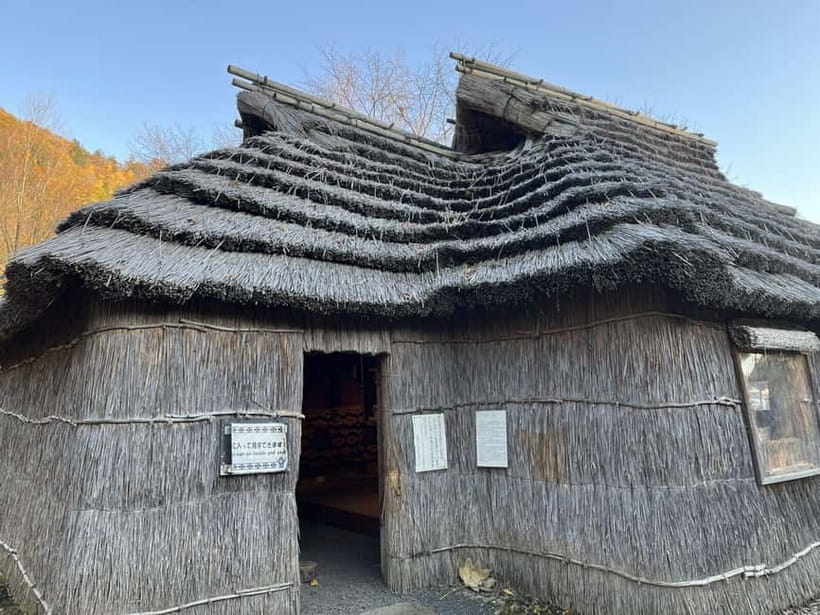
The Sapporo Ainu Culture Promotion Center is the first major stop and receives about 90 minutes. The center focuses on the Ainu, the Indigenous people who first settled Hokkaido and developed a distinct culture suited to the northern island.
Your guide helps explain the lifestyle, art, and history behind the displays. That guidance matters because a museum collection can otherwise become a procession of unfamiliar names and objects. Scott has been especially praised for explaining the items clearly and connecting them to the wider story of Ainu life.
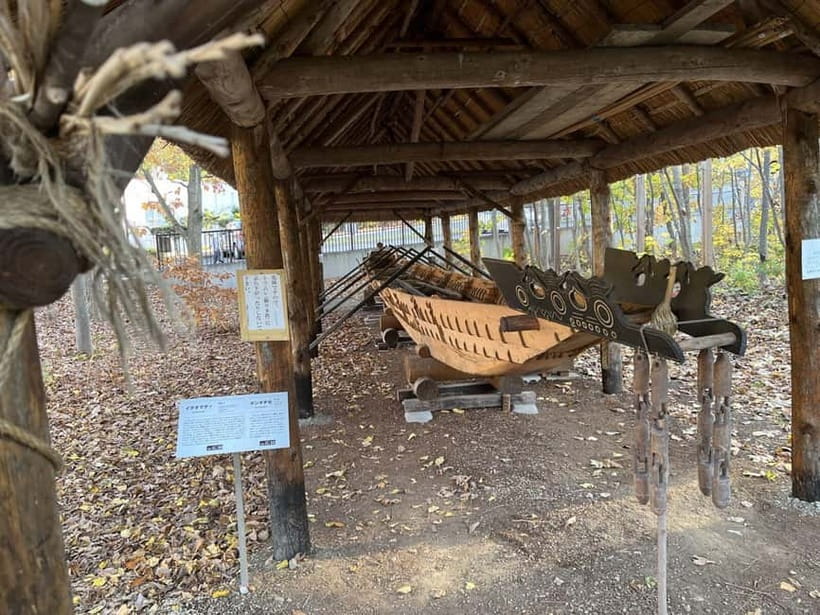
The most appealing feature is the chance to touch and handle traditional craftworks made by Ainu artisans. That changes the visit from a passive museum stop into something more direct. You can pay attention to the texture, construction, and practical purpose of the objects rather than simply taking photographs.
Do not expect a huge museum visit with hours of exhibits. The scheduled time is about an hour and a half, which gives you enough room for an introduction without taking over the whole day. If Ainu culture is your main reason for booking, you may wish the visit were longer. Still, the guide’s explanations help make the time count.
This stop also gives the rest of the day more meaning. When you later see the wooded paths, hot springs, and old religious sites around Jozankei, you have already begun thinking about Hokkaido as a place shaped by people, nature, and volcanic forces.
The long move from culture to hot springs
After the cultural center, you travel toward Jozankei by bus, with about an hour on the road. The full outbound journey includes an 80-minute train segment and a one-hour coach ride, according to the planned schedule. Exact transport details can depend on the day’s connections, but you should expect a substantial amount of sitting.
This is where the group format has a real advantage. A guide can fill in the gaps, point out what matters, and help you keep track of the route. Scott is praised for good conversation during quieter stretches, which is useful when the scenery is pleasant but the journey is not an attraction in itself.
The trade-off is flexibility. One person specifically wished for private transportation, and that is a fair point. Buses do not leave when your group is ready, and winter timetables can mean longer waits. The public system keeps the price lower than a private car tour, but you give up some control over the day.
Wear shoes that can handle wet or uneven paths. Jozankei’s walking sections include parks, a bridge, and village streets, and seasonal conditions can make surfaces slippery or snowy. Water is also worth carrying, especially before the hot bath.
Walking through Jozankei’s volcanic valley
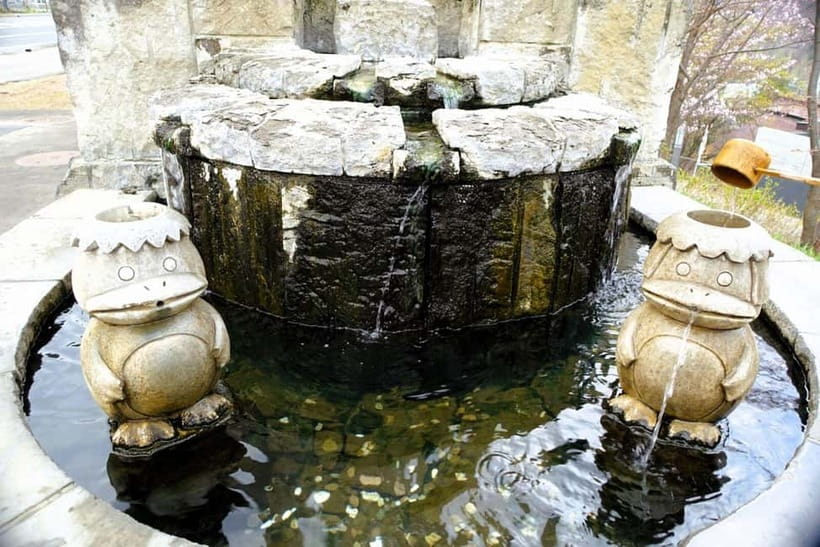
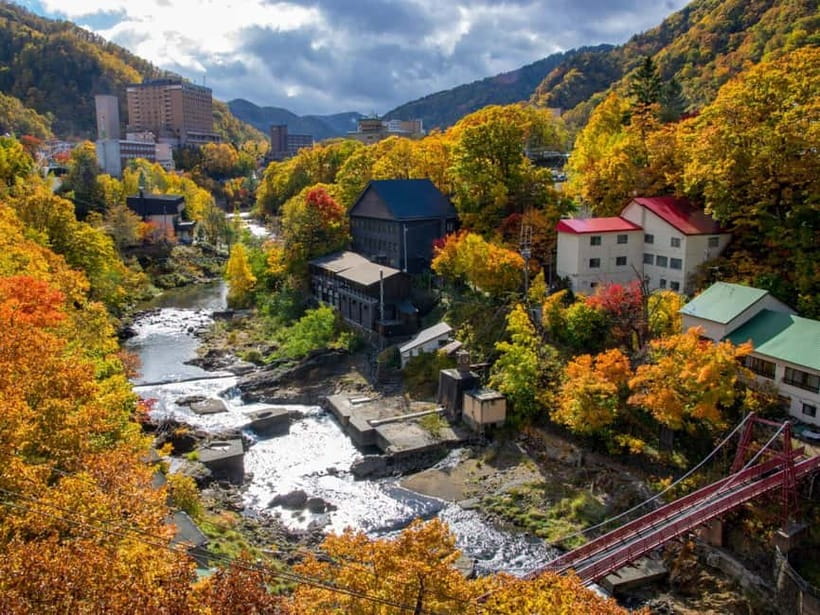
Jozankei sits within Shikotsu-Toya National Park, an area shaped by hundreds of years of volcanic activity. Its hot springs are not simply a spa amenity added to an ordinary town. The geology is the reason the settlement exists.
You spend about 4.25 hours here, combining guided sightseeing with free time. That is generous compared with a quick coach stop, and it allows the village to be enjoyed at walking pace. You can listen to the guide, take photographs, pause at the viewpoints, and avoid treating each stop as a race.
The route includes Jozankei Shrine and Jozankei Temple. These religious sites add a quiet, local layer to the visit, especially after the busy station and transport connections. The tour does not present Jozankei only as a place to bathe. You see the community around the hot springs, including its shrines, paths, parks, and river views.
Gesen Park includes a footbath, giving you a small taste of the hot spring tradition before the main bath later in the day. A footbath is also a useful option if you would rather not take part in the full onsen. Bring a small towel, since you will need to dry your feet afterward.
At Futami Park, the route becomes more about trees, water, and open air. Seasonal change matters here. Winter can make Jozankei especially striking, but cold temperatures, snow, and icy paths will slow you down. Autumn brings strong color, while warmer months make outdoor walking easier. The tour operates across different seasons, so choose clothing for the weather rather than relying on the idea of a mild city day in Sapporo.
Same base, a different sort of day:
- Sapporo Bar Hopping Food Tour
★ 5.0 · 232 reviews - Hokkaido Seasonal: Lake Toya & Noboribetsu Jigokudani Valley
★ 4.7 · 173 reviews - Sapporo Private Tour with a Local – Highlights & Hidden Gems
★ 5.0 · 91 reviews - Sapporo: Hokkaido, Noboribetsu and Lake Toya Day Tour
★ 4.1 · 88 reviews
Crossing Futami Tsuribashi Suspension Bridge
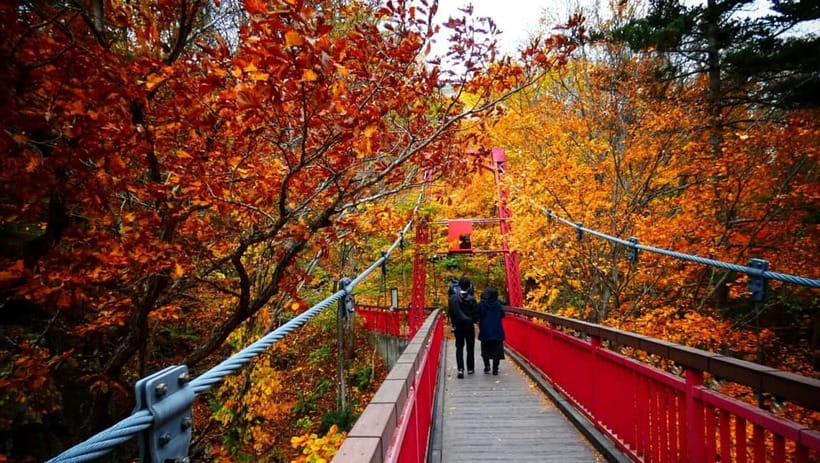
Futami Tsuribashi Suspension Bridge is one of the clearest highlights of the walk. The bridge adds a little drama without requiring a major hike, and it gives you a different view of the valley and surrounding trees.
If you are uneasy with heights or crossing a moving bridge, this may be the moment to take your time. The tour includes walking on uneven surfaces, and snow or wet weather can add another challenge. Comfortable footwear is not a minor suggestion here.
The bridge works well in the middle of the itinerary because it breaks up the cultural and religious stops. You are no longer simply listening to explanations. You are moving through the setting that makes Jozankei appealing.
Two hours at Hotel Shika no Yu
The final major stop is Hotel Shika no Yu, where you receive a two-hour day-bath experience. This is not an overnight stay. Accommodation is not included, and you return to Sapporo after the visit.
For many people, the bath will be the day’s most memorable part. A Japanese onsen is not entered like a swimming pool. You wash before getting into the communal bath, follow the facility’s rules, and keep towels out of the bathing water. Your guide explains the etiquette, which is valuable if this is your first time.
Bring a towel and a change of clothes. The supplied information also advises bringing water, a sensible precaution after walking and bathing. You may prefer to pack these items in a small day bag that you can reach easily during the outing.
The two-hour window gives you time to settle in rather than rushing through the experience. The hot spring can ease tired legs after the village walk, but the bath is not a good match for everyone. If you are uncomfortable with communal bathing, the footbath at Gesen Park gives you a less involved alternative, though it does not replace the full Hotel Shika no Yu visit.
The onsen is also a practical cultural lesson. Your guide explains not only where to bathe, but how to behave. That makes the experience less awkward and helps you take part respectfully rather than guessing what to do.
What the $170 price includes
At $170 per person, this is not a cheap hop-on, hop-off day. Its value depends on whether you would otherwise arrange the train, buses, cultural center entry, Jozankei sightseeing, and onsen yourself.
The price includes an English-speaking guide, transportation from Sapporo Station to the listed stops, and entry fees for the included attractions. You do not need to pay separately for the cultural center or the listed sightseeing spots. The onsen visit is part of the package as well.
Lunch is not included. That is important on a nine-and-a-half-hour outing. The supplied schedule does not name a fixed lunch stop, so carry food or confirm with the guide how the day handles the meal break. Do not assume you will have a long restaurant visit.
The strongest value comes from the combination of interpretation and logistics. A self-guided visit could cost less, especially if you already understand the local transport system. But reaching the cultural center, changing transport, finding Jozankei’s key sights, and managing onsen etiquette takes planning. The guide removes much of that friction.
The price is easier to justify for a first visit to Hokkaido, a solo visitor, or anyone who wants an English-language explanation of Ainu culture. It is harder to justify if you want a private car, dislike fixed schedules, or plan to spend most of your time shopping and eating.
Seasons, walking, and the pace of the day
Winter gives Jozankei a special look, with snow and cold shaping the village and surrounding views. It also brings the practical issues that come with the season. Bus waits may be longer under winter schedules, and walking surfaces can be slippery.
Spring and autumn may suit you better if you want easier walking and milder temperatures. One guidebook-style assessment of the timing is simple: winter scenery is striking, but some people will enjoy the day more in spring or autumn. Summer should be more comfortable for outdoor walking, though the supplied details do not promise any particular weather or scenery.
You should be comfortable walking for several hours, standing during sightseeing, and managing uneven ground. The experience is not suitable for wheelchair users, and people with back problems are advised not to book it.
The pace is not frantic, but it is full. You leave Sapporo at 9 a.m. and return after a 75-minute bus ride from Jozankei. With the outbound transport, the museum, the village walk, and the bath, this is a full day rather than a relaxed half-day outing.
Who should book this experience
I would choose this tour if you want three things in one day: a serious introduction to Ainu culture, a guided look at Jozankei, and a properly explained onsen visit. It suits curious first-time visitors who would rather learn as they go than piece the route together from separate bookings.
It also works well for small groups and solo visitors who want company during the transport sections. Scott’s style, based on the information available, is especially useful if you value detailed explanations and easy conversation rather than a guide who only points out landmarks.
I would think twice if you want private transportation, a long restaurant lunch, or complete control over when you leave each stop. I would also avoid it if you cannot manage uneven paths, have back problems, or are not comfortable with communal bathing.
The tour has earned a 4.9 rating from 25 ratings, with particular praise for the Ainu center, the Jozankei walk, and Scott’s guidance. That matches the structure of the day: the best parts are not flashy attractions, but the chance to understand what you are seeing and take part in local customs properly.
Should you book it?
Book this day if you want substance with your scenery. The Ainu center gives the outing a cultural purpose, Jozankei provides a pleasant change of pace, and Hotel Shika no Yu finishes things in a distinctly Japanese way.
At $170, you are paying for guidance, transport, admissions, and a carefully joined-up day rather than for one headline attraction. Pack lunch, water, a towel, spare clothes, and sturdy shoes. If you can accept public transport, a long schedule, and an onsen’s bathing rules, this is a thoughtful way to see a side of Hokkaido that is easy to miss from central Sapporo.
FAQ
Where does the tour meet?
Meet your guide at 9 a.m. at Myomu, the circular white stone structure near the South Exits of Sapporo Station. After leaving the main JR gates, turn left and walk toward the South Exits. The guide wears a Snow Monkey Resorts tour tag.
How long does the experience last?
The tour lasts 570 minutes, or nine and a half hours. The planned day begins at 9 a.m. and returns to Sapporo after the Jozankei visit.
What language is the tour conducted in?
The tour has a live English-speaking guide. Scott is one of the guides associated with this experience.
Is transportation included?
Yes. Transportation from Sapporo Station to the listed destinations and activities is included. The schedule includes an 80-minute train journey, about one hour by bus or coach to Jozankei, and a 75-minute bus ride back.
Is lunch included?
No. Lunch is not included, so you should plan to bring food or confirm the day’s meal arrangements with the guide.
What should I bring?
Bring comfortable shoes, water, a towel, and a change of clothes for the onsen. You should also be ready for walking on uneven surfaces.
Can wheelchair users or people with back problems join?
The experience is not suitable for wheelchair users or people with back problems. It includes walking on uneven surfaces and a full day of public transportation and sightseeing.
Just added in Hokkaido
- Half Day – Snow View Rafting in Niseko★ 5.0 · 13 reviews
- 3hours Primeval Forest and Stunning Views of Cliff Trekking Tour★ 5.0 · 20 reviews
- 3.5hours Primeval Forest Snowshoe hike and Wildlife Watching Tour★ 5.0 · 14 reviews
- Snowshoe Adventures and Onsen Bliss Winter Escape in Furano★ 5.0 · 12 reviews
- Hakodate 6hr Private Tour with Government-Licensed Guide★ 5.0 · 17 reviews
- Chitose Airport to Niseko Private Transfer | Licensed Driver★ 5.0 · 19 reviews
- SkyExpress Private Transfer: New Chitose Airport – Niseko (8 Pax)★ 5.0 · 15 reviews
- Sapporo: Sumo Show Experience with Japanese food & Photo★ 4.9 · 81 reviews
Walking Tours, compared.

Kyoto Geisha Walking Tour: Gion District & Hidden Gems
Read our review →
Tokyo Tsukiji Fish Market Food and Culture Walking Tour
Read our review →
Imperial Palace and Shogun Historical Walking Tour
Read our review →
Gion Geisha District Walking Tour – Stories of Geisha
Read our review →
Shinjuku Local Bar and Izakaya Guided Walking Tour
Read our review →
Asakusa Walking Tour with Sensoji Temple Visit
Read our review →
Nishiki Market Brunch Walking Tour (7 Tastings + Brunch)
Read our review →Browse the lists this tour appears in