
Reviewed · TSUKIJI & TOYOSU FISH MARKET TOURS
Tokyo Tsukiji Fish Market Food and Culture Walking Tour
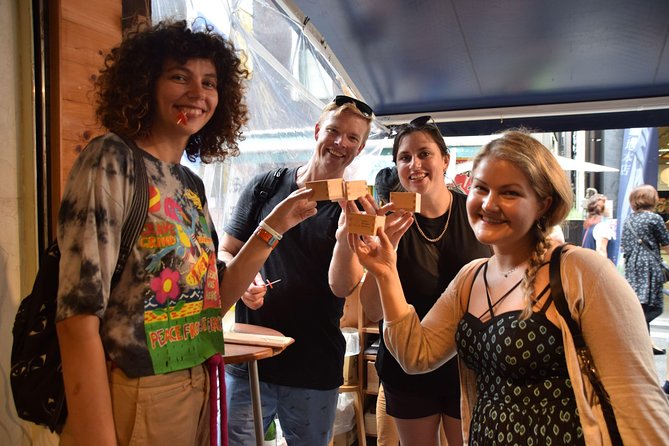
Tsukiji is best understood with your eyes, nose, and appetite working together. This three-hour walk takes you through the outer market, where seafood sellers, food stalls, kitchen shops, and small restaurants crowd together around the place where Tokyo cooks shop. The final sushi or seafood bowl gives the tour a proper finish.
I like the local guidance most. A guide can steer you past unfamiliar foods, explain how ingredients are used, and keep you moving through busy lanes. I also like the mix of tasting and culture: dashi soup, green tea, fish cakes, Japanese omelette, Wagyu beef, seasonal fruit, and seafood appear alongside stories about Tsukiji and the nearby temple.
The main caution is expectation. This is a walking tour of the outer market, not a visit to the old inner wholesale auction floor. Food portions may feel modest to a very hungry eater, and the tour cannot handle vegetarian, halal, gluten-free, or allergy-related requests.
Key points to know before you book
- Tsukiji Honganji Temple is the meeting point: Meet at the main gate, not the back side. The group leaves on time.
- The food is fish-centered: Sushi or a seafood bowl is included, along with samples such as tuna, fish cakes, omelette, dashi, fruit, and Wagyu.
- Guides make the difference: Kiyo, Naz, Shoko, Masa, Yuki, Mieko, and others have been praised for food knowledge, cultural context, and help navigating the market.
- The wholesale market stop has limits: Tsukiji Uogashi is closed Wednesdays, Sundays, holidays, and other market closure days.
- Plan for three hours on foot: Comfortable walking shoes matter, and the tour suits people with moderate fitness.
- The $99.49 price buys direction and context: It can be good value if you want tastings and a local escort, but less so if you only want a large meal.
Starting at Tsukiji Honganji Temple
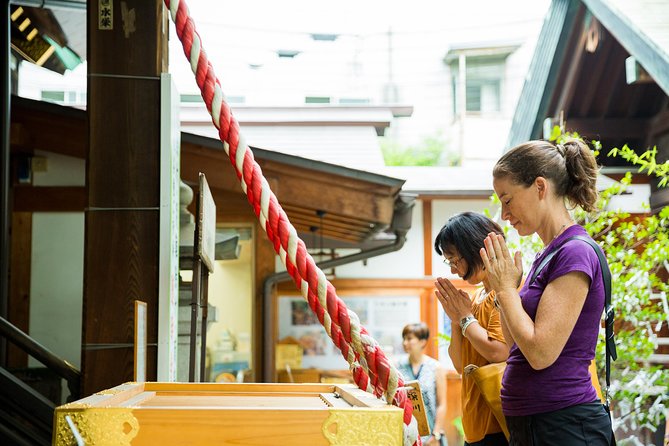
Your morning or afternoon begins at the main gate of Tsukiji Honganji Temple, at 3-chōme-15-1 Tsukiji. This is a useful meeting point because the temple gives you a calm visual introduction before the food stalls take over.
Pay close attention to the instructions. The meeting place is the front side of the temple, and map software may lead you around to the back. The group leaves at the scheduled start time, so arrive early rather than trying to catch up in the market.
The temple itself adds something worthwhile to the outing. Several guides use it to explain local customs and the building’s unusual design before turning toward the market. You would probably see the temple on your own, but a guide helps connect it to the neighborhood and the daily rhythm of Tsukiji.
Other walking tours in Tokyo people book:
- Tokyo: Imperial Palace and Shogun Historical Walking Tour
★ 5.0 · 2,251 reviews - Tokyo: Shinjuku Local Bar and Izakaya Guided Walking Tour
★ 4.9 · 1,794 reviews - Tokyo: Tsukiji Fish Market Food and Walking tour
★ 5.0 · 1,724 reviews
Tsukiji Jogai Market, where the food starts
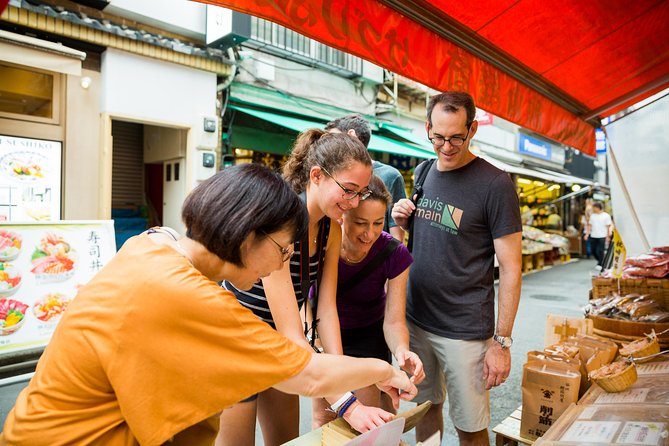
Most of the tour takes place in Tsukiji Jogai Market, the outer market. This is not a single indoor hall. It is a network of narrow streets and shops selling fish, shellfish, prepared food, seasonings, kitchen tools, and other supplies.
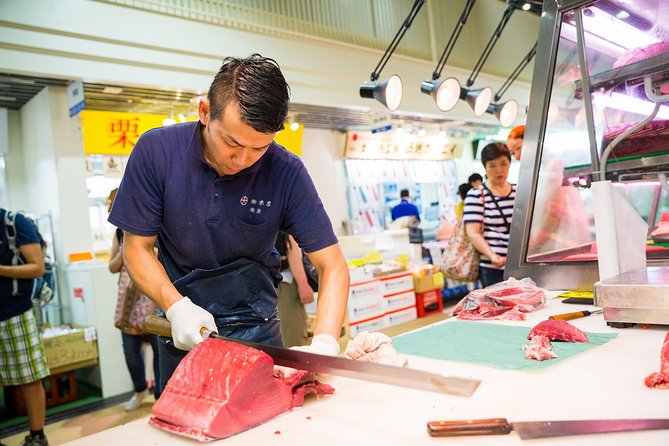
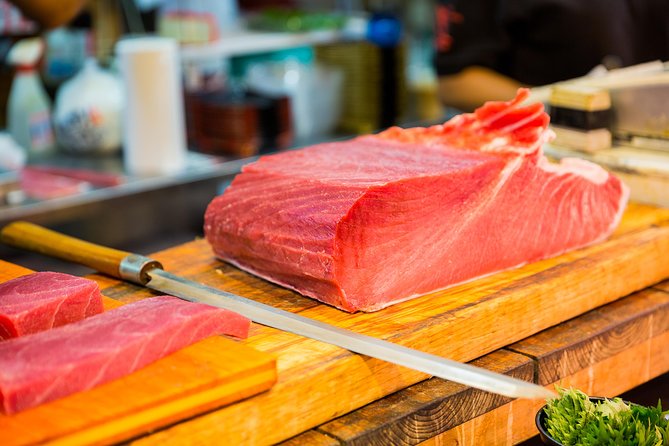
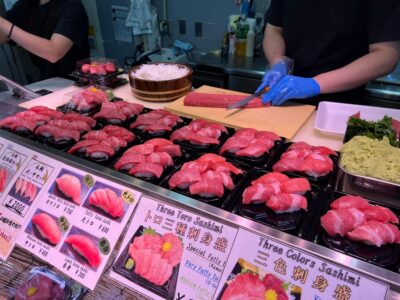
The first stretch lasts about 90 minutes. That gives you time to look rather than rush from snack to snack. You might see boxes of sea urchin, vendors handling large Bluefin tuna, pufferfish in tanks, and displays of seafood you may not recognize.
This is where the guide earns the fee. Tsukiji can feel confusing, especially when several stalls sell similar-looking foods or when the walkway fills with people. A good guide can point out what matters, explain how an ingredient is used, and help you choose something to take home.
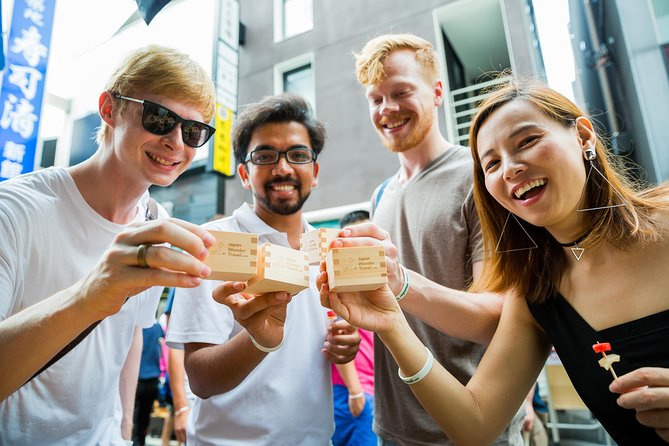
The food samples are part of the lesson. Expect items such as dashi soup, green tea, seaweed, fish cakes, Japanese omelette, tuna, Wagyu beef skewers, seasonal fruit, and other market foods. The exact mix can change with the day and the shops that are open.
I would not treat every tasting as a full course. Some are small samples meant to introduce a flavor or cooking method. The sushi or seafood bowl later in the tour provides the more substantial meal, but one critical comment described the overall food quantity as limited. If you wake up ravenous, eat a light breakfast first or plan another meal afterward.
The Wagyu skewer is a welcome change from the seafood focus. It gives you a taste of another prized Japanese food while keeping the walk from becoming a long series of fish samples. Still, fish remains the central theme, so this is not a good choice if you cannot eat fish.
What you learn about Tsukiji’s role in Tokyo
The guide explains Tsukiji’s roughly 80-year history as one of Japan’s best-known fish-market districts. You also hear why chefs from top restaurants come here for ingredients and how the outer market continues to serve local cooks and shoppers.
The best guides make the food easier to understand without turning the tour into a lecture. Shoko, for example, has helped visitors understand how she uses Japanese foods and spices in her own cooking. Other guides have explained local customs, suggested the best time to return, and helped with shopping decisions.
That practical advice is one of the tour’s strongest features. You can ask what an unfamiliar seasoning is for, how a food is prepared, or which kitchen item makes a sensible souvenir. A guide may also help you find a shop you would have missed on your own.
The quality of the guiding is not perfectly uniform. Kiyo, Naz, Miky, Kayoko, Joy, Mieko, Yuki, KK, Masa, Nick, and several others have been singled out for warmth, clear explanations, humor, and local insight. Yet some people have found a guide too quiet or inexperienced, with slow periods and too much waiting.
That variation matters. The market itself is interesting enough to carry part of the experience, but the tour’s value depends heavily on how well the guide manages the group and explains what you are seeing. A small group makes it easier to hear and ask questions. The maximum group size is 20, though some departures may be much smaller.
Old market lanes and kitchen shops
The itinerary includes about 30 minutes in the old Tsukiji market area. This section continues the food walk and may include time at shops selling kitchen tools.
The kitchen stop is useful if you want a practical souvenir rather than another snack. Tsukiji has long served cooks as well as diners, and browsing knives, utensils, or other cooking tools adds another side to the district.
You should keep expectations sensible. The tour does not promise a dedicated shopping session or extra time at every shop. In a small group, there may be some flexibility if you want to look around, but the group still needs to follow the schedule.
Guides have helped people select ingredients and kitchen items, which is a nice benefit for first-time shoppers. If you have a particular store in mind, mention it early. The walking route has several parts, and you may not have time to return after the final meal.
Other market mornings in Tokyo:
- Tokyo: Tsukiji Fish Market Guided Walking Tour
★ 4.9 · 1,397 reviews - Tokyo Sushi Making Class in Tsukiji with Professional Chef
★ 5.0 · 1,177 reviews - Tsukiji Fish Market Guided Tour and Sushi Making with Pro Chef
★ 5.0 · 775 reviews - Tokyo: Tsukiji Fish Market Food and Culture Walking Tour
★ 4.7 · 757 reviews
Tsukiji Uogashi and the wholesale side
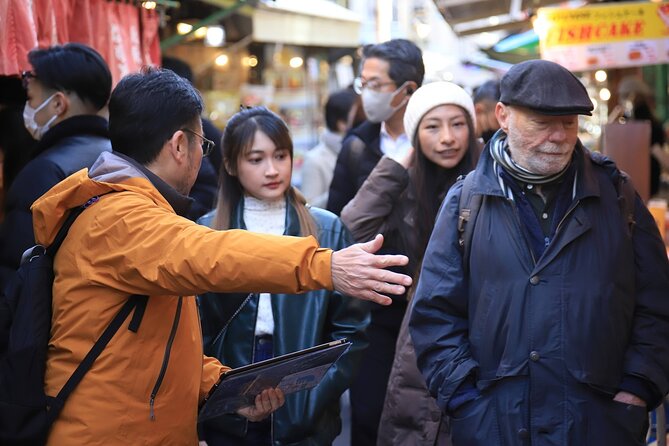
The next stop is Tsukiji Uogashi, a smaller wholesale market area. The stated visit lasts about 30 minutes and offers a look at many kinds of fresh fish.
This is the part that can cause confusion. The famous wholesale fish market and tuna auction moved from Tsukiji to Toyosu, so do not book this expecting the old auction-floor experience. You are visiting the outer market and a smaller wholesale area, not the former central wholesale complex.
When Uogashi is open, the stop helps show how seafood moves through the district. When it is closed, the route changes and some tastings cannot be served. The market is closed Wednesdays, Sundays, holidays, and other designated closure days. On those days, Japanese omelette, fish cakes, and fruit may not be available.
Check the date before booking if those foods matter to you. The tour can still offer a useful market walk, but the exact experience depends on shop schedules and the day’s stock.
Sushi or a seafood bowl to finish
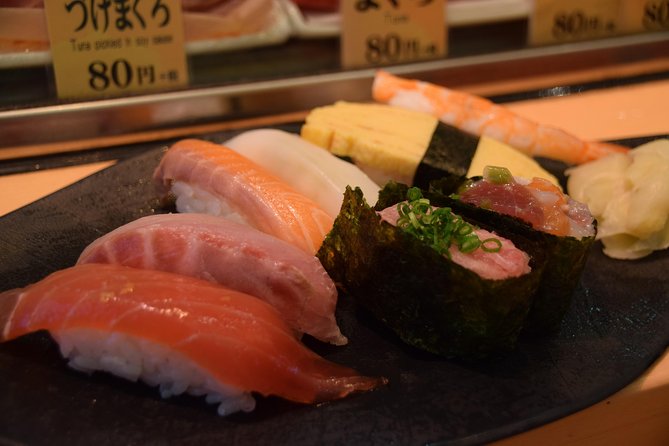
The final 30 minutes center on a serving of sushi or a seafood bowl. The choice depends on the day and time, so you should not assume one specific dish.
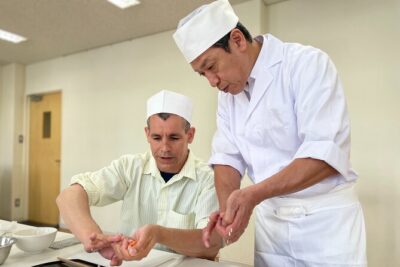
This is the point where the tour becomes lunch rather than a string of bites. One guide-led visit included a sushi preparation demonstration, and another ended with sashimi prepared at a respected local restaurant. You may also see fish being cut or prepared before eating, depending on the restaurant and the day.
The meal gives the earlier tastings a clear purpose. You have seen raw ingredients, learned a little about market customs, and then eaten seafood in a more complete form. For many people, the sushi or bowl is the highlight.
Still, do not book this as a premium omakase meal. The tour promises a delicious fish bowl or sushi, not a long multi-course restaurant experience. If you are hoping for complete control over the menu, this may feel restrictive. The meal can change if a restaurant closes unexpectedly, though an alternative is provided.
How much food do you really get?
The tour includes lunch and snacks, but the word snacks is important. The route offers several tastes, yet not every stop hands you a full serving.
The most commonly described foods include:
- Dashi soup and green tea
- Seaweed and fish cakes
- Japanese omelette
- Tuna and other seafood
- Wagyu beef skewers
- Seasonal fruit
- Sushi or a seafood bowl
- Additional market samples depending on the day
The final meal should leave you better fed than the earlier tastings alone would. Even so, one person found the tour more focused on looking at and discussing food than on eating large amounts. That is a fair warning for anyone comparing it with a full food crawl.
I see the value in the variety. You are paying to understand the market and taste selected foods, not simply to buy the cheapest possible lunch. If you want a large meal, compare the price with what you would spend eating independently, then decide how much you value the guide and cultural explanation.
Is $99.49 a fair price?
At $99.49 per person, this is not the cheapest way to visit Tsukiji. You can walk through the outer market without paying an admission fee, choose your own stalls, and spend less if you keep your meal simple.
The tour earns its price through direction, explanations, included tastings, and the final sushi or seafood bowl. It also saves you from guessing which stall is worth your time or worrying about how to order unfamiliar foods. For a first visit to Tokyo, that can be worth more than a modest saving.
I would book it if you want structure and food guidance, especially during your first few days in the city. I would skip it if you are comfortable navigating Japanese markets, prefer choosing every dish yourself, or mainly want the largest meal possible.
The strong overall rating and 97 percent recommendation figure suggest that the basic plan works well for many people. But those numbers should not hide the important limits: food options are fixed by the route, the guide’s style can vary, and the old wholesale market is no longer at Tsukiji.
Timing, group size, and practical comfort
The tour lasts about three hours and ends back at the temple meeting point. It is near public transportation, but transport to and from the meeting point is not included.
Wear comfortable walking shoes. You will spend much of the time on foot, often moving through narrow market lanes rather than strolling along a quiet sidewalk. Moderate physical fitness is recommended.
Arrive early. Late arrivals cannot be added to the end of the tour, and the group cannot wait past the scheduled departure. There is no refund for a same-day cancellation or late arrival.
The minimum drinking age in Japan is 20. If a drink is part of the experience and you are under 20, another drink is provided. Extra food, extra drinks, hotel pickup, hotel drop-off, and transportation to the meeting point are not included.
The tour does not accommodate vegetarian, halal, gluten-free, or allergy-related requests. Fish is essential to the experience, so anyone who cannot eat fish should not book it.
Free cancellation is available up to 24 hours before the start time for a full refund. Changes made within 24 hours are not accepted.
Who will enjoy this Tsukiji walk?
I recommend it most for first-time visitors who want help making sense of Tsukiji. It also suits curious eaters who want to try seafood, learn how Japanese ingredients are used, and get some shopping advice along the way.
Families and older visitors can do well if everyone is comfortable walking. One guide was praised for keeping a patient pace for an elderly parent, and a small group can make the route easier to manage.
It is less suitable for a strict dietary plan, anyone seeking the old tuna auction, or people who dislike group schedules. It is also not ideal if you need a quiet, slow restaurant meal rather than a moving food lesson.
Should you book it?
Book this Tsukiji tour if you want a guided introduction to Tokyo’s food culture, several carefully chosen tastes, and a final sushi or seafood bowl. The strongest guides, including Shoko, Masa, Nick, Yuki, Kiyo, and Naz, have made the market easier to understand and more rewarding to explore.
Before paying, accept three facts: the tour visits the outer market, the wholesale section may be closed on your date, and the food is varied but not unlimited. If those conditions suit you, $99.49 is a reasonable price for three hours of food, local context, and help in a district that can be confusing on your own.
FAQ
Where does the tour meet?
Meet your guide at the main gate of Tsukiji Honganji Temple, 3-chōme-15-1 Tsukiji, Chuo City, Tokyo. Do not go to the back side of the temple, as map directions may lead you there.
How long does the tour last?
The tour lasts approximately three hours and ends back at the meeting point.
What food is included?
Included foods may include dashi soup, green tea, seaweed, fish cakes, Japanese omelette, tuna, Wagyu beef skewers, seasonal fruit, and other samples. The tour finishes with either sushi or a seafood bowl, depending on the day and time.
Is lunch included?
Yes. Lunch and snacks are included. The final meal is either sushi or a seafood bowl.
Can people with dietary restrictions join?
The tour does not accommodate vegetarian, halal, gluten-free, or allergy-related requests. Fish is central to the experience, so you cannot join if you cannot eat fish.
Is the old wholesale fish market included?
The tour passes through Tsukiji Uogashi, a smaller wholesale market area when it is open. It does not visit the former central wholesale market and tuna auction site, which moved elsewhere.
What happens if I need to cancel?
You can cancel at least 24 hours before the start time for a full refund. Cancellations, changes, and late arrivals within 24 hours are not eligible for a refund.
More walking tours elsewhere in Japan
- Tokyo: Asakusa Walking Tour with Sensoji Temple Visit
★ 4.8 · 1,583 reviews - Tokyo Castle & Imperial PalaceーShogun Walking Tour
★ 4.7 · 1,068 reviews - Tokyo: Imperial Palace Japanese History Walking Tour
★ 4.9 · 987 reviews - Tokyo: Imperial Palace and Shogun Walking Tour
★ 4.9 · 935 reviews
Just added in Tokyo
- Nikko: Edo Wonderland Edomura Cultural Theme Park Ticket★ 4.3 · 205 reviews
- 《MEMBERS-ONLY-BAR-HOPPING》Discover Your Special Whiskey in Tokyo!★ 5.0 · 29 reviews
- Japanese Whisky Hunting《HIGH-QUALITY-ONLY》Rare Tasting Class★ 5.0 · 20 reviews
- Luxury Tokyo Sake, Cocktail, Whisky and Pairing Tour★ 5.0 · 18 reviews
- Wagyu & Sake Pairing in Shinjuku – Steak, Shabu-Shabu & More★ 5.0 · 112 reviews
- Small-Group Wagyu Beef and 7 Japanese Dishes Tokyo Cooking Class★ 5.0 · 190 reviews
- Tokyo: KABUKI Show at Kabukiza Theatre Admission Ticket★ 4.8 · 152 reviews
- Tokyo: KABUKI, BUNRAKU, etc. presented by National Theatre★ 4.6 · 135 reviews
Tsukiji & Toyosu Fish Market Tours, compared.
Tokyo Sushi Making Class in Tsukiji with Professional Chef
Read our review →
Tsukiji Fish Market Guided Tour and Sushi Making with Pro Chef
Read our review →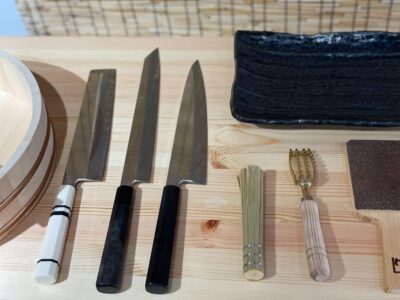
Tsukiji Fish Market Sushi Making Class with Pro Chef
Read our review →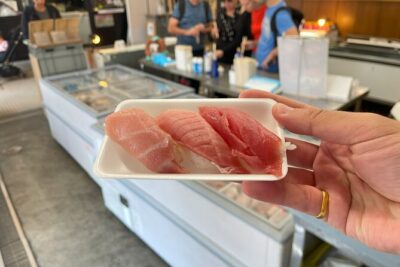
Tokyo Food Tour Taste Fresh Delights at Tsukiji Market
Read our review →
Tokyo Tsukiji Fish Market Tour and Sushi Making Lesson
Read our review →Browse the lists this tour appears in