
Reviewed · GEISHA & GION DISTRICT TOURS
Kyoto: Gion Geisha District Walking Tour – Stories of Geisha
Kyoto’s geisha districts make the most sense after sunset, when lanterns glow outside wooden teahouses and maiko and geiko may hurry between appointments. This two-hour walk links Pontocho and Gion with stories that explain what you’re seeing, rather than leaving you to admire pretty streets without context. I especially like the small, manageable route and the chance to ask questions as you go. Guides such as Yuki, Nami, Deborah, and Manny are praised for making the subject clear and lively.
The $20 price is easy to justify if you want an introduction to Kyoto’s traditional entertainment world. The main drawback is that a geisha sighting is never guaranteed, and evening darkness can make some landmarks harder to see. You’ll also finish away from the starting point, so pay attention to the final location.
Key points at a glance
- Two historic districts in one walk: Visit Pontocho and Gion, Kyoto’s best-known geisha quarters.
- Nighttime atmosphere: Narrow lanes, wooden teahouses, lanterns, and discreet club entrances give the walk its special mood.
- Useful cultural context: Learn the difference between geiko and maiko, along with details about training, dress, ceremony, and teahouse life.
- Realistic chance of sightings: You may see maiko or geiko heading to appointments, but the tour does not promise it.
- Strong guide element: Yuki, Nami, Deborah, Yukari, Kenji, and Manny are among the guides praised for warmth, humor, and clear explanations.
- Good value for a short stay: Two hours and $20 give you a useful introduction before exploring Kyoto on your own.
Why Gion makes more sense with a guide
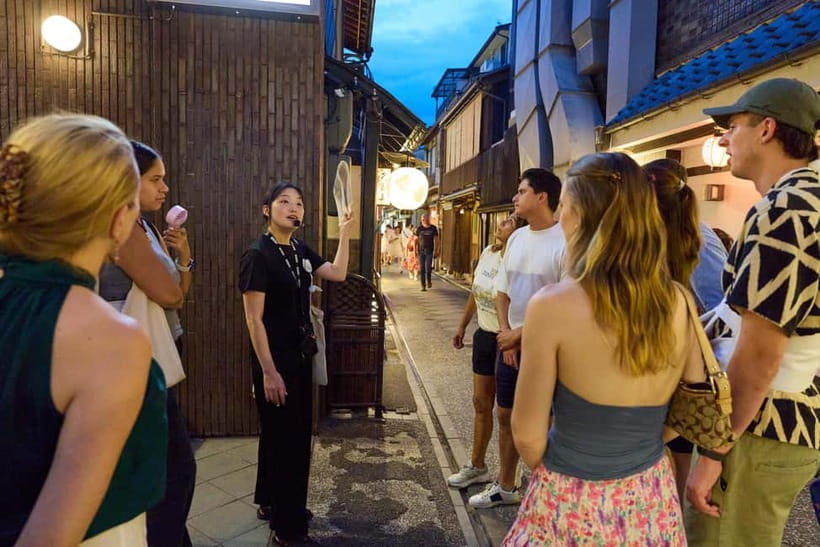
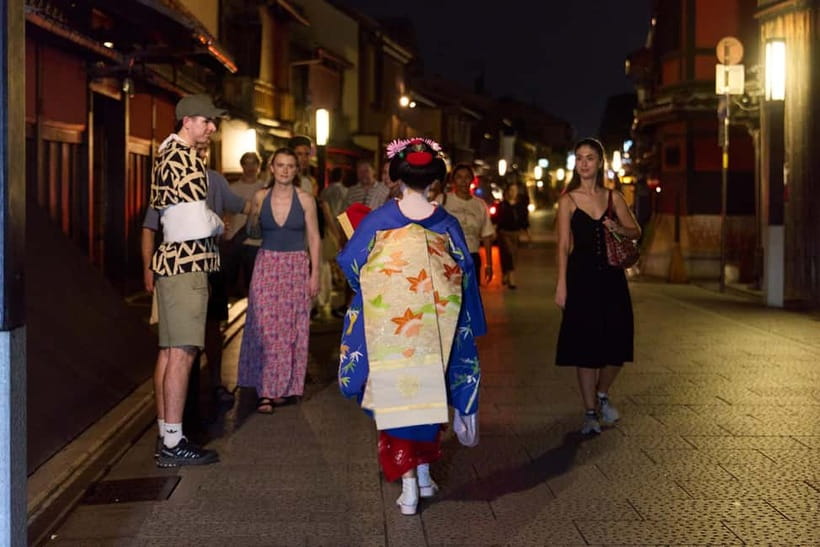
At first glance, Gion can seem like a collection of handsome wooden buildings and quiet lanes. That is pleasant enough, but the details are easy to miss. A guide explains why certain streets are narrow, how the teahouse world works, and why a woman in elaborate dress moving quickly through the district should be treated with care rather than treated like a photo opportunity.
The tour focuses on geiko and maiko, the Kyoto terms for professional women who perform traditional arts and entertain guests in teahouses. You learn about their training, clothing, makeup, music, dance, etiquette, and place in Kyoto’s cultural life. That background changes the way you see the district.
I like that the walk is not presented as a guaranteed celebrity sighting. You might see a maiko or geiko heading to an appointment, and several people on recent tours did. But the real value is the explanation of the world behind the brief glimpse.
The best guides adjust their talk to the group. Ann was praised for handling both beginners and people who already knew something about geisha culture. Nami regularly checked that everyone was keeping up and had time for questions. Deborah used photographs to make clothing and customs easier to understand. Those small teaching choices matter on a walking tour.
Other walking tours in Kyoto people book:
- Kyoto Geisha Walking Tour: Gion District & Hidden Gems
★ 4.7 · 3,273 reviews - Kyoto: Gion Magical Night Walking Tour with Geisha Trivia
★ 4.9 · 2,393 reviews - Kyoto Gion Geisha District Walking Tour – The Stories of Geisha
★ 5.0 · 1,441 reviews
Starting near Ben’s Cookies Kyoto Shijo
The meeting point is in front of Ben’s Cookies Kyoto Shijo, in a central part of Kyoto. Look for the guide holding a sign board. This is a practical meeting place, but give yourself enough time to find it, especially if you are arriving from another neighborhood.
The route begins with a short guided introduction before moving toward the traditional entertainment districts. Bring water and wear shoes you can walk in comfortably. The tour lasts two hours and includes narrow lanes, ordinary city streets, and stops where you stand while the guide explains the setting.
English and Spanish tours are available. The activity is not suitable for children under 10, so families with younger children should choose another way to see Gion.
Pontocho Alley and Kyoto after dark
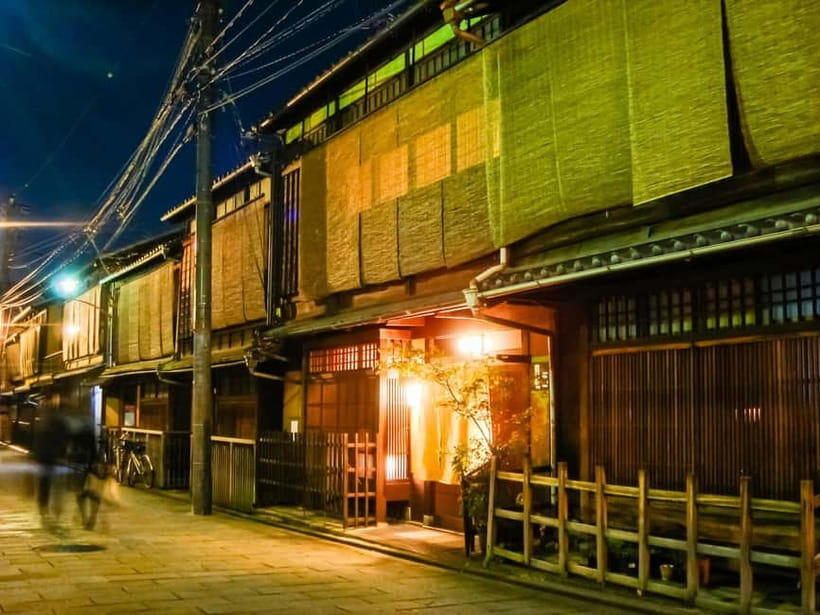
Pontocho Alley is one of the most atmospheric parts of the walk. It is a narrow lane lined with traditional Japanese restaurants, teahouses, and private clubs. Many businesses are discreet, and some entrances reveal very little from the street. That privacy is part of the district’s character.
Your guide helps you understand that Pontocho is not simply an old-fashioned restaurant street. It belongs to a particular system of dining, performance, hospitality, and introductions. You will not be touring the private clubs or entering teahouses, but you can see how the street is arranged and learn why it has such a guarded feel.
At night, the lane is more evocative than it would be in full daylight. Wooden facades and small lamps create a sense of another era, though the street remains part of modern Kyoto. You might also find it crowded at points, so stay close enough to hear your guide.
The scheduled explanation here lasts about 15 minutes. That is enough for useful context without turning the whole evening into a lecture. The route keeps moving, which helps the experience feel like a walk through a living neighborhood rather than a museum visit.
Izumo-no-Okuni and the origins of kabuki
After Pontocho, the group crosses the river to the statue of Izumo-no-Okuni. This stop adds a wider cultural thread to the evening.
Izumo-no-Okuni is associated with the creation of kabuki, one of Japan’s best-known traditional performance forms. The guide explains her role and connects performance traditions with the broader history of Kyoto’s entertainment districts. It is a good pause between Pontocho and Gion because it reminds you that these neighborhoods are tied to dance, theater, music, and public performance, not just dining.
The stop is scheduled for about 15 minutes. This is one of the more useful moments for questions. If you are new to Japanese performing arts, ask your guide how kabuki relates to the geiko and maiko traditions. The subjects overlap in their emphasis on training and presentation, but they are not the same profession.
Other evenings in the old entertainment quarters of Kyoto:
- Best of Kyoto: Gion, Geisha, Pagodas & Cobblestones
★ 4.9 · 2,058 reviews - Night Walk in Gion: Kyoto’s Geisha District
★ 4.5 · 2,003 reviews - Kyoto Night Foodie Tour in Gion (9+ dishes + 6 Sake tastings)
★ 5.0 · 1,762 reviews - Kyoto Gion: 2-Hour Geisha Culture & History Walking Tour
★ 5.0 · 1,186 reviews
Gion’s wooden streets and working teahouses
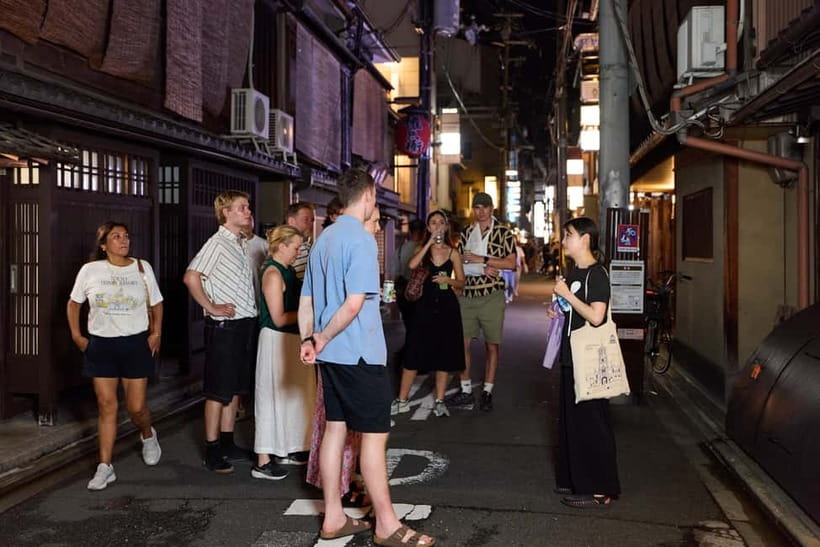
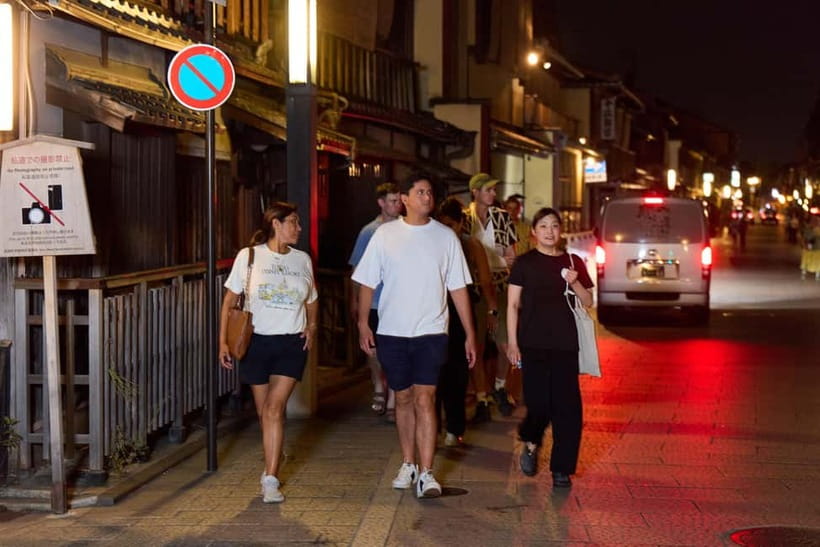
Gion is Kyoto’s most famous geisha district, and the tour spends about 30 minutes walking through it. The streets are visually striking, with old wooden buildings and narrow lanes that have retained a traditional appearance.
This is where the tour’s cultural explanation becomes especially important. Gion is not a stage set built for sightseeing. People work here, and the teahouses and clubs are private businesses. A good guide shows you how to look without getting in the way.
You may see a woman in formal dress moving quickly toward an appointment. The guide can help you identify whether you are looking at a maiko or geiko and explain the visible differences. Still, do not treat a sighting as the goal of the entire tour. A respectful glimpse, followed by space and quiet, is the right approach.
Several guides are praised for the way they handle this part. Yuki is described as a local with strong pride in Kyoto and a respectful attitude toward its traditions. Michael is praised for his friendly explanations of both Gion and Kyoto more broadly. Kenji is noted for a well-paced walk filled with useful facts. These comments point to the most important quality here: a guide who helps you understand the district without turning its residents into attractions.
Yasaka Shrine and a welcome change of pace
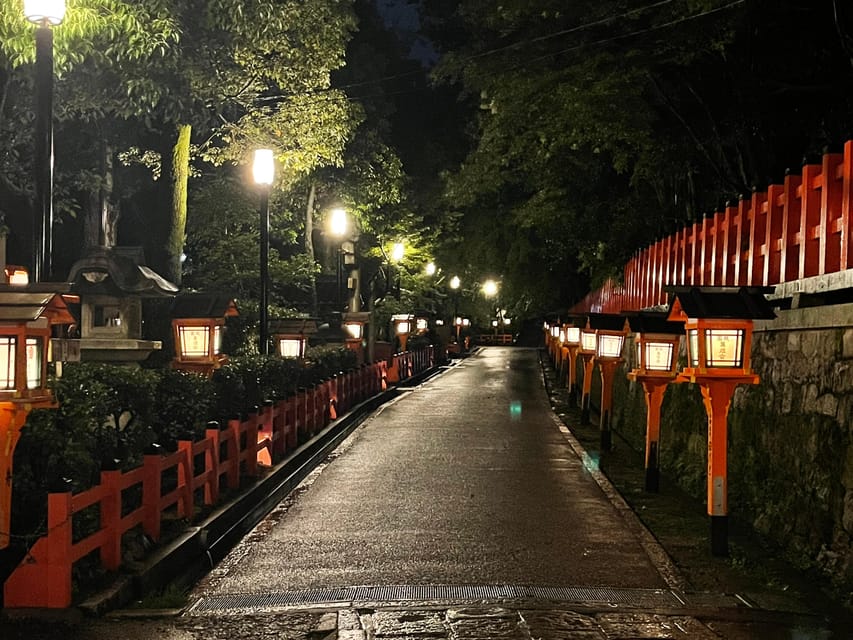
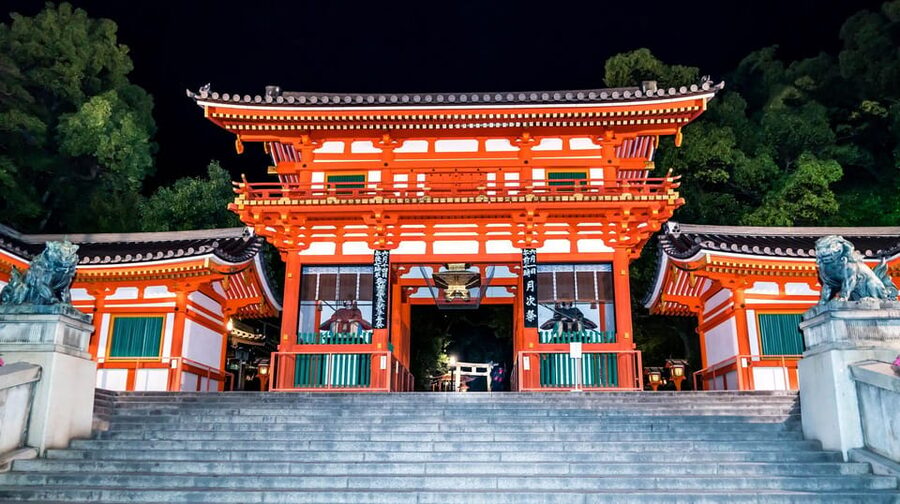
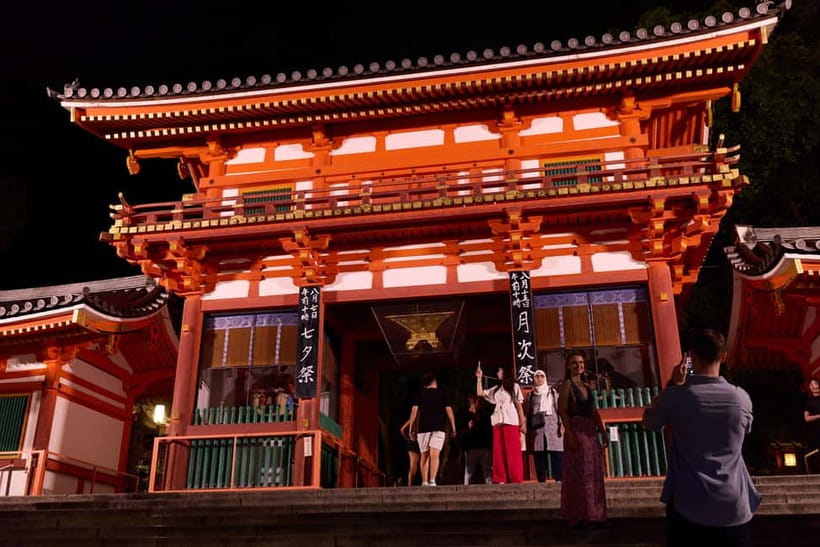
The route continues to Yasaka Shrine, one of the most recognizable religious sites in this part of Kyoto. The stop lasts about 25 minutes, making it one of the longer pauses.
The shrine provides a useful contrast to the teahouse streets. Here, your guide can place Gion within the wider life of Kyoto, where religious sites, festivals, ordinary homes, shops, restaurants, and entertainment districts exist close together. You are not visiting a sealed-off historical quarter. You are walking through a functioning city.
The shrine may be easier to appreciate with some explanation, especially if you are not familiar with Japanese religious customs. Ask questions about what you are seeing and how the site fits into local traditions. The amount of detail depends on your guide and the group, but the stop gives the evening a broader frame.
If the weather is poor, this part of the walk may be less comfortable. One guide handled rain by finding sheltered places to stop, but you should still bring suitable clothing. Weather can also affect how much time you want to spend outdoors after the official tour ends.
Gion Corner and Hanamikoji Street
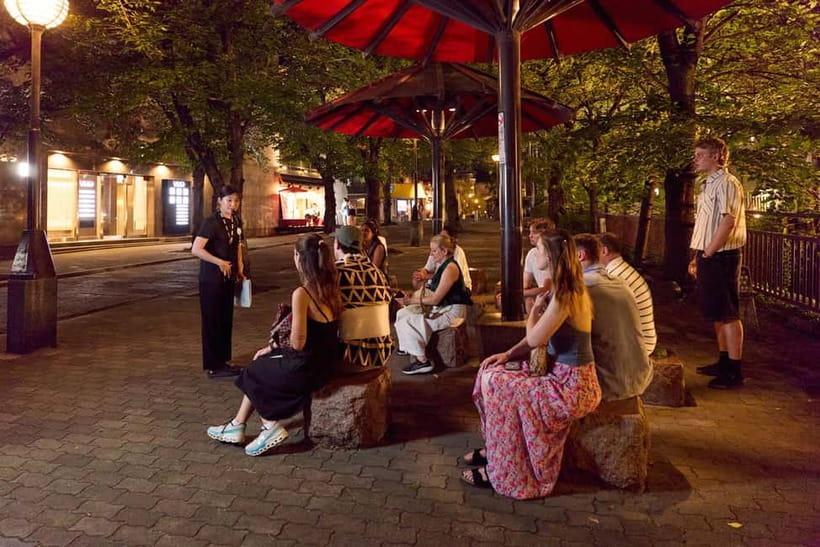
Gion Corner is included as a short, approximately 10-minute stop. The guide can point out its place within Kyoto’s traditional performing-arts scene and explain how visitors can think about formal cultural entertainment in the city.
The final main stop is Hanamikoji Street, visited for about 15 minutes. This is one of Gion’s best-known streets, with traditional facades and a strong nighttime atmosphere. It is also a place where visitors need to behave well. Keep voices low, avoid blocking doorways, and ask before taking pictures of people.
The tour ends in the Hanamikoji area rather than returning to the starting point. This is useful because you are already in one of Kyoto’s best areas for an evening meal, but it can surprise you if you expect a circular route. Before leaving, ask your guide for directions or a restaurant suggestion. One guide even helped a couple choose a restaurant that they enjoyed afterward.
What the $20 price really buys you
At $20 per person, this is an inexpensive guided introduction to one of Kyoto’s most difficult cultural subjects. You are not paying for admission to a private teahouse, a meal, or a guaranteed performance. You are paying for a local guide who can explain what the streets, clothing, customs, and buildings mean.
That distinction matters. If you only want photographs, you could walk through Gion on your own. If you want to understand the difference between geiko and maiko, learn why training takes years, and see how the districts function after dark, the fee is good value.
The two-hour length is also useful. It is long enough to cover both Pontocho and Gion, yet short enough to fit into a busy Kyoto schedule. You can take the tour early in your stay, then return to the area later with a better sense of what you are seeing.
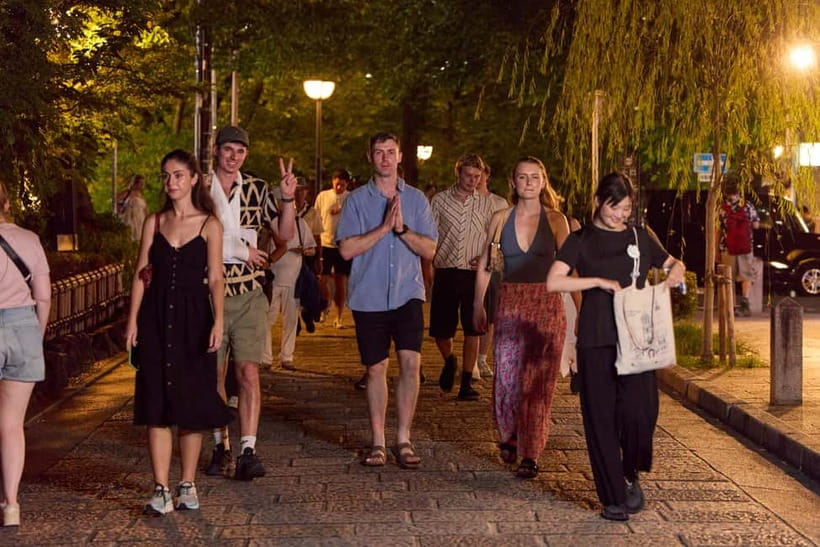
The group size may vary. Some outings have been very small, while another group included about 13 people. Smaller groups make it easier to ask questions and hear explanations in narrow lanes. If you are assigned a guide such as Nami, Yuki, Deborah, Yukari, or Manny, expect the tone to be friendly and conversational, but the exact style will depend on who leads your outing.
The guides are the main reason to book
The route itself is excellent, but the guide determines how much you take away. The most praised guides are not simply reciting dates. They explain customs in plain language, use humor when appropriate, answer questions, and adjust the pace.
Nami is praised for making the two hours feel quick while still allowing plenty of explanation and photos. Deborah is noted for her enthusiasm and for using pictures to clarify geiko and maiko life. Yukari is praised for combining local history with a relaxed, funny manner.
Manny and Manuel, apparently names used for the same or different guides depending on the outing, are praised for keeping the subject interesting and accessible. Yuki receives repeated praise for his passion for Kyoto, his courtesy, and his respectful approach to geiko and maiko culture.
There is no way to choose a particular guide in advance from the information provided, so book this for the route and subject, not for one named person. Still, the repeated praise for different guides is encouraging. It suggests that the company’s strength is its guiding team rather than one individual.
Sightings, etiquette, and realistic expectations
Seeing a maiko or geiko can be a memorable part of the evening. Some groups have seen one, and at least one group saw geiko rather than maiko. Other groups saw few or none. Timing, weather, appointments, and simple chance all matter.
Think of a sighting as an extra, not the product. The tour remains worthwhile because the guide explains the culture and the district even when no one appears.
Your behavior matters. Do not chase, touch, block, or photograph people at close range without permission. The guide can help you spot someone respectfully, but you should follow local directions and keep the path clear.
The tour is for people aged 10 and older. It suits couples, solo visitors, friends, and families with older children who are curious about culture and comfortable walking for two hours. It is less suitable if you want a seated performance, a meal, or access inside a private teahouse.
Practical details before you go
Meet in front of Ben’s Cookies Kyoto Shijo, where the guide will hold a sign board. Check the starting time when booking, since several departure times may be available.
Bring water. Wear comfortable shoes and prepare for weather, since the entire experience takes place outdoors. Evening temperatures can change, and rain may make the stone and paved streets less pleasant.
The tour is offered in English and Spanish. You can cancel up to 24 hours ahead for a full refund, and the reserve now, pay later option keeps your schedule flexible. These policies are useful in Kyoto, where plans often shift around weather and temple visits.
Should you book the Gion Geisha District Walking Tour?
Book it if you want a clear, affordable introduction to Kyoto’s geiko and maiko traditions, especially early in your stay. The route covers Pontocho, Gion, Yasaka Shrine, Gion Corner, and Hanamikoji in two hours, while a local guide gives meaning to streets you could otherwise walk past.
Skip it if you want guaranteed contact with geisha, a private performance, or entry into a teahouse. No walking tour can promise sightings, and the evening darkness limits some sightseeing.
For $20, I would choose this tour if my Kyoto schedule were tight. The strongest benefit is not simply seeing a woman in formal dress for a few seconds. It is learning how to read the district, why its traditions matter, and how to visit without treating a working neighborhood like a theme park.
FAQ
How long does the Gion geisha walking tour last?
The tour lasts two hours.
How much does the tour cost?
The listed price is $20 per person.
Where does the tour meet?
Meet in front of the Ben’s Cookies Kyoto Shijo shop. The guide will be holding a sign board.
Where does the tour finish?
The route finishes in the Hanamikoji Street area rather than returning to the original meeting point.
Which neighborhoods does the tour visit?
The walk visits Pontocho and Gion, including Pontocho Alley, Yasaka Shrine, Gion Corner, and Hanamikoji Street.
Will I definitely see a geisha or maiko?
No. You may encounter geiko or maiko traveling to appointments, but sightings are not guaranteed.
What languages are available?
The tour is available in English and Spanish.
Is the tour suitable for young children?
The activity is not suitable for children under 10 years old.
Can I cancel the booking?
Yes. You can cancel up to 24 hours in advance for a full refund. A reserve now, pay later option is also available.
More walking tours elsewhere in Japan
- Nishiki Market Brunch Walking Tour (7 Tastings + Brunch)
★ 5.0 · 1,355 reviews - Kyoto Arashiyama Walking Tour: Bamboo, Monkeys, Gardens & Secrets
★ 5.0 · 1,216 reviews - Kyoto: Izakaya Bars Guided Walking Tour
★ 4.9 · 815 reviews - Kyoto Sake Brewery & Tasting Walking Tour
★ 5.0 · 623 reviews
Just added in Kyoto
- Kyoto Rickshaw Tour★ 5.0 · 210 reviews
- Kyoto: Private Photoshoot Service★ 5.0 · 158 reviews
- Izakaya Style Cooking Class★ 5.0 · 219 reviews
- Kyoto: Traditional Concert at Townhouse or Bathhouse★ 4.9 · 224 reviews
- Ninja 2-hour Hands-on Lesson by Japanese master in Kyoto -Medium★ 5.0 · 218 reviews
- Kyoto: Arashiyama Bamboo, Temple, Matcha, Monkeys & secret spots★ 5.0 · 219 reviews
- Kyoto: Kimono Tea Ceremony with Matcha and Sweet★ 4.9 · 249 reviews
- South Kyoto in a Nutshell: Gentle Backstreet Bike Tour!★ 5.0 · 225 reviews
Geisha & Gion District Tours, compared.
Kyoto Geisha Walking Tour: Gion District & Hidden Gems
Read our review →
Best of Kyoto: Gion, Geisha, Pagodas & Cobblestones
Read our review →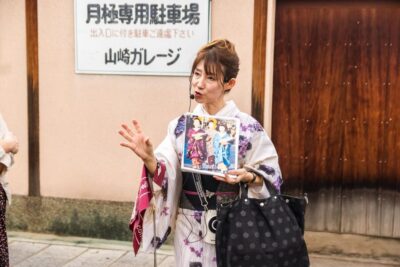
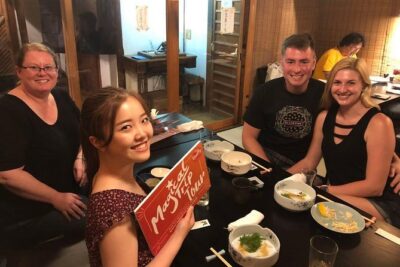
Kyoto Night Foodie Tour in Gion (9+ dishes + 6 Sake tastings)
Read our review →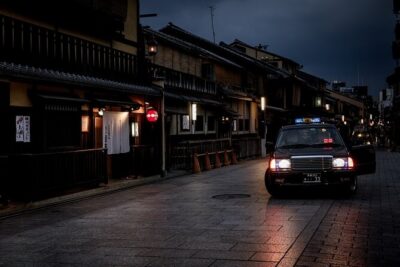
Kyoto Gion Geisha District Walking Tour – The Stories of Geisha
Read our review →
Kyoto Gion: 2-Hour Geisha Culture & History Walking Tour
Read our review →
Chopsticks Making Workshop in Gion with Engraving Option
Read our review →
Browse the lists this tour appears in