
Reviewed · SIGHTSEEING BUS TOURS
Tokyo: 60min Panoramic Open Top Bus Tour with Audio Guide
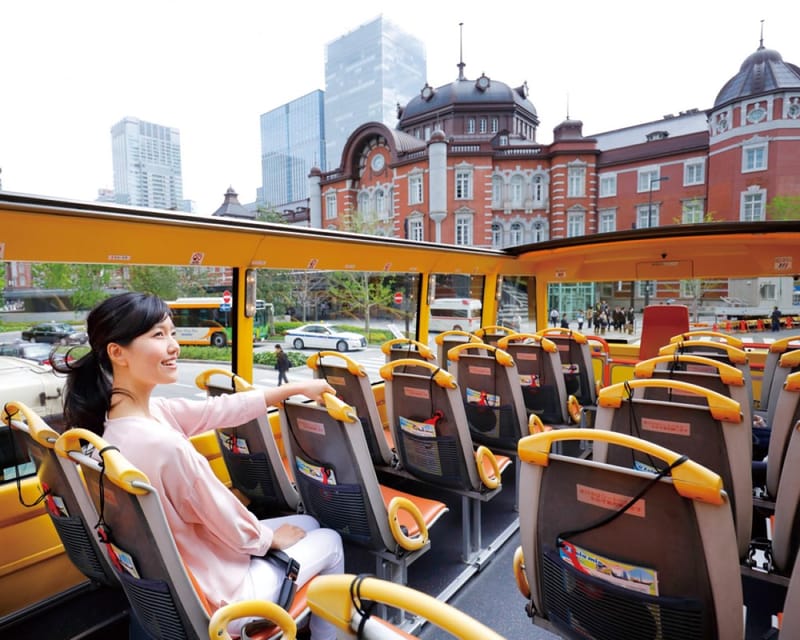
Tokyo reveals itself differently from the upper deck of a bus. This one-hour ride sweeps from central Tokyo across Rainbow Bridge, then back through Ginza and the Tsukiji area. You get a fast, broad look at the capital without spending the day underground on trains.
I like the low $14 price, especially if you want a quick orientation near the start of your stay. I also like the eight-language GPS guidance, which lets you follow the route in English and several other languages while the Japanese-speaking guide handles the live tour. The main catch is weather: rain may close the roof or cancel the trip, and the ride is a sightseeing loop, not a hop-on hop-off bus.
The route gives you two strong views of Tokyo. First comes the formal city center, with the National Diet Building and Tokyo Tower. Then the bus reaches Tokyo Bay, Odaiba, Toyosu, and Rainbow Bridge before returning through Tsukiji and Ginza.
Key points to know before boarding
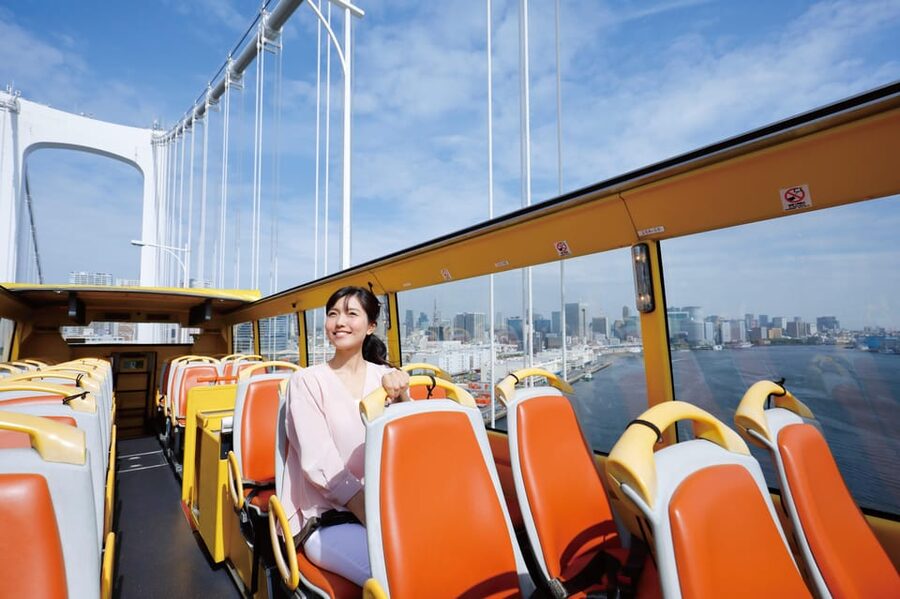
- Rainbow Bridge is the route’s big open-air moment: You feel Tokyo’s breeze and get a broad view toward the bay area.
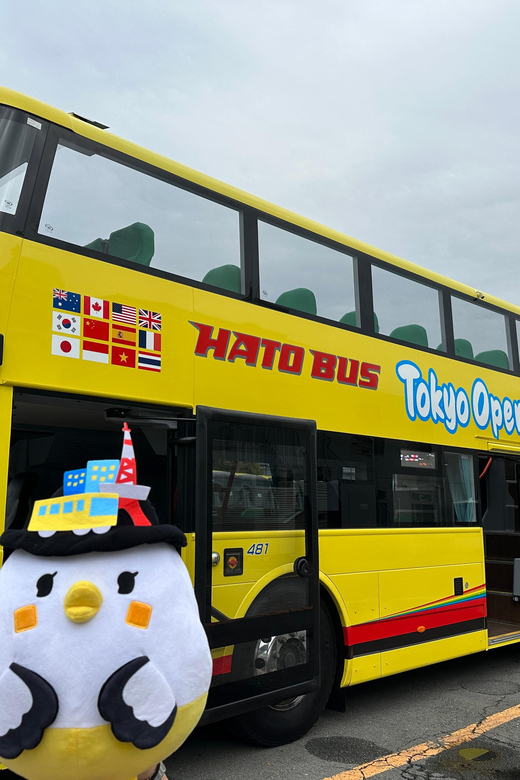
- The bus leaves and returns to Tokyo Station: Meet at the Hato Bus Tokyo Office near the Marunouchi South Exit.
- Eight audio languages are available: English, Chinese, Korean, Spanish, French, Thai, Indonesian, and Vietnamese.
- This is a continuous one-hour ride: You cannot get off at the landmarks along the way.
- Bring your own phone and earphones: The GPS system is free, but neither a device nor earphones are supplied.
- Rain can change the experience: The roof may close, and heavy rain or bad weather can cancel the tour.
Why this short bus ride works in Tokyo
Tokyo can feel hard to read at street level. One neighborhood blends into another, train stations swallow time, and major sights are often separated by long walks or several stops on different rail lines. This bus tour gives you a quick visual map.
You begin near Tokyo Station and pass through the political center, the office districts, Tokyo Tower, the bay, and Ginza. In one hour, you see how these parts fit together. I would not treat the ride as a replacement for visiting Tokyo Tower, Tsukiji, or Odaiba on foot. Think of it as a useful first look, or a pleasant final ride when you want to rest your feet.
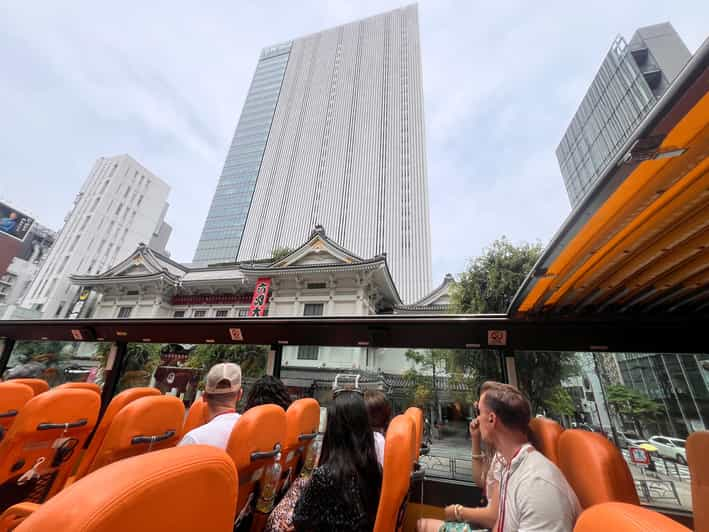
The open top matters. From the upper deck, you have no side windows blocking the view above street level. You can look up at buildings and get a wider sense of the road ahead. The tradeoff is exposure to sun, wind, and rain, so your comfort depends heavily on the day.
At $14 per person, this is priced more like a city orientation than a major sightseeing attraction. You are paying for a fixed route and a clear view, not entry to a landmark or a private guide. That makes it good value if you want a short activity close to Tokyo Station.
Other tours by coach from Tokyo:
- Mt Fuji and Hakone 1-Day Bus Tour Return by Bullet Train
★ 5.0 · 26,383 reviews - 1-Day Tokyo Bus Tour
★ 5.0 · 14,250 reviews - Tokyo Mt Fuji 5th St & Hakone Cruise Bus Tour w/Bullet Train
★ 4.4 · 5,024 reviews
Starting at the Hato Bus office near Tokyo Station
The meeting point is the Hato Bus Tokyo Office near the JR Tokyo Station Marunouchi South Exit. After leaving the station through that exit, turn left and walk straight for about two minutes. Look for the yellow Hato Bus stop.
This location is practical for an arrival day, a departure day, or a gap between other plans in the Marunouchi area. Tokyo Station is large, so allow enough time to find the correct exit. The published coordinates are 35.678964, 139.765781 if you want to check the location on your phone.
The bus returns to this same office at the end. There is no hotel pickup or hotel drop-off, so you need to reach the meeting point yourself. That keeps the price low, but it also means the tour is less convenient if you are staying far from central Tokyo.
The tour lasts one hour. It is a continuous ride, not a hop-on hop-off service, so use the restroom and settle in before departure. Once the bus leaves, you remain on board until the return to Tokyo Station.
Hibiya Park and the formal heart of Tokyo
The first part of the route passes Hibiya Park. You do not stop to explore it, but the area helps introduce central Tokyo as a mix of public green space, government buildings, and major roads.
The bus then passes the National Diet Building. Japan’s national legislature has a formal, carefully planned setting, and viewing it from the road gives you a useful sense of the political district. The audio guidance can add context as the bus moves, but this is still a passing view rather than a museum-style visit.
You will not have time to get off, walk around, or take a detailed photograph from several angles. If the National Diet Building is a priority, plan a separate visit. On this ride, its value is as one part of a quick sequence of Tokyo landmarks.
Toranomon and Tokyo Tower

The route continues through Toranomon, an office and business district in central Tokyo. From the bus, you see Tokyo as a working city rather than only a collection of tourist sights. This stretch also keeps the route moving between the government district and Tokyo Tower.
Tokyo Tower is one of the tour’s most rewarding sights. The bus approaches it from the road, so you can see it from changing angles rather than from one fixed viewpoint. A recent booking comment specifically praised seeing the tower from several directions, something that is difficult to arrange during an ordinary visit.
That is an important distinction. This tour does not include admission to Tokyo Tower, and you will not go up the tower. Instead, you get a moving view of its orange and white structure among the surrounding buildings. If you want photos, keep your phone ready and expect the best angle to last only a short time.
The upper deck helps here. You can look above nearby traffic and buildings, though the exact view will depend on the bus position and road conditions. The ride gives you variety, but not the control of a walking tour.
Same base, a different sort of day:
- Tokyo: TOKYO SKYTREE® Admission ticket
★ 4.5 · 11,192 reviews - Tokyo: teamLab Planets TOKYO Digital Art Museum Entry Ticket
★ 4.6 · 9,779 reviews - Mt Fuji & Hakone Cruise, Drum Show Bullet Train 1 Day from Tokyo
★ 4.0 · 7,413 reviews - Tokyo: Sumo Show Experience with Chicken Hot Pot and a Photo
★ 4.8 · 6,678 reviews
Crossing Rainbow Bridge toward Tokyo Bay
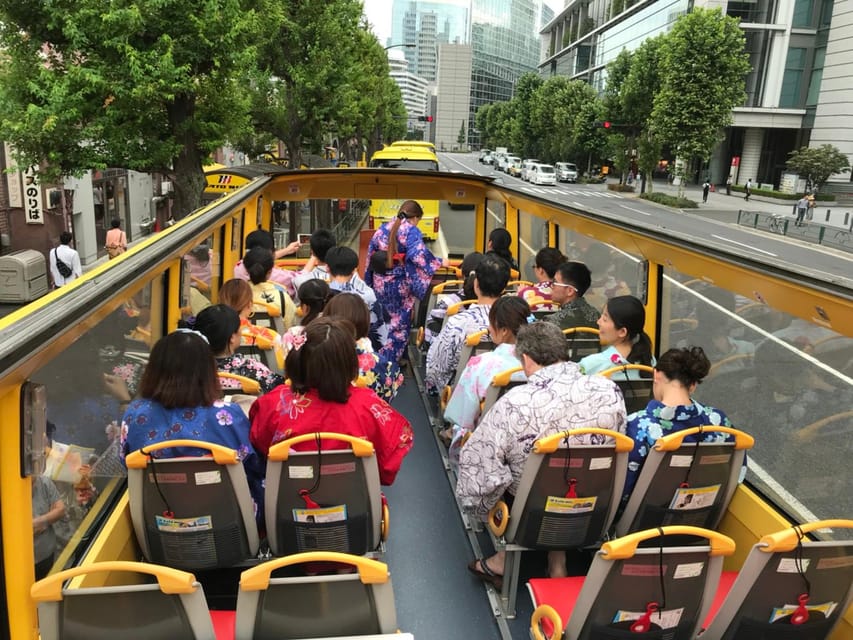
The route’s most memorable section comes as the bus heads toward Rainbow Bridge. This is where the open-top design earns its keep. You can feel the air as the bus crosses, and the city opens into a wider bay view.
The experience is more about movement and scale than about stopping for a perfect photograph. You are crossing on a moving bus, so keep cameras and phones secure. The bridge can also be breezy, even when the streets around Tokyo Station feel calm.
For many people, this bay crossing will be the reason to choose the tour over a regular bus ride. The open upper deck makes the transition noticeable. You move from dense central streets into a more spacious waterfront setting, then continue into Odaiba and Toyosu.
Weather matters most here. In rain, the roof may be closed. In heavy rain or poor conditions, the whole tour may be canceled. A cloudy day can still provide a pleasant ride, but you should not book this as your only major outdoor plan.
Odaiba and Toyosu from the upper deck

After Rainbow Bridge, the bus passes Odaiba. You see the bay-side district as part of the wider route, with the water and modern development giving the ride a different feel from the older central neighborhoods.
Again, there is no stop for exploring. You will not have time to visit individual attractions in Odaiba, and the bus does not function as local transport around the district. The advantage is that you can see Odaiba without giving up several hours of your day.
The route then continues through Toyosu. This area adds another side of Tokyo Bay to the trip. The changing views help you understand that Tokyo is not one uniform city center. Central government buildings, business districts, waterfront development, markets, and shopping streets all appear in the same short circuit.
An audio guide can make these passing scenes more useful. GPS-based guidance is offered in eight languages: English, Chinese, Korean, Spanish, French, Thai, Indonesian, and Vietnamese. The live guide speaks Japanese, while the phone-based system supplies the language support for international passengers.
Tsukiji, Kabuki-za, and Ginza on the return
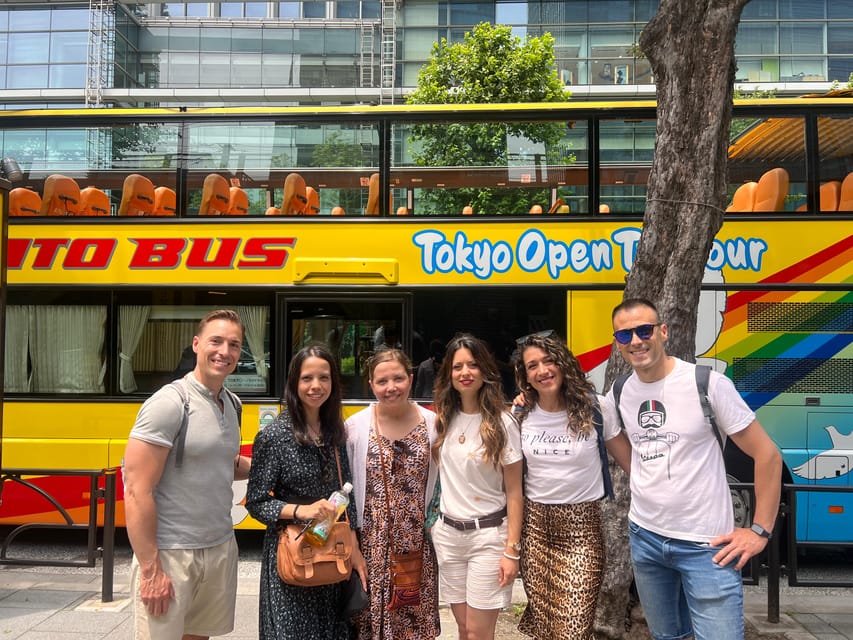
The return leg passes Tsukiji Outer Market, Kabuki-za, and Ginza. These three places offer a strong finish because they bring the bus back into some of Tokyo’s best-known central districts.
Tsukiji Outer Market is known for food shops and market streets, but this tour only passes by. You cannot stop to eat or browse. If you want the full market experience, schedule a separate visit and give yourself time to walk. On the bus, Tsukiji is a quick reminder of how close the historic market area is to the modern bay districts.
Kabuki-za adds a cultural landmark to the route. The building is associated with kabuki theater, one of Japan’s major traditional performance forms. You see the theater from outside as the bus passes, so the view is brief but easy to combine with a later Ginza walk.
Ginza brings the tour back to polished central Tokyo streets and major shopping avenues. It is a fitting final section because the bus moves from waterfront views into one of the city’s best-known commercial districts before returning to the Hato Bus office.
The entire route works best as a connected story. You are not stopping long enough to study each place, but you see central Tokyo, Tokyo Tower, the bay, market districts, theater, and Ginza in a single hour.
Using the GPS audio guide
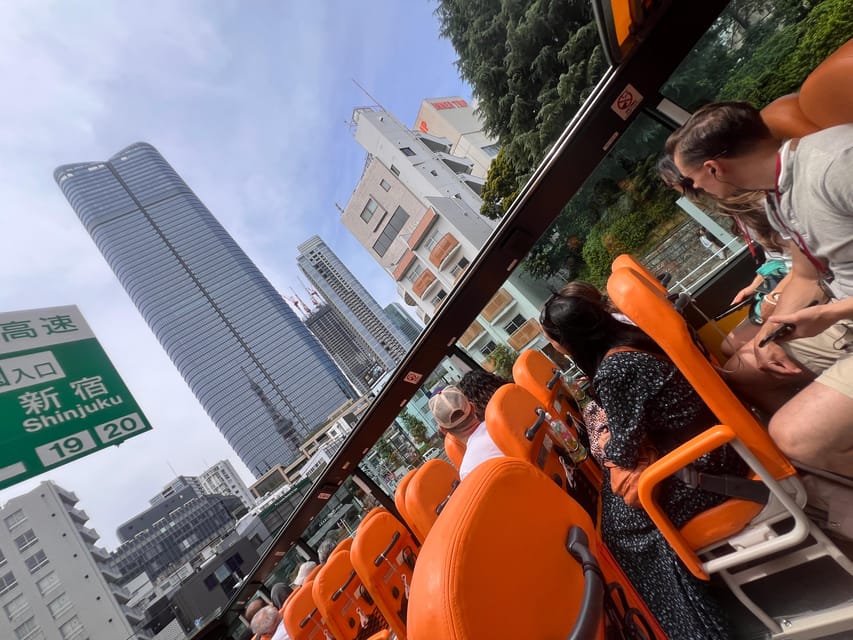
The audio guidance is GPS-based, so it follows your position along the route. It is available free of charge in eight languages. You need to bring a smartphone that works in Japan and your own earphones.
This requirement is easy to overlook. The bus does not provide a rental phone or earphones. Test your phone before boarding, make sure it has enough battery, and bring earphones that fit securely. The system is supplied at no extra cost, but technical problems or faulty earphones do not qualify for a refund.
The Japanese-speaking guide remains part of the experience, but international passengers should plan to use their own phone for detailed language support. If you prefer not to manage a device while taking photographs, the passing views can still be enjoyed without constant audio. Just keep in mind that the guidance is one of the main ways to understand what you are seeing.
What to bring and what not to expect
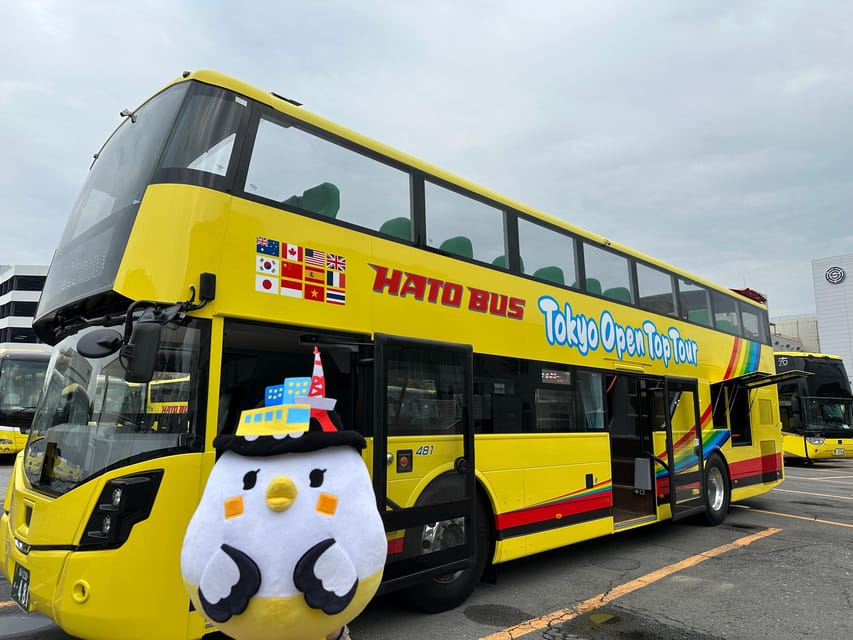
Dress for an open-air ride, not a sealed coach. The upper deck can be sunny or windy, and rain may lead to a closed roof. A light layer is sensible, and secure belongings are important when the bus is moving across the bridge.
Food is not allowed on the bus. Drinks in plastic bottles are permitted. This makes the ride simple and tidy, but do not plan to bring a meal from Tokyo Station and eat it during the hour.
There is no hotel transfer. You meet at Tokyo Station and return there, which is convenient if you already have plans in Marunouchi, Ginza, or nearby central Tokyo. It is less useful as a direct sightseeing transfer between districts because you cannot get off along the way.
Children under six can ride free without a seat, limited to one child per adult. If a child needs a seat, the booking conditions should be checked before you reserve.
Who will get the most from the $14 fare
I would choose this tour for a first morning in Tokyo, especially if you want to understand the city’s layout before tackling it by train. It also suits anyone with a short schedule who wants Tokyo Tower, Rainbow Bridge, the bay, Tsukiji, Kabuki-za, and Ginza in one compact ride.
Families may appreciate the simple one-hour format. You get a clear activity without committing to a long walking tour, and the upper deck gives children a memorable view of the city. Keep in mind that the roof, wind, and weather may affect comfort.
The tour is less suitable if you want detailed sightseeing at each stop. You cannot leave the bus, enter attractions, browse Tsukiji, or spend time at Rainbow Bridge. A walking tour or a carefully planned day using Tokyo’s rail system will give you more depth.
The strongest praise connected to this experience focuses on comfort, the route, and the changing views of Tokyo Tower. That matches the tour’s real strength: it gives you a pleasant overview rather than a close examination of any one landmark.
Booking, cancellation, and weather planning
You can cancel up to 24 hours in advance for a full refund, and the reserve-now-pay-later option keeps your plans flexible. Starting times vary, so check availability for your preferred day.
Do not rely on this ride for a fixed outdoor highlight if the forecast looks poor. The roof may close during rain, and heavy rain or bad weather can cancel the tour. Since the main pleasure comes from open views and the breeze, a dry day makes a real difference.
Should you book this Tokyo bus tour?
Book it if you want a low-cost, one-hour introduction to Tokyo with a strong route and little walking. The $14 fare is fair for a continuous open-top ride from Tokyo Station, especially when you value Rainbow Bridge, multiple views of Tokyo Tower, and a quick look at the bay districts.
Skip it if you need time at each landmark, want hotel pickup, or dislike weather-dependent activities. Bring your own smartphone and earphones, arrive at the Hato Bus office near Marunouchi South Exit, and treat the ride as a city overview. On a clear day, it is an efficient and enjoyable way to see Tokyo’s many faces in one circuit.
FAQ
Where does the Tokyo open-top bus tour begin and end?
The tour begins and ends at the Hato Bus Tokyo Office near the JR Tokyo Station Marunouchi South Exit. The bus stop is about a two-minute walk after turning left and walking straight from the exit.
How long does the tour last?
The tour lasts one hour.
Is this a hop-on hop-off bus?
No. This is a continuous sightseeing ride. You remain on the bus and return to the Hato Bus Tokyo Office at the end.
What languages are available for the audio guide?
GPS-based audio guidance is available in English, Chinese, Korean, Spanish, French, Thai, Indonesian, and Vietnamese. The live guide speaks Japanese.
Do I need to bring my own phone and earphones?
Yes. Bring a smartphone that can be used in Japan and your own earphones. The GPS system is free, but phones and earphones are not provided for rental.
Can I eat or drink on the bus?
Eating is not allowed. Drinks in plastic bottles are permitted.
What happens if it rains?
The bus roof may be closed during rain. The tour may be canceled because of bad weather or heavy rain.
Just added in Tokyo
- The 10 Tastings of Tokyo With Locals: Private Street Food Tour★ 5.0 · 48 reviews
- Small Town in the Big City: Tasting Tokyo’s Kichijoji★ 5.0 · 195 reviews
- Small Town in the Big City: Tasting Tokyo’s Kichijoji★ 5.0 · 16 reviews
- EXCLUSIVE Tokyo Secret: Kichijoji Small-Group Food & Bar Hopping★ 5.0 · 29 reviews
- Explore Kichijoji: Walk Through One of Tokyo’s Beloved Districts★ 5.0 · 21 reviews
- :Tokyo,Shibuya/ Pro Photography in Kimono / English-Friendly★ 5.0 · 26 reviews
- 【R34】Tokyo:Private Daikoku tour in Modified R34★ 4.9 · 92 reviews
- Tokyo: Allstar Food Tour★ 4.7 · 29 reviews
Sightseeing Bus Tours, compared.
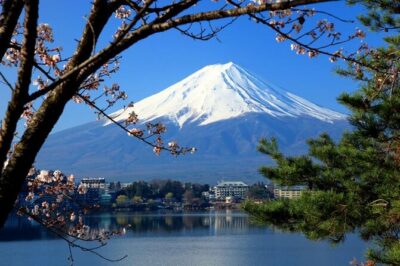
Mt Fuji and Hakone 1-Day Bus Tour Return by Bullet Train
Read our review →
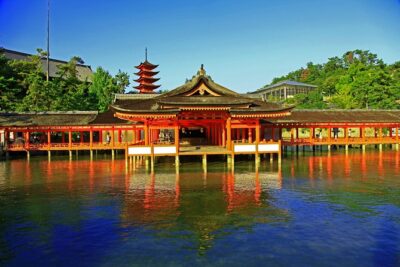
Peaceful Hiroshima & Miyajima UNESCO 1 Day Bus Tour
Read our review →
Tokyo Mt Fuji 5th St & Hakone Cruise Bus Tour w/Bullet Train
Read our review →
Meiji Shrine, Asakusa, Skytree Bus Tour and Cruise
Read our review →
Kyoto/Osaka: Nara, Fushimi Inari Taisha, Arashiyama Bus Tour
Read our review →Browse the lists this tour appears in