
Reviewed · TOURS IN TOKYO
Tokyo: Edo Kiriko Traditional Glass Carving Class
The best part of this Asakusa activity is that you do not just look at Japanese craftwork, you make a piece yourself. In 90 minutes, an instructor shows you how to carve a glass using traditional Edo Kiriko methods, then helps you turn a practice design into a take-home souvenir. Instructor Ze is especially good at calm, clear guidance in English.
I like the easy location, just 30 seconds from Asakusa Station, and the chance to choose your own glass and pattern from a wide selection. I also like the small-group feel reported by one participant, who worked with three others and had plenty of support. The main catch is that neat carving takes practice. Your first cuts may be crooked, and the instructor may need to refine parts of your design.
Key points to know before you book

- Practice comes before the final glass: You can try sample cuts, including stars, before working on your chosen piece.
- More than 20 glass styles are available: Pick from six clear and colored glass types, including blue, pink, and yellow.
- Your pattern choice matters: Dozens of samples help you see how different designs may look on different glasses.
- English instruction is available: The instructors speak English and Japanese, with clear, supportive help for beginners.
- The workshop is near Asakusa’s big sights: Sokichi is about 30 seconds from Asakusa Station, with Senso-ji and Tokyo Skytree nearby.
- You leave with a handmade souvenir: The finished glass may not be perfect, but it is a personal piece of Japanese craft.
What Edo Kiriko means in a 90-minute class

Edo Kiriko is a traditional Japanese glass-carving craft with more than 180 years of history. Instead of shaping hot glass, you work on the surface of a finished glass, cutting lines and patterns into it to reveal the color and create a bright, faceted design.
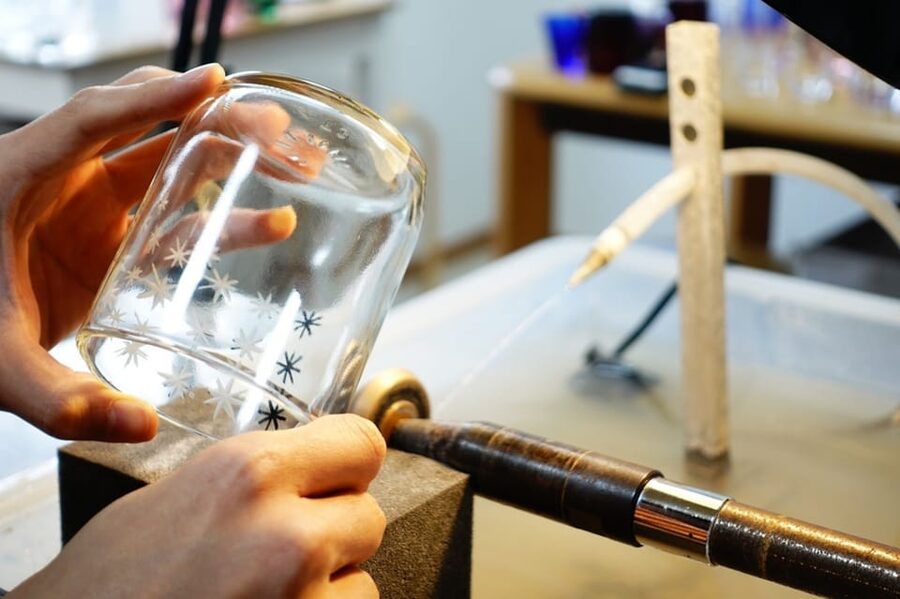
That distinction matters. This is a hands-on carving class, not a glassblowing demonstration. You sit at a work station and learn to guide the glass against the cutting equipment under an instructor’s direction. The finished object is small, practical, and easy to carry home.
I like this kind of activity because the souvenir has a clear connection to the place where you made it. You are not simply buying a decorative item in a shop. You are choosing the color, selecting the pattern, and leaving visible traces of your own skill.
The class is beginner-friendly, but the craft is not effortless. The basic cutting motion is straightforward. Making a smooth, accurate line is the hard part. That balance gives the class some satisfaction: you can produce something attractive in one visit, while also seeing why experienced Edo Kiriko artists can create such precise work.
Other experiences people book in Tokyo:
- Mt Fuji and Hakone 1-Day Bus Tour Return by Bullet Train
★ 5.0 · 26,383 reviews - 1-Day Tokyo Bus Tour
★ 5.0 · 14,250 reviews - Tokyo: TOKYO SKYTREE® Admission ticket
★ 4.5 · 11,192 reviews
Arriving at Sokichi near Asakusa Station
The meeting point is Sokichi, only about 30 seconds on foot from Asakusa Station. That short walk is useful in Tokyo, where a class can be easy to book but surprisingly hard to locate once you leave the station. Here, the shop itself helps you get oriented.
Speak with a staff member at the shop, and you will be escorted to the room used for the class. The workshop is located above a glassware shop, a fitting setting for the activity. One participant described the entrance as being down a small side street, but still easy to find, with someone waiting outside at arrival time.
The location also works well in a sightseeing day. Senso-ji is about five minutes away according to one detailed account, and Tokyo Skytree is about 15 minutes away. You could visit the temple first, make your glass in a quieter room, and then continue toward the Skytree.
Do not expect a large attraction with a busy exhibition hall. The class takes place in a small, quiet space away from the noise of central Tokyo. That is part of its appeal. You can focus on the glass instead of competing with crowds for attention.
Bring a hair tie if you have long hair. It is the only special item listed for the class, but tying your hair back is also sensible when working at a close station.
Choosing your glass and pattern
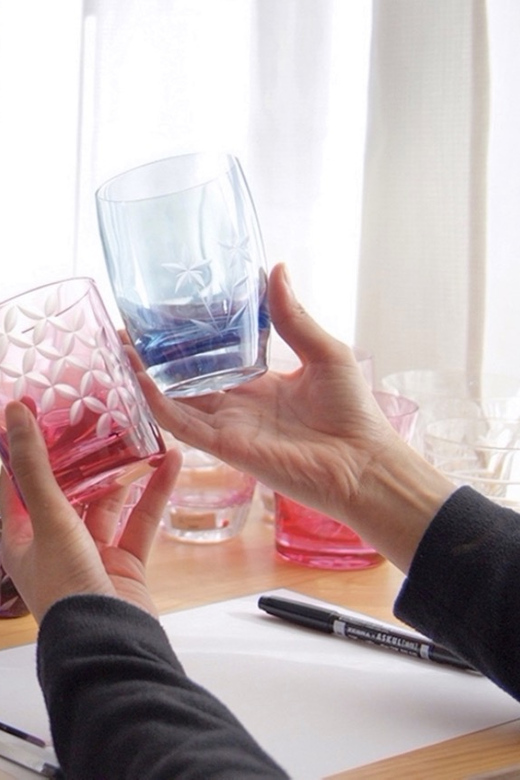
The selection process is one of the most important parts of the experience. You can choose from more than 20 kinds of glasses and dozens of pattern samples. The course includes six types of clear and colored glass, with blue, pink, and yellow among the colored choices.
The color affects how your carving looks. Some patterns may read clearly on one glass but appear less distinct on another. An instructor can explain how the design and glass work together, so take your time before making a choice.
You will also need to decide how ambitious you want to be. The class offers options from beginner to expert level, although all are described as suitable for beginners. That does not mean every pattern is equally simple. A plain design gives you more room to learn the cutting motion, while a detailed one may reward patience but leave less room for mistakes.
If you are unsure, ask the instructor which pattern fits your time and experience. One participant specifically appreciated being shown how different designs would look on different glasses. That advice can save you from choosing a pattern that looks appealing on paper but is difficult to execute in 90 minutes.
The sample designs are not just decoration. They help you picture the result before you start. Look closely at the spacing, the number of lines, and how much of the glass surface is covered. A design with generous open areas may be easier to control than one packed with fine detail.
Practice cuts before the real piece
The class begins with instruction and practice. You do not immediately work on the glass you will take home. One participant described practicing stars first, while another appreciated being able to practice as much as needed before starting the final design.
This is a valuable step. The machine may be simple to operate, but your hands need time to learn the pressure and movement. A light touch may barely mark the surface. Too much pressure or an uncertain motion can send a line away from its intended path.
Use the practice time seriously. Try to repeat the same shape several times, not just once. Watch how the instructor holds the glass and how quickly the cutting motion moves. If you are working with a partner or family member, it can be helpful to compare the advice you receive, since each person may find a different movement more comfortable.
The instructors are there to correct you before a small error lands on the final piece. Reports of the class repeatedly point to patient, encouraging support. Ze is named as an especially kind and thorough instructor, and another participant noted that the instructor’s English was fully clear when offering critiques.
That support makes this a good choice for first-time crafters. You are not left to guess what the equipment is doing. At the same time, the instructor will not do every step for you. The point is to make the object yourself, with help when you need it.
Same base, a different sort of day:
- Tokyo: teamLab Planets TOKYO Digital Art Museum Entry Ticket
★ 4.6 · 9,779 reviews - Mt Fuji & Hakone Cruise, Drum Show Bullet Train 1 Day from Tokyo
★ 4.0 · 7,413 reviews - Tokyo: Sumo Show Experience with Chicken Hot Pot and a Photo
★ 4.8 · 6,678 reviews - Tokyo: Shinjuku Food Tour (13 Dishes at 4 Local Eateries)
★ 5.0 · 6,603 reviews
Carving the glass you take home
After practice, you choose your glass and pattern, then begin the final work. This is the most focused part of the session. You follow the sample design while keeping the glass steady and guiding each cut with care.
The activity is not designed to produce identical results. Even if two people choose the same pattern, their finished glasses may have slightly different lines and spacing. That is part of the charm, but it also means you should not expect a factory-perfect finish.
One participant was pleased to take home a self-made piece even after the instructor refined some crooked etchings. That is a useful expectation to set. The teacher may correct or improve parts of your work, but the glass remains something you made.
The full 90 minutes are used for the activity, and one account says the time passed quickly. A class of around four people was described as peaceful and easy to manage, with enough time for each person to receive help. The exact group size is not guaranteed in the supplied information, so you should not assume every session will have four people, but the available experience suggests a personal teaching style rather than a mass workshop.
You may finish one glass, and some bookings result in two fine glasses. The information does not promise a fixed number for every participant, so think of one completed glass as the reliable expectation and any additional piece as dependent on the class arrangement and pace.
How much help will you receive?
The teaching is available in English and Japanese. That makes the class practical for international visitors who want to understand both the technique and the design choices.
The most useful help comes during the cutting itself. An instructor can point out when your pressure is too heavy, show you how to correct a line, or suggest a pattern that matches your skill level. You may also learn more by asking questions about Edo Kiriko and the craft’s background. One participant noted that cultural information is available, but that you may need to ask for the pamphlet or ask questions to get that part of the experience.
That is worth keeping in mind. This is primarily a making class, not a long lecture about Japanese glass. If you want historical context, take the initiative and ask. You will get more from the session if you are curious about the tools, the designs, and the reason carved patterns look different on colored glass.
The instructors also seem comfortable helping people through imperfect first attempts. Several accounts describe calm, patient assistance and encouragement when early cuts did not go well. That is exactly what you want in a craft lesson where one uncertain movement can change the design.
Is the $30 price good value?
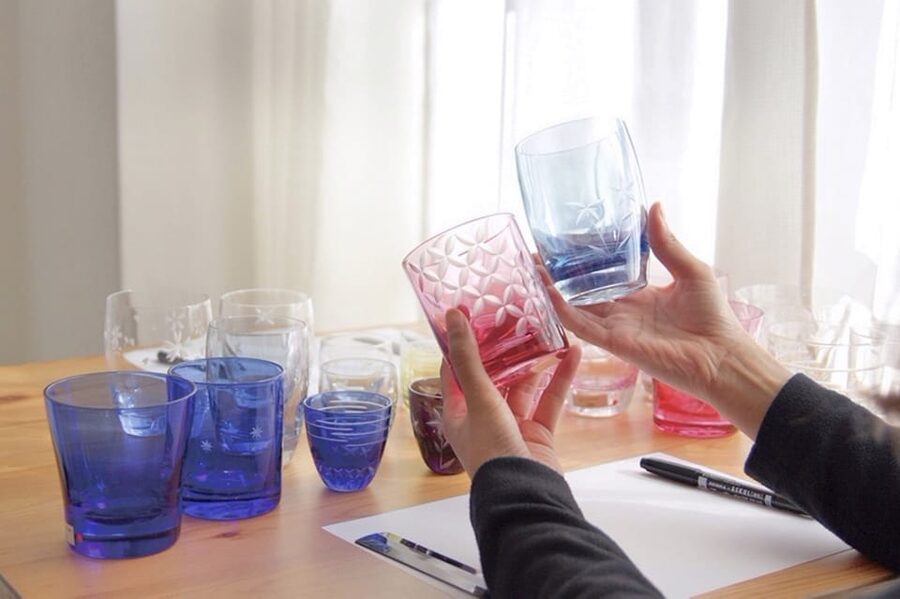
At $30 per person, the price is reasonable for a 90-minute guided craft activity in central Tokyo. The fee includes the glass-carving class, an instructor, and colored glass. Transportation is not included, but the meeting point is so close to Asakusa Station that getting there should be simple if you are already using Tokyo’s rail and subway network.
The value is strongest if you care about making something rather than only seeing something. A purchased souvenir may be smoother, but it will not carry the memory of choosing the pattern, practicing the cuts, and solving the small problems along the way.
The class also gives you a structured break from sightseeing. Asakusa can fill a day with temples, shops, food, and crowds. Ninety minutes in a quiet workshop offers a different way to experience the neighborhood without requiring a full-day commitment.
There are limits. If you dislike careful handwork, or if you want a polished professional result with no visible imperfections, the price may feel less appealing. The activity is rewarding because you participate, not because the instructor guarantees a flawless object.
The high rating of 4.9 from 29 reviews supports the impression that the class delivers what it promises, especially in instruction and the finished souvenir. Still, treat the score as a guide rather than a promise of your own technique. Your result will depend on the pattern you choose and how carefully you work.
Who will enjoy this class most?
I would recommend this to adults, families with older children, couples, and solo visitors who want a creative activity near Asakusa. It suits people who like souvenirs with a personal story and those who are willing to accept that handmade means slightly imperfect.
It is also a good option for anyone visiting Tokyo during poor weather. The activity takes place indoors, has a fixed 90-minute length, and does not require a long transfer from the station.
The class may be less suitable if you want a relaxed demonstration where you simply watch an artist. You will be expected to participate, concentrate, and make repeated cuts. The work is not described as physically demanding, but it does require attention.
I also like it for families because practice comes first. A child or first-time maker can get a feel for the process before committing to a design. The provided information does not state a minimum age, so check the available booking details if you are planning to bring young children.
Planning your Asakusa craft stop
Allow enough time to reach Sokichi before your start time, even though the shop is close to the station. Asakusa Station has several exits and connections, so a few extra minutes can prevent a rushed arrival.
Plan the class around Senso-ji or Tokyo Skytree rather than treating it as an isolated appointment. Senso-ji is about five minutes away, and Tokyo Skytree is about 15 minutes away based on the timing provided by a participant. The exact walking time can vary with your route and pace, but the location is well suited to a sightseeing schedule.
Free cancellation is available up to 24 hours before the activity for a full refund. You can also reserve and pay later, which helps if your Tokyo plans are still changing. Check the start times for your date, since the activity lasts 90 minutes but the available session times vary.
The class is not described as including transportation, so you make your own way to Sokichi. Once at the shop, staff direct you to the class room.
The souvenir you carry home
The finished glass is the lasting reason to book. It is compact, useful, and tied to a specific place and skill. Each time you use it, you will see the pattern you selected and the lines you managed to cut yourself.
Do not judge the result against the instructor’s work. One participant pointed out that the teacher’s carvings were incredibly impressive, while also leaving with a souvenir they felt proud of. That is the right comparison. The instructor shows you what the craft can become after long practice, while your glass records one focused afternoon in Tokyo.
If your design has a crooked line, that does not cancel the experience. The instructor may refine parts of it, and the final piece can still look attractive. The most satisfying result is usually not the most perfect one, but the one you can explain: this is the color I picked, this was the pattern I tried, and I made it in Asakusa.
Should you book the Edo Kiriko class?
Book it if you want a short, personal activity with a clear Japanese connection and a souvenir you make yourself. The location is excellent, the price is fair, and the English-language support makes the class accessible to beginners.
Choose your pattern with care, use the practice time, and expect a handmade result rather than a flawless one. If that sounds enjoyable, this is one of the better ways to spend 90 minutes near Senso-ji. If you would rather watch a craft expert than handle the tools yourself, spend your time at a glass shop instead.
FAQ
Where does the Edo Kiriko glass class meet?
The class begins at Sokichi, a shop about 30 seconds on foot from Asakusa Station. Speak with a staff member, and they will escort you to the room used for the workshop.
How long does the class last?
The class lasts 90 minutes. Available starting times depend on the date you select.
How much does the experience cost?
The listed price is $30 per person.
What languages are spoken during the class?
Instruction is available in English and Japanese.
What can I make during the workshop?
You learn to carve a glass using traditional Edo Kiriko techniques and take your finished glass home. Some participants have completed two glasses, but a fixed number is not specified.
Can beginners join?
Yes. You can choose from beginner to expert-level designs, and all options are described as beginner-friendly. The class also includes practice before you work on your final glass.
What glass colors can I choose from?
The class includes six types of clear and colored glass. The listed colored choices include blue, pink, and yellow.
What should I bring?
Bring a hair tie, especially if you have long hair. Transportation is not included, so you also need to make your own way to Sokichi.
Can I cancel the booking?
You can cancel up to 24 hours in advance for a full refund. Reserve-now, pay-later booking is also available.
Just added in Tokyo
- The 10 Tastings of Tokyo With Locals: Private Street Food Tour★ 5.0 · 48 reviews
- Small Town in the Big City: Tasting Tokyo’s Kichijoji★ 5.0 · 195 reviews
- Small Town in the Big City: Tasting Tokyo’s Kichijoji★ 5.0 · 16 reviews
- EXCLUSIVE Tokyo Secret: Kichijoji Small-Group Food & Bar Hopping★ 5.0 · 29 reviews
- Explore Kichijoji: Walk Through One of Tokyo’s Beloved Districts★ 5.0 · 21 reviews
- :Tokyo,Shibuya/ Pro Photography in Kimono / English-Friendly★ 5.0 · 26 reviews
- 【R34】Tokyo:Private Daikoku tour in Modified R34★ 4.9 · 92 reviews
- Tokyo:Calligraphy &Make your original folding fan in Asakusa★ 5.0 · 62 reviews
Tours in Tokyo, compared.

Mt Fuji and Hakone 1-Day Bus Tour Return by Bullet Train
Read our review →


teamLab Planets TOKYO Digital Art Museum Entry Ticket
Read our review →
Mt Fuji & Hakone Cruise, Drum Show Bullet Train 1 Day from Tokyo
Read our review →
Sumo Show Experience with Chicken Hot Pot and a Photo
Read our review →
Shinjuku Food Tour (13 Dishes at 4 Local Eateries)
Read our review →