Reviewed · TOURS IN TOKYO
Tokyo: Kintsugi Art Repair Workshop
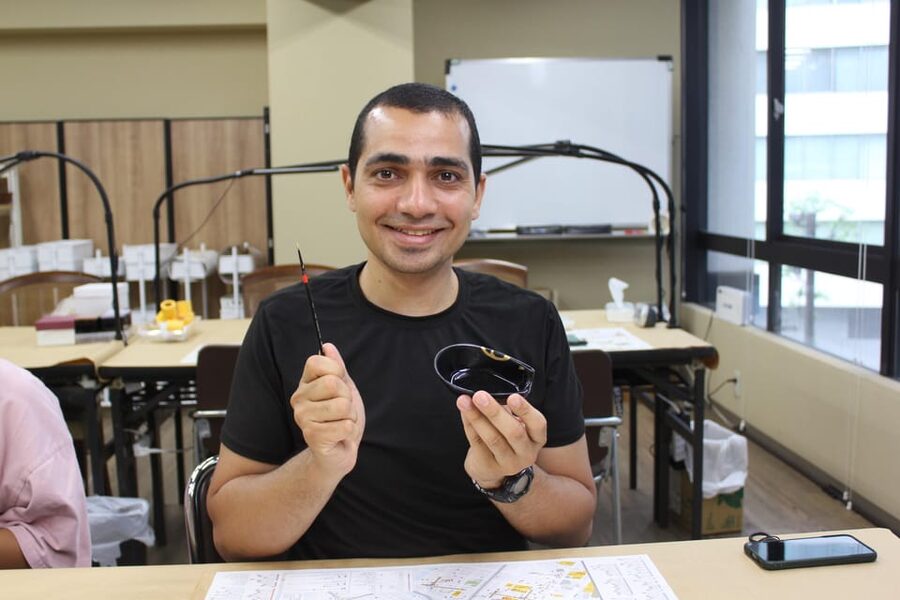
Kintsugi turns a crack into the best part of a piece. In this 90-minute Tokyo workshop, you repair ceramic pottery, fill or smooth damaged areas, and trace the seams with gold-colored paint. The result is not factory-perfect. That is the point.
I like the small groups of up to five and the calm, patient instruction. I also like the practical souvenir: you do not just watch a craft demonstration, you take home a piece you worked on yourself. The main consideration is that this is a shortened workshop version of kintsugi, not the full traditional process that can take a month.
Key points at a glance
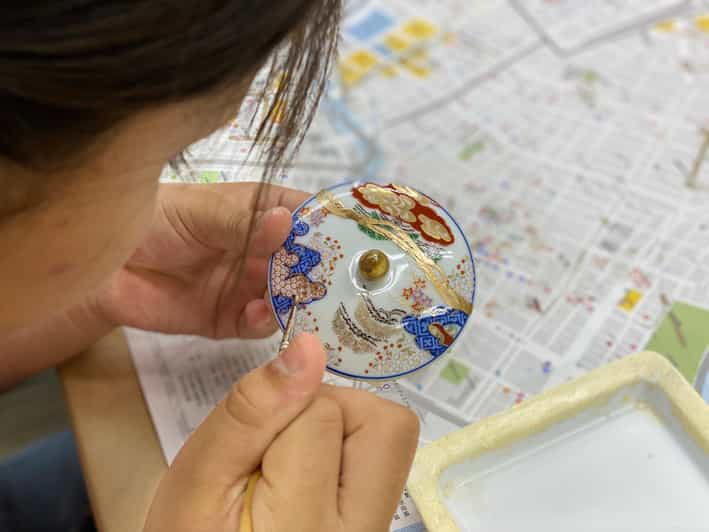
- A hands-on repair: You work through joining, filling, sanding, and painting rather than simply observing.
- English support: An English-speaking instructor and interpreter guide you through each stage.
- Small class size: The group is limited to five, allowing close help at the table.
- A useful Tokyo stop: The meeting point is about 15 minutes by subway from Asakusa.
- A take-home keepsake: Your finished ceramic piece is primarily decorative and can hold dry food.
- Bring-your-own option: You may bring a ceramic vessel, within strict size and damage limits.
What kintsugi means beyond the gold lines
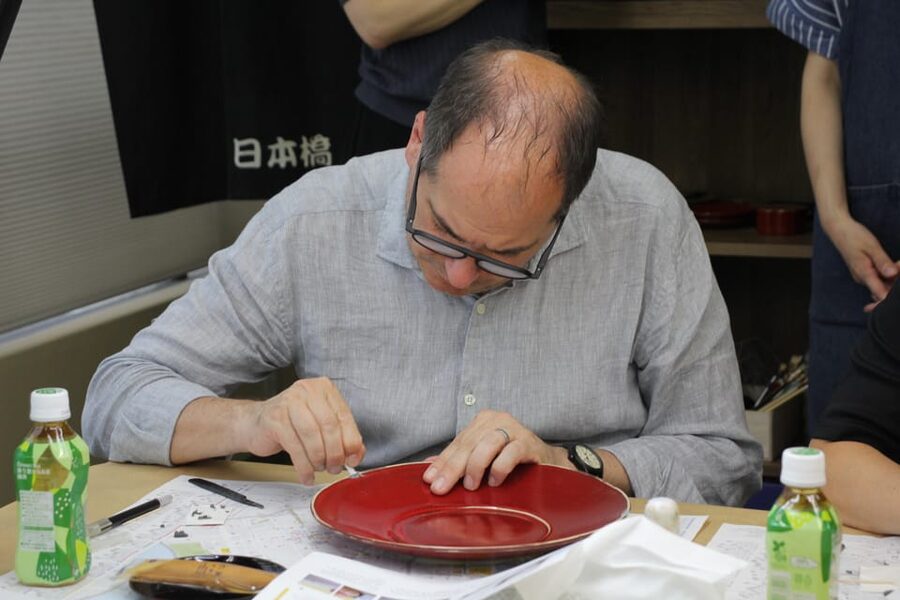
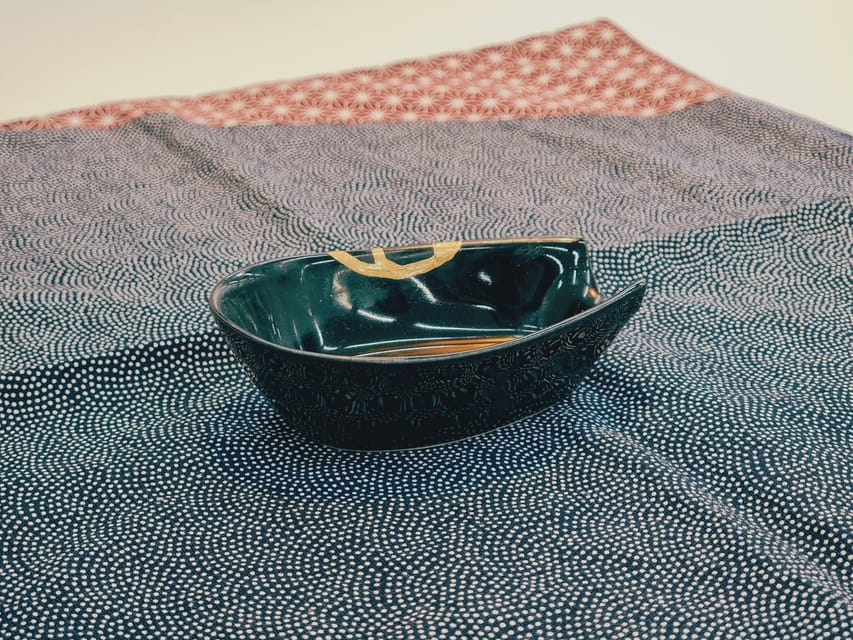
Kintsugi is the Japanese art of repairing broken pottery with lacquer and gold. Instead of hiding a break, the repair makes it visible. A damaged bowl or cup becomes a record of its own history, with the seams treated as part of the design.
That idea gives the workshop more weight than a standard souvenir craft. You are not simply painting a ready-made object. You are taking a damaged or prepared ceramic piece and making decisions about how its flaws will look.
The class uses a shortened format suited to a Tokyo itinerary. Traditional kintsugi can require several stages of curing and may take about a month to complete. Here, you practice the key visible steps and finish with metallic paint, so you can leave with your piece instead of waiting weeks.
This distinction matters. If you want a full professional restoration using traditional urushi lacquer and extended curing, this session is not that. If you want a clear introduction and a satisfying handmade object within an hour and a half, the shorter format works well.
Other experiences people book in Tokyo:
- Mt Fuji and Hakone 1-Day Bus Tour Return by Bullet Train
★ 5.0 · 26,383 reviews - 1-Day Tokyo Bus Tour
★ 5.0 · 14,250 reviews - Tokyo: TOKYO SKYTREE® Admission ticket
★ 4.5 · 11,192 reviews
Arriving at Nihonbashi Mutoh Main Store
The meeting point is Nihonbashi Mutoh Main Store, in the Nihonbashihoncho area of central Tokyo:
1-8-13 Nihonbashihoncho, Chuo City, Tokyo 103-0023
The shop is around 15 minutes by subway from Asakusa, making it a sensible addition to a day that begins near Senso-ji or the older parts of eastern Tokyo. You should still allow time to find the building and arrive at least five minutes early. The class starts promptly, and the end time cannot be extended for late arrivals or unfinished work.
The shop itself adds interest before and after the class. It sells kintsugi pieces, ceramics, lacquerware, chopstick sets, table linens, bento boxes, and other gifts. If you like Japanese household objects, give yourself a few minutes to look around rather than treating the shop as a simple meeting point.
The setting is described as quiet and peaceful, which suits the slow, careful work. You sit alongside other participants, and in some sessions you may also see professional craftspeople working nearby. That gives you a useful glimpse of the skill behind the finished pieces without turning the workshop into a formal museum demonstration.
The first steps: choosing and preparing your piece
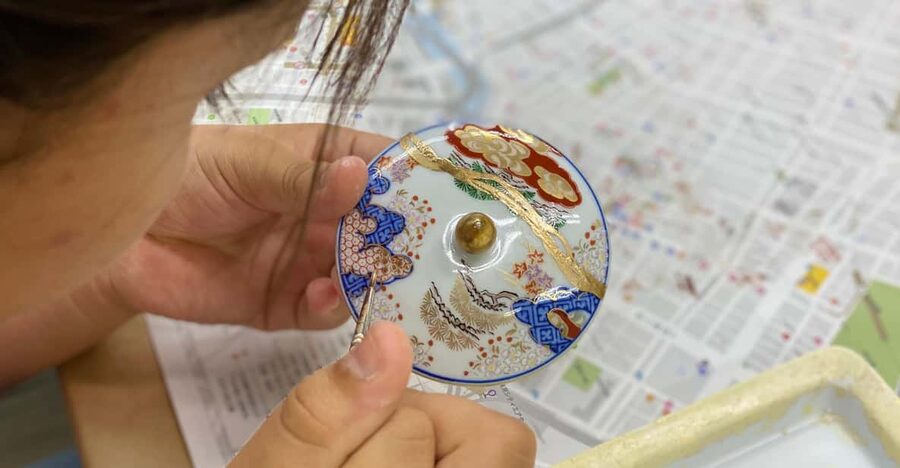
The exact items available can vary, and the workshop images are illustrative rather than a guarantee of a particular bowl or vessel. You can expect to choose from suitable ceramic pieces provided for the class, with options presented by the instructors.
Some sessions allow you to make more than one small piece, while other participants focus on one repair. The supplied material indicates that the class provides all required materials, so you do not need to pack tools, lacquer, paint, or pottery.
If you bring your own vessel, check the rules carefully before booking. It must be ceramic, no larger than 15 centimeters in diameter and 15 centimeters high, with one or two cracks. Chipped or cracked mug handles cannot be repaired.
Large breaks, complex damage, or a crack that requires too much preparation may not be finished within 90 minutes. For that reason, I would bring a sentimental object only if you can accept an incomplete repair or a shortened treatment. You can also use the class piece and save the treasured family bowl for a longer professional restoration.
Joining, filling, sanding, and painting
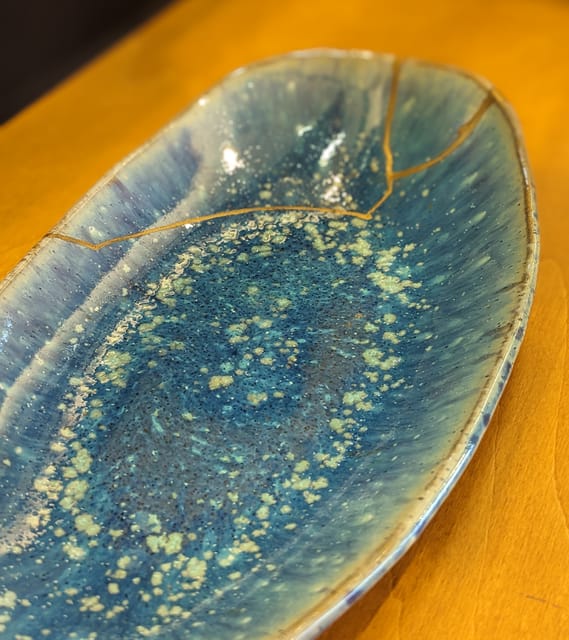
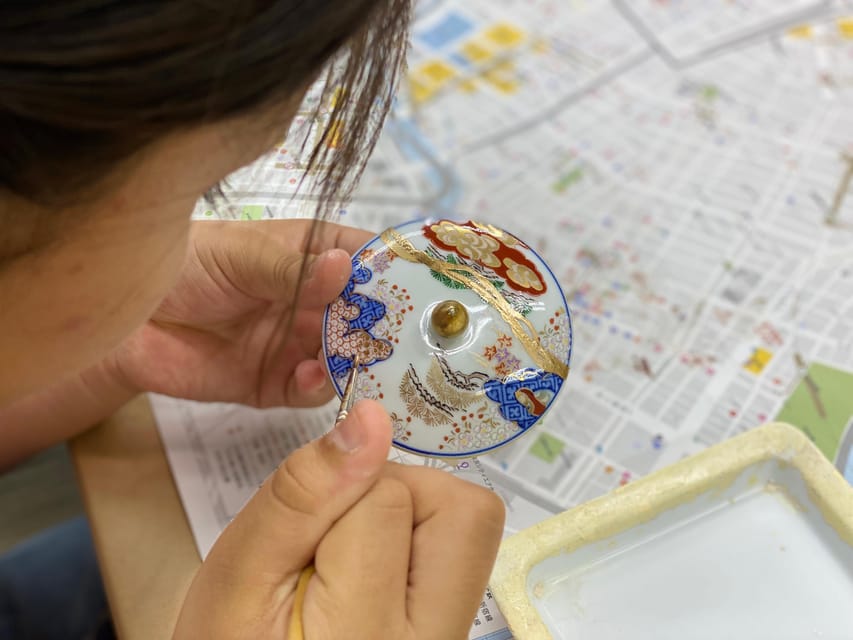
The practical work follows the basic logic of kintsugi. You may begin by arranging and taping broken sections so the pieces hold their shape. The instructor then helps you apply the appropriate adhesive or filler.
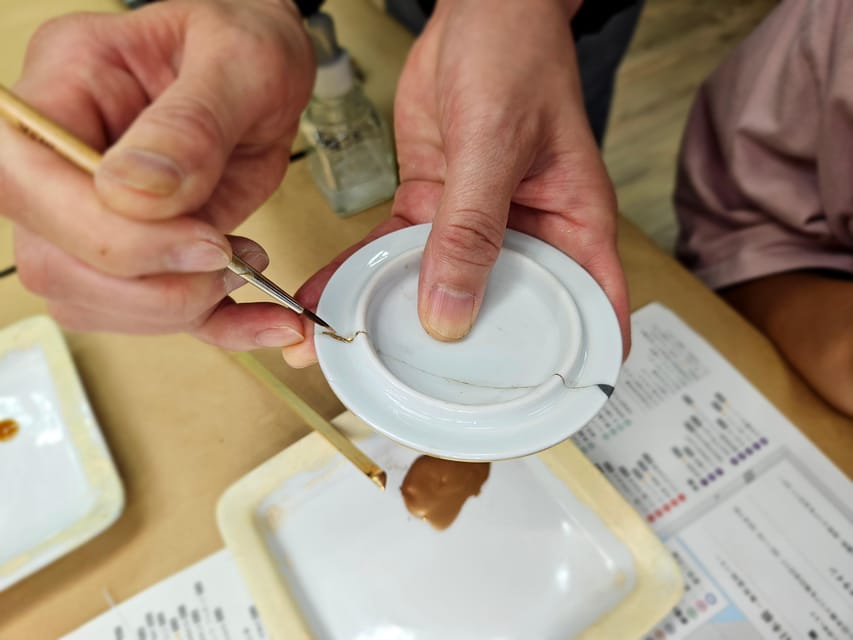
For missing sections or larger chips, putty can fill the gap. Once the surface is ready, sanding helps smooth the repair. The final visual stage is painting the seams with metallic color, creating the gold-like lines that make kintsugi instantly recognizable.
This sequence gives you a better feel for the craft than a lecture alone. You see why patience matters, why a clean join affects the final look, and how a rough chip can become part of the pattern.
The teaching style is hands-on. Instructors provide materials in small amounts and replenish them as needed, which keeps the table manageable and avoids waste. You will receive guidance at each stage, and the instruction is designed for first-time participants.
Instructor Hijiri is specifically praised for being patient, kind, and clear. Other sessions use a Japanese-speaking craft teacher with English interpretation, allowing the technical work to be explained while the instructor demonstrates the process directly.
Do not expect a long academic lesson on Japanese aesthetics. One useful piece of advice is to read a little about kintsugi before you arrive if the philosophy and traditional method are especially important to you. The session puts most of its time into making, not theory.
Same base, a different sort of day:
- Tokyo: teamLab Planets TOKYO Digital Art Museum Entry Ticket
★ 4.6 · 9,779 reviews - Mt Fuji & Hakone Cruise, Drum Show Bullet Train 1 Day from Tokyo
★ 4.0 · 7,413 reviews - Tokyo: Sumo Show Experience with Chicken Hot Pot and a Photo
★ 4.8 · 6,678 reviews - Tokyo: Shinjuku Food Tour (13 Dishes at 4 Local Eateries)
★ 5.0 · 6,603 reviews
Why the five-person limit matters
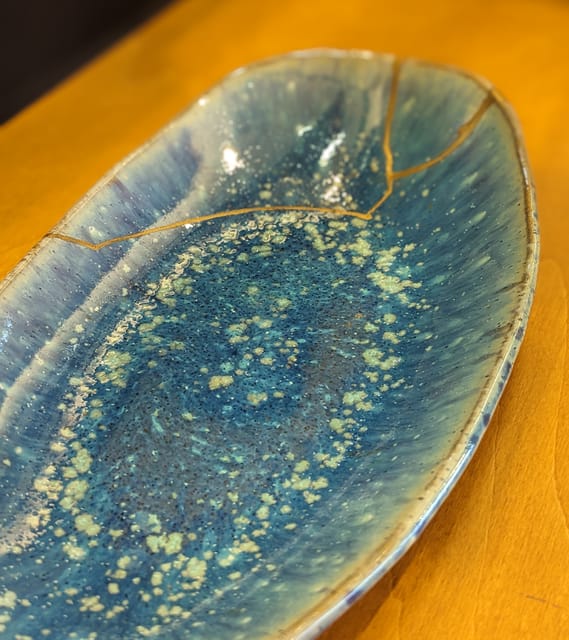
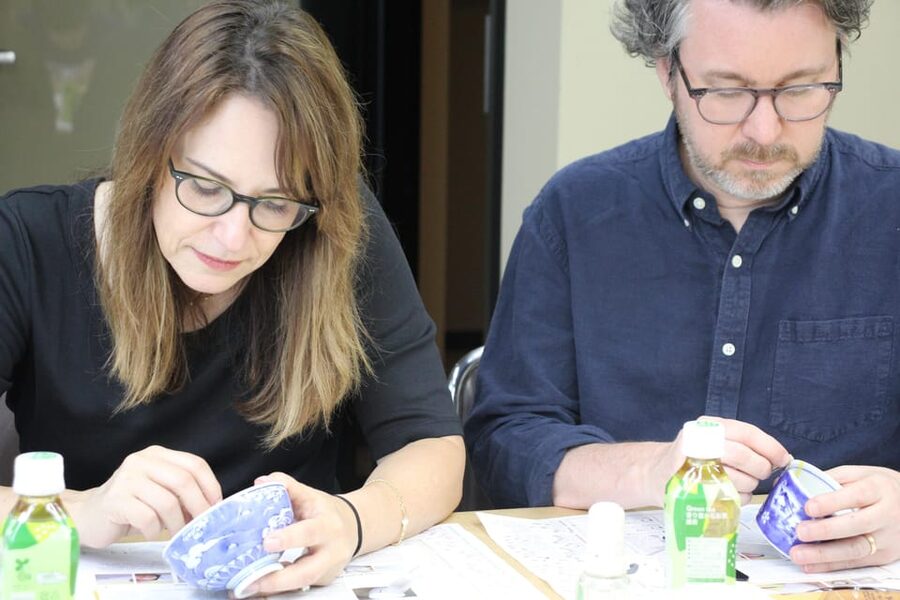
A maximum of five participants is a strong feature here. Kintsugi involves small movements and surfaces that are easy to overwork, so you benefit from being able to show your piece to the instructor as you proceed.
A small group also keeps the mood quiet. The activity has been described as relaxing, almost meditative, because you concentrate on one careful task at a time. That makes it a good break from Tokyo’s crowded stations, bright shopping streets, and busy sightseeing schedule.
The actual class may be even smaller. Some bookings have been private sessions for two people, while another group had three participants. If there are only a few people booked, you may receive very personal attention.
The trade-off is that this is not a lively social event built around constant conversation. You will spend much of the time concentrating on your hands and your pottery. That is a plus for anyone who wants calm instruction, but less ideal if you are looking for a highly animated group activity.
What you take home
Your completed work is included in the price. It is mainly intended for decoration, though it can hold dry food items. Do not treat it as a water-tight everyday mug or bowl unless the instructor specifically confirms that use.
The finished object has the appeal of a personal souvenir. You made the repair, chose how to handle the lines, and watched a damaged surface become a designed feature. It will not have the perfect finish of a professional masterwork, but its unevenness is part of its story.
If your own object needs additional curing, staff may pack it carefully for you. One participant brought home a project that needed about a week to cure, so timing can depend on the vessel and the materials used.
You should also know that the image used to advertise the experience may not match the exact piece you receive. Think of the example as an indication of the style, not a promised shape, color, or pattern.
Is $125 a fair price?
At $125 per person, this is not a cheap craft class. You are paying for a central Tokyo location, professional instruction, materials, English assistance, a small group, and a finished piece to take home.
The value depends on what you want from the activity. If your only goal is to buy a decorative bowl, the nearby shop may offer easier options. If you want the story of making it, the price covers more than the object itself.
I see the best value for people who care about Japanese craft, want a break from outdoor sightseeing, or prefer souvenirs with a personal connection. The 90-minute length also helps. You are not giving up half a day, and you can fit the class between other Tokyo plans.
The price feels harder to justify if you expect a full traditional restoration, a long cultural lecture, or a museum-level finished product. This is an introduction with a practical result, not professional training.
Who should book this workshop?
This activity suits adults and teenagers aged 13 and older who enjoy careful, creative work. It works particularly well for couples, friends, and solo visitors who want something quieter than a food tour or a major attraction.
It is also a good choice for someone who has already seen Japan’s temples and gardens and wants to understand a craft through direct practice. You do not need previous pottery or painting experience. The instructor guides you step by step.
The age rule is firm: children under 13 are not suitable for the activity, and minors must be accompanied by a guardian. Comfortable clothing is recommended, since you will be working with adhesives, fillers, and metallic paint.
I would be cautious about booking if you have limited hand mobility, need a flexible end time, or are bringing a fragile heirloom that must be restored perfectly. The workshop moves on schedule, and some repairs are too complex to finish within the session.
Timing, cancellation, and planning tips
Plan on 90 minutes, and arrive at least five minutes early. Starting times vary, so you need to check availability when selecting a date.
Cancellation is free up to three days in advance for a full refund. That gives you some room to adjust a Tokyo itinerary, but last-minute changes may not qualify.
Wear comfortable clothes and avoid bringing an important vessel unless it fits the size and damage rules. For the easiest experience, use the provided ceramic piece. If you bring your own, photograph it first and confirm that it has only one or two suitable cracks.
I would also leave a little space around the workshop in your day. The class itself lasts 90 minutes, but the subway ride from Asakusa, the search for the building, and time in the shop can make the outing longer.
Should you book the Tokyo kintsugi workshop?
Book it if you want a small, calm, hands-on cultural activity with English guidance and a souvenir you helped create. The patient instruction, limited group size, and short format make it easy to add to a busy Tokyo schedule.
Do not book it expecting a complete traditional restoration in the old sense of the craft. The workshop uses a shortened method, and intricate cracks may not be finished on time. For most first-time participants, though, that is a fair trade: you learn the main techniques, hear about the craft’s meaning, and leave with a personal ceramic keepsake.
FAQ
Where is the kintsugi workshop held?
It is held at Nihonbashi Mutoh Main Store, located at 1-8-13 Nihonbashihoncho, Chuo City, Tokyo 103-0023, Japan.
How long does the workshop last?
The scheduled duration is 90 minutes.
How far is the workshop from Asakusa?
The meeting point is about 15 minutes from Asakusa by subway.
Is English instruction available?
Yes. English instruction and interpretation are provided.
How many people are in each group?
The workshop is limited to five participants.
What is included in the price?
The price includes a professional instructor, experience fees, all necessary workshop materials, and a souvenir piece.
Can I bring my own pottery?
Yes, but it must be a ceramic vessel no larger than 15 centimeters in diameter and 15 centimeters high, with one or two cracks.
Can I repair a mug handle?
No. Chipped and cracked mug handles cannot be repaired in this workshop.
Can children attend?
The activity is for ages 13 and older. Minors must be accompanied by a guardian, and children under 13 cannot participate.
What happens if my repair is not finished in 90 minutes?
The workshop cannot extend its scheduled end time. Depending on the size of the crack or chip, a vessel brought from home may not be completed during the session.
Just added in Tokyo
- The 10 Tastings of Tokyo With Locals: Private Street Food Tour★ 5.0 · 48 reviews
- Small Town in the Big City: Tasting Tokyo’s Kichijoji★ 5.0 · 195 reviews
- Small Town in the Big City: Tasting Tokyo’s Kichijoji★ 5.0 · 16 reviews
- EXCLUSIVE Tokyo Secret: Kichijoji Small-Group Food & Bar Hopping★ 5.0 · 29 reviews
- Explore Kichijoji: Walk Through One of Tokyo’s Beloved Districts★ 5.0 · 21 reviews
- :Tokyo,Shibuya/ Pro Photography in Kimono / English-Friendly★ 5.0 · 26 reviews
- 【R34】Tokyo:Private Daikoku tour in Modified R34★ 4.9 · 92 reviews
- Tokyo:Calligraphy &Make your original folding fan in Asakusa★ 5.0 · 62 reviews
Tours in Tokyo, compared.

Mt Fuji and Hakone 1-Day Bus Tour Return by Bullet Train
Read our review →


teamLab Planets TOKYO Digital Art Museum Entry Ticket
Read our review →
Mt Fuji & Hakone Cruise, Drum Show Bullet Train 1 Day from Tokyo
Read our review →
Sumo Show Experience with Chicken Hot Pot and a Photo
Read our review →
Shinjuku Food Tour (13 Dishes at 4 Local Eateries)
Read our review →