
Reviewed · ONSEN & HOT SPRING VISITS
Become a local! A Walking Tour of Arts, Crafts & Onsen Culture
Beppu’s most interesting stories are not found at the famous Hells. They are tucked into market lanes, working studios, old bathhouse neighborhoods, and ordinary streets where daily life carries on. This small-group walk takes you into that quieter side of town, with stops at a bamboo factory, artists’ workspaces, and a century-old Japanese house.
I like the chance to meet working craftspeople rather than simply look at finished souvenirs. I also like the human scale: groups are limited to eight, and guides such as Masahiro Ide, known as Masa, and Lou or Loi can explain Beppu’s past while you walk.
The main tradeoff is clear. This is not an onsen tour in the usual sense, and you will not enter an onsen building or visit the Hells. One workshop is offered only when its instructor is available, so the exact route may change.
Key points to know before booking
- Bamboo craft since 1908: Visit Nagai Se竹 and watch local Oita bamboo being shaped into practical and decorative goods.
- A small group of no more than eight: The size suits questions, conversation, and close visits to studios.
- A working arts district: Kiyoshima Apartment is a creator residence and studio, not a polished museum display.
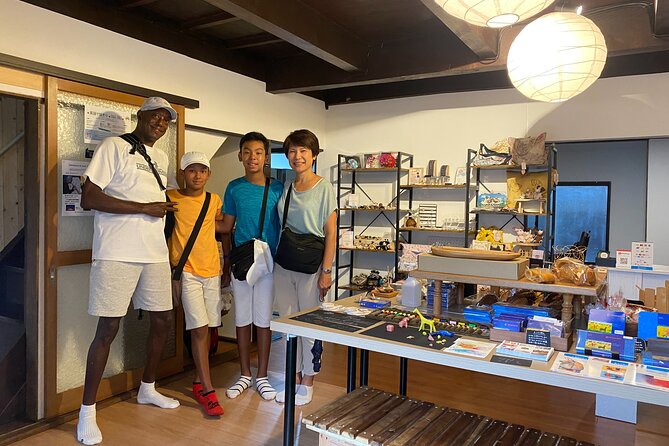
- Space Beppu’s old-house setting: Finish in a century-old Japanese house with a gallery, shop, and photographs of Beppu’s past.
- About two to two and a half hours: The walk is manageable, but you should have moderate physical fitness.
- Not a Hells or indoor-onsen tour: Book it for local streets, craft, and art, not Beppu’s headline sights.
Beppu beyond the Hells
Beppu is famous for its hot springs, but its identity is broader than steam and bright mineral pools. The downtown streets tell a quieter story through shops, small bathhouses, market stalls, old houses, and artists who have made the city their base.
That is the point of this experience. You are not being led from one famous photo stop to another. You are walking through places you could easily pass without understanding what makes them important.
The tour begins at WANDER COMPASS BEPPU inside the Beppu Station area. From there, the group moves through downtown streets and alleys before finishing at Space Beppu in Chiyomachi. Space Beppu is about a 12-minute walk from JR Beppu Station, and the guide explains how to return to the station or continue elsewhere.
The pace is likely to feel more like a guided neighborhood walk than a sightseeing march. That matters in Beppu, where the best details can be small: a sign, a workshop door, an old building, or a local custom that needs explaining.
Other baths worth the trip from Japan:
- From Osaka: Himeji Castle, Arima Onsen & Mt. Rokko Day Tour
★ 4.6 · 339 reviews - Osaka: Nara and Uji Day Trip with Deer Park and Hot Spring
★ 4.4 · 302 reviews - From Tokyo: Private Tour to Fuji/Hakone – Onsen, Art, Nature
★ 5.0 · 116 reviews
The Beppu Station Market: a quick look at daily life
The first stop is Beppu Station Market, where you see fresh fish and vegetables and get a glimpse of local shopping habits. The scheduled visit is only about 10 minutes, so do not expect a full market tour or time for a long meal.
Still, this is a useful opening. Markets give you a fast sense of what people actually buy and eat, and a local guide can help you notice details that are easy to miss. The stop also creates an early chance to interact with local residents rather than staying inside a sightseeing bubble.
Food and drinks are not included, and bottled water is not supplied. If you need water during the walk, bring your own. The market is a sensible place to pay attention to what catches your eye, but the tour is not designed around tastings or purchases.
Nagai Se竹: bamboo work with a long local tradition
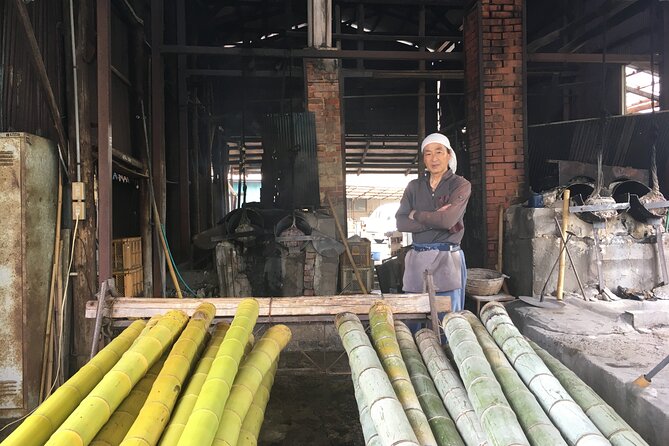
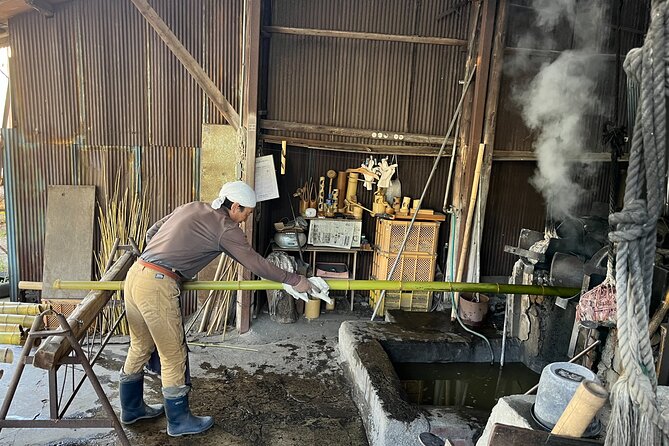
The bamboo factory is one of the strongest parts of the walk. Nagai Se竹 has operated since 1908, and its artisans work with bamboo from Oita Prefecture. You can watch the material being cut, shaped, and turned into finished products by hand.
This stop gives you something a shop cannot: a look at the work behind the object. Bamboo craft is often presented as a simple Japanese souvenir theme, but seeing the process makes clear how much patience and control the material requires.
The visit lasts around 30 minutes, with admission included. It is also a good place to ask questions, especially if you are interested in Japanese design, local materials, or handmade goods. Past tour experiences have even sparked enthusiasm for bamboo speakers, showing how a factory visit can lead to a memorable purchase later.
You should remember that this remains a working factory, not a theatrical demonstration built only for visitors. The appeal is precisely that you are seeing skilled people at work in their own setting.
The irregular workshop: a special hour when the artist is available
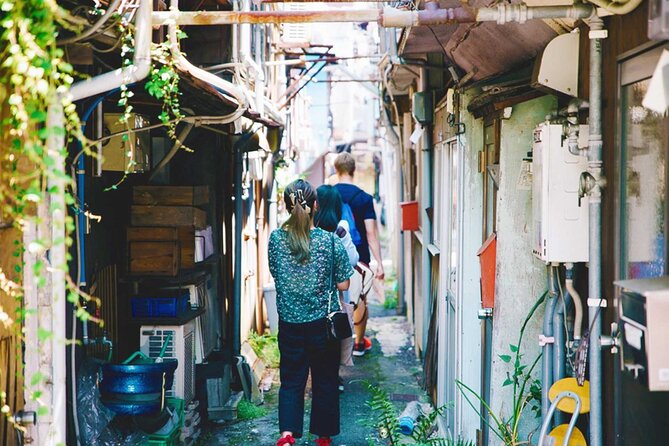
The itinerary includes an approximately one-hour visit to a workshop called 別府風流人. This is the least predictable part of the experience because it is irregular and unscheduled. It can happen only when the instructor has time.
That uncertainty cuts both ways. If the workshop is available, it can become the most personal part of the walk, with time for a more focused exchange than the shorter stops allow. If it is not available, the route and places visited may change.
The tour provider is candid about this, which is helpful when you are deciding how tightly to plan your day. Do not book the walk because you need one specific workshop. Book it because you want a flexible local route with the chance of an additional arts encounter.
One especially memorable version of the experience included visiting a local home, playing the harp, drinking tea, and learning origami. That kind of encounter explains the tour’s appeal, but it should not be treated as a guaranteed part of every departure. The exact workshop depends on availability.
Other guided walks in Japan:
- Kyoto Geisha Walking Tour: Gion District & Hidden Gems
★ 4.7 · 3,273 reviews - Tokyo Tsukiji Fish Market Food and Culture Walking Tour
★ 5.0 · 3,184 reviews - Kyoto: Gion Magical Night Walking Tour with Geisha Trivia
★ 4.9 · 2,393 reviews - Tokyo: Imperial Palace and Shogun Historical Walking Tour
★ 5.0 · 2,251 reviews
Kiyoshima Apartment: artists at work in downtown Beppu
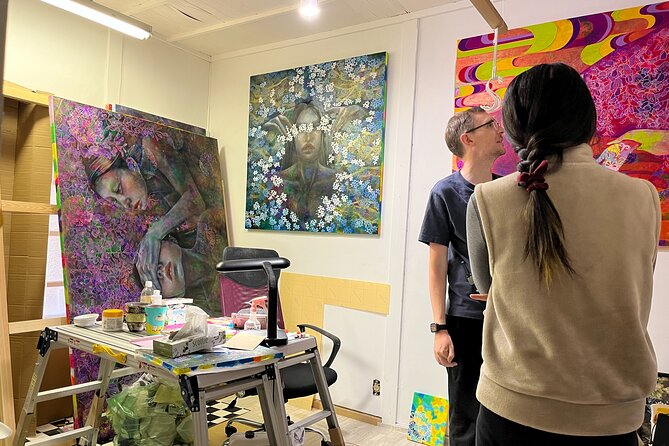
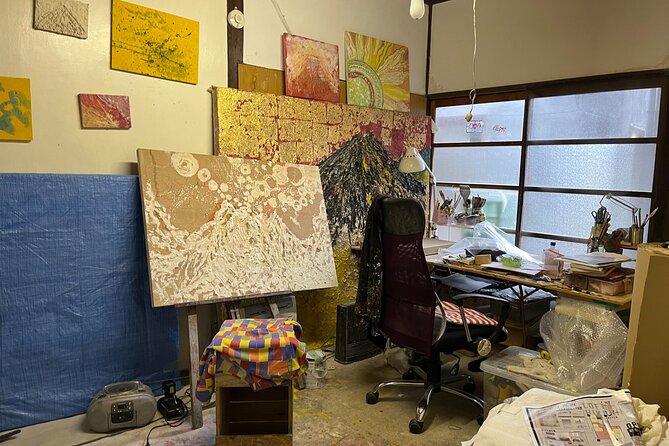
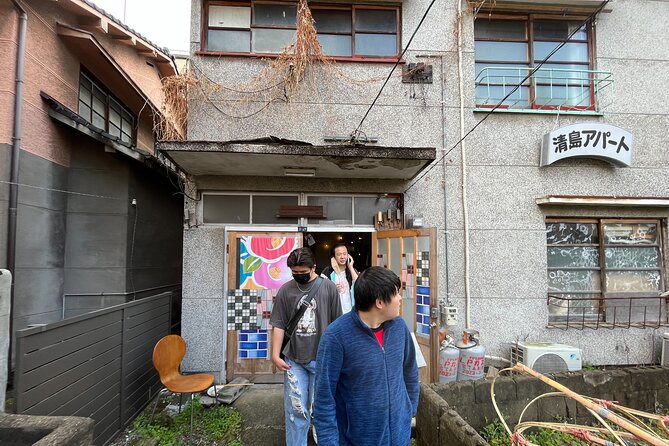
Beppu’s arts scene becomes most personal at Kiyoshima Apartment, a creator residence and studio. The building gives artists a place to live and work, and the visit offers the chance to meet residents and see where they make their work.
This is very different from walking through a formal gallery. You are seeing a place connected to the artists’ everyday routines. The setting can help you understand Beppu as a working arts town rather than a place that simply displays art for visitors.
The scheduled time is around 20 minutes. That is enough for a useful introduction, but not enough to inspect every studio or have a long conversation with each resident. A small group helps here. With a maximum of eight people, the visit should feel less crowded and gives you a better chance to ask a question.
The tour’s art focus is one of its clearest strengths. If you enjoy meeting makers, seeing creative spaces, and learning how artists fit into a local community, this stop may be more rewarding than another standard city attraction.
Space Beppu: an old house with several layers
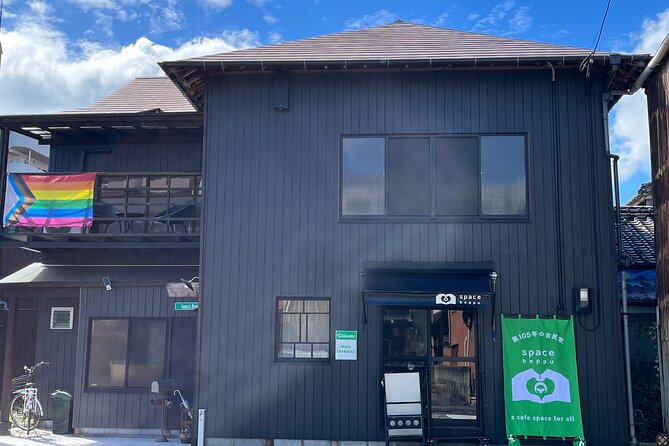
The tour ends at Space Beppu, a community space and shop inside a renovated Japanese house that is about a century old. It combines a contemporary art gallery, a gift shop, and a history room filled with old photographs of Beppu.
That mix works well. The gallery connects the city to its present-day creative scene, while the photographs show how Beppu looked and functioned in earlier times. The house itself gives the visit a sense of place that a modern exhibition room would not provide.
You can browse the shop, but souvenir costs are not included. This is worth keeping in mind if you are interested in bamboo goods or local artwork. The stop is not just a shopping break, though. It gives the tour a clear ending by linking old Beppu, modern artists, and the continued use of traditional Japanese buildings.
The end point is not the station, so allow a little time afterward. The guide provides directions back to JR Beppu Station or to your next destination.
What the tour says about onsen culture
The title may suggest a bathhouse visit, but you will not be shown inside an onsen building. The walk can pass through areas shaped by Beppu’s bath culture, and guides can point out local bathhouses or explain how hot springs fit into city life, but the experience is not a bathing tour.
That distinction matters. If your goal is to soak, you need to arrange that separately. One past tour experience included a recommendation for an onsen at Suginoi Hotel, but a visit there is not part of the booked walk.
I see this as a useful separation. You spend the tour learning how Beppu works as a city, then choose your own bathhouse afterward. You can ask the guide for suggestions, but you should not arrive expecting towels, bathing time, or an indoor onsen visit.
How much value do you get for $59.30?
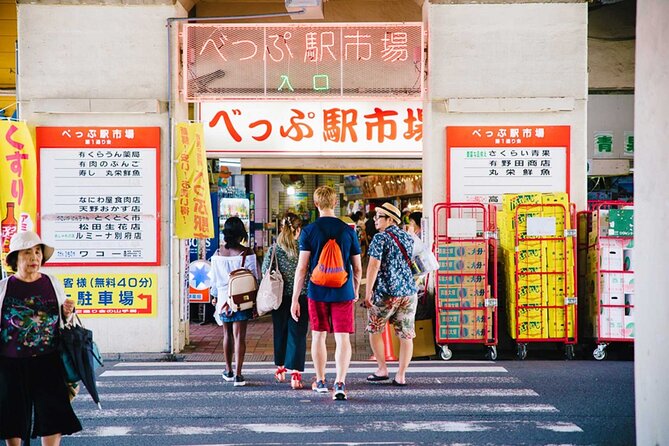
At $59.30 per person, this is not the cheapest way to spend two hours in Beppu. The value comes from access and interpretation, not from the number of ticketed attractions.
Admission fees for the facilities are included. Food, drinks, souvenirs, and bottled water are not. The price also covers a small group, a local guide, and access to places that are not obvious stops on a standard city walk.
If you simply want to see Beppu’s main sights, this tour may feel too specialized. You could spend less by walking downtown on your own, though you would likely miss the background, introductions, and working studios that give the route its character.
I think the price makes the most sense for someone who values contact with local makers and wants a guide who can connect small details to the city’s past. It is especially good value if your alternative is spending half a day searching for these locations without knowing which workshops are open.
Timing, fitness, and group size
The experience lasts about two hours to two and a half hours. The schedule lists short stops of 10 or 20 minutes, a 30-minute factory visit, and a possible one-hour workshop. The total time can change because businesses may open at different times.
You should be comfortable walking through city streets and standing during visits. The physical requirement is moderate rather than strenuous, but the tour is not designed for someone who needs to avoid walking. Wear comfortable shoes and bring water.
The maximum group size is eight. That is small enough for a more direct exchange with the guide and craftspeople. It also means the tour may feel more personal than a large bus excursion, particularly at Kiyoshima Apartment and the bamboo factory.
Service animals are allowed, and the meeting point is close to public transportation. Confirmation is provided when you book.
Which guide style suits this walk?
The guide can shape the whole experience. Masa, whose full name is Masahiro Ide, is praised for clear English, humor, and strong knowledge of Beppu’s past. Lou, also written as Loi in the tour information, is another named guide associated with the walk.
The most useful guide for this experience is not simply someone who can point out buildings. You want a person who can explain why a market matters, introduce you properly to an artisan, and make sense of Beppu’s changing streets.
English ability has been a strong feature of the experience, and the guide-led format is helpful if you do not speak Japanese. Still, this is an encounter-based tour. The amount of conversation you have with artists can depend on opening hours, instructor availability, and how the visit unfolds that day.
Who should book this Beppu walking tour?
I would choose this tour if you have already seen, or do not care about seeing, Beppu’s famous Hells. It is also a good match for anyone interested in Japanese crafts, contemporary art, old houses, local shopping, or the everyday side of a hot spring city.
It suits couples, solo visitors, and small families who enjoy walking and asking questions. The small group makes it easier to connect with a guide, though younger children may not find every studio visit equally engaging.
You should think twice if you want a bath, a food tour, or a fixed list of major landmarks. You should also be comfortable with a route that can change. The irregular workshop is a bonus, not a promise.
Cancellation and practical planning
You can cancel for a full refund up to 24 hours before the start time. Changes or cancellations made less than 24 hours before the tour are not accepted for a refund, and local time determines the cutoff.
Since the route can change, avoid scheduling a tight connection immediately afterward. The end point is Space Beppu, not the station, although the guide gives directions for continuing on foot or returning to JR Beppu Station.
Should you book it?
Book this walk if you want Beppu’s quieter side: bamboo workers, artists, market life, old photographs, and streets you might otherwise pass without noticing. The bamboo factory and Kiyoshima Apartment are the strongest reasons to go, while Space Beppu provides a thoughtful finish.
Skip it if the Hells or an actual onsen visit are your main goals. For everyone else, especially art lovers and repeat visitors to Beppu, $59.30 buys more than a walk. It buys introductions, context, and a chance to see how local craft and daily life still shape the city.
FAQ
Does the tour visit Beppu’s Hells?
No. The route focuses on lesser-known cultural streets and alleys in downtown Beppu rather than the popular Hells attractions.
Do you enter an onsen building?
No. The tour does not show you inside an onsen building. It can provide local context about Beppu’s bath culture, but bathing is not included.
How long does the walking tour last?
The experience lasts approximately two hours to two and a half hours.
What is the maximum group size?
The group can include a maximum of eight travelers.
Where does the tour begin?
It begins at WANDER COMPASS BEPPU inside えきマチ1丁目別府, near JR Beppu Station.
Where does the tour end?
It ends at Space Beppu in Chiyomachi. The guide provides directions back to Beppu Station or to your next destination.
Is admission included?
Admission fees for each facility are included. Food, drinks, souvenirs, and bottled water are not included.
Can the itinerary change?
Yes. Business opening times can vary, and the route or places visited may change. The workshop at 別府風流人 is offered only when the instructor is available.
Is the tour suitable for anyone with limited mobility?
The tour requires a moderate level of physical fitness and involves walking through downtown streets. Service animals are allowed.
What is the cancellation policy?
You can cancel at least 24 hours before the start time for a full refund. Cancellations or changes made less than 24 hours before the start time are not accepted for a refund.
Just added in Japan
- Nagasaki Private Customizable Half Day Tour★ 5.0 · 16 reviews
- Nagasaki Full Day Tour with Licensed Guide and Vehicle★ 5.0 · 27 reviews
- Nagasaki Like a Local: Private & Custom Experience (2-3 hrs)★ 5.0 · 14 reviews
- Nagasaki Private Tour with a Local – Highlights & Hidden Gems★ 5.0 · 24 reviews
- Nagasaki WW2 History and Culture Tour★ 5.0 · 19 reviews
- Nagasaki Street Food Adventure: Private Walking Tour with a Local★ 5.0 · 26 reviews
- Snow Monkeys, Hokusai & Sake: A Perfect Day in Nagano★ 5.0 · 19 reviews
- Wasabi Farm Walking Tour & Lunch★ 4.5 · 20 reviews
Onsen & Hot Spring Visits, compared.
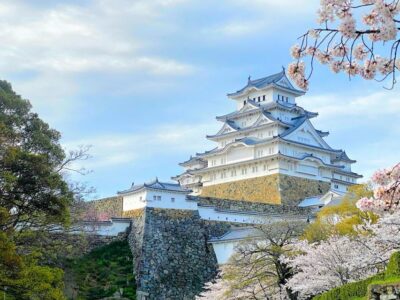
Himeji Castle, Arima Onsen & Mt. Rokko Day Tour
Read our review →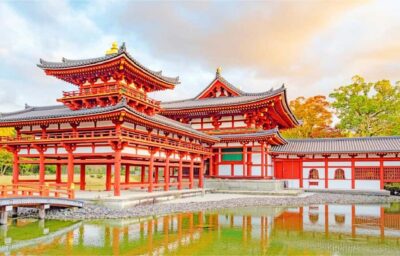
Nara and Uji Day Trip with Deer Park and Hot Spring
Read our review →
Private Tour to Fuji/Hakone – Onsen, Art, Nature
Read our review →
Mt. Fuji, Hakone Private Tour from Tokyo – Onsen, Arts and Nature
Read our review →

Private Nagano 1-Day Tour:Snow Monkeys,Zenko-ji,Obuse,Sake,Onsen
Read our review →
Mt Takao Tour with Ramen and Tattoo-Okay Hot Spring
Read our review →Browse the lists this tour appears in