

Reviewed · GEISHA & GION DISTRICT TOURS
Kyoto: Gion Magical Night Walking Tour with Geisha Trivia
Gion changes character after sunset. The lanterns come on, the crowds thin out, and Hanamikoji’s wooden facades feel far more atmospheric than they do in the middle of the day. This 100-minute night walk links the famous geisha quarter with quieter lanes, shrines, and an illuminated Buddhist pagoda.
I like two things here: the small groups of up to 10, which give you room to ask questions, and the route’s wider view of Kyoto. You are not simply hunting for a glimpse of a geiko or maiko. You learn about customs, prayer rituals, local legends, and the difference between Shinto and Buddhism.
The main drawback is that sightings of geiko or maiko are never promised, and the route includes stairs. Anyone using a wheelchair or baby carriage, or anyone with limited mobility, should choose another way to see Gion.
Key points to know before you book
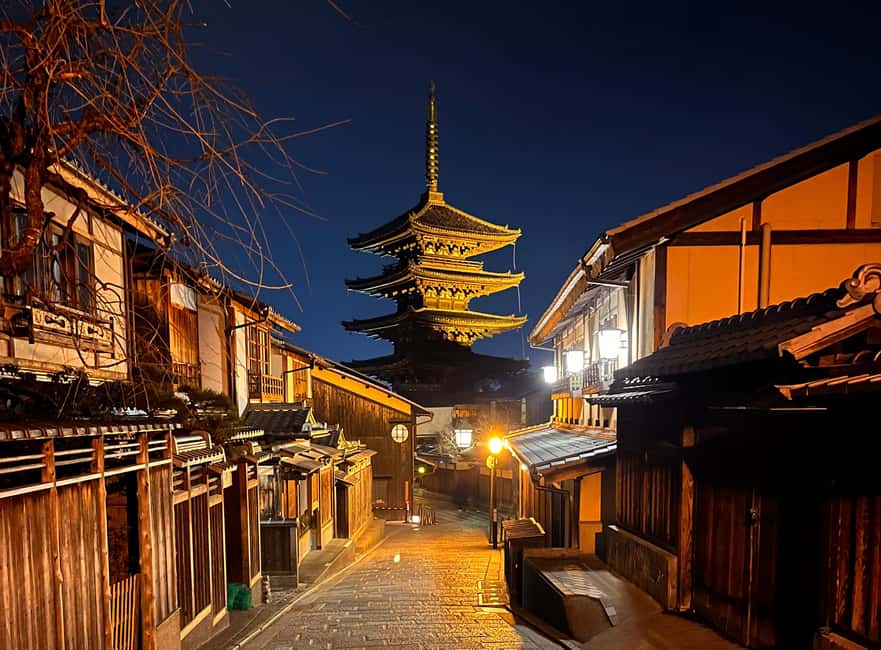
- Gion after dark: See Hanamikoji, side streets, shrines, and a pagoda under evening lights and with fewer people around.
- Up to 10 people: The limited group size makes it easier to hear the guide and ask detailed questions.
- Geisha culture explained with care: Learn about maiko, geiko, private clubs, lanterns, etiquette, and local traditions without treating the district like a stage show.
- More than one neighborhood walk: The route continues beyond the geisha quarter to spiritual sites and quieter paths.
- English-speaking guides: Guides such as Shino, Hina, Masami, Sho, Pam, Kevin, Yuri, and Wasabi have been praised for clear explanations and friendly conversation.
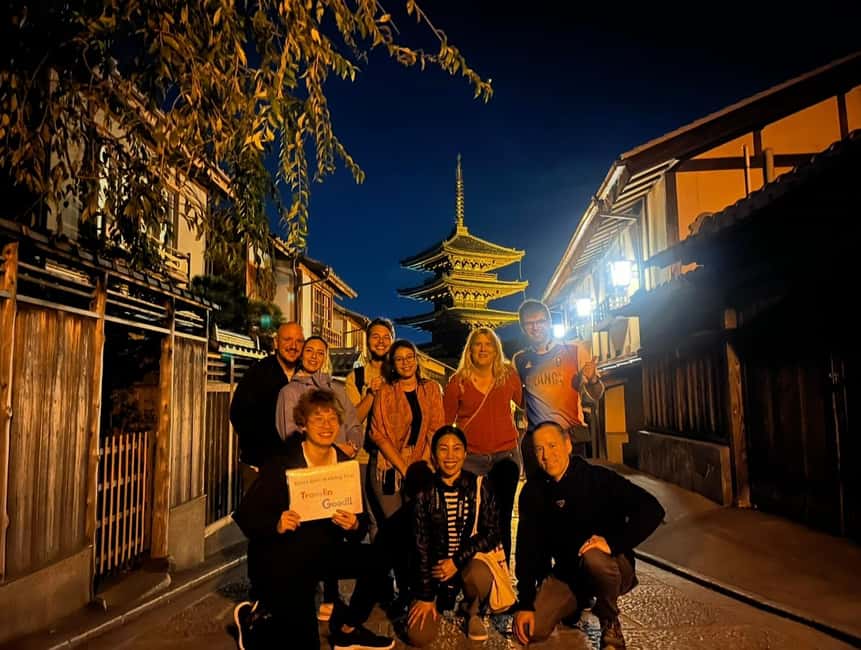
- Simple meeting point: Meet at the front of Minamiza Theatre, where the guide carries a TravelinGood sign. The listed time is departure time, so arrive at least five minutes early.
Starting beneath Minamiza Theatre
The tour begins in front of Minamiza Theatre, one of the easiest landmarks in Gion to recognize. Make sure you stand on the front side of the theatre, not somewhere around the back or in a nearby alley. Your guide holds a sign marked TravelinGood.
This meeting point matters because the tour leaves at the stated start time. It is not a suggested arrival time. I would reach the theatre at least 10 minutes early, especially if you are coming by bus or taxi. Traffic can slow down around central Kyoto, and losing five minutes at the start can mean missing the group.
The route is conducted in English. Guides have included Shino, Hina, Masami, Sho, Pam, Kevin, Yuri, Wasabi, and others. The names change, but the pattern is clear: the best guides combine explanations with relaxed conversation. Shino has helped visitors understand shrine rituals and offered restaurant suggestions. Masami has been praised for patiently answering questions. Hina and Yuri have been noted for making people of different ages feel comfortable.
That personal contact is one reason the small group matters. With no more than 10 people, you can stop to ask what a lantern means, how maiko differ from geiko, or why one shrine is associated with matchmaking. In a group of 20 or 30, those questions are harder to fit in.
Other walking tours in Kyoto people book:
- Kyoto Geisha Walking Tour: Gion District & Hidden Gems
★ 4.7 · 3,273 reviews - Kyoto: Gion Geisha District Walking Tour – Stories of Geisha
★ 4.7 · 2,187 reviews - Kyoto Gion Geisha District Walking Tour – The Stories of Geisha
★ 5.0 · 1,441 reviews
Hanamikoji and the rules of the geisha district
The first major part of the walk heads toward Hanamikoji, one of Gion’s best-known streets. Its traditional wooden buildings and restrained lighting provide the setting most people picture when they think of old Kyoto.
The guide adds the context you would miss by walking alone. You learn about geiko and maiko, the stages of training, customs in the entertainment district, and the rules that shape daily life here. The explanations also cover private clubs and the meaning of the lanterns that mark establishments.
This is useful because Gion is easy to misunderstand. A short visit can reduce the district to costumes and photographs. A good guide explains that this is a working neighborhood with private spaces, not an open-air performance venue. You are shown how to appreciate the streets without blocking entrances, following performers, or treating residents as scenery.
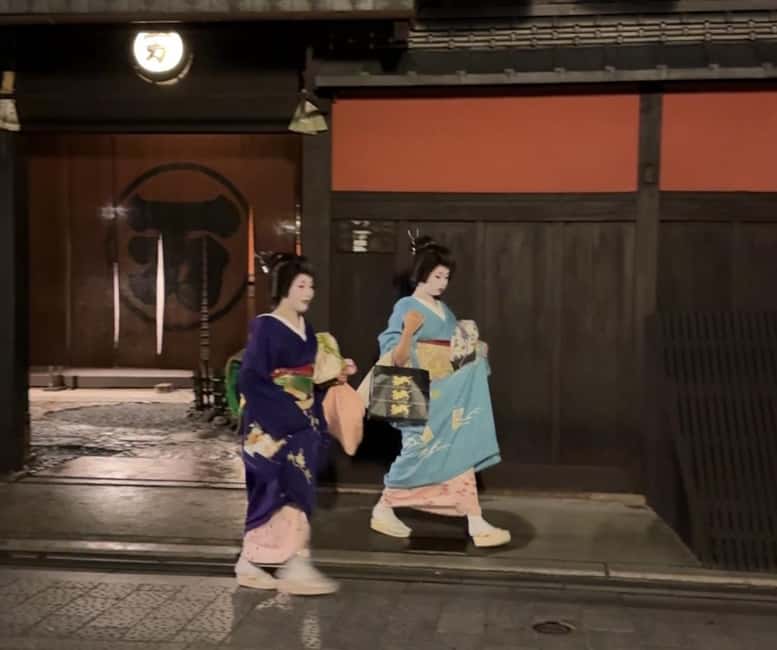
You may see a geiko or maiko entering a taxi or walking between appointments. Several people have had that good fortune, but the tour is not designed as a meeting opportunity. There is no promise of a sighting, and you should not book it as if one were included.
That distinction improves the experience. You can focus on the architecture and culture rather than spending the entire walk scanning the street. If you do see someone, your guide can help explain what you are looking at while keeping the moment respectful.
Quiet lanes, private corners, and Kyoto after sunset
After Hanamikoji, the route leaves the main geisha streets and uses smaller paths. This is where the evening timing pays off. Gion can be crowded during the day, especially around its most photographed lanes. At night, the same streets can feel calmer, with illuminated temples and shrines giving the walk a softer mood.
The route is not a long-distance hike. One older participant described the amount of walking as manageable, and another group moved at a slow pace through the district. Still, this is a walking tour on uneven urban ground, with stairs along the way. Wear comfortable shoes and expect to be outdoors for the full 100 minutes.
The quieter paths also make the guide’s stories more effective. Instead of racing from one famous viewpoint to another, you have time to notice details such as a lantern, a narrow passage, or the relationship between a shrine and the surrounding businesses. The walk becomes a lesson in how old customs remain part of an active neighborhood.
The evening schedule has another advantage: you can use the tour to get oriented during your first days in Kyoto. Guides have offered food suggestions and ideas for daytime sightseeing at the end of the walk. That makes the experience more useful than a one-off photo stop.
Matchmaking shrine and the meaning of local worship
One stop is a shrine associated with matchmaking. The site gives the guide a chance to explain Japanese religious customs in a practical way, rather than simply pointing out an attractive building.
You will learn how to approach a Shinto shrine and how to pray. One guide demonstrated the ritual and encouraged the group to practise it. That kind of help is valuable if you have never visited a Japanese shrine before and are unsure about the order of gestures.
The guide also explains the difference between Shinto and Buddhism. Kyoto places both traditions close together, sometimes within a short walk, and the distinction can be confusing at first. The tour gives you a basic framework for understanding the shrines and temples you will see elsewhere in Japan.
This portion is not as visually dramatic as Hanamikoji or the pagoda, but it adds substance. You are not only collecting views. You are learning how local people relate to these places and why certain sites attract particular prayers.
Other evenings in the old entertainment quarters of Kyoto:
- Best of Kyoto: Gion, Geisha, Pagodas & Cobblestones
★ 4.9 · 2,058 reviews - Night Walk in Gion: Kyoto’s Geisha District
★ 4.5 · 2,003 reviews - Kyoto Night Foodie Tour in Gion (9+ dishes + 6 Sake tastings)
★ 5.0 · 1,762 reviews - Kyoto Gion: 2-Hour Geisha Culture & History Walking Tour
★ 5.0 · 1,186 reviews
The illuminated Buddhist pagoda
The Buddhist pagoda outside the geisha district is one of the route’s visual high points. At night, its lighting changes the way you see the structure. The shape becomes more pronounced, and the surrounding darkness draws attention to the details that can get lost in daylight.
The exact pacing can vary by guide and group, but the pagoda is presented as part of a larger story about Gion and Kyoto’s spiritual life. It is not just a quick photograph. You have time to understand how Buddhist sites fit into the neighborhood and why the evening setting feels different.
This stop also helps break up the geisha-focused part of the walk. If your interest in maiko and geiko is limited, the temples and pagoda give the tour a broader appeal. You get architecture, local beliefs, nighttime scenery, and neighborhood history in the same outing.
Photography is included, and guides may take pictures along the way. That is helpful for couples, families, and solo visitors who want more than self-timer shots. Do not expect a formal photo session, but you can ask the guide about taking pictures at suitable stops.
Finishing at a shrine more than 1,000 years old
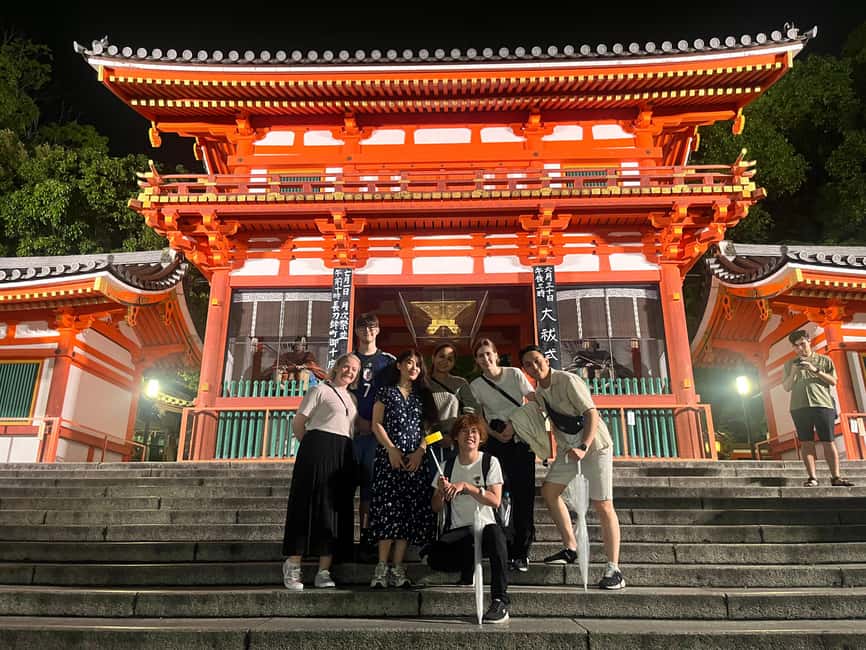
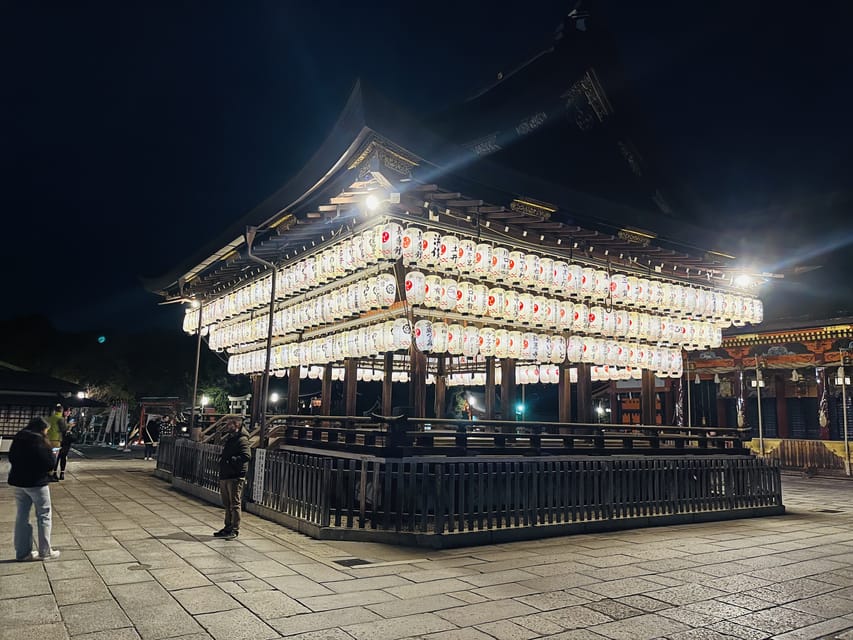
The walk finishes at a shrine that is more than 1,000 years old. Ending here gives the tour a quieter final note after the brighter streets and pagoda.
The shrine also brings together the main themes of the evening: Kyoto’s age, its religious traditions, and the way historic places remain part of ordinary city life. You can ask final questions, compare Shinto and Buddhist customs, and get practical suggestions for food or nearby sights.
Because the route ends away from its starting point, check your map before booking another activity. The supplied details identify the starting point clearly, but do not give a precise finish address. Leave a little breathing room after the tour rather than scheduling a tight dinner reservation across town.
What the $24 price really buys you
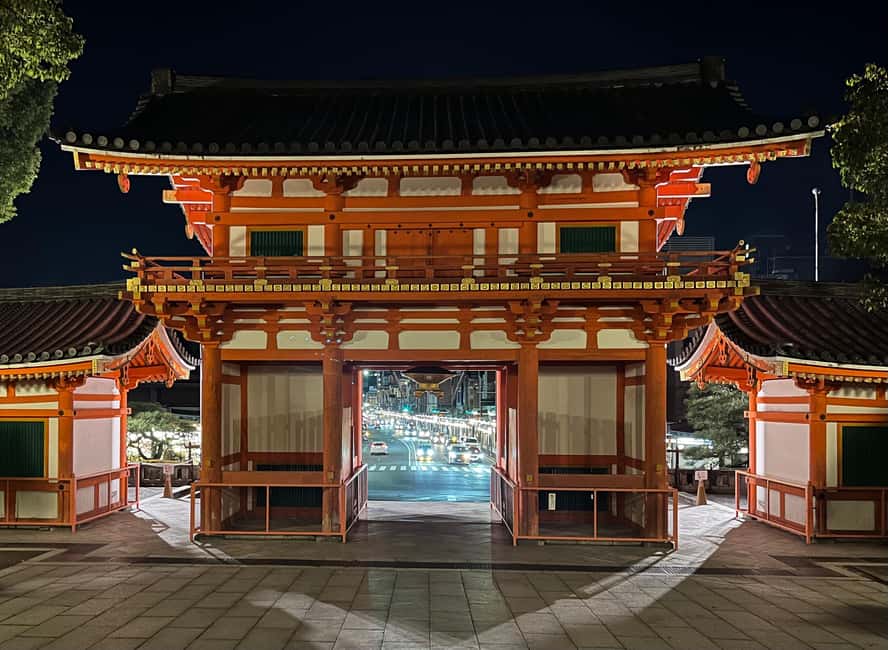
At $24 per person, this is an inexpensive guided introduction to Gion. The value comes less from entrance tickets and more from access to interpretation. You could walk many of these streets for free, but you would not automatically know what the lanterns signify, how maiko and geiko differ, how to behave around private establishments, or how to pray at the shrine.
The small group makes the price stronger. A guide can answer individual questions and adjust explanations to the group. That matters if you want more than a rehearsed speech. Several guides have been praised for sharing local food tips, festival information, photos, and small stories along the way.
The price is less compelling if you already know Gion well and have spent time studying its culture. One person found the explanations added little beyond what they already knew, though they still considered the walk a good choice for first-time visitors. If you have already explored every lane and shrine in the area, the route may feel familiar.
Photography is included, which adds a little practical value. Free cancellation up to 24 hours before the tour and the option to reserve now and pay later also make it easier to fit into a changing Kyoto schedule.
Who will enjoy this walk most?
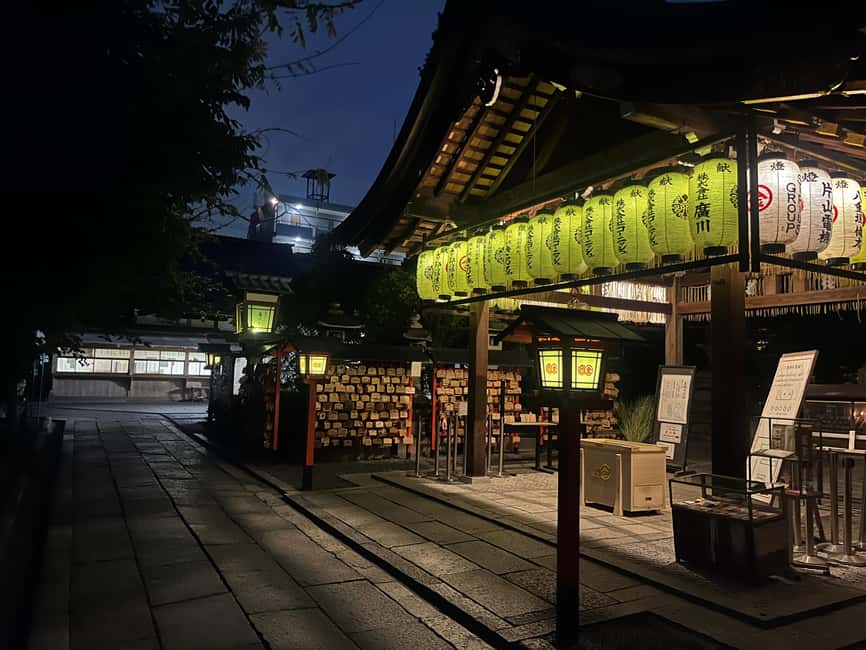
I would choose this tour for a first visit to Kyoto, especially if you want a calm introduction to Gion before exploring more on your own. It suits solo visitors because the guide provides company and takes photographs. It also works well for couples looking for an evening walk without committing to an expensive dinner or performance.
Families with older children can enjoy it too. Two children aged 9 and 11 were reported to have enjoyed the explanations and nighttime scenery. Children under 6 do not need a ticket, but the route still includes stairs and a full 100 minutes of walking, so very young children may struggle.
The tour is also a good fit for anyone curious about Japanese religious practice. The shrine instruction, stories about local legends, and comparison of Shinto and Buddhism give the walk more depth than a standard sightseeing circuit.
You should think twice if you need step-free access. The tour is not suitable for wheelchair users, baby carriages, or people with limited mobility. It is also not intended for babies under 1 year old or people with a cold.
Night timing, winter options, and practical comfort
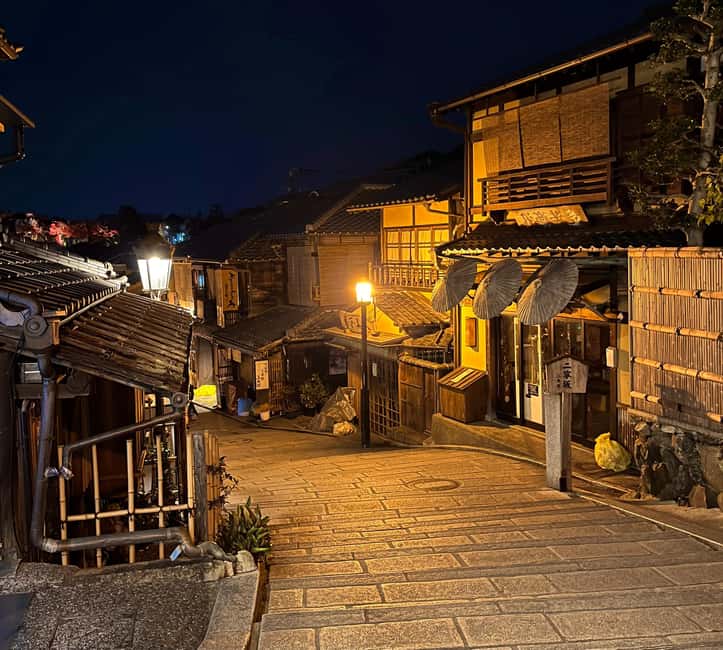
Most people choose the tour for the nighttime setting. Gion’s streets and religious buildings look different under lamps, and the reduced crowds can make it easier to stop and listen. During February, a limited 3 p.m. departure may be available for people with evening plans or anyone who prefers to begin in daylight.
That earlier option changes the mood. You may see Gion shift from afternoon into evening rather than entering after dark. Check the available start time when booking, since the schedule can vary.
Dress for the season and remember that you will be outside. One guide handed out a warmer during a cold January walk, but you should not rely on that. Bring layers in winter, and make sure your shoes are suitable for stairs and uneven paths.
The listed duration is 100 minutes. It is long enough to cover several different parts of Gion without taking up an entire evening. You can pair it with dinner afterward, but allow time to reach the restaurant from the final shrine.
My verdict: book it for context, not a guaranteed geisha sighting
I recommend the Gion Magical Night Walking Tour if you want a well-priced introduction to Kyoto’s traditional streets, especially during your first few days. The strongest features are the small group, the evening light, the clear explanations of geisha culture, and the route beyond Hanamikoji to shrines and a pagoda.
Book it for the stories and setting, not for a guaranteed geiko or maiko encounter. The sighting may happen, but it is luck. You should also skip it if stairs or extended walking will be difficult.
For most visitors who want more than a self-guided stroll, $24 is a fair price for 100 minutes of useful local context. Arrive early at Minamiza Theatre, keep your expectations respectful, and let the night scenery do some of the work.
FAQ
Where does the Gion night walking tour meet?
Meet in front of Minamiza Theatre, on the front side of the building. Look for a guide holding a TravelinGood sign.
How early should I arrive?
Arrive at least five minutes before the stated start time. The listed time is when the group leaves the meeting point, not the time to arrive.
How long does the tour last?
The tour lasts 100 minutes.
Is the tour conducted in English?
Yes. The tour has a live English-speaking guide.
Can I see a geiko or maiko?
You might see one during the walk, but sightings are not guaranteed. The tour is not intended for arranging meetings with geiko or maiko.
Is the route suitable for wheelchairs or baby carriages?
No. Stairs along the route make it unsuitable for wheelchair users, baby carriages, and people with limited mobility.
More walking tours elsewhere in Japan
- Nishiki Market Brunch Walking Tour (7 Tastings + Brunch)
★ 5.0 · 1,355 reviews - Kyoto Arashiyama Walking Tour: Bamboo, Monkeys, Gardens & Secrets
★ 5.0 · 1,216 reviews - Kyoto: Izakaya Bars Guided Walking Tour
★ 4.9 · 815 reviews - Kyoto Sake Brewery & Tasting Walking Tour
★ 5.0 · 623 reviews
Just added in Kyoto
- Kyoto: Private Photoshoot Service★ 5.0 · 158 reviews
- Kyoto Rickshaw Tour★ 5.0 · 210 reviews
- Izakaya Style Cooking Class★ 5.0 · 219 reviews
- Kyoto: Traditional Concert at Townhouse or Bathhouse★ 4.9 · 224 reviews
- Ninja 2-hour Hands-on Lesson by Japanese master in Kyoto -Medium★ 5.0 · 218 reviews
- Kyoto: Arashiyama Bamboo, Temple, Matcha, Monkeys & secret spots★ 5.0 · 219 reviews
- Kyoto: Gion & Pontocho Food Tour with 13 Dishes★ 4.9 · 235 reviews
- Kyoto: Afternoon Japanese Izakaya Cooking Class★ 4.9 · 241 reviews
Geisha & Gion District Tours, compared.
Kyoto Geisha Walking Tour: Gion District & Hidden Gems
Read our review →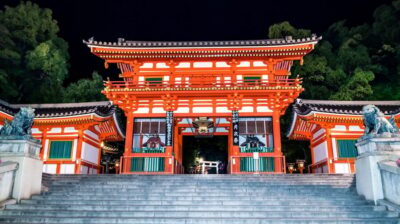
Gion Geisha District Walking Tour – Stories of Geisha
Read our review →
Best of Kyoto: Gion, Geisha, Pagodas & Cobblestones
Read our review →
Kyoto Night Foodie Tour in Gion (9+ dishes + 6 Sake tastings)
Read our review →
Kyoto Gion: 2-Hour Geisha Culture & History Walking Tour
Read our review →
Chopsticks Making Workshop in Gion with Engraving Option
Read our review →
Browse the lists this tour appears in