
Reviewed · RAMEN TOURS & WORKSHOPS
Tokyo: Mt Takao Tour with Ramen and Tattoo-Okay Hot Spring
Mt. Takao gives you a very different Tokyo day: forest trails, temple gates, monkeys, mountain air, and a clear view of Mt. Fuji if the weather cooperates. The tour’s best trick is its finish, a tattoo-friendly hot spring reached by a scenic 35-minute drive through western Tokyo.
I like the thoughtful mix of nature and everyday Japanese culture. You get a cable car or chair lift, a local noodle lunch, Buddhist sights, and time to soak instead of rushing from one landmark to the next. I also like the small group, capped at seven, and guide Jordan’s flexible pace.
The main drawback is the walking. The climb and descent can feel tough, especially after several hours on the mountain, and Mt. Takao is well outside central Tokyo. Clear Fuji views are never guaranteed, so come for the mountain day first and treat Fuji as a bonus.
Key points to know before booking
- Small-group mountain day: The group is limited to seven, with English-speaking guide Jordan leading the route.
- Cable car or chair lift access: You can reduce the uphill effort while still enjoying the mountain views and forest walk.
- More than a hike: The day includes the Takao 599 Museum, Monkey Park, Yakuo-in, and local explanations of Japanese religious traditions.
- Local lunch included: Hachioji ramen is the main meal, with soba and other choices available depending on the stop and your preference.
- Fuji depends on the sky: The summit view can be superb on a clear day, but clouds and haze may hide Mt. Fuji.
- Tattoo-friendly onsen: The final 1.5 hours offer a practical way to enjoy a Japanese hot spring without worrying about tattoo restrictions.
Why Mt. Takao makes a good break from Tokyo
Tokyo can fill your day with stations, department stores, neon, and foot traffic. Mt. Takao gives you a change of pace without requiring a long intercity journey. You meet at Takaosanguchi Station in Hachioji, then spend most of the day around the mountain before finishing at Hachiōji Station.
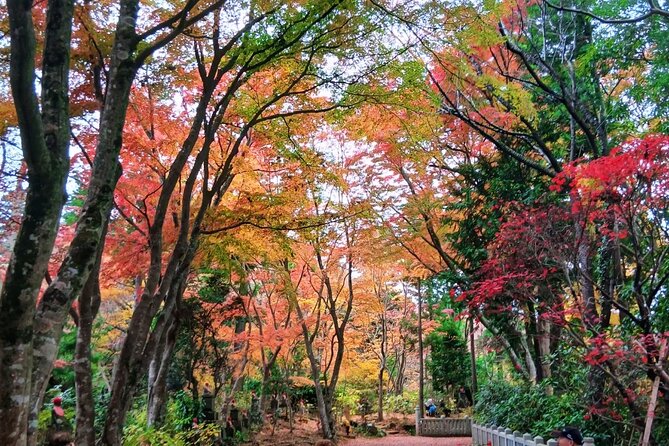
That change matters. You are not simply looking at another temple or shopping street. You are walking through a wooded mountain area where shrines, Buddhist statues, wildlife, and local food fit together in one outing. The experience works especially well in autumn, when the trees add color, and in winter, when crisp air can produce unusually clear views.
Jordan is the guide throughout the day. His style, based on the way the tour is run, is personal rather than scripted. He explains the meaning of shrines, statues, trees, and local customs, then gives you room to ask questions. He also adjusts the pace and can help communicate with staff at the restaurant, shrine, and hot spring.
The small group helps here. With no more than seven people, it is easier to hear explanations, ask for a slower pace, and make small choices about routes, food, and stops.
Other bowls worth queuing for in Tokyo:
- Eat and Drink Like a Local: Tokyo Ueno Food Tour-Taverns&Ramen
★ 5.0 · 957 reviews - Ramen & Gyoza Cooking Class in Tokyo with Local Supermarket Visit
★ 5.0 · 823 reviews - Tokyo: Ramen Tasting Tour with 6 Mini Bowls of Ramen
★ 4.9 · 432 reviews
Starting at Takaosanguchi and the Takao 599 Museum
The meeting point is simple: Jordan waits at the ticket gates of Takaosanguchi Station with a yellow tennis ball. That unusual marker is useful in a busy station, particularly if you are arriving by train and do not know the area.
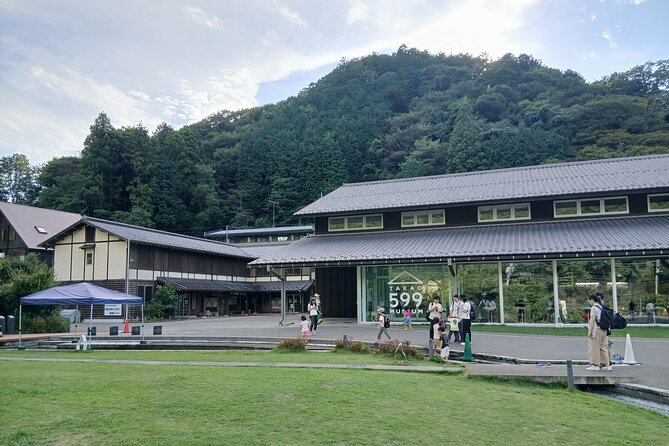
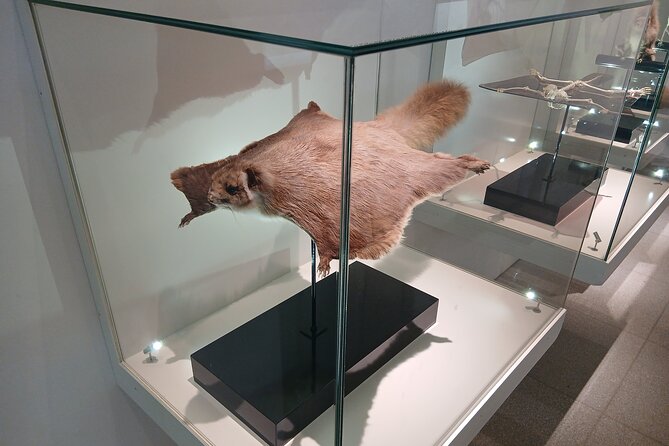
The first stop is the Takao 599 Museum, with a guided visit of about 15 minutes. It introduces the plants, animals, and natural setting of Mt. Takao. This is a short stop, not a full museum afternoon, but it gives you useful context before heading uphill.
I like having this introduction at the start. The mountain is more than a pretty walk, and the museum helps you notice the natural details Jordan points out later. If you are eager to get onto the trail, the visit is brief enough not to feel like a delay.
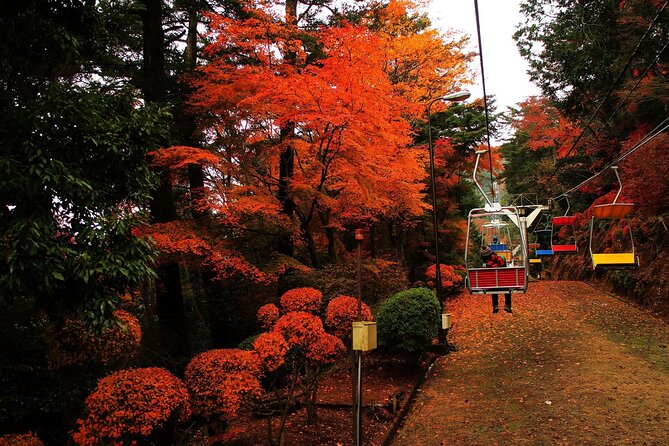
The route then moves toward the cable car or chair lift. The included transport saves energy for the walking sections, temples, and summit. You still get the mountain experience without spending the whole morning on a steep climb.
Riding up and meeting the monkeys
The cable car ride takes about 15 minutes. Depending on the day’s plan and your preference, the chair lift may also be used. The point is not simply to avoid exercise. It lets you reach the higher parts of the mountain with enough energy left for the sights that make the tour worthwhile.
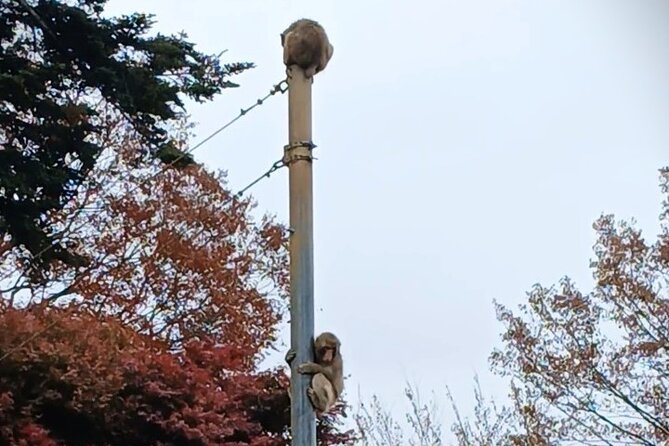
The Monkey Park and Wildflower Garden is scheduled for about 20 minutes. The monkeys live in an enclosed habitat, and you can watch their active behavior at close range. Feeding the monkeys is part of the experience described by participants, but you should follow the park’s instructions rather than treat them like pets.
This stop adds something different from the usual mountain walk. You see local wildlife before moving on to religious sites and the summit. It also gives children a clear focus, although the full day and mountain walking may still be demanding for younger kids.
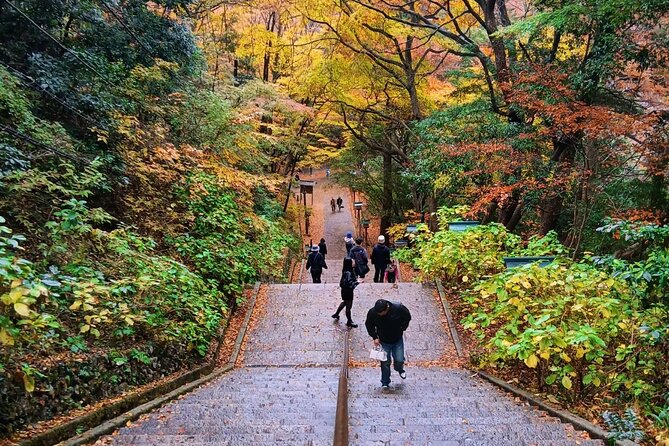
After the park, you walk along scenic sections of Mt. Takao. The listed walking segments are short, but they form part of a longer mountain day. Do not read the 15-minute entries as a promise of only a few minutes on your feet. The day includes a more substantial hike, and several people found the uphill and downhill sections challenging but manageable.
Wear shoes with a good grip. Comfortable footwear is the one item specifically called for, and it is sensible advice.
Yakuo-in, mountain beliefs, and the summit
Yakuo-in is one of the day’s strongest cultural stops. The visit lasts about 40 minutes and brings you into Mt. Takao’s mix of Buddhist and mountain traditions. Jordan explains the meaning behind the temple grounds, statues, gates, and symbols rather than leaving you to guess what you are seeing.
That guidance gives the stop real value. Japanese religious sites can be visually striking but hard to interpret on your own. Here, the walk becomes a chance to understand how mountains, worship, folklore, and daily life connect.
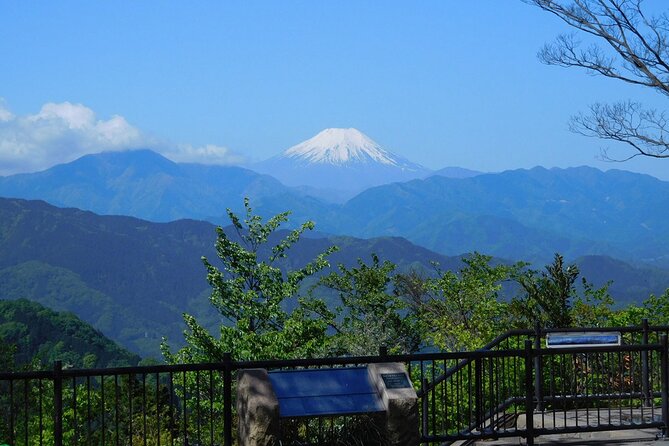
The route continues through scenic parts of the mountain and toward the summit. The schedule includes several shorter walking and sightseeing sections, plus about 15 minutes set aside for Mt. Fuji views. On a clear day, Fuji can be the visual high point of the outing. Winter conditions may produce especially sharp visibility, while summer humidity and cloud can make the view less certain.
I would not book this tour solely for Fuji. The mountain may be hidden, and no guide can control the weather. Book it for the complete day, then enjoy the view if the sky opens.
The summit area also gives you a sense of accomplishment. You have combined lift access with enough walking to feel that you earned the mountain day, without committing to a full day of strenuous hiking from the bottom.
Other baths worth the trip from Tokyo:
- From Tokyo: Private Tour to Fuji/Hakone – Onsen, Art, Nature
★ 5.0 · 116 reviews - Mt. Fuji, Hakone Private Tour from Tokyo – Onsen, Arts and Nature
★ 5.0 · 79 reviews - [Seasonal Limited] Mt. Fuji 5th Station &Hot Spring Day Tour
★ 4.5 · 53 reviews - Tokyo: Mt Fuji Lake Kawaguchi & Yamanaka Hot Spring Day Tour
★ 4.0 · 14 reviews
Hachioji ramen, soba, and a well-timed lunch
Lunch comes at a local restaurant for about 40 minutes. Hachioji ramen is the featured meal, and it is a fitting choice for the area. It gives you a regional specialty rather than a generic restaurant stop. Soba is also available as an alternative, and the tour can offer food choices based on your preference.
The timing works well because the walk builds an appetite. You are not stopping for food immediately after meeting the guide, nor waiting until the end of the day. The ramen is hearty, while soba suits you if you prefer something lighter.
Food needs can be discussed with Jordan. He has helped explain allergies to restaurant staff, which is useful when you are navigating Japanese menus. Still, you should state allergies clearly when booking and again at the meal.
The lunch is not meant to be a long culinary lesson. It is a relaxed local meal in the middle of an active day. That is part of its appeal. You get to sit down, warm up or cool off, and talk with the guide before continuing through the mountain sights.
The descent and the final cable car ride
After lunch and Yakuo-in, the tour continues with more walking and mountain views before returning toward the cable car. Some people choose to hike much of the route, while others use the lift options to keep the effort comfortable.
The flexibility is important because fitness levels vary. One person may want a stronger hike, while another may be traveling with a child, recovering from surgery, or simply saving energy for the hot spring. Jordan has adjusted the pace for different needs and has offered choices about routes and timing.
The descent is not automatically easy. Downhill walking can be hard on your knees, and the day may feel long by this point. The included cable car ride gives you a sensible way to finish the mountain portion without turning tired legs into a problem.
The tour’s transport arrangements also reduce mental work. You do not have to work out each lift, trail, and local stop alone. That is valuable on a day when the main goal is to enjoy Mt. Takao rather than manage every connection.
A 35-minute drive to a tattoo-friendly hot spring
The onsen is the reward at the end. It is about a 35-minute drive from the mountain through local towns and the mountains of western Tokyo. This transfer shows you a side of the Tokyo area that most visitors miss, and it avoids the awkward task of finding your own way to a suitable bathhouse after a tiring hike.
You get about 1.5 hours at the natural hot spring. The setting is described as a local, relaxing bathhouse with several pools, and the outdoor baths can be especially pleasant in cooler weather. The hot water gives your legs a chance to recover after the mountain walking.
The key practical point is the tattoo policy. Tattoos are accepted here, so you do not need to cover them or skip the onsen. That makes this tour useful for people who have avoided Japanese hot springs because of restrictions elsewhere.
You should know the basic onsen custom before you go. The baths are nude and separated by gender. Towels are included, so you do not need to bring one for the visit. The experience is public and traditional, not a private bath or spa treatment.
The bathhouse is not described as huge. If you want a grand resort-style onsen with endless facilities, this may feel modest. If you want a real soak after a mountain day, the scale is part of the charm.
After the bath, the tour finishes at Hachiōji Station. Jordan has sometimes driven participants closer to a convenient train station and walked them to the station, but you should confirm the final drop-off plan for your date.
What $120 gets you
At $120 per person, this is not the cheapest way to see Mt. Takao. You could reach the mountain by train and arrange parts of the day yourself for less. The price makes more sense when you count the included cable car or chair lift, Monkey Park admission, museum entry, lunch, hot spring visit, towels, English guidance, and the drive to the onsen.
The strongest value is convenience with interpretation. You are not just paying for transport. Jordan manages the sequence of mountain stops, explains the cultural details, helps with local communication, and keeps the day moving at a sensible pace.
The seven-person limit also matters. A large coach tour would cost less per person but would not offer the same flexibility. Here, you can ask questions, slow down, choose ramen or soba, and discuss route options without holding up a busload of people.
The price is easiest to justify if you want all of the following in one day: nature, a moderate mountain walk, a temple, wildlife, a local meal, Fuji potential, and an onsen. If you only want a quick cable car ride and a view, a self-guided visit will likely be better value.
Who should book this Mt. Takao day
I would recommend it to first-time visitors who want a break from central Tokyo but do not want to plan a complicated regional outing. It also suits solo visitors, couples, families with older children, and anyone who wants help understanding Japanese religious sites and bathing customs.
It is a particularly good choice if you have tattoos. The hot spring removes one common barrier and gives the day a strong finish that you may not arrange easily on your own.
Families can make it work, especially with a flexible guide. A four-year-old joined one outing, and the pace was adjusted as needed. Still, the day includes several hours of walking, so parents should be realistic about stamina.
It is less suitable if you dislike communal bathing, cannot comfortably walk on mountain paths, or want a completely private experience. The hot spring is nude and gender-separated, and the mountain section is not a flat city stroll.
Allow extra time to reach Takaosanguchi. The journey from central Tokyo can take roughly an hour to an hour and a half, depending on where you stay and train connections. A start around 10 a.m. can make the timing more workable, but check the available departure time when booking.
Free cancellation up to 24 hours before the tour and reserve-now, pay-later booking make it easier to fit the day into a changing Tokyo schedule. The tour is available in English, and the transport element has received a 94 percent perfect score.
Should you book it?
Book this Mt. Takao tour if you want a guided, small-group escape with real variety. The combination of monkeys, temples, forest walking, local noodles, possible Fuji views, and a tattoo-friendly onsen is unusually well balanced.
I would skip it only if you want a short outing, dislike walking, or feel uncomfortable with a nude public bath. For everyone else, the $120 price is reasonable because it covers the awkward parts of the day as well as the enjoyable ones. Meet Jordan at Takaosanguchi with comfortable shoes, keep your Fuji expectations flexible, and let the mountain set the pace.
FAQ
Where does the Mt. Takao tour begin?
The tour begins at the ticket gates of Takaosanguchi Station. The guide waits there holding a yellow tennis ball.
Where does the tour finish?
The planned finish is Hachiōji Station. On some outings, the guide has driven participants to a closer station and walked them to the train.
Is lunch included?
Yes. Hachioji ramen is included, and soba or other food choices may be available depending on your preference.
Are tattoos allowed at the hot spring?
Yes. The hot spring included in this tour is tattoo-friendly.
Are the hot spring baths private?
No. The hot springs in Japan are nude and separated by gender. Towels are provided for the visit.
How large is the group?
The group is limited to seven participants, and the tour is conducted in English.
Just added in Tokyo
- The 10 Tastings of Tokyo With Locals: Private Street Food Tour★ 5.0 · 48 reviews
- Small Town in the Big City: Tasting Tokyo’s Kichijoji★ 5.0 · 195 reviews
- Small Town in the Big City: Tasting Tokyo’s Kichijoji★ 5.0 · 16 reviews
- EXCLUSIVE Tokyo Secret: Kichijoji Small-Group Food & Bar Hopping★ 5.0 · 29 reviews
- Explore Kichijoji: Walk Through One of Tokyo’s Beloved Districts★ 5.0 · 21 reviews
- :Tokyo,Shibuya/ Pro Photography in Kimono / English-Friendly★ 5.0 · 26 reviews
- 【R34】Tokyo:Private Daikoku tour in Modified R34★ 4.9 · 92 reviews
- Tokyo:Calligraphy &Make your original folding fan in Asakusa★ 5.0 · 62 reviews
Ramen Tours & Workshops, compared.
Ramen Cooking Class at Ramen Factory in Kyoto
Read our review →
Eat and Drink Like a Local: Tokyo Ueno Food Tour-Taverns&Ramen
Read our review →
Ramen & Gyoza Cooking Class in Tokyo with Local Supermarket Visit
Read our review →
Ramen Cooking Class at a Ramen Factory with Souvenir
Read our review →
Five Must-See Highlights Walking Tour & Ramen Lunch
Read our review →
Browse the lists this tour appears in