
Reviewed · WALKING TOURS
Hakata Old Town Walking Tour Tracing the True History of Fukuoka
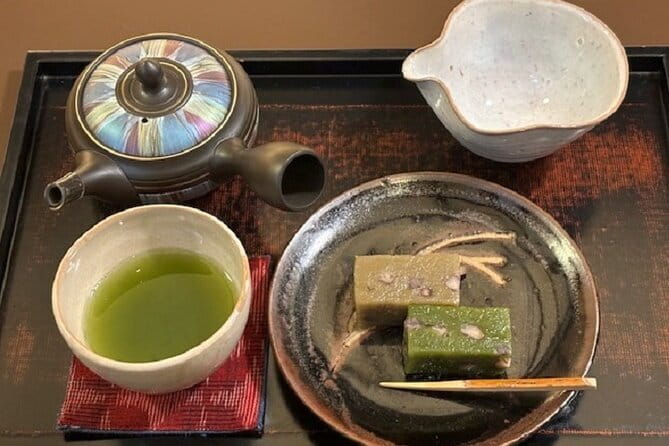
Hakata’s story comes alive through old temples, tea, festivals, and merchant-town customs, not through a long museum lecture. This small-group walk links several meaningful places in central Fukuoka, then pauses for Yame green tea and a Japanese sweet at the 300-year-old Mitsuyasu Seikaen Tea Leaf Shop.
I like the small maximum of 10 people, which should make it easier to ask questions, and I like the clear finish at Kushida Shrine, a useful place to continue exploring on your own. The main catch is the price, $190.49 per person, for a three-and-a-half-hour walk, plus the need to arrive on time because latecomers cannot join.
Key points at a glance
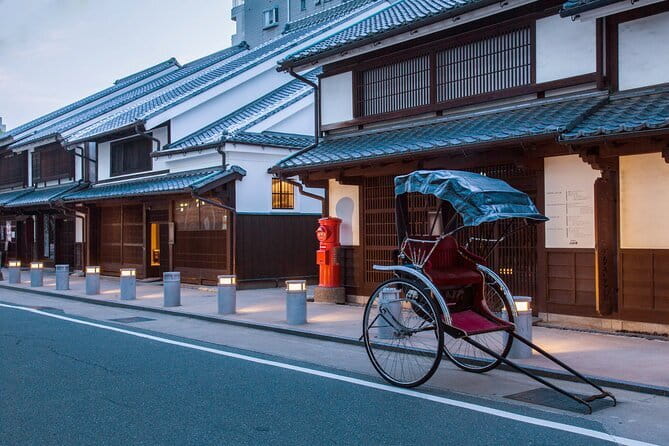
- Sennen-no-Mon and Jotenji Temple: Begin among Hakata’s old streets and pass through a welcoming gate before reaching the temple district.
- Tochoji’s Great Buddha: See the Fukuoka Daibutsu and a five-story pagoda cherished by local residents.
- Tea at Mitsuyasu Seikaen: Try kabusecha from Yame with a Japanese confectionery in a 300-year-old shop.
- Hakatamachiya Furusatokan: Learn about traditional town life, annual festivals, and local crafts inside a replica Hakata townhouse.
- Kushida Shrine finale: End at Hakata’s tutelary shrine, home to the famous Hakata Gion Yamakasa festival displays.
- A short but active walk: Cover about 3 kilometers, with temple visits, stairs or standing time possible, and no partial joining.
Why this walk helps you understand Hakata
Fukuoka is often treated as a food stop, a shopping base, or a gateway to Kyushu. That is fair, but it misses Hakata, the older core of the city. Hakata grew through trade with the Asian continent, and its customs developed around merchants, religious institutions, festivals, tea, and neighborhood life.
This tour gives you a useful thread through that story. You move from temples to a tea shop, then from a recreated townhouse to a working shrine. The places are close enough to connect on foot, but different enough to show how religion, commerce, and everyday traditions fit together.
I especially like that the experience includes ordinary cultural details, not only grand monuments. Tea and a small sweet may sound modest, but they give the afternoon a human scale. At Hakatamachiya Furusatokan, you can see how local life and annual events are presented rather than simply hearing a list of dates.
The English-speaking guide is central to the experience. A guide can explain what you are looking at, answer questions, and point out why each site matters. One guide named Miyoko has been specifically praised for being punctual, kind, and able to answer questions clearly. Your guide may be someone else, but the small group gives you a better chance to speak up.
Other guided walks in Fukuoka:
- Fukuoka Private and Personalized Walking Tour with a Local
★ 4.7 · 46 reviews - Fukuoka: Private Walking Tour with Local Guide
★ 4.8 · 22 reviews - Kyoto Geisha Walking Tour: Gion District & Hidden Gems
★ 4.7 · 3,273 reviews
Starting at Hakata Station and entering the old quarter
The meeting point is the Fukuoka City Tourist Information Center at Hakata Station. The tour starts at noon, so you can reach the station by train and still have the morning free. I would arrive early rather than cut this close. The rules are strict: if you miss the departure, you cannot join later, and the reservation is canceled.
From the station, the route moves toward Hakata Old Town. This is a practical beginning because Hakata Station is modern and busy, while the walking route quickly shifts toward older religious and residential areas.
The first stop is Jotenji Temple, reached after a walk through the old-town area. The tour also pauses at Sennen-no-Mon, a welcome gate for Hakata Old Town. The scheduled time at this opening section varies by tour year, listed as 15 minutes for 2025 and 30 minutes for 2026. That difference matters if you are comparing versions of the experience, since the amount of time for later stops changes too.
Do not expect a long private visit at every temple. The value here is the guide’s explanation and the way the route connects the sites. You are walking through the area, not checking off isolated attractions from a vehicle.
Jotenji Temple and the first look at old Hakata
Jotenji Temple is the first religious stop, though the main appeal is also the walk through its surrounding part of Hakata. The temple helps establish the tone of the afternoon: this is a place where historic religious sites sit within the modern city rather than in a remote park.
The scheduled stop is short in the 2025 version, at 15 minutes, and longer in the 2026 version, at 30 minutes. That may give the guide more room to explain the area, answer questions, or allow a less rushed look around.
I would use this time to ask about Hakata’s connection to overseas trade and the relationship between temples and the old town. Those questions fit the purpose of the tour and can turn a quick temple visit into a more useful lesson.
The walk itself requires moderate fitness. The full route is about 3 kilometers, but distance is not the only issue. You may be standing, moving between stops, and visiting temple or shrine grounds rather than sitting for long stretches. Wear shoes and clothing suited to walking.
Tochoji Temple and the Fukuoka Daibutsu
Tochoji Temple is likely to be one of the afternoon’s strongest visual stops. Its five-story pagoda is valued locally as a newer symbol of Hakata, while the temple grounds also hold the Fukuoka Daibutsu, described as Japan’s biggest Great Buddha.
The scheduled visit is 20 minutes for 2025 and 40 minutes for 2026. That is a meaningful difference. With more time, you can look around without feeling that you must rush immediately to the next stop. Even so, the tour has a fixed sequence, so this is not a slow, unstructured temple visit.
I like the contrast here. The pagoda gives you a familiar Japanese temple image, while the Great Buddha offers a larger interior focus. The guide can help place both features in the context of local religious life instead of leaving you to guess what you are seeing.
Entry to Tochoji is included. Other costs are not automatically covered unless specifically listed, so bring a payment method for anything you choose to buy on your own. The tour information also warns that shrine and temple access can change because of circumstances at the sites. If a planned stop cannot be entered, the guide may take the group to Waka Hachimangu Shrine, Myoraku-ji Temple, Engaku-ji Temple, or Ryugu-ji Temple instead.
That possibility is worth keeping in mind. You do not receive a refund if an alternative destination is used, so book this for the guided exploration of Hakata rather than for one single guaranteed interior.
Same base, a different sort of day:
- Mt. Aso & Takachiho Gorge Tour with Optional Boat Ride
★ 4.7 · 222 reviews - Fukuoka: Takachiho Gorge & Scenic Railway One Day Tour
★ 4.8 · 178 reviews - Private Fukuoka Tour with a Local, Highlights & Hidden Gems 100% Personalised
★ 5.0 · 143 reviews - Fukuoka Your Way: 100% Customisable Private Tour with Local Guide
★ 5.0 · 83 reviews
A thoughtful tea break at Mitsuyasu Seikaen
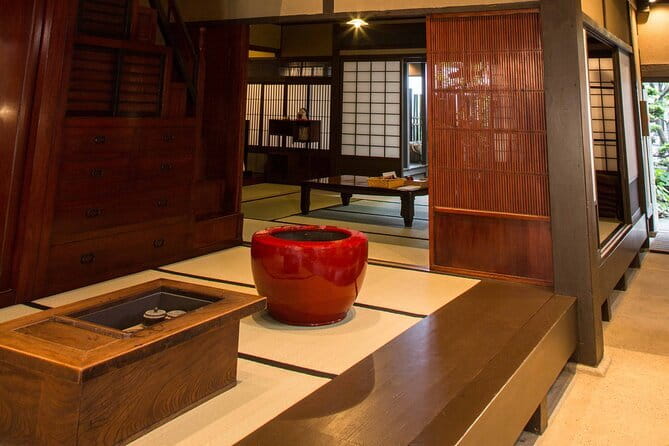
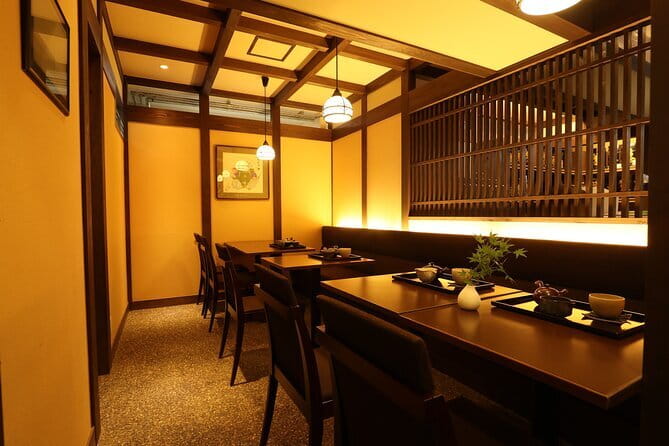
The tea stop gives this walk a welcome change of pace. Mitsuyasu Seikaen is a 300-year-old tea leaf shop, and the setting provides a direct link to Fukuoka’s tea culture rather than treating tea as a generic souvenir.
You will taste kabusecha from Yame, a well-known tea-producing area in Fukuoka. Kabusecha is shaded before harvest, which gives it less bitterness and a stronger savory quality. The experience includes the tea and a Japanese confectionery, often called a teacake in the tour details.
This is not simply a beverage break. The tea makes you pay attention to taste, preparation, and the importance of regional products. After temples and pagodas, the quiet shop offers a more personal look at local habits.
The scheduled time is 40 minutes in 2025 and 30 minutes in 2026. Either version should give you time to sit, drink, and take a short rest, but the 2026 timing is tighter. Children ages 0 through 5 may join free, though seating and the tea treat are not included for them. If you want those included, book the child rate.
I see this stop as one of the best reasons to choose the tour instead of walking the old town alone. You could pass the shop without knowing its age or significance. The included tea treat also adds real value, particularly if you enjoy regional food and small cultural encounters.
Hakatamachiya Furusatokan and everyday customs
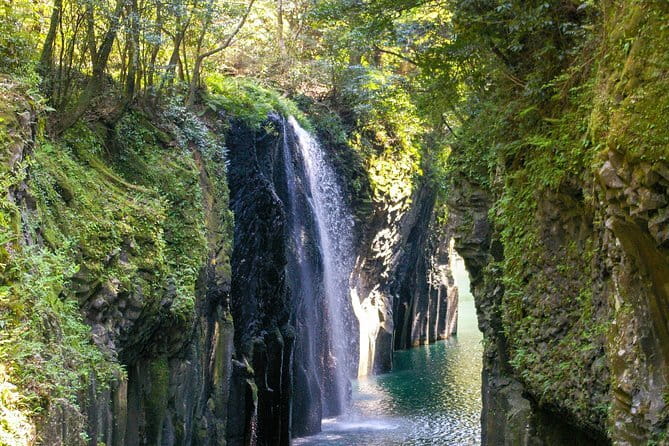
After the tea break, the route continues to Hakatamachiya Furusatokan. The building is a replica of a traditional Hakata townhouse, with displays about annual events, handicrafts, and the older lifestyle of Fukuoka.
This stop matters because temples and shrines can show the ceremonial side of a place, while a townhouse helps explain daily life. You can see how the tour shifts from religious landmarks to the homes, skills, and community events that supported Hakata’s identity.
The visit lasts 25 minutes in the 2025 schedule and 40 minutes in the 2026 schedule. If the longer timing applies to your departure, you will have more room to study the exhibits and ask the guide about local customs. If your time is shorter, listen closely to the explanation rather than trying to examine everything.
I would not expect a large museum visit here. The value comes from the focused introduction. This is a good stop for you if you want context for Hakata’s festivals and crafts, but it may feel brief if you prefer to read every display at your own speed.
Kushida Shrine and the Hakata Gion Yamakasa festival
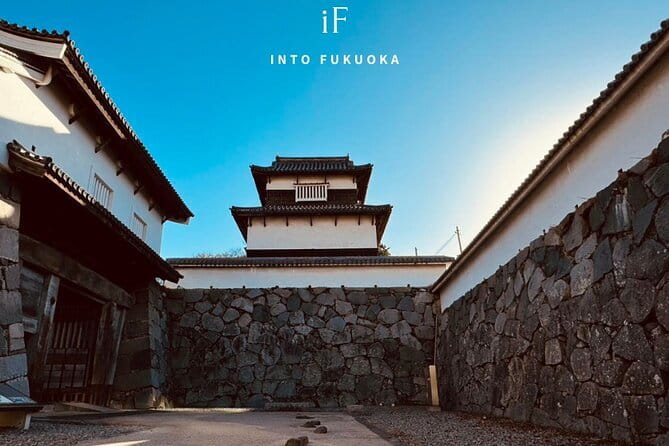
The tour ends at Kushida Shrine, Hakata’s oldest tutelary shrine. Locals affectionately call it Okushida-san, and it is closely tied to the Hakata Gion Yamakasa festival.
Kazariyama floats are displayed at the shrine throughout the year. These large decorative floats are central to the festival tradition, so the shrine gives you a strong final image of Hakata’s community life and seasonal celebrations.
Ending here makes practical sense. You finish at a major local site rather than returning to the station with the guide. From Kushida Shrine, you can continue around the surrounding area or follow the guide’s directions back toward Hakata Station. The shrine is about a 15-minute walk from JR Hakata Station.
The end point is not a transport transfer. You are responsible for getting to your next destination, and if you choose to use public transportation during the walk, you pay the fare yourself. I like having the afternoon finish in a place where you can continue exploring, but first-time visitors should plan the route ahead.
What $190.49 means in practical terms
At $190.49 per person, this is not a budget walking tour. The price pays for an English-speaking guide, included admission, and the tea and confectionery at Mitsuyasu Seikaen. The group size is capped at 10, which is important because a small group can make temple explanations and questions more useful.
Still, you are paying a high hourly rate for about three and a half hours. The value depends on what you want from Fukuoka. If you already know Hakata well and are comfortable researching temples and shrines yourself, the cost may be hard to justify.
If you have limited time, do not speak Japanese, or want a guide to connect the sites into one story, the price becomes easier to understand. You are not paying only for admission. You are paying for a planned route, interpretation in English, a tea experience that would be easy to miss, and a small group.
The tour is booked an average of 67 days ahead, so popular dates may fill early. Confirmation is sent within 48 hours of booking, subject to availability. I would reserve ahead if your Fukuoka schedule is fixed, then remember that free cancellation is available up to 24 hours before the start time.
Timing, walking, and possible changes
The tour begins at noon and lasts approximately three hours and 30 minutes. The exact arrival time can shift because of road conditions and the physical stamina of the group. The order or selection of destinations can also change.
You should plan for the entire outing on foot. The stated distance is about 3 kilometers, and the tour requires moderate physical fitness. Comfortable shoes are more important than stylish ones here.
You also cannot join partway through. That makes punctuality especially important, since the group will not wait for someone who arrives late. I would reach the tourist information center with enough time to find the correct spot inside Hakata Station.
Visitors under 18 need written parental permission. Anyone under 15, or not yet enrolled in middle school, must be accompanied by a parent or guardian. These rules are easy to overlook if you are booking for a family.
Who should book this Hakata walk?
I would choose this experience if you want a guided introduction to Hakata’s religious sites, local tea, and traditional customs in one afternoon. It suits first-time visitors who prefer a clear route and direct explanations rather than piecing together several places alone.
It is also a good match if you enjoy small food experiences. The Yame kabusecha and Japanese confectionery are not a full meal, but they add a regional flavor and a comfortable pause.
Families can join, but the 3-kilometer walk and fixed pace may not suit very young children unless an adult is prepared for the walking. Children under 6 can join free without the included seating and tea treat, or you can book the child rate if you want those extras included.
I would skip it if your main goal is shopping, nightlife, or a long unhurried visit at one temple. I would also think twice if $190.49 feels high for a short guided walk. The experience is strongest for someone who values context, a small group, and the chance to see everyday Hakata traditions as well as major religious sites.
Should you book it?
Book this tour if you want a compact, guided introduction to old Hakata and appreciate details that are easy to miss alone, especially the Yame tea stop and the year-round festival floats at Kushida Shrine.
The price is the main question. You receive a guide, admission, a tea and sweet tasting, and a group limited to 10, but the outing is still only about three and a half hours. For a first visit to Fukuoka, that package can be worthwhile. For independent walkers who already know the area, it is less compelling.
Arrive early, wear walking shoes, and keep your afternoon flexible in case the timing shifts or a temple visit changes. If those conditions suit you, this is a well-focused way to meet Hakata through its temples, tea, homes, and festivals.
FAQ
Where does the Hakata Old Town walking tour begin?
It begins at the Fukuoka City Tourist Information Center inside Hakata Station, at 1-1 Hakataekichūgai, Hakata Ward, Fukuoka.
What time does the tour start?
The tour starts at 12:00 pm.
Where does the tour end?
It ends in front of Kushida Shrine at 1-41 Kamikawabatamachi, Hakata Ward, Fukuoka.
How far do you walk?
The full walking route is approximately 3 kilometers, and participants walk for the day’s entire itinerary.
How long does the experience last?
The tour lasts approximately three hours and 30 minutes.
Is tea included?
Yes. The tour includes kabusecha from Yame and a Japanese confectionery at Mitsuyasu Seikaen Tea Leaf Shop.
How many people can join?
The tour has a maximum of 10 participants.
Can the temples or shrines be changed?
Yes. Entry may not be possible because of circumstances at the listed sites. Alternative destinations can include Waka Hachimangu Shrine, Myoraku-ji Temple, Engaku-ji Temple, or Ryugu-ji Temple. No refund is issued if an alternative destination is used.
Just added in Fukuoka
- Fukuoka Sumo Tournament November 2025 with a Sumo Expert Guide★ 5.0 · 21 reviews
- Fukuoka Group/Private Tour by Local Professionals!★ 5.0 · 15 reviews
- Tour Nagasaki or Fukuoka in Privacy and Comfort.★ 5.0 · 17 reviews
- Kyushu: Aso Vocano, Grassland,Onsen and Aso shrine 1-Day Tour★ 4.5 · 23 reviews
- From Fukuoka: Miyazaki, Takachiho Gorge And Shrine Day Tour★ 4.5 · 44 reviews
- Fukuoka Takachiho Gorge, Amano Iwato and Scenic Train Tour★ 4.5 · 17 reviews
- Fukuoka Evening Tours: Yatai, Izakaya, Karaoke and more★ 5.0 · 21 reviews
- Dazaifu and Yanagawa Canal Cruise Private Guide Day Tour by Train★ 5.0 · 13 reviews
Walking Tours, compared.

Kyoto Geisha Walking Tour: Gion District & Hidden Gems
Read our review →
Tokyo Tsukiji Fish Market Food and Culture Walking Tour
Read our review →
Imperial Palace and Shogun Historical Walking Tour
Read our review →
Gion Geisha District Walking Tour – Stories of Geisha
Read our review →
Shinjuku Local Bar and Izakaya Guided Walking Tour
Read our review →
Asakusa Walking Tour with Sensoji Temple Visit
Read our review →
Nishiki Market Brunch Walking Tour (7 Tastings + Brunch)
Read our review →Browse the lists this tour appears in