
Reviewed · HIROSHIMA & MIYAJIMA DAY TRIPS
Hiroshima and Miyajima 1 Day Bus Tour
Hiroshima’s hardest lesson and Miyajima’s prettiest view fit into one carefully timed day. You’ll see the Atomic Bomb Dome and Peace Memorial Museum, then trade the city for the sea and Itsukushima Shrine’s famous torii gate.
I like the local okonomiyaki lunch, which gives the day a real taste of Hiroshima, and I like having transport and ferry tickets handled for you. The main catch is time: the museum can feel rushed, and the tour is not a good match if long periods of walking are difficult.
Key points to know before booking
- Two very different Hiroshima experiences: The morning focuses on war, loss, and peace. Miyajima brings shrines, sea views, shopping, and a lighter change of pace.
- Hiroshima-style okonomiyaki included: Expect pork, cabbage, bean sprouts, fish powder, noodles, and eggs, with advance alternatives for some dietary needs.
- English-speaking guides add real context: Guides named Hiro, Tom, Yuka, Kaori, Takane, and Toe have been praised for clear explanations and personal stories.
- Ferry and museum tickets are covered: You do not need to sort out separate admission for the Peace Memorial Museum or the ferry to Miyajima.
- A full day from Hiroshima Station: The tour starts at 10:00 a.m., lasts about 7 hours and 40 minutes, and returns to the station meeting point.
- Good value for a short Hiroshima stay: At $118.92 per person, the price covers transport, lunch, ferry travel, museum entry, and a guide.
Why this day works for first-time visitors
Hiroshima is a city where two major sights ask for different moods. The Peace Memorial Park and Museum require attention and quiet thought. Miyajima offers a change of rhythm, with a shrine by the water, a famous torii gate, and time for local food and shops.
I like this pairing because it prevents the day from becoming one long museum visit. The change to Miyajima does not erase the morning’s difficult subject, but it gives you room to breathe and see another side of the region.
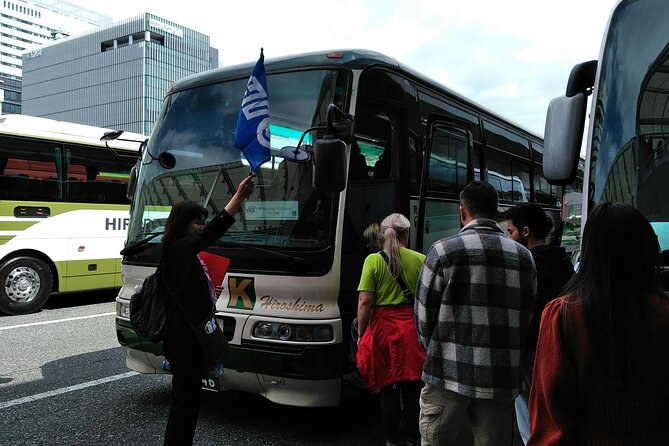
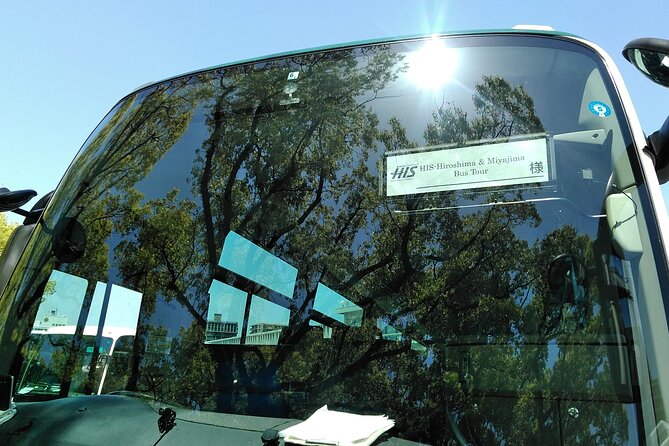
The tour begins at Hiroshima Station at 10:00 a.m. and ends back at the same meeting point. You ride in an air-conditioned vehicle, and the bus can hold luggage in its storage area. That last detail is useful if you are changing hotels or catching onward transport, though you should plan a Shinkansen departure after 6:30 p.m. to leave a sensible buffer.
The group can reach up to 40 people. That keeps the price lower than a private tour, but it also means you must listen for meeting instructions and stay aware of the schedule. Earphone guides are provided, though one person found the sound muffled, so do not hesitate to move closer to the guide when possible.
Other long days west of Hiroshima:
- Peaceful Hiroshima & Miyajima UNESCO 1 Day Bus Tour
★ 5.0 · 5,309 reviews - Hiroshima: Hiroshima and Miyajima UNESCO Sites 1-Day Tour
★ 4.9 · 2,330 reviews - Hiroshima / Miyajima Full-day Private Tour with Government Licensed Guide
★ 5.0 · 1,298 reviews
The Atomic Bomb Dome puts the day in focus
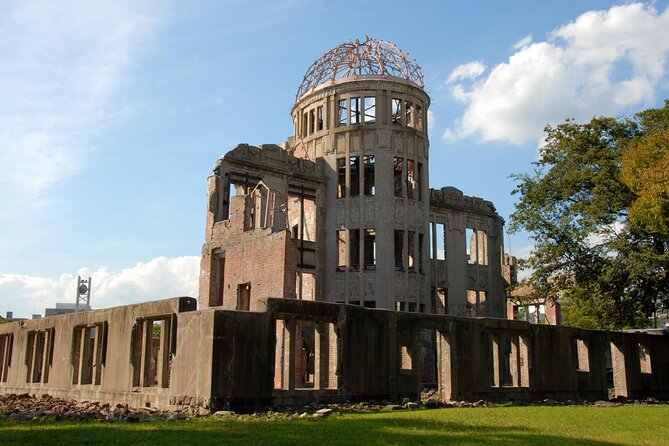
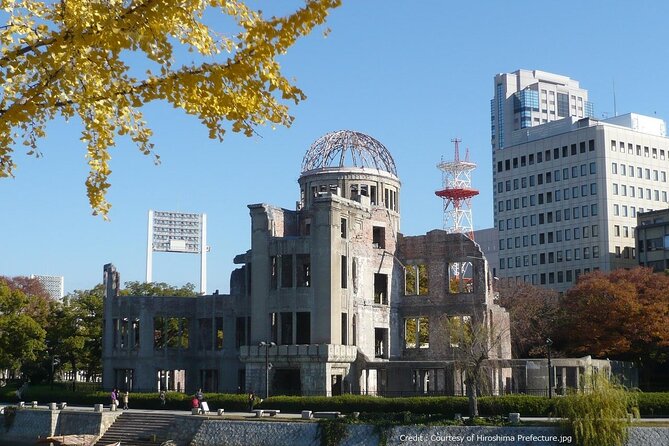
The first stop is the Atomic Bomb Dome, with about an hour here. Admission is free, and the building is viewed from the outside.
This damaged structure is not simply an old building. It is one of Hiroshima’s central symbols of the atomic bombing and the city’s later peace work. The tour guide gives you the historical setting, while the remaining time lets you look closely at the dome and its position beside the river.
The stop works best when you resist treating it as a quick photo pause. The exposed framework and ruined walls make the event feel physical in a way that dates and figures cannot. Your guide may also explain how survivors and peace advocates supported its preservation as a World Heritage Site.
One hour is enough for an introduction, but it is not a long independent visit. The guide’s explanation matters here, especially if you know little about Hiroshima before arriving. Guides such as Hiro and Tom have been praised for adding information during the bus rides, not just at the official stops.
Peace Memorial Park gives the history a human scale
From the dome, the group continues into Hiroshima Peace Memorial Park for about an hour. The park occupies what was once the Nakajima District, which was set aside for peace memorial facilities after the Hiroshima Peace Memorial City Construction Law of 1949.
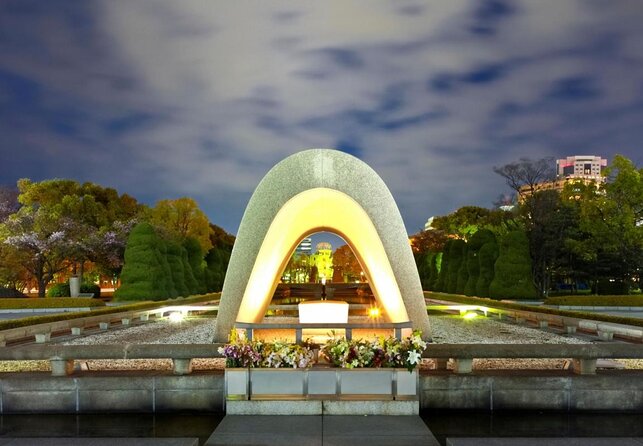
This is a place for walking, listening, and taking stock. The open paths connect the city’s memorial sites and give you time to absorb what you have seen before entering the museum. The guide explains the purpose of the park, the memorials, and Hiroshima’s message of peace.
I find this part important because it keeps the bombing from becoming a single building or a single date. The park shows how Hiroshima chose to remember, teach, and speak about nuclear war.
The mood is serious. This is not a stop to hurry through while chatting with your group. Several guides have received high marks for explaining painful material with care, and one guide shared a personal family connection to survivors of the bombing. Personal stories can make the history easier to understand, but they can also make the visit more emotional. Come prepared for a quiet and sometimes upsetting hour.
Allow enough attention for the Peace Memorial Museum
The Peace Memorial Museum gets about an hour, and admission is included. The museum has two buildings and covers Hiroshima’s history, the development of the atomic bomb, and the events of August 6.
This is the most emotionally demanding part of the tour. Displays include direct evidence of the bombing and its effect on ordinary people. The material is not softened into a simple sightseeing stop, so you may find the visit harrowing, particularly if you are sensitive to graphic wartime exhibits.
The museum is also the point where the schedule feels tightest. I would prefer more than an hour here, and some people would happily give up time on Miyajima to stay longer. You can see the main material in the allotted time, but a careful reading of every display is unlikely.
That limitation is the biggest tradeoff in the day. A guided schedule lets you see all the major sights without planning several transport connections, but it cannot give you the freedom of a museum visit on your own. If Hiroshima’s wartime history is your main reason for coming, consider returning to the museum independently on another day.
For many people, though, the hour provides a meaningful introduction. The guide’s explanation helps place the exhibits in context, and the park outside gives you a little quiet afterward. The tour does not ask you to process the museum alone.
Other tours by coach from Hiroshima:
- Full Day Hiroshima and Miyajima Bus Tour from Hiroshima
★ 4.5 · 371 reviews - Mt Fuji and Hakone 1-Day Bus Tour Return by Bullet Train
★ 5.0 · 26,383 reviews - 1-Day Tokyo Bus Tour
★ 5.0 · 14,250 reviews - PERFECT KYOTO 1-Day Bus Tour
★ 5.0 · 13,518 reviews
Okonomiyaki makes lunch part of the local experience
The included lunch is Hiroshima-style okonomiyaki, a layered savory dish with pork, cabbage, bean sprouts, fish powder, noodles, and eggs. It is a fitting meal for this tour because it is strongly tied to the city and offers something more distinctive than a standard restaurant lunch.
The regular option includes all the listed ingredients. Two alternatives are available if requested in advance:
- No pork, with eggs
- No pork, no fish powder, and no eggs
Tell the operator about allergies or dietary restrictions when booking. Menu changes cannot be made on the day, and you should not bring your own food or drinks into the restaurant.
The meal has been a highlight for many people, with praise for the flavor and the pleasant restaurant setting. One person found the serving disappointing because it arrived before they took their seat, so expectations should stay practical. This is an organized group meal, not a long, flexible food tour.
Even so, I consider lunch a strong part of the price. You get a local specialty without having to guess where to go, and the meal breaks up a heavy morning. If you have never tried okonomiyaki, this is a useful introduction to Hiroshima’s version, especially with noodles worked into the dish.
The ferry ride changes the pace on the way to Miyajima
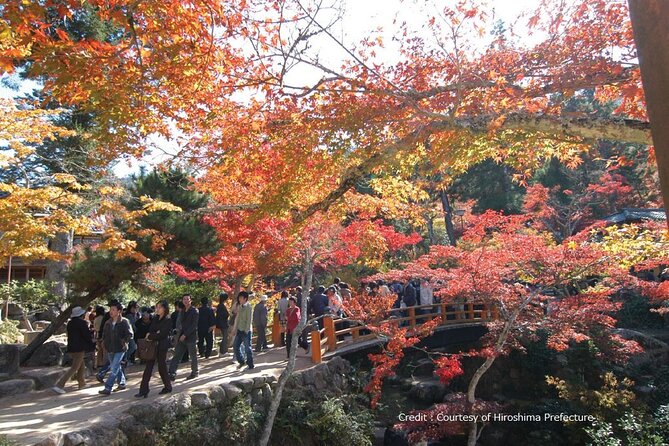
After lunch, the tour continues toward Miyajima, with the ferry ticket included. The crossing is part of the appeal. Hiroshima’s memorial district has a solemn city setting, while Miyajima opens the day toward the Seto Inland Sea.
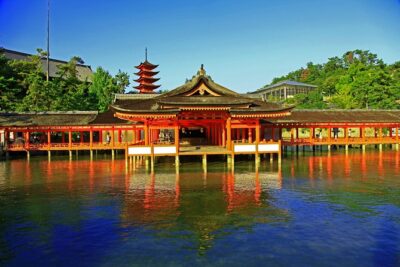
The tour heads to Itsukushima Shrine and its famous torii gate, which sits out in the water at the entrance to the shrine area. Paths run around the inlet, giving you different views of the shrine, gate, and sea.
The Miyajima portion lasts about three hours, making it the most relaxed section of the tour. You have time for the shrine, photographs, local snacks, and shopping along the island streets. The tour information does not promise a particular tide or sunset view, so the torii’s appearance from the shore will depend on conditions at the time of your visit.
Itsukushima Shrine is important as a Shinto religious site, not just a scenic backdrop. Your guide can explain why the shrine was built at the water’s edge and how the torii relates to the approach. That context gives the visit more meaning than a quick walk to the gate for a picture.
Miyajima is also a welcome contrast after the museum. The island portion still has a schedule, so you cannot wander without watching the meeting time. But three hours gives you a fair chance to enjoy the setting without the frantic feeling of a short photo stop.
Guides make the difference on a group tour
A bus tour succeeds or fails through its guide. This one is conducted in English, and the strongest guide feedback centers on clear speech, organization, humor, and a willingness to answer questions.
Hiro is repeatedly praised for her pride in Hiroshima and for keeping the bus rides interesting. Tom is noted for strong English, historical detail, and a friendly manner. Yuka, Kaori, Takane, and Toe are also singled out for calm group management and useful explanations.
The best guides do more than point out monuments. They connect Hiroshima’s public history with personal memory, local identity, and daily life. Toe, for example, shared personal anecdotes about the places visited, while another guide spoke about grandparents who survived the bombing. Those details can make a difficult subject feel less distant.
A group of up to 40 means the experience will not feel private. You may need to rely on the earphone guide, stay close during walks, and remember the bus departure times. Still, the structure is helpful if you want someone else to handle the route and keep the day moving.
What the $118.92 price really covers
At $118.92 per person, the tour is not a bargain-basement outing, but the price includes a substantial package. You get the air-conditioned bus, English-speaking guide, okonomiyaki lunch, Peace Memorial Museum admission, and ferry ticket to Miyajima.
That matters because Hiroshima and Miyajima involve several moving parts. Organizing both areas independently means arranging city transport, the ferry, lunch, museum admission, and timing. The tour bundles those jobs and gives you a single day plan.
The value is strongest if you are staying in Hiroshima and have only one free day. It is less attractive if you already know the city well or want long, unhurried time in the museum. It is also not designed as a day trip from Osaka or Kyoto. You would need to add roughly $200 per person for a Shinkansen journey from those cities, according to the practical cost guidance provided with the experience.
The 97 percent recommendation rate and 4.7 rating from 145 ratings point to a reliable experience, but the small complaints are worth noting. Museum time can feel short, the lunch may not suit every palate, and the earphone audio may be imperfect. Those are manageable issues, not reasons to dismiss the tour.
Who should book this Hiroshima day tour?
I would choose this tour if you want to see Hiroshima’s essential sights in one day without solving the transport puzzle yourself. It suits first-time visitors, people staying near Hiroshima Station, and anyone who values a guide’s explanation at the memorial sites.
It is also a good fit if you want a local meal and a scenic break after the museum. The combination of history, food, ferry travel, and shrine views gives the day a satisfying range.
I would think twice if you want to spend several hours reading every museum display. An independent visit gives you more control. I would also avoid this tour if long periods of walking are difficult, since the itinerary covers several sites on foot and the operator does not recommend it for people who struggle with extended walking.
The museum may not suit young children or anyone who finds graphic wartime material overwhelming. The tour itself is open to most people, but the subject matter deserves an honest look before booking.
Final verdict: a strong one-day introduction
Book this tour if your Hiroshima visit is short and you want the city’s two defining experiences in one organized day. The Peace Memorial sites provide the serious heart of the visit, while Miyajima, Itsukushima Shrine, and the ferry add beauty and breathing room.
The best reason to go is the combination of practical value and human explanation. You get transport, lunch, admissions, and a guide who can connect the places to Hiroshima’s past and present. Just keep your expectations clear: the day moves at a steady pace, and the Peace Memorial Museum deserves a return visit if you want more time.
FAQ
Where does the Hiroshima and Miyajima tour start?
The tour starts at Hiroshima Station, at 1-2-37 Matsubaracho in Hiroshima’s Minami Ward. The scheduled start time is 10:00 a.m.
Where does the tour end?
The activity ends back at the meeting point at Hiroshima Station.
How long does the tour last?
The tour lasts approximately 7 hours and 40 minutes.
Is the ferry to Miyajima included?
Yes. The ferry ticket to Miyajima is included in the tour price.
Is lunch included?
Yes. Lunch is Hiroshima-style okonomiyaki with pork, cabbage, bean sprouts, fish powder, noodles, and eggs. Alternative menus must be requested in advance.
Is the Peace Memorial Museum admission included?
Yes. Admission to the Hiroshima Peace Memorial Museum is included.
Is the tour conducted in English?
Yes. The tour is conducted by an English-speaking guide only.
Just added in Hiroshima
- Iya Valley BROMPTON Slow Cycling Tour★ 5.0 · 28 reviews
- Iya Valley All Must-Sees Private Chauffeur Full-day Tour with a Driver★ 5.0 · 20 reviews
- Shore Excursion from Hiroshima Port : Private Tour in Hiroshima★ 5.0 · 17 reviews
- Hiroshima & Miyajima All-Inclusive Tour w/Licensed guide Pancho★ 5.0 · 54 reviews
- Okunoshima Rabbit Island Cycling Tour with Local Guide★ 4.5 · 17 reviews
- The Peace Memorial to Miyajima : Icons of Peace and Beauty★ 4.5 · 31 reviews
- Private Full Day Hiroshima Tour★ 4.5 · 29 reviews
- Hiroshima Saijo Sake Tasting Tour with visit to 7 Breweries★ 5.0 · 104 reviews
Hiroshima & Miyajima Day Trips, compared.
Peaceful Hiroshima & Miyajima UNESCO 1 Day Bus Tour
Read our review →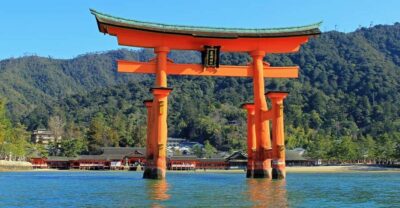
Hiroshima and Miyajima UNESCO Sites 1-Day Tour
Read our review →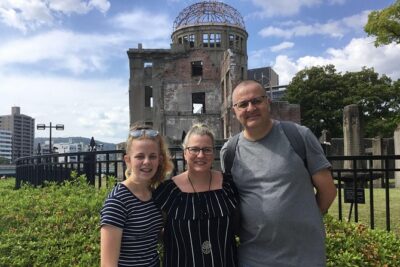
Hiroshima / Miyajima Full-day Private Tour with Government Licensed Guide
Read our review →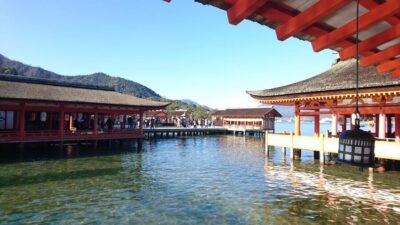
Osaka/Kyoto: Hiroshima Miyajima Bus Tour & Shinkansen Ticket
Read our review →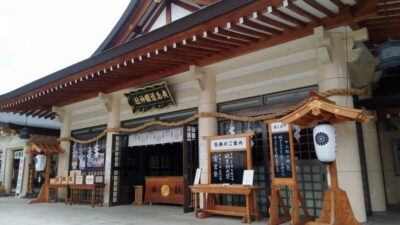
Hiroshima Historical Walking Tour – Why A-Bomb was Dropped
Read our review →
Hiroshima Peace (Heiwa) Walking Tour at World Heritage Sites
Read our review →
Hiroshima in a Nutshell: Morning Bike Adventure
Read our review →
Hiroshima City 4hr Private Walking Tour with Licensed Guide
Read our review →Browse the lists this tour appears in