
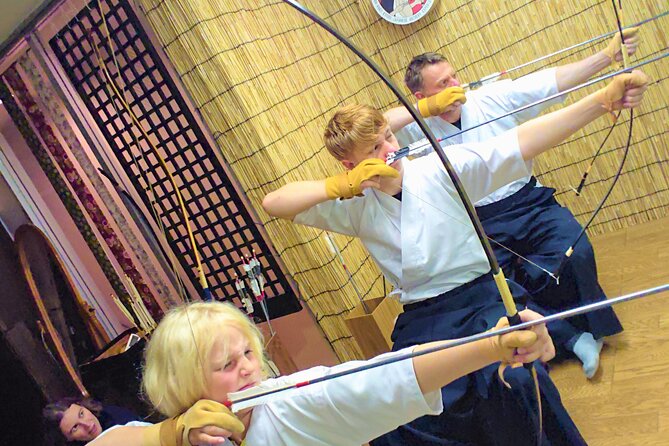
Reviewed · HIROSHIMA & MIYAJIMA DAY TRIPS
Japanesel Archery Experience HIROSHIMA CASTLE SHARAKU
Kyudo is not simply Japanese archery with a different bow. It is a careful sequence of movements, from handling the arrow to releasing it, designed to bring your mind and body into focus. At Hiroshima Castle, you learn those steps, dress in dogi and hakama, and get to shoot even if you have never held a Japanese bow.
I like the small maximum of four people, which gives you close attention instead of a crowded class. I also like the mix of culture and play: you learn why the form matters, then shoot enough arrows to feel the challenge for yourself. The main drawback is that instruction may rely partly on gestures and a translation app, and parking near the castle can be difficult.
Key points to know before booking
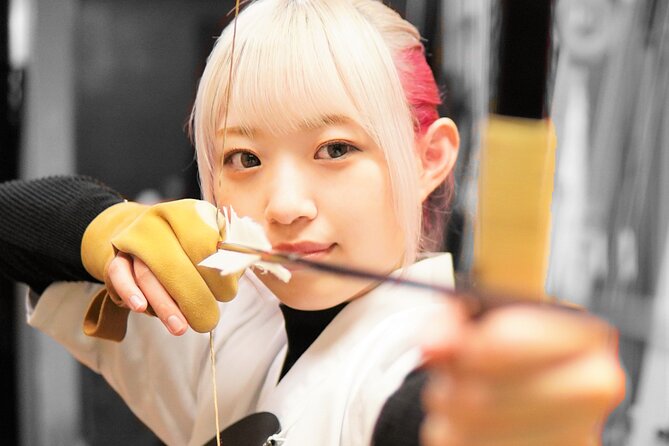
- You wear real kyudo clothing: The experience includes a dogi top and hakama trousers, giving the session a formal Japanese feel and making for memorable photos.
- Beginners can shoot: Standard kyudo training normally limits shooting until the basics are mastered, but this class is designed to let first-timers try the full experience.
- The class is small: No more than four participants take part, often with two instructors helping the group.
- Expect a careful routine: You will learn the order of movements, not just point and fire. Proper form matters as much as hitting the target.
- The session can become competitive: After practice, your group may shoot several rounds and compare scores. A high score can earn a place on the wall.
- Give yourself time to arrive: The meeting point is at the Hiroshima Castle Sannomaru Ruins, but parking nearby is reported to be awkward, and the directions may need extra attention.
Why kyudo feels different from ordinary archery
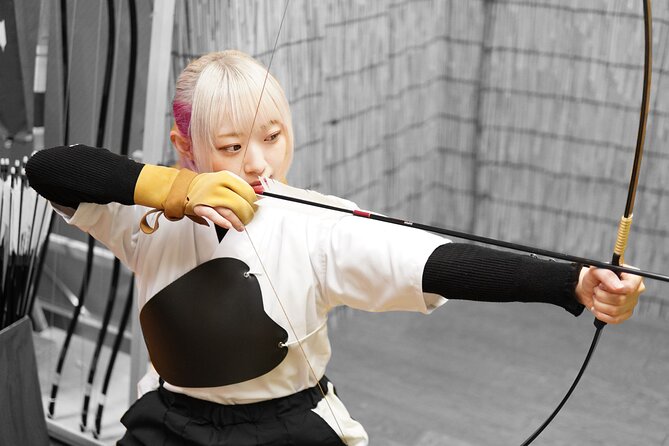
The first thing to understand is that this is not a quick target-shooting lesson. Kyudo treats the bow, arrow, target, and other participants with respect. Each action follows a traditional routine, so you are learning a physical discipline as well as a sport.
That routine can feel surprisingly complex at first. You must learn how to hold the bow, place and draw the arrow, position your body, and release in the correct order. The curved Japanese bow adds another challenge. An arrow may not travel exactly where your eyes expect, and the correct technique can feel counterintuitive to anyone used to Western archery.
This is part of the appeal. You are not rewarded for brute strength or rushing. The aim is to build control and concentration. Even when your arrow misses, you can see how a small change in posture or release affects the result.
The class makes kyudo accessible by allowing complete beginners to shoot under supervision. That is important because formal kyudo training usually requires mastery of basic movements before you pull the arrow. Here, you get a short, practical introduction rather than a long-term grading lesson.
Other long days west of Hiroshima:
- Peaceful Hiroshima & Miyajima UNESCO 1 Day Bus Tour
★ 5.0 · 5,309 reviews - Hiroshima: Hiroshima and Miyajima UNESCO Sites 1-Day Tour
★ 4.9 · 2,330 reviews - Hiroshima / Miyajima Full-day Private Tour with Government Licensed Guide
★ 5.0 · 1,298 reviews
Arriving at Hiroshima Castle Sannomaru Ruins
The meeting point is Japanese Archery Experience Hiroshima Castle Sharaku, at Hiroshima Castle Sannomaru Ruins, 21-7-2 Motomachi, Naka Ward. The activity begins and ends at this same location.
The setting makes sense for the subject. You are not being taken to a generic recreation center far from the sights. The class takes place near one of Hiroshima’s best-known historic attractions, so it is easy to pair with castle sightseeing and other stops in the area.
Allow extra time to find the exact meeting point. Directions have not always felt perfectly clear, and parking nearby can be a nuisance. The activity is near public transportation, but the supplied information does not specify a particular station or walking time. I would avoid arriving at the last minute, especially if you are carrying bags or coordinating a family group.
Once you arrive, the small group size becomes a real advantage. With a maximum of four participants, the instructors can watch each person’s stance and hand position. Some sessions use two guides, giving you more direct help while others are shooting.
Dressing in dogi and hakama
Before you begin, you put on an authentic kyudo uniform. The dogi is the upper garment, while the hakama forms the lower part of the outfit. The clothing is not just a costume added for photographs. It helps set the tone and makes the movements feel more formal.
For many people, dressing for the class is one of the most memorable parts. You look and feel different from the start, and the uniform adds a strong visual connection to Japanese martial arts. The provider also encourages photographs and videos during the session, and instructors may help capture them with your phone toward the end.
The outfit can make movement feel less familiar, particularly once you begin working through the shooting sequence. That is useful rather than distracting. It reminds you that kyudo is a disciplined art with its own rules, not a casual game of backyard archery.
If you want a relaxed photo opportunity, this experience delivers that. Still, keep your expectations sensible. The class is built around learning and shooting, not a staged photo session. Your pictures will be best when they show you following the actual routine.
The opening lesson and demonstration
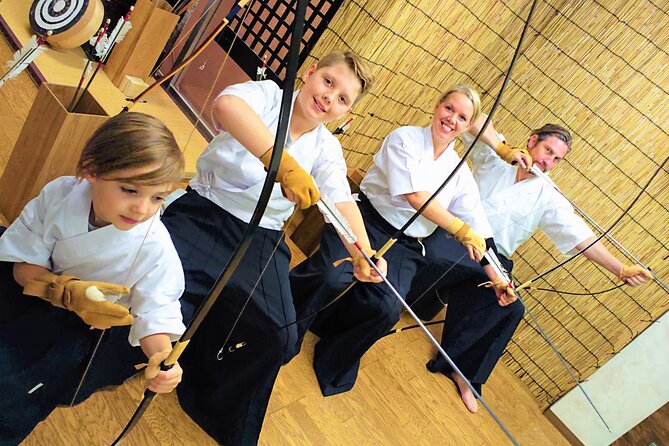
The instructor begins with an explanation of kyudo and a demonstration of the basic process. You learn that the goal is not only to hit the target. The way you stand, handle the bow, and release the arrow all matter.
Instruction may be given in English, through gestures, or with a translation app. Several participants have found that the tablet-based translation is useful when a more detailed explanation is needed. The language difference does not prevent the class from moving forward, but it can affect the pace and clarity.
Pay close attention during this opening section. The steps for notching the arrow and preparing the bow may seem like a lot to remember. The process becomes easier after several attempts, but the first few shots can feel slow.
The instructor and assistants continue correcting technique as you practice. You may hear reminders about posture, hand position, and the direction in which to aim. One unusual detail is that aiming slightly to the left may help the arrow travel straight, because of the shape and handling of the bow. That is exactly the sort of detail you are unlikely to discover by yourself.
Other martial arts sessions in Hiroshima:
- Hiroshima: Traditional Japanese Archery Experience
★ 4.8 · 351 reviews - Kyoto: Kendo and Samurai Experience with Uniform and Gear
★ 4.9 · 815 reviews - Tokyo: Samurai Sword & Archery Class from Samurai Descendant
★ 5.0 · 603 reviews - Samurai Training Experience KENDO in Osaka
★ 5.0 · 515 reviews
Practice shots before the real contest
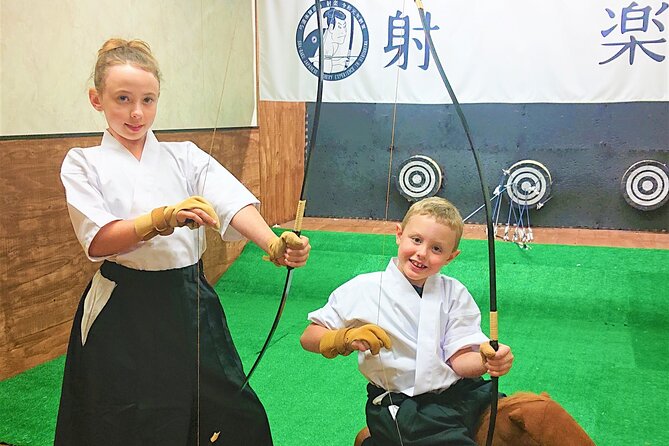
After the demonstration, you get a practice round. One detailed account describes eight practice shots, followed by additional rounds depending on how quickly the group learns the technique. Other sessions may spend more time on instruction before moving into a competition.
This flexible structure is helpful. You are not forced into a rigid timetable if everyone needs more practice. At the same time, a quick-learning group may get several chances to shoot.
The first goal is not a perfect score. It is learning to repeat the sequence. You prepare the arrow, settle into position, draw, and release. As the movements become more familiar, you can focus less on remembering each step and more on making a clean shot.
Do not be surprised if your arm or hand feels tired afterward. The bow and the unfamiliar technique can be demanding for a beginner. The class lasts about one hour, so the physical strain is limited, but you should still take the instructor’s guidance seriously and avoid forcing the movement.
This is not recommended for people with arm, hand, or shoulder injuries or disabilities. The supplied information says most people can participate, but it is not a suitable choice if drawing the bow may cause pain.
Hitting the target, and enjoying the misses
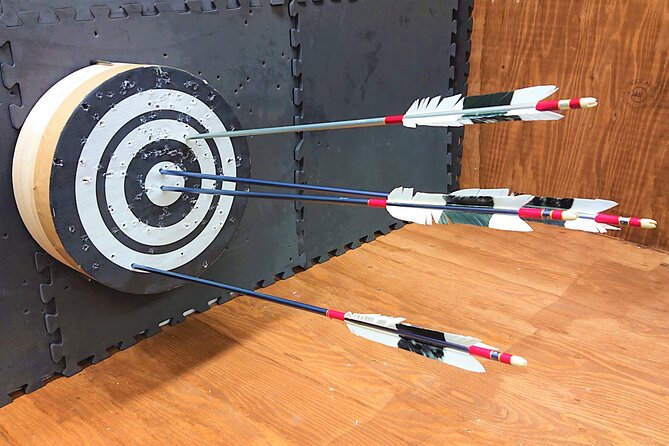
The target gives the class a clear sense of purpose. You have something to aim at, and every successful hit feels earned because the formal steps come first.
Do not assume that a missed target means you have failed at the experience. The curved bow, unfamiliar release, and careful stance make the first shots unpredictable. Some people hit several times during the hour, while others find the main reward in learning the process.
That balance is one of the reasons this activity works for mixed groups. A confident archer gets a new technical challenge, while someone with no archery background can still learn the basics and have a fair chance at the target.
The instructors are generally described as patient and encouraging, though the tone may vary. One account found the host impatient and overly worried about participants touching the costly, authentic equipment, especially with children. If you are bringing kids, explain before the lesson that the bow and arrows must be handled only when directed.
For many families, this is still a good fit. Children around 11 to 14 have taken part successfully, and the instructor may keep younger participants engaged while adults shoot. The experience is best for children who can listen closely and follow safety instructions.
From practice to friendly competition
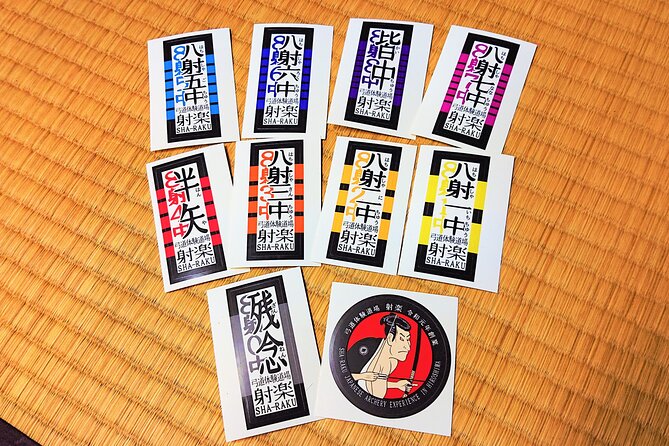
When the group has learned the basics, the session can turn into a small contest. A common format uses rounds of eight arrows, split into two sets of four. Depending on the group’s pace, you may shoot several rounds and more than 40 arrows in total, including practice.
The competition adds energy without changing the basic character of the class. You still need to follow the proper form, but now each arrow has a score attached to it. It becomes a lighthearted contest between couples, friends, or family members.
A high score may earn a special card or a place on the wall. You do not need to be an experienced archer to enjoy this part. In fact, the unpredictable flight of the arrows can keep the contest close.
The scoring also gives you a way to measure progress. Your first arrows may feel awkward, but later rounds often feel more controlled. Even if your final number is modest, you will understand more clearly why kyudo takes years to master.
What the one-hour format gives you
At about 60 minutes, this is a compact activity. You get enough time to dress, learn the background, practice, and shoot at the target, but not enough time for the lesson to become tiring for most people.
That makes it easy to fit into a day of sightseeing around Hiroshima Castle. You can schedule it as a change of pace between historical attractions, rather than giving up half a day to a large organized tour.
The short format also sets the right expectations. You are receiving an introduction, not a complete course in kyudo. You will not master the martial art in one visit, and the instructor cannot correct every part of your form in great detail.
For the price of $43.11 per person, I see reasonable value if you want active participation rather than another guided walk. The cost covers instruction, traditional clothing, equipment, and a small-group session. It is especially good value for a family or pair that wants one shared activity and personal photos.
The price is less compelling if you only want a quick picture in costume. In that case, much of the hour is devoted to learning movements and shooting, which is the point of the experience but may not match your priorities.
Communication, equipment, and the tone of the class
The instructors have enough English in some sessions for basic conversation, and a translation app can fill in the gaps. You should be prepared for instruction that is partly visual. Watch the demonstration, copy the movement, and ask for clarification when needed.
The equipment is authentic and expensive, so the class has rules about handling it. That care is appropriate, but the teaching style may feel firm. Some participants appreciate the serious approach, while others would prefer more patience when children or first-timers make mistakes.
I would treat this as a martial arts lesson rather than a casual amusement. Follow directions, wait your turn, and do not handle the bow or arrows without permission. That approach will make the hour more enjoyable for you and for the instructor.
The high overall rating of 4.9 from 387 reviews, with 98 percent recommending the activity, reflects how well the format works for most people. The less positive experiences point to two practical cautions: communication can be uneven, and the meeting directions could be clearer.
Who should book this Hiroshima activity?
I would choose this for you if you want something unusual, hands-on, and connected to Japanese culture. It suits couples, families, solo visitors, and small groups of friends. The limited capacity means a solo participant can receive close attention, while a family can share the whole lesson without being lost in a crowd.
It is also a good choice for an archer who wants to experience a very different system. Do not assume your Western archery habits will transfer directly. The formal sequence, bow design, and release all require adjustment.
You should think twice if you have an arm, hand, or shoulder problem, or if you dislike activities where rules and repetition come before free play. The class is not designed as a speed exercise, and the first part may feel slow if you only want to fire arrows immediately.
Book at least 24 hours ahead if you want the option of a full refund. Cancellation is free up to that point, but changes or cancellations made less than 24 hours before the start time are not accepted for a refund. The local cut-off time applies.
Should you book Japanese Archery Experience Hiroshima Castle Sharaku?
Yes, if you want a short activity that gives you more than a costume photograph. You learn the structure of kyudo, handle a Japanese bow, shoot at a target, and possibly compete with your own group. The small class and patient instruction make it approachable for beginners.
I would book it as a one-hour cultural break near Hiroshima Castle, especially for a family or couple looking for a shared memory. Arrive early, allow for confusing directions and difficult parking, listen carefully around the equipment, and expect a translation app to be part of the lesson.
Skip it if you need polished English instruction, have an upper-body injury, or want a simple recreational archery session. For everyone else, the combination of formal dress, focused technique, and a friendly target contest makes this one of Hiroshima’s more distinctive short activities.
FAQ
How long does the Japanese archery experience last?
The activity lasts approximately one hour. This includes changing into the kyudo uniform, receiving an explanation and demonstration, practicing, and shooting at the target.
Where does the experience begin and end?
It begins at Japanese Archery Experience Hiroshima Castle Sharaku, Hiroshima Castle Sannomaru Ruins, 21-7-2 Motomachi, Naka Ward, Hiroshima, 730-0011, Japan. It ends back at the same meeting point.
What clothing is provided?
You wear a dogi, which is the upper garment, and a hakama, which is the lower garment used in kyudo.
Can a complete beginner take part?
Yes. The activity is designed to let complete beginners shoot under instruction, even though formal kyudo training normally requires students to master basic skills first.
How many people can join the class?
The maximum group size is four participants. Some sessions include two instructors.
Is the experience available in English?
English support varies. Instructors may give basic explanations in English and use a translation app to communicate more detailed instructions.
Is the activity suitable for children?
Most people can participate, and children have taken part successfully. Children must be able to follow instructions and handle the equipment only when directed.
Is the activity suitable for someone with an arm or shoulder injury?
No. The experience is not recommended for people with arm, hand, or shoulder injuries or disabilities.
Can I cancel for a full refund?
Yes, if you cancel at least 24 hours before the experience start time. Cancellations or changes made less than 24 hours before the start time are not accepted for a refund.
More castle tours elsewhere in Japan
- Osaka Castle: Museum and Tower Entry Ticket
★ 4.5 · 2,380 reviews - Tokyo Castle & Imperial PalaceーShogun Walking Tour
★ 4.7 · 1,068 reviews - Kyoto: Nijo-jo Castle and Ninomaru Palace Guided Tour
★ 4.7 · 1,020 reviews - Ultimate Osaka Walking Tour: Castle, Dotonbori & Hidden Gems
★ 5.0 · 862 reviews
Just added in Hiroshima
- Day Trip to Hiroshima & Miyajima with Itsukushima Shrine★ 4.6 · 124 reviews
- Hiroshima 3hr Peace Cycling Tour with Local Guide★ 5.0 · 131 reviews
- Hiroshima: Best of Hiroshima Guided Bike Tour★ 4.9 · 89 reviews
- Hiroshima & Miyajima 6.5h Guided Tour – Dome, Park & Shrine★ 4.9 · 83 reviews
- Hiroshima: Food and Culture Guided Walking Tour with Dinner★ 4.9 · 212 reviews
- Hiroshima Local guided Hiking Tour&Open-air Tea Ceremony★ 5.0 · 213 reviews
- Hiroshima & Miyajima: Full-Day Private Tour & Licensed Guide★ 4.8 · 252 reviews
- Hiroshima: History of Hiroshima Group Walking Tour★ 4.8 · 266 reviews
Hiroshima & Miyajima Day Trips, compared.
Peaceful Hiroshima & Miyajima UNESCO 1 Day Bus Tour
Read our review →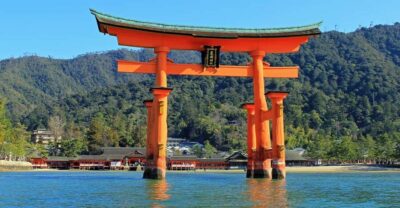
Hiroshima and Miyajima UNESCO Sites 1-Day Tour
Read our review →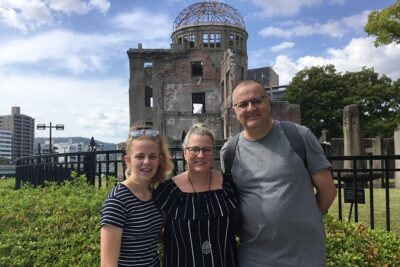
Hiroshima / Miyajima Full-day Private Tour with Government Licensed Guide
Read our review →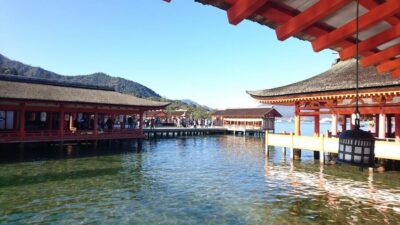
Osaka/Kyoto: Hiroshima Miyajima Bus Tour & Shinkansen Ticket
Read our review →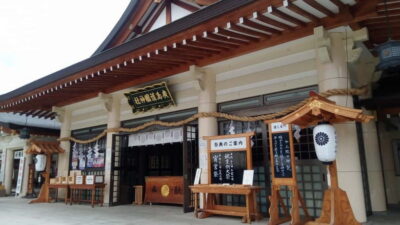
Hiroshima Historical Walking Tour – Why A-Bomb was Dropped
Read our review →
Hiroshima Peace (Heiwa) Walking Tour at World Heritage Sites
Read our review →
Hiroshima in a Nutshell: Morning Bike Adventure
Read our review →
Hiroshima City 4hr Private Walking Tour with Licensed Guide
Read our review →Browse the lists this tour appears in