
Reviewed · GOVERNMENT-LICENSED GUIDE TOURS
Kanazawa 6hr Private Tour with Government Licensed Guide
Kanazawa is a city best understood through its details: a carefully pruned pine in Kenrokuen, a samurai home tucked behind a mud wall, or the quiet story behind a geisha district. This six-hour private walking tour gives you one guide’s full attention, so you can shape the day around gardens, food, architecture, temples, or Japanese history instead of following a fixed route.
I like the freedom to choose just three or four major sights, and I like the local guidance that can add small restaurants, bus tips, craft shops, and less-visited corners. Guides such as Yoshi, Yumiko, Keiko, and Sho have helped visitors focus on everything from local handicrafts to fish-market lunches. The main consideration is cost: at about $155.22 per person, entrance fees, transport, lunch, and a private vehicle are extra.
Key points to know before booking
- Three or four sights in six hours: You choose from major stops rather than trying to rush through all eleven.
- A true private tour: Only your group participates, with a licensed local English-speaking guide.
- Walking is the default: Pickup means meeting on foot within the designated Kanazawa area.
- Strong cultural range: Pair Kenrokuen with a samurai district, market, teahouse area, or museum.
- Guides tailor the day: Past guide matches have included Yoshi, Yumiko, Keiko, Tomoko, Asa, Hiroko, and Sho.
- Budget for extras: Admission, buses, lunch, and personal purchases are not included.
Why a private guide helps in Kanazawa
Kanazawa has a compact center, but its sights do not all tell the same story. Kenrokuen explains the taste and power of the Maeda lords. Nagamachi shows where samurai families lived. Higashi Chaya introduces the world of geisha entertainment. Omicho Market brings you back to everyday food and commerce.
You can walk between some areas, but it is not always obvious how to link them well in six hours. A private guide helps you choose a sensible mix and adjust the pace. If you linger over a garden, ask many questions, or want time for photographs, you are not held to a large group schedule.
This is especially useful on a first visit. Guides can explain customs, point out architectural details, and help with public buses when walking no longer makes sense. Yoshi was praised for making bus travel part of the local experience, while Hiroko helped with a future bus ticket. Those practical moments can save time and reduce the mild confusion that often comes with Japanese transport.
The experience is also a good fit for groups with different interests. Yumiko worked with a party whose members wanted different things, offering suggestions and waiting patiently while they explored. That is one of the clearest benefits of paying for a private guide: the day can bend around your group rather than the other way around.
Other tours with a licensed guide in Kanazawa:
- Kanazawa 4hr Private Tour with Government Licensed Guide
★ 5.0 · 89 reviews - Tokyo 6hr Private Tour with Government-Licensed Guide
★ 5.0 · 3,902 reviews - Tokyo 4hr Private Tour with Government-Licensed Guide
★ 5.0 · 1,394 reviews
Kenrokuen Garden: the essential opening stop
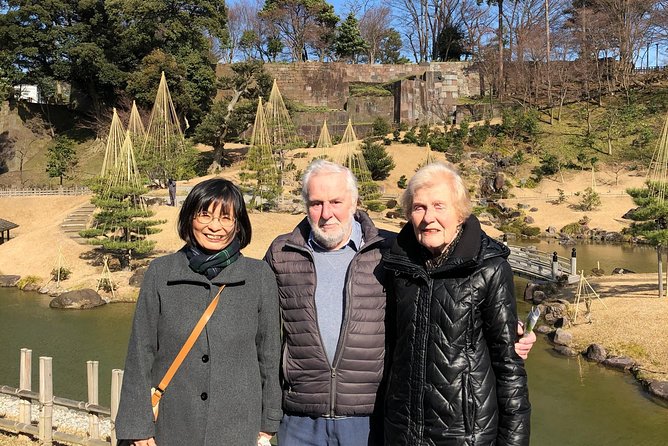
Kenrokuen is usually the strongest first choice. It is one of Japan’s three most celebrated garden settings, alongside Kairakuen in Mito and Korakuen in Okayama. Its broad grounds, ponds, bridges, trees, and carefully arranged views give you an immediate sense of Kanazawa’s old wealth and refined taste.
Plan on about an hour here. That sounds generous, but the garden rewards a slow pace. A guide can explain why certain views matter and help you notice the work behind the beauty, rather than treating the garden as a quick photo stop.
The admission fee is extra. If you already know you want Kenrokuen, confirm how the guide’s own entry is handled, since the tour notes say guide entry is covered for sights included in the expected sightseeing list, while your own admission remains separate.
Kenrokuen also sits close to the 21st Century Museum of Contemporary Art and Seisonkaku Villa. That makes this part of the city useful for a history-and-art combination, though fitting all three into six hours would leave little room elsewhere.
Kanazawa Castle and Oyama Shrine
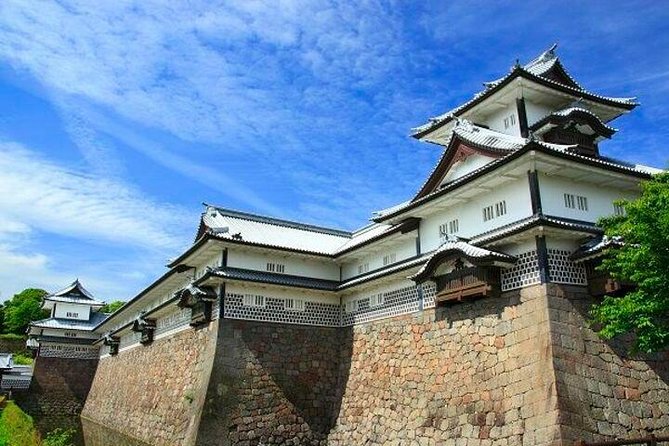
Kanazawa Castle was the seat of the Maeda Clan from 1583 until the end of the Edo Period. The Maeda domain ranked just below the Tokugawa possessions in power, and the castle helps explain why Kanazawa developed such a strong cultural identity.
A guide adds value here because the site is more than walls and gates. The political importance of the Maeda family connects the castle to Kenrokuen, Seisonkaku Villa, the samurai quarter, and the city’s traditional arts. If you want Japanese history placed in a clear local setting, this is one of the best combinations.
Nearby Oyama Shrine honors Maeda Toshiie, the first lord of the local clan. Its construction began in 1599 under his successor, Maeda Toshinaga. The shrine offers a different mood from the castle, with religious purpose replacing military power.
Both stops involve admission considerations, and the tour price does not include your entrance fees. Ask your guide to help decide if they fit your interests before committing time to them.
Nagamachi: samurai homes and a quieter Kanazawa
Nagamachi was the samurai district at the foot of Kanazawa Castle. Its preserved streets and remaining residences give you a better sense of family life than a grand castle alone can provide.
This is a strong choice if you want atmosphere without spending the whole day inside museums. The area is free to walk through, although individual homes or related sites may involve separate charges. The old district works well with Kanazawa Castle, since the connection between ruling family and samurai household becomes easy to follow.
The guide’s explanations matter here. Without context, the walls and narrow lanes can seem like attractive scenery. With a good guide, you can place them within the social order of the Edo Period and understand why this area was built as it was.
If your group enjoys architecture, photography, or stories of daily life, choose Nagamachi over a second formal museum. It gives the day a more human scale.
Same base, a different sort of day:
- World Heritage Shirakawa-go and Experience Tours from Kanazawa
★ 5.0 · 4,049 reviews - Kanazawa: Kenrokuen Tea Ceremony Experience
★ 4.8 · 1,139 reviews - Kanazawa Half Day Tour (Private Guide)
★ 5.0 · 361 reviews - Kanazawa Full Day Tour (Private Guide)
★ 5.0 · 323 reviews
Higashi Chaya and Nishi Chaya
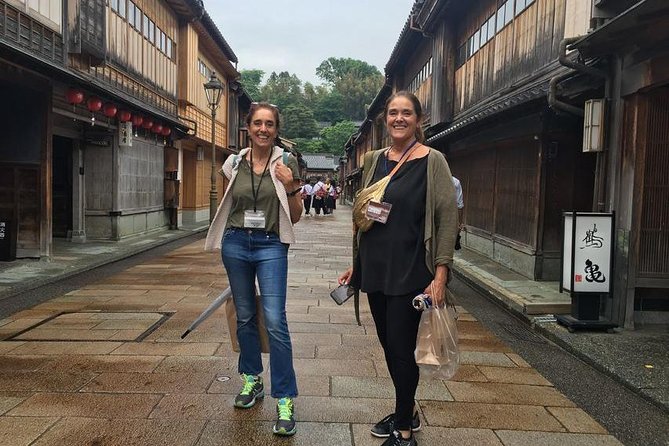
Kanazawa has three preserved chaya districts, with Higashi Chaya being the best-known option in this tour. A chaya was an exclusive entertainment house where geisha performed music and dance for invited patrons. It was not simply a teahouse in the casual modern sense.
Higashi Chaya is a smart choice if you want traditional streets, local culture, and an explanation of geisha life. The district is free to enter, but individual buildings and museums may charge admission. Your guide can help you decide how much time to spend browsing and how much to devote to the cultural background.
One particularly useful detail from the guide experiences is the focus on geisha culture. Yumiko helped explain this world and included a geisha performance in one day. The exact schedule and availability of any performance are not guaranteed, so treat that as a possible addition rather than a promised feature.
Nishi Chaya offers another view of Kanazawa’s chaya tradition. The Kanazawa City Nishi Chaya Museum is listed as a possible stop, and it may suit you if you prefer a smaller cultural site or want to compare two entertainment districts.
Omicho Market and the best case for a lunch stop
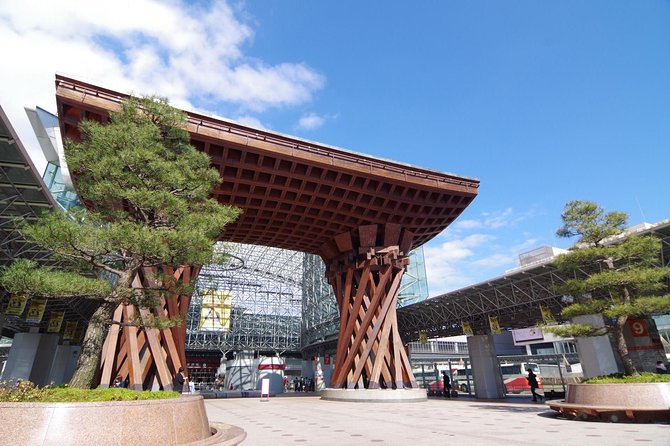
Omicho Market has served as Kanazawa’s main fresh-food market since the Edo Period. Its covered streets contain about 200 shops and stalls, making it a natural place to see the city’s food culture in action.
This is one of the easiest stops to combine with a meal, but lunch is not included. Several guide experiences made good use of the market, including an introduction to a Japanese lunch and local dishes. One guide also shared Kanazawa-style oden, a practical way to turn sightseeing into a meal rather than stopping at a generic restaurant.
The market suits you if food is part of your reason for visiting Kanazawa. It also provides a welcome change after several formal sites. Ask your guide about timing, since a long meal can reduce the number of other places you see.
You pay for anything you eat or buy. That is not a flaw, but you should treat the advertised tour price as the cost of guiding, not an all-inclusive day out.
The D. T. Suzuki Museum for quiet reflection
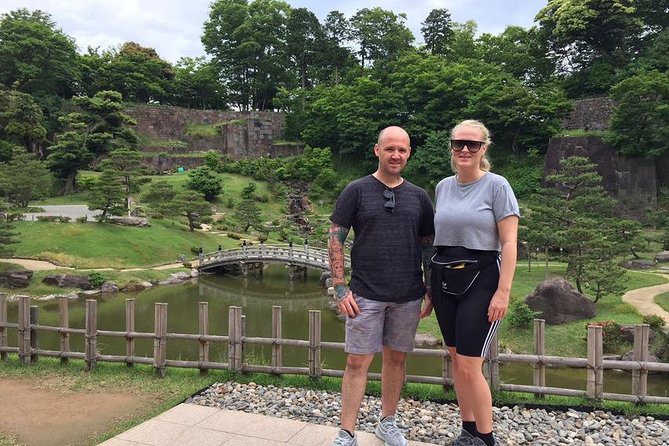
The D. T. Suzuki Museum honors Suzuki Daisetz Teitaro, a Buddhist philosopher who lived from 1870 to 1966. It is a small museum focused on his life and work.
This stop is best for you if you enjoy philosophy, Buddhism, architecture, or calm spaces. It is not the obvious choice for every group, and a family mainly interested in markets and samurai homes may prefer another site.
The museum can add balance to a busy day. After gardens, streets, and markets, a quieter hour gives you time to think rather than collect more sights. Admission is not included, and the museum is one of the places to confirm with your guide when you settle on your three or four stops.
The 21st Century Museum and Seisonkaku Villa
The 21st Century Museum of Contemporary Art opened in 2004 and sits only a short distance from Kenrokuen. It gives you a modern counterpoint to Kanazawa’s older districts, with contemporary works by acclaimed artists.
Choose it if you like modern art or want variety. Skip it if your priority is traditional Japan and your six hours are already tight. Admission is extra, and museum time can easily expand if you stop for several exhibits.
Seisonkaku Villa offers the opposite experience. A Maeda lord built it in the final years of the Edo Period for his mother, and it is one of Japan’s most elegant surviving samurai villas. It is a strong pick for architecture, interiors, family history, and refined domestic design.
Kenrokuen, Seisonkaku, and the 21st Century Museum are geographically convenient, but they represent three different ways to read Kanazawa: garden design, elite private life, and modern art.
How the six hours really work
The tour is not designed for all eleven listed places. The included plan is a customized visit to three or four sites from the possible selection. That is good news. Trying to see every garden, museum, district, shrine, market, castle, and temple in one day would turn the experience into a checklist.
A practical first choice might be:
- Kenrokuen Garden
- Kanazawa Castle
- Higashi Chaya District
- Omicho Market
This gives you a garden, political history, traditional entertainment culture, and food. Another strong plan for architecture and older Japan would be Kenrokuen, Nagamachi, Seisonkaku Villa, and Myoryuji Temple.
Myoryuji, known as Ninja Temple, was built by the Maeda lords. Despite its nickname, it is not connected to ninja. Its unusual design and defensive features are the reason people visit. Choose it if you like puzzles, hidden features, and temple architecture, but check the practical arrangements with the guide before making it a centerpiece.
The pace is flexible, but six hours still passes quickly. Walking, photographs, admissions, bus rides, and lunch all use the clock. Tell your guide your top priority at the beginning. If you want a long market meal, accept that another museum may need to go.
Walking, meeting points, and extra costs
This is a walking tour, and pickup is on foot within a designated area of Kanazawa. There is no private vehicle included. Transportation fees, admission fees, lunch, and personal purchases are also separate.
That setup keeps the experience personal and avoids paying for a vehicle you may not need. It also means you should wear comfortable shoes and be ready for a full day on foot. Public transport may be used when useful, but you pay the fares.
The advertised price is $155.22 per person. For one or two people, that is a significant outlay. The value improves for a larger private group, especially when you care about a custom route or need help balancing different interests. Group discounts are offered, though the group cannot be combined with another tour party.
The guide’s own entry fees are covered for sights listed under the expected stops, but your admissions are not included. Confirm the details for your chosen sites before the day begins.
The guide can make or break the day
The strongest part of this experience is the human connection. Asa handled a cruise-terminal meeting issue and then helped the day run smoothly. Yoshi focused on Japanese history, culture, local buses, food, and the details that bring buildings to life. Sho contacted his group before arrival to ask about architecture, handicrafts, and local dishes.
Keiko was praised for patient explanations and for keeping a family comfortable in intense heat. Yumiko’s conversational English and steady pace suited a relaxed six-hour walk. Tomoko was described as warm, cheerful, and deeply fond of her home city. Hiroko helped with practical transport questions as well as site explanations.
These guides are not all the same person, so you cannot book a specific guiding style unless the provider confirms it. Still, the range of interests covered is encouraging. Send your priorities in advance if possible, especially if you care about crafts, food, architecture, Buddhist thought, or geisha culture.
Who should book this Kanazawa tour?
Book it if you want a flexible first look at Kanazawa, prefer private guiding, or have a short stay and need help choosing. It is also a good fit for families and mixed-interest groups because the route can be adjusted.
You should also consider it if you want more than photographs. The best parts are the explanations of Maeda power, samurai life, geisha culture, local food, and Japanese customs. A guide can show you how separate places fit into one city story.
Think twice if you prefer to wander alone, dislike walking, or want transport and admissions bundled into one price. You may get better value from independent sightseeing if you already know exactly what you want to see.
For most first-time visitors who want a personal introduction, I would book it. Choose three or four sites in advance, leave room for your guide’s local suggestions, and make clear which matters more to you: gardens, history, food, art, or traditional neighborhoods.
FAQ
How long does the Kanazawa private tour last?
The tour lasts approximately six hours.
How many places can I visit?
The customized tour includes three or four sites chosen from the available sightseeing options.
Is the tour private?
Yes. Only your group participates, and you receive the attention of a licensed local English-speaking guide.
Is hotel pickup included?
The tour meets you on foot within a designated area of Kanazawa. A private vehicle is not included.
Are entrance fees included?
Your entrance fees are not included. The tour information says guide entry fees are covered for sights listed under the expected sightseeing options.
Is lunch included?
No. Lunch and personal expenses are separate. Your guide can help you find local food, including options around Omicho Market.
Can I cancel for a full refund?
Yes, if you cancel at least 24 hours before the experience start time. Cancellations or changes made less than 24 hours before the start time are not accepted for a refund.
Just added in Kanazawa
- Kanazawa: Sushi & Japanese Cooking Class at a Historic School★ 5.0 · 66 reviews
- Taste of Kanazawa (Food tasting in Omicho Market & Higashi Chaya)★ 5.0 · 58 reviews
- Takayama and Shirakawago/Photoshoot by professional photographer★ 5.0 · 67 reviews
- Kanazawa private 1 day/Photoshoot by professional photographer★ 5.0 · 33 reviews
- Photoshoot session by professional photographer in Kanazawa★ 5.0 · 42 reviews
- Private Tour of Shirakawago and Gokayama from Kanazawa★ 5.0 · 50 reviews
- Shirakawago & Kanazawa from Kanazawa★ 5.0 · 51 reviews
- Private Ring Craft Experience in Kanazawa★ 5.0 · 22 reviews
Government-Licensed Guide Tours, compared.
Tokyo 6hr Private Tour with Government-Licensed Guide
Read our review →
Hiroshima / Miyajima Full-day Private Tour with Government Licensed Guide
Read our review →
Kyoto 4hr Private Tour with Government-Licensed Guide
Read our review →
Hiroshima City 4hr Private Walking Tour with Licensed Guide
Read our review →
Private Kyoto Tour with Licensed Guide & Vehicle (Max 15 persons)
Read our review →
Nikko Full-Day Private Tour with Government-Licensed Guide
Read our review →
Himeji Half-Day Private Tour with Government-Licensed Guide
Read our review →Browse the lists this tour appears in