
Reviewed · HIROSHIMA & MIYAJIMA DAY TRIPS
Hiroshima: Traditional Japanese Archery Experience
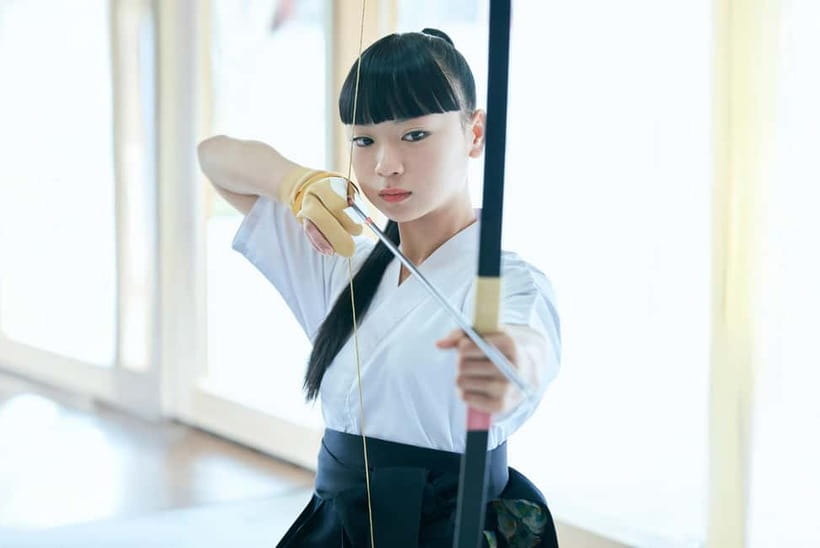
Kyudo is not simply Japanese archery with a different bow. It is a formal practice where every movement has a purpose, from handling the equipment to standing before the target. In Hiroshima, you can try it only a 15-minute walk from the Atomic Bomb Dome, without needing previous archery experience.
I especially like the chance to dress in a real dogi and hakama, then shoot a generous number of arrows under close instruction. I also like the tiny group size, which can mean nearly one-to-one help. The main caution is time: one hour passes quickly, and kyudo’s many exact steps may feel strict if you want a casual, free-form archery session.
Key points before you book
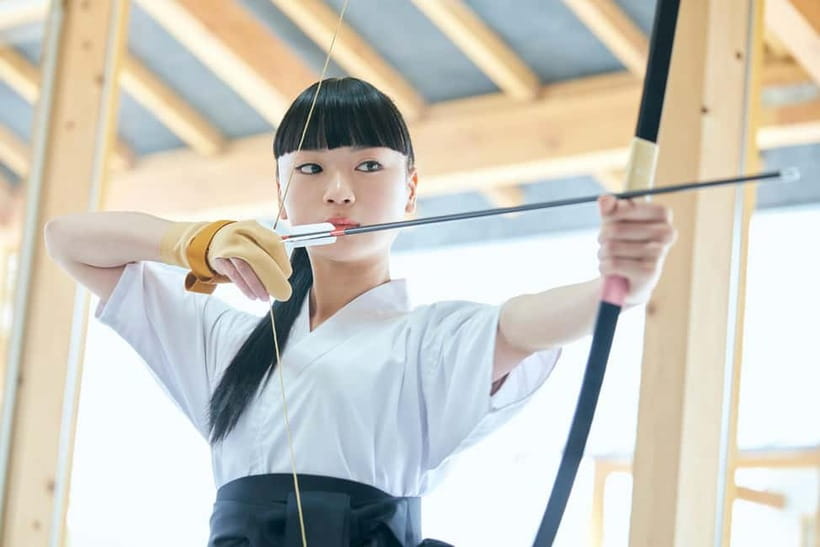
- Traditional dress is part of the lesson: You change into dogi upper-wear and hakama lower-wear before handling the bow.
- Beginners can shoot right away: The session lets you practice and fire arrows even though formal kyudo training normally takes longer before target shooting.
- Small groups mean close guidance: The maximum is four people, and some sessions have had two instructors helping a very small group.
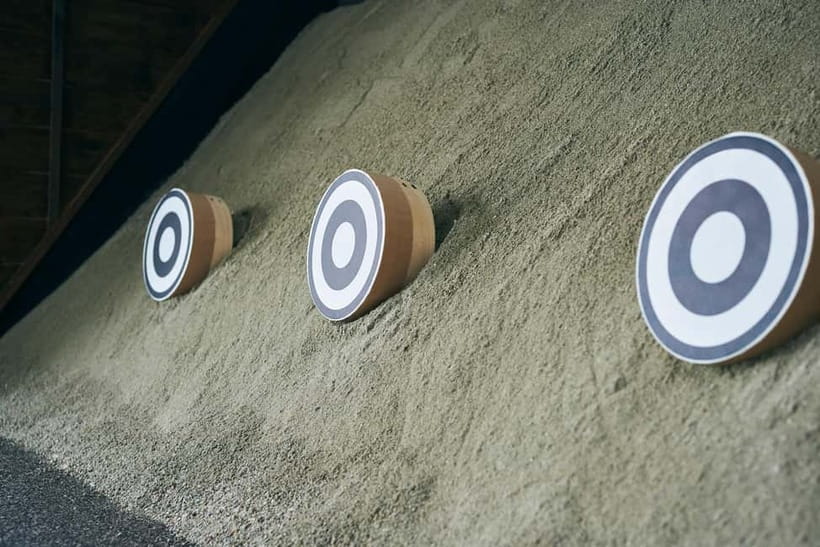
- The target is close, but hitting it is not easy: The mini-sized range makes the activity practical, not effortless.
- Translation apps may help: English support is provided, but some instructors communicate partly through a phone translation app.
- Wear trousers: Pants are a better choice than skirts or shorts, especially while wearing the hakama and armor.
What makes this Hiroshima kyudo session different
The appeal here is not a string of quick shots at a target. Kyudo asks you to slow down and follow a set sequence. You learn how to hold the bow, place the arrow, draw, aim, and release in the correct order.
That formality is the point. In western-style archery, you may focus mainly on stance, draw weight, and accuracy. In kyudo, the ritual matters just as much. The bow and arrows receive respect, and your conduct toward the range and the other people in the room is part of the practice.
You should expect a lesson with repeated instructions and exact movements. One participant described the activity as intense because of its many rules, while others found that the steps became routine after a little practice. Both reactions make sense. If you enjoy learning a skill carefully, the structure gives the hour real purpose. If you want to pick up a bow and fire immediately, the opening may feel slow.
The session takes place at Hiroshima Castle SHARAKU, identified at the meeting point as a shop in the Hiroshima Castle Sannomaru shopping mall. It is close enough to combine with central Hiroshima sightseeing, particularly a visit to the Atomic Bomb Dome. Allow time to find the shop rather than arriving at the last second.
Other long days west of Hiroshima:
- Peaceful Hiroshima & Miyajima UNESCO 1 Day Bus Tour
★ 5.0 · 5,309 reviews - Hiroshima: Hiroshima and Miyajima UNESCO Sites 1-Day Tour
★ 4.9 · 2,330 reviews - Hiroshima / Miyajima Full-day Private Tour with Government Licensed Guide
★ 5.0 · 1,298 reviews
Changing into dogi and hakama
The activity begins with a change into traditional clothing. You wear the dogi, the upper garment used in Japanese martial arts, along with a hakama, the pleated lower garment. Armor is also part of the presentation and practice.
This is more than a costume photo stop. The clothing changes how you move. The hakama can make your footwork feel less natural at first, and the traditional equipment gives you an immediate sense that this is not a standard tourist archery lane.
Wear trousers under your clothing and avoid skirts or shorts. The activity is not recommended for people with limited mobility, and changing clothes plus moving through the practice may be awkward if you have difficulty standing, bending, or walking.
The closing part of the hour includes time for changing back and taking photos. That leaves about 45 minutes for instruction, practice, and target shooting. You receive enough time to learn the basics and shoot several rounds, but not enough for a long historical lecture or advanced coaching.
Learning the sequence before you shoot
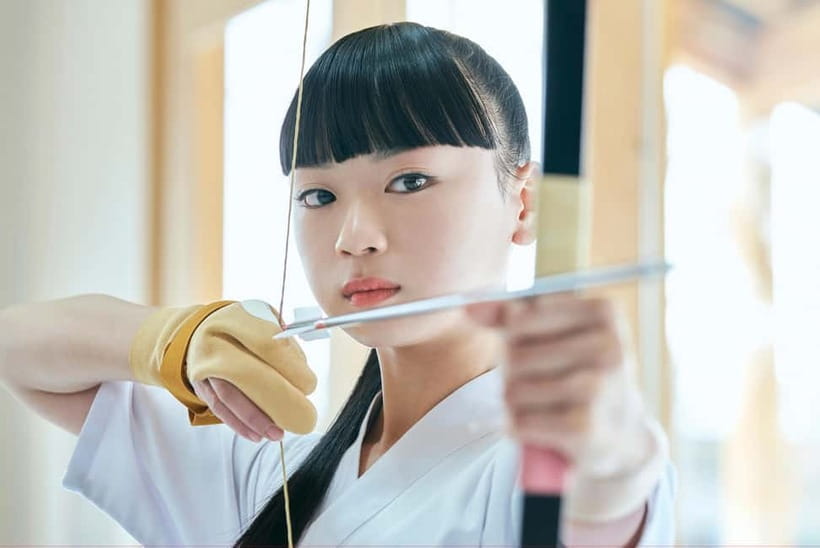
The instructor first explains kyudo and demonstrates the required movements. You learn how to load the arrow, position your body, draw the bow, and release it safely.
Expect repeated correction. The aim is not simply to get an arrow downrange. The instructor wants you to understand the order and feel of the process. That patient approach has been one of the strongest features of this activity. Instructors have been described as friendly, calm, and willing to repeat instructions for adults, children, and first-time archers.
English is listed as the teaching language, though communication can vary by instructor. Translation apps may be used to support the lesson. Several sessions have worked well with a phone translation tool, allowing the instructor to explain details and answer questions even when spoken English was limited.
You may receive some background on Japanese archery, samurai, and the different types of bows. The amount of history can vary. If your main interest is battlefield archery or the development of kyudo, this short session may leave you wanting more. It is primarily a hands-on lesson, with history added around the technique.
One instructor named in participant accounts is Kenji-san, who has led lessons that included explanations of samurai and friendly shooting contests. You should not assume he will lead every time, but the staff generally provide close, patient instruction.
Why the first arrow feels harder than expected
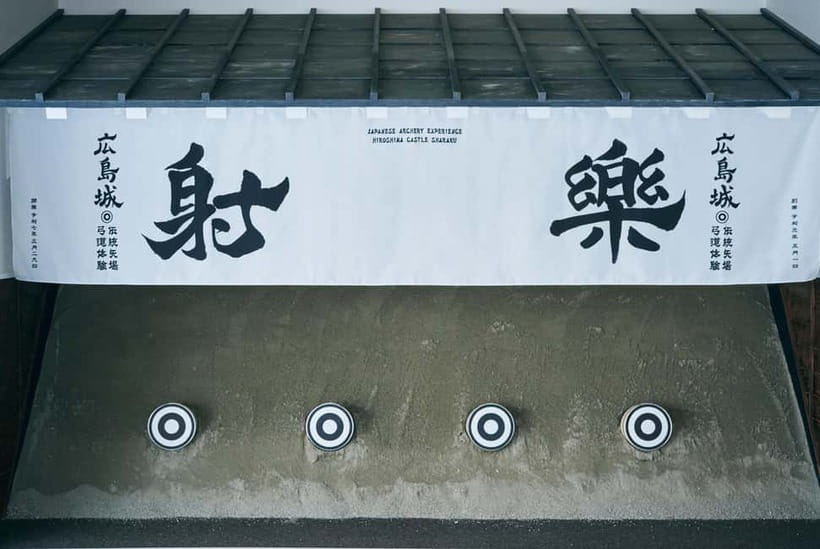
The target is mini-sized and closer than the distance used in professional kyudo. That sounds easy, but the mechanics make accuracy surprisingly demanding.
You have to coordinate several things at once: your stance, grip, draw, posture, release, and attention. Traditional clothing and armor can add another layer of distraction. Beginners may miss repeatedly at first, then suddenly find that one small adjustment sends an arrow toward the target.
That first hit matters because it gives you a clear sense of progress. Some people reached the target within about 30 minutes, while others found the sport difficult even at the shorter range. You will not be judged by how many arrows you land. The fun comes from seeing your form improve from one attempt to the next.
The activity also includes a small competition in some sessions. This can be a simple contest between family members or the people in your group. It adds energy near the end without turning the whole experience into a noisy tournament.
If you are visiting with children or teenagers, the contest can help keep everyone focused. Adults who dislike competitive activities can treat it as optional fun. The instructors remain involved, so the competition does not replace the teaching.
Other martial arts sessions in Hiroshima:
- Japanesel Archery Experience HIROSHIMA CASTLE SHARAKU
★ 5.0 · 387 reviews - Kyoto: Kendo and Samurai Experience with Uniform and Gear
★ 4.9 · 815 reviews - Tokyo: Samurai Sword & Archery Class from Samurai Descendant
★ 5.0 · 603 reviews - Samurai Training Experience KENDO in Osaka
★ 5.0 · 515 reviews
A close look at the one-hour schedule
The stated duration is one hour. About 15 minutes cover changing, closing, and photos, leaving roughly 45 minutes for practice and target shooting.
The first portion is used for dressing and orientation. You get familiar with the equipment and hear the basic explanation of kyudo. Because the process has rules, this stage may feel longer than expected, especially if you already practice western archery.
Next comes the demonstration and guided practice. The instructor breaks the movement into parts and helps you repeat them. This is where the small group format earns its keep. With up to four participants, there is less chance of being left on your own. Some sessions have had two instructors working with only one or a few participants, creating something close to a private lesson.
The final portion is target shooting. You work through multiple arrows and adjust your technique. Depending on the group, you may finish with a small contest and then take photographs before changing.
I would book this for the quality of the instruction, not the length. One hour is enough for a satisfying introduction, but several people wished the session lasted an entire afternoon. If you want formal kyudo training, this is only a first taste. If you want an authentic beginner activity that fits between Hiroshima sights, the compact schedule is useful.
How authentic is the experience?
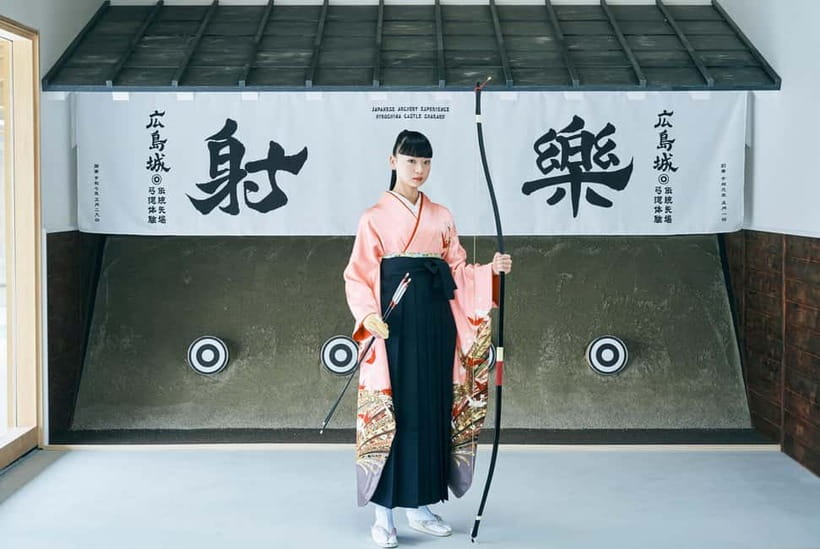
The strongest authentic element is the attention to form. You are not handed a bow and told to aim at a foam target. You dress in traditional clothing, follow a set routine, and learn that kyudo values mental and physical focus.
The activity also explains an important difference between kyudo and western archery. In kyudo, the ritual respects the equipment and the other person using the range. That does not mean the lesson is solemn from start to finish. The instructors are often friendly and playful, and a small contest can make the final minutes lively.
The target area is smaller than a full professional kyudo ground, so you should not mistake this introduction for a complete sporting match. The shorter distance makes it possible for a beginner to shoot safely and have a fair chance of hitting something within 45 minutes.
There is also a local cultural detail attached to the target. Hitting it is believed to bring good luck and help wishes come true. It is a pleasant bit of symbolism, particularly in a city where many visitors are already thinking about peace, hope, and good fortune.
Price, group size, and practical value
At $41 per person, this is a reasonable price for a one-hour activity that includes traditional equipment, clothing, instruction, and target shooting. You are not paying only for a few minutes with a bow. The fee covers the preparation, the staff’s close attention, and the chance to try a Japanese martial art that is not commonly available in a standard sightseeing program.
The value is best for someone who wants participation rather than observation. A museum can explain samurai weapons more fully, but it cannot give you the physical experience of drawing a Japanese bow in traditional dress.
The maximum group size is four. That is a major advantage for families and small parties, since the instructor can watch each person’s form. Solo bookers may also find themselves in a very small group, depending on availability. That can turn the session into a near-private lesson.
Food, drinks, and hotel transport are not included. You arrange your own way to Hiroshima Castle SHARAKU and meet at the shop in the Hiroshima Castle Sannomaru area. The central location makes it easy to fit into a day around the castle, Atomic Bomb Dome, and nearby Hiroshima sights.
You can cancel up to 24 hours before the activity for a full refund, and the reserve-now, pay-later option gives you some flexibility. Check the available starting times when planning, since the session lasts only one hour but your wider Hiroshima day may be tightly arranged.
Who will enjoy it most
I would recommend this to first-time archers, families with older children, couples, and anyone curious about Japanese martial arts. You do not need to know how to shoot, and the lesson is designed to let complete beginners try the real sport.
It also suits people who enjoy quiet concentration. The practice can feel almost meditative once you stop worrying about hitting the target and focus on the sequence. One participant even described it as a meditation experience and wanted to continue the practice afterward.
History fans should book it with the right expectation. You may hear about samurai and Japanese archery, and some instructors add useful background. The main focus remains technique, not a full lecture on battlefield history.
People with limited mobility should choose another activity. The clothing, movement, and range work make this unsuitable for those who cannot move comfortably through the session. If you have concerns about your arms or wrists, note that the bowstring can rarely strike the arm or wrist and cause swelling.
Small details that make the session work
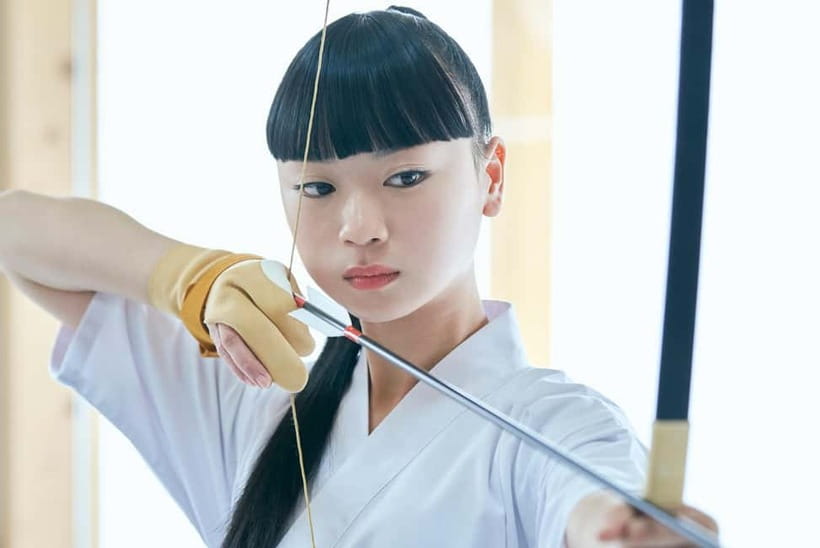
The staff’s patience is a repeated strength. Beginners often feel awkward when every movement is corrected, but calm instruction keeps the mood friendly rather than intimidating.
You also get plenty of chances to shoot. The session is not just a demonstration followed by one ceremonial arrow. After the explanation, you practice and repeat the full process. That repetition is what helps the steps begin to feel natural.
The clothing adds fun, but it also teaches you something. A hakama and armor change your sense of balance and movement, so you learn why body position matters. The equipment is part of the lesson rather than a background prop.
Translation technology is another practical feature. It may slow the rhythm slightly, and it cannot always convey every nuance of a Japanese martial art. Still, it lets the instructor communicate detailed corrections when spoken English is limited.
Finally, the group size keeps the experience personal. A family can encourage one another, a solo participant may receive focused help, and a small group can enjoy a harmless contest without the pressure of a large class.
Should you book the Hiroshima kyudo experience?
Book it if you want a hands-on cultural activity close to central Hiroshima, especially if you have never tried archery. The traditional clothing, formal movements, patient coaching, and repeated target shooting make this feel like more than a quick photo opportunity.
Skip it if you want a long historical presentation, professional-distance shooting, or a relaxed activity with very little instruction. Kyudo requires attention, and the rules are part of the experience.
For most visitors, $41 is fair value for a small-group lesson with authentic tools and a good chance to shoot several arrows. Wear trousers, allow a few minutes to find the Hiroshima Castle SHARAKU meeting point, and arrive ready to follow the process. Your first arrow may miss. That is normal. The satisfying part is learning why, then trying again.
FAQ
How long does the kyudo experience last?
The activity lasts one hour. About 45 minutes are used for practice and target shooting, while 15 minutes cover changing, closing, and taking photos.
How much does the experience cost?
The listed price is $41 per person.
Do I need previous archery experience?
No. The activity is suitable for complete beginners, and instruction and demonstrations are provided throughout the session.
Where is the meeting point?
The meeting point is Hiroshima Castle Sannomaru. It is a shop in a shopping mall called HIROSHIMA CASTLE SHARAKU.
How far is it from the Atomic Bomb Dome?
The activity location is about a 15-minute walk from the Atomic Bomb Dome.
Is the session taught in English?
English is listed as the activity language. Translation apps may also be used to help with communication.
What should I wear?
Pants are recommended instead of skirts or shorts. You will change into traditional dogi and hakama clothing for the activity.
Is the experience wheelchair accessible?
The activity is listed as wheelchair accessible, but it is also not recommended for people with limited mobility. Consider your ability to change clothes and move through the practice before booking.
Just added in Hiroshima
- Hiroshima 3hr Peace Cycling Tour with Local Guide★ 5.0 · 131 reviews
- Day Trip to Hiroshima & Miyajima with Itsukushima Shrine★ 4.6 · 124 reviews
- Hiroshima: Best of Hiroshima Guided Bike Tour★ 4.9 · 89 reviews
- Hiroshima & Miyajima 6.5h Guided Tour – Dome, Park & Shrine★ 4.9 · 83 reviews
- Hiroshima: Food and Culture Guided Walking Tour with Dinner★ 4.9 · 212 reviews
- Hiroshima Local guided Hiking Tour&Open-air Tea Ceremony★ 5.0 · 213 reviews
- Hiroshima & Miyajima: Full-Day Private Tour & Licensed Guide★ 4.8 · 252 reviews
- Miyajima: Cultural Experience in Zen Temple★ 5.0 · 258 reviews
Hiroshima & Miyajima Day Trips, compared.
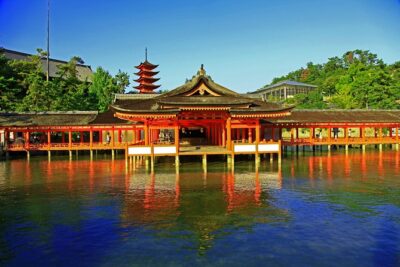
Peaceful Hiroshima & Miyajima UNESCO 1 Day Bus Tour
Read our review →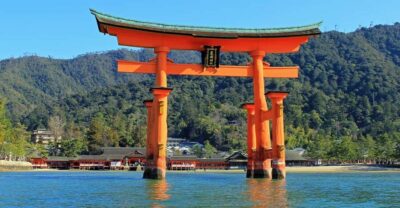
Hiroshima and Miyajima UNESCO Sites 1-Day Tour
Read our review →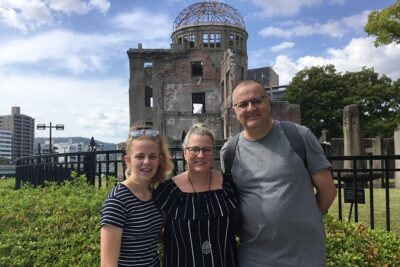
Hiroshima / Miyajima Full-day Private Tour with Government Licensed Guide
Read our review →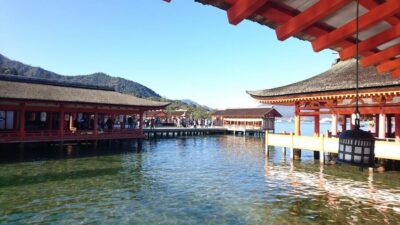
Osaka/Kyoto: Hiroshima Miyajima Bus Tour & Shinkansen Ticket
Read our review →
Hiroshima Historical Walking Tour – Why A-Bomb was Dropped
Read our review →
Hiroshima Peace (Heiwa) Walking Tour at World Heritage Sites
Read our review →
Hiroshima in a Nutshell: Morning Bike Adventure
Read our review →
Hiroshima City 4hr Private Walking Tour with Licensed Guide
Read our review →Browse the lists this tour appears in