

Reviewed · TOURS IN TOKYO
Kintsugi Experience: Art of Golden Joinery in Tokyo
Kintsugi turns a damaged plate into a keepsake by highlighting its cracks with gold. In this Tokyo workshop, you do not simply watch a craft demonstration. You repair your own ceramic piece, learn why Japanese artisans value the history of an object, and leave with something made by your own hands.
I like the hands-on format and the thoughtful cultural lesson. I also like the small class setting, patient guidance, traditional samue workwear, and the fact that the plate is packaged so you can carry it home. The main drawback is the strict booking policy: this experience is non-refundable and cannot be changed, even if you select the wrong date.
Key points at a glance
- Repair your own plate: The studio supplies one ceramic plate for each participant, and you take it home after the lesson.
- Meet Master Taku at 11:00am: The owner and master artisan may lead this class, with staff helping participants through each stage.
- Small, personal class: The lesson is described as capped at 10 people, though the general activity information lists a maximum of 20.
- Learn the idea behind kintsugi: The class connects the technique with Japanese views of imperfection, repair, and the history of objects.
- One hour in Minami-Aoyama: The workshop fits neatly into a Tokyo day around Omotesando and nearby sights.
- Book carefully: Cancellation and date changes are not allowed, so check the time and meeting point before paying.
Why kintsugi makes a good Tokyo souvenir
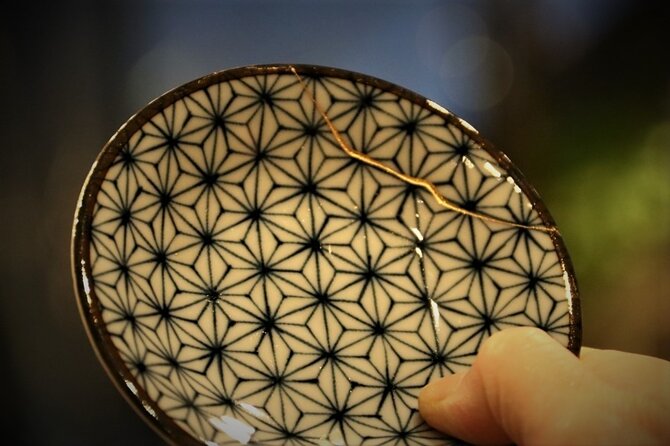
Many Tokyo souvenirs sit on a shelf and collect dust. A kintsugi plate gives you a story to carry home. The object begins with a break, then gains visible lines made with lacquer mixed with gold. Instead of hiding damage, the process treats the repair as part of the plate’s identity.
That idea is the heart of the class. You are not being asked to make perfect pottery from scratch. You are learning how a broken object can become useful and attractive again. The work also gives you a quiet hour away from crowded shopping streets and busy train platforms.
The experience is especially appealing if you enjoy creative activities but do not consider yourself artistic. The class is designed around clear demonstrations and guided steps. You do not need to arrive with pottery skills, and personal broken items are not allowed, so everyone works with the same kind of studio-provided plate.
You should also keep your expectations sensible. This is an introduction to kintsugi, not a long professional apprenticeship. In about an hour, you will get a taste of the technique, the philosophy, and the satisfaction of completing a small piece.
Other experiences people book in Tokyo:
- Mt Fuji and Hakone 1-Day Bus Tour Return by Bullet Train
★ 5.0 · 26,383 reviews - 1-Day Tokyo Bus Tour
★ 5.0 · 14,250 reviews - Tokyo: TOKYO SKYTREE® Admission ticket
★ 4.5 · 11,192 reviews
Entering the Minami-Aoyama studio
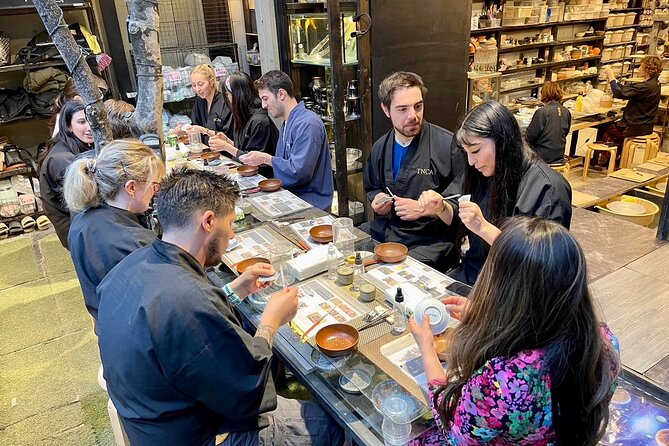
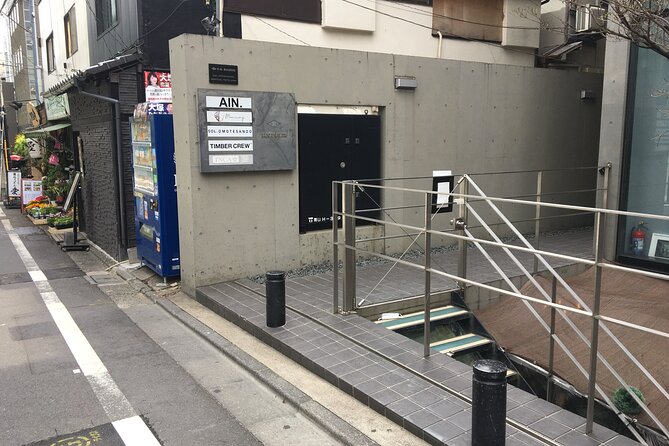
You make your own way to TNCA Minami-Aoyama Studio at 3-chōme-8-2 Minamiaoyama, Minato City. The activity is near public transportation, and Omotesando is the listed stop. One useful practical tip is to allow time to locate the studio. The neighborhood is central, but the entrance may not be obvious if you arrive at the last minute.
The workshop ends at the same place. There is no hotel pickup, drop-off, meal, or drink included. That is not a serious weakness for a one-hour class, but it means you should plan the workshop as one stop within a larger Tokyo outing.
Arrive early enough to get your bearings. One participant found the studio difficult to locate and felt ignored when arriving only six minutes before the class began. That appears to be an isolated poor experience among many positive ones, but it offers sound advice: do not cut the arrival time close, especially in an unfamiliar part of Tokyo.
What happens during the one-hour lesson
The class begins with an introduction to kintsugi and its place in Japanese craft. You learn that breakage and repair can be seen as part of an object’s life rather than a reason to throw it away. This cultural explanation matters because it gives the practical work some meaning.
You then put on a samue, a traditional garment associated with Japanese craft work. It is a small detail, but it helps mark the lesson as a workshop rather than a quick tourist demonstration.
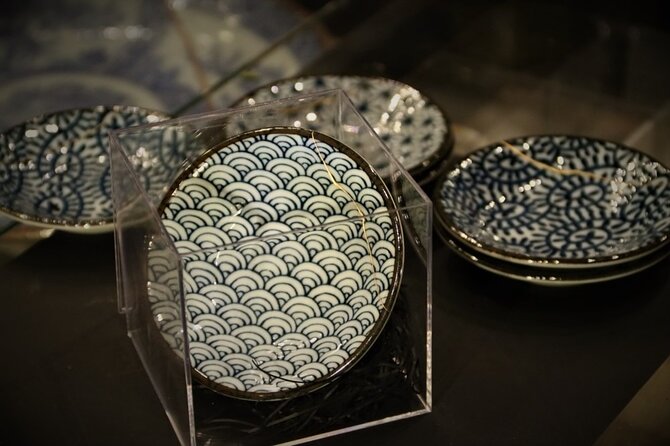
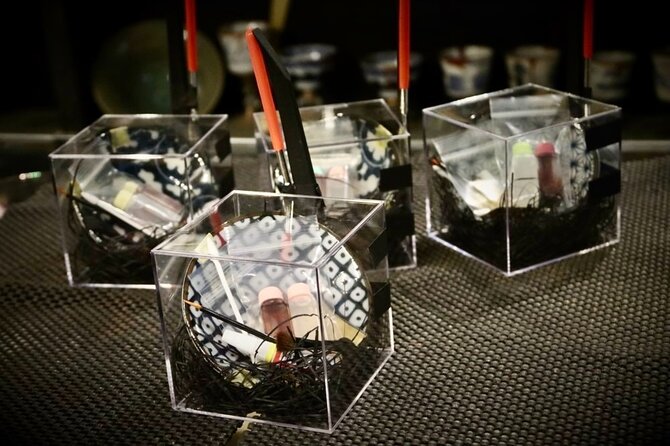
The studio supplies the ceramic plate and all equipment. Personal pottery is not permitted. That rule keeps the class organized and avoids the risk of someone bringing an item that needs a much longer or more complex repair.
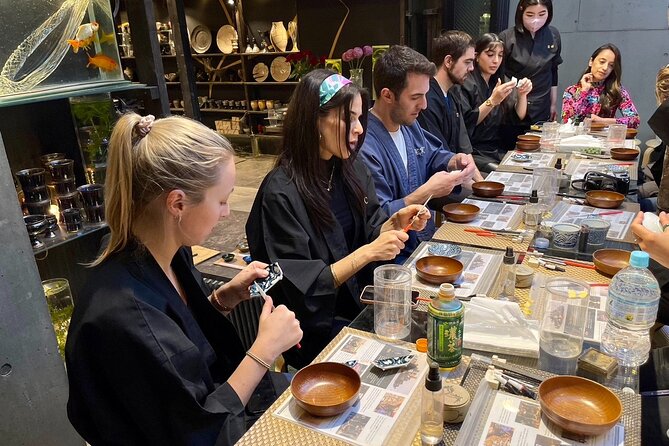
The instructor shows you the process, with video examples and clear directions used in the class. You work on the plate step by step, and staff members offer help as needed. The most praised part of the teaching is its patience. The instructor is described as encouraging and attentive without taking over the work.
That balance is important. You want help when handling an unfamiliar material, but you also want the final piece to feel like yours. The class is arranged so beginners can follow along, while the instructor still looks at each person’s work and gives individual support.
At the 11:00am session, you may meet Master Taku. The workshop is also supported by other staff, and the instructor may be Japanese with very good English. The information provided does not promise a specific teacher for every departure, so book the 11:00am class if meeting Taku is important to you, but treat it as a possibility rather than a guarantee.
The plate you take home
The supplied plate is included in the price, as are the lesson, equipment, taxes, fees, and handling charges. At the end, you bring home the repaired item. This is the feature that gives the workshop much of its value.
A purchased souvenir can remind you of Tokyo. A plate you repaired yourself can remind you of the morning you spent learning, concentrating, and making something imperfect but personal. The finished piece may not look like the work of a master, and that is fine. Kintsugi is well suited to first attempts because the visible repair is part of the design.
The studio also takes care with the return journey. One participant specifically praised the way the finished piece was packaged for travel. Still, pack it thoughtfully in your luggage and follow any instructions given at the workshop.
Do not expect to repair your own favorite mug or family heirloom during this class. Personal items are not allowed. If you want to work on a particular piece, this is the wrong format. If you want a controlled first introduction with a guaranteed object to work on, the supplied plate is a practical advantage.
Same base, a different sort of day:
- Tokyo: teamLab Planets TOKYO Digital Art Museum Entry Ticket
★ 4.6 · 9,779 reviews - Mt Fuji & Hakone Cruise, Drum Show Bullet Train 1 Day from Tokyo
★ 4.0 · 7,413 reviews - Tokyo: Sumo Show Experience with Chicken Hot Pot and a Photo
★ 4.8 · 6,678 reviews - Tokyo: Shinjuku Food Tour (13 Dishes at 4 Local Eateries)
★ 5.0 · 6,603 reviews
A small class with individual help
The experience is presented as a capped group, with no more than 10 people described for the lesson. Elsewhere, the activity information lists a maximum of 20 participants. That discrepancy is worth noting, though the class format is clearly intended to be personal rather than a large lecture.
A smaller group suits this craft. You need to see the demonstration, handle the materials, and receive help with your own plate. The teaching style appears friendly and hands-on, with the instructor checking each person’s progress.
This is also a good choice for couples, friends, and families with older children. A parent and daughter enjoyed taking the class together, and couples appreciated having a creative activity to share. The workshop does not require one person to be artistic while the other watches. Everyone works on an individual plate.
Children under 6 cannot enter the atelier because of the establishment’s safety rules. The general information says most people can participate, but the age restriction is firm. If you are booking for a family, check that every child meets the minimum age requirement before paying.
The Japanese ideas behind the gold lines
The class teaches more than a repair method. It introduces a way of seeing objects. A crack is not automatically treated as a flaw to conceal. Once repaired with a contrasting material, it becomes part of the object’s story.
This connects with the Japanese aesthetic idea of wabi-sabi, which the workshop discusses through its cultural and philosophical background. The lesson does not ask you to admire perfection from a distance. It asks you to pay attention to wear, change, and the marks left by time.
That makes the class feel more substantial than a standard craft activity. You are using your hands, but you are also considering why the finished object can be more meaningful because it has been repaired. The theme can stay with you after the plate is packed away. It might even make you pause before discarding a chipped bowl at home.
The philosophy is introduced within a short class, so it will not cover every aspect of Japanese aesthetics. Still, the combination of explanation and practical work gives you a useful first look at the subject.
Is $59.69 a fair price?
At $59.69 per person, this is not the cheapest one-hour activity in Tokyo. You are paying more than the cost of a casual museum visit or a simple souvenir. The value comes from the combination of instruction, materials, cultural background, staff support, and a finished plate to take home.
The included plate matters. You do not need to shop for pottery, bring tools, or pay an extra equipment charge. The lesson fee also includes taxes, fees, and handling charges, which makes the advertised price easier to assess.
I consider the price reasonable if you want a structured creative experience and a personal souvenir. It is less attractive if your main goal is to learn professional restoration in depth. You get an accessible introduction, not a multi-session craft course.
Group discounts are available, so the cost may work better if you book with a partner, family group, or friends. The one-hour length also helps the value. You can fit the workshop into a day of sightseeing without surrendering half a day to one activity.
The strongest value is personal rather than financial. You leave with a plate that records your own attempt at kintsugi. If that means more to you than buying a finished ceramic item, the price makes sense.
Fitting the class into an Omotesando day
The workshop begins and ends in Minami-Aoyama, with Omotesando listed as the itinerary stop. That makes it easy to pair with shopping, cafés, galleries, or a walk through the surrounding central Tokyo neighborhoods. The activity itself does not include any additional sightseeing, so you are free to build the rest of the day around it.
Book the class when you can arrive without rushing. A morning session gives you the rest of the day afterward, while the one-hour format leaves room for other plans. The precise lesson time should be checked carefully during booking, especially if you are aiming for the 11:00am session with the possibility of meeting Master Taku.
The studio is near public transportation, and the metro is the quickest and easiest way to reach the area according to practical feedback from the experience. Even so, give yourself extra time for the final walk and locating the entrance. Tokyo addresses can be precise but still take a little effort to match with the correct door.
Who should book this experience?
I would choose this workshop for you if you want a cultural activity with something tangible at the end. It suits couples, friends, solo visitors, and families with children aged 6 and older who can follow a one-hour craft lesson.
It is a particularly good match if you:
- Like ceramics, design, or traditional crafts
- Prefer making a souvenir to buying one
- Want an activity that does not require advanced artistic ability
- Enjoy learning the ideas behind a craft, not only copying the technique
- Need a short activity that fits into a busy Tokyo itinerary
- Are comfortable booking a fixed, non-refundable time
You may want to skip it if you need flexible plans, want to use your own broken pottery, or hope to become skilled at professional restoration in one sitting. The class is also not suitable for children under 6 because they cannot enter the atelier.
The experience has a 4.9 rating from 467 reviews, with 98 percent recommending it. Those figures fit the strongest points of the activity: clear instruction, kind staff, easy participation for beginners, and a satisfying object to bring home. The small number of poor experiences also points to the areas requiring care, especially finding the studio and checking the date before booking.
Booking details worth knowing
Confirmation is sent within 48 hours, subject to availability. The activity is non-refundable and cannot be changed for any reason. If you accidentally choose the wrong date or time, you may have to pay again, so check your plans before completing the reservation.
The experience requires a minimum number of participants. If the operator cancels because that minimum is not reached, you are offered another date or experience, or a full refund. That is different from canceling on your own, which is not refundable.
The class includes mobile ticketing, and group discounts are available. Food, drinks, and transportation are not included. The meeting point and end point are the same TNCA Minami-Aoyama Studio.
Should you book the kintsugi workshop?
Book it if you want a short, thoughtful Tokyo activity that combines craft, culture, and a souvenir you make yourself. The patient instruction, traditional samue, studio-provided plate, and chance to learn from Master Taku at the 11:00am class give it more substance than a quick photo stop.
Before paying, confirm the date, allow extra time to find the studio, and remember that you cannot bring your own pottery. If you accept those limits, this is a strong choice for a creative hour in Minami-Aoyama and a useful reminder that a repaired object can carry more meaning than a perfect new one.
FAQ
How long does the kintsugi experience last?
The lesson lasts approximately one hour.
Where does the workshop take place?
It takes place at TNCA Minami-Aoyama Studio, 3-chōme-8-2 Minamiaoyama, Minato City, Tokyo 107-0062, Japan.
What do I repair during the class?
The studio provides a ceramic plate for you to repair. Personal items are not allowed.
Can I take my repaired plate home?
Yes. The plate used during the lesson is included and can be taken home afterward.
Is the class suitable for young children?
Children under 6 cannot enter the atelier because of the establishment’s safety rules. Most other participants can take part.
Is Master Taku present at every class?
The 11:00am class offers the chance to meet Master Taku. The available information does not guarantee his presence at every session.
Can I cancel or change my booking?
No. This experience is non-refundable and cannot be changed for any reason. If the operator cancels because the minimum number of participants is not met, you can receive a different date or experience, or a full refund.
Just added in Tokyo
- 《MEMBERS-ONLY-BAR-HOPPING》Discover Your Special Whiskey in Tokyo!★ 5.0 · 29 reviews
- Japanese Whisky Hunting《HIGH-QUALITY-ONLY》Rare Tasting Class★ 5.0 · 20 reviews
- Luxury Tokyo Sake, Cocktail, Whisky and Pairing Tour★ 5.0 · 18 reviews
- Wagyu & Sake Pairing in Shinjuku – Steak, Shabu-Shabu & More★ 5.0 · 112 reviews
- Small-Group Wagyu Beef and 7 Japanese Dishes Tokyo Cooking Class★ 5.0 · 190 reviews
- Nikko: Edo Wonderland Edomura Cultural Theme Park Ticket★ 4.3 · 205 reviews
- From Tokyo: Private Tour to Fuji/Hakone – Onsen, Art, Nature★ 5.0 · 116 reviews
- Tokyo: KABUKI Show at Kabukiza Theatre Admission Ticket★ 4.8 · 152 reviews
Tours in Tokyo, compared.

Mt Fuji and Hakone 1-Day Bus Tour Return by Bullet Train
Read our review →


teamLab Planets TOKYO Digital Art Museum Entry Ticket
Read our review →
Mt Fuji & Hakone Cruise, Drum Show Bullet Train 1 Day from Tokyo
Read our review →
Sumo Show Experience with Chicken Hot Pot and a Photo
Read our review →
Shinjuku Food Tour (13 Dishes at 4 Local Eateries)
Read our review →
Tokyo Mt Fuji 5th St & Hakone Cruise Bus Tour w/Bullet Train
Read our review →Browse the lists this tour appears in