
Reviewed · TRAIN EXPERIENCES
From Tokyo 1-Day Kyoto English-guided Tour by Bullet Train
Kyoto is about 300 miles from Tokyo, yet this tour lets you see three of its famous sights in one very long day. The real attraction is the round-trip Shinkansen ride, with the chance to spot Mt. Fuji from the window on a clear morning. In Kyoto, you visit Fushimi Inari Taisha, Sanjusangen-do, and Kiyomizu-dera before returning to Tokyo at night.
I like the careful station handoffs and the fact that English-speaking staff guide you from Tokyo City i to the train, meet you at Kyoto Station, and help you return. I also like the mix of sights: bright torii gates, a quiet hall filled with 1,001 statues, and a hilltop temple with fine views over Kyoto.
The catch is simple: this is a half-day Kyoto visit wrapped inside a 12-hour transportation day. You will see the headline sights, but crowds, traffic, and fixed departure times can leave little room to linger.
Key points to know before booking
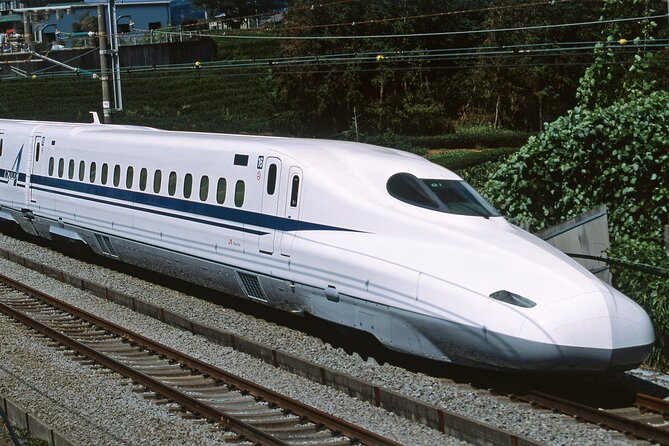
- The Shinkansen is part of the experience: The journey takes about 2 hours and 20 minutes each way, with standard or first-class seating available.
- Three major Kyoto sights: You visit Fushimi Inari Taisha, Sanjusangen-do, and Kiyomizu-dera in one afternoon.
- Station support is a major help: Staff escort you to the train in Tokyo and meet you on the Kyoto platform, but they do not ride the Shinkansen with you.
- Lunch is included: The 2025 version offers a Western-style semi-buffet at the Miyako Hotel Kyoto Hachijo. The 2026 version changes to a vegetarian-friendly Western-style set menu.
- Expect crowds and a quick pace: Fushimi Inari and Kiyomizu-dera can feel packed, and each stop has a strict time limit.
- The tour suits first-time visitors: It is a practical choice if Kyoto matters to you but an overnight stay is not possible.
The Shinkansen turns a long transfer into part of the day
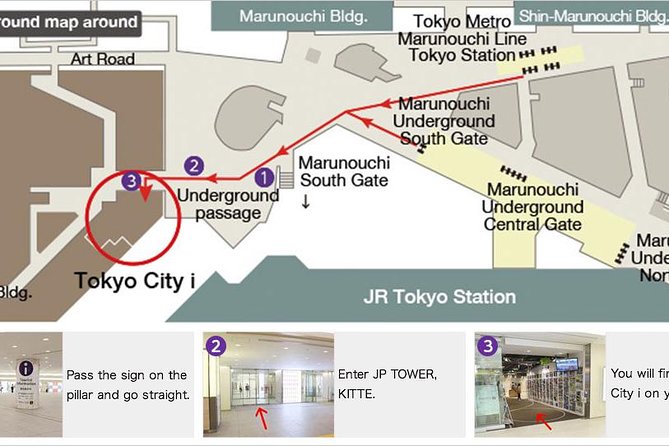
Your morning begins at Tokyo City i, in the KITTE building near Tokyo Station. The meeting time is 9:20 a.m. An English-speaking tour conductor takes you to the correct Shinkansen platform and helps you board.
This support matters. Tokyo Station is large, busy, and not always intuitive when you are still learning Japan’s rail system. Staff walk you to the train car door and explain what to do when you reach Kyoto. They do not travel in your carriage, so you need to manage the roughly 2-hour-20-minute ride on your own.
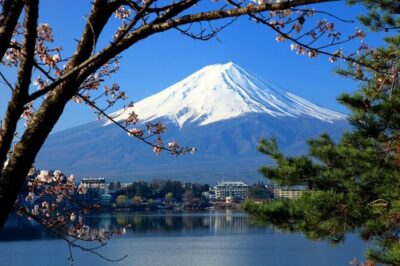
Look out the window on a clear day. Mt. Fuji may appear during the trip, and the view can be one of the day’s best surprises. The train itself is also a major reason to book this outing. For many first-time visitors, riding the Shinkansen is not just transportation. It is a central part of the Japan experience.
You can choose standard or first-class, often called Green Car, seating. The upgrade costs more, but several hours on trains can feel easier with extra space and a quieter carriage. If your budget allows, first class makes the long day more comfortable. Seats may not be designated, so read your final instructions carefully and follow the staff’s directions.
Large luggage needs planning. Bags whose combined height, width, and length exceed 160 centimeters cannot be brought onto the Shinkansen under the tour rules. Use a luggage delivery service independently if you are carrying a large suitcase.
Other trips by rail from Tokyo:
- Mt Fuji and Hakone 1-Day Bus Tour Return by Bullet Train
★ 5.0 · 26,383 reviews - Mt Fuji & Hakone Cruise, Drum Show Bullet Train 1 Day from Tokyo
★ 4.0 · 7,413 reviews - Tokyo Mt Fuji 5th St & Hakone Cruise Bus Tour w/Bullet Train
★ 4.4 · 5,024 reviews
A hotel lunch gives you a smooth start in Kyoto
An English-speaking staff member meets you on the Kyoto platform and escorts you to the Miyako Hotel Kyoto Hachijo, close to the station. Lunch lasts about 40 minutes and is served in a hotel restaurant.
For 2025, lunch is a Western-style semi-buffet. The main dish can be changed to a vegetarian option if you request it when booking. You cannot make that change on the day. For 2026, the meal is listed as a vegetarian-friendly Western-style set menu.
This is convenient rather than deeply local. If you are hoping for a small traditional Kyoto meal, this is not that kind of lunch. The hotel setting keeps the schedule orderly and gives you a reliable meal before the afternoon sightseeing begins. The food has received strong praise, including the buffet selection, seafood, pastries, and desserts.
After lunch, staff escort you on foot to the JTB Sunrise Tours Desk at Kyoto Avanti. This is where people from different tour segments may gather before boarding the sightseeing coach. That changeover can involve waiting, especially if another group is finishing a morning tour. It is one of the less exciting parts of the day, but it helps explain why the tour can keep a large group together.
Fushimi Inari gives you Kyoto’s most recognizable gates
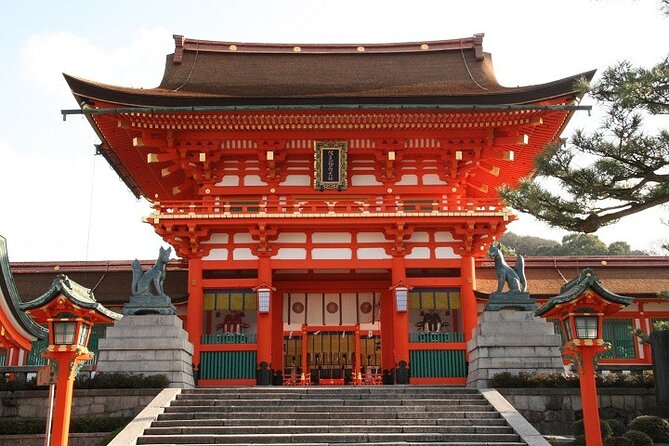
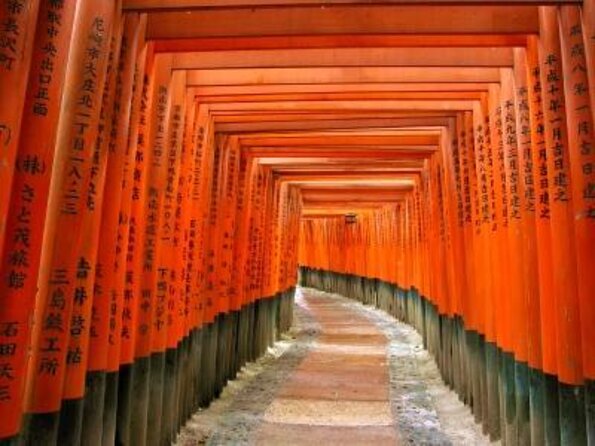
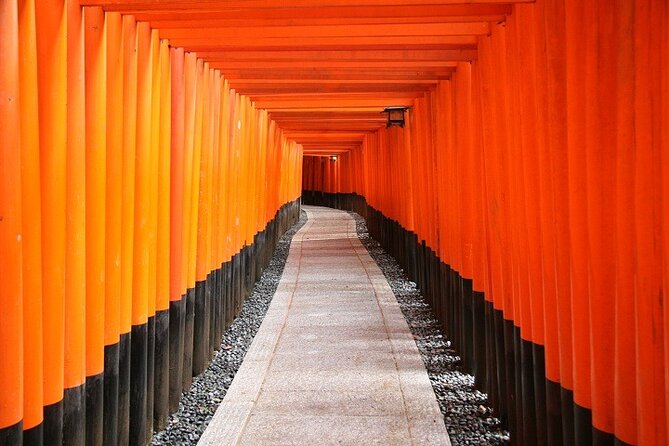
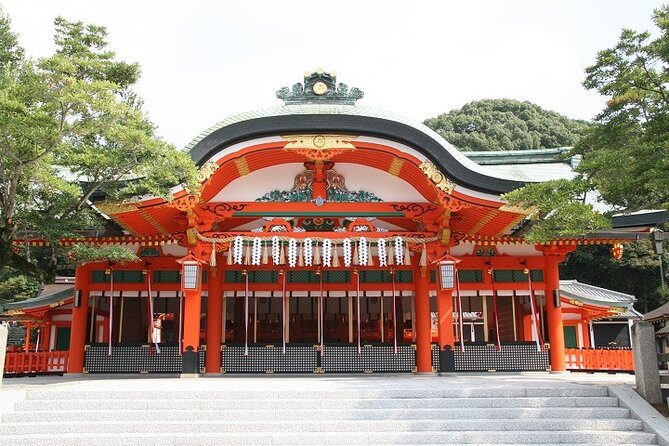
The first sightseeing stop is Fushimi Inari Taisha, the head shrine of roughly 40,000 Inari shrines across Japan. It is famous for the Senbon Torii, a long series of orange-red gates leading up the wooded slopes of Mount Inari.
You will walk from the coach parking area to the shrine. The scheduled visit is about 30 minutes, which is enough to see the entrance area and walk beneath part of the gates. It is not enough to climb far up the mountain or explore the full shrine grounds.
This is the stop where the tight schedule feels most obvious. Some people have had only about 10 minutes at the start of the torii path before needing to return to the coach. You can take photographs, but you need to keep an eye on the guide and the clock.
The gates are beautiful, though the approach can be crowded. Stay close to the group, especially if you stop for pictures. If Fushimi Inari is your main reason for visiting Kyoto, a separate visit with more time would be better. On this tour, treat it as a memorable introduction rather than a full exploration.
Sanjusangen-do offers a quieter, more focused hour
Sanjusangen-do changes the mood. The temple occupies the world’s longest wooden structure and contains 1,001 life-size statues of Kannon, the Buddhist deity associated with compassion. The figures date from the 13th century and fill the long interior in striking rows.
The scheduled visit lasts about 30 minutes. That is brief, but the temple’s main hall is compact in purpose: you enter, take in the scale of the statues, and listen as the guide explains the religious setting and the building’s role. Photography is not permitted inside, so this is a place to put the camera away and pay attention.
The stop can be especially rewarding if you want more than postcard views. Fushimi Inari gives you color and movement. Sanjusangen-do gives you a concentrated look at Japanese Buddhist art. Some guides also explain the connection to archery associated with the long hall.
Your guide may be someone such as Yumi, Tammy, KC, Momo, or Nobu, depending on the departure. Guide quality can shape this portion of the day. Several guides have been praised for clear cultural explanations and lively delivery, while one account found an English-speaking guide harder to understand. The operator uses licensed English guides, but the experience can vary by person.
Same base, a different sort of day:
- 1-Day Tokyo Bus Tour
★ 5.0 · 14,250 reviews - Tokyo: TOKYO SKYTREE® Admission ticket
★ 4.5 · 11,192 reviews - Tokyo: teamLab Planets TOKYO Digital Art Museum Entry Ticket
★ 4.6 · 9,779 reviews - Tokyo: Sumo Show Experience with Chicken Hot Pot and a Photo
★ 4.8 · 6,678 reviews
Kiyomizu-dera brings the best view, and the biggest crowds
The final major stop is Kiyomizu-dera, one of Kyoto’s best-known temple sites. It sits on a hill above the city, giving you broad views from the temple grounds. The approach runs through a historic shopping lane lined with places to browse and buy snacks or souvenirs.
The allotted time is about 1 hour and 10 minutes, longer than at the first two sites. That sounds generous, but it disappears quickly. You need to walk from the coach area, move through the shopping lane, reach the temple, hear the guide’s explanation, take in the view, and return on time.
The slope and crowds matter. Kiyomizu-dera can be difficult to move through when the area is packed, particularly during busy seasons. Some departures have reached the final temple late in the afternoon, around 5 p.m., leaving little time before the return transfer.
I would use your time here carefully. Follow the guide’s route first, then take photographs and browse only if the schedule allows. The view over Kyoto is the payoff, but you should not expect a slow afternoon among quiet temple grounds. This is a popular place, and the tour cannot control road congestion or the number of people already there.
The return journey requires attention to the clock
After Kiyomizu-dera, the group returns to Kyoto Station for the Nozomi Shinkansen to Tokyo. Another staff member helps with the station connection, and the tour ends at Shin-Yokohama, Shinagawa, or Tokyo Station.
The listed arrival window is approximately 8:30 to 9:30 p.m. Train schedules can change, and traffic may alter the sightseeing order or arrival times. Plan nothing important for that evening. You will have spent about 4 hours and 40 minutes on trains, plus coach rides, walking, and sightseeing.
The handoff system is reassuring, but you still need to remain alert. Staff escort you to the train and explain connections, yet they do not ride the Shinkansen with the group. Keep your ticket, follow the meeting instructions, and stay with the party at stations.
A few people have found the waiting periods frustrating, especially after lunch or during the return gathering. That is the tradeoff for joining a large, organized group. The maximum size is 40 people, so you gain structure but lose some flexibility.
What $452.45 means in practical terms
At $452.45 per person, this is not a cheap way to see Kyoto. The price includes round-trip Shinkansen fare, the Kyoto sightseeing coach, licensed English guide service, station assistance, and lunch. Standard or first-class train options affect the final value, and first class costs more.
The simplest value test is this: can you spare an overnight in Kyoto? If yes, staying there gives you more time and removes the exhausting return ride. You could visit the same areas at a slower pace and add other parts of the city.
If you are based in Tokyo and cannot change hotels, the calculation looks different. You are paying for a managed long-distance connection, a meal, station help, and a clear route through three major sites. For a first visit, that can be worth the premium, especially if navigating Japanese trains feels stressful.
You are not paying for a relaxed Kyoto day. You are paying for access to Kyoto when your schedule is tight. That is a fair price for convenience, but it is poor value if you want quiet temple visits or time for unscheduled wandering.
Who will get the most from this Kyoto day trip
I would recommend this tour to you if:
- You have only one open day from Tokyo.
- You want to ride the Shinkansen.
- You prefer guided sightseeing to managing several train and bus connections.
- You want a first look at Kyoto’s most famous temples and shrines.
- You value station assistance and a fixed plan.
- You are comfortable with a long day and a group of up to 40 people.
I would hesitate if you want to photograph every torii gate at Fushimi Inari, spend an hour inside each temple, or eat a traditional Kyoto lunch. The itinerary gives you a strong first taste, but not a full sense of the city.
Families should note the age rules. Children up to age five may join free, but they receive no Shinkansen or coach seat and no lunch unless booked at the child rate. Anyone under 18 needs written parental permission. Anyone under 15, or not yet in middle school, must be accompanied by a parent or guardian.
This is a special tour for international visitors, and residents of Japan cannot book it. Most people can participate, but the amount of walking, standing, station movement, and hill walking at Kiyomizu-dera should be part of your decision.
My call: book it for access, not depth
I would book this tour if Kyoto is important to you and an overnight stay is impossible. The Shinkansen, the careful station escorts, the three famous sites, and the included meal create a practical way to add Kyoto to a Tokyo-based trip. Guides such as Yumi, Tammy, KC, and Momo have helped make the day informative and easy to follow.
I would not book it if you can spend two days in Kyoto. You will gain far more by staying overnight and visiting the temples at a slower pace. The same is true if crowds drain your energy or if $452.45 feels high for only a few hours of sightseeing.
For the right person, this is a strong express introduction. Just call it what it is: a long Shinkansen adventure with a tightly packed Kyoto afternoon, not a leisurely city visit.
FAQ
How long is the tour?
The tour lasts about 12 hours. It begins at 9:20 a.m. at Tokyo City i and usually ends at Tokyo, Shinagawa, or Shin-Yokohama between approximately 8:30 and 9:30 p.m.
Is the Shinkansen included?
Yes. Round-trip bullet train fare between Tokyo and Kyoto is included. You can choose standard or first-class seating, though seats may not be designated.
Do staff ride the Shinkansen with the group?
No. An English-speaking staff member guides you to the train in Tokyo, and another staff member meets you on the Kyoto platform. Tour staff do not ride in the Shinkansen with participants.
What lunch is included?
For 2025, lunch is a Western-style semi-buffet at the Miyako Hotel Kyoto Hachijo. A vegetarian main dish must be requested when booking. For 2026, the lunch changes to a vegetarian-friendly Western-style set menu.
How much time is spent at each Kyoto sight?
The scheduled time is about 30 minutes at Fushimi Inari Taisha, 30 minutes at Sanjusangen-do, and 1 hour 10 minutes at Kiyomizu-dera. Traffic and crowd conditions can change the order and timing.
Can I bring a large suitcase?
Large luggage with combined dimensions over 160 centimeters cannot be brought onto the Shinkansen. You need to arrange luggage delivery independently if your bag exceeds that limit.
Just added in Tokyo
- Nikko: Edo Wonderland Edomura Cultural Theme Park Ticket★ 4.3 · 205 reviews
- 《MEMBERS-ONLY-BAR-HOPPING》Discover Your Special Whiskey in Tokyo!★ 5.0 · 29 reviews
- Japanese Whisky Hunting《HIGH-QUALITY-ONLY》Rare Tasting Class★ 5.0 · 20 reviews
- Luxury Tokyo Sake, Cocktail, Whisky and Pairing Tour★ 5.0 · 18 reviews
- Wagyu & Sake Pairing in Shinjuku – Steak, Shabu-Shabu & More★ 5.0 · 112 reviews
- Small-Group Wagyu Beef and 7 Japanese Dishes Tokyo Cooking Class★ 5.0 · 190 reviews
- Tokyo Cyberpunk Street Photo Tour★ 5.0 · 165 reviews
- From Tokyo: Private Tour to Fuji/Hakone – Onsen, Art, Nature★ 5.0 · 116 reviews
Train Experiences, compared.
Mt Fuji and Hakone 1-Day Bus Tour Return by Bullet Train
Read our review →
Mt Fuji & Hakone Cruise, Drum Show Bullet Train 1 Day from Tokyo
Read our review →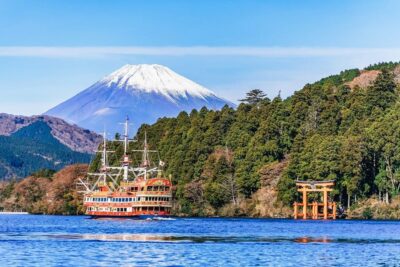
Tokyo Mt Fuji 5th St & Hakone Cruise Bus Tour w/Bullet Train
Read our review →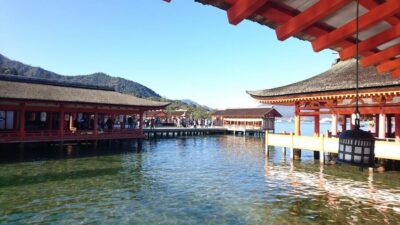
Osaka/Kyoto: Hiroshima Miyajima Bus Tour & Shinkansen Ticket
Read our review →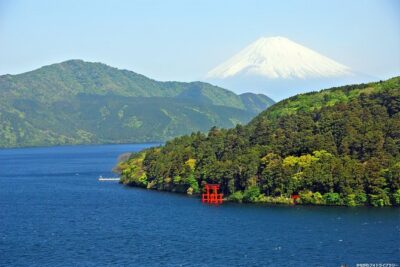
Mt. Fuji and Hakone Day Trip From Tokyo with Bullet Train Option
Read our review →
Browse the lists this tour appears in